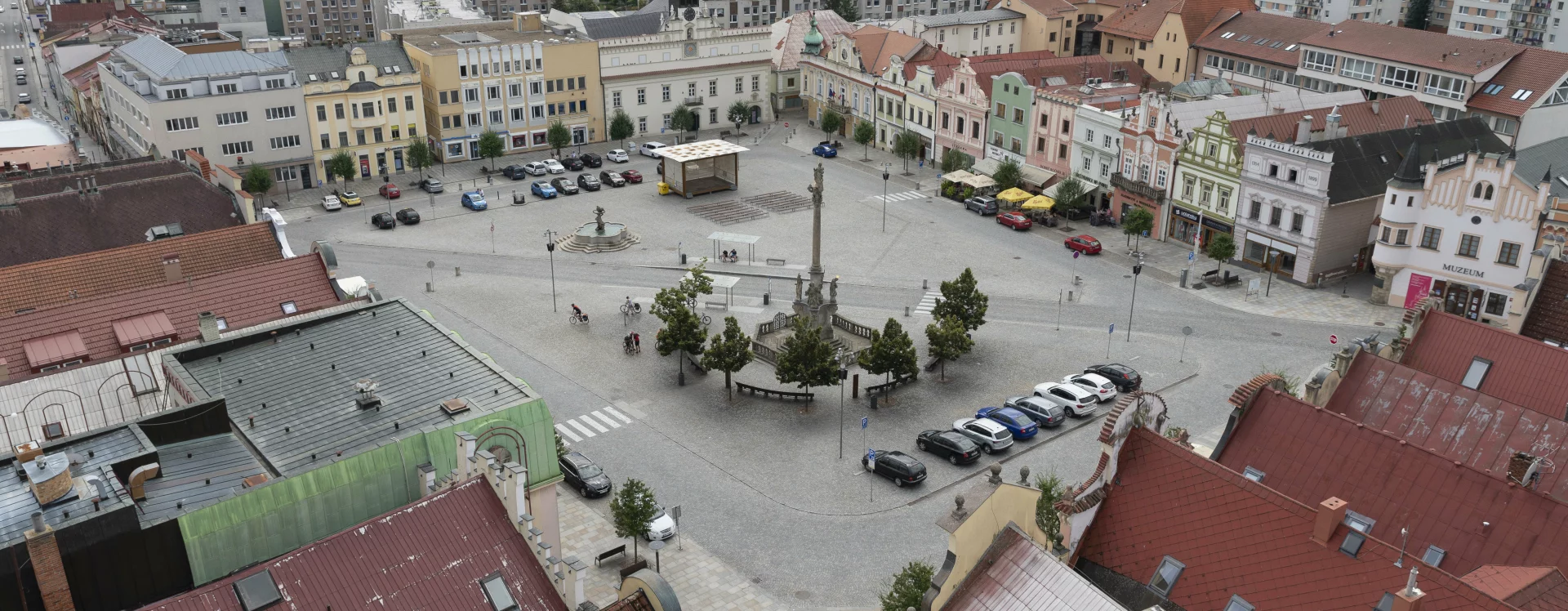
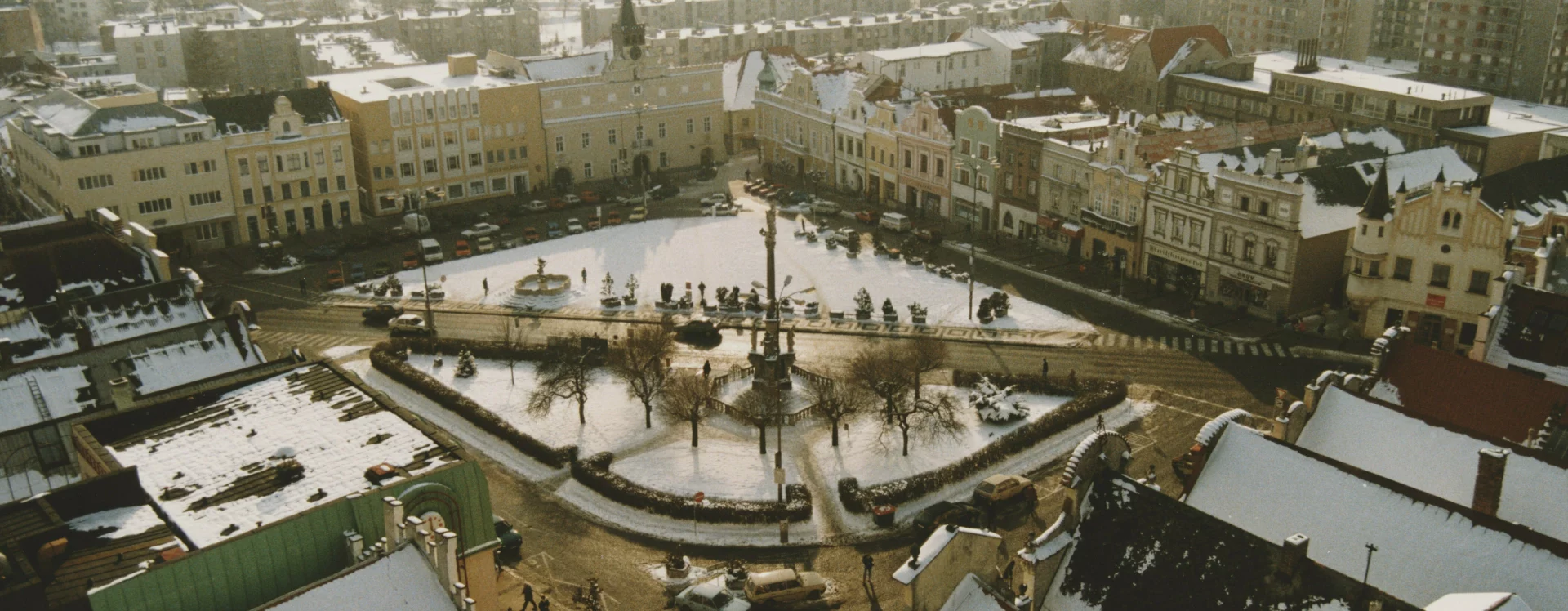
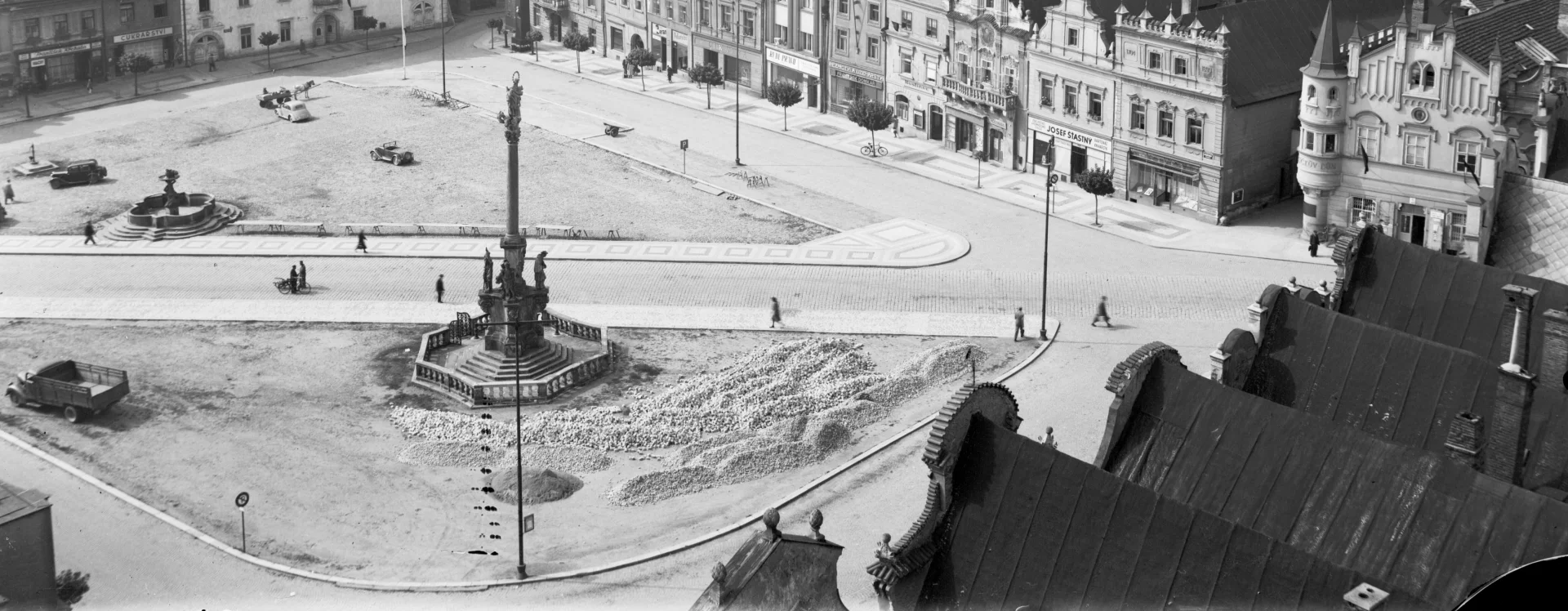
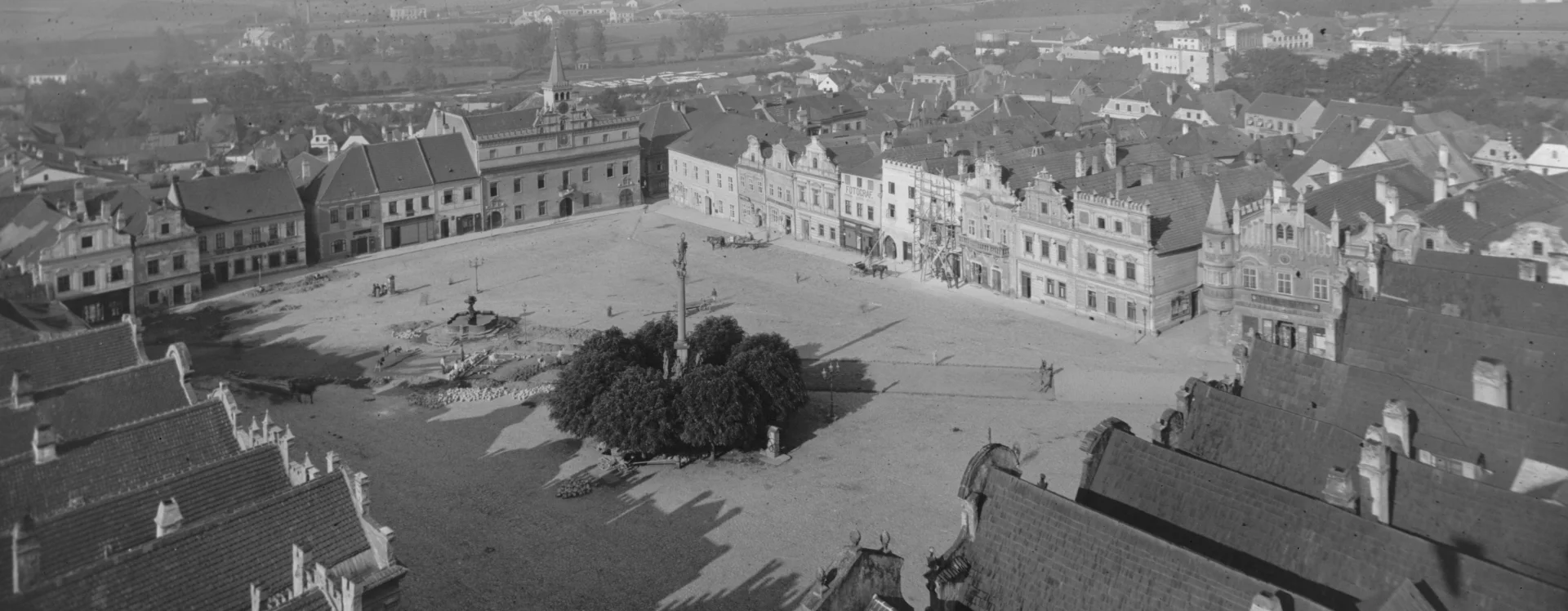
The origins of Havlíčkův Brod date back to a ford across the Sázava River on the important early medieval „Haberská“ trade route, where the first settlement was established. The discovery of silver deposits in this area in the mid-13th century brought new inhabitants and led to the founding of a town in close proximity to the original settlement. The town took its name from the ancient ford. It also acquired the epithet "Německý (German)" after the German miners who arrived and the Order of German Knights who operated here. The town bore the name Německý Brod until the end of World War II.
The stone fortifications, built from 1310, encompassed both the newer town and the original settlement in the area of today's Smetana Square. After the fire of 1340, there was an extensive reconstruction of the town houses in stone and stabilization of the street network, which determined the character of the town for centuries to come. Periods of disaster and development repeated themselves over the following centuries, with crises of war, fire and flood, followed by phases of effort to rebuild the city. Another period of significant construction development did not come until the first half of the 18th century, among other things in connection with the arrival of the Augustinian order and the construction of a monastery in the upper suburbs. In the 19th century, urban development began to move further and further away from the contours of the medieval walls. However, the real construction boom was yet to come...
The local architecture of the 20th century shows a remarkable journey in which the regional center gradually transformed into a modern urban organism. The rapid development of the city after its connection to the railway in 1870 and the boom in villa districts at the turn of the 19th and 20th centuries, the self-confident modernism of the First Republic, and the extensive post-war transformations associated with industrial growth and controversial interventions in the historic core—all of this has shaped the city's present-day appearance. After 1989, Brod embarked on a path of renewal, searching for identity and a sensitive dialogue between the past and the present. Today's city is an inspiring example of how the heritage of the 20th century can not only be preserved, but also transformed into an attractive environment for residents and visitors alike.
Look around, ask questions, explore... Let the architecture of Havlíčkův Brod be your guide!