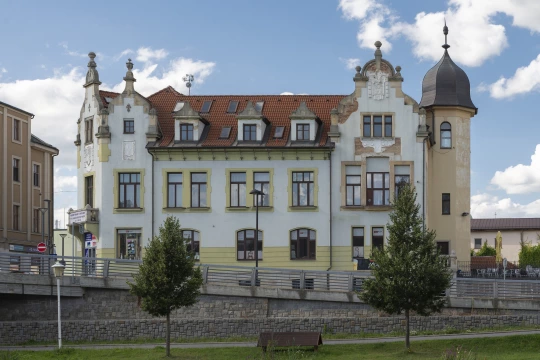
A decisive factor behind the growth of Německý (Havlíčkův) Brod was its designation as the administrative centre of the newly established district. The connection to the Northwestern Railway in 1870 made it an important transport hub in south-eastern Bohemia, enabling rapid industrial development, particularly in textiles and potato processing. The turn of the 19th and 20th centuries was a period of energetic construction activity in Německý Brod, far exceeding that of previous eras.
Under the leadership of Mayor Eduard Šubrt (1868–1926), the town expanded both in terms of public buildings—schools, offices and hospitals—and in private villa construction, reflecting the lingering historicist styles alongside the emerging Art Nouveau and Modernist trends. Prudent prewar land acquisitions, later converted into building plots, allowed the town to extend westward and northward, creating the new districts of Letná and Kokořín. Another notable achievement of this period was the establishment of the Budoucnost Town Park in 1889, which remains an important recreational area in close proximity to the town centre.