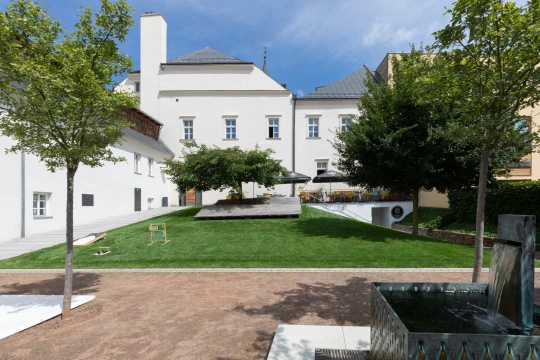
After the Velvet Revolution, the construction of panel housing estates was halted, and in 1990 the historic centre was declared an urban conservation area. Together with the restitution of property to private ownership, this significantly improved the appearance of the heart of the town. Despite the destructive approach to historic architecture during the 1970s and 1980s, many cultural monuments manged to survive within the conservation zone.
During the 1990s, new buildings were constructed with little concern for artistic quality, reflecting both the lingering influence of socialist central planning and the shortage of personnel and materials. After 2005, a continuous, systematic restoration of the historic centre began, led by the town council—represented at the time by Deputy Mayor Libor Honzárek—in cooperation with the architectural firm Burian-Křivinka. This included the gradual reconstruction of the town’s most valuable buildings. The revitalization of public spaces, including both squares and the park, through exemplary cooperation between the investors, preservation authorities and architects, earned the town numerous awards from both professionals and the general public.
Private construction in the newly developing districts, now partly regulated by the town, also includes many high-quality examples by architects working locally and beyond. The current town leadership under Mayor Zbyněk Stejskal is striving not only to restore artistic and architectural value to public spaces but also to present these achievements to the wider public, integrating them into the overall development of tourism.