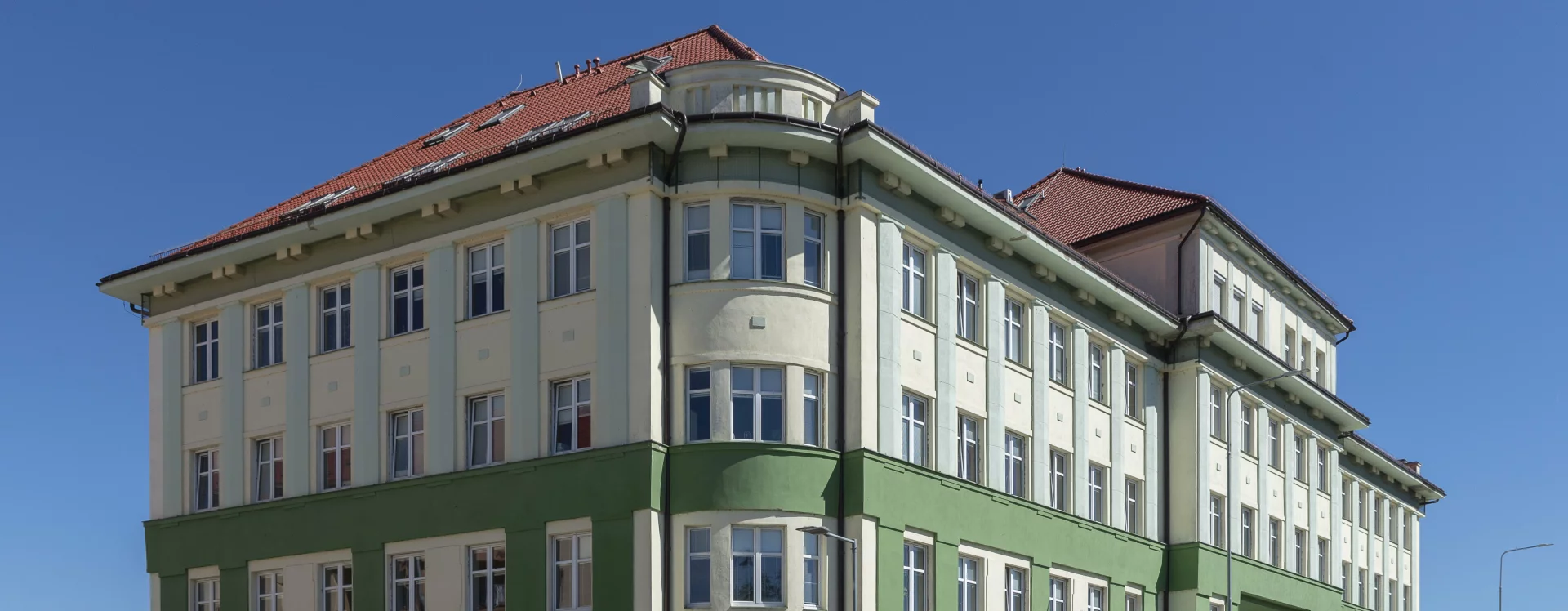
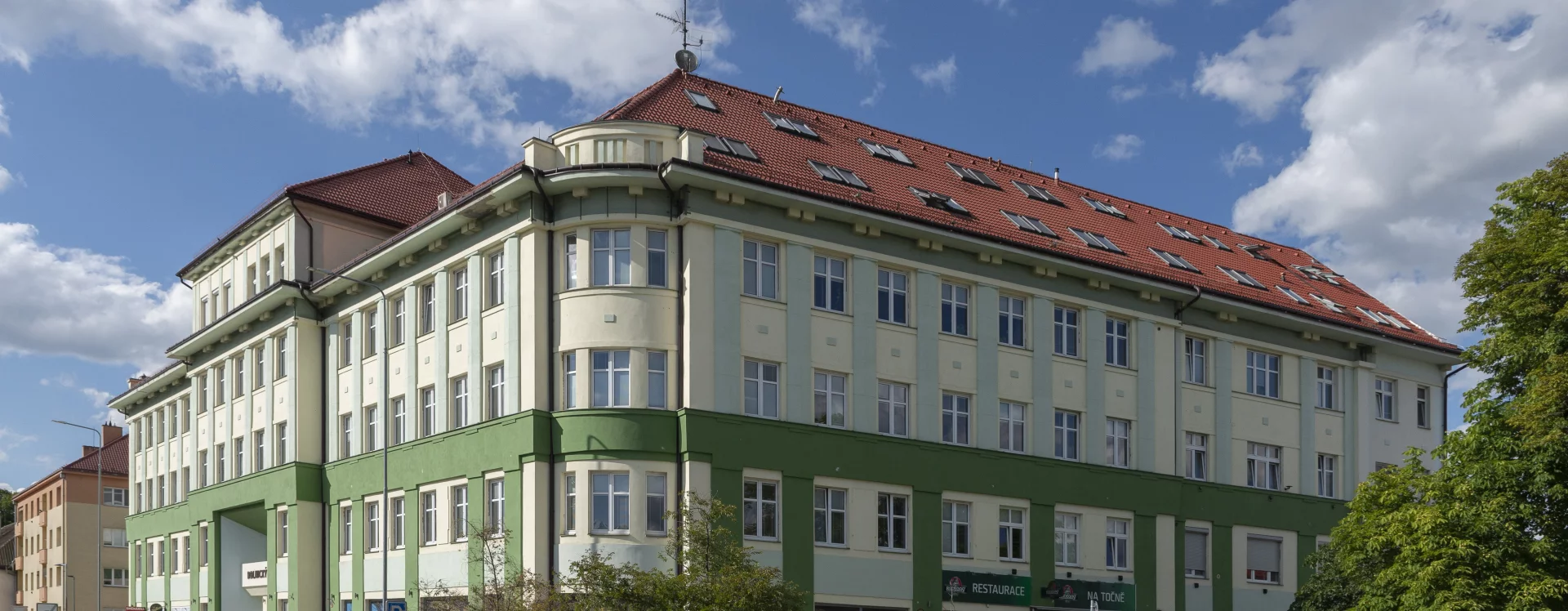
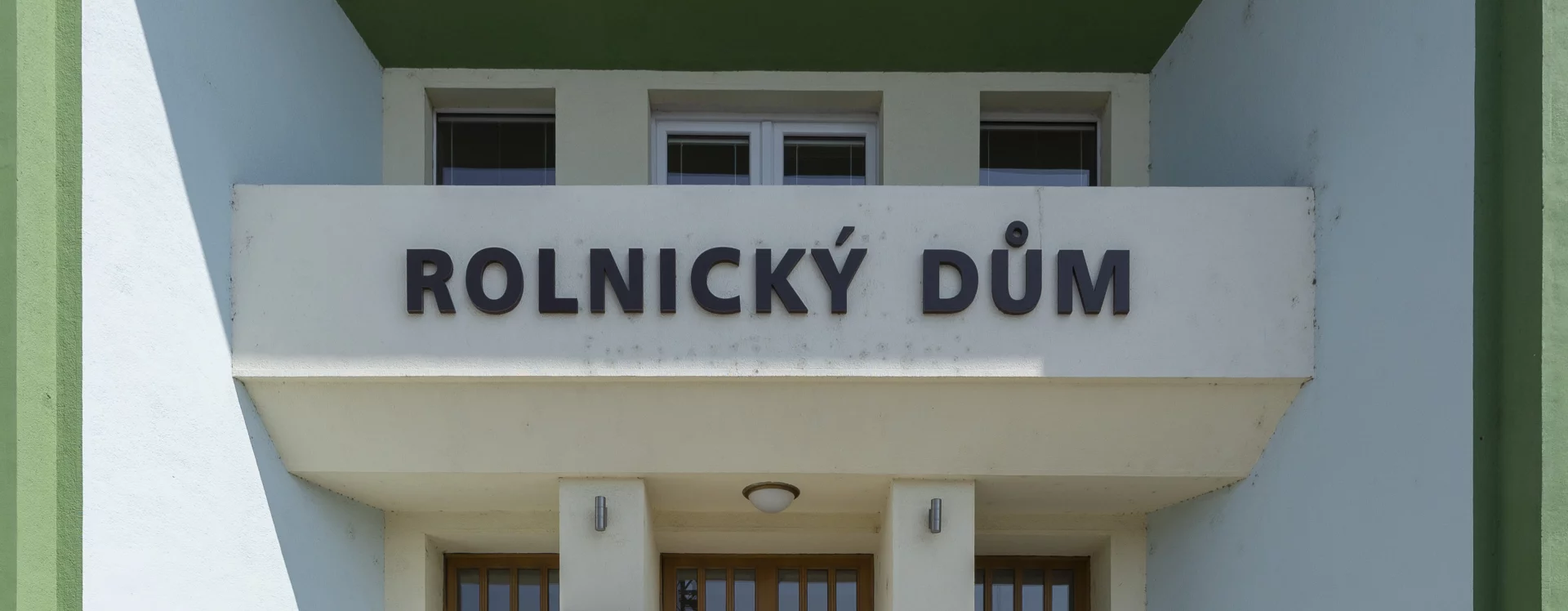
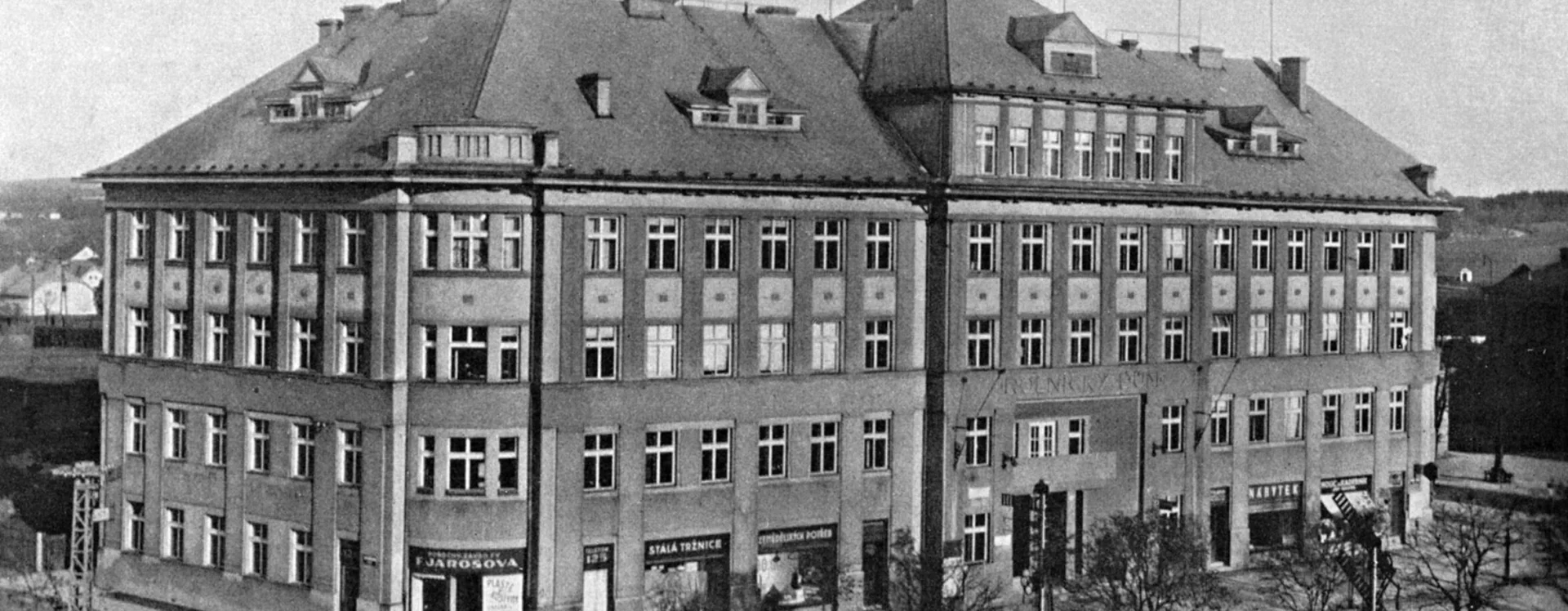
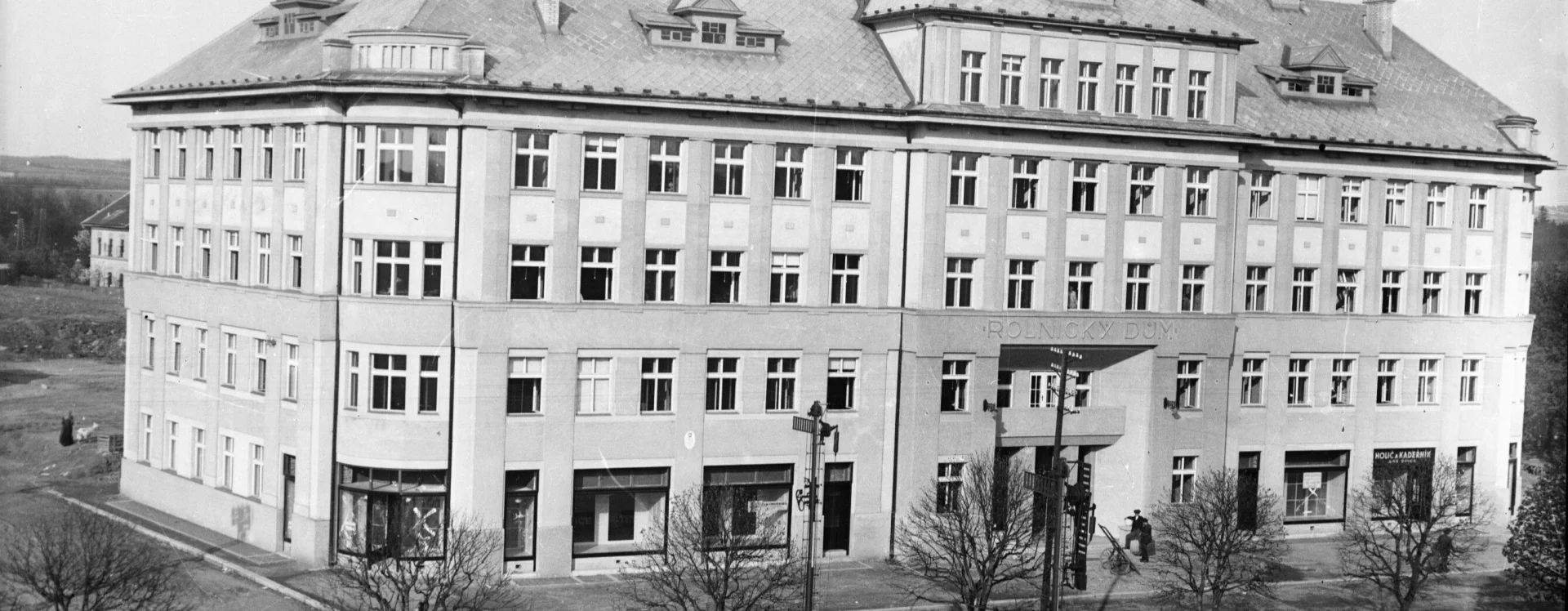


Německý Brod had long been regarded as an important regional centre of the potato-growing area of the Vysočina region, a status reflected also at an organizational level. It was chosen as the headquarters of the Central Union of Potato Growers, a trade organization of Czechoslovak mountain farmers and potato producers, which brought together an entire network of agricultural cooperative self-help enterprises, corporations, and individuals.
The organization was responsible for protecting and improving the quality of potato production, both for consumption and for industrial processing (particularly for alcohol and starch). Over time, it also took on the role of promoting its members’ interests—most notably in securing favourable sales conditions.
With the expansion of the association came the need for a new multifunctional administrative building. A strategically advantageous location was chosen near the railway station and close to the storage facilities. From the outset, the building’s intended use was clearly defined: “1) a section for offices to accommodate all agricultural corporations; 2) a right wing containing flats, possibly also a restaurant and guest rooms; 3) a left wing dedicated to cultural purposes, including a large hall, museum, and so forth.”
Work on the new two-storey building began on 23 June 1925. From the start, the investor planned that “a hotel would be added to the right wing the following year, and in due course another two-storey building to the left wing.” Shops were intended for the ground floor.
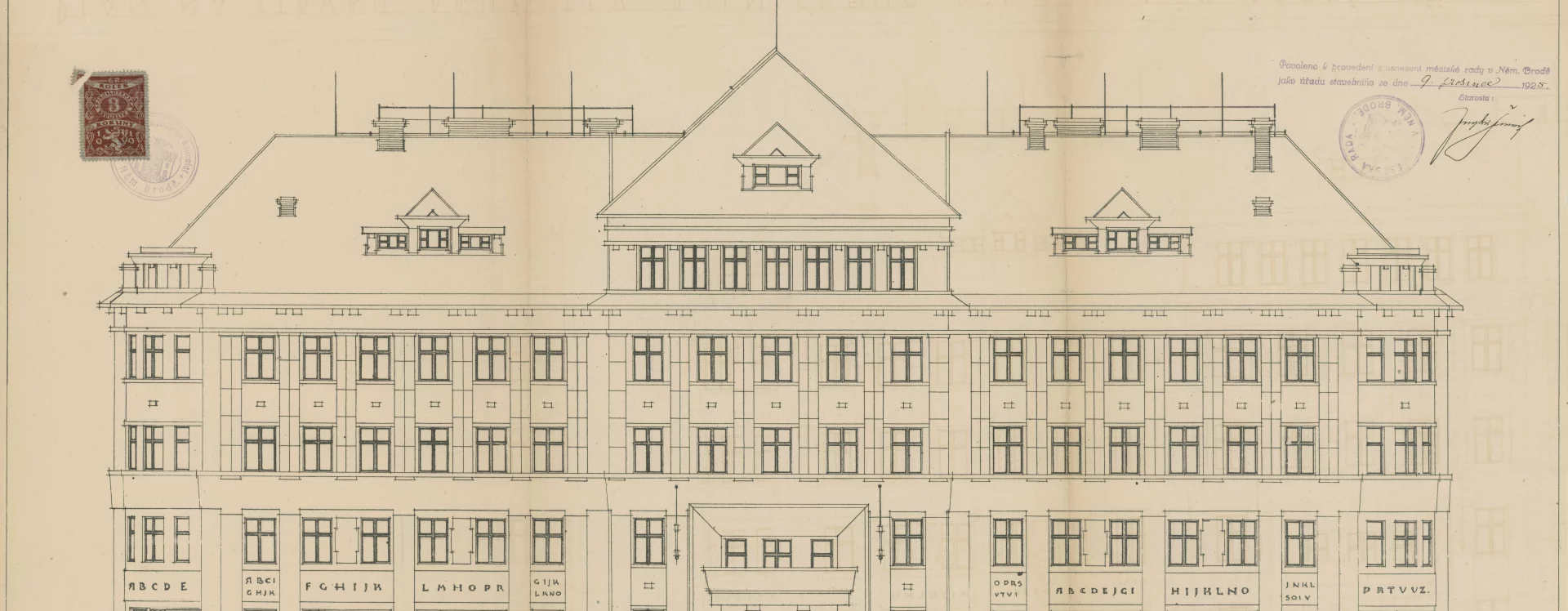
After only a few months (on 20 November 1925), the first round of revisions was approved: the addition of another storey, alterations to the layout and its intended use (not the last), and an expansion of the design. The building was newly provided with a basement to accommodate bath and steam facilities in the basement and part of the ground floor. The rest of the ground floor contained shops, as well as a canteen, a dairy shop, a telephone booth, and other amenities. The upper floors had more than fifty offices, a meeting room, four museum rooms, and several flats—the latter, unlike the rest of the building which had central heating, were heated by solid-fuel stoves.
The complexity and scale of these changes required entirely new plans, and the construction—designed by Prague architect Dr Hönich, a member of the Agricultural Council—was officially approved as completed on 8 March 1927.
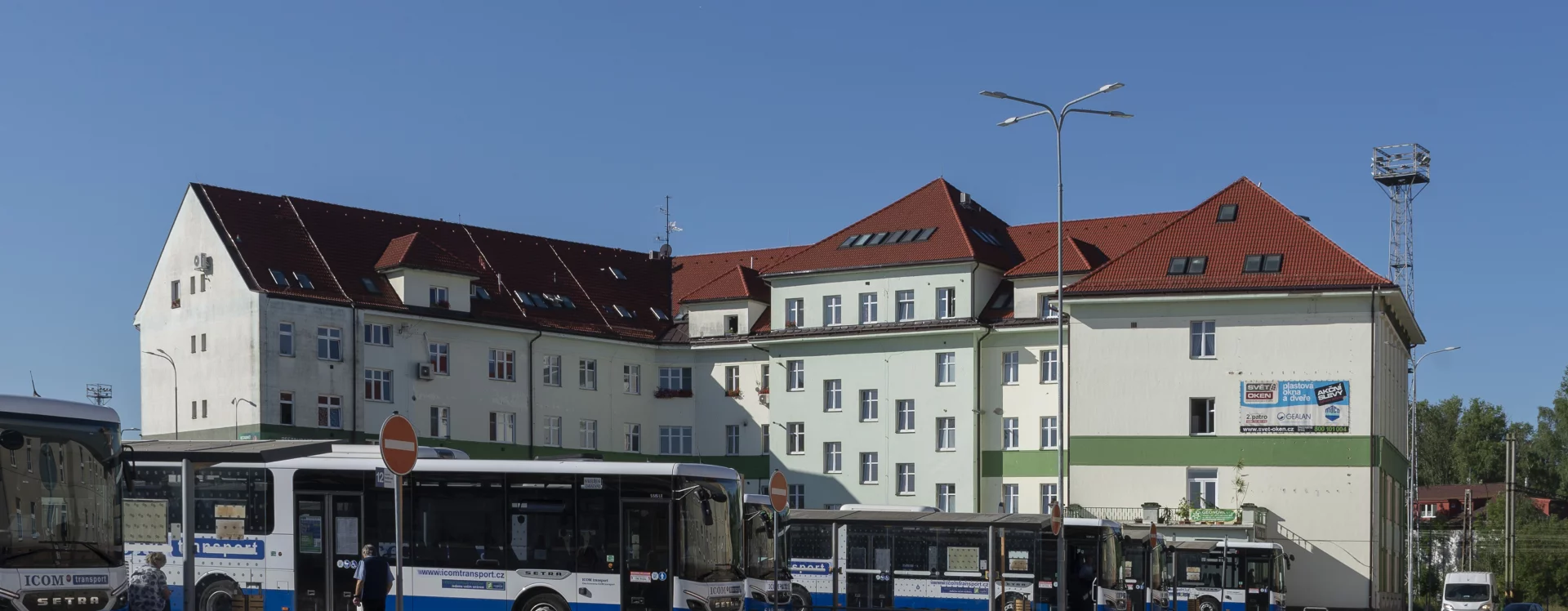
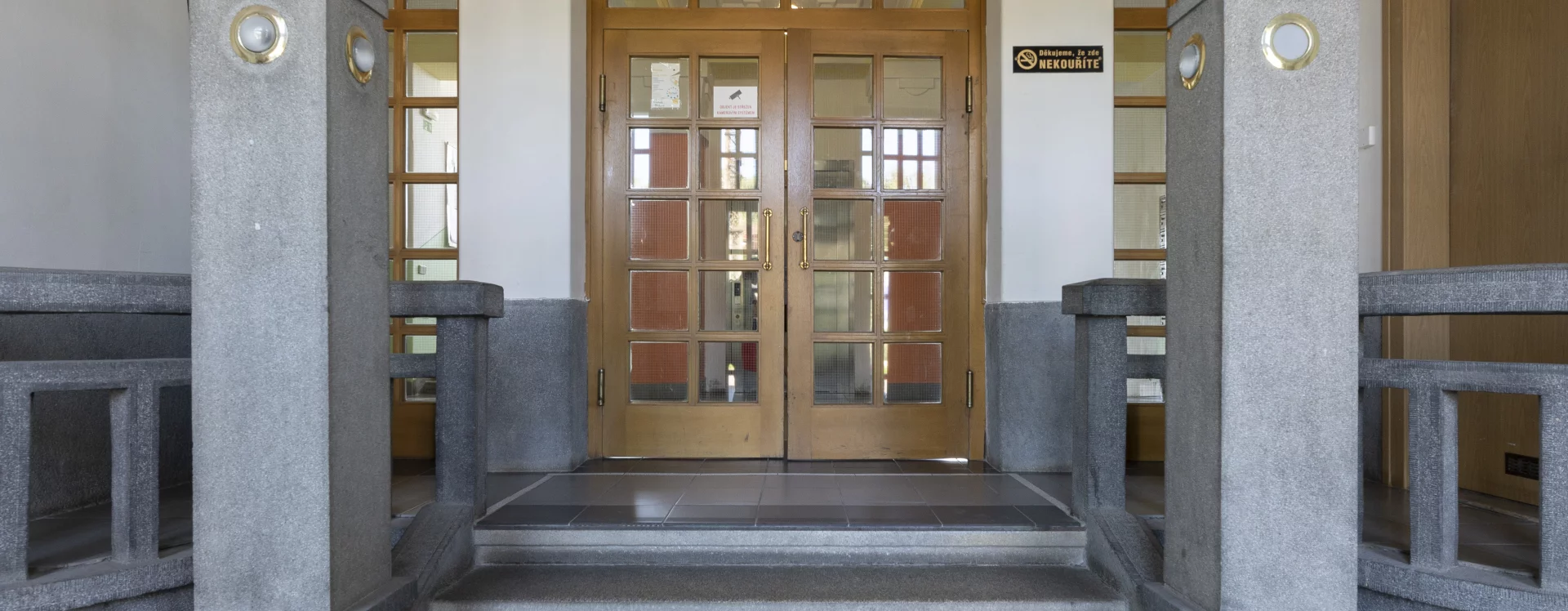
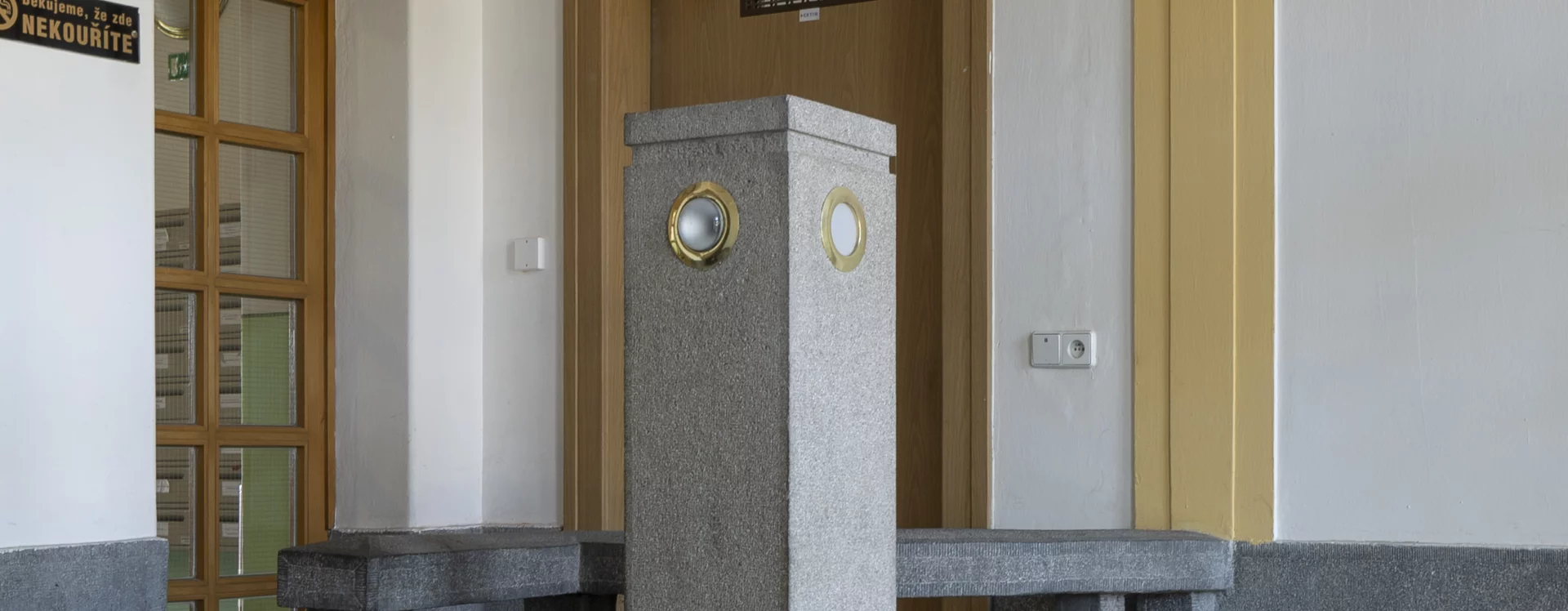
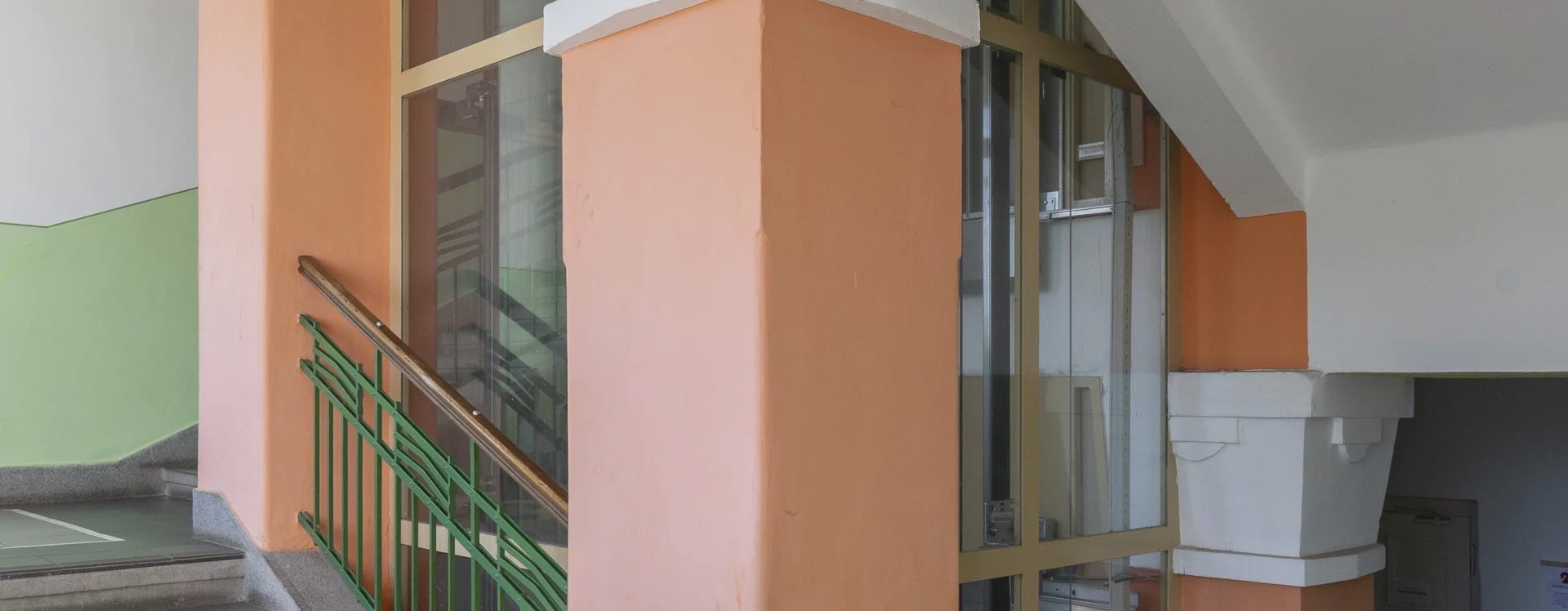
An extensive, dignified Neo-Classical building with elements of late Cubism was constructed—one that has retained its timeless elegance and refinement to this day. It has undergone only minimal alteration; it is to be regretted, however, that it has remained ‘isolated’, as the two planned wings were never completed.
Dana Schlaichertová, 2025
Literature
Antonín Bartůšek. Průvodce po Německém Brodě a okolí. Německý Brod, Klub československých turistů, 1933.
Dana Schlaichertová. Architektura a urbanismus Havlíčkova Brodu 1848-1938. Olomouc, Katedra teorie a dějin umění FF UP, 1998, Diplomová práce. p. 80-82.
Dana Schlaichertová. Družstevní rolnický dům v Německém Brodě. In: Aleš Veselý (ed.). Příběhy brodských domů. Havlíčkův Brod, Galerie výtvarného umění v Havlíčkově Brodě, 2016, p. 126-129. ISBN 978-80-904726-9-3.
Sources
Městský úřad Havlíčkův Brod, archiv Stavebního úřadu. sv. č. p. 397.
Státní okresní archiv Havlíčkův Brod, fond Sbírka map a plánů. p. X/40.
Jiří Kuba, Tomáš Lána. Ústřední svaz pěstitelů zemáků - krajský odbor Havlíčkův Brod (1918-1943/1947), inventář, archivní pomůcka. Státní oblastní archiv v Zámrsku, 2015, roč. 8949.