
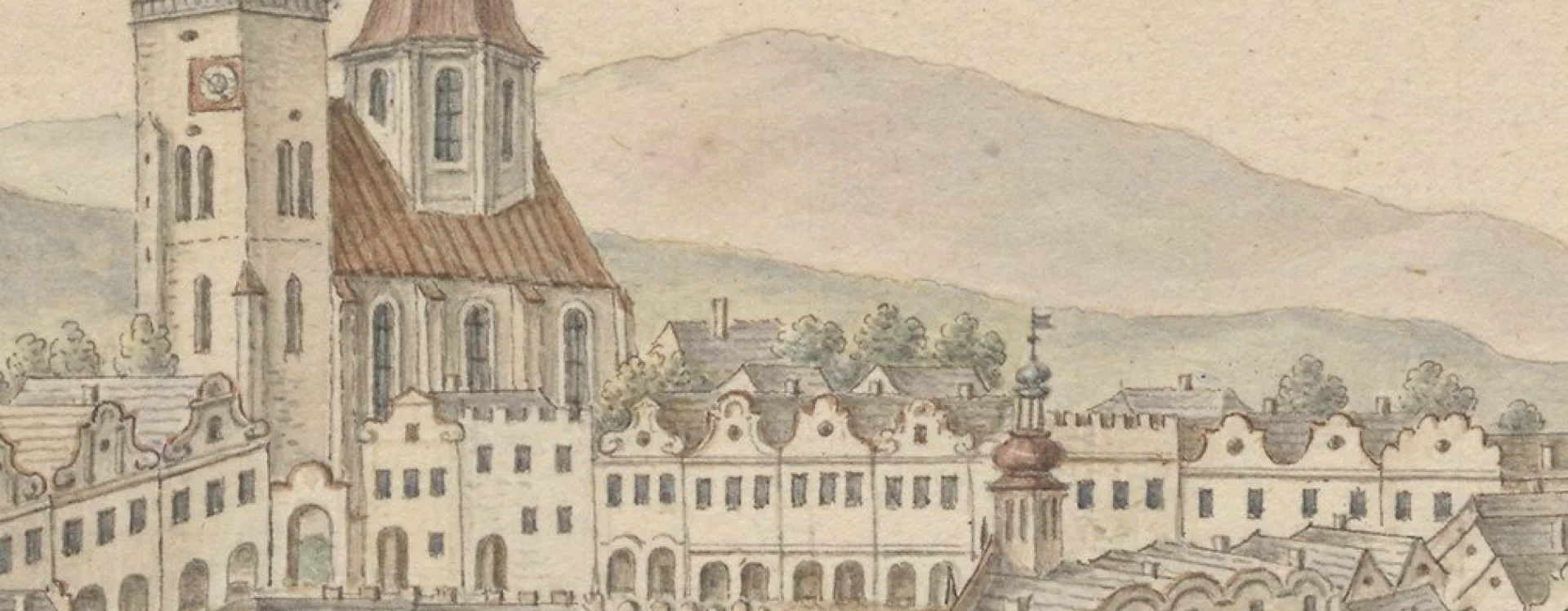
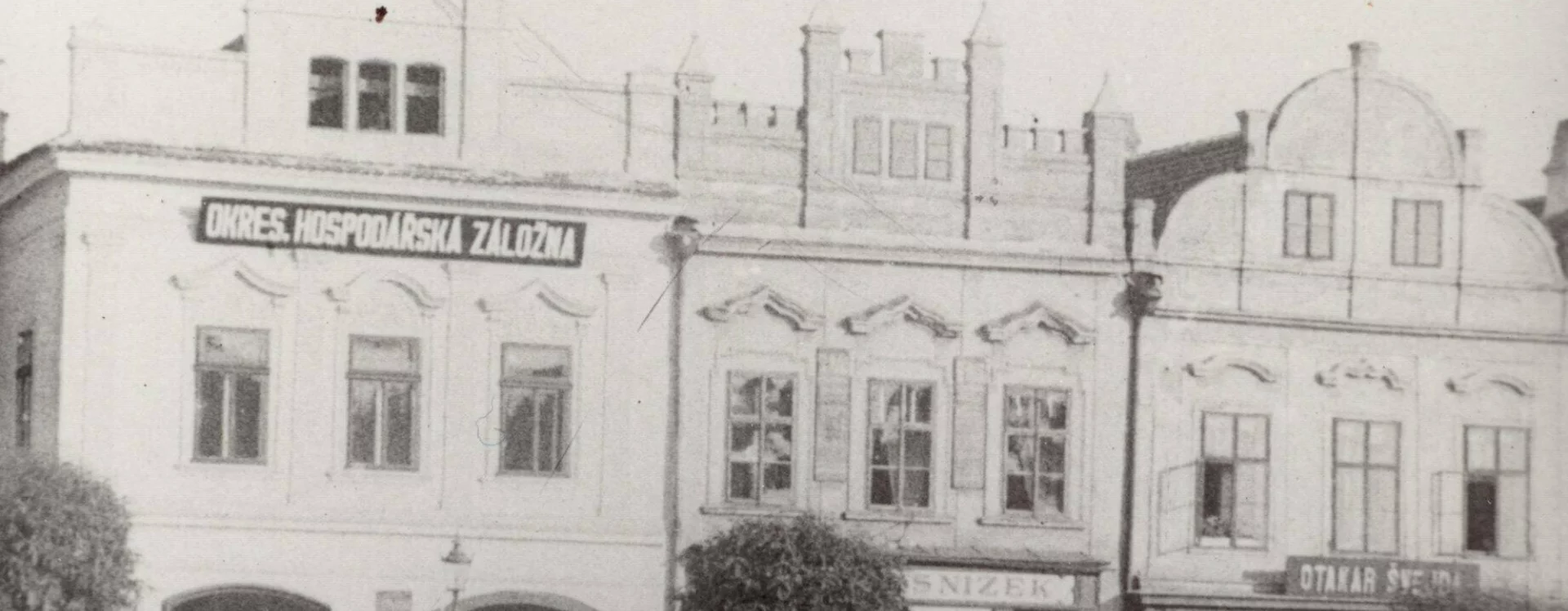

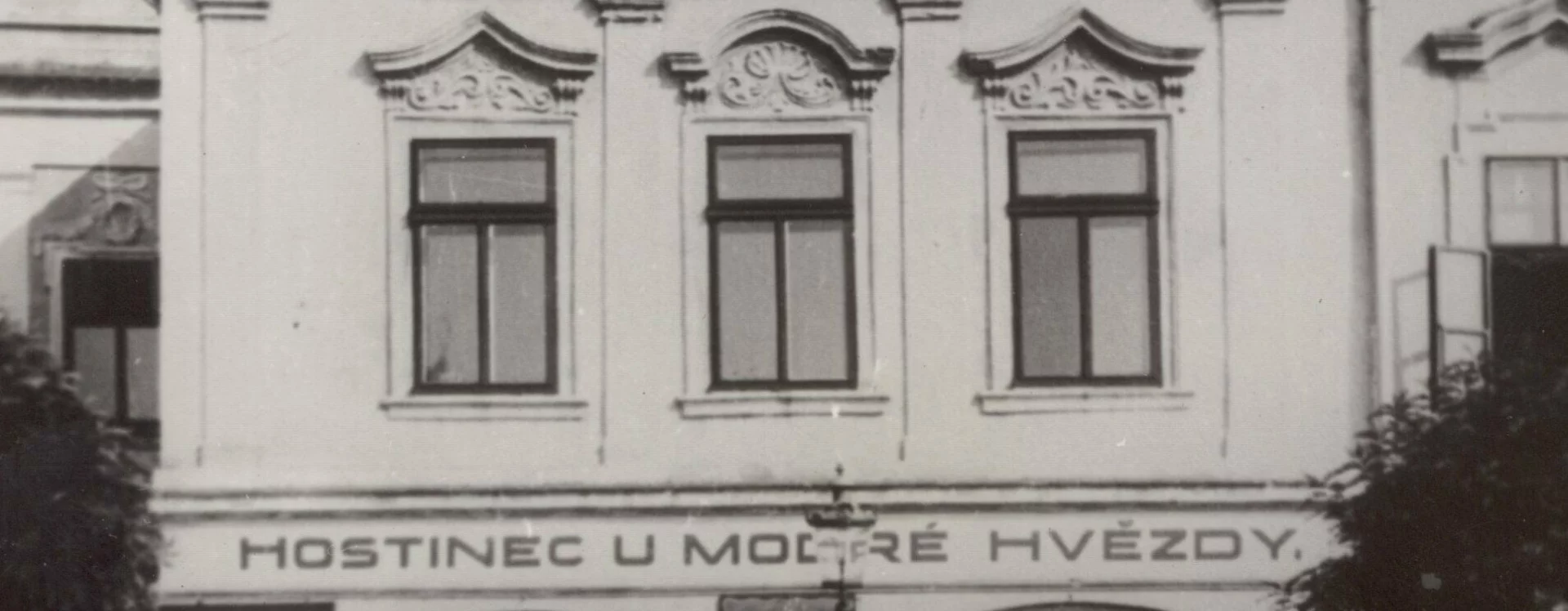
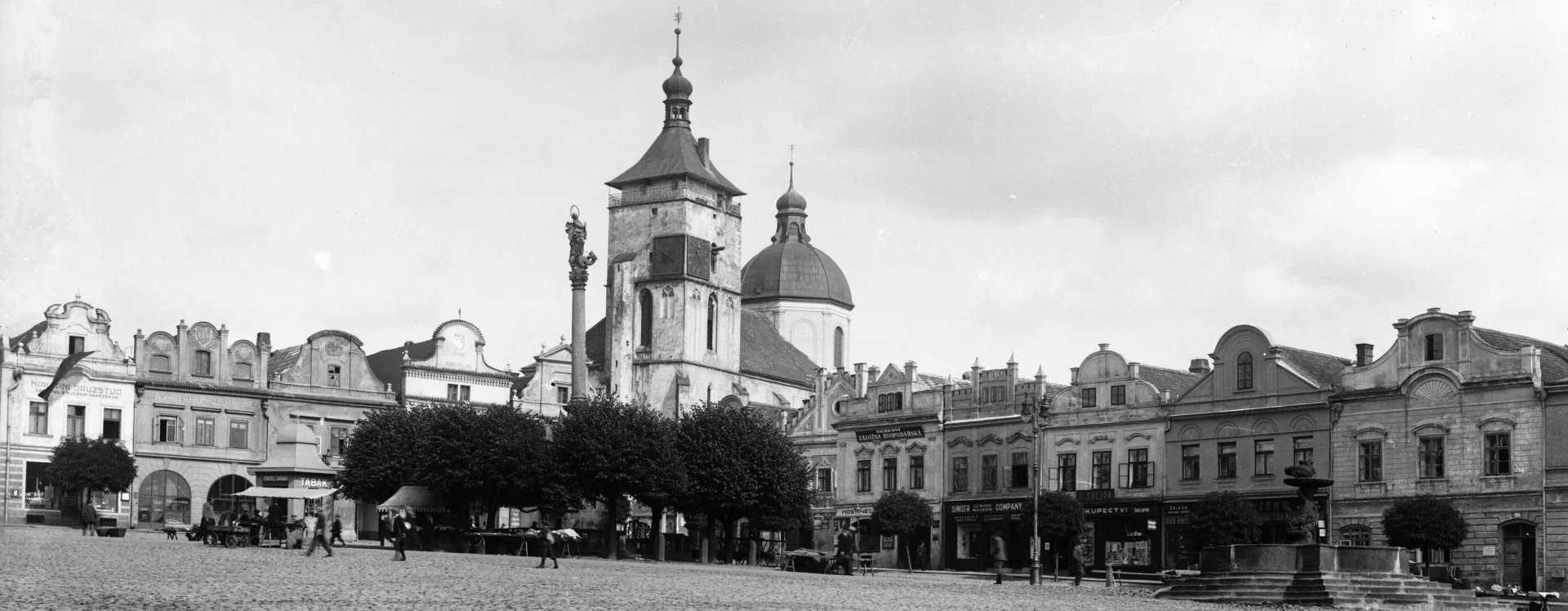
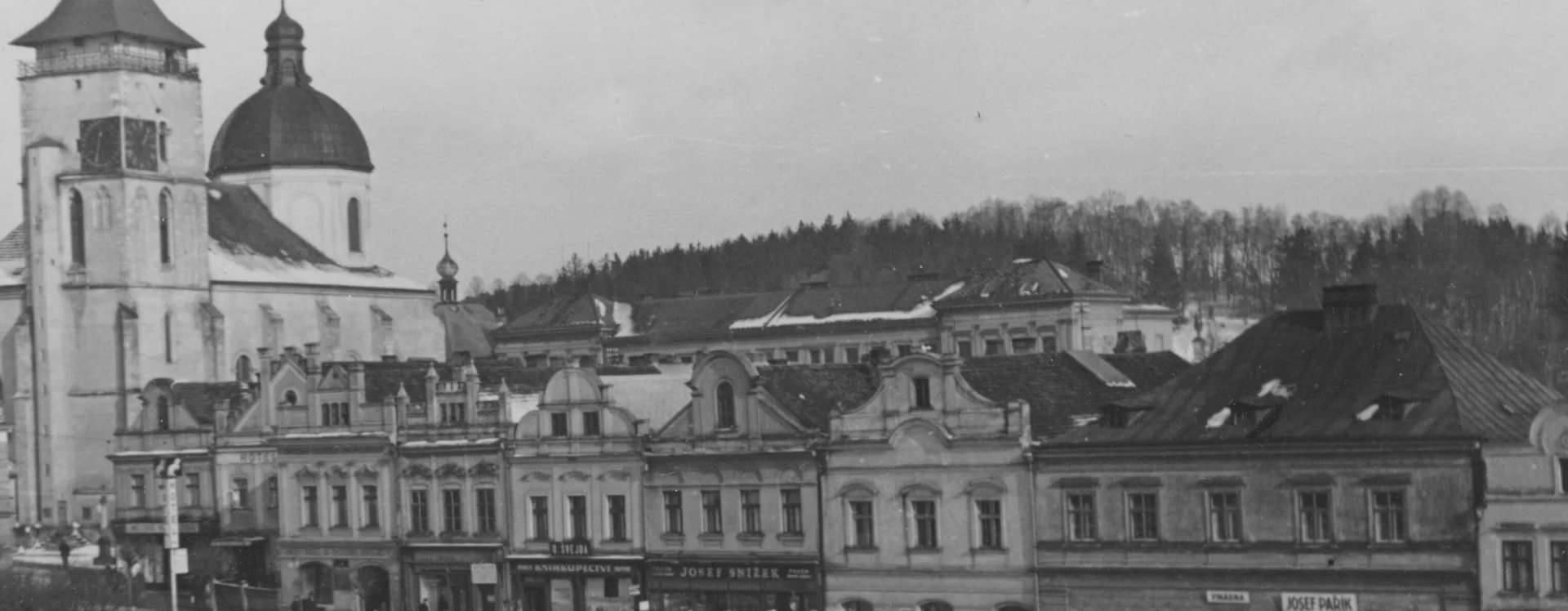

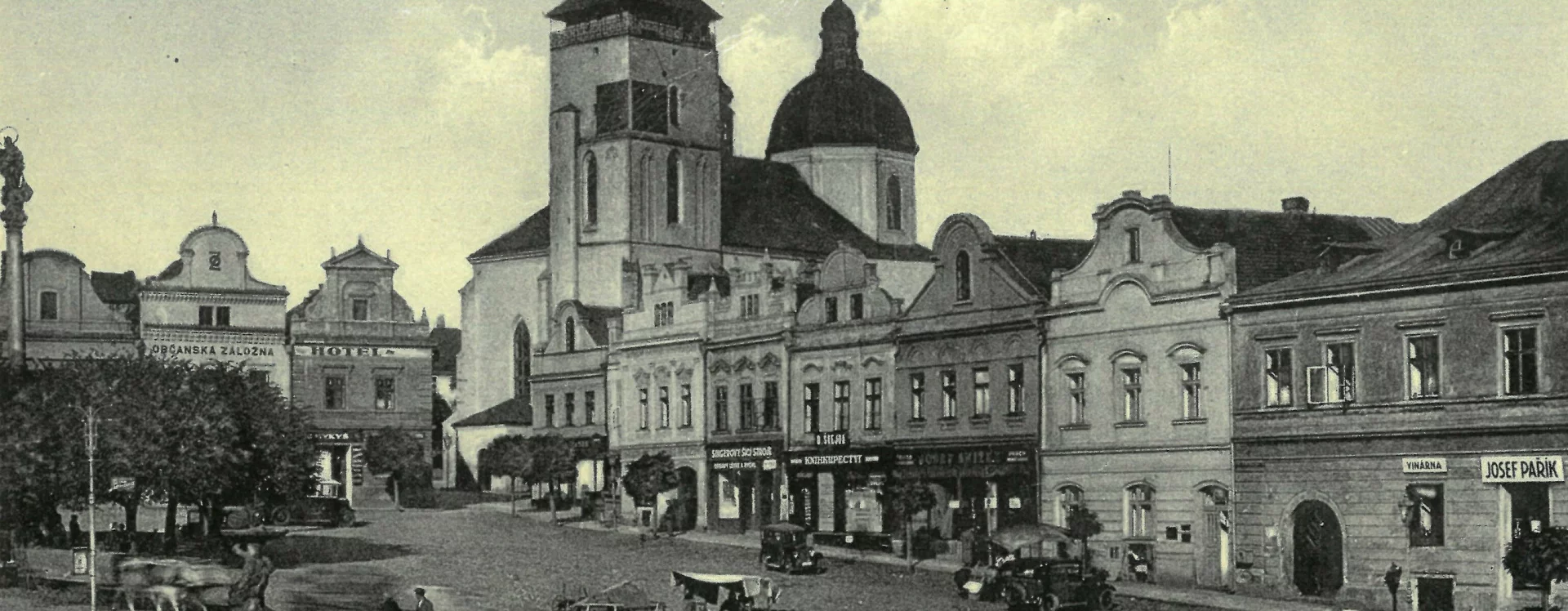
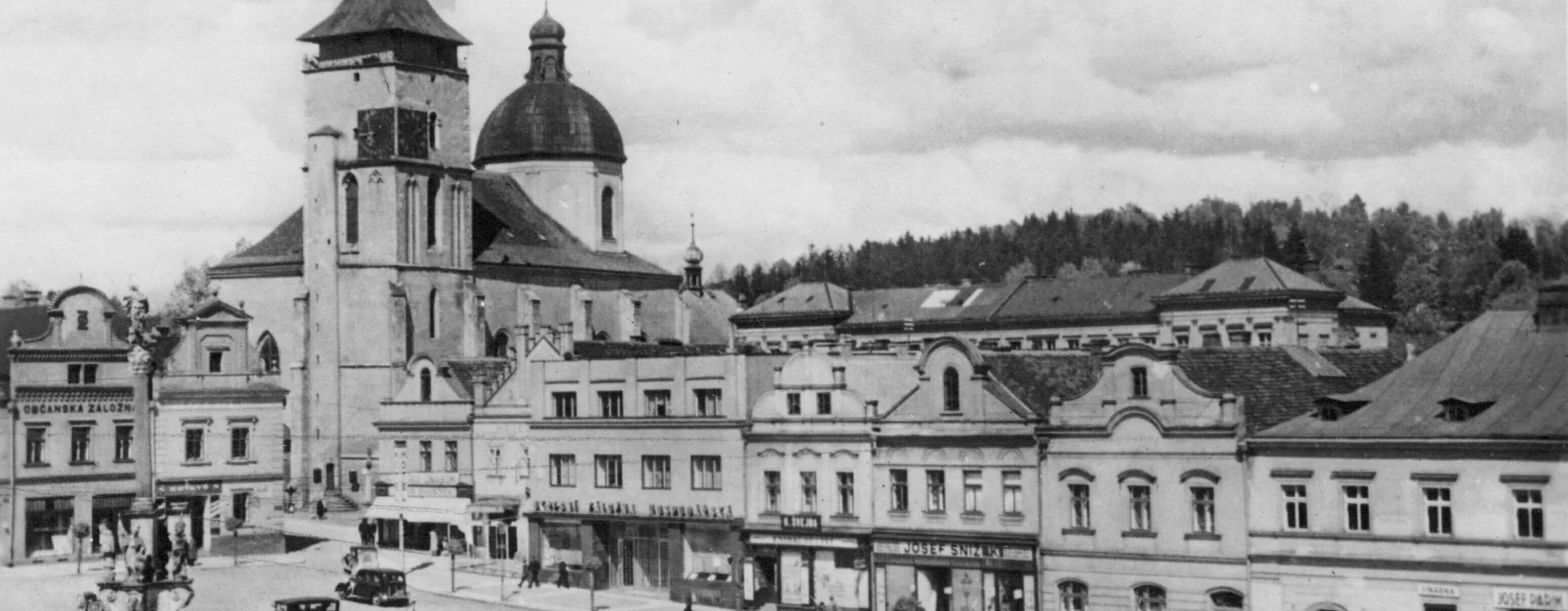
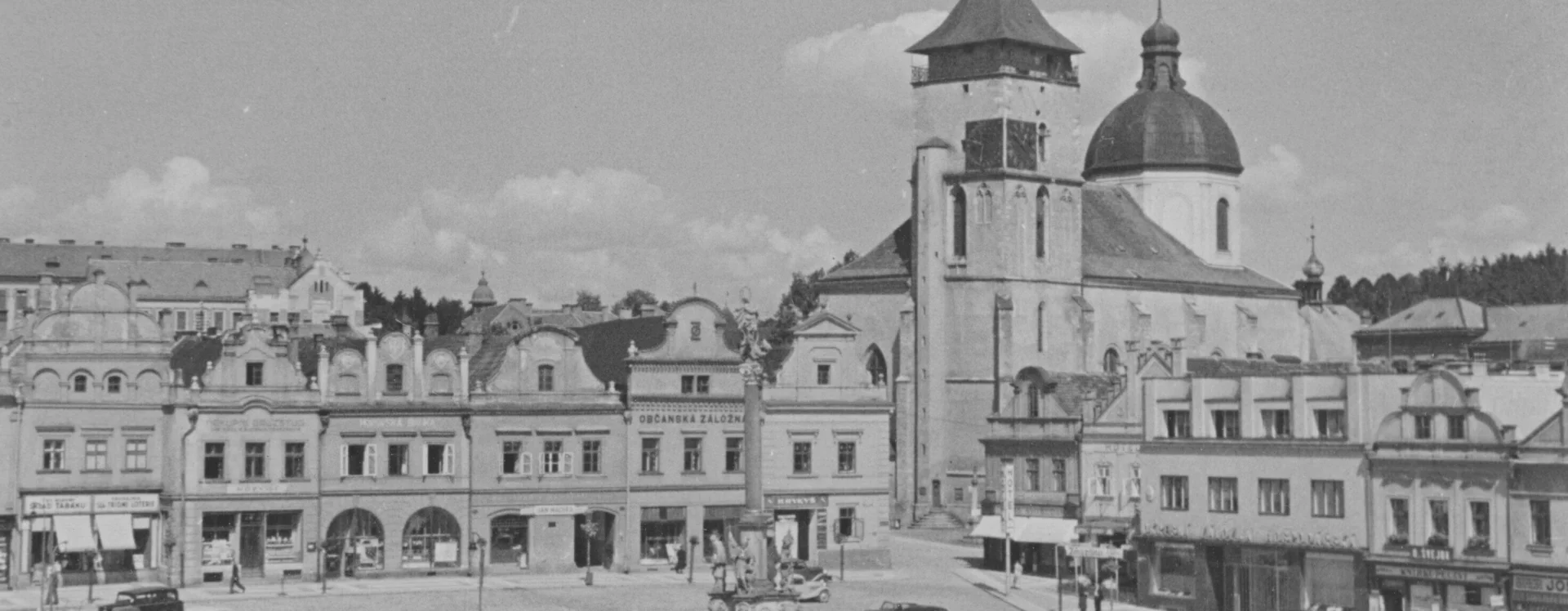

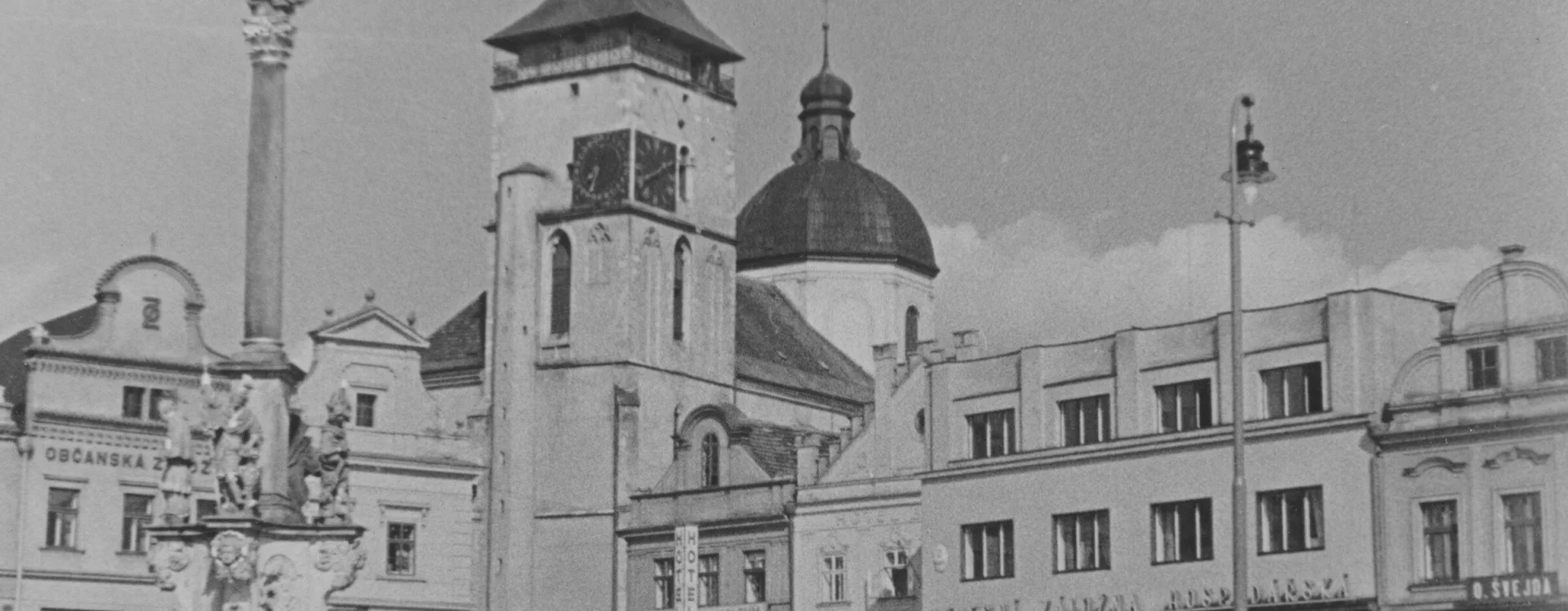
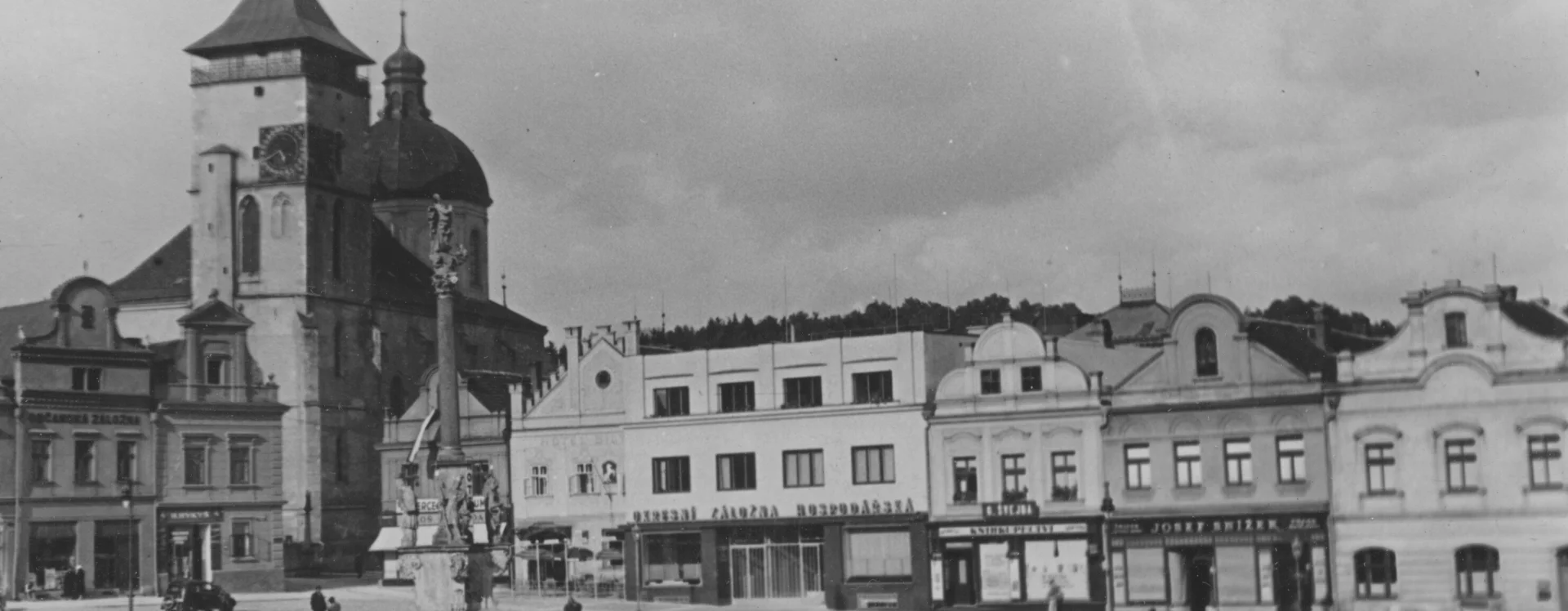
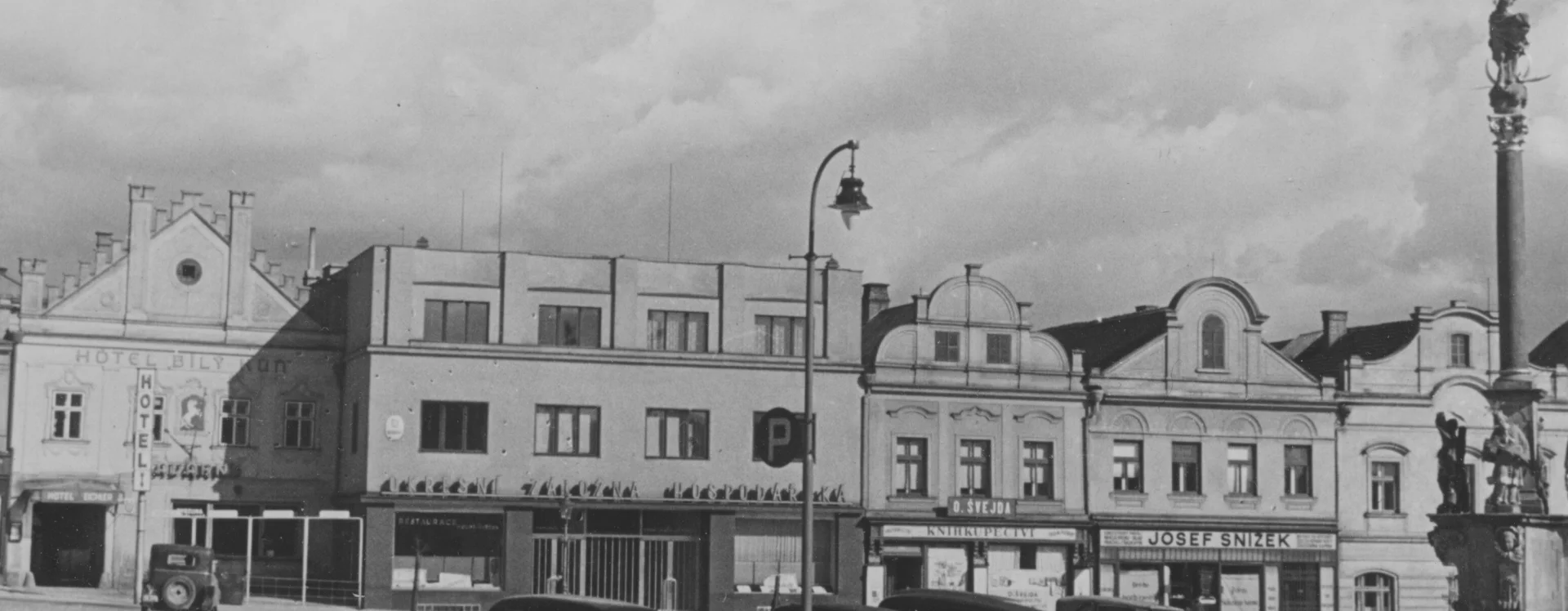
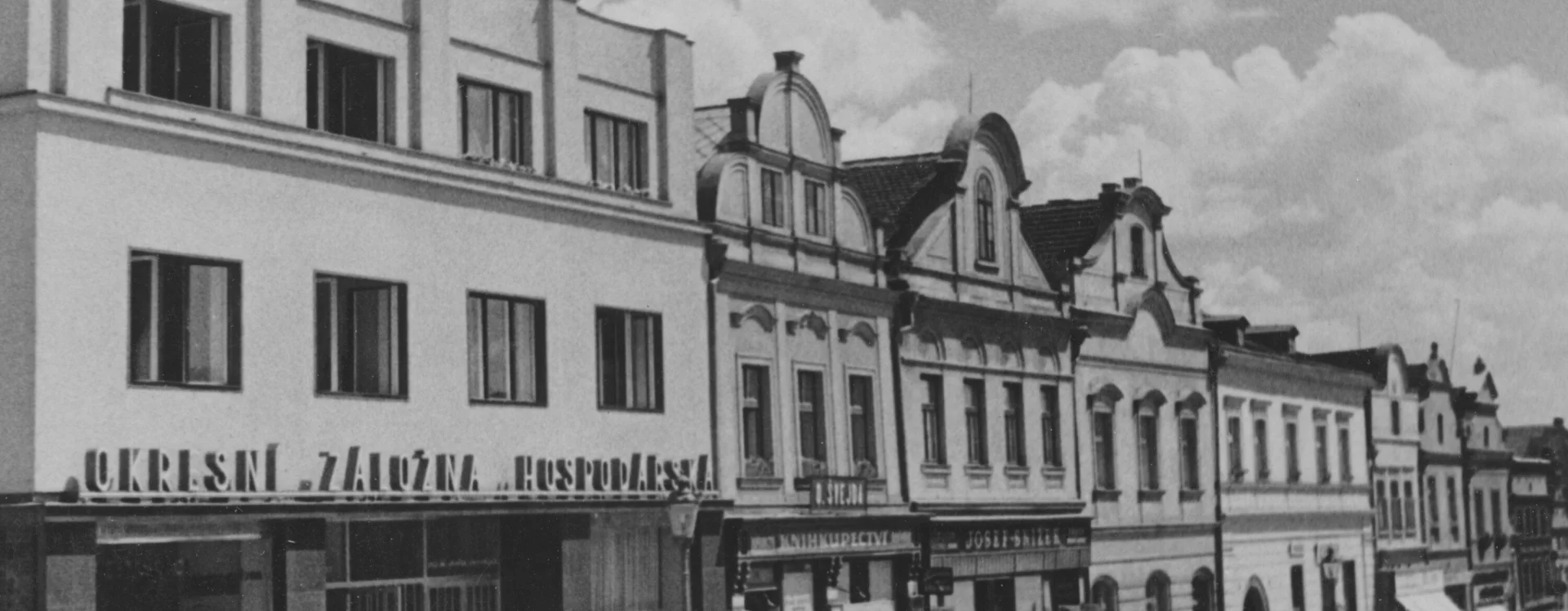
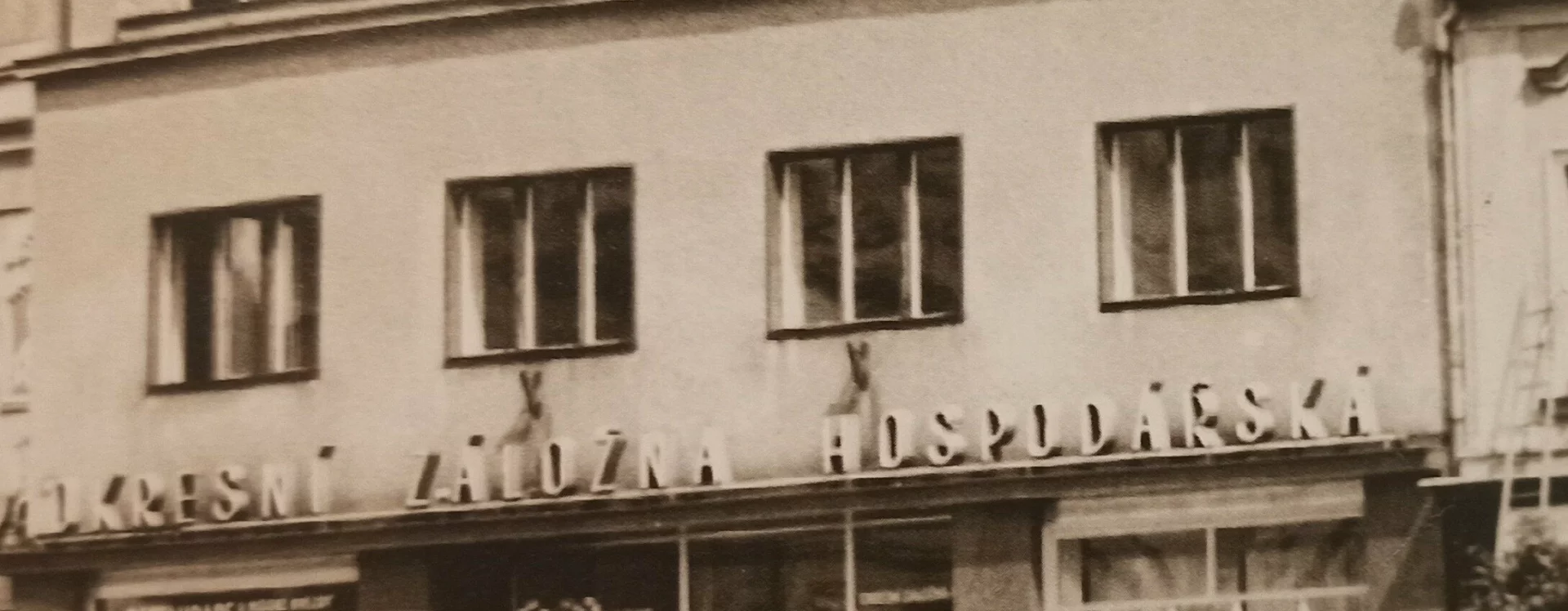

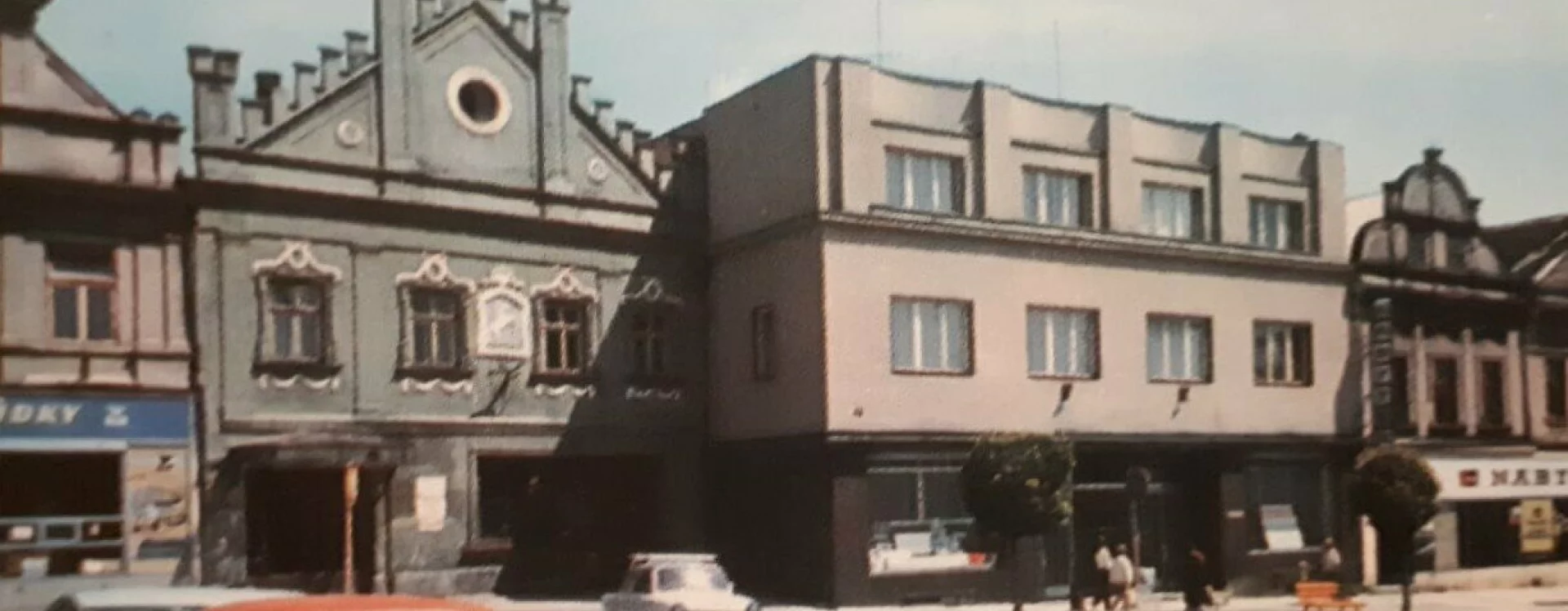
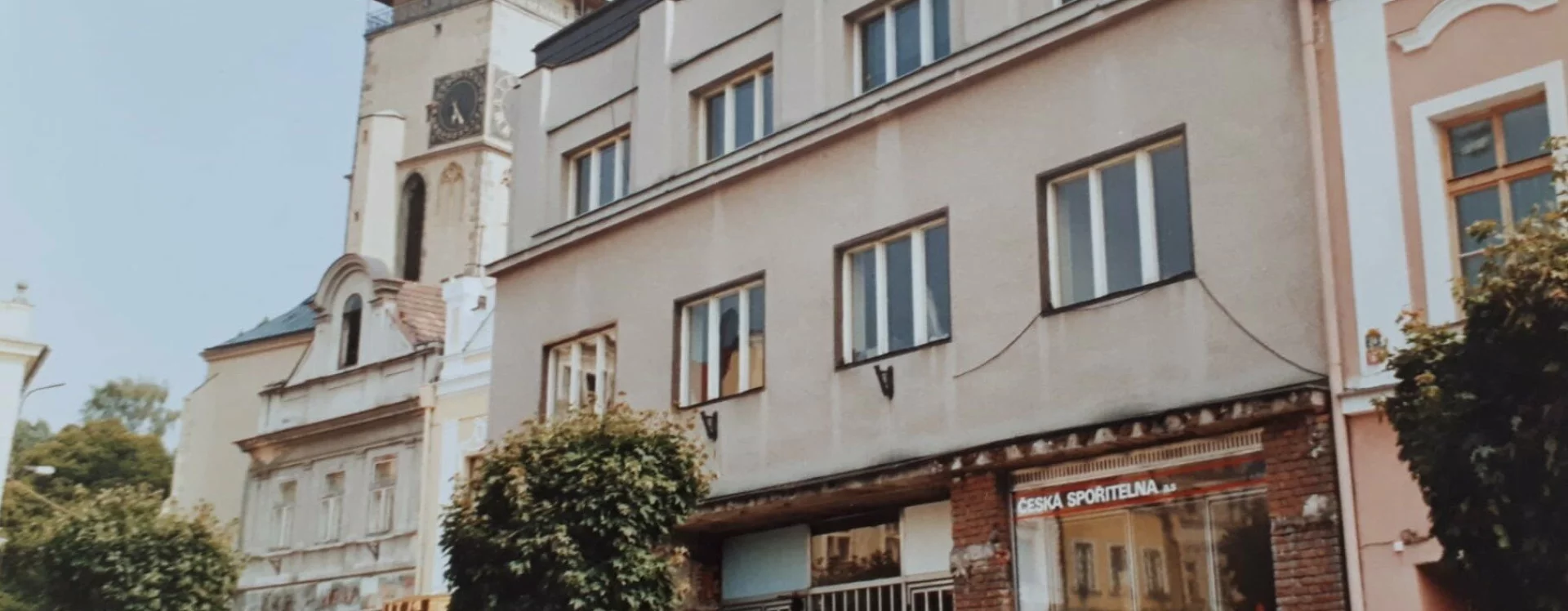
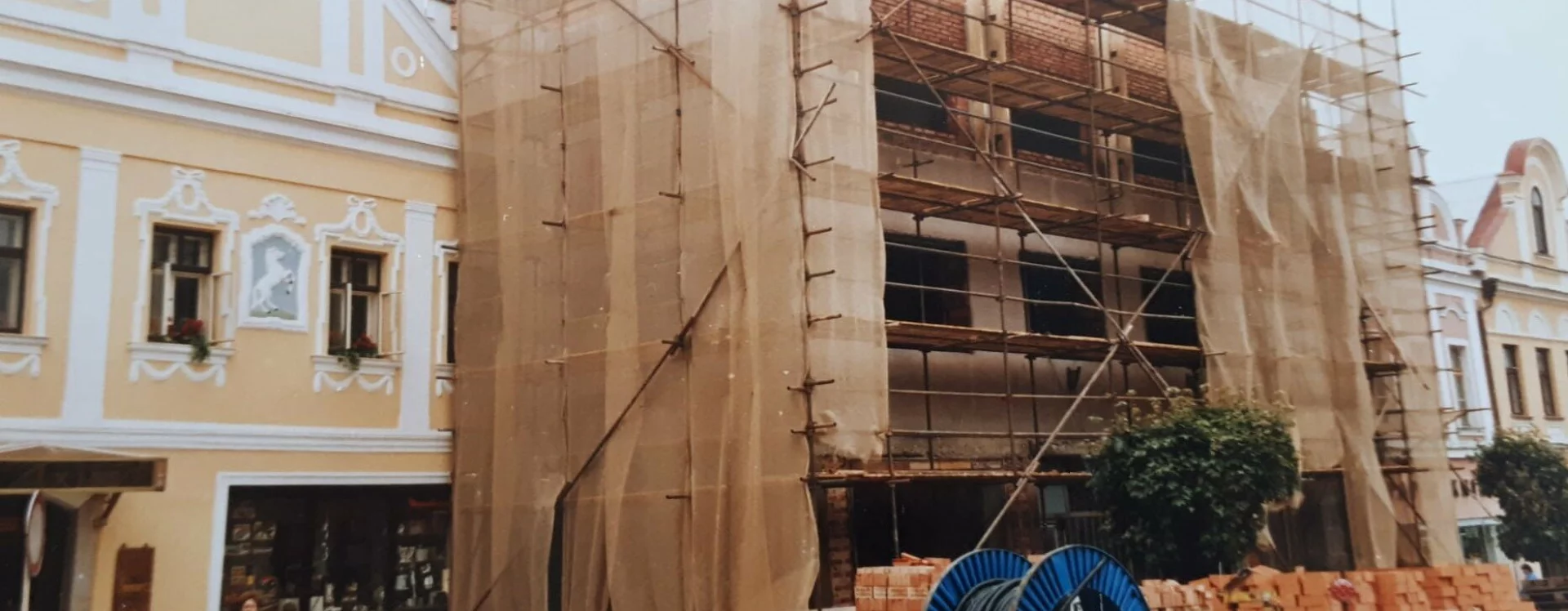

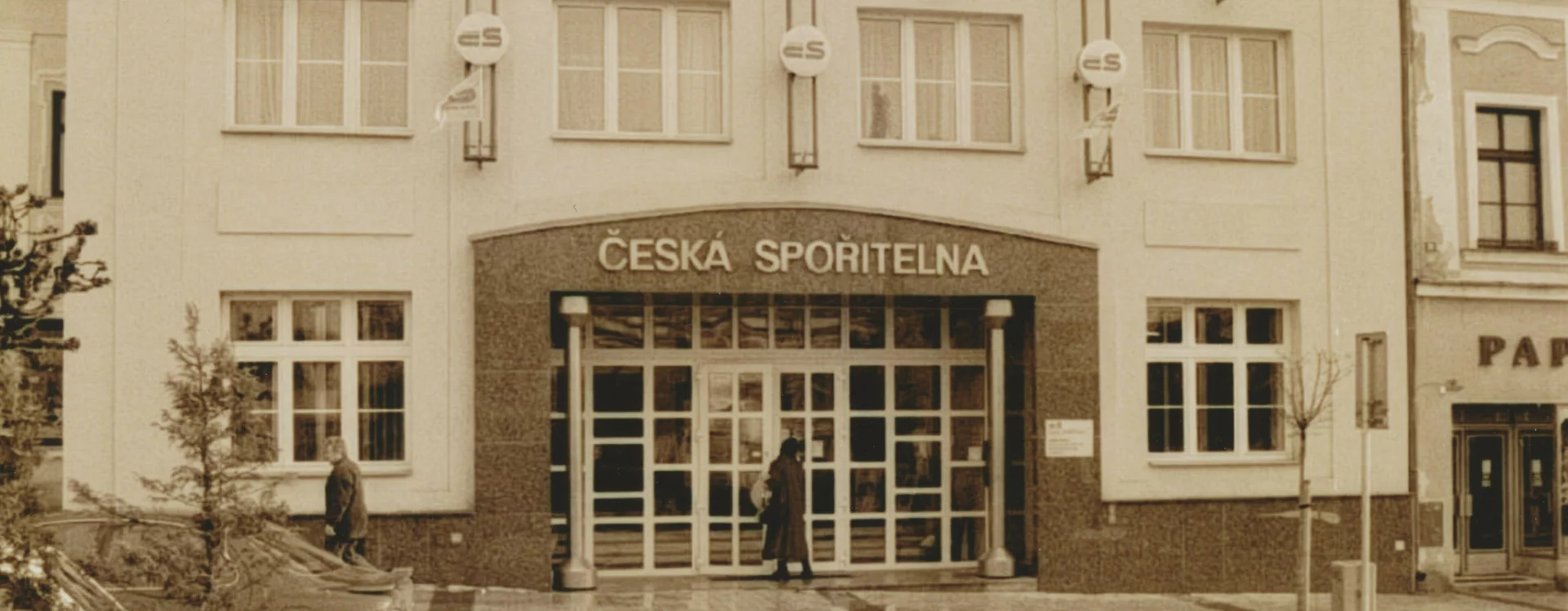
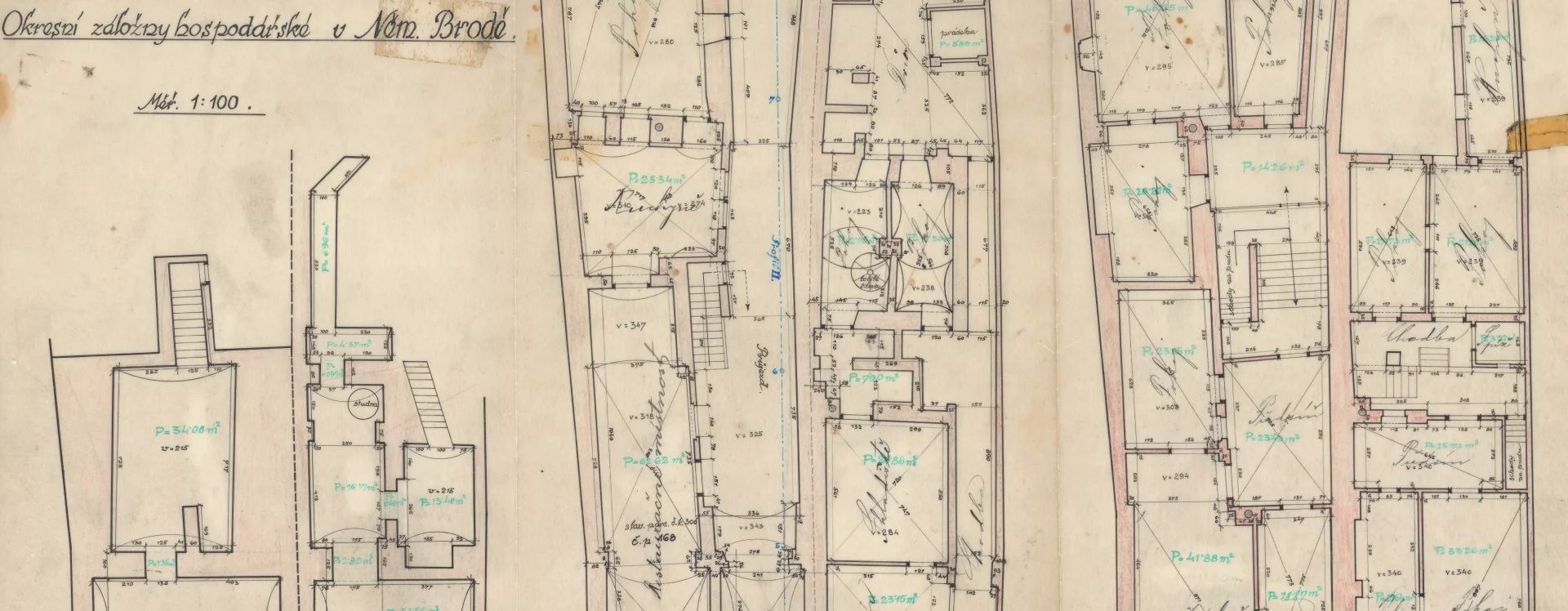

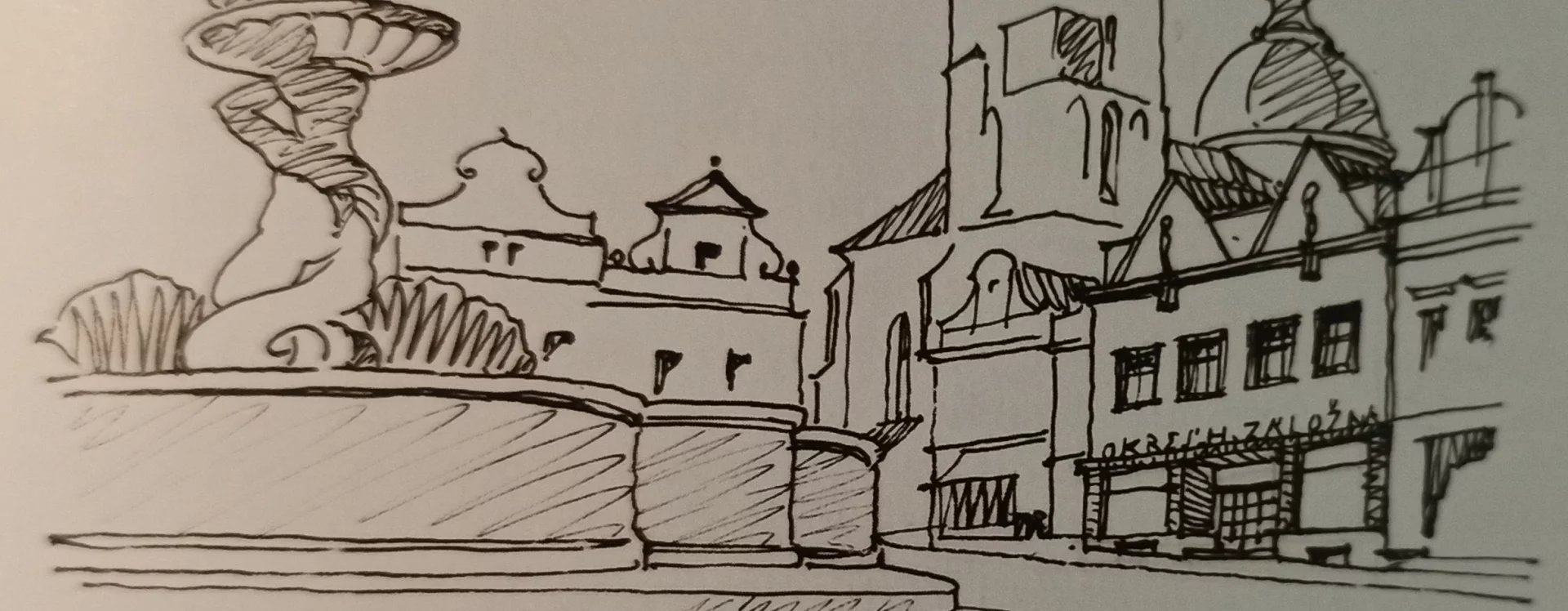

Even before the First World War, the District Agricultural Savings Bank had managed to establish itself at a prestigious address—right on the main square of Německý Brod. It became the owner of the former burgher house U Modré hvězdy (No. 168) on the north-eastern corner of the square, placing it in close proximity to its main local rival, the Municipal Savings Bank. In the tranquil small-town atmosphere, the bank operated from this historic building until the early 1930s.
Change came when, despite objections from the Heritage Office and opposition from the wider public, its main competitor, supported by the council, successfully pushed through the construction of the first modern building on the square: the new Municipal Savings Bank (1933) (HB-93).
It was in this climate that only a year after the completion of the Municipal Savings Bank, the Agricultural Savings Bank purchased the neighbouring houses and subsequently officially announced its decision to construct a new building on the site of two heritage-protected properties.
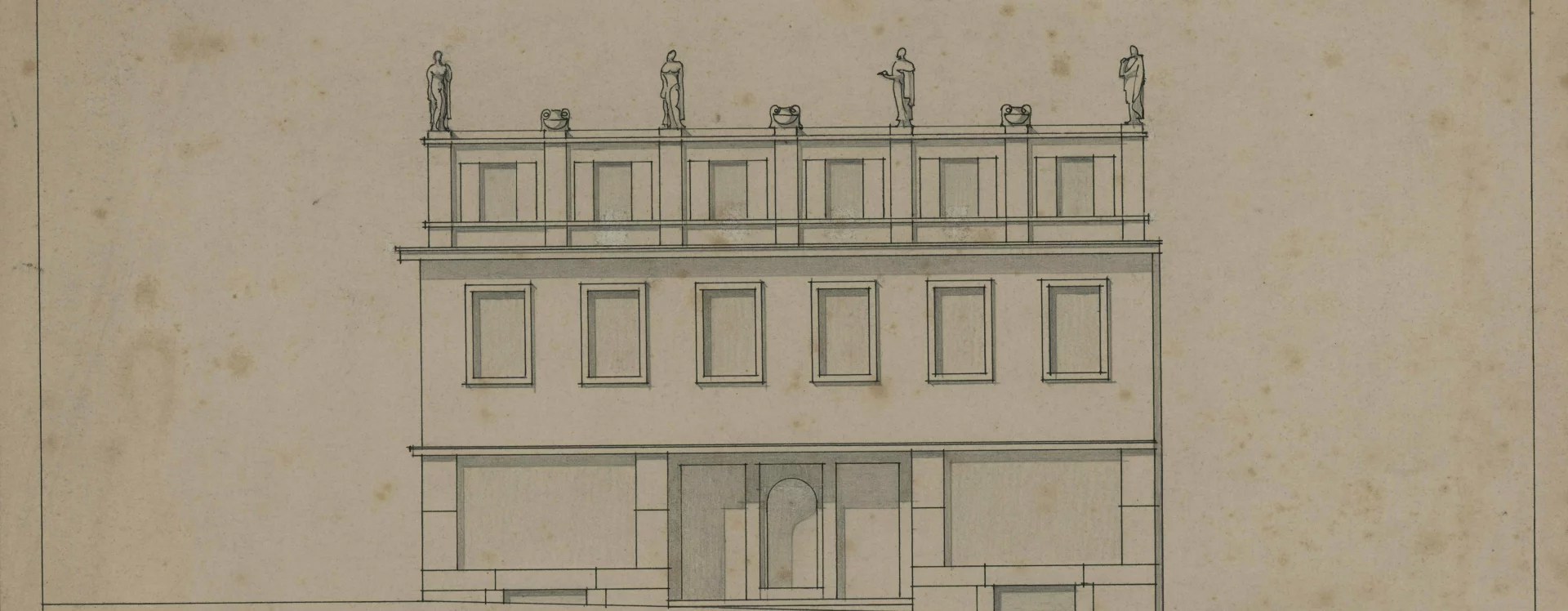
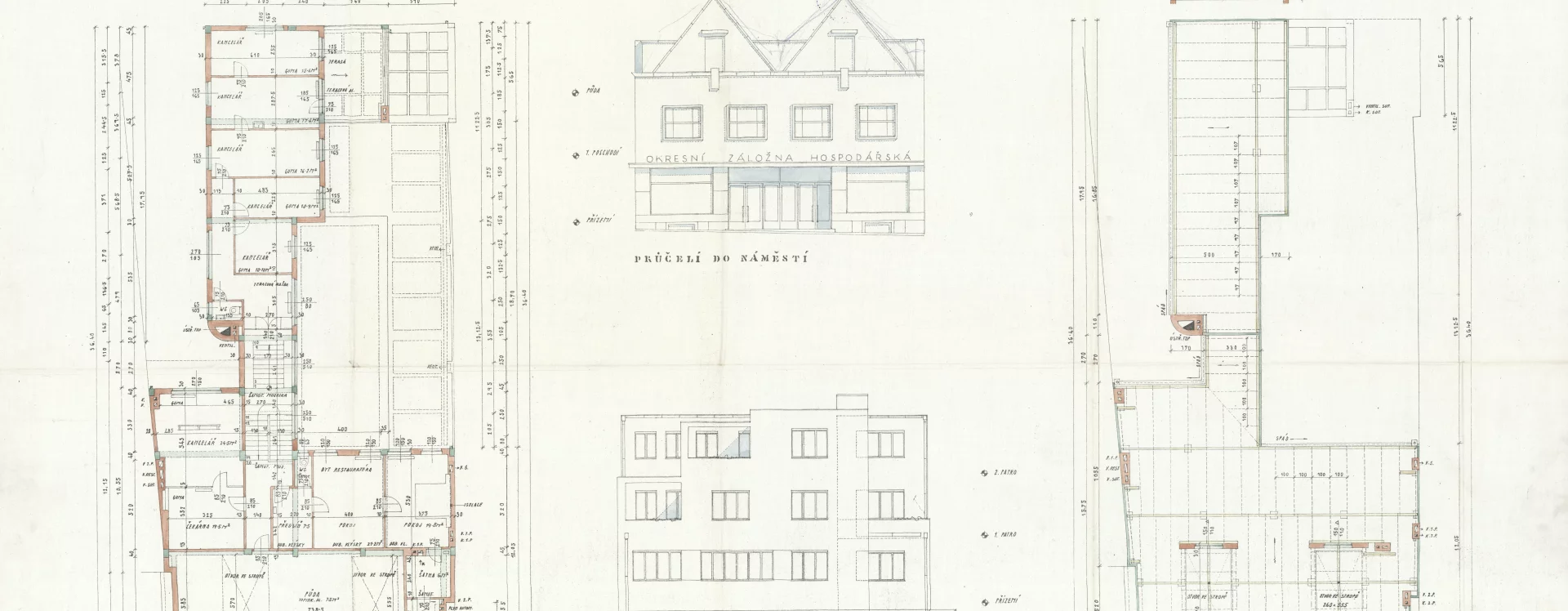
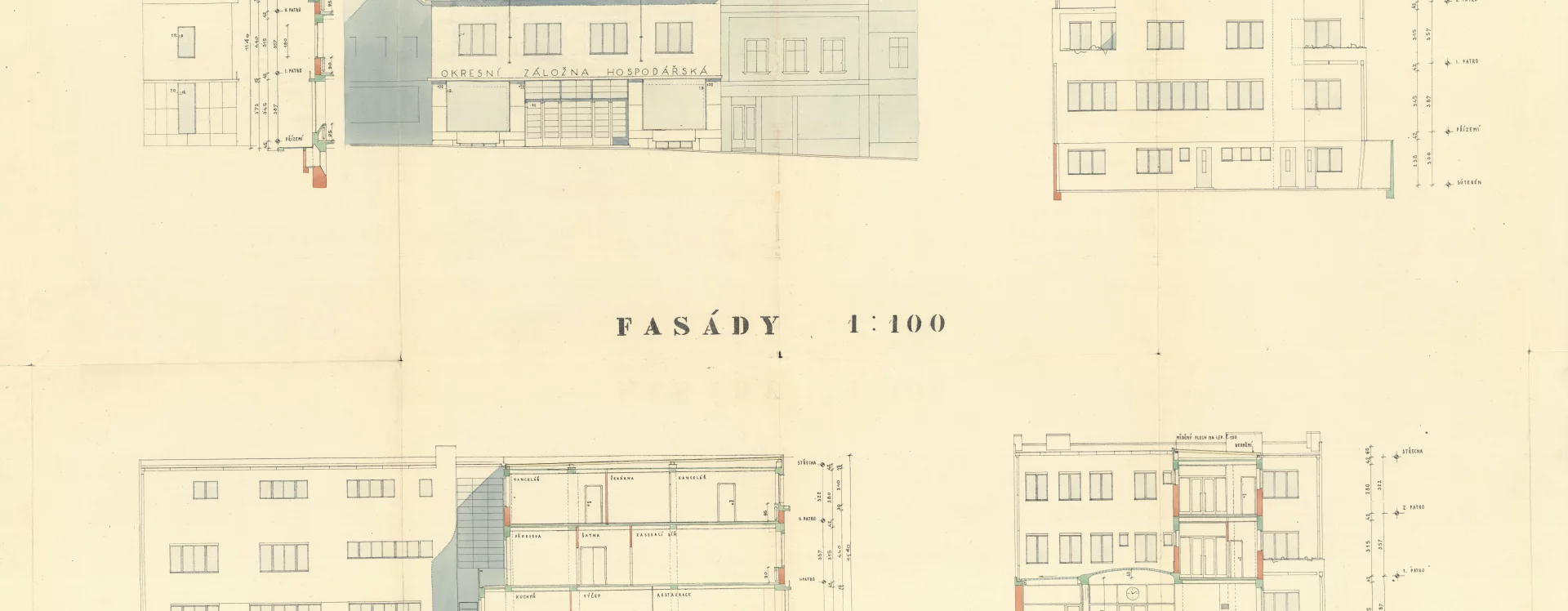
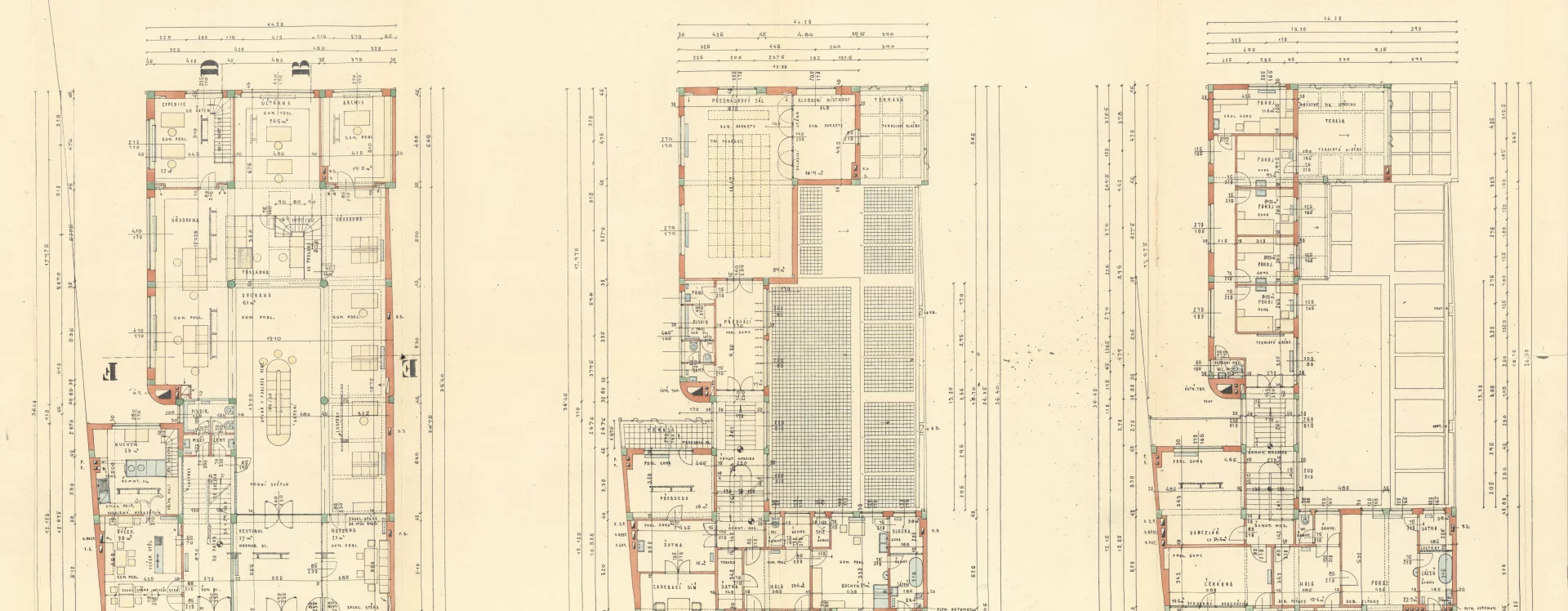
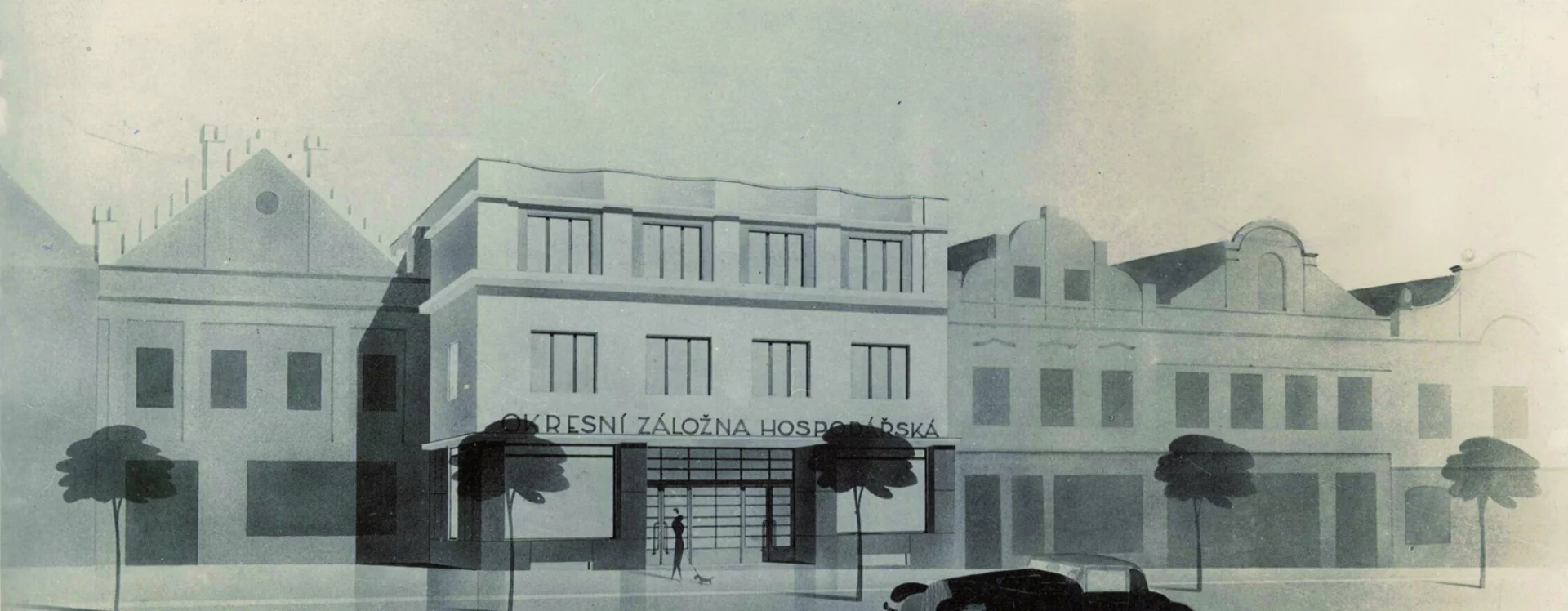
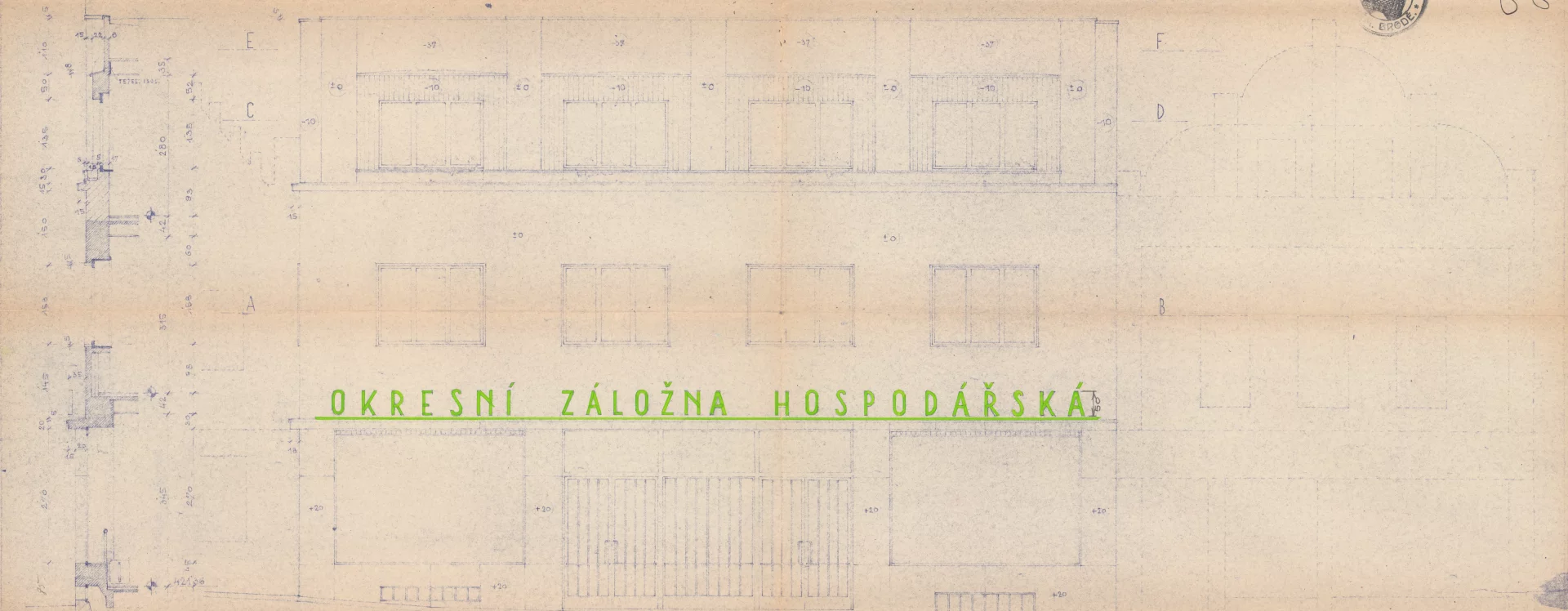
Plans for a two-storey multifunctional building with a modern, smooth facade were submitted in April 1934 by the established Prague architects and ‘savings bank specialists’, František Stalmach (1903–1985) and Jan Svoboda (1903–1985). The proposal immediately provoked near-universal opposition—this time not only from local patriots and the State Heritage Office in its advisory role, but also from the town council as the executive authority, which formally rejected the project.
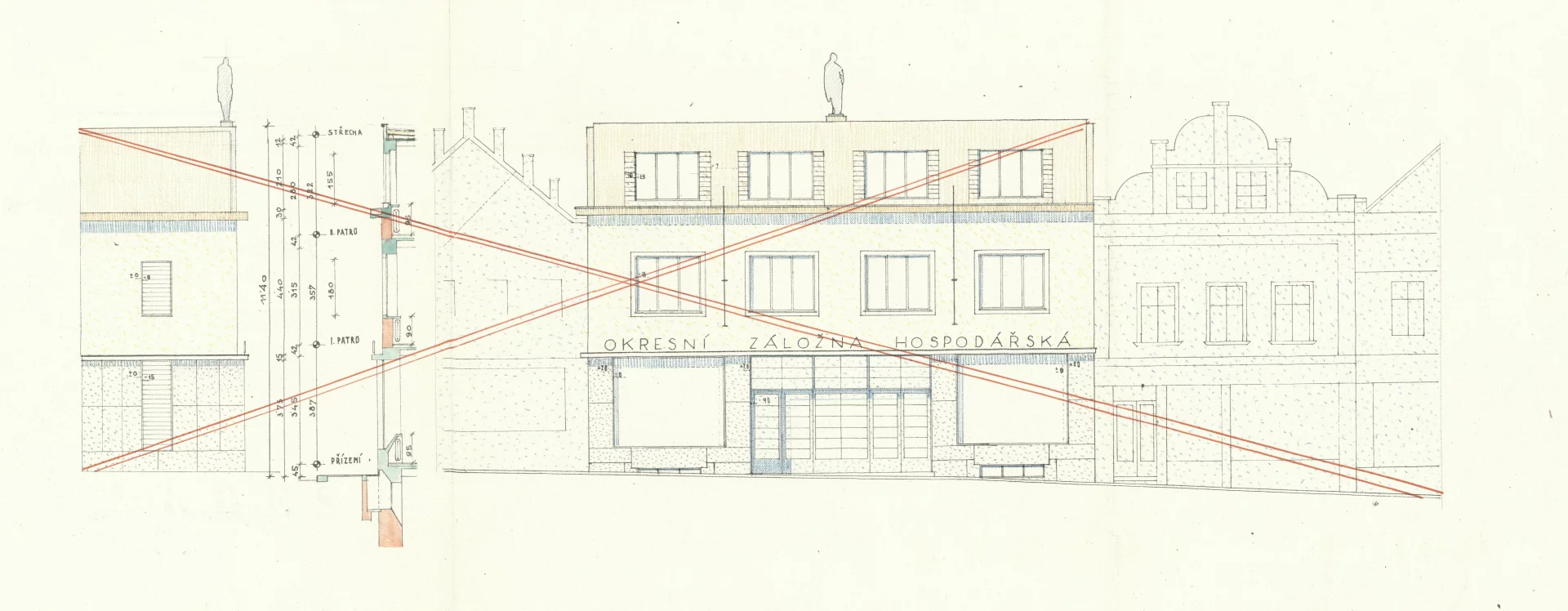
The bank, however, did not give up. It proposed a compromise solution (7 May 1934) in the form of new plans for a single-storey building topped with two gables, on the basis of which the State Heritage Office was willing to grant permission for the original structures to be torn down (7 February 1935). Demolition could then begin.
An unexpected turn in the entire affair came a month later, when the long-serving mayor and Social Democratic Party member, Robert Neuern, resigned from his post. “The reason for the resignation was the increase in misunderstandings between the different parties in the town council.” It is unclear whether the controversy and the unusual amount of attention devoted by the local press to the construction of the savings bank had influenced his departure. What is certain, however, is that with his resignation and the appointment of the new mayor, Ludvík Mareš, a carpenter by profession and representative of the Tradesmen’s Party (16 March 1935), the situation changed dramatically.
The District Agricultural Savings Bank almost immediately revived its campaign for a two-storey building and was even willing to exploit the precarious situation faced by many townspeople caused by the economic crisis.
In April 1935, the bank submitted new plans to the town council, stating that “once approved, construction will begin immediately in the interests of employment (for both workers and tradespeople).” Following yet another rejection by the council, on 6 May 1935 the bank completely halted the demolition of the original houses and laid off the workers. The response from local trade associations, undoubtedly strongly backed by the developer, was echoed throughout the town. In letters to the municipal authorities, they unanimously criticized the council for its disregard for people who had lost their jobs over “an insignificant monument, which in this case does not even exist [as there is only] a row of decayed, rotting houses, even if they appear outwardly sound.” They believed the council was behaving “as if it were destroying the monuments of old Florence or ancient Rome.” Could the town not “act with somewhat greater leniency, in the cause of urban development and the livelihood of small tradesmen”?
Just seven days after work was halted (13 May 1935), the mayor sent an urgent letter to the State Heritage Office for Bohemia in Prague, requesting a second opinion. He did not fail to emphasise that the workers “gather daily at the bank construction site and at the town office, urgently demanding the matter be resolved.”
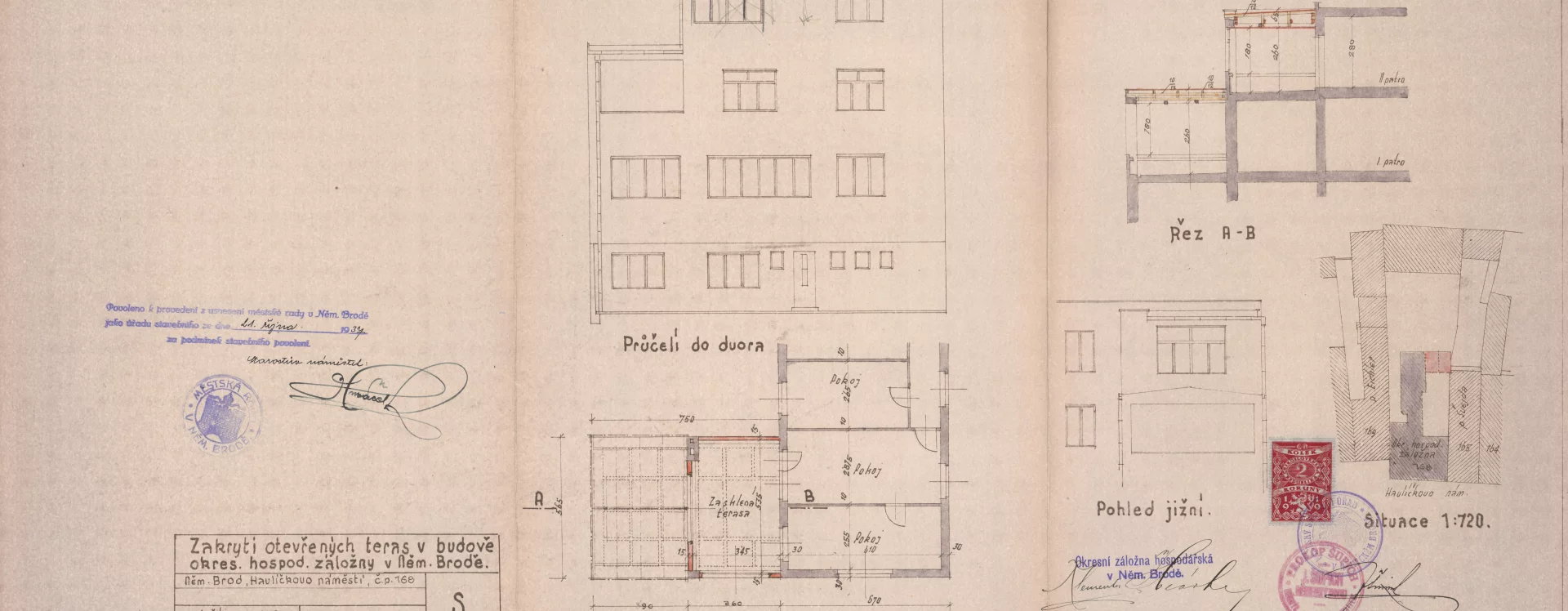
In its official statement, the Heritage Office, taking into account “the social nature of the entire affair,” declared that “although it has not abandoned its previously defended position, […] it does not raise further objections to the construction of a second storey as an attic storey with two hipped gable roofs behind this attic.” On the basis of this decision, a new—though not final—building permit was issued within a few days (16 May 1935). The last concession to the bank came from the town council in September 1935, when it agreed that only the attic should be reinstated on the facade up to the second storey.
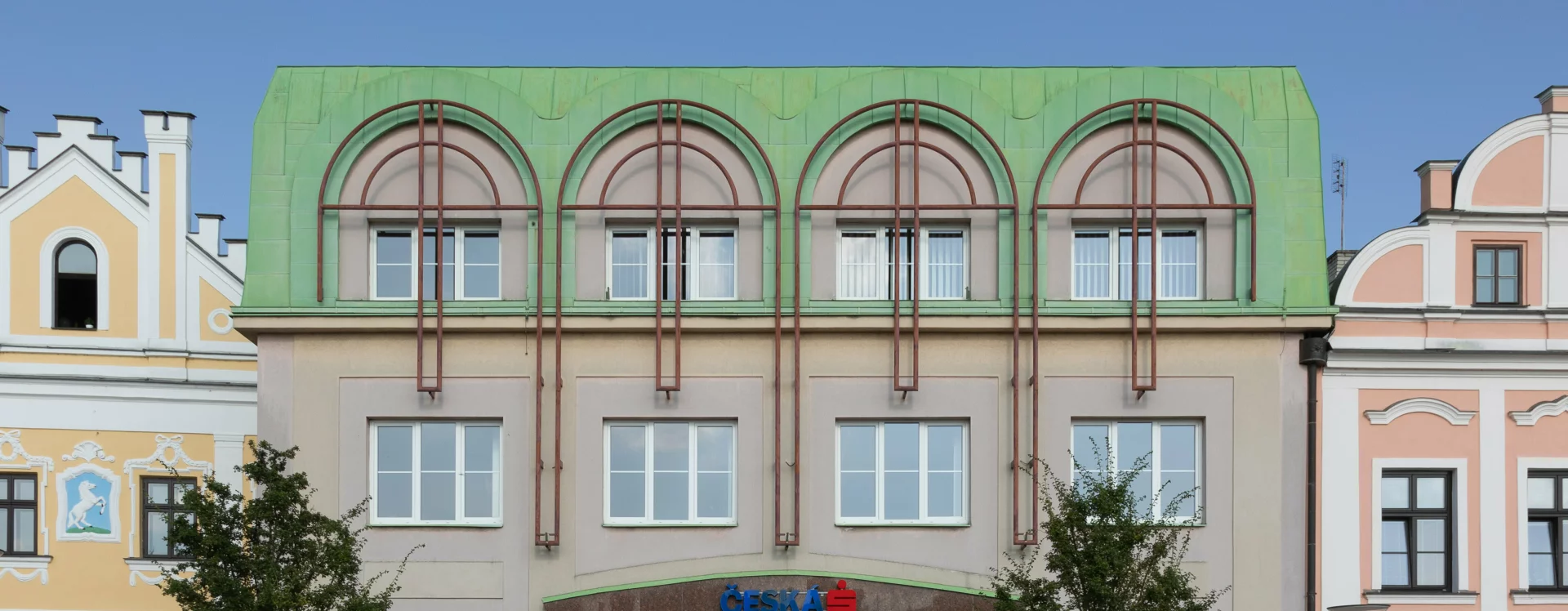
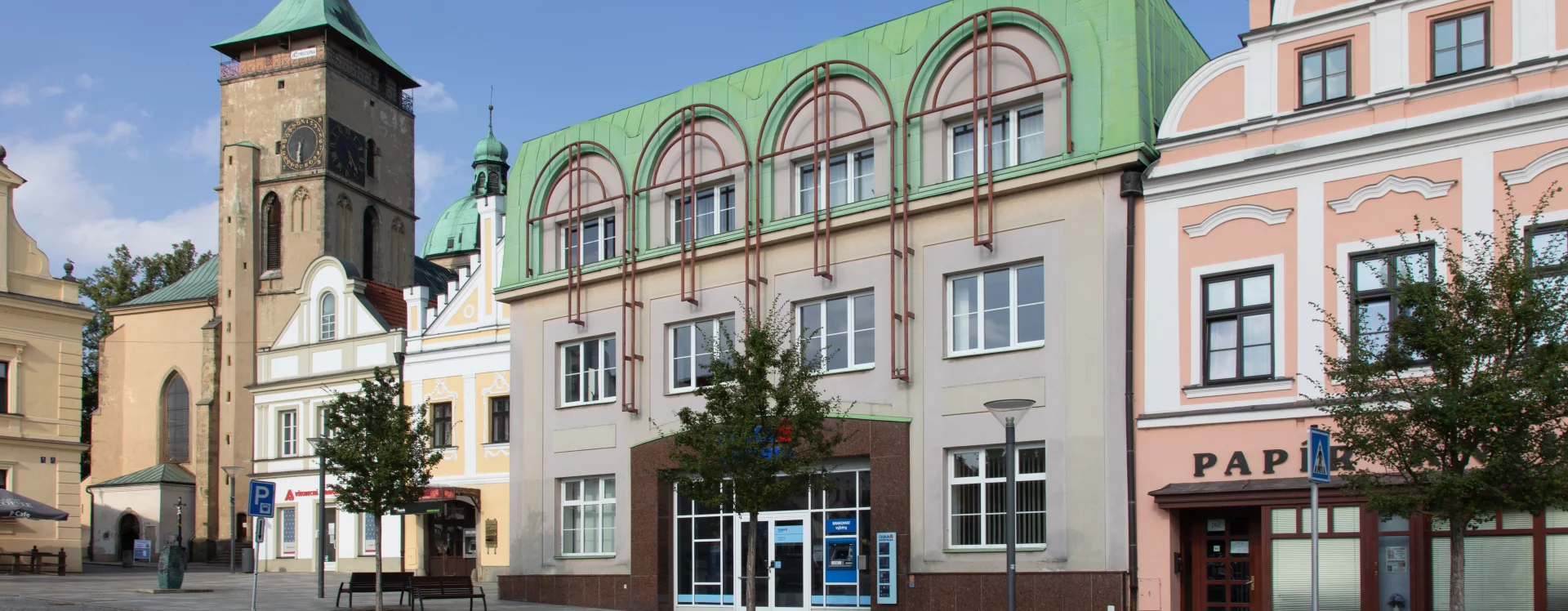
Despite further tense developments, the new bank building was officially approved in May 1936, essentially following the plans from April 1934. Even the facade returned to its original design. The only compromise compared to the initial proposal was a “gentle undulation” in the line of the attic on the second storey to give the building “sufficient articulation.”
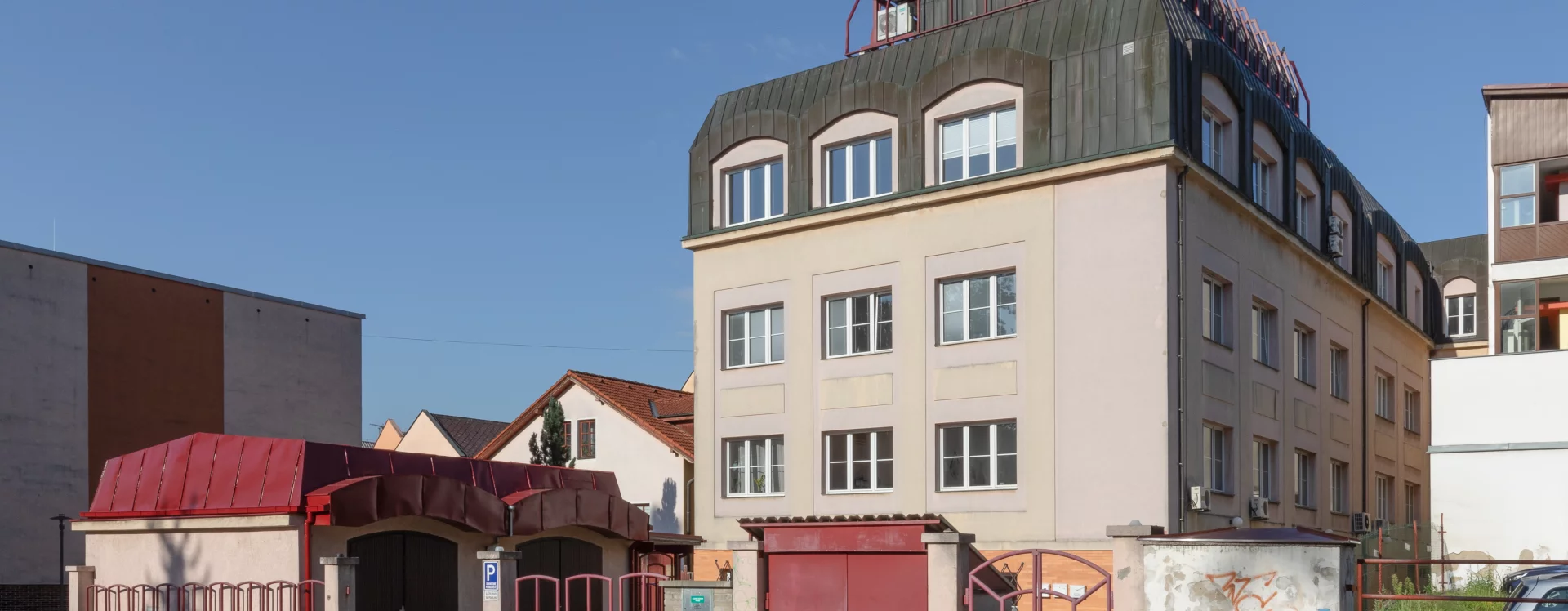
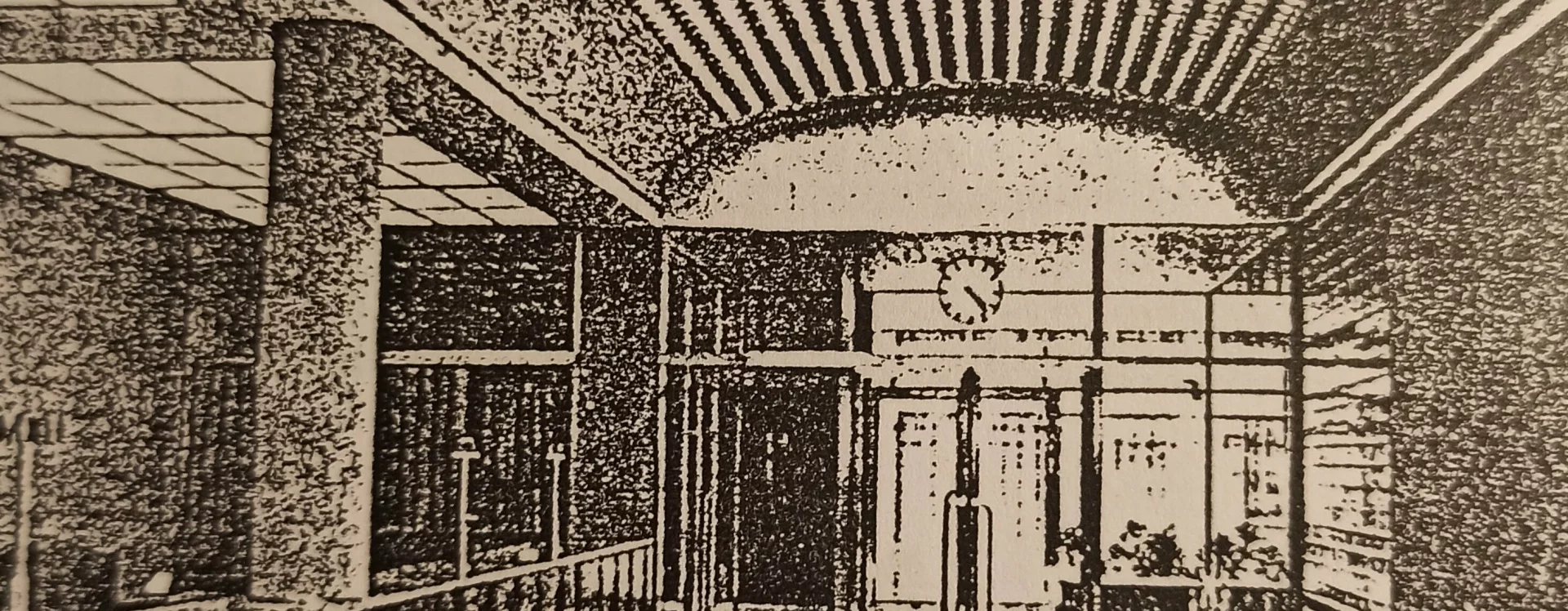
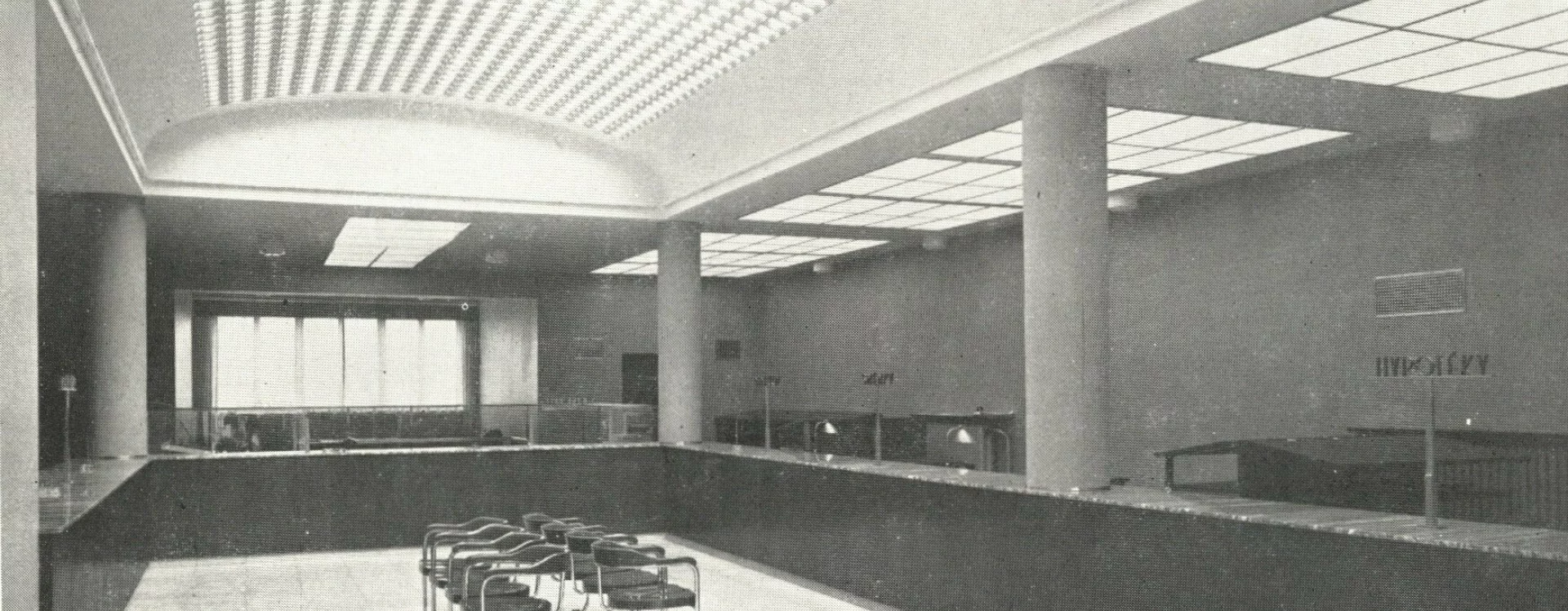
From today’s perspective, it is clear that the State Heritage Office was unable to preserve two historically valuable buildings or enforce a design that respected the ‘rhythm’ and height of the square. As a standalone structure, however, the building that emerged does have its merits, including an exceptionally elegant interior, illuminated from above and with undeniable artistic qualities.
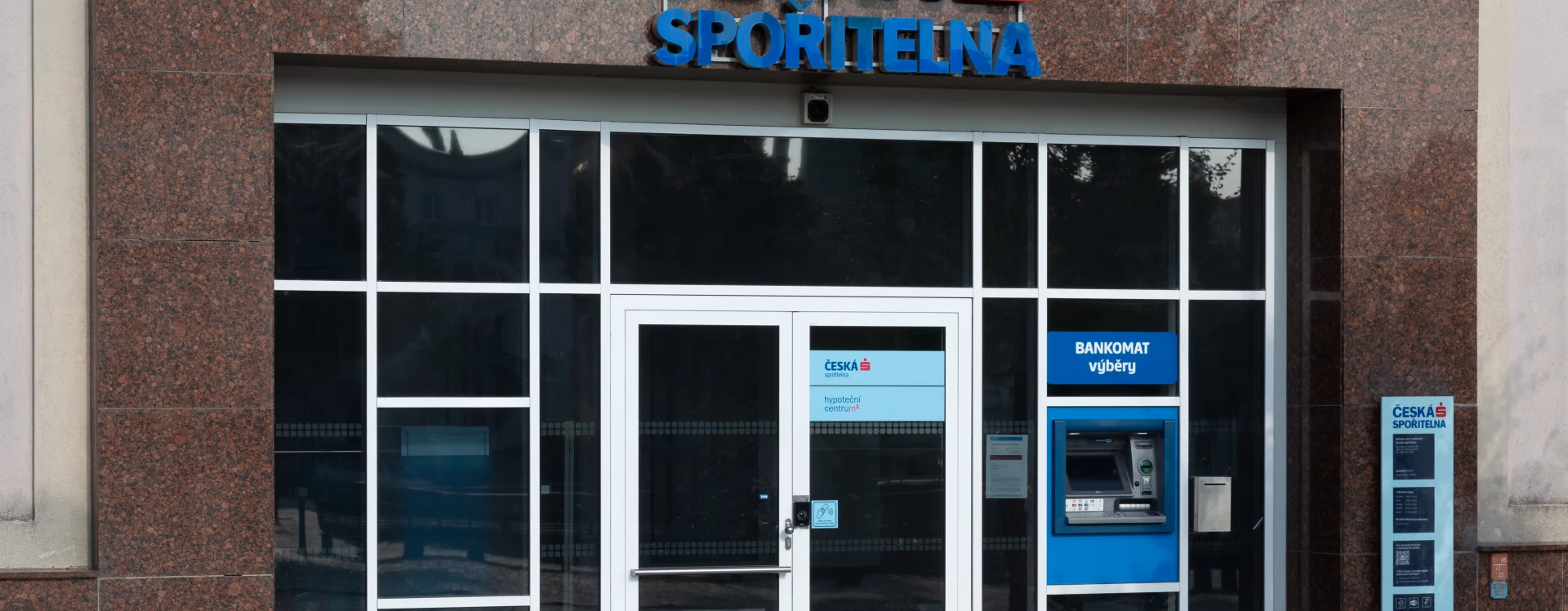
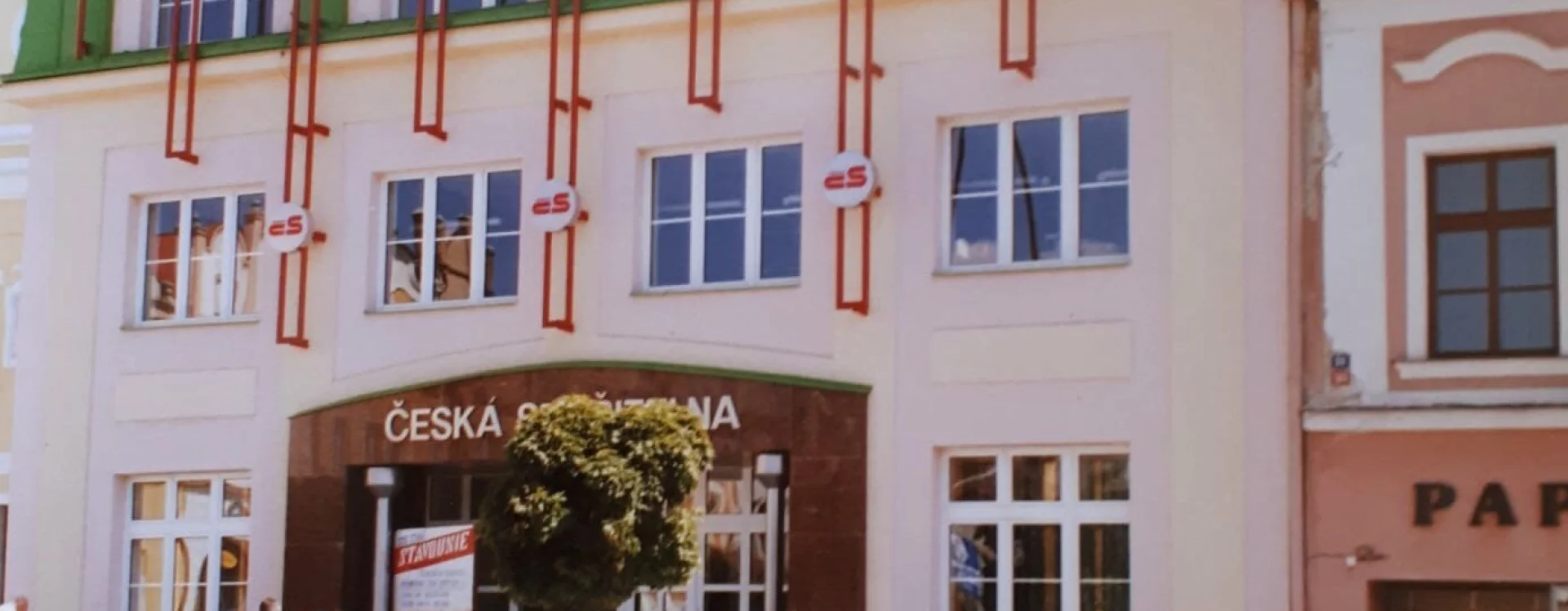
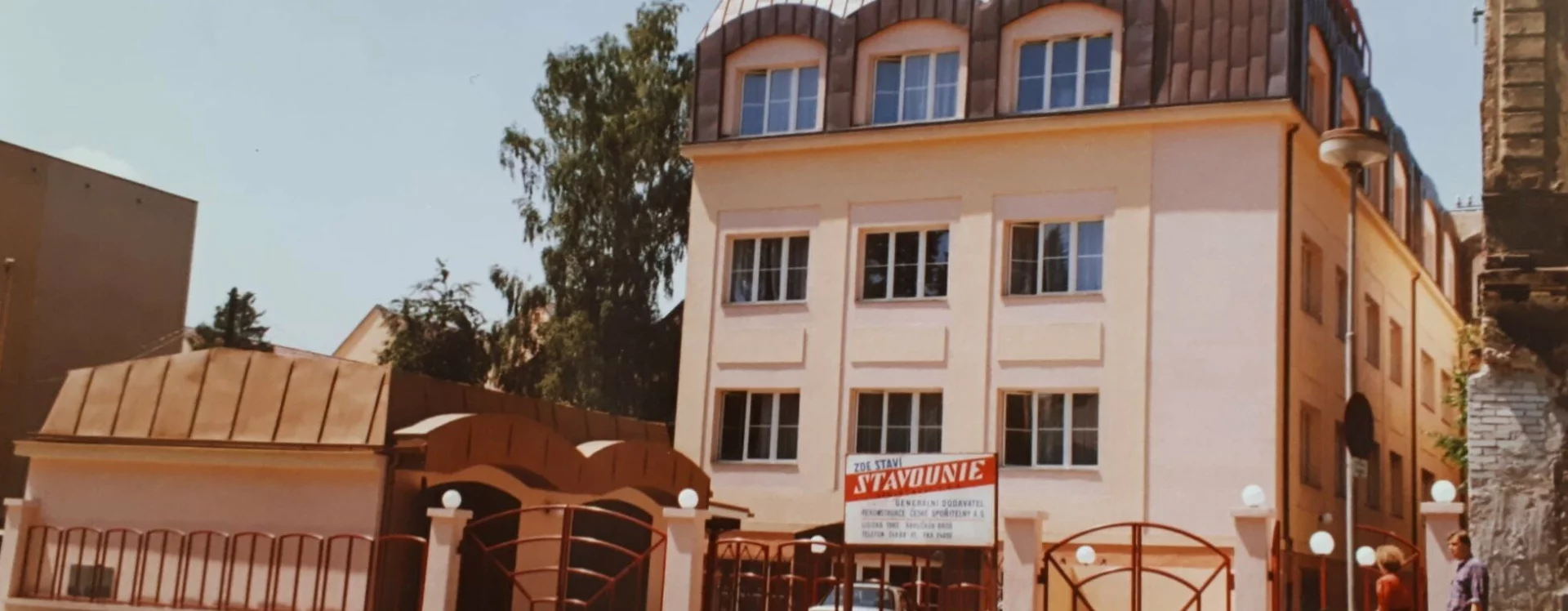
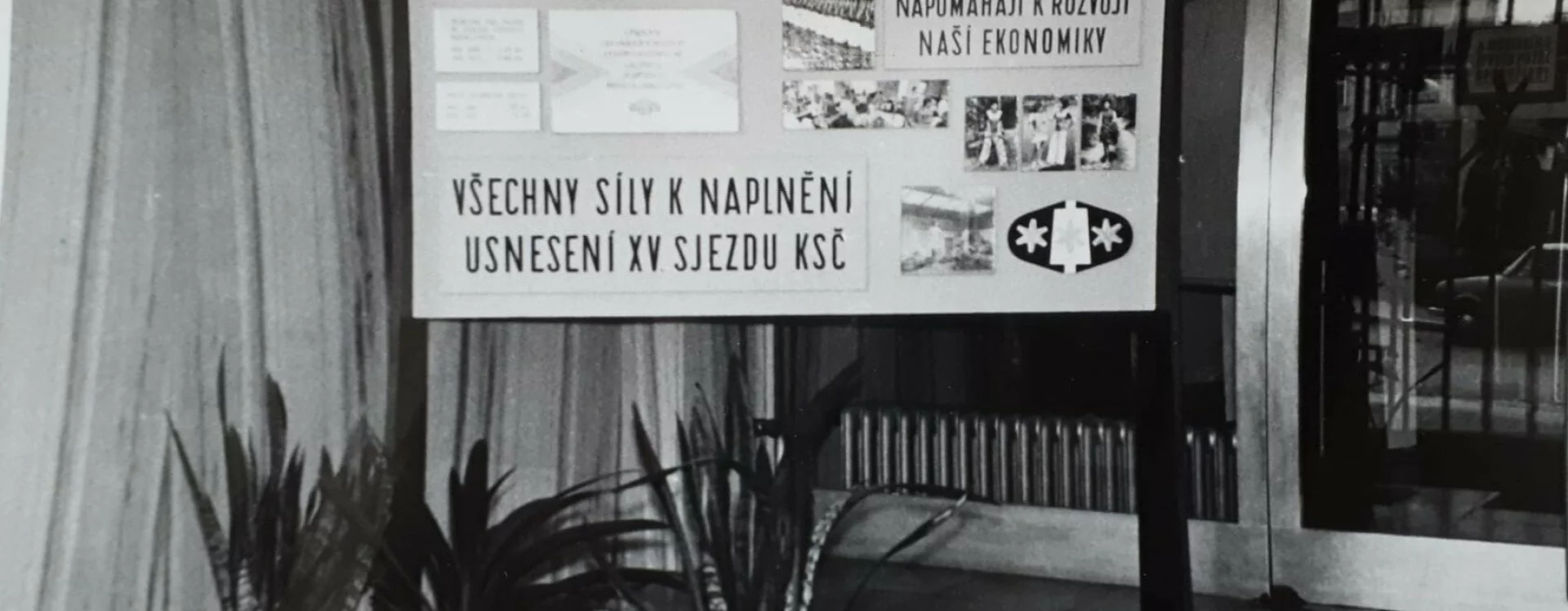
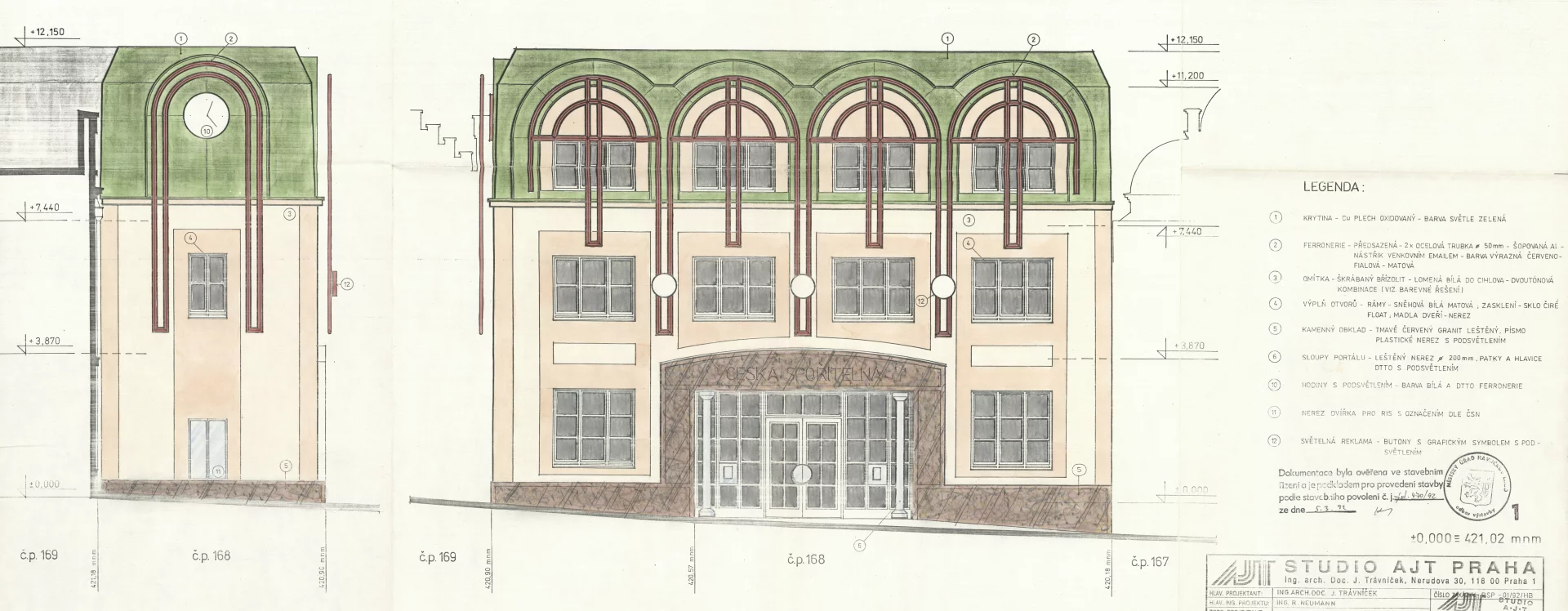
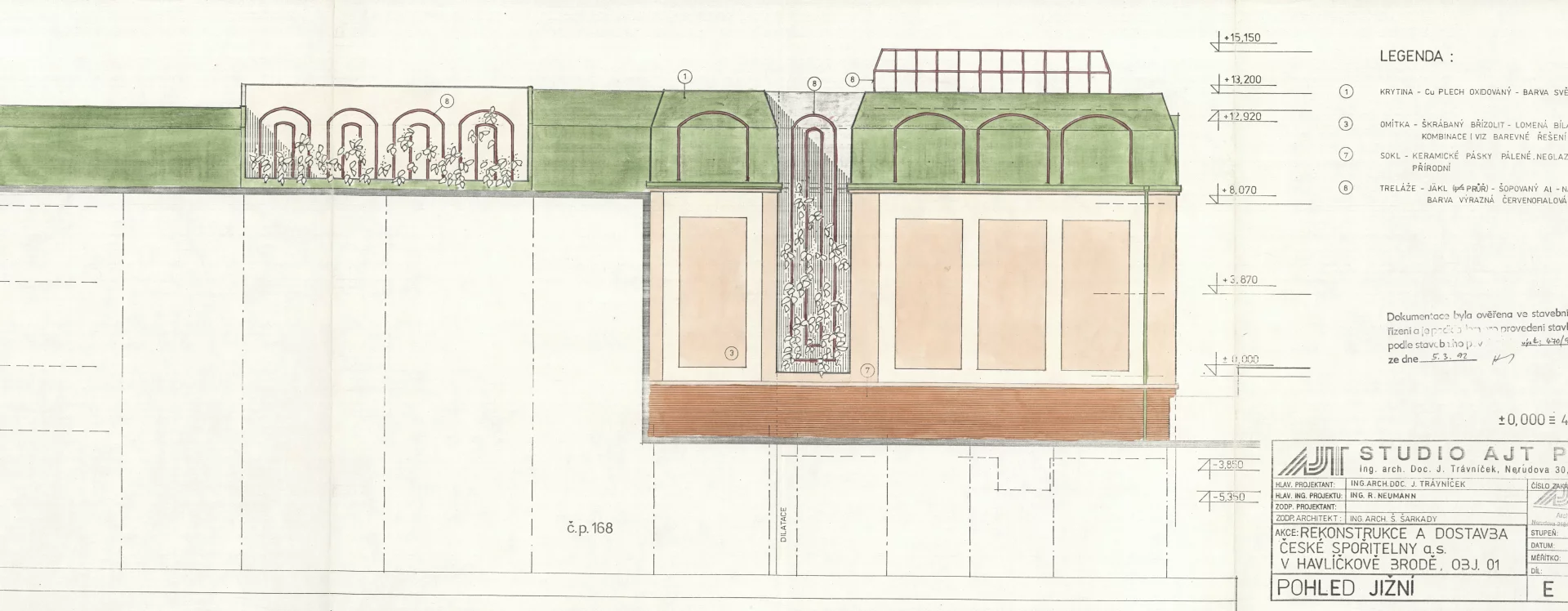
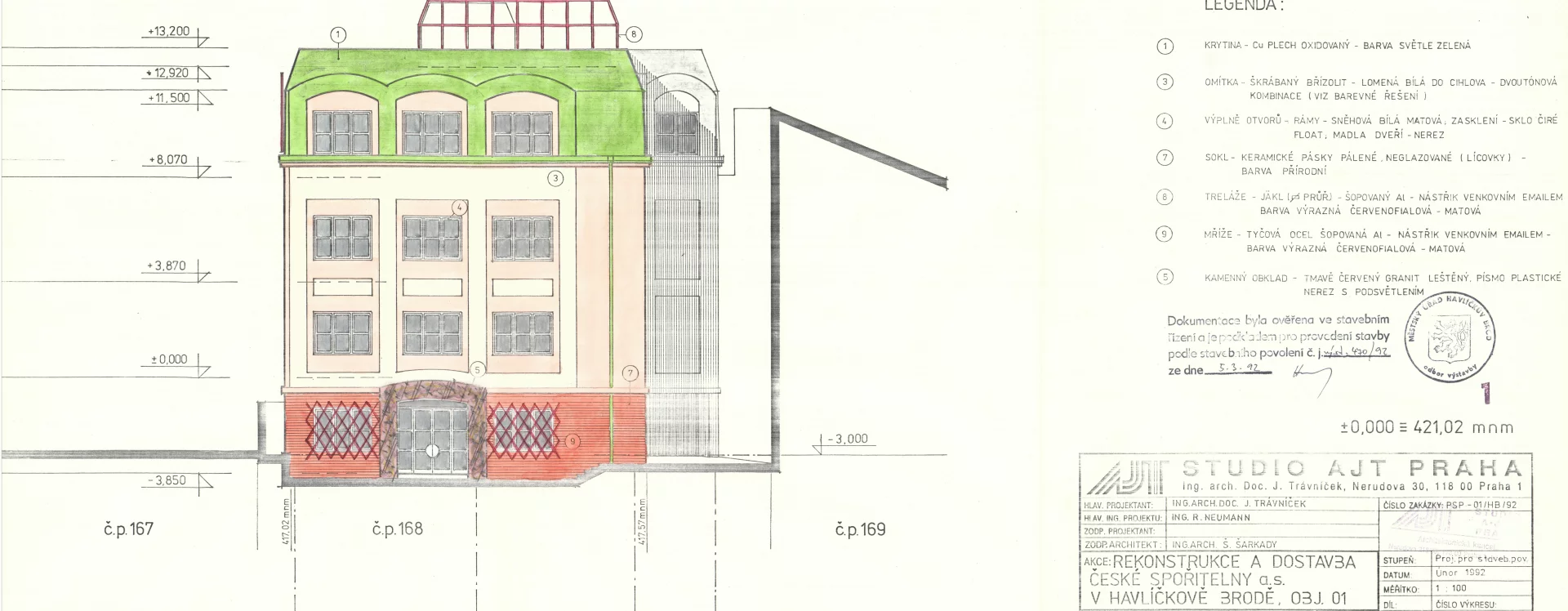
There were far sadder chapters for the square and for the building—by then already housing the Česká Spořitelna—nearly sixty years later, during its extensive renovation (1992–1993) by the A.J.T. architectural studio in Prague. The work was carried out on the basis of an opinion issued by the Pardubice Heritage Institute, which agreed “with the architectural treatment of the facade, as it is better adapted to the overall character of the square than the existing frontage.” The interior from this reconstruction, however, did not survive for long. Its most recent alteration took place in 2015, when it was redesigned by the architect Zbyněk Zavřel from the K4 studio.
Dana Schlaichertová, 2025
Literature
Dana Schlaichertová. Okresní záložna hospodářská v Německém Brodě. In: Jakub Bachtík, Michal Kurz, Kristina Uhlíková (eds.). Boj o malé město 1900-1960: příběhy památek a jejich lidí. Praha, Artefactum, 2024, p. 252-261. ISBN 978-80-88283-96-6.
Petr Horák. Proměny Havlíčkova náměstí v Havlíčkově Brodě. In: Havlíčkobrodsko. Havlíčkův Brod, 2011, roč. 25. p. 7-59.
Alena Kašparová. JUDr. Robert Neuern - starosta německobrodský. In: Havlíčkobrodsko. Havlíčkův Brod, 2008, roč. 22. p. 132-141.
Dana Schlaichertová. Architektura a urbanismus Havlíčkova Brodu 1848-1938. Olomouc, Katedra teorie a dějin umění FF UP, 1998, Diplomová práce. p. 80-82.
Miloš Tajovský. Havlíčkův Brod: fragmenty z historie. Havlíčkův Brod, Tiskárny Havlíčkův Brod, 2015. p. 159-163. ISBN 978-80-903451-6-4.
Dana Schlaichertová. Okresní záložna hospodářská. In: Aleš Veselý (ed.). Příběhy brodských domů. Havlíčkův Brod, Galerie výtvarného umění v Havlíčkově Brodě, 2016, p. 114-119. ISBN 978-80-904726-9-3.
Sources
Městský úřad Havlíčkův Brod, archiv Stavebního úřadu. sv. č. p. 168.
Státní okresní archiv Havlíčkův Brod, fond Archiv města Havlíčkův Brod.
Státní okresní archiv Havlíčkův Brod, fond Sbírka map a plánů. p. X/25.
Pamětní kniha Německého Brodu II. 1930-1969. p. 154-156. Státní okresní archiv Havlíčkův Brod, fond Městský národní výbor Havlíčkův Brod, Městský národní výbor Havlíčkův Brod.