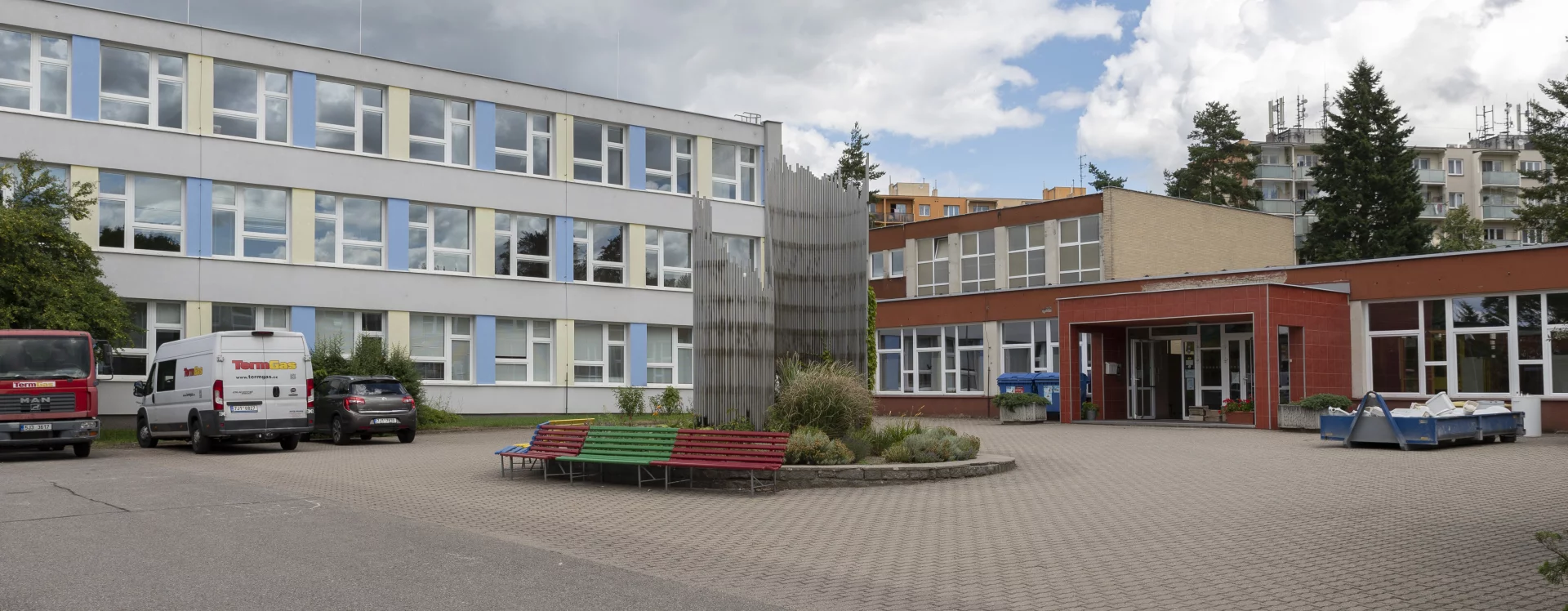
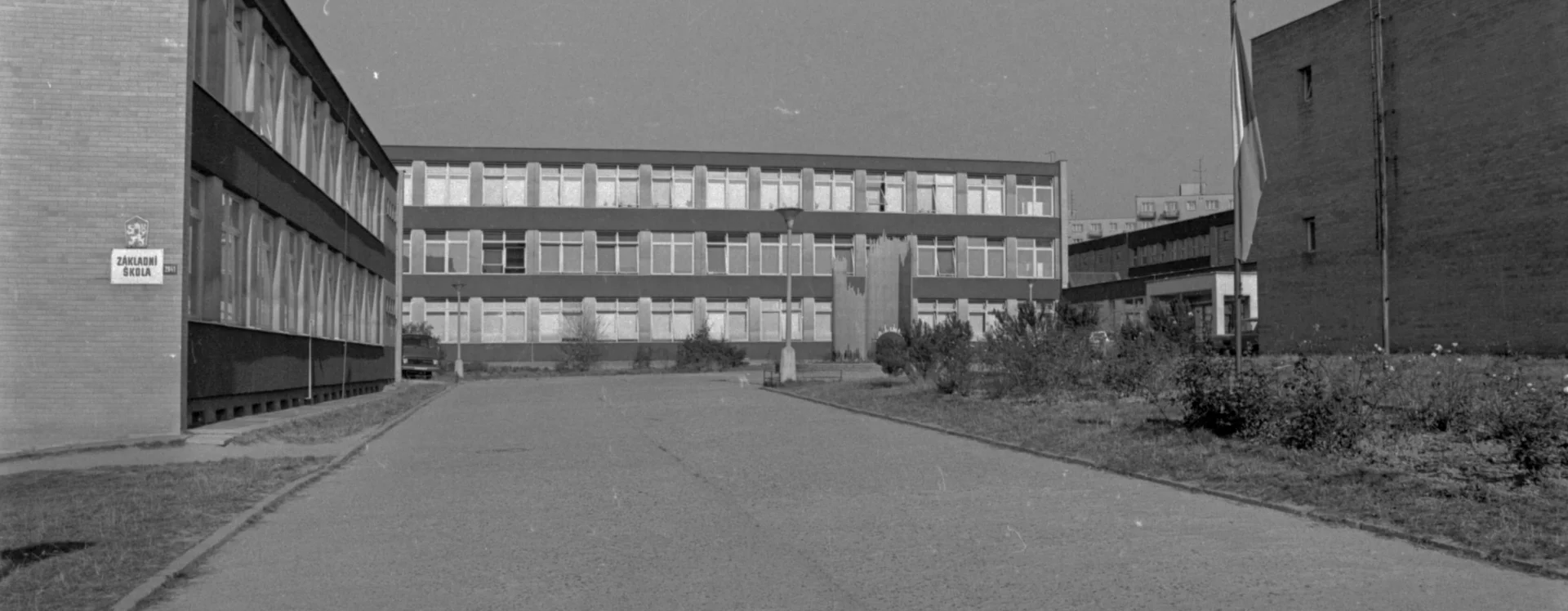
Today’s Wolkerova Primary School was the first new school building in Havlíčkův Brod in the second half of the 20th century. With 22 classrooms, the school was designed to reduce the need for the youngest children to attend in shifts, a practice that had previously been necessary due to a shortage of teaching space.
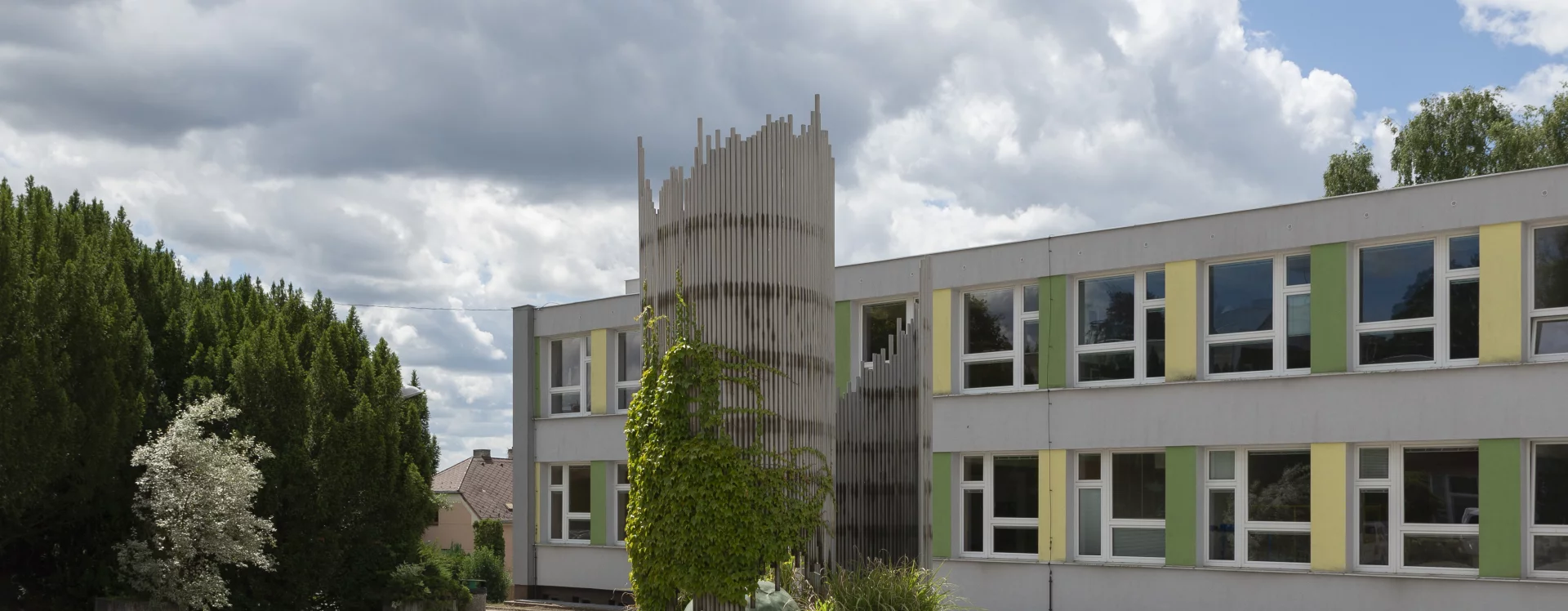
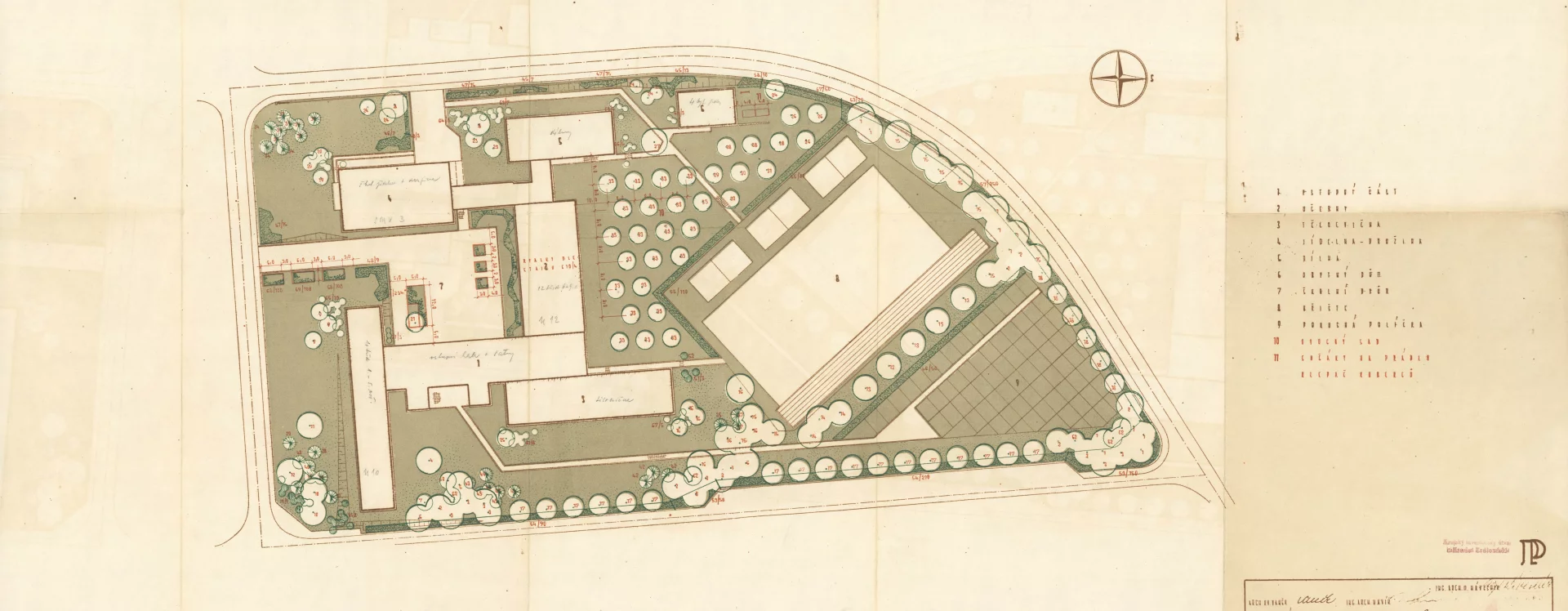
The extensive complex, which is a typical example of socialist architecture, was designed by the architect G. Havíř from the Pardubice branch of Stavoprojekt Hradec Králové. The five school pavilions were designed from a standardized modular reinforced concrete skeleton, infilled with bricks. The buildings’ moderate height—no more than three stories—gave the complex a pleasant character. Another advantage was the carefully planned spatial layout of the site, complemented by detailed landscaping that included fruit trees and a vegetable garden.
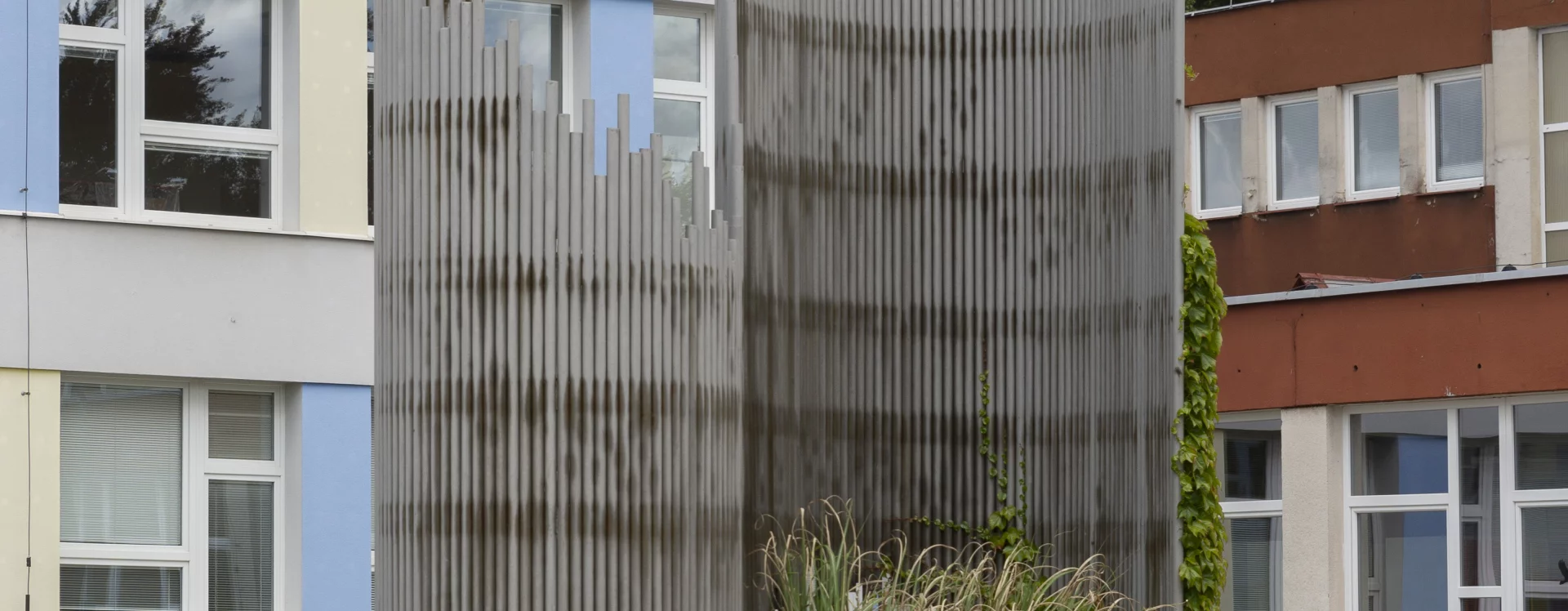
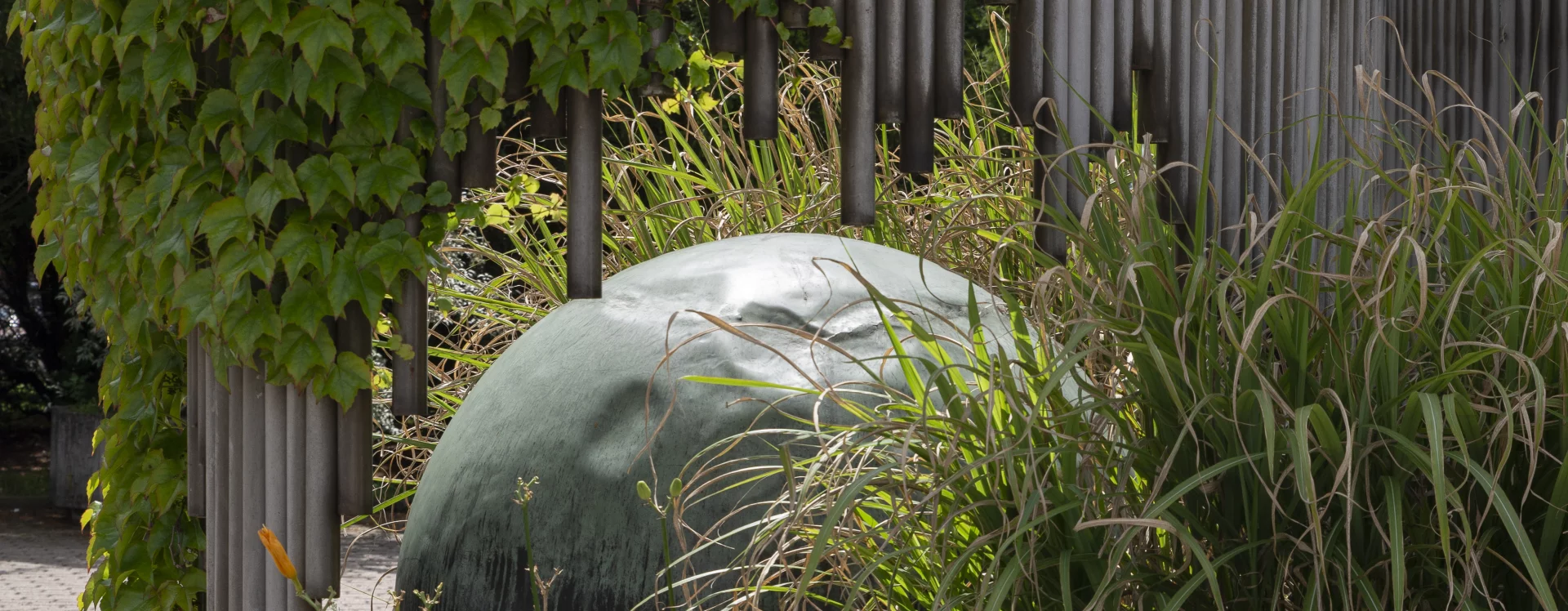
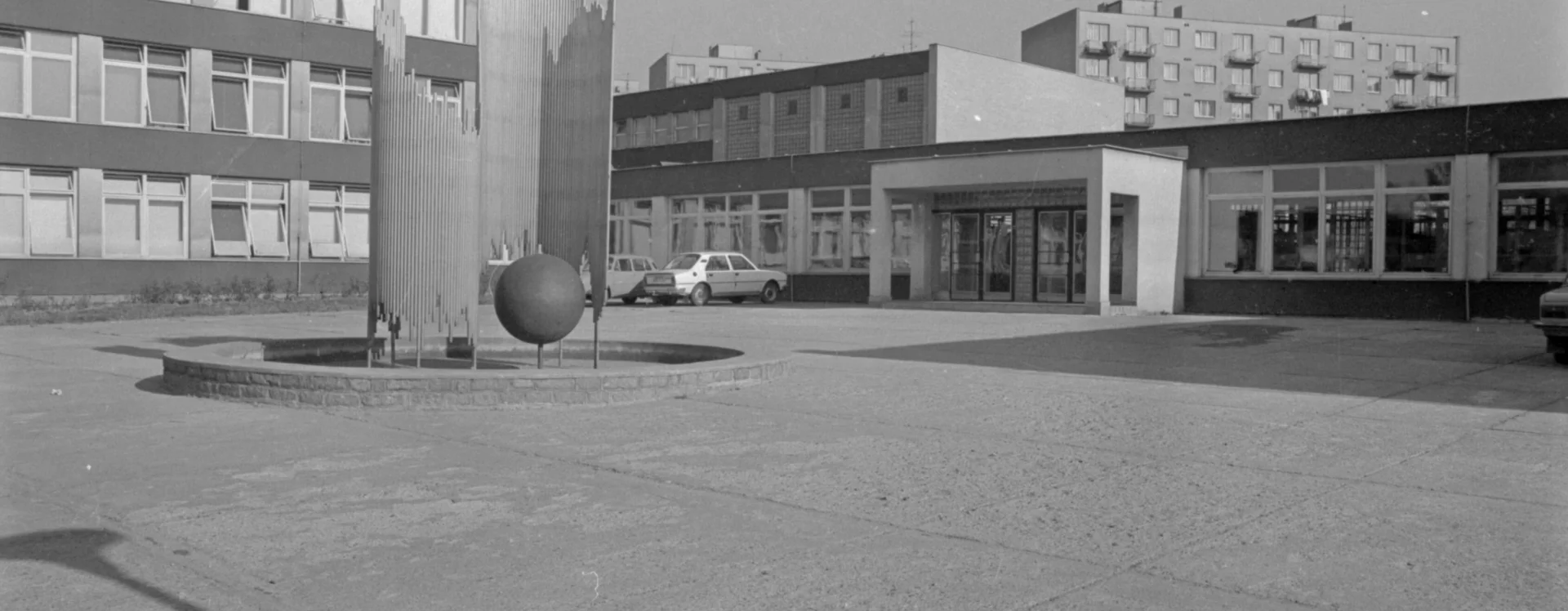
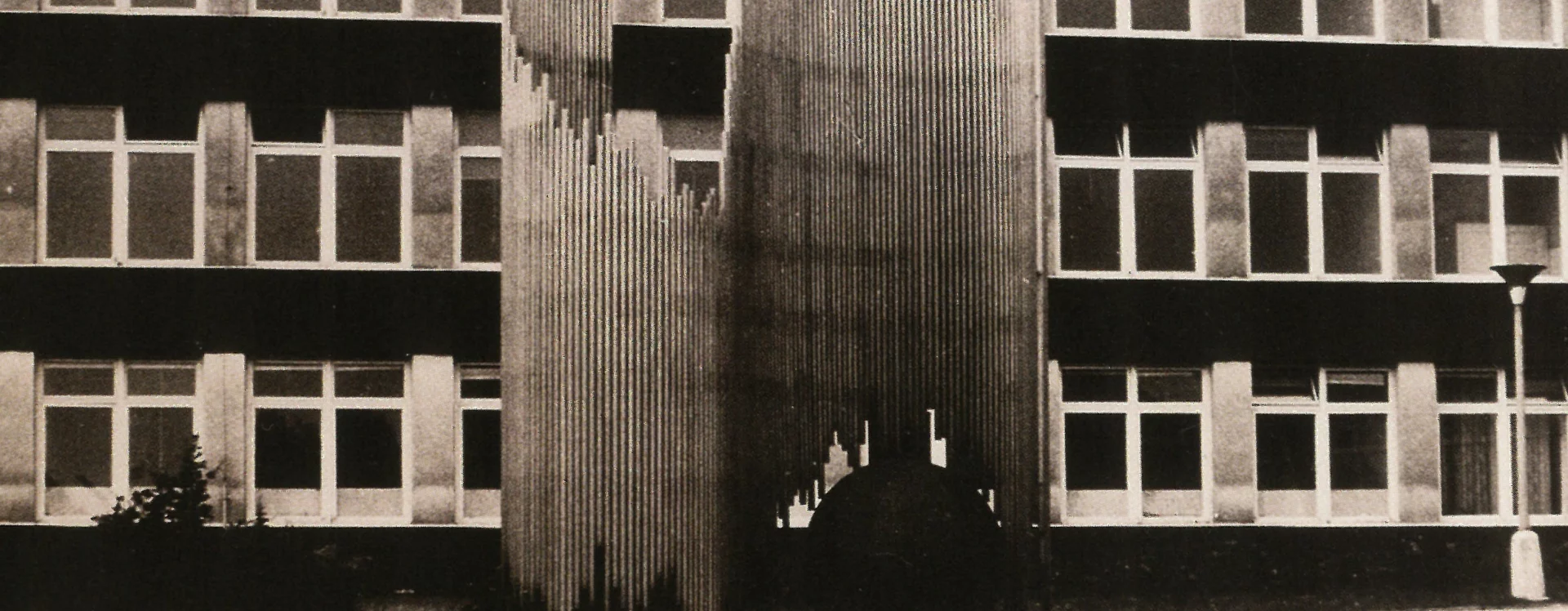
The pavilions were arranged around the central courtyard of the school, in the middle of which was a fountain by the Havlíčkův Brod sculptor and university teacher Karel Hyliš (1928–2024) and his friend, the architect Jiří Jirmus from the Stavoprojekt office in Jihlava. It was a large, technically demanding work of art called The Birth of an Idea. Encircling the sphere, formed from hammered copper-alloy sheets, are spiral walls composed of steel tubes of varying lengths, linked together by internal iron bands. The abstract sculpture does not close in on itself, but blends in with the surrounding space.
Karel Hyliš was primarily a figurative sculptor. However, the socially and artistically vibrant 1960s meant for him—as for many other artists—a temporary shift towards abstraction and experimentation. Through his work at the Faculty of Education in České Budějovice, he was able to keep abreast of current artistic trends and public art projects—even those from democratic Western countries, which were otherwise difficult to access in Czechoslovakia. This breadth of inspiration and perspective is reflected in the fountain.
A relatively large amount of money was allocated for the construction of the fountain. At that time, works of art in public buildings were required by law, and there was a table specifying what percentage of the total cost had to be spent on the “artistic component” of the building. In general, the larger or more significant the building, the greater the funds allocated for the work of art.
An important part of the original design of the sculpture was water, which flowed from the top of the sphere into a circular pool around the structure. Water features were incorporated into many public artworks of the time, but they often proved short-lived due to technical shortcomings. The Brod fountain was no exception. The circular area around the piece is still marked by a low wall, but instead of water it now contains a flower bed with climbing plants.
Zuzana Trnková, 2025
Literature
Vladislava Říhová, Zuzana Křenková. Sochy a města. České umění 50.–80. let 20. století ve veřejném prostoru: evidence, průzkumy a restaurování. In: Sochy a města. Available from: https://sochyamesta.cz/.
Sources
Osobní rozhovor s Milošem Fikarem, ředitelem ZŠ a MŠ Wolkerova. 11. 8. 2025.
Městský úřad Havlíčkův Brod, archiv Stavebního úřadu. sv. č. p. 2941.
Kronika, město Havlíčkův Brod, okres Havlíčkův Brod, III. 1970-1989. p. 14-15. Státní okresní archiv Havlíčkův Brod, fond Městský národní výbor Havlíčkův Brod, Městský národní výbor Havlíčkův Brod.
Zina Zborovská. Evidence pomníků, památníků, pamětních desek a soch na území města Havlíčkův Brod. Havlíčkův Brod, 2012. p. 127-128.