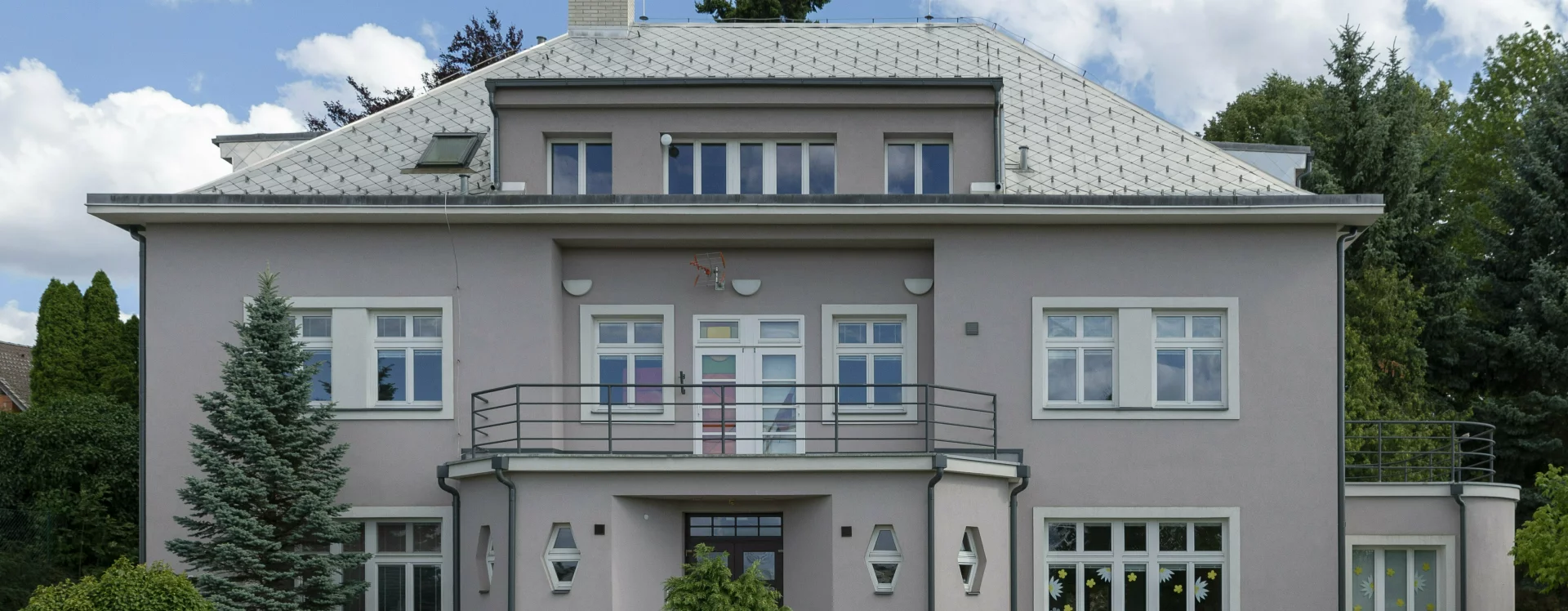
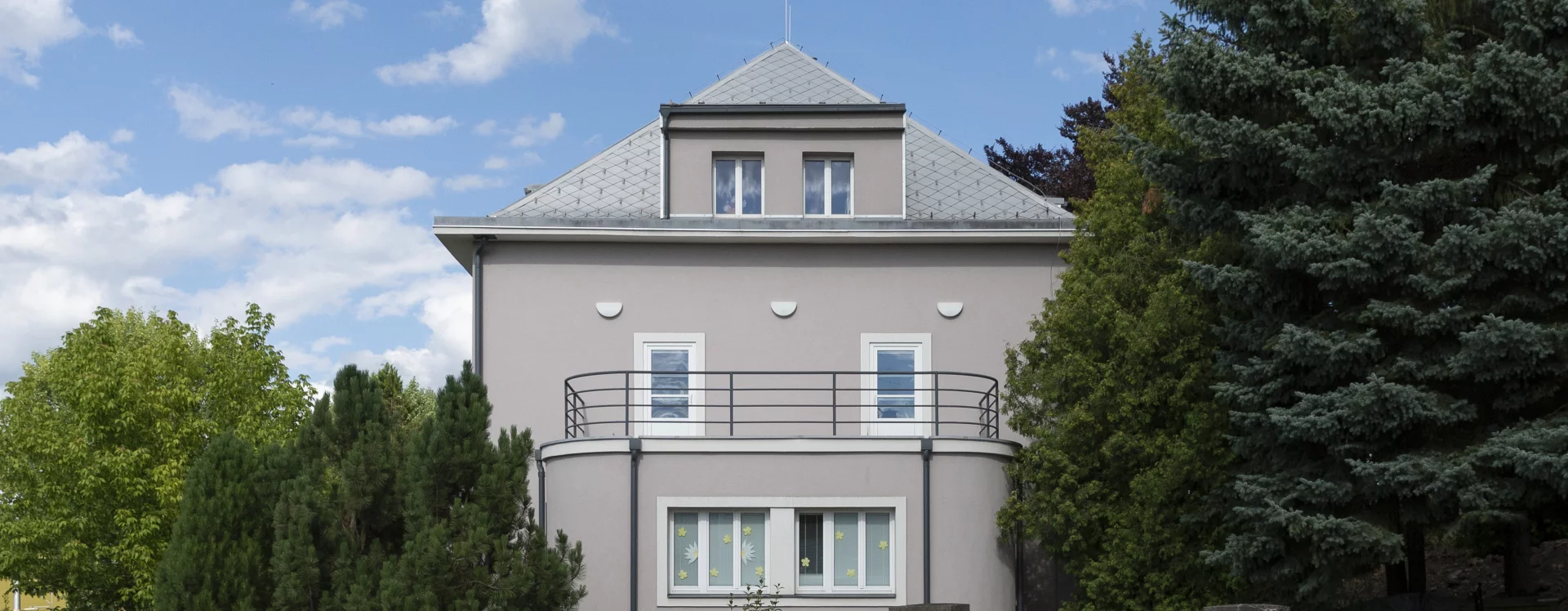
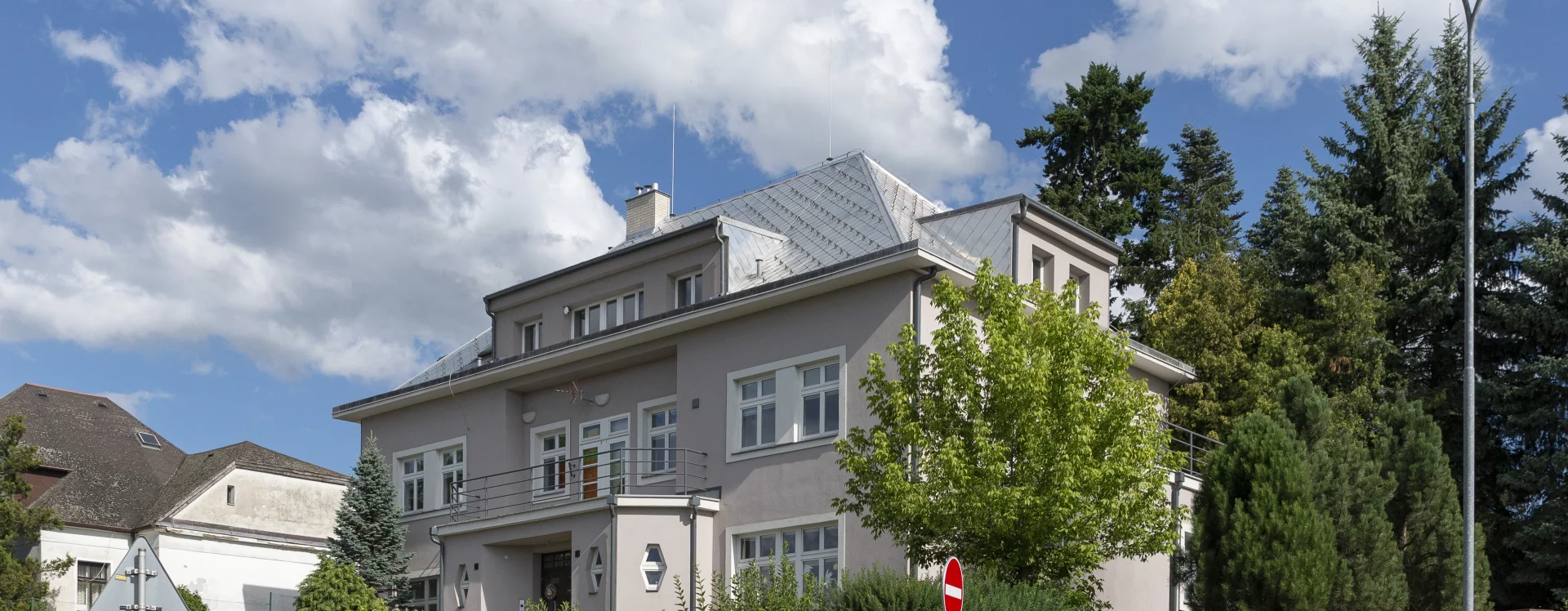
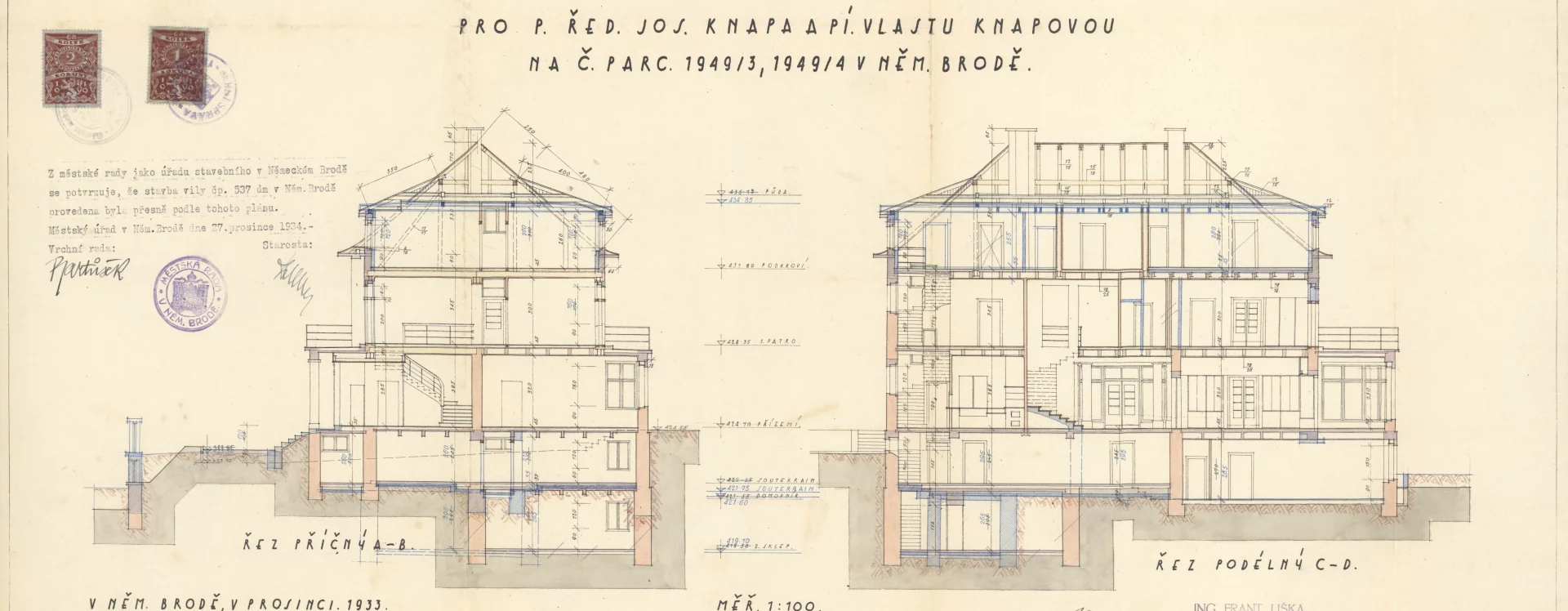
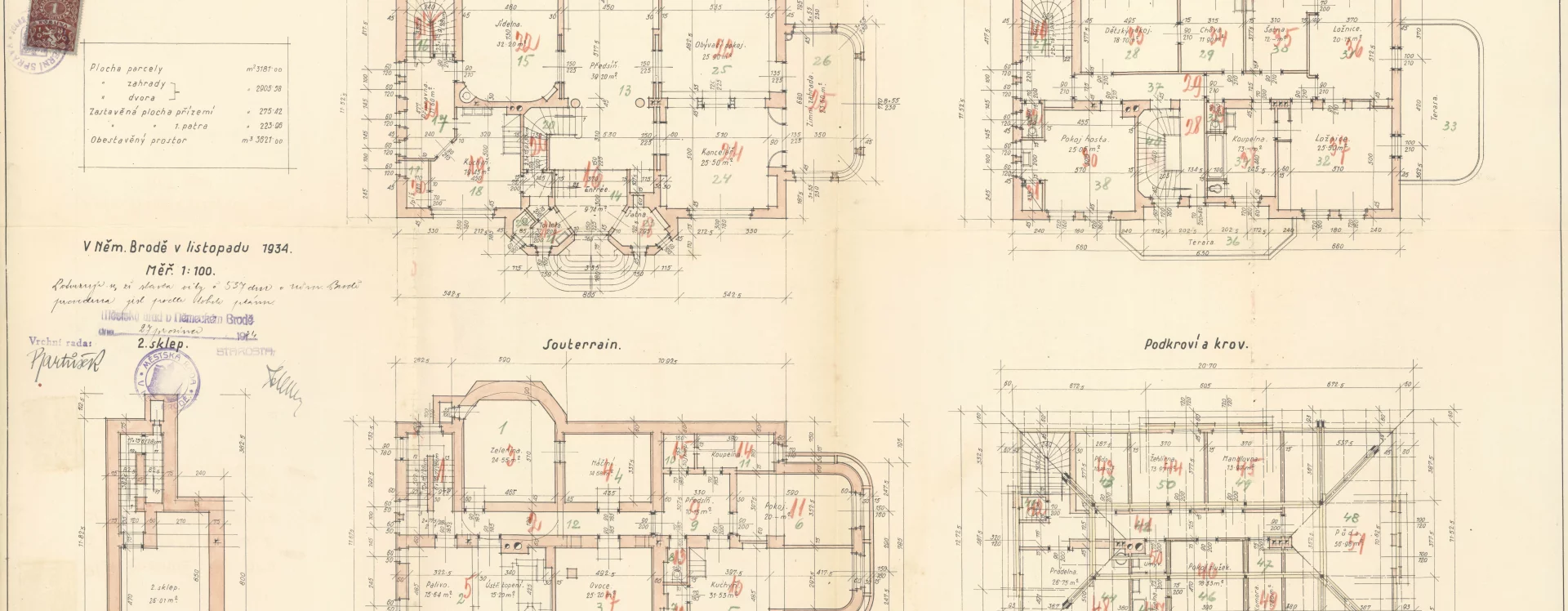
During the interwar period, the former Knap Villa belonged to one of the wealthiest men in the town: the young, capable and successful director of the J. Veselý & Sons factory, Josef Knap, and his wife Vlasta, daughter of the Havlíčkův Brod printer František Riedl. The local builder František Liška is said to have originally planned the villa in a historicising style, but its final form reflected an awareness of contemporary modern architectural trends. New ideas could certainly have been introduced both by the owners and by the project’s designer, while money seemed to be no object.
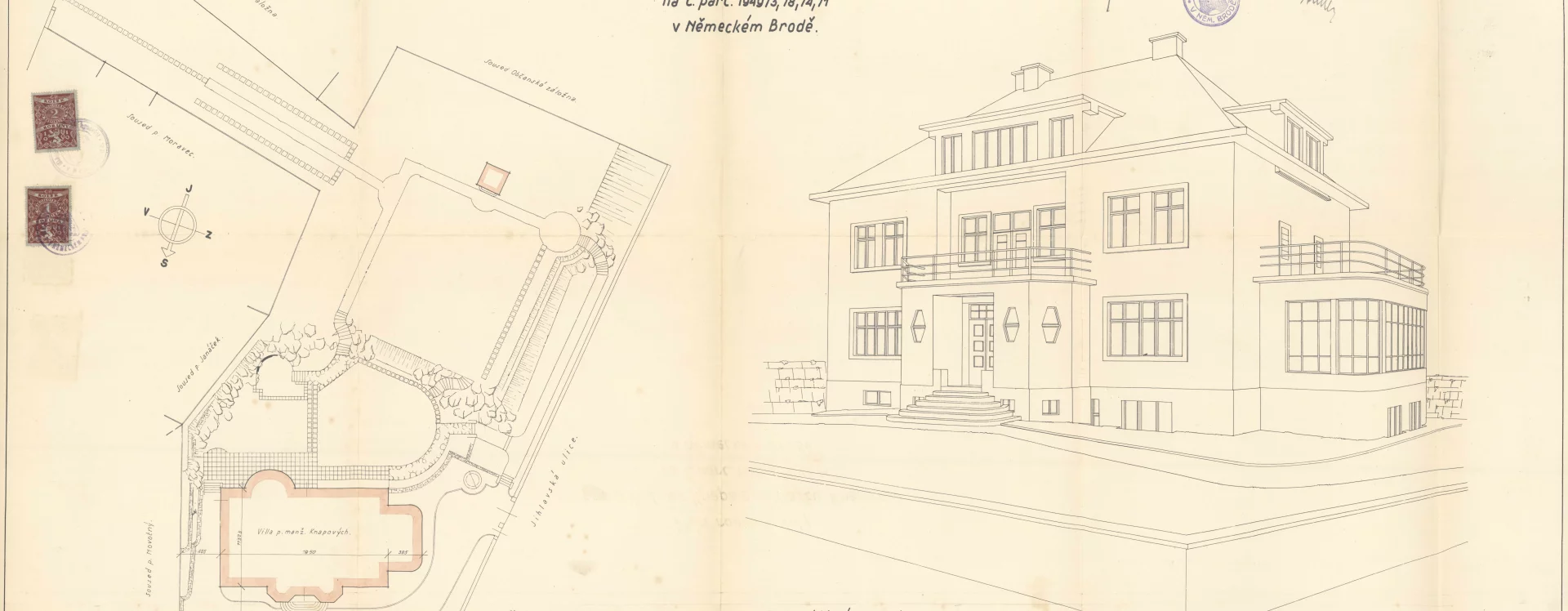
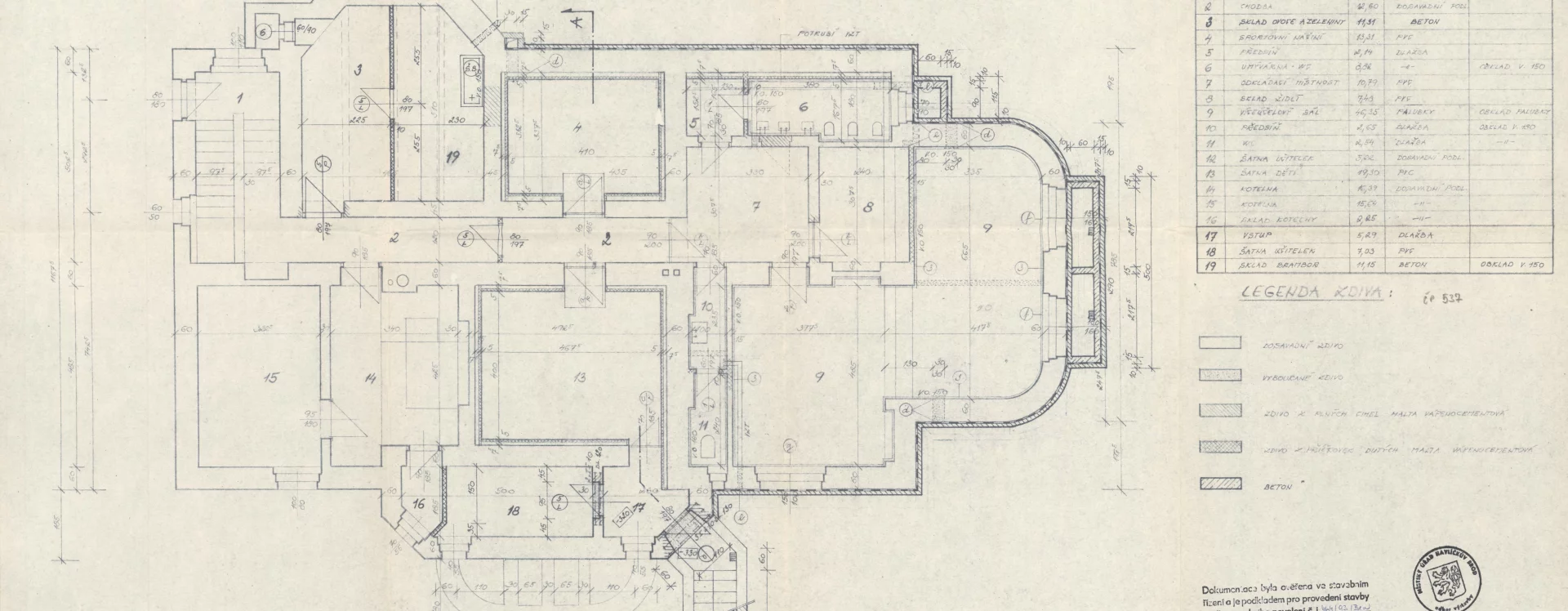
Three ground-floor sections project from the basic cubic mass of the villa, each differing in plan shape. The entrance risalit has a polygonal ground plan, the dining room curves in a semicircular form towards the terrace, while the conservatory features rounded corners. In all these areas, there were terraces on the first floor; the one above the dining room was later removed to enlarge the children’s room.
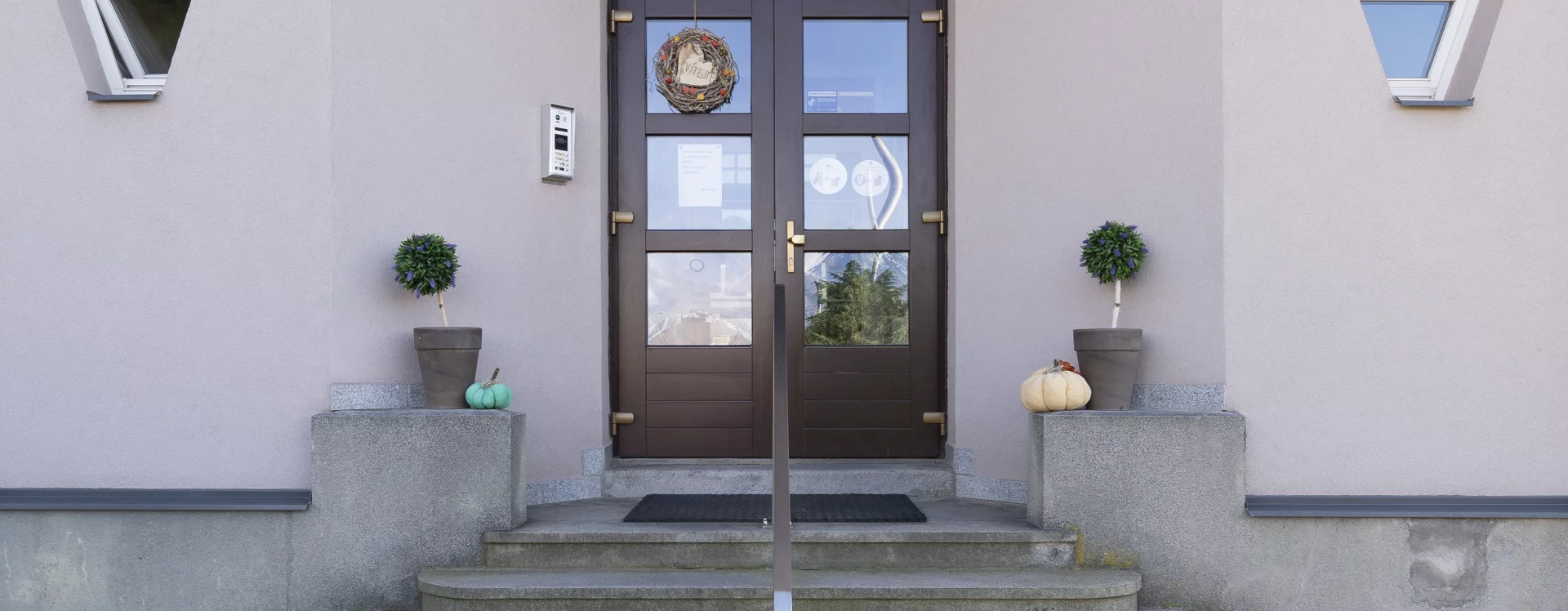
The facades are simple and unarticulated, with broad window and door surrounds providing them with a sense of depth and relief. The entrance risalit features atypically small, polygonal windows which, besides their aesthetic function, also prevent unwelcome views into the main entrance area.
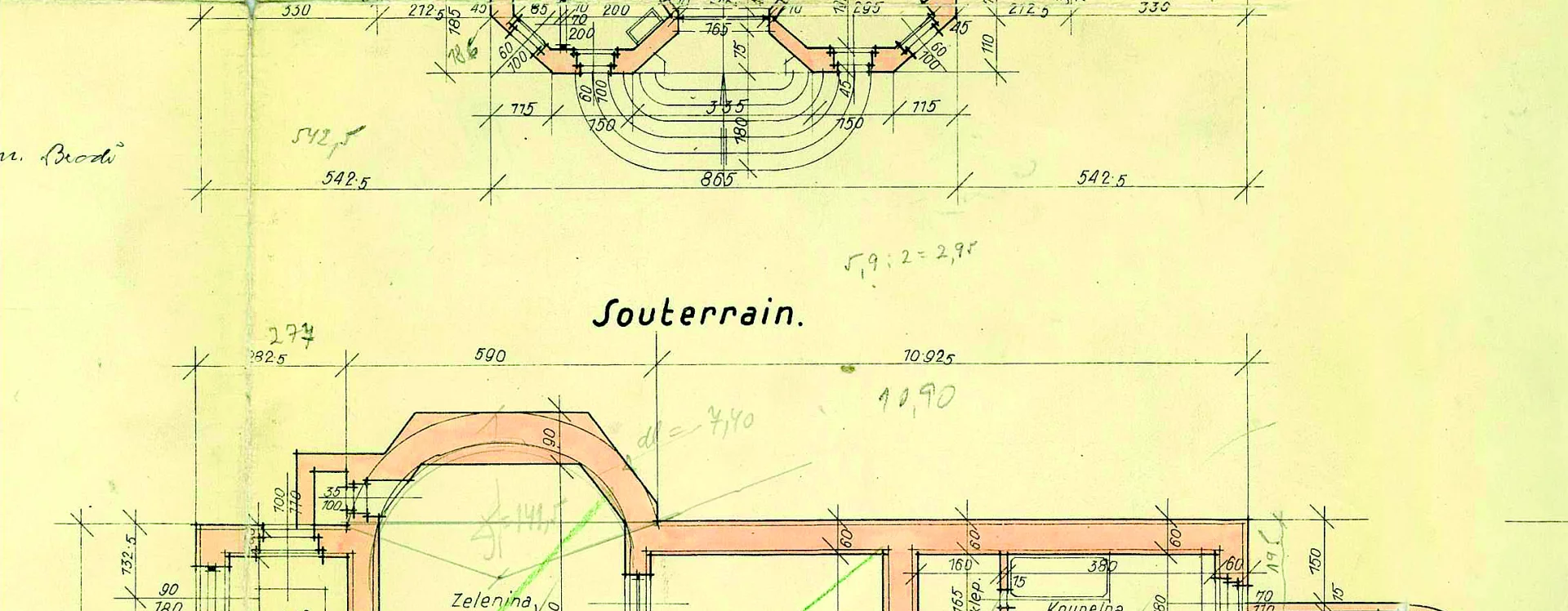
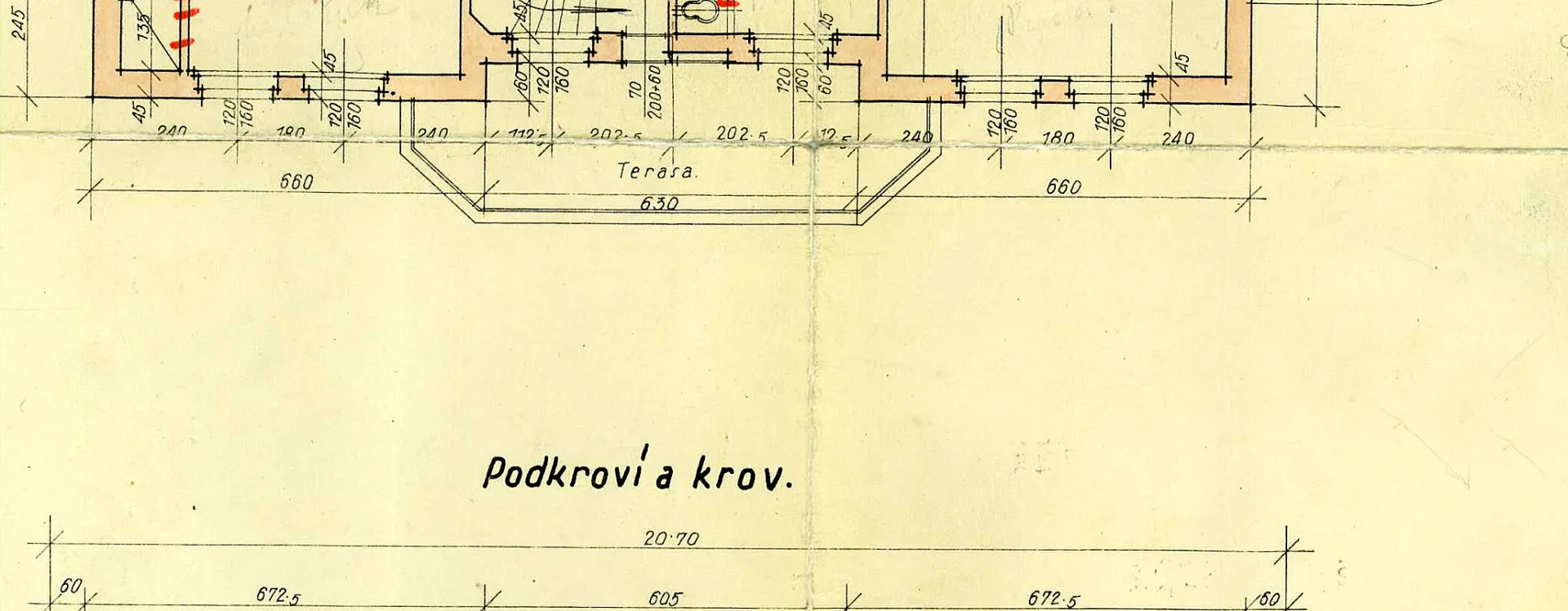
Although documents from the time describe the villa as a single-storey building, it actually has five levels in total—two underground and one attic floor. While the first two above-ground storeys served the owners as both formal and living spaces, the attic and the first basement contained technical rooms and accommodation for the household staff. The second basement functioned as an air-raid shelter.
The villa was also connected to the pinnacle of contemporary Czechoslovak design through its emphasis on high-quality materials and impeccable craftsmanship in the interior details. In the entrance hall, which opened to the garden through French windows, there were columns and a fireplace with surfaces imitating light marble, while the custom-made furniture was designed in dark wood. The servants’ quarters were functionally furnished in metal, yet even there the owners did not compromise on first-rate design. The villa was equipped with a lift from the very beginning.
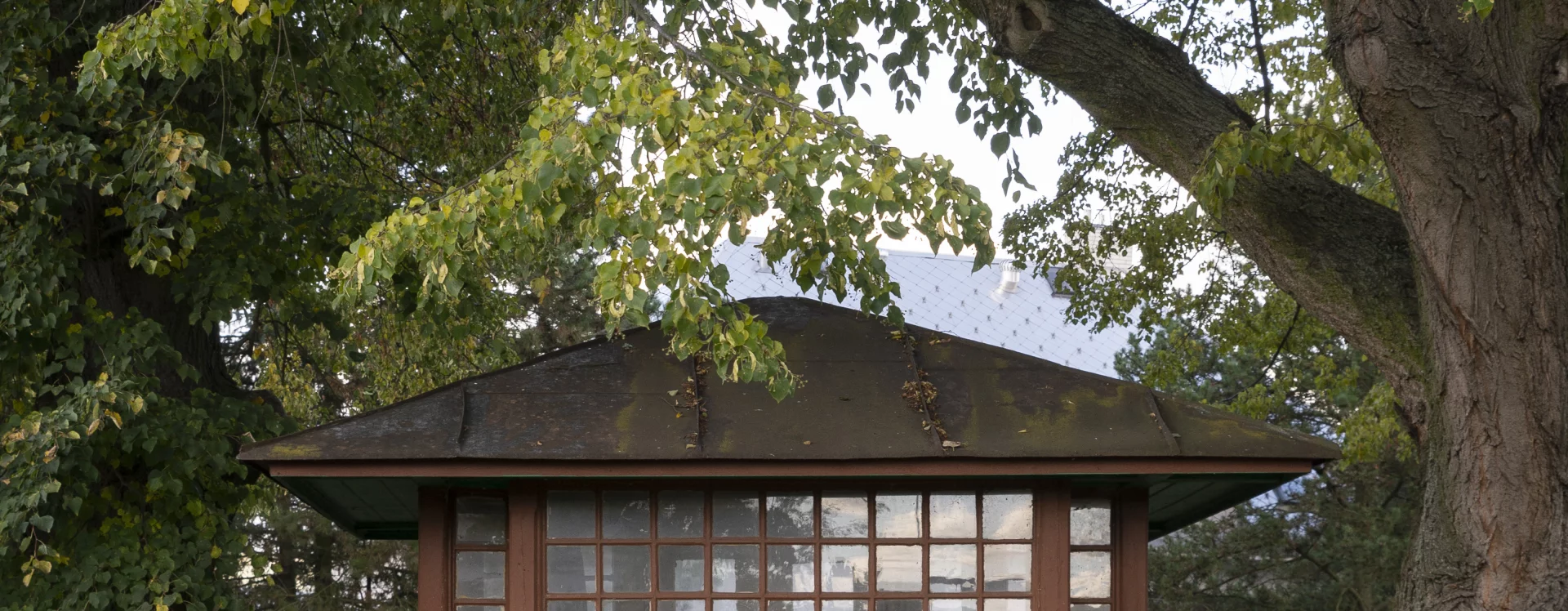
The villa’s garden was designed on several levels. Adjoining the ground floor was a terrace and ornamental garden, which continued up the slope into an orchard with a wooden gazebo. The grounds also featured three water elements—a small swimming pool, a pond for aquatic plants, and a decorative pond with a fountain.
After the Second World War, Josef Knap briefly served as head of the knitting department of the nationalized Czechoslovak Textile Works. In the late 1950s, however, he and his wife were accused of selling undeclared gold coins they had saved during the interwar period. In the ensuing political trial, they were sentenced to twelve and eight years respectively in prison, during which Josef Knap died.
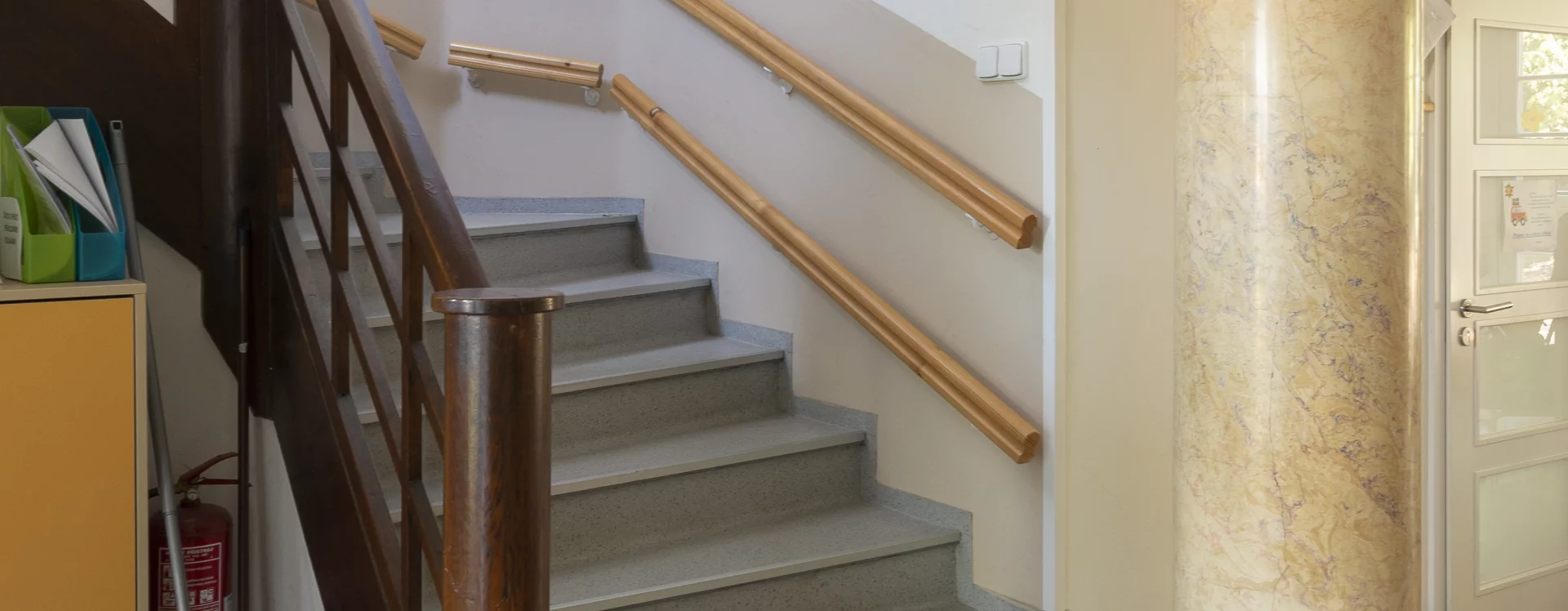
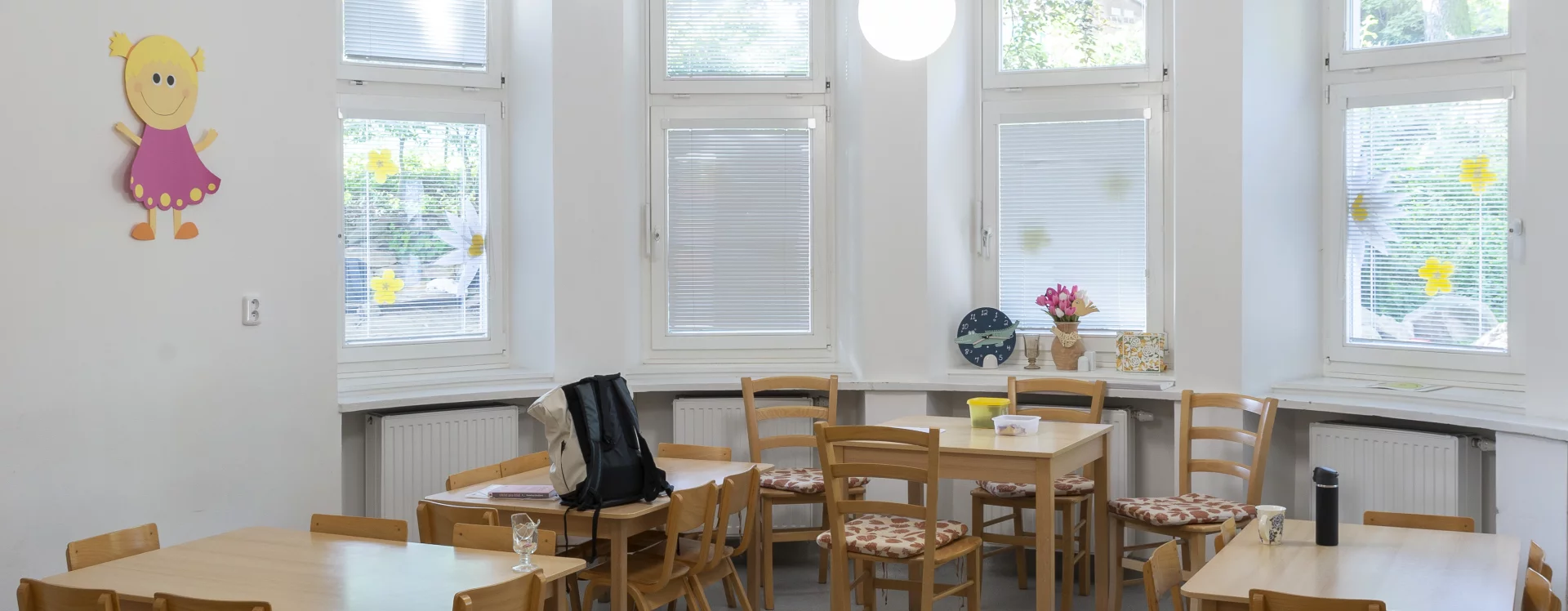
The villa was nationalized and converted into a nursery school, which still occupies the building today. Despite this, the original layout of both the house and the garden has been admirably preserved. Of the original interior fittings, however, only a few fragments remain—the columns in the entrance hall, the stair railings, and, in rare cases, door handles or fittings.
Zuzana Trnková, 2025
Literature
Michal Kamp. Jan Veselý a synové: šedesátileté dějiny jedné textilky za Černým mostem. In: Havlíčkobrodsko. Havlíčkův Brod, 2010, roč. 24, p. 88-105.
Zdeněk Lukeš. Vily Vlasty a Josefa Knapových. In: Jan Sedlák (ed.). Slavné vily kraje Vysočina. Praha, 2008, p. 119-120.
Michal Kamp. Knapova vila. In: Aleš Veselý (ed.). Příběhy brodských domů. Havlíčkův Brod, Galerie výtvarného umění v Havlíčkově Brodě, 2016, p. 218-219. ISBN 978-80-904726-9-3.
Sources
Městský úřad Havlíčkův Brod, archiv Stavebního úřadu. sv. č. p. 537.
Státní okresní archiv Havlíčkův Brod, fond Berní správa. sv. RD748.