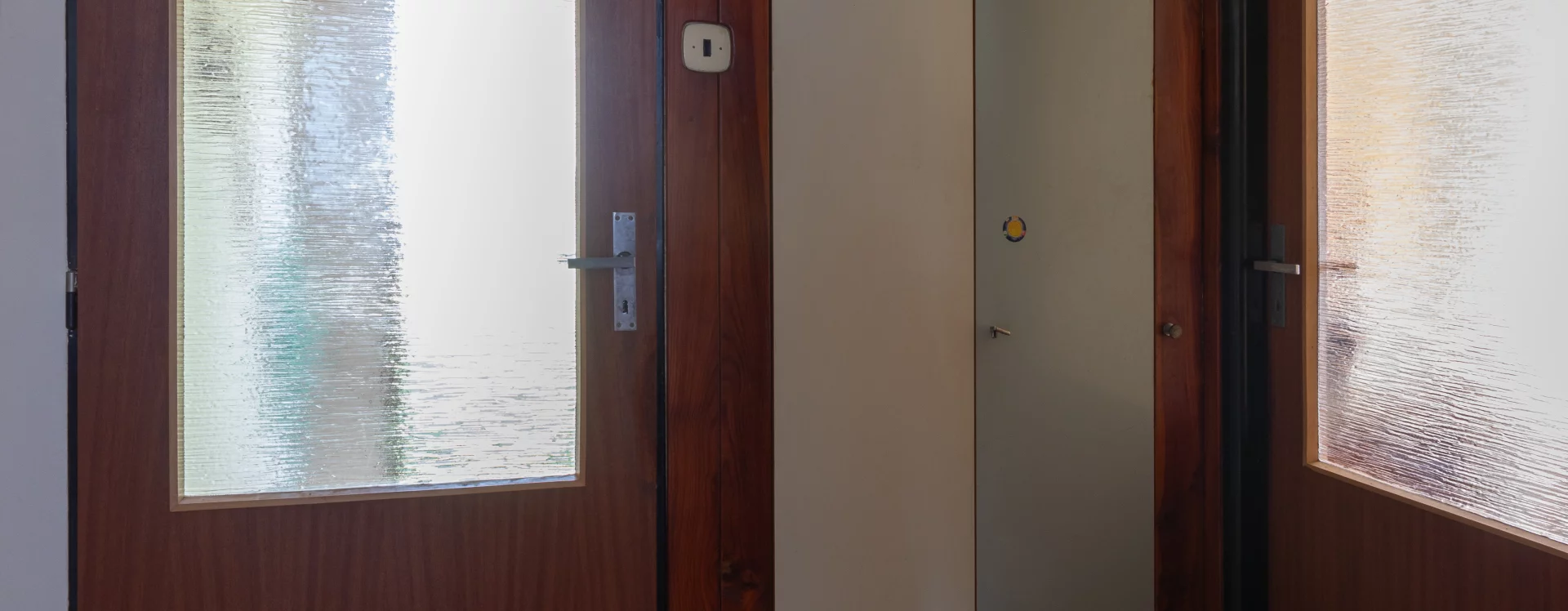
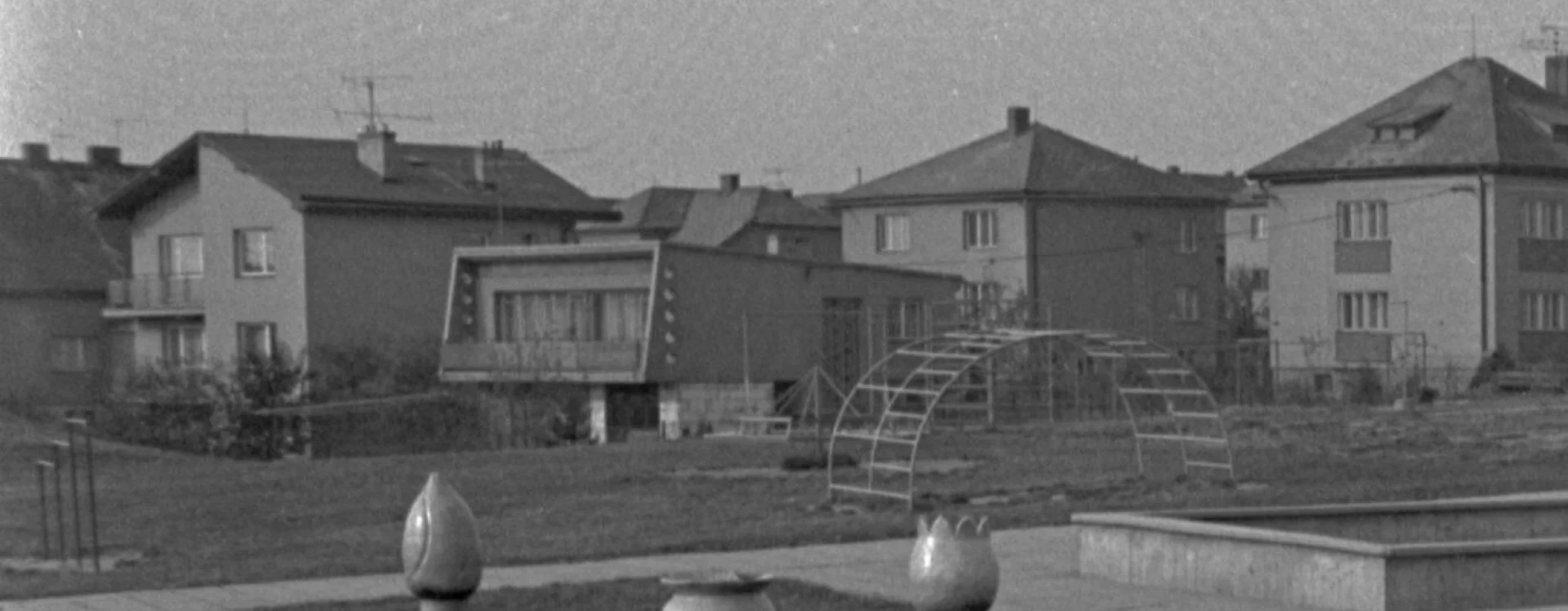
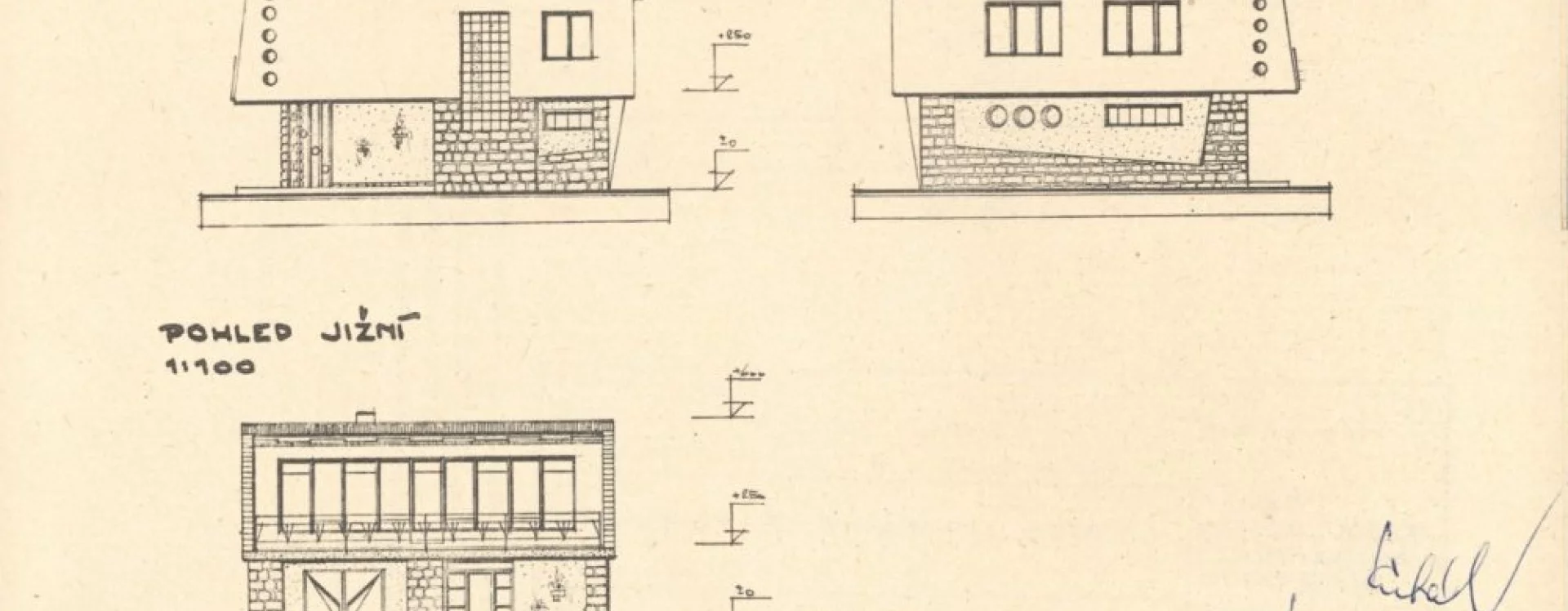
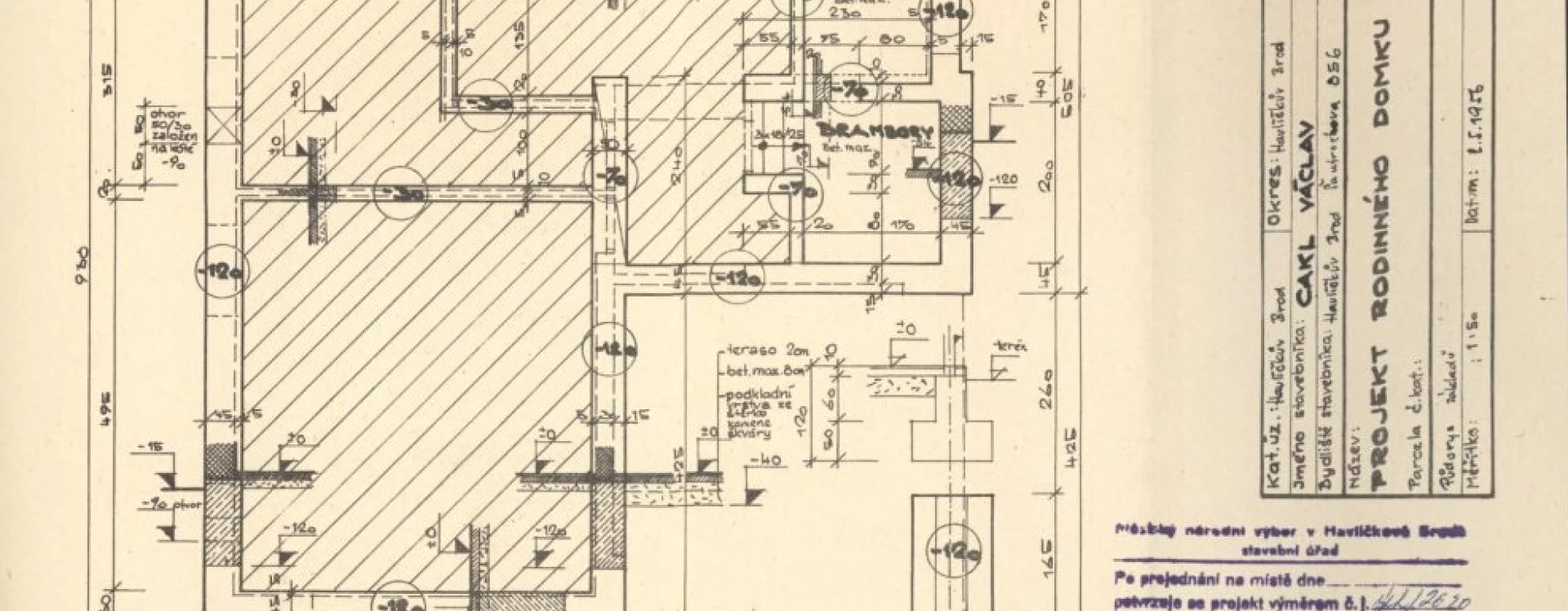
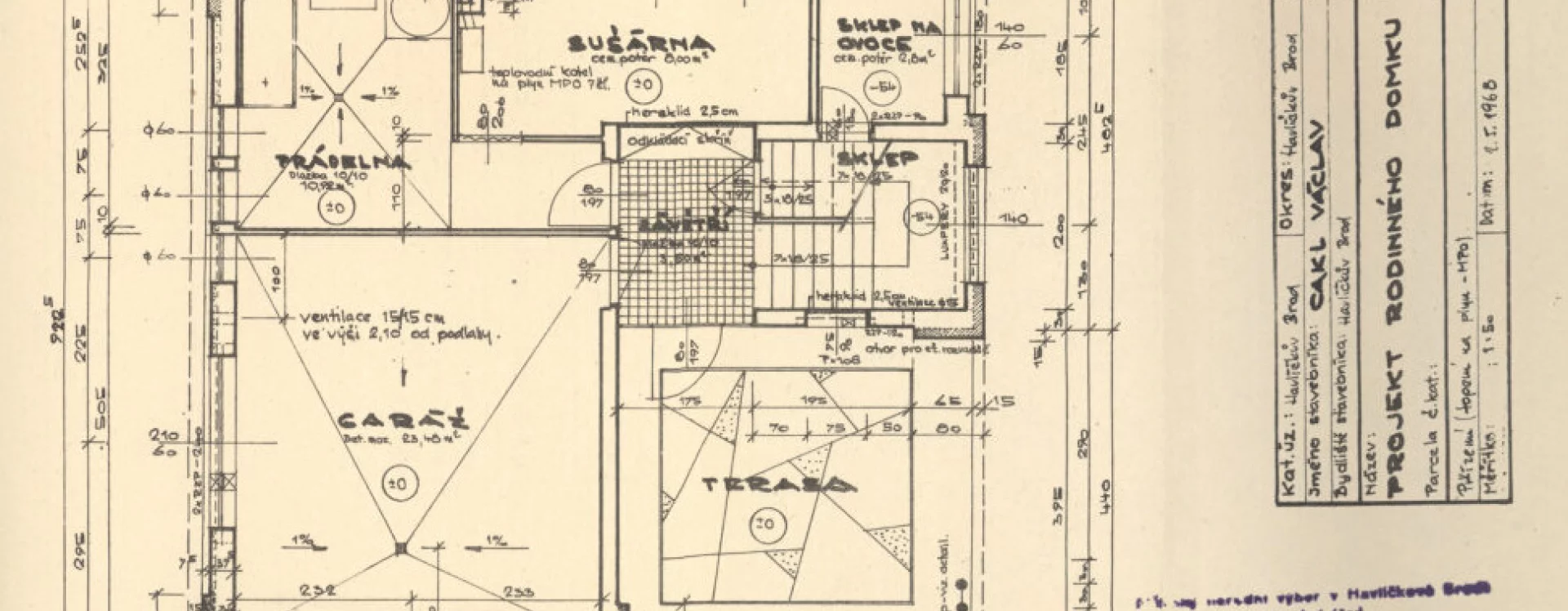
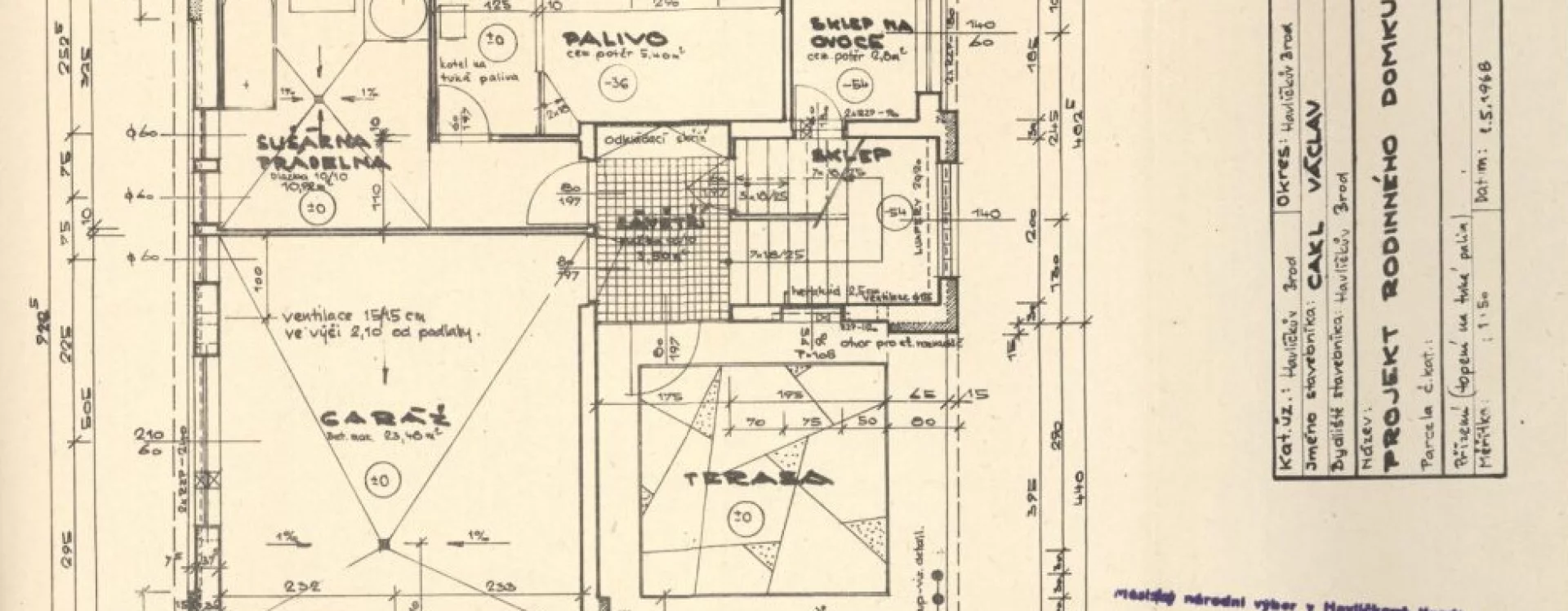
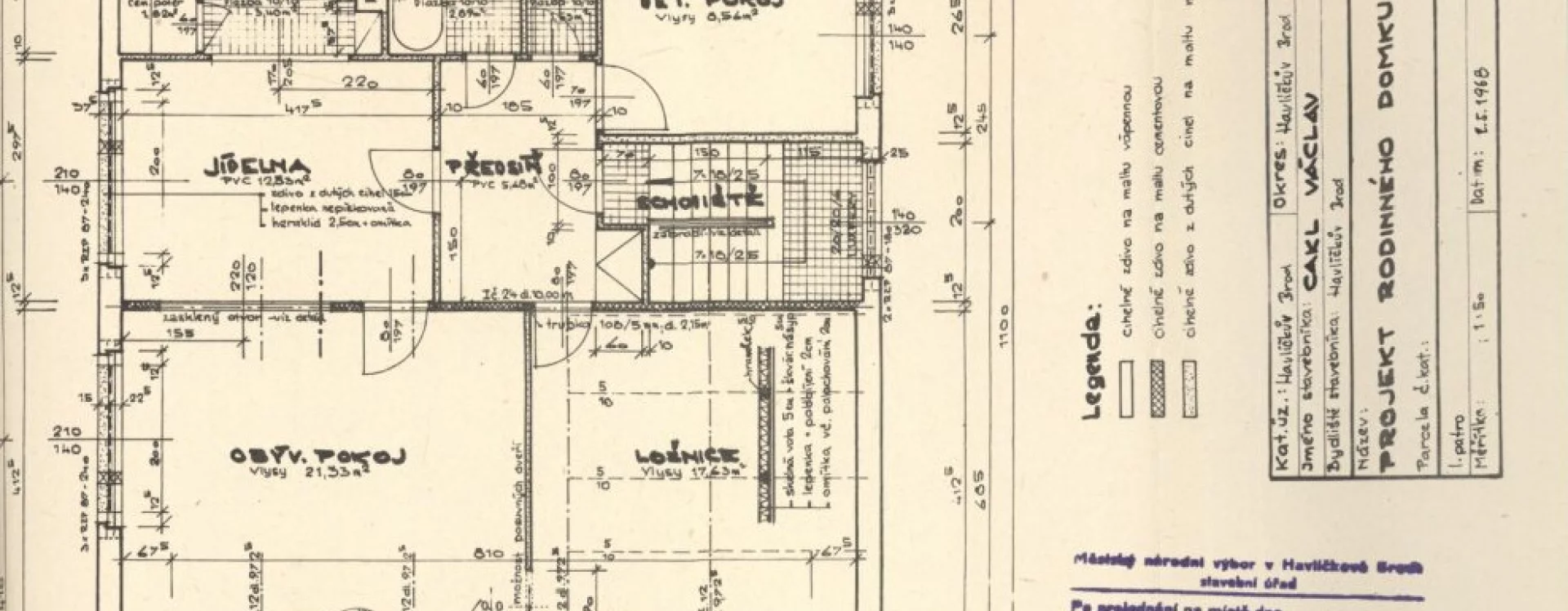
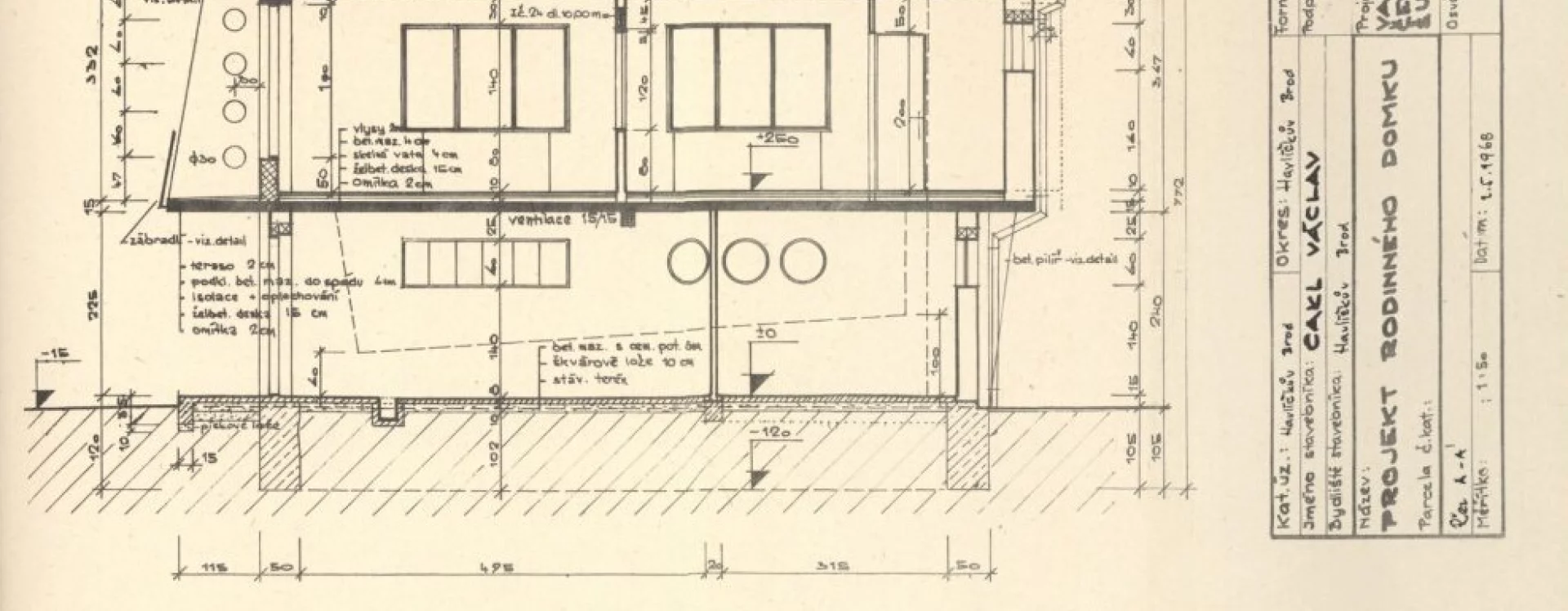
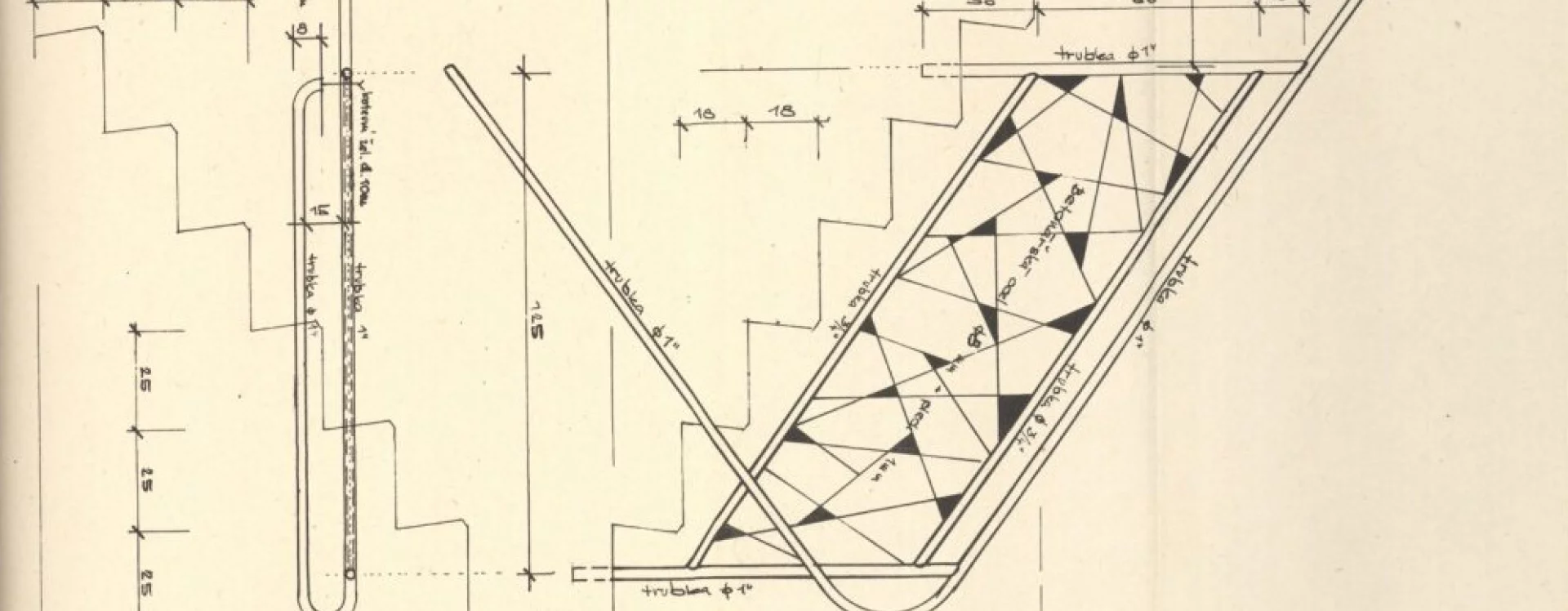
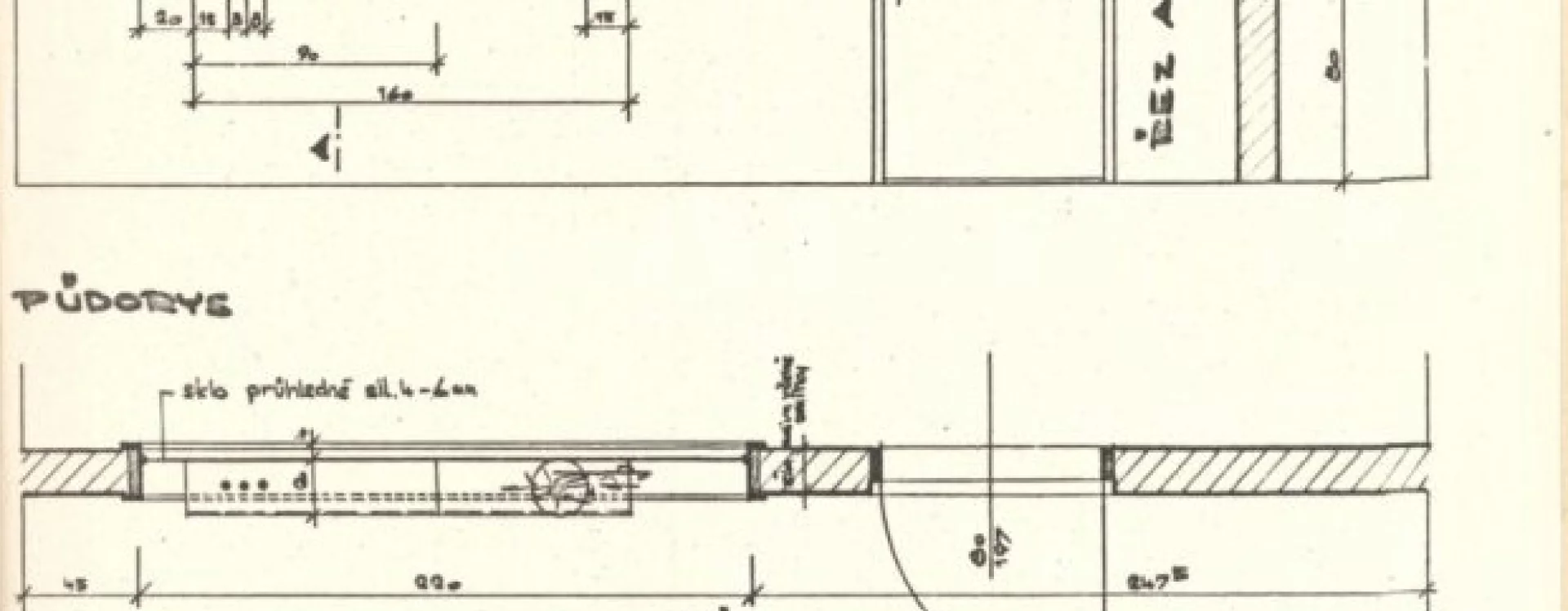
From the beginning of the 20th century, the area east of Budoucnost Park gradually underwent development and the Žižkov district began to take shape. More substantial construction occurred in the postwar period, when, at the end of the 1950s, the Obránců mírů (Žižkov I) housing estate was built on nationalized land. In the 1960s, the land above the housing estate was divided into garden plots and sold to individuals interested in private housing. However, due to the limited capacity of construction companies and the scarcity of building materials, the houses had to be built by the buyers themselves. At the same time, state-prioritized housing estate construction was also underway in the new district.
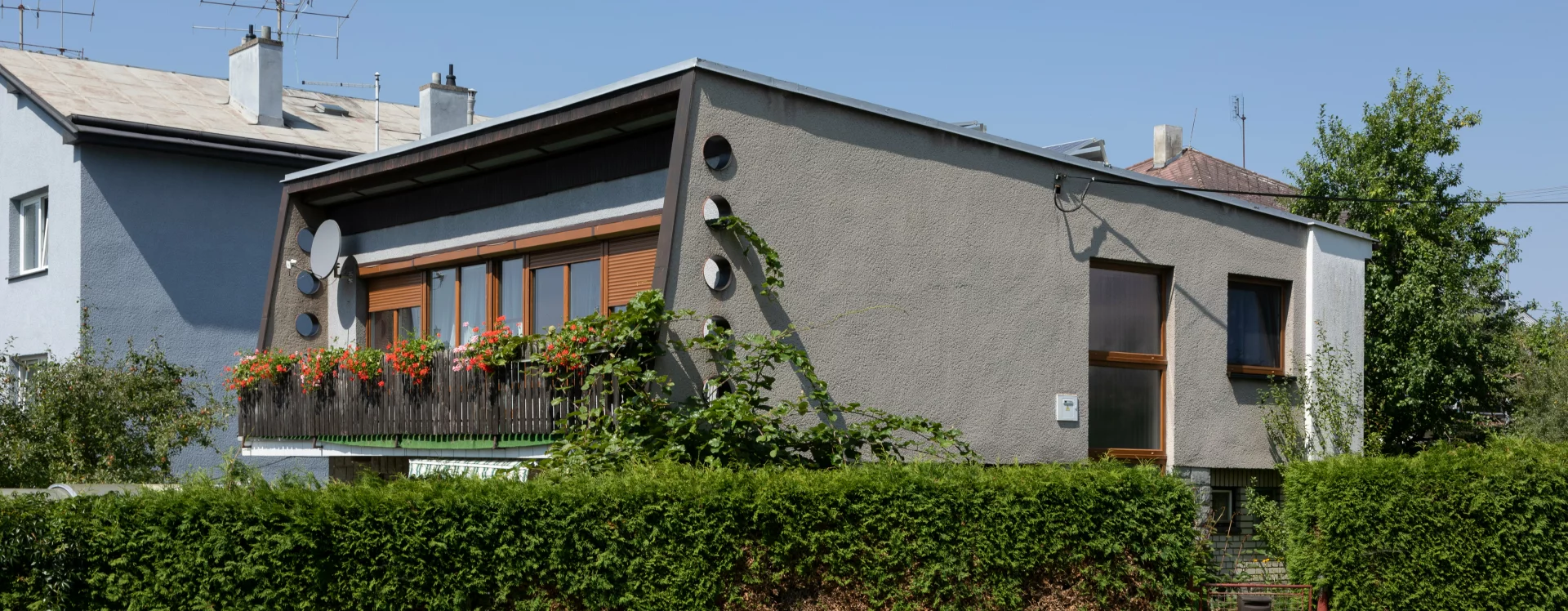
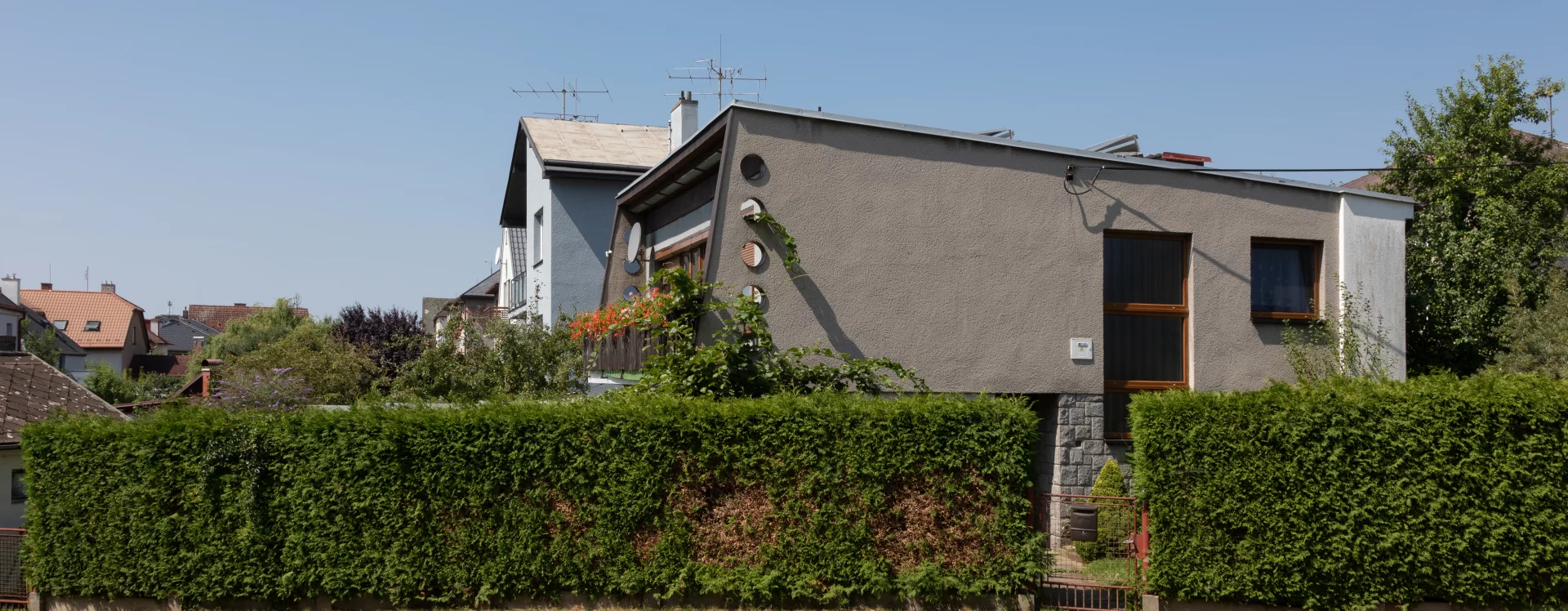
Between 1968 and 1970, the Cakl couple built a standardized detached house on a corner plot, now formed by the intersection of Práčat and Jeronýmova streets, according to a design by the Šumperk builder Josef Vaněk (1932–1999).
The design for a Type V family house, popularly known as a ‘Šumperák’, was created by Vaněk in 1966, and although private construction was frowned upon by the regime at the time in favour of collective housing, the modernist house with a new layout and design became a phenomenon, with variations being built until the 1980s. In the former Czechoslovakia, around 5,000 buildings were constructed over a period of 20 years. The project designer summarized his main ideas in the very first sentence of the technical report: “Saving on materials, achieving modern living, and reducing construction costs are what led me to pursue this type of detached house design.”
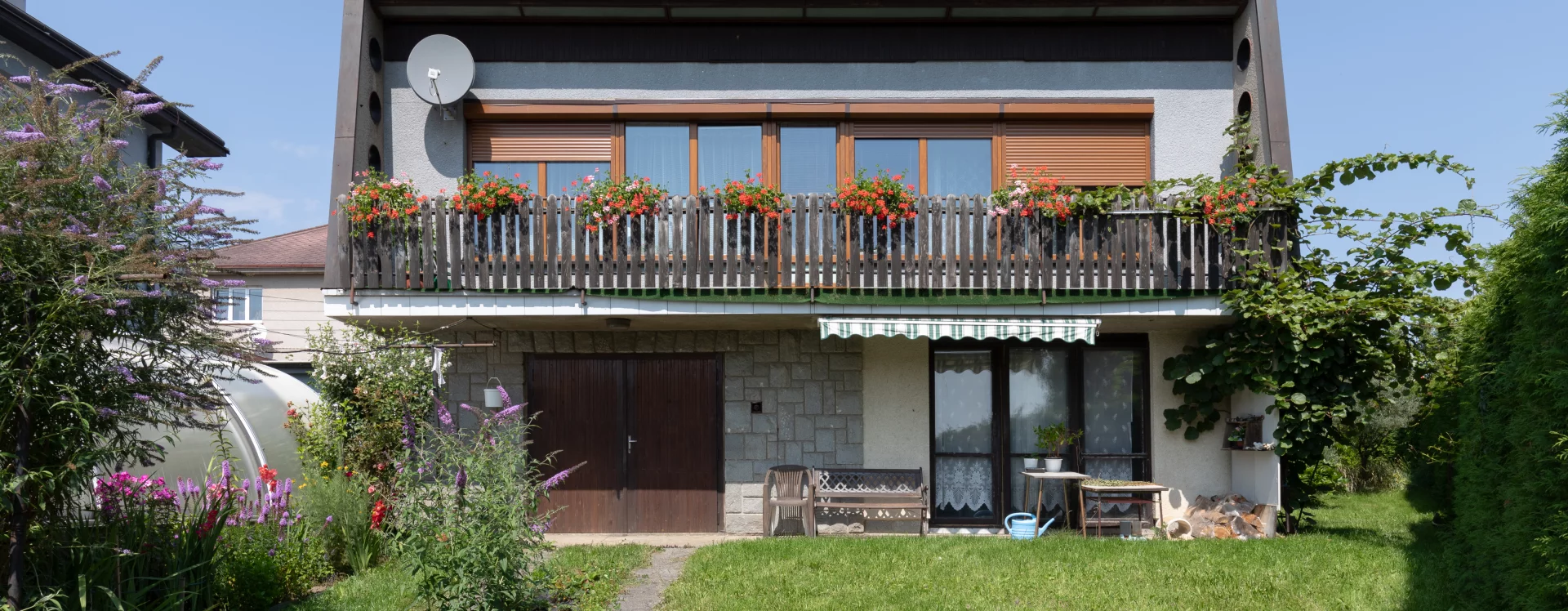
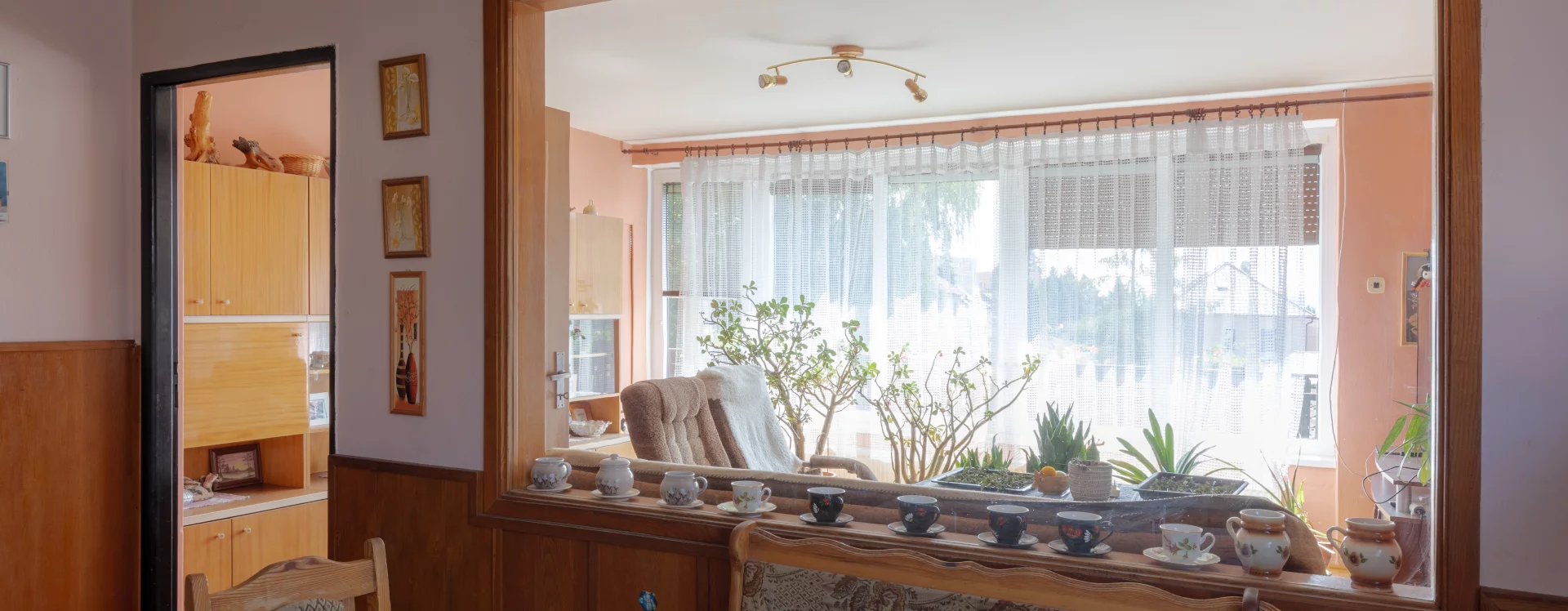
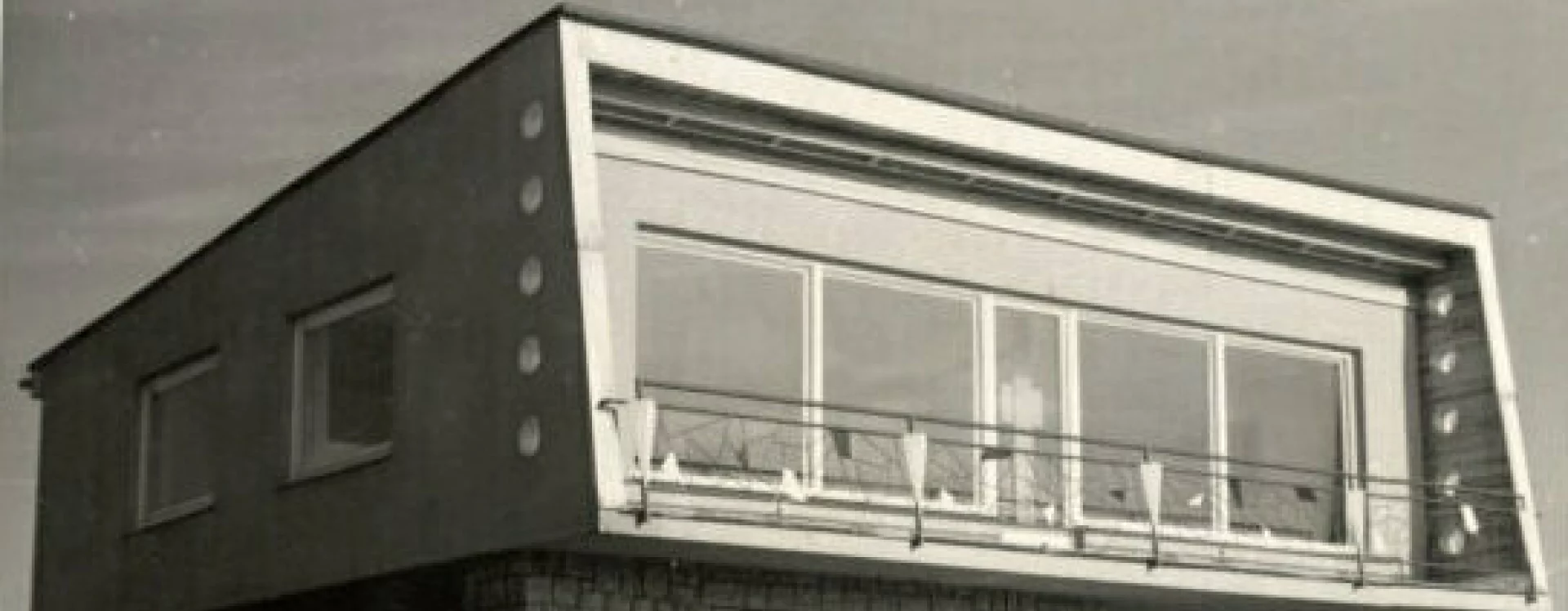
For 842 crowns (roughly the equivalent of one month’s salary), builders could purchase plans for a small two-storey house, the ground floor of which served as utility space (garage, boiler room, laundry room, drying room, fruit and potato cellar), and the first floor, accessible via a prefabricated staircase, contained an apartment consisting of a hallway, toilet, bathroom, kitchenette with pantry, dining room, children’s room and living room with bedroom, from which there was access to a balcony. Although Vaněk proposed several variants of the project, the exterior retains the common element of a flat roof, a protruding first floor with a balcony with ribbon windows, and the use of motifs of various slopes and circles based on the so-called Brussels style. The project was particularly attractive due to its relatively low budget (100,000 crowns) and speed of construction – Vaněk declared that the house could be built by one bricklayer and two assistants in two months.
Like many builders at the time, the Cakls created their own variation of Vaněk’s original project, adapting it to their requirements. They added a garage to the rear of the building and opted not to build a covered terrace on the ground floor.
Unlike in nearby Chotěboř, where several streets with more than thirty ‘Šumperák’ houses were built, this type of house was very rarely seen in Havlíčkův Brod. The Cakl home is one of the few examples of this type of private construction in Havlíčkův Brod, and it is also one of the best preserved.
Aleš Veselý, 2025
Literature
Tomáš Pospěch, Martine Mertová, Josef Vaněk. "Šumperák". Praha, PositiF, 2015. p. 18-30. ISBN 978-80-87407-13-4.
Anna Waisserová Šubrtová. Rodinný dům typu V, tzv. šumperák. In: Litomyšlský architektonický manuál. Available from: https://lam.litomysl.cz/objekt/03-196-rodinny-dum-typu-v-tzv-sumperak [accessed 9. 7. 2025]
Sources
Městský úřad Havlíčkův Brod, archiv Stavebního úřadu. sv. č. p. 1044.