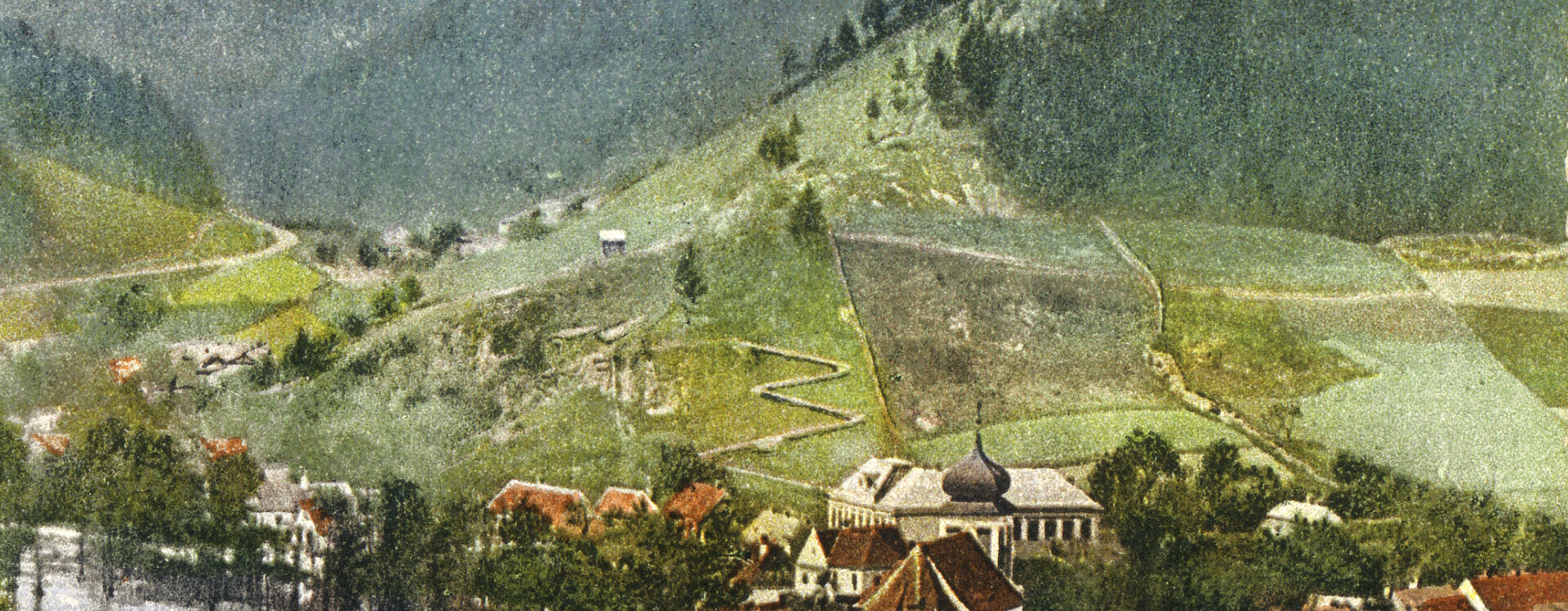
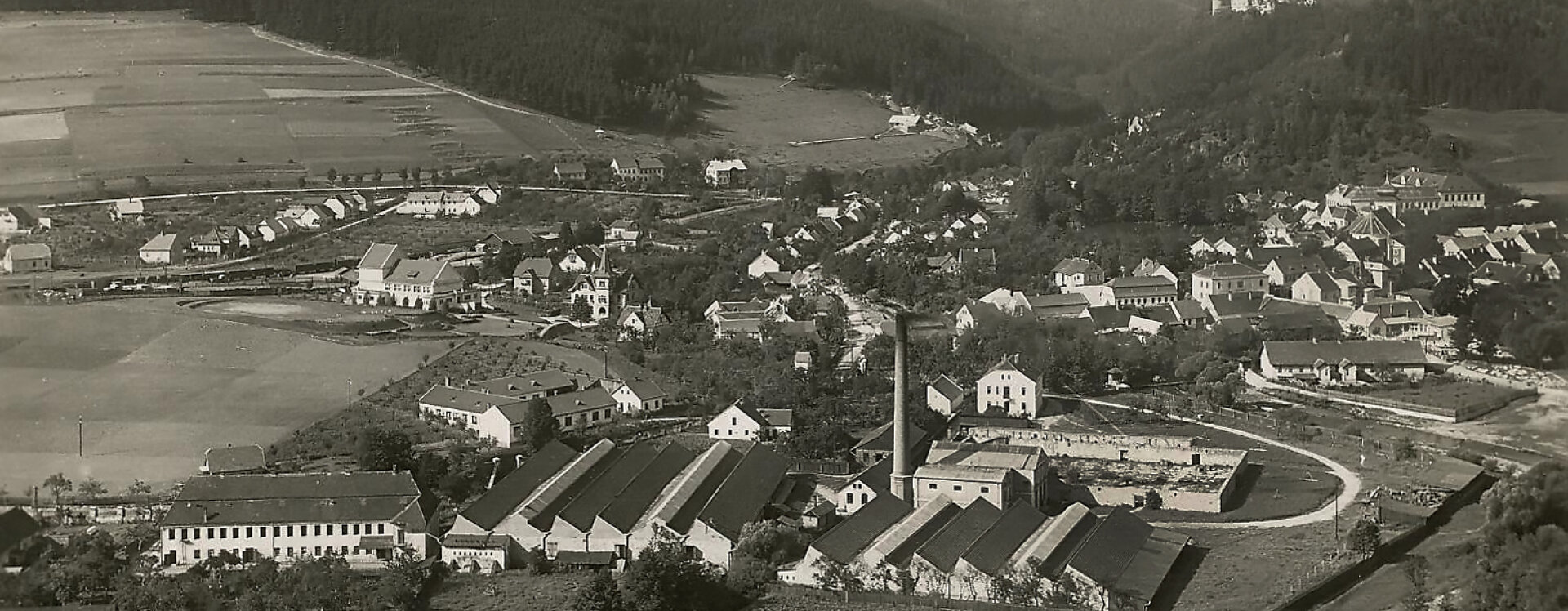
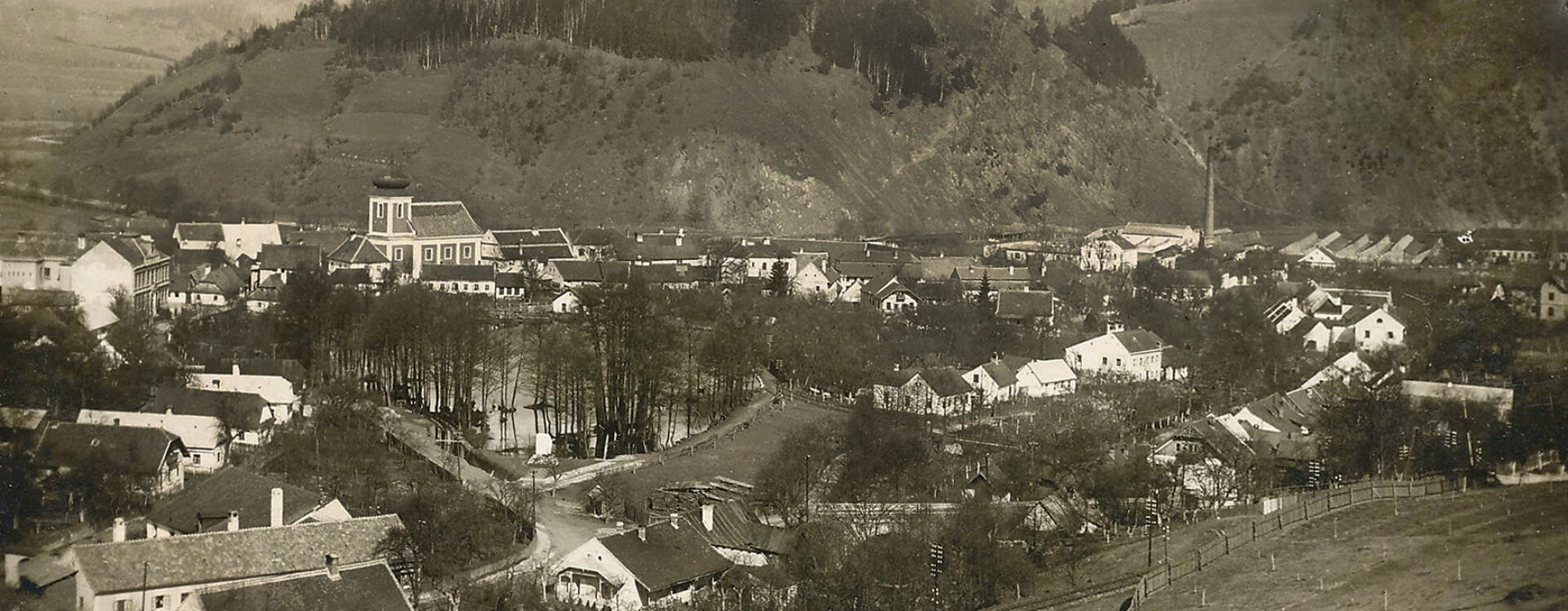
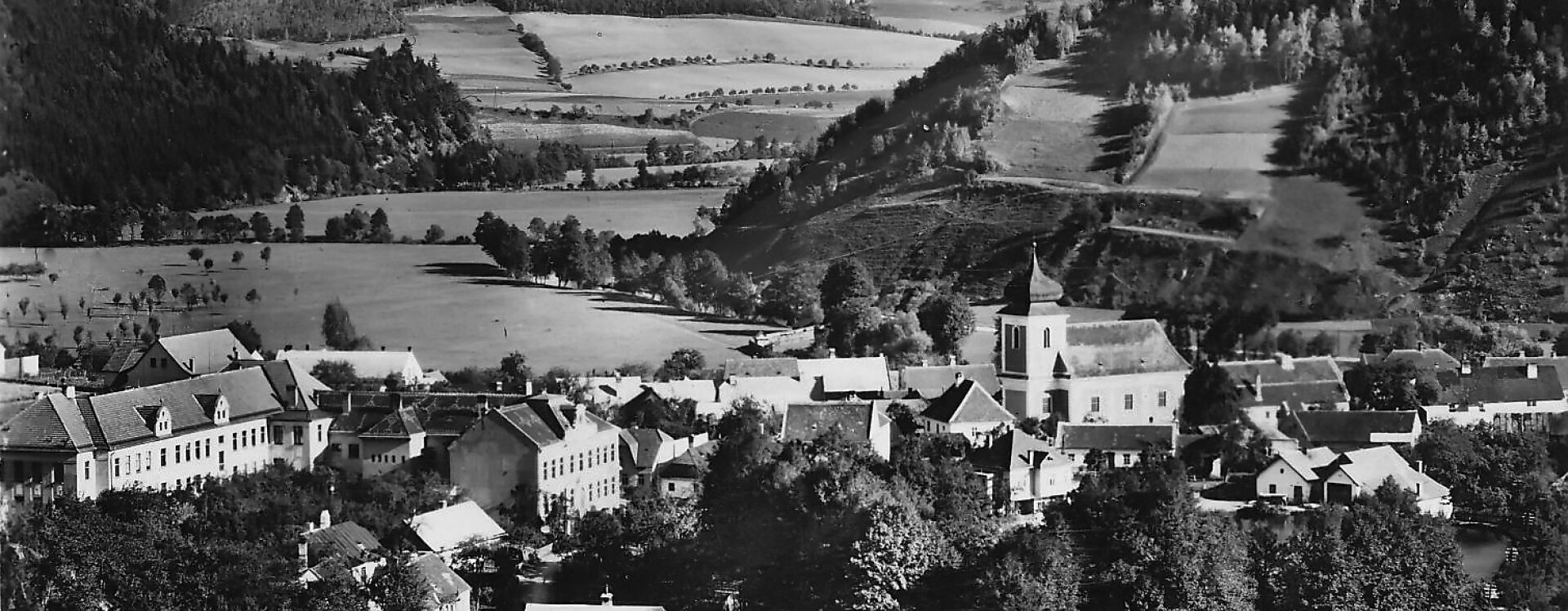
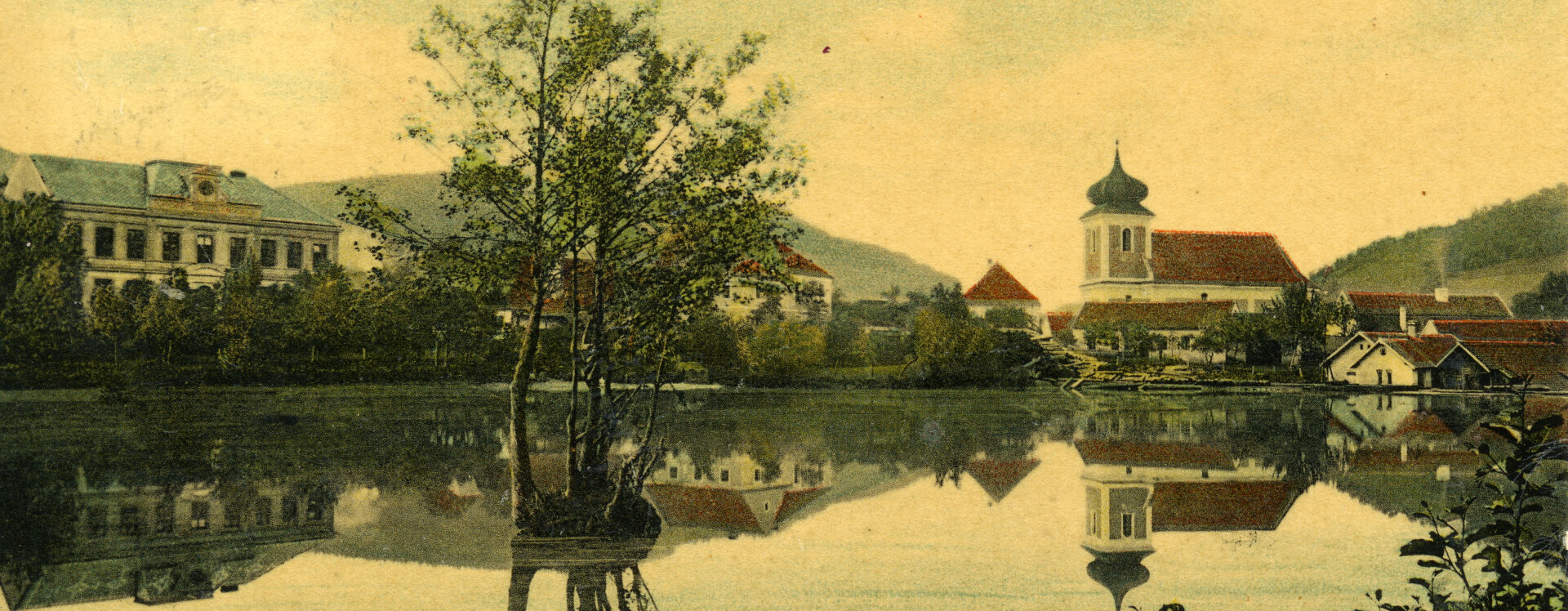
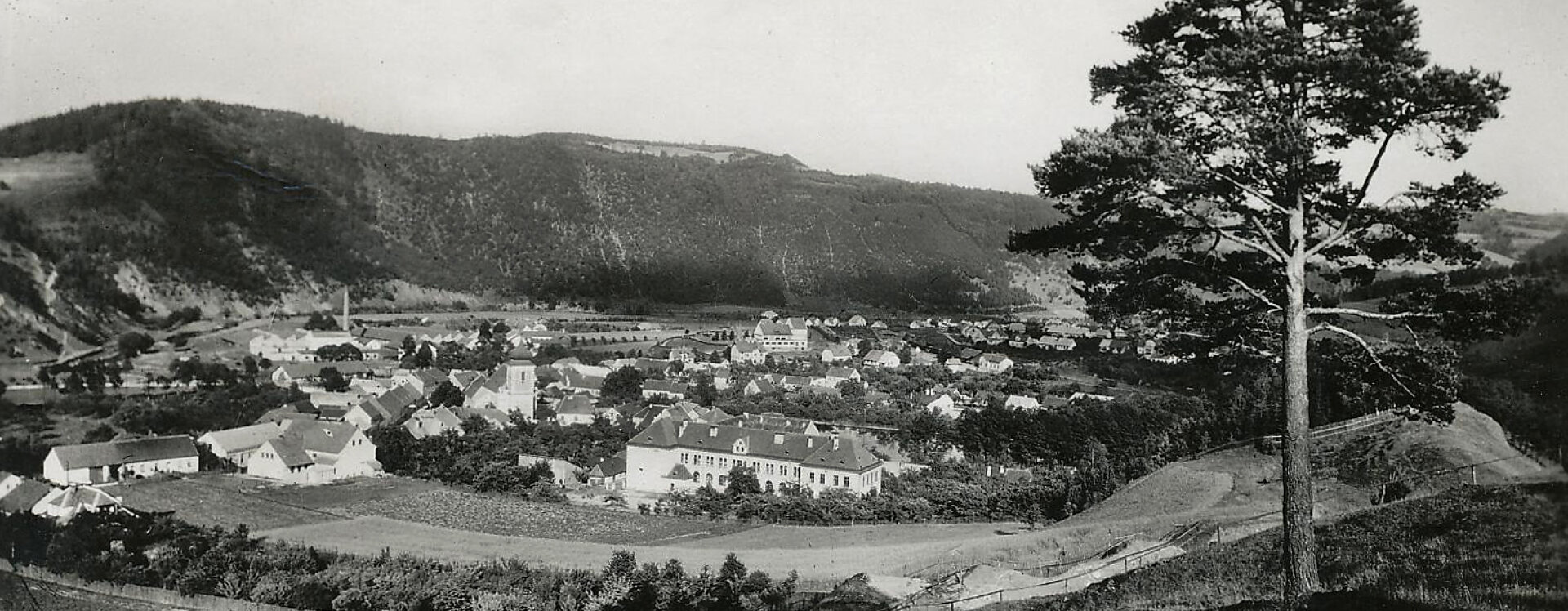
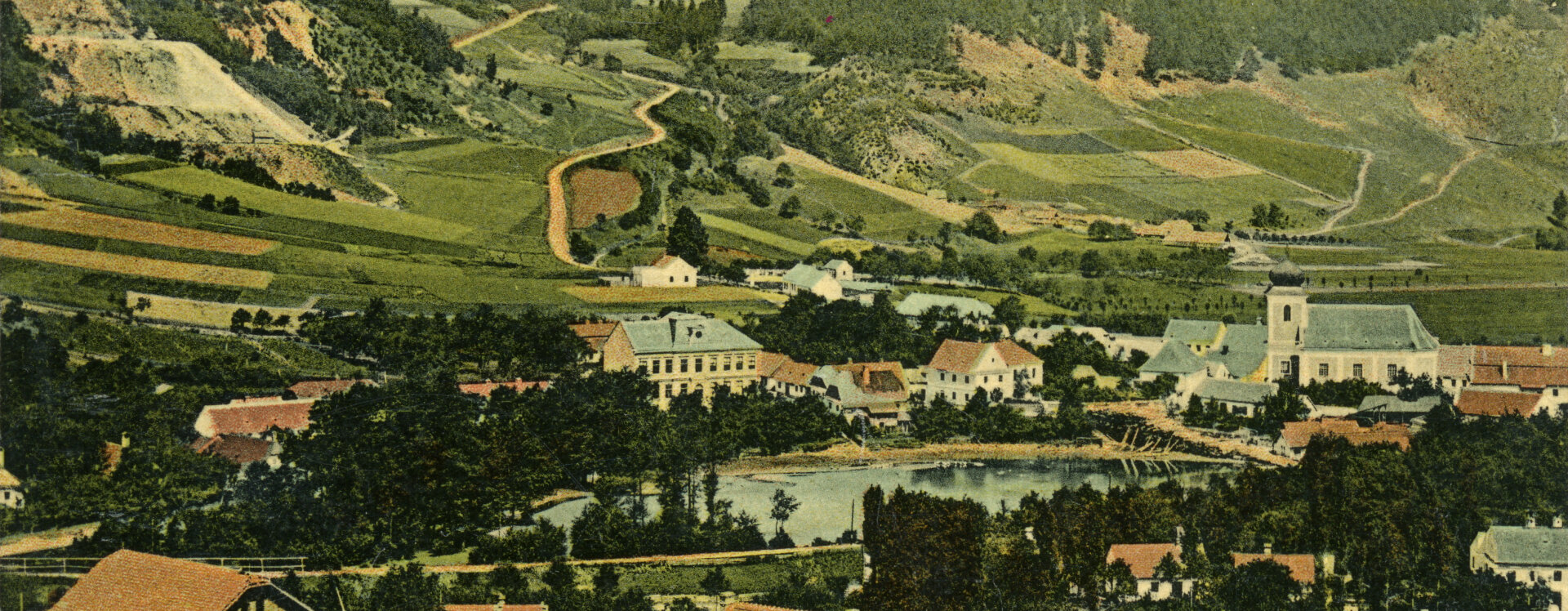
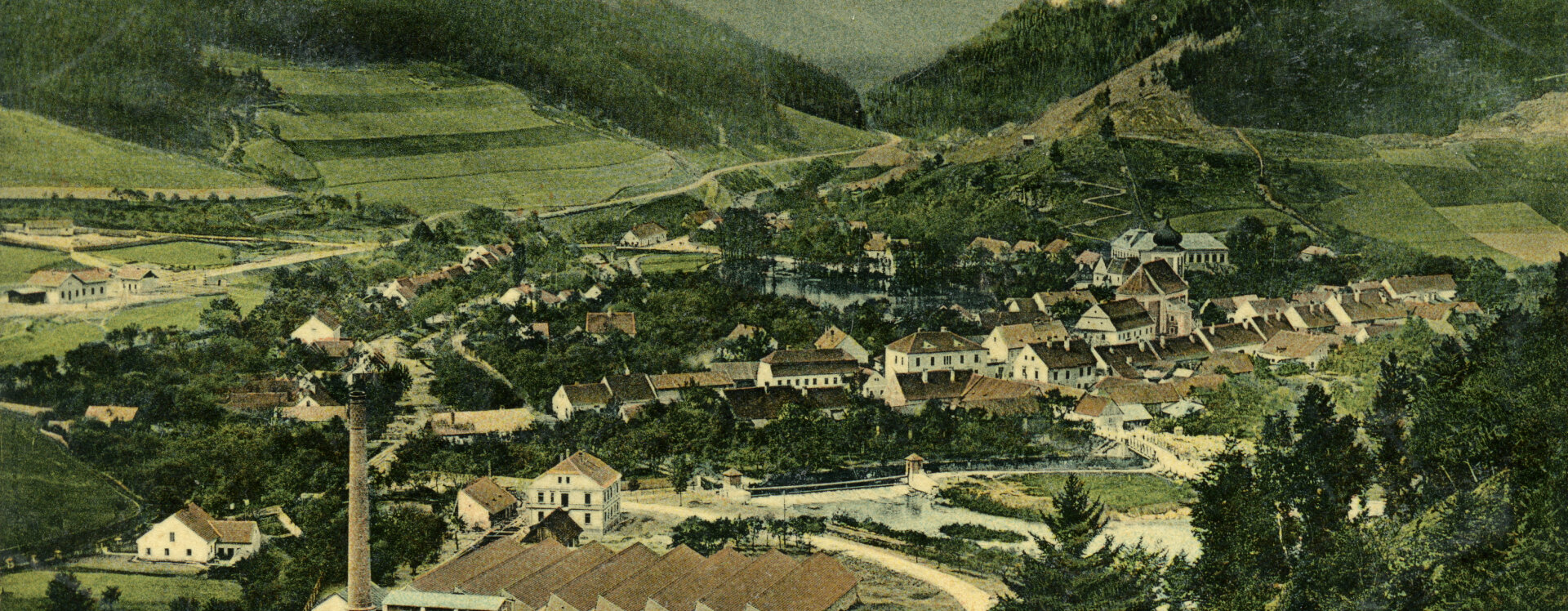
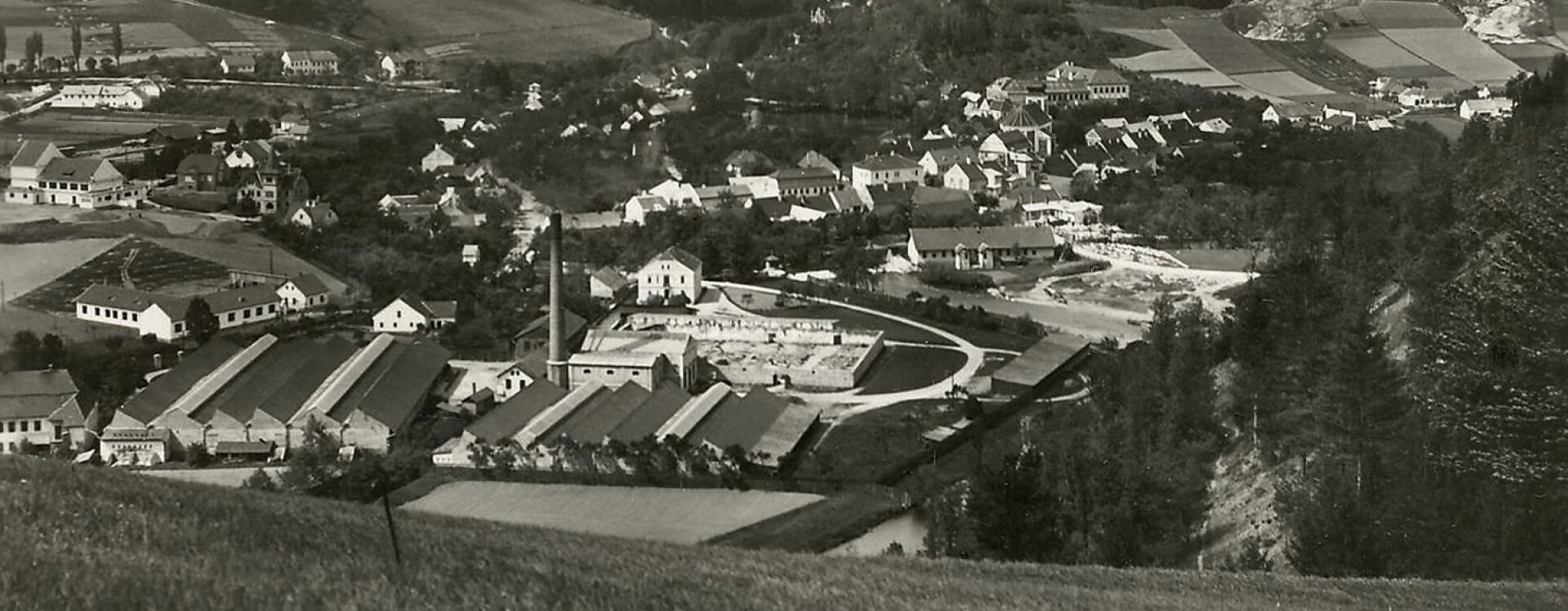
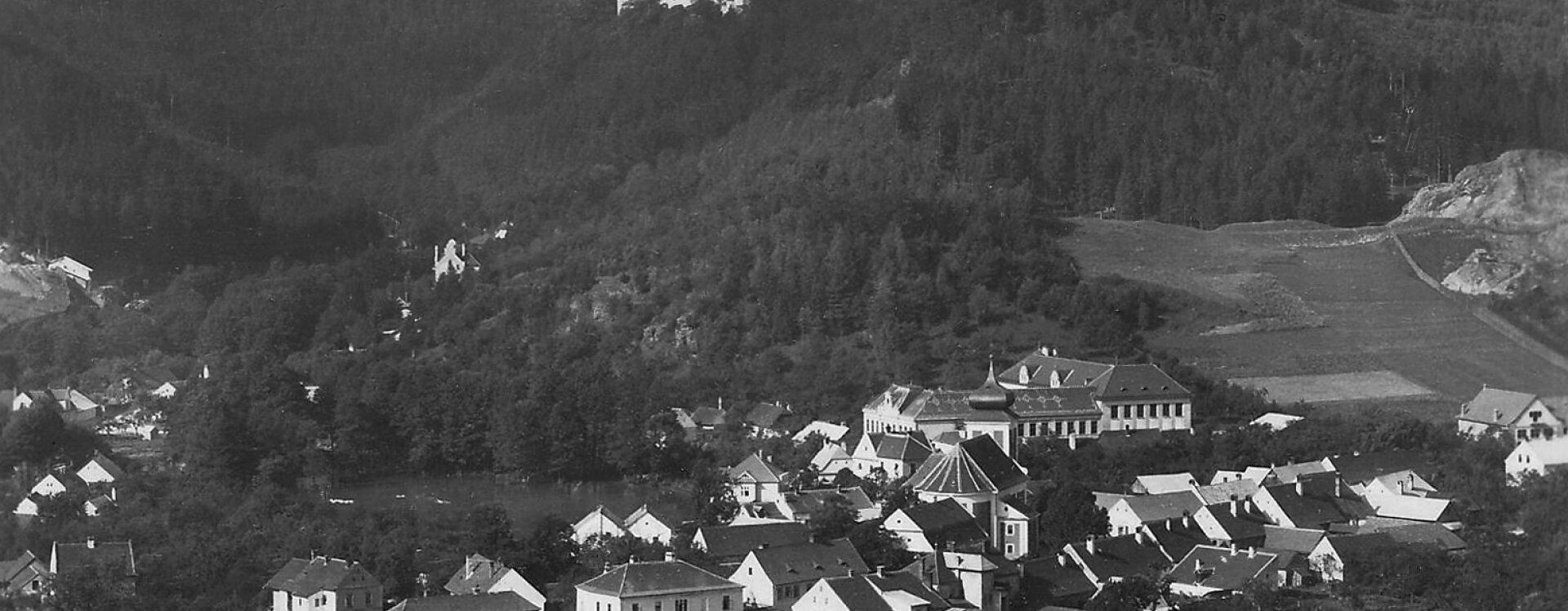
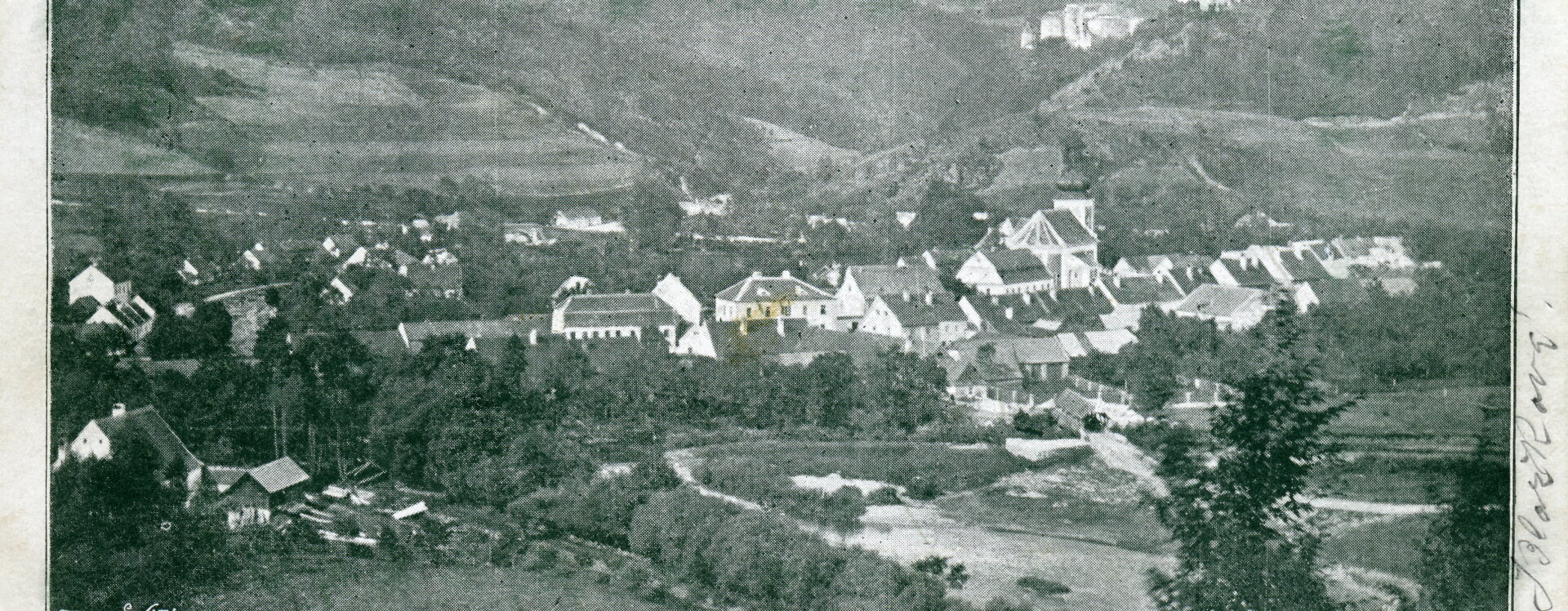
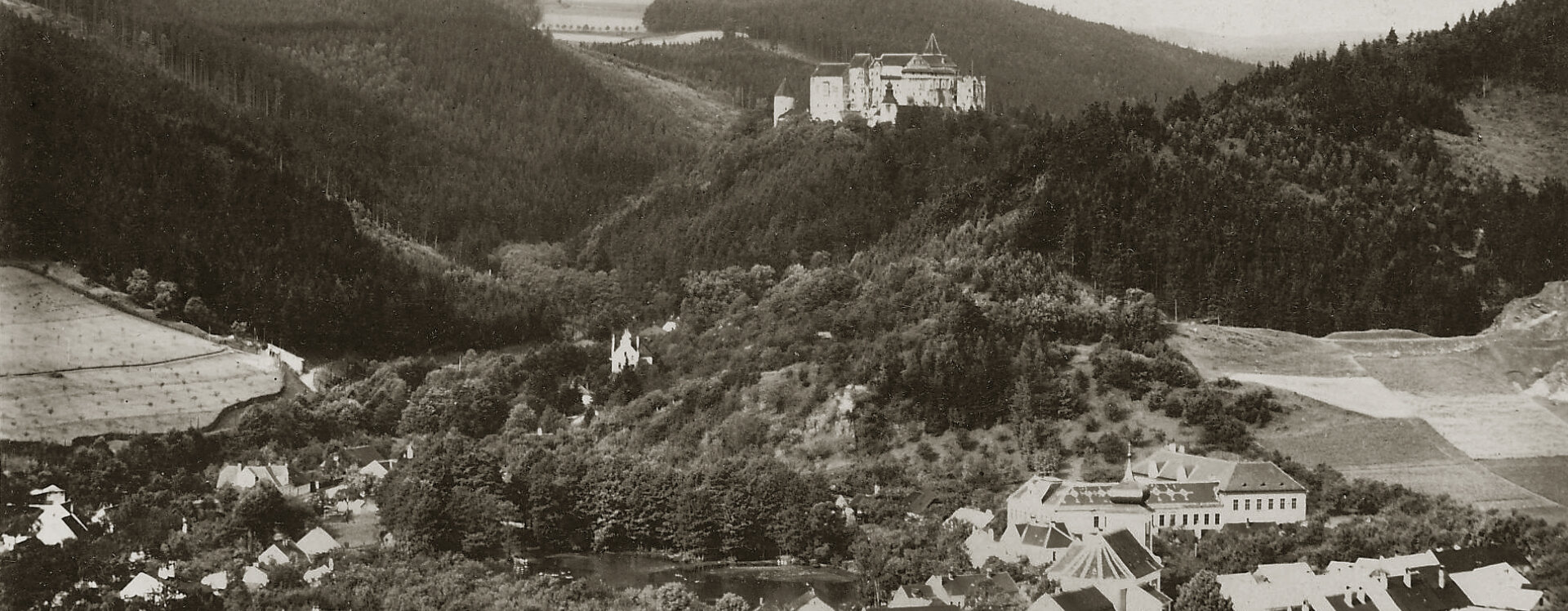
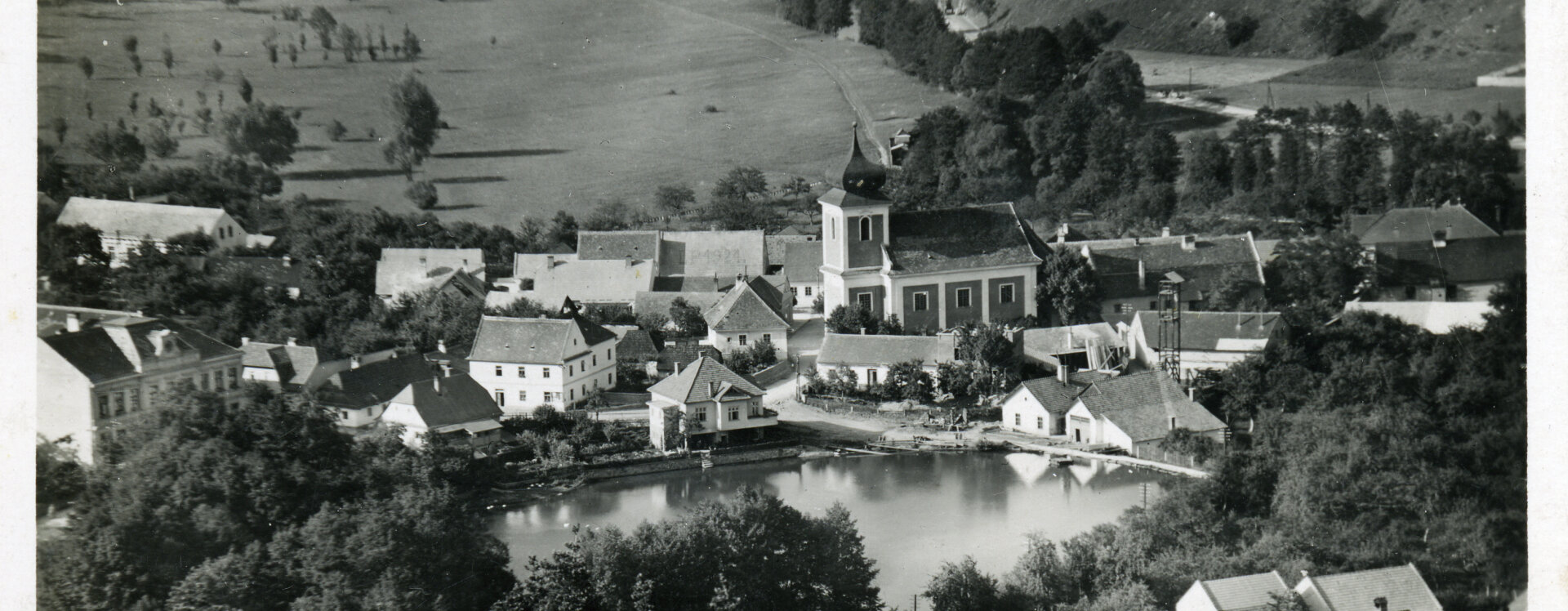
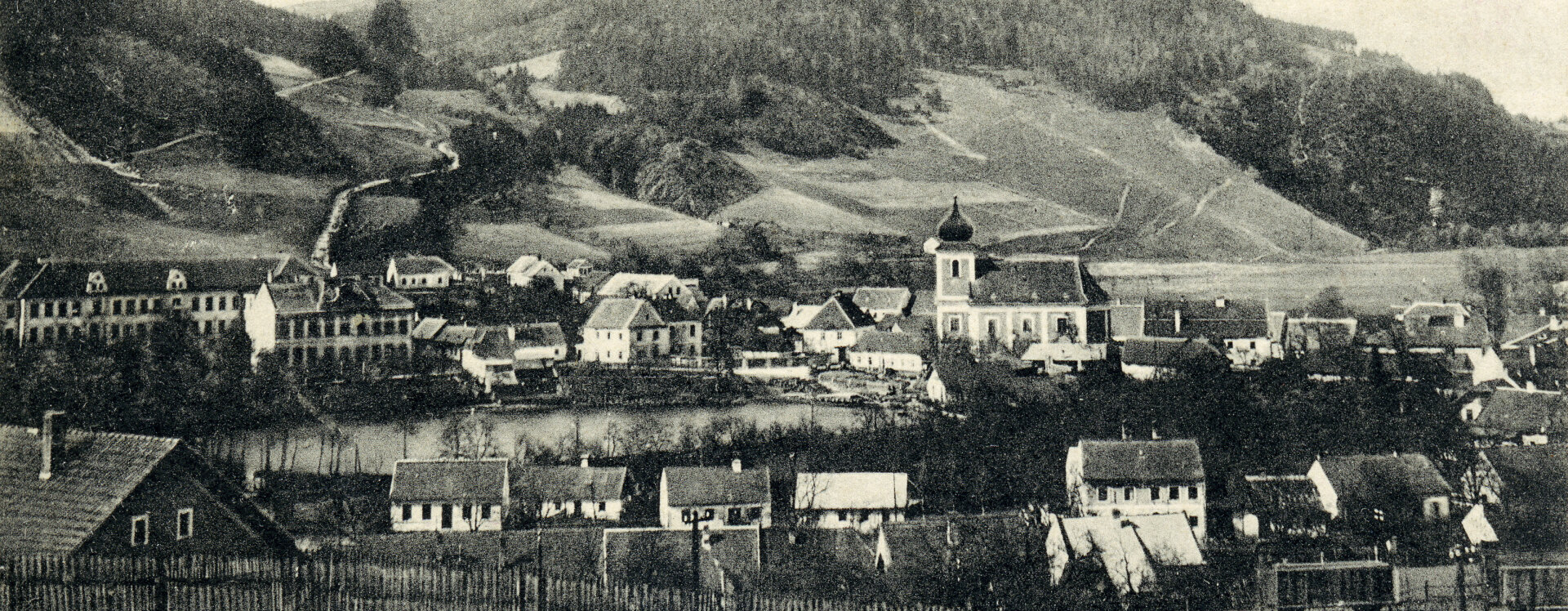
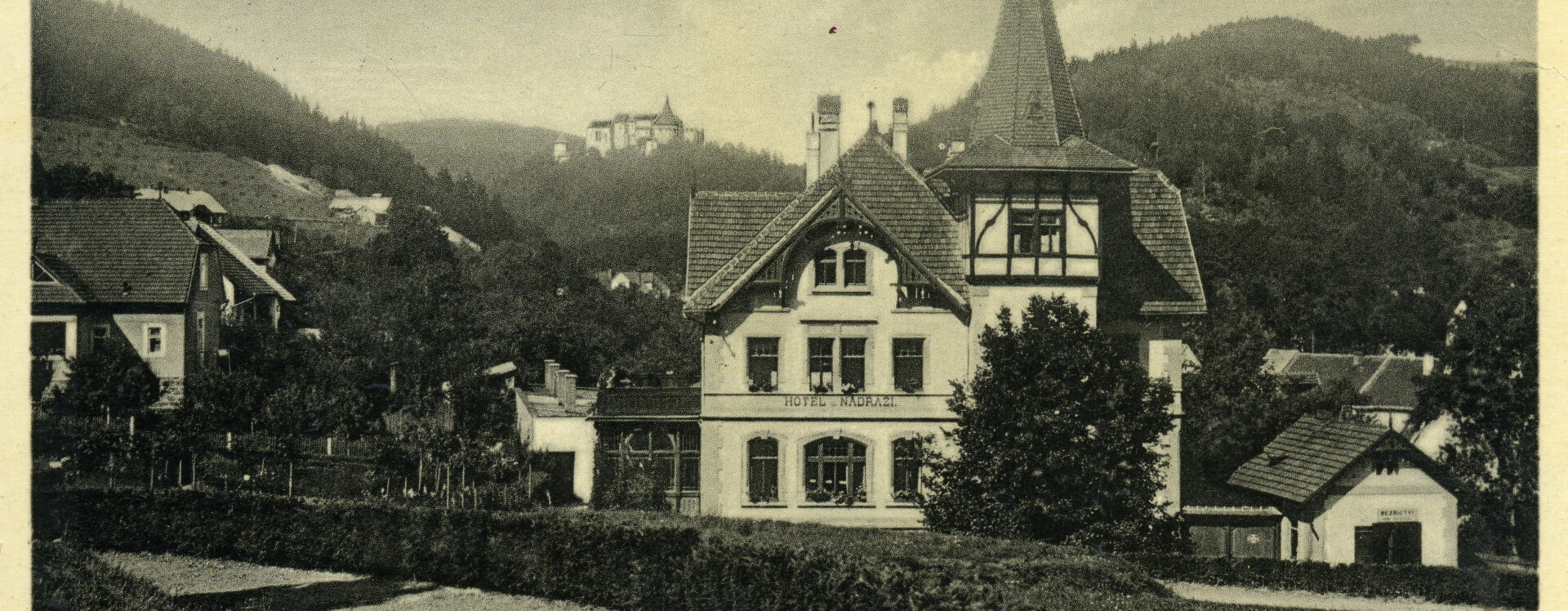
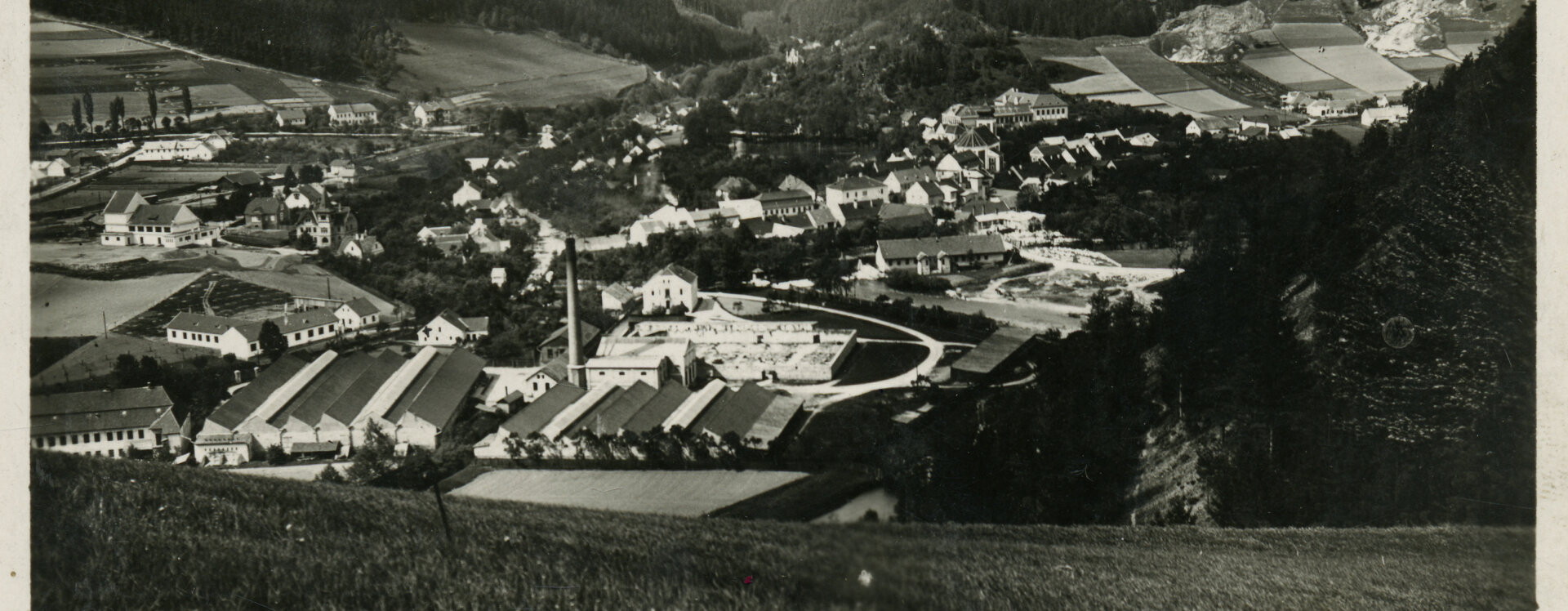
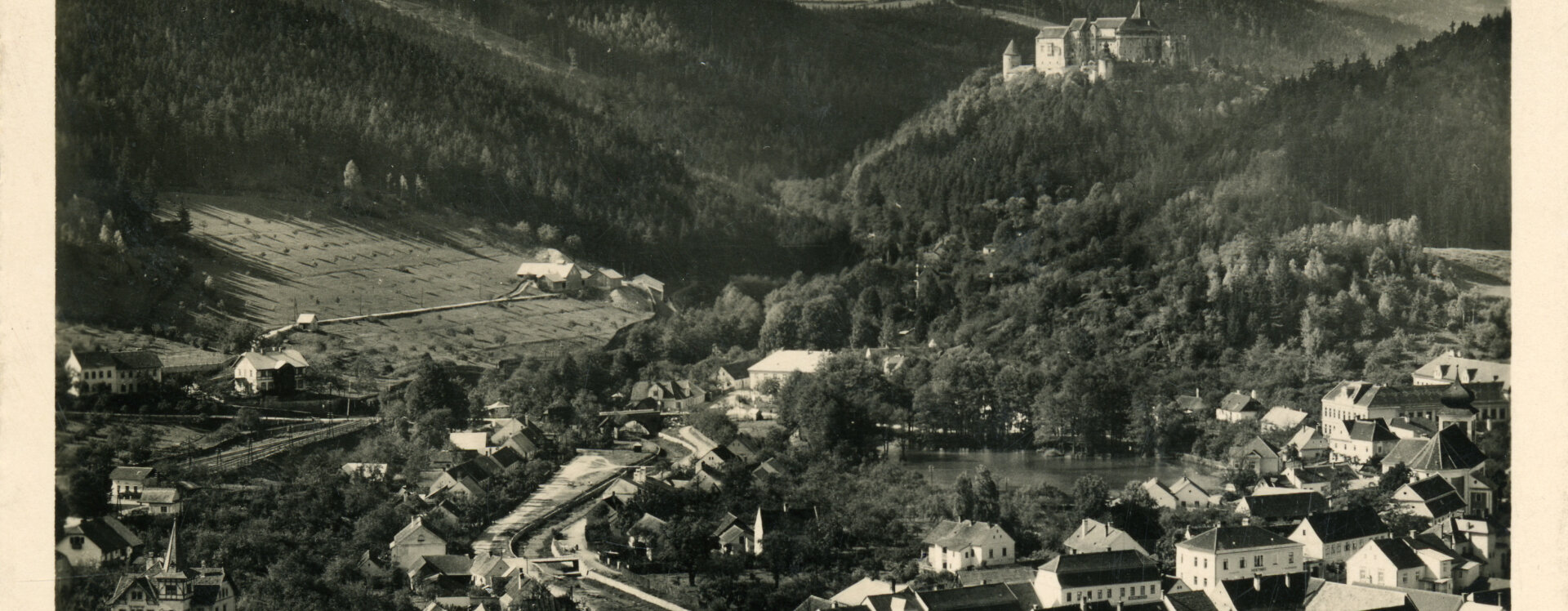
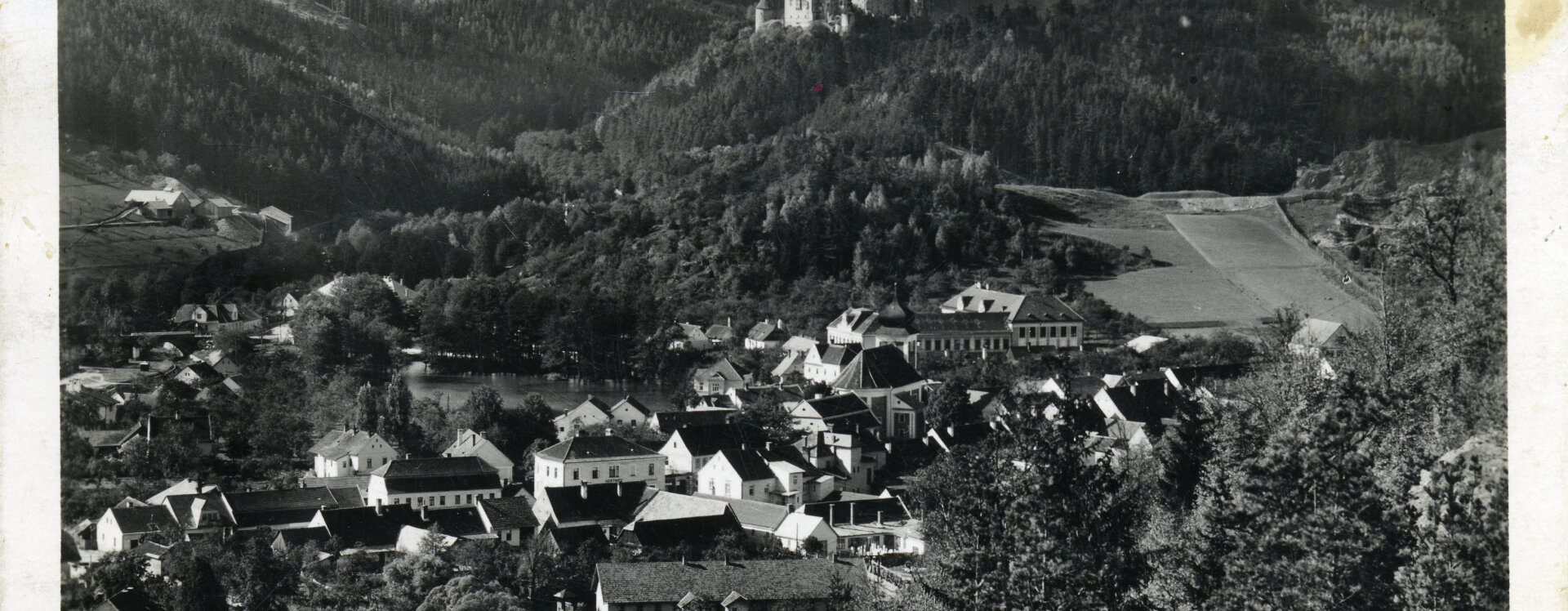
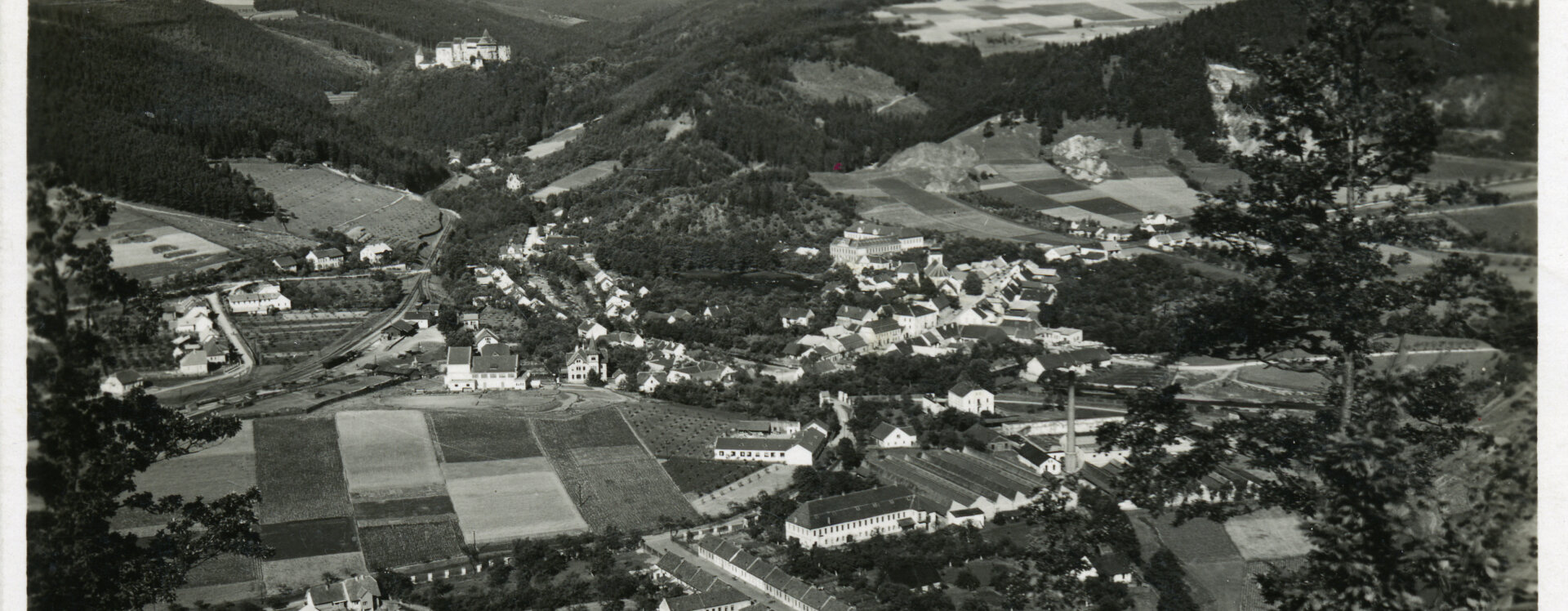
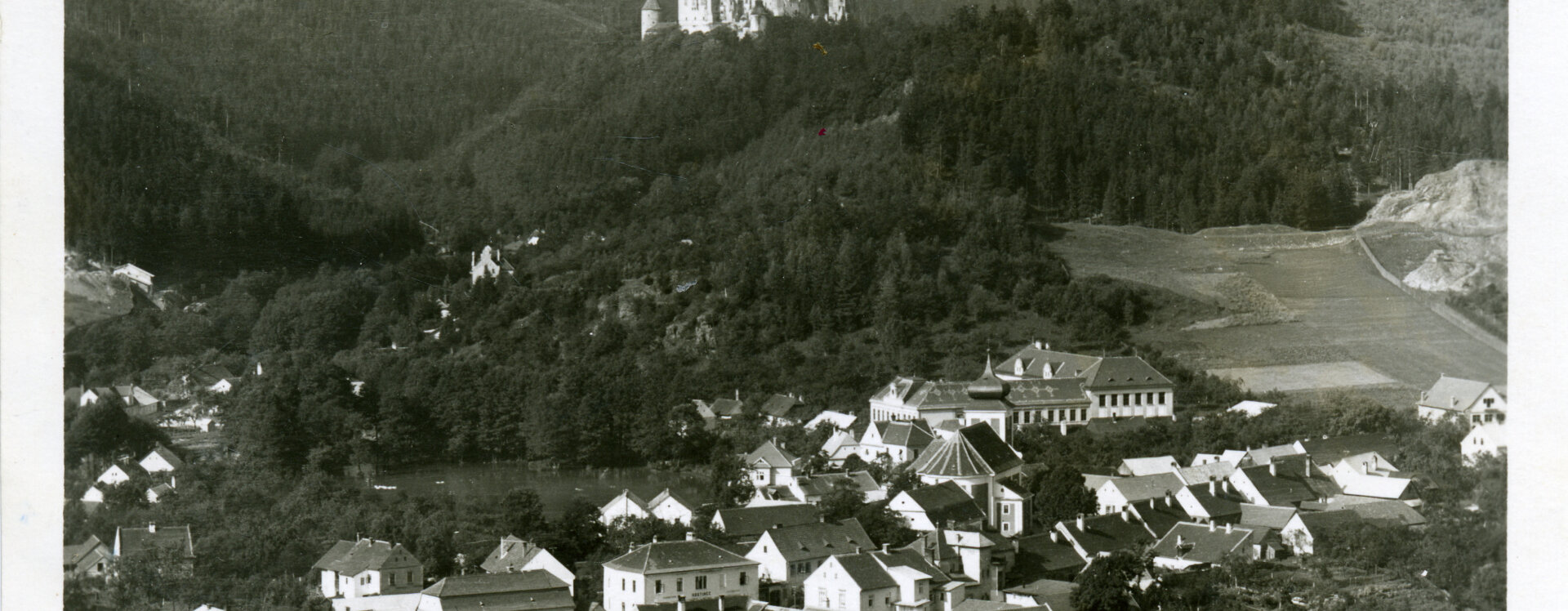
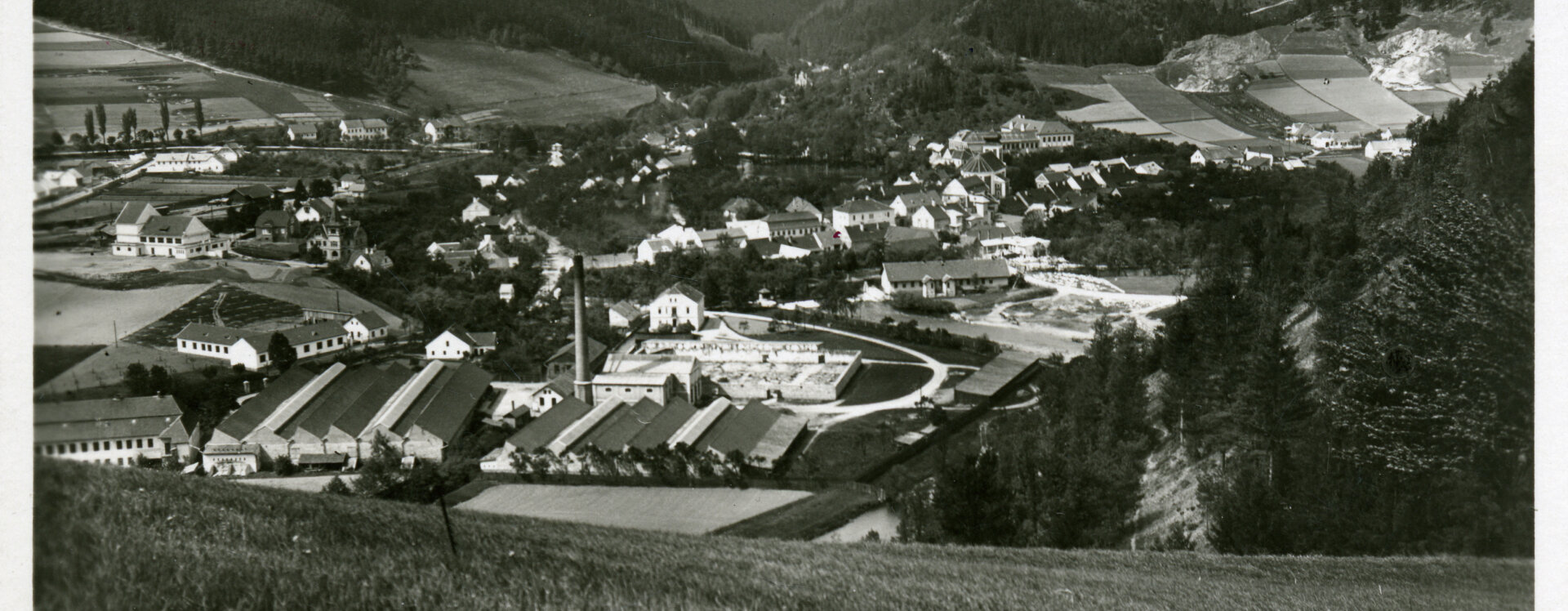
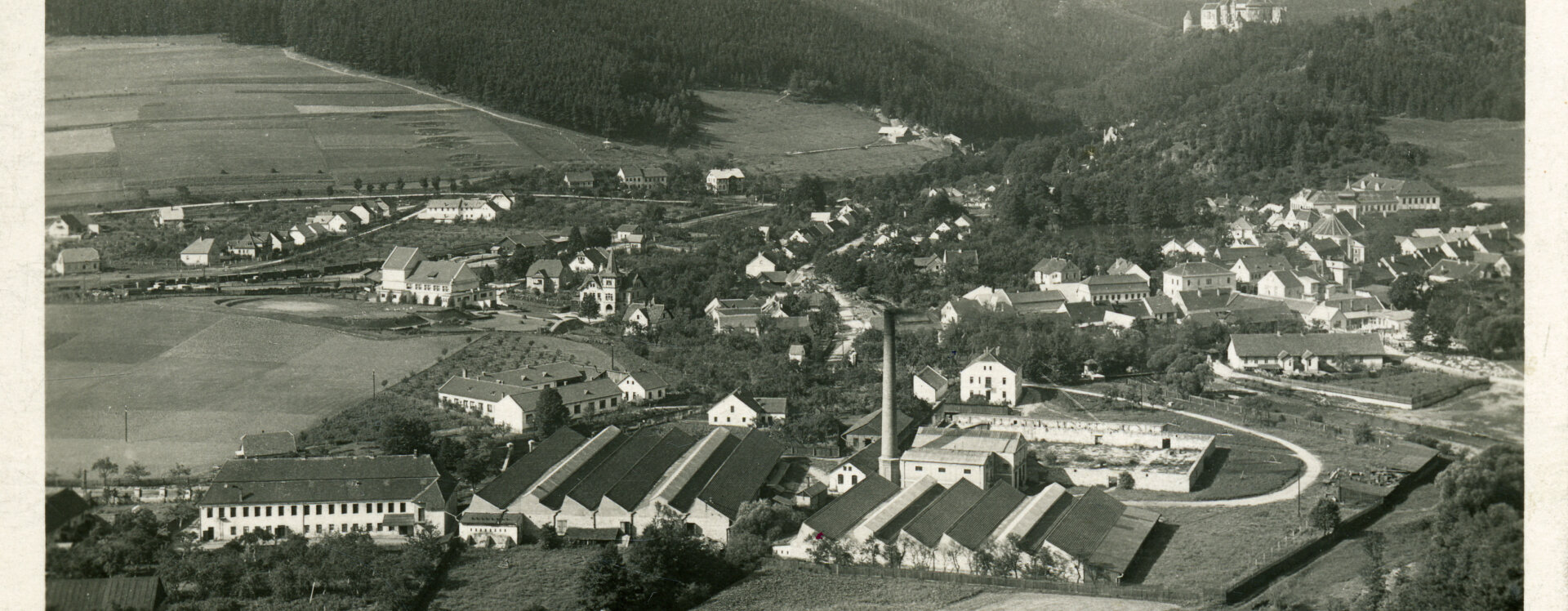
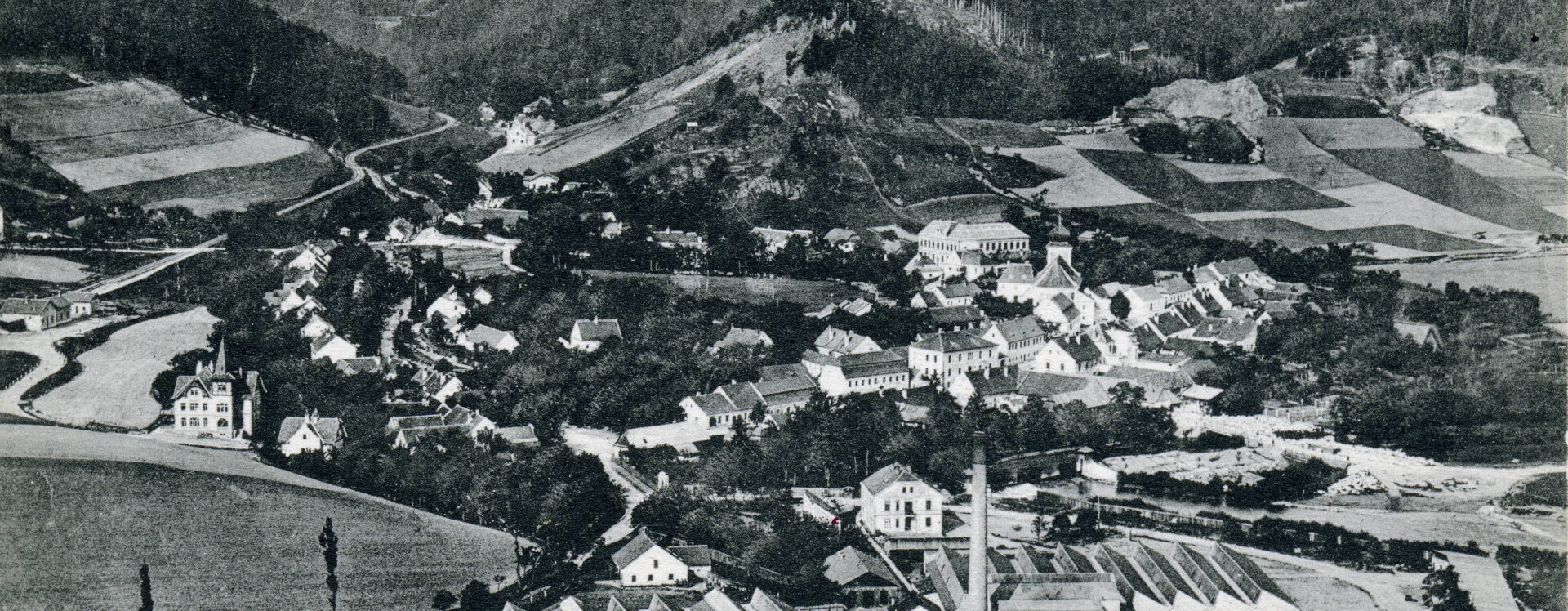
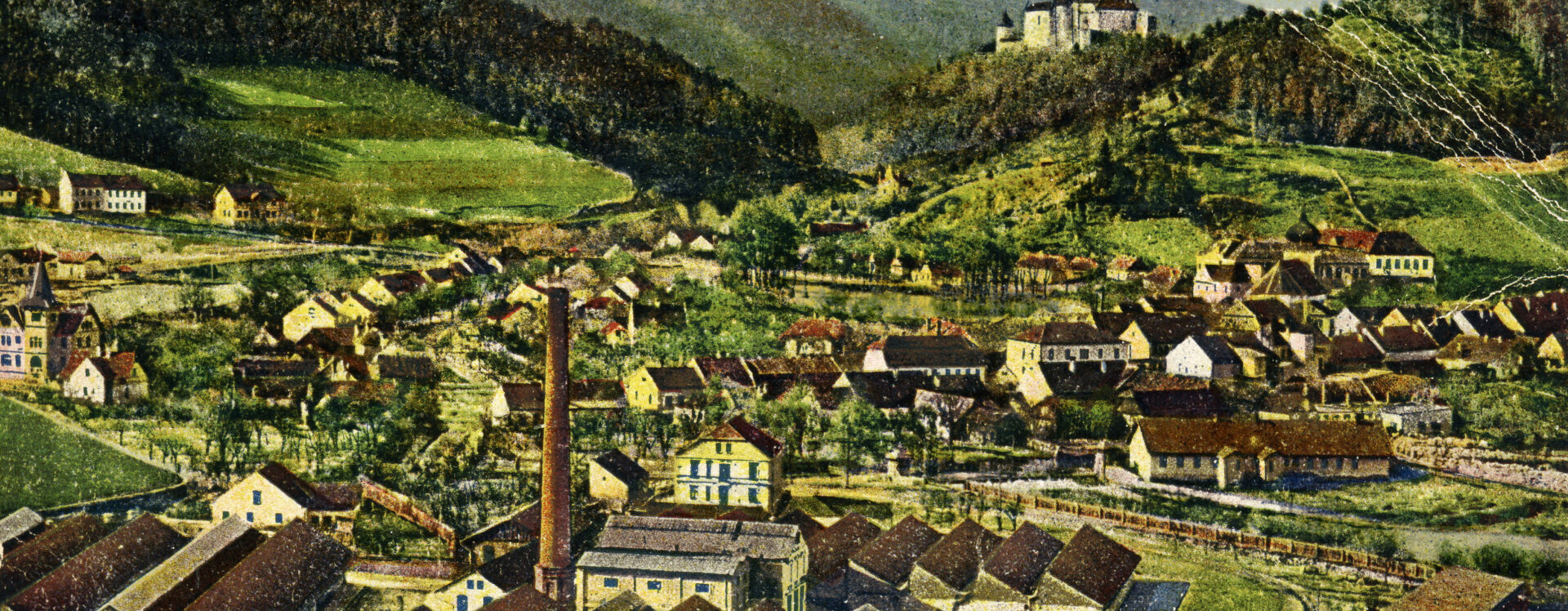
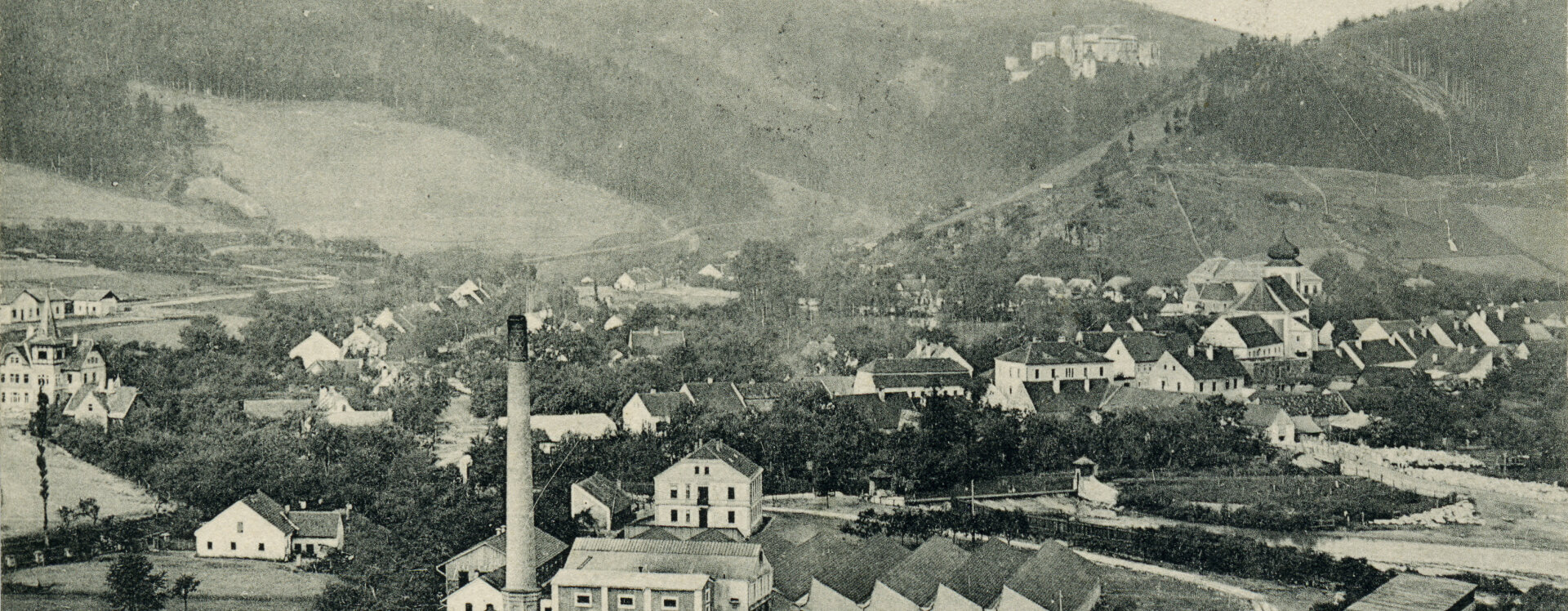
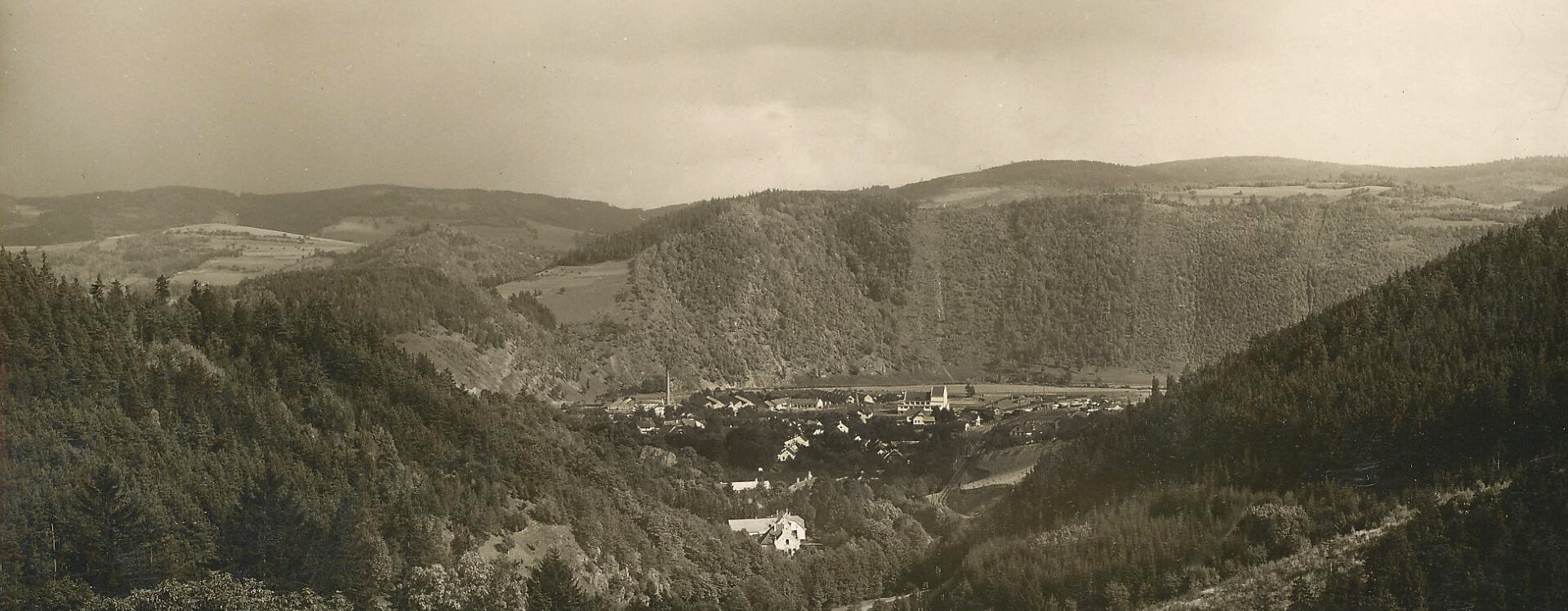
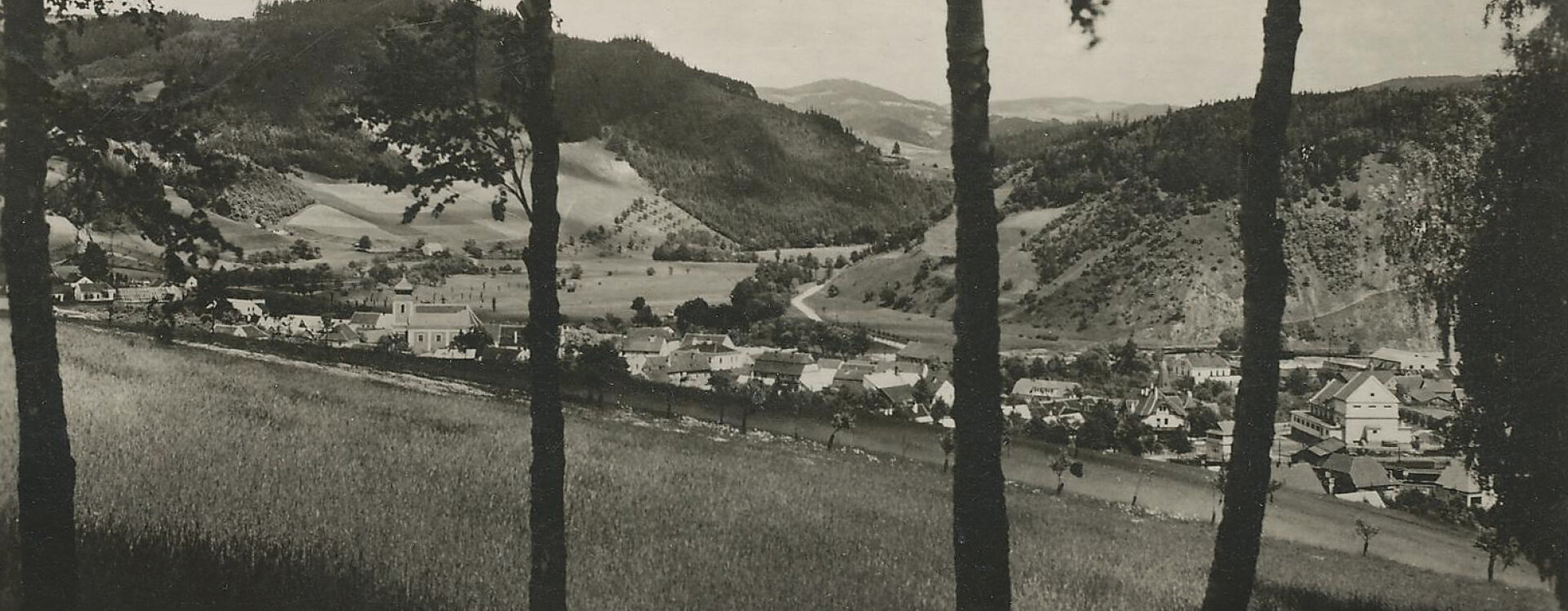
The Nedvědice trail begins at the railway station, where crowds of visitors still flock to the town and the nearby important medieval Pernštejn Castle. The arrival of the railway in the village in 1905 was a major boost for its commercial and tourist development. From 1906, visitors could stay at Mr. Kalina's local hotel, and in 1927, a Sokol hall was built on the hill above it, designed by Brno architect Miloslav Kopřiva, which became the center of the town's social and sporting life. In the early 1970s, a striking shopping center near the Moravian Energy Works became another commercial center of the village. In front of it stands a bronze statue of Energy of Life by Zdeněk Řehořík, originally created for the factory premises. The plant had been in operation since 1900, founded by Otto Kuhn as a textile factory, which significantly influenced the growth of the village. Kuhn also initiated the construction of a colony of family houses for his factory employees, designed by the Brno architect Vladimír Fischer. From here, the trail takes us along the main road to the house of Stanislav Neděla, one of the leaders of the local stonemasonry workshop, which also contributed to the development of Nedvědice. Social and community life in the village flourished in the interwar period, as evidenced by the existence of the Sokol hall and the construction of the People's House in 1932. In addition to the Baroque church, the village is dominated by a school building from 1902, probably also designed by Brno architect Vladimír Fischer. Important municipal events take place near the school on the banks of a small pond. The water surface of the pond forms the backdrop for the most significant work of art in the town's public space, a monument to those who fell in the First (and Second) World War, which is the work of sculptor Josef Axmann. A short detour from the trail leads past a spring to the so-called New Quarter, built after 1907 above the railway line, mainly by the local construction company of Jaroslav Hutař. The trail then follows the route taken by most tourists heading towards Pernštejn, where architecturally valuable villas were built at the beginning of the 20th century. In the case of the villa built for Marie Loosová, the owner of a prosperous stone carving workshop in Brno, which mined marble in the Nedvědice quarry, which also adorns the villa, there has been speculation in the past that it could be an early work by her son, the pioneer of modern architecture, Adolf Loos. Among other family homes for prominent local citizens, the neo-Gothic villa of František Vendolský, designed by Vladimír Fischer, stands out. The last owners of the Pernštejn estate were the Mittrowský family. Vilém Mittrowský wanted to leave the uncomfortable castle and invested in the modernization of the buildings in the castle grounds, having already had the original manor house rebuilt in the mid-19th century into a neoclassical villa with an ornamental garden for his own use, while the neighboring building was used to accommodate his guests. The last point on the trail is the Pernštejn Park, which was founded by the enlightened knight Ignác Schröffl of Mannsberg, inspired by the sentimental English gardens of the time. The last stop on the trail is Pernštejn Park, which was founded by the enlightened knight Ignác Schröffl of Mannsberg, inspired by the then fashionable sentimental English gardens and symbolizing the transition to the modern age.
Objects on the trail
 Railway Station Nedvědice
 Villa Anička (Villa of Anna Šikululová and Alois Zámečník)
 Sokol Hall
 Hotel Nedvědice (Hotel Kalina)
 Sculpture Energy of Life
 Department Store Nedvědice
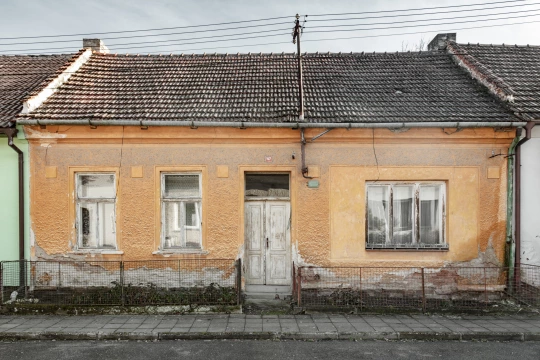 Workers' colony "V Domkách"
 House of Marie a Stanislav Havel
 Folk house
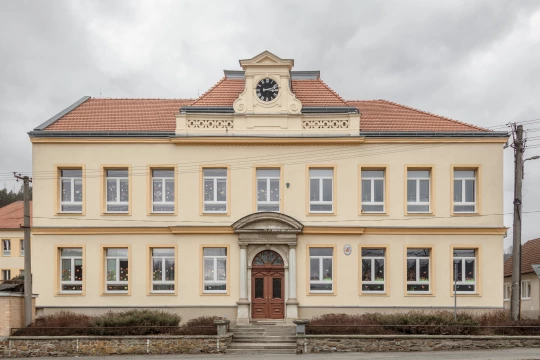 Primary School (Municipal School for Boys)
 Monument to the fallen soldiers in World War I (and II)
 Grocary store
 Vilala of Jaroslav Hutař
 House of Jan Čermák
 Villa of Marie Loosová
 House of Veronika and Alois Hamerský
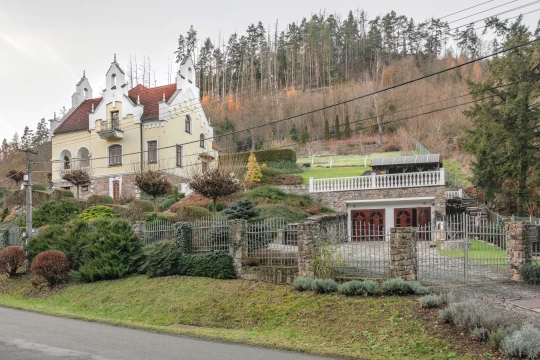 Villa of František Vendolský
 Dům Aloise a Aloisie Frankových
 House for former employees of the estate
 Villa of Counts Mittrowský
 Pernštejn Park