The area around today’s 28. října Avenue was once part of the Vítkovice suburb located beyond the Hrabovská (Vítkovice) Gate. Until the second half of the 19th century, the development in this part of the city – or rather, its outskirts – consisted mainly of wooden houses, with masonry buildings appearing only from the 1860s. One of the centres of new construction that accompanied the city’s expansion beyond the historic core (following the demolition of the remaining town walls in 1833) emerged along the newly laid Nádražní Street after the Přívoz railway station was built. The initial building development was somewhat chaotic; only in 1898 did the city council approve plans to regulate construction activity along Nádražní Street between Moravská Ostrava and Přívoz, as well as in several inner-city streets. The western side of Nádražní Street subsequently became the city’s largest district of apartment houses. A major turning point came in 1927, when the municipality issued a decree granting developers a 35-year tax exemption, sparking an unprecedented construction boom.
The urban block in which the Textilia department store stands gradually took shape in the second half of the 19th century. It filled an irregular building plot at the intersection of Nádražní Street and 28. října Avenue, next to the German House built in 1895. By the early 1920s, the block consisted of the corner residential and commercial building of Alfred Schmelz (no. 284), the residential and commercial building of Jakob Goldstein (no. 243), and the building of the Commercial and Industrial Bank (no. 241). In March 1928, the building no. 243 was purchased by the company Textilia, a joint-stock firm owned by the Jewish entrepreneur Igo Wechsler. He planned to demolish the existing three-storey building from 1899 and erect a completely new department store selling textiles and ready-to-wear clothing. He commissioned the design from the German architect of Jewish descent Marie Frommer from Berlin, who designed the building in the Art Deco style.
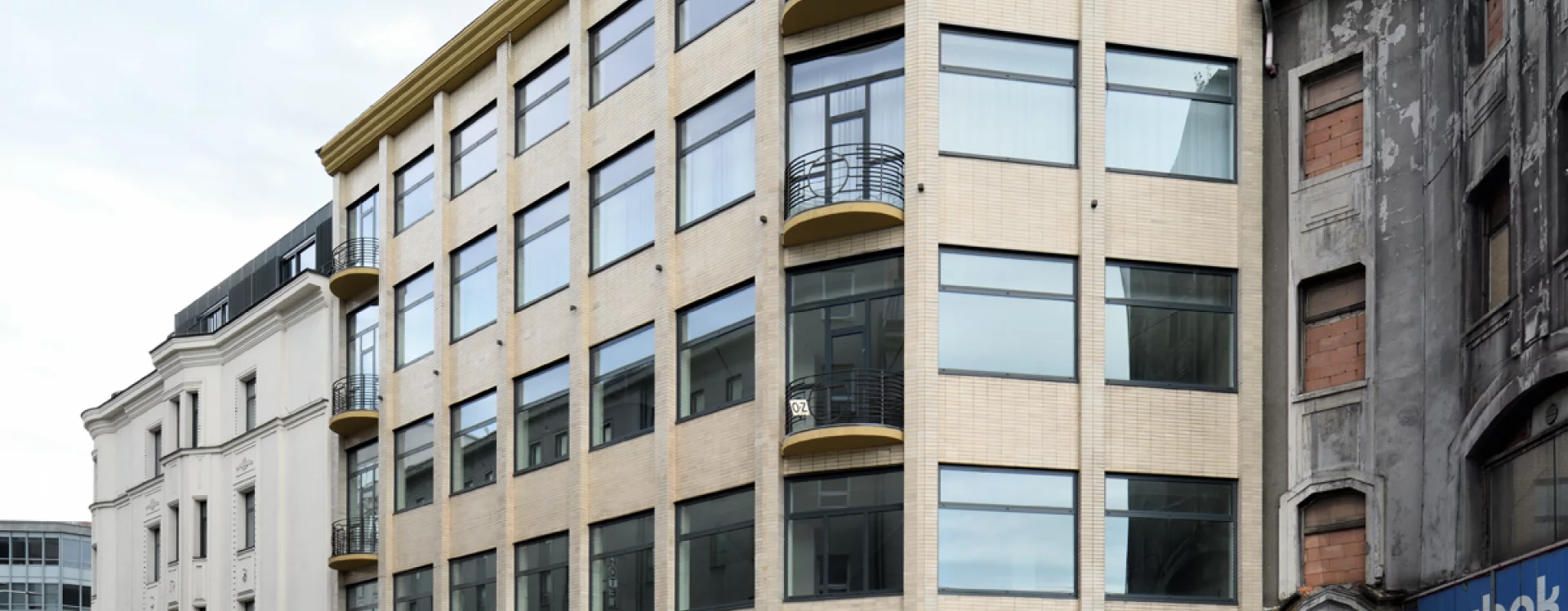
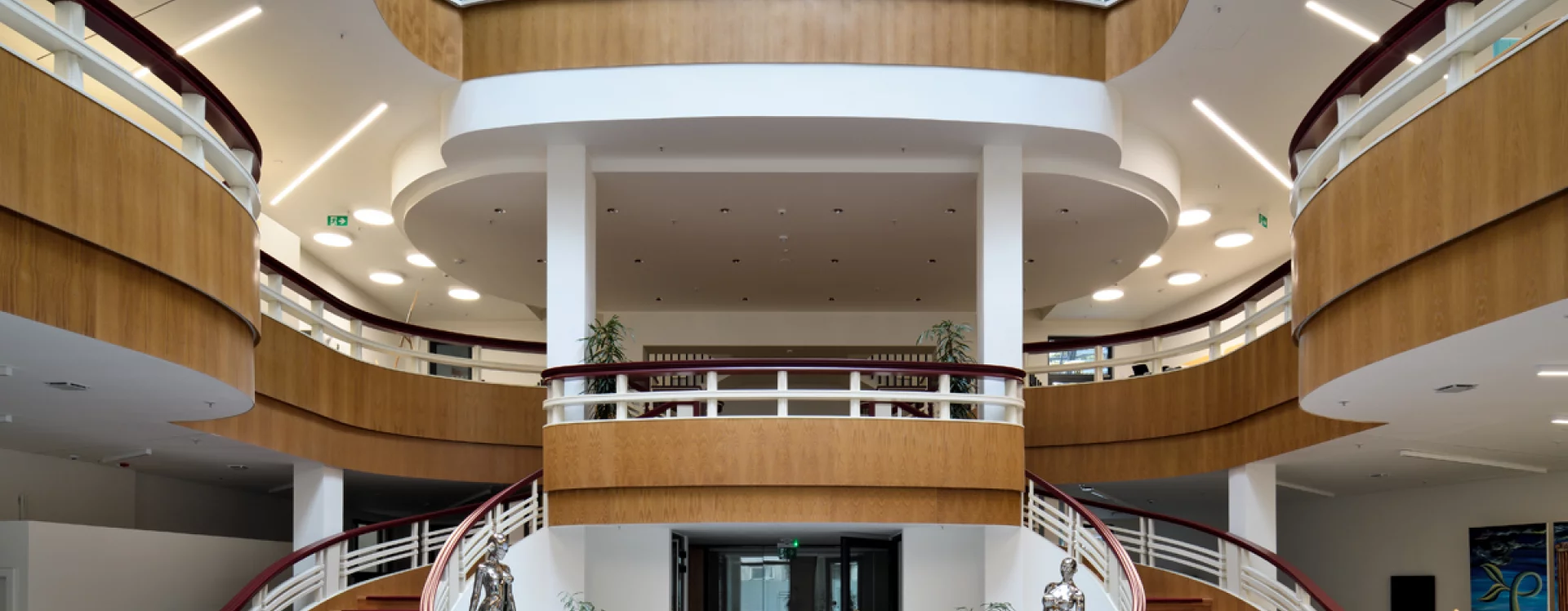
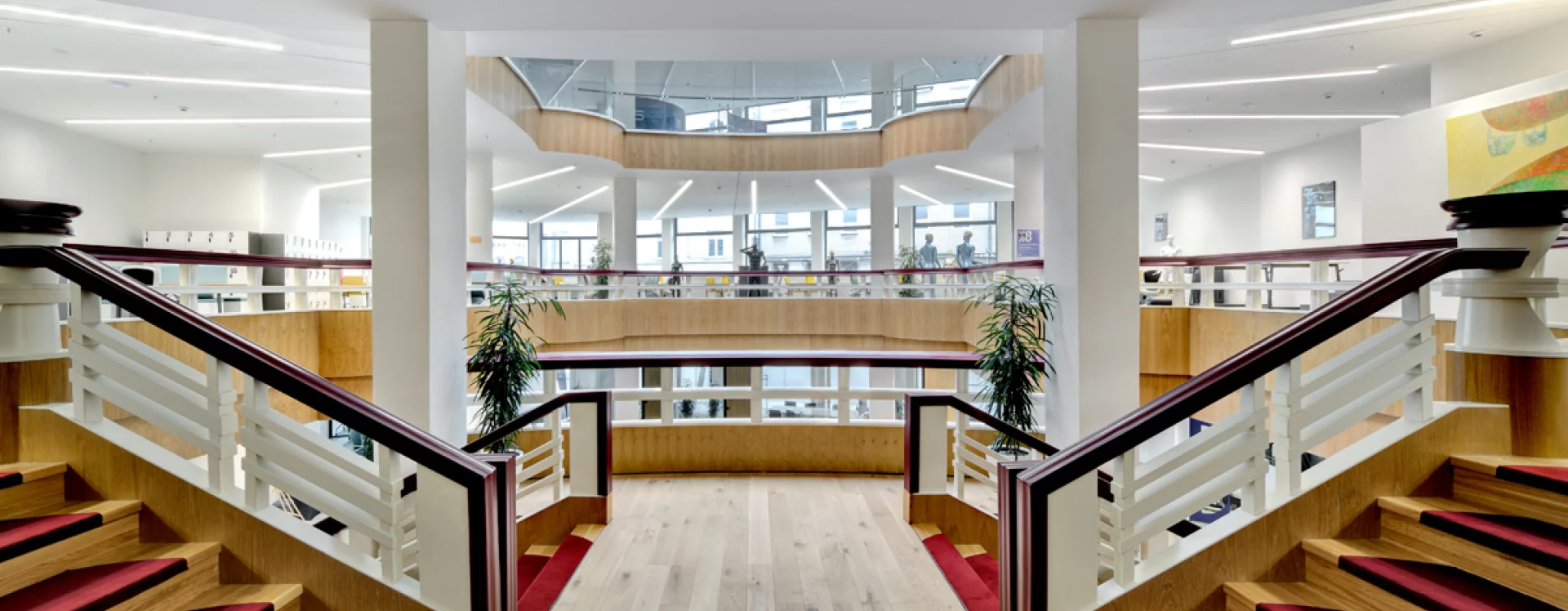
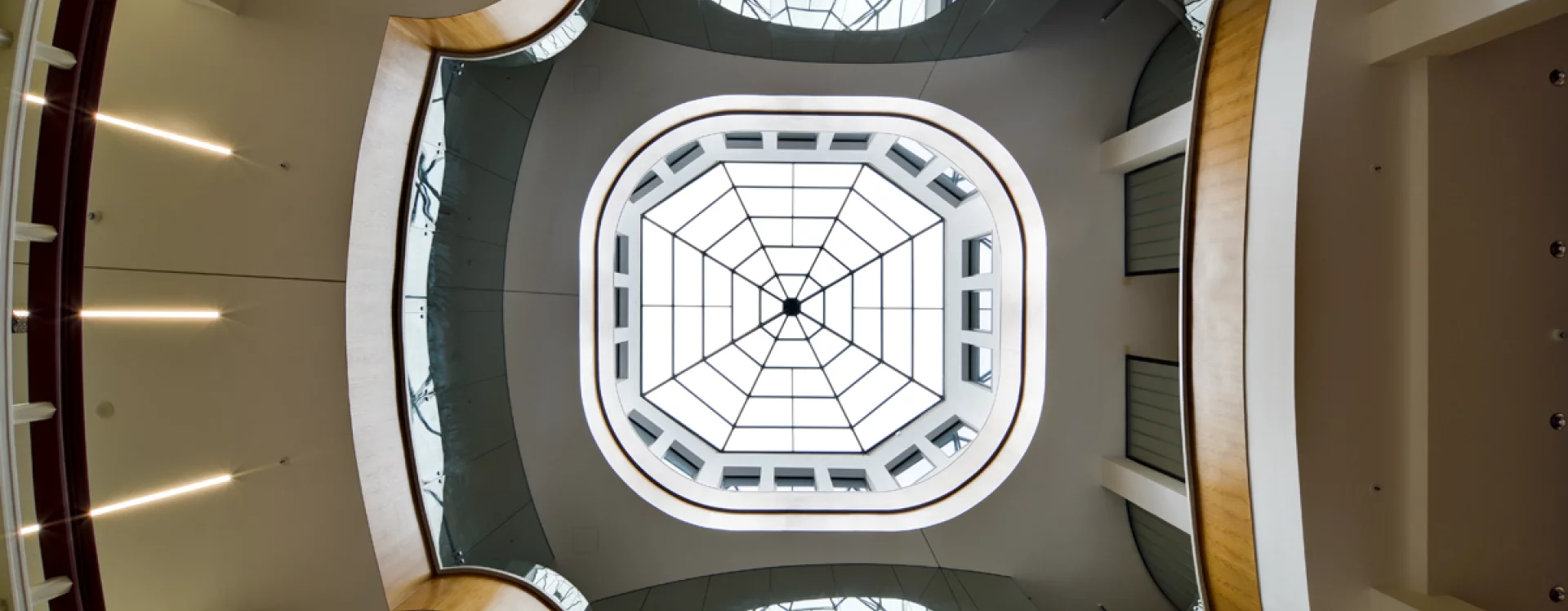
The first design, completed in February 1928, envisioned a six-storey building (a ground floor plus five upper floors) on an irregular pentagonal plan, with an oval skylight in the centre and a double-flight horseshoe staircase leading to the third upper floor. Access to the fourth and fifth upper floors, where offices and service areas were located, was provided by a single-flight fan-shaped staircase on the right-hand side. Entrances to the ground floor were located both at the prominent corner and on the left-hand side through a passage lined with shop windows. The façade, in contrast to the richly designed interior, was austere and composed as a grid of large rectangular windows. The revised plans from July 1928 reduced the design to five storeys (a ground floor plus four upper floors). Compared to the earlier version, Frommer changed the skylight from oval to cartouche-shaped and relocated the fan-shaped main staircase, now reaching only the second upper floor, to the rear of the space. Between the skylight and the staircase, a mezzanine with an open snack bar was inserted at the level of the second upper floor. From the third upper floor upwards, the skylight assumed an octagonal form, while access to the higher storeys was provided by a simple staircase at the rear and an additional side staircase. The nine-axis, slightly angled façade facing 28. října Avenue was more decorative than in the first design. The ground floor was articulated with large shop windows and two entrances. Above the display windows, pierced friezes with openwork decoration and the letter T were inserted, surmounted by a continuous narrow moulded cornice bearing the name TEXTILIA above the entrances. The upper storeys featured rectangular, horizontally divided windows; in the second to fourth upper floors, the windows above the entrances were fitted with small segmental balconies with decorative metal railings. The vertical composition of the façade was accentuated by pilaster-like strips, originally intended to be topped with small pyramidal finials, which were never executed – just as the larger pyramids with the TEXTILIA lettering planned above the entrances were omitted. The façade was meant to be clad in marble but was eventually finished with ceramic tiles. The building also received modern neon signage, a novelty at the time. The ground floor accommodated spacious sales areas selling fabrics, underwear, costume jewellery, and travel goods, as well as toilets with washrooms, two lifts, and a passage. The first upper floor offered women’s and men’s clothing and housed a snack bar, while the second and third upper floors featured children’s fashion, hats, and household textiles. The fourth upper floor was reserved for administrative and operational functions, including offices, an accounting department, a telephone exchange, goods reception, a sample room, a testing area, and workshops.
The building permit was granted on 19 March 1928, and construction began later that same month. The structure was based on a silicon-steel framework produced by the Vítkovice Bridge Works. Final approval took place on 3 July 1929, although work on the interior fittings continued thereafter. The ceremonial opening was held on 3 March 1930. In 1933, Igo Wechsler decided to extend the department store by incorporating the neighbouring building, no. 284, which at that time housed a bank. In 1934, architects Ladislav Pokora and Josef Skala prepared a project for the conversion of this building and its connection to the existing department store. The integration was achieved by cutting large openings on the ground floor, first floor, and second floor. The expanded department store was ceremonially reopened on 17 September 1934.
During the occupation, the owner was forced to emigrate to the United States. After 1946, he began repairing the building, which had been heavily damaged during the bombing of Ostrava. However, in 1948 the company Textilia was nationalised. By that time, the entire block had been designated for demolition to make way for a new square. This plan was never carried out, and instead, in 1957–1958, the department store underwent modernisation according to the design by architect Lubomír Šlapeta, who created a new entrance with a large corner display window in building no. 284 and remodelled the interior of the whole department store in the late international style, also known as the Brussels style. The new design featured built-in furniture with light wood veneers and colourful accents. The original railing around the skylight was replaced by glass display cabinets for merchandise.
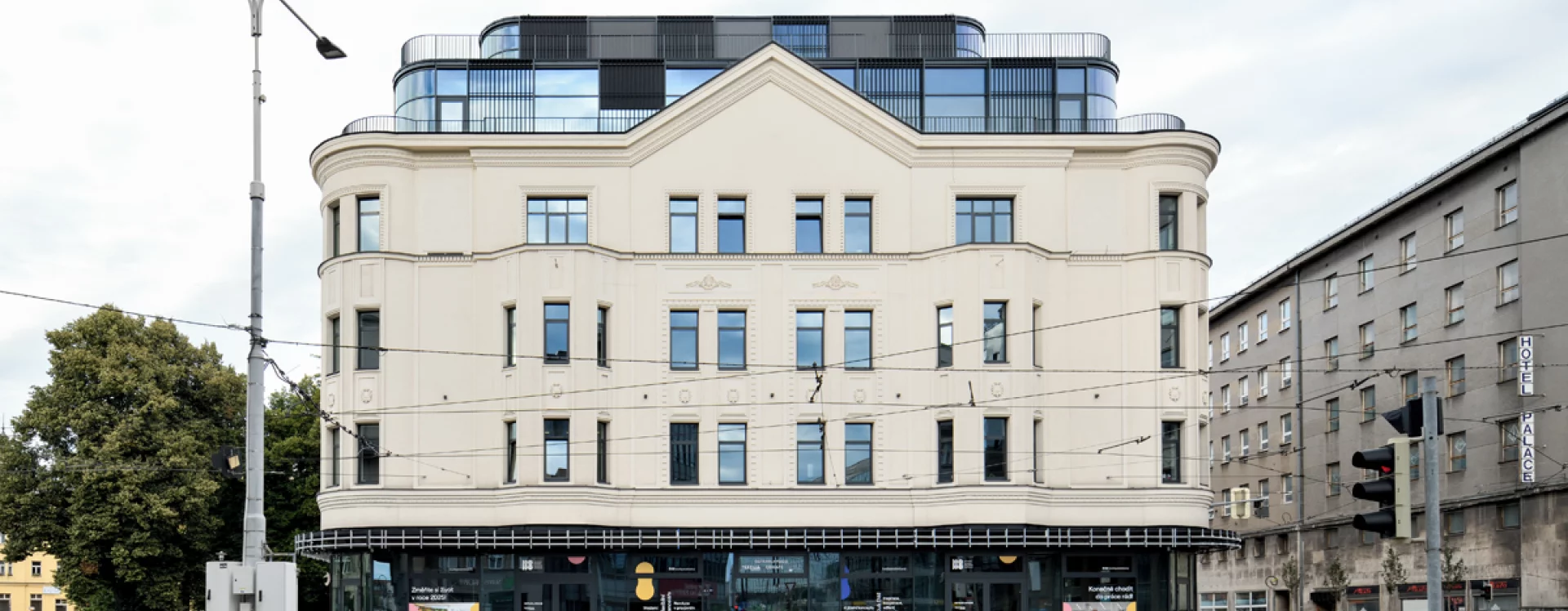
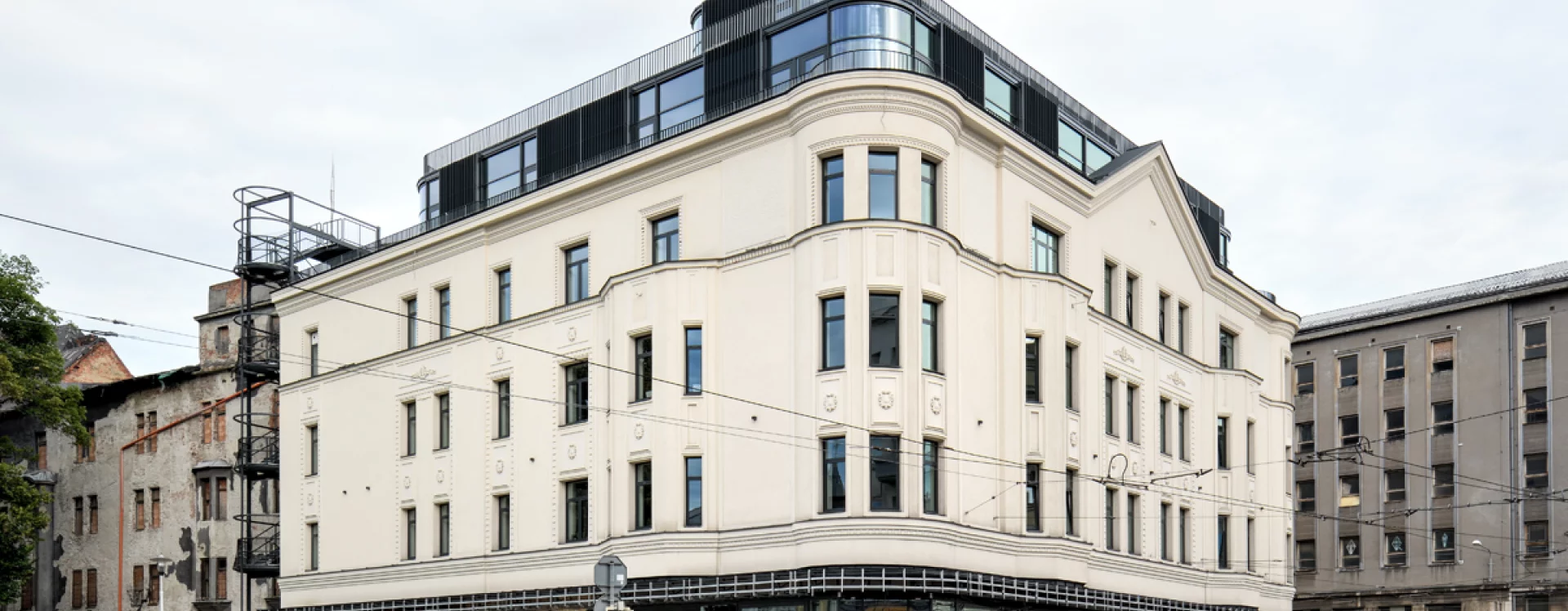
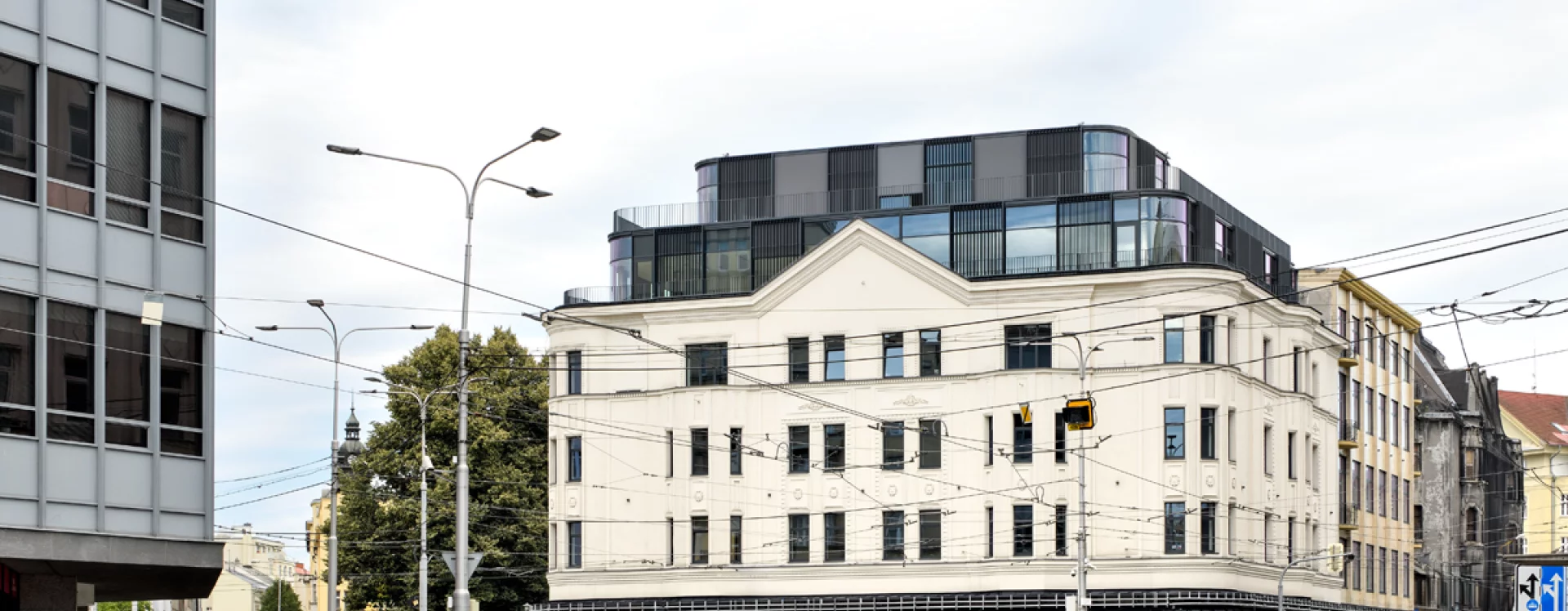
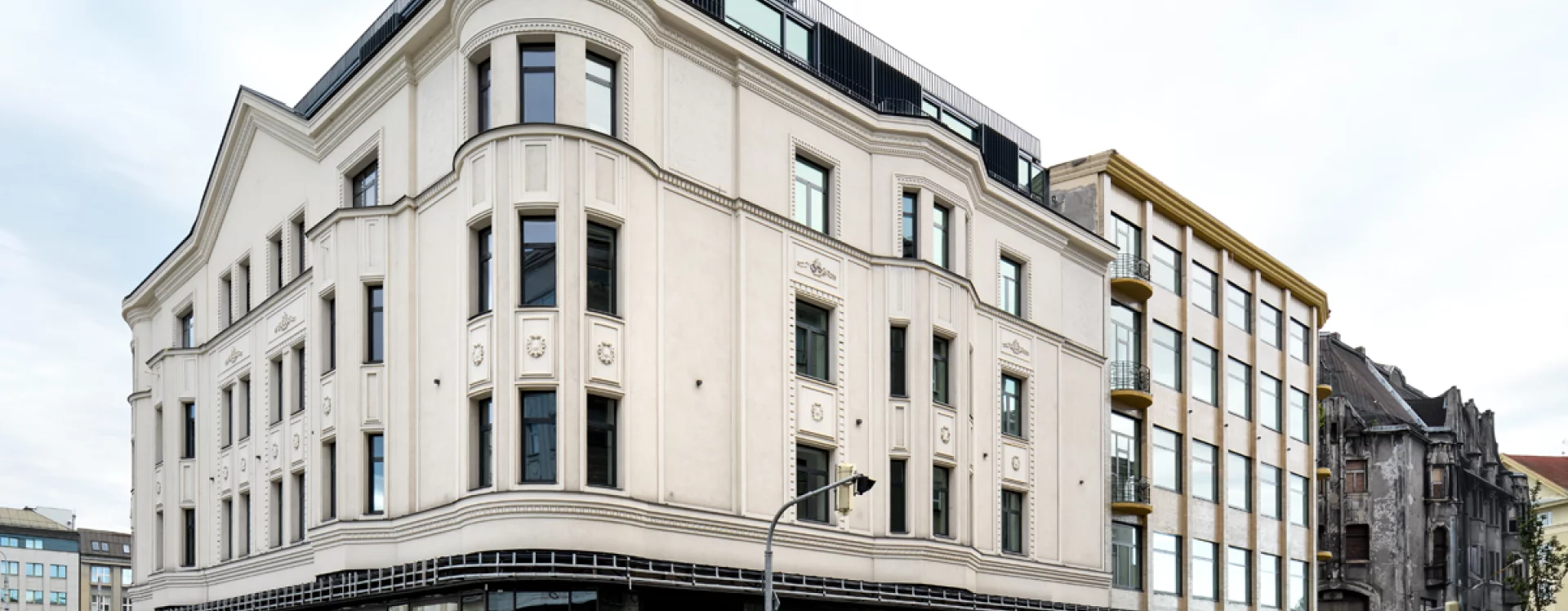
After 1989, the department store was privatised. In 2000, its owner Kamil Kolek carried out unauthorised construction work, causing a structural collapse that affected parts of building no. 284. In 2008, the development company Amadeus Real proposed to incorporate the entire block into a new large shopping gallery between 28. října Avenue and Edvarda Beneše Square, but the project was never realised. Since 2021, the buildings nos. 243 and 284 have been undergoing adaptation for the Boutique Business Incubator Ostravica (offices, creative studios, gastronomy, and social and commercial activities) based on a design by architect Martin Náhlovský from the Master Design studio. The restoration has succeeded in preserving the ceramic façade and reinstating the original composition of the frontage with new windows and doors. The balcony railings with the T logo and the main sales hall on the ground floor, with its iconic staircase, have been restored. New wooden elements were crafted to replace those destroyed by water damage, including the display cabinets flanking the staircase in the mezzanine. Later additions to the skylight railing were replaced by full-height glass barriers with metal handrails. With the approval of heritage authorities, the skylight roof was raised to extend above the office floors.
Literature
Romana Rosová. Ostrava. Příspěvky k dějinám a současnosti Ostravy a Ostravska 25. Ostrava, 2011. p. 273–297.
Romana Rosová. Krásná Ostrava. Bulletin okrašlovacího spolku Za krásnou Ostravu 2. Ostrava, 2014. p. 16-18.
Romana Rosová, Martin Strakoš. Konverze památek. Sborník z konference AXIS 2025. In: Konverze památek. Sborník z konference AXIS 2025. p. 71-81.
Průvodce architekturou Ostravy. 2009. p. 54. ISBN 978-80-85034-54-7.
Obchodní dům Textilia – Ostravica. Available from: https://cs.wikipedia.org/wiki/Obchodn%C3%AD_d%C5%AFm_Textilia_%E2%80%93_Ostravica [accessed 15. 9. 2025]
Ostravica. Available from: https://www.msstavby.cz/projekty/ostravica [accessed 15. 9. 2025]
Obchodní dům Textilia. Available from: https://pamatkovykatalog.cz/obchodni-dum-textilia-20375292 [accessed 15. 9. 2025]
Sources
dům č. 243. fond Městský obvod Moravská Ostrava a Přívoz, spisovna stavebního úřadu.
Neznámý (Ostravica). fond Národní památkový ústav, územní odborné pracoviště v Ostravě, spisovna.