Bedřich Bendelmayer graduated in decorative architecture at the Academy of Arts, Architecture and Design in Prague under Friedrich Ohmann, who successfully moved this educational institute towards modern European trends. Although the legacy of ancient architecture played an important role in Ohmann’s work, he was also considerably inspired
by later styles, such as Baroque and Classicism. Despite his use of the morphology of the historicist styles, Ohmann displayed a distinctive inventiveness and artistic decorativeness in his design. Later, he naturally responded to the impulses of foreign modernism and opened the door to Art Nouveau in the Czech lands. He was able to pass on his intuition and professional qualities to his talented pupils. One of them was Rudolf Němec, with whom Bendelmayer began his career. Together, they first realized the Belvedere tenement house
at the corner of Kamenická and Kostelní Streets in Prague’s Letná district and won the third prize in the competition for the Town Hall in Pilsen. In 1898, like other young artists, they experienced the turbulent atmosphere of the transformation of the fortress town of Hradec Králové into a modern metropolis. They designed a house for builder Viktor Weinhengst
at 310 Eliščino nábřeží Embankment, whose Neo-Renaissance façade already foreshadowed the character of Art Nouveau ornamentation. Bendelmayer then worked for Quido Bělský’s firm, where he met his former classmate Alois Dryák and together they worked on the project for the Central Hotel in Prague’s Hybernská Street, starter already by Bendelmayer’s teacher. At that time, Ohmann’s Art Nouveau had already fully dominated Bendelmayer's artistic repertoire, which was also manifested in the city center in the form of tenement houses in U Prašné brány Street (1903–1904) or the Archduke Štěpán Hotel in Wenceslas Square
(1903–1905). In 1904 Bendelmayer was dismissed after a quarrel with the owner of Bělský’s construction company, but he maintained a working partnership with Emil Weichert, who also left the firm. Together, they successfully continued to apply the Art Nouveau concept to
the façades of the tenement houses in Maiselova, Kaprova and Valentinská Streets until about 1908. Evidence that Bendelmayer also successfully managed the transition to geometric modernism is provided by his realization of a shop and tenement house in Anglická Street
in Vinohrady (1911) and a similarly conceived house in Ve Smečkách Street (1912–1913).
In the 1920s, Bendelmayer joined the important trend of Neo-Classical architecture, mainly applied in the design of public buildings. Of these, the monumental building of the former regional criminal court in Pankrác (1928–1930) or the Czech Industrial Bank in Na Příkopě Street (1927–1933) stand out. After WWI, Bendelmayer managed to break through professionally outside Prague as well – he built grammar schools in Jindřichův Hradec and Hlučín, court buildings in Klatovy and Chrudim, the Municipal Spa in Pilsen, and residential buildings for civil servants in the Slovak town of Košice. Over the years, he participated in numerous architectural competitions, winning top prizes, for example, for the design of the Nusel Bridge or the Živnostenská banka in Prague.
MP
Literature
- Pavel Vlček. Encyklopedie architektů, stavitelů, zedníků a kameníků v Čechách. Praha, 2023.
Objects of the author in other architectural manuals
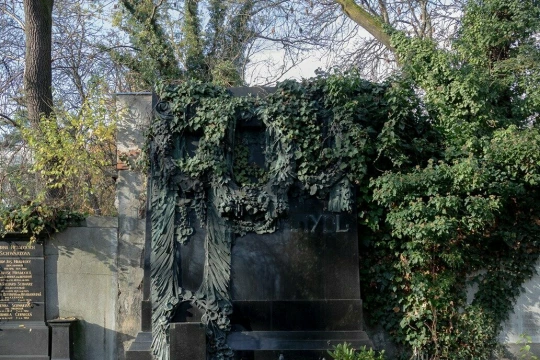 Crypt of Dr. Karel MaydlPrague Cemeteries Architecture Manual
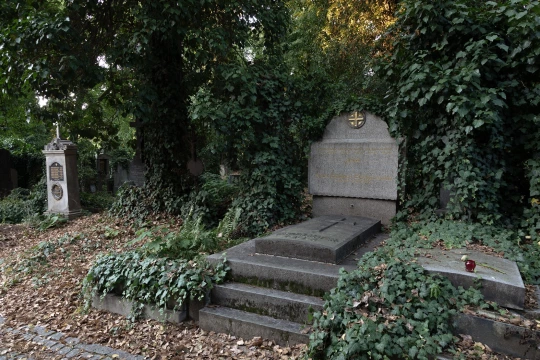 Grave monument of the Bendelmayer familyPrague Cemeteries Architecture Manual
 Hotel with restaurant National HouseUmělecké památky Prahy
 Municipal SpaPlzeňský architektonický manuál
 Rebuilding and extension of the premises of the Savings Bank of the Royal City of PilsenPlzeňský architektonický manuál
 Tenement building BelvedereUmělecké památky Prahy
 Viktor Weinhengst’s HouseKrálovéhradecký architektonický manuál
 Villa of Bedřich BendelmayerUmělecké památky Prahy