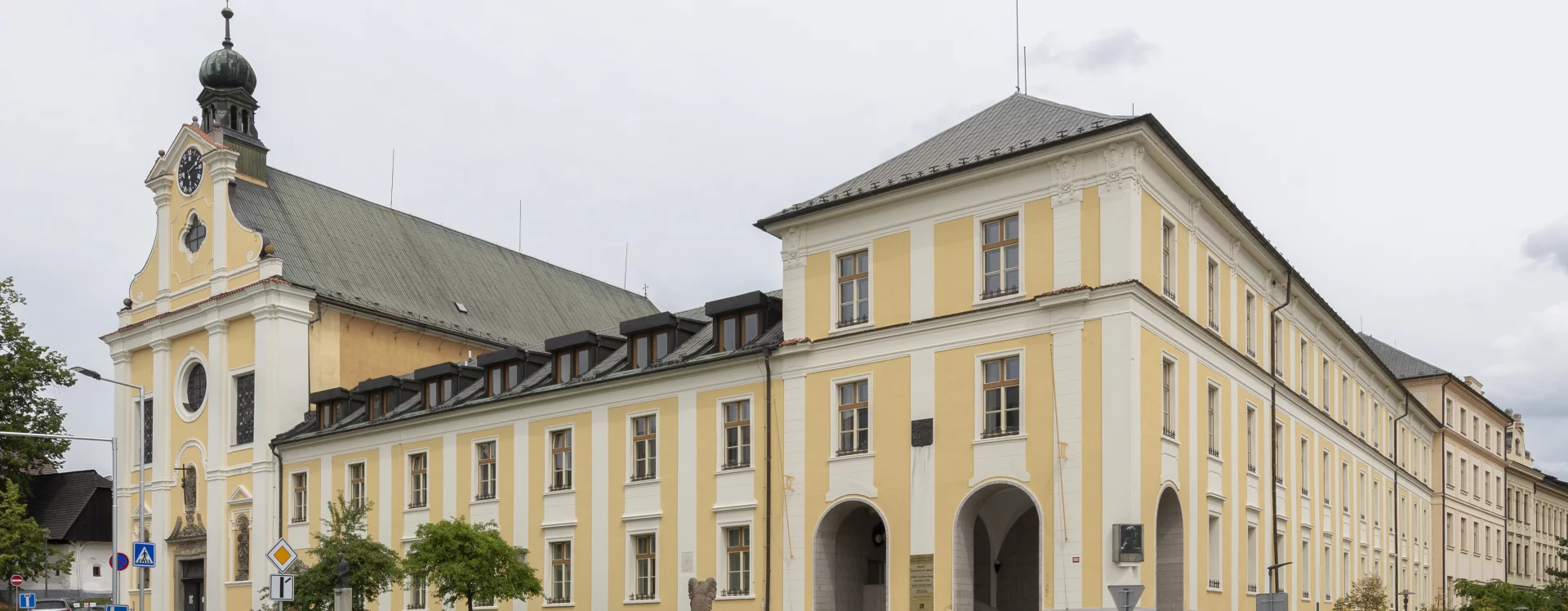
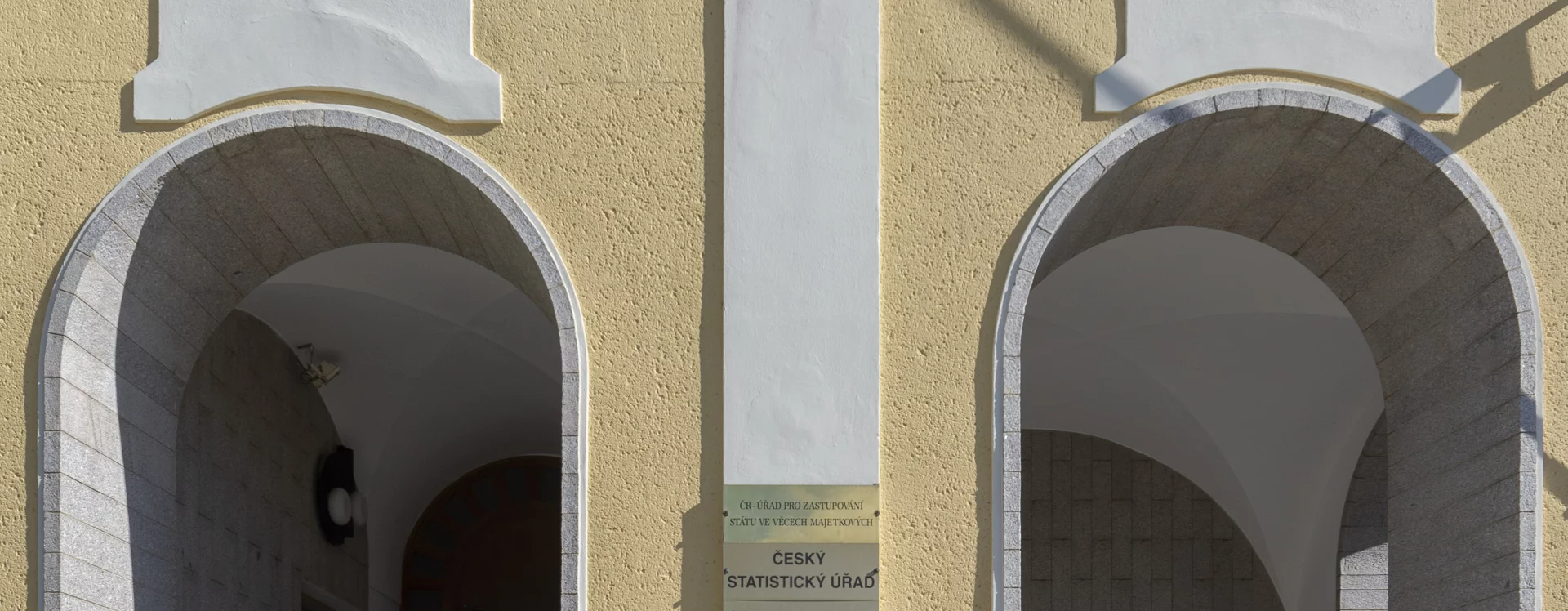
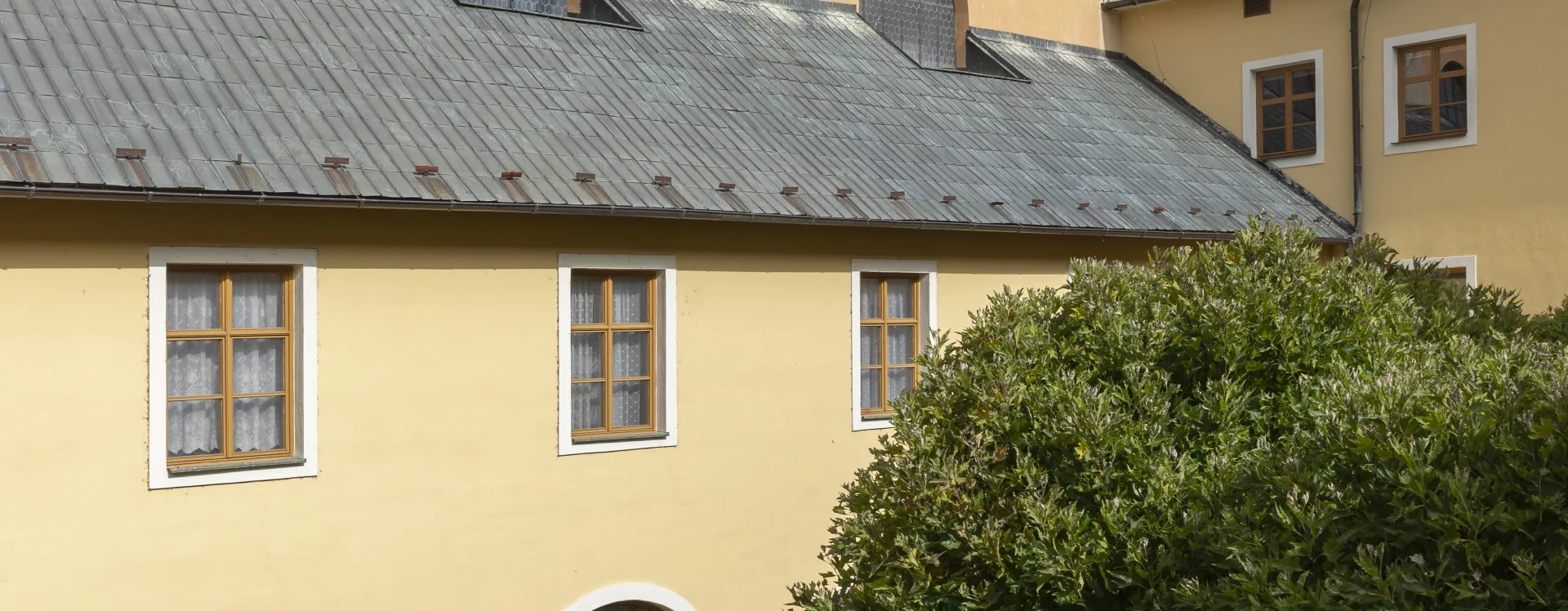
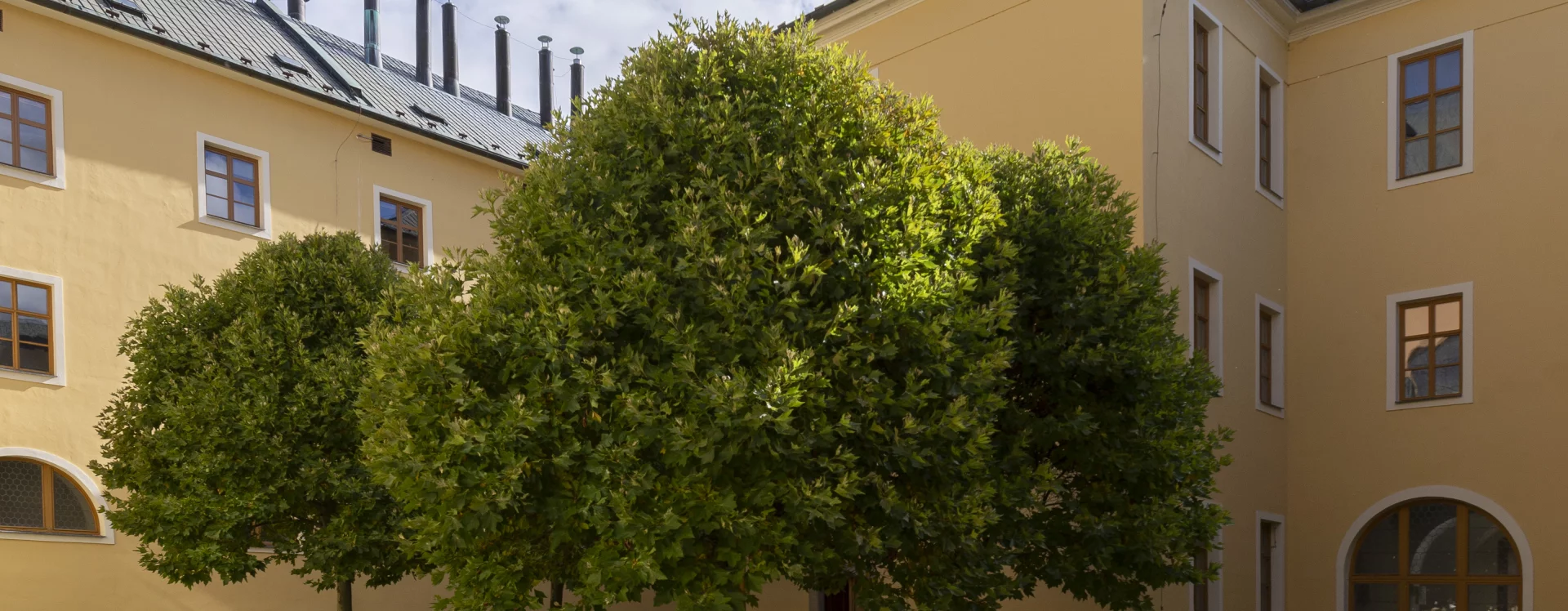
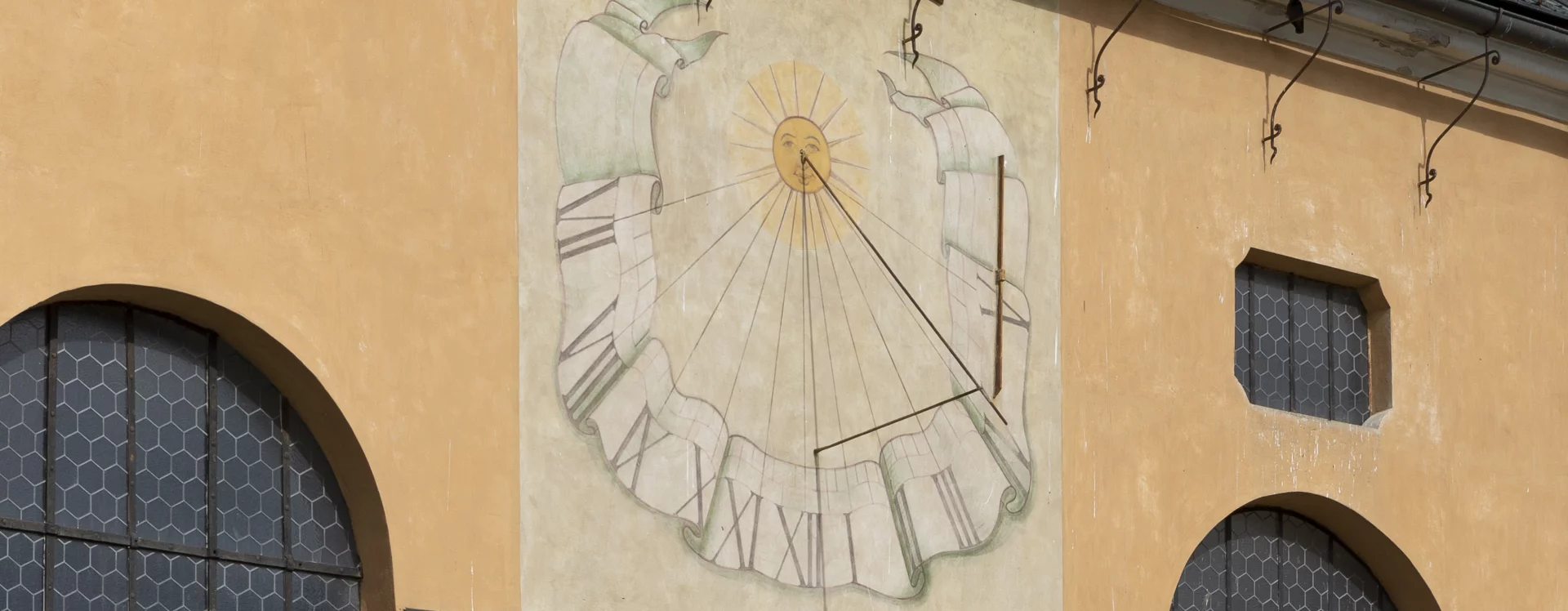
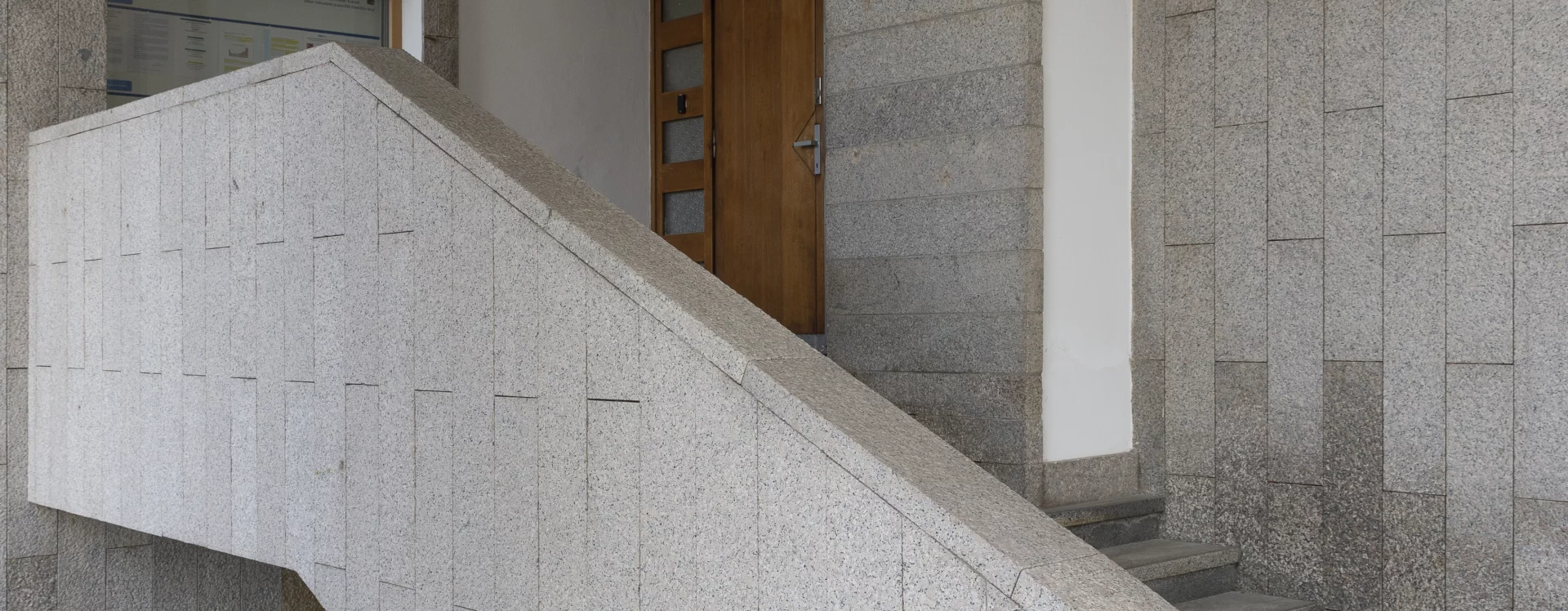
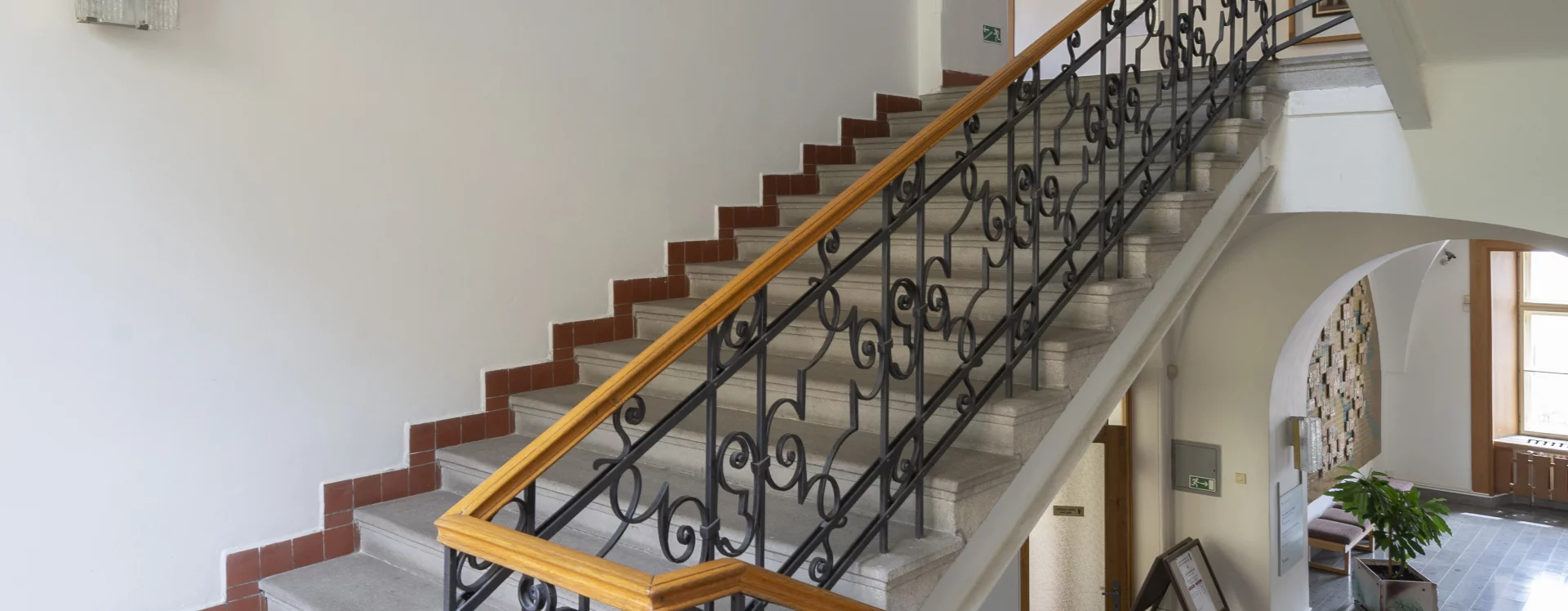
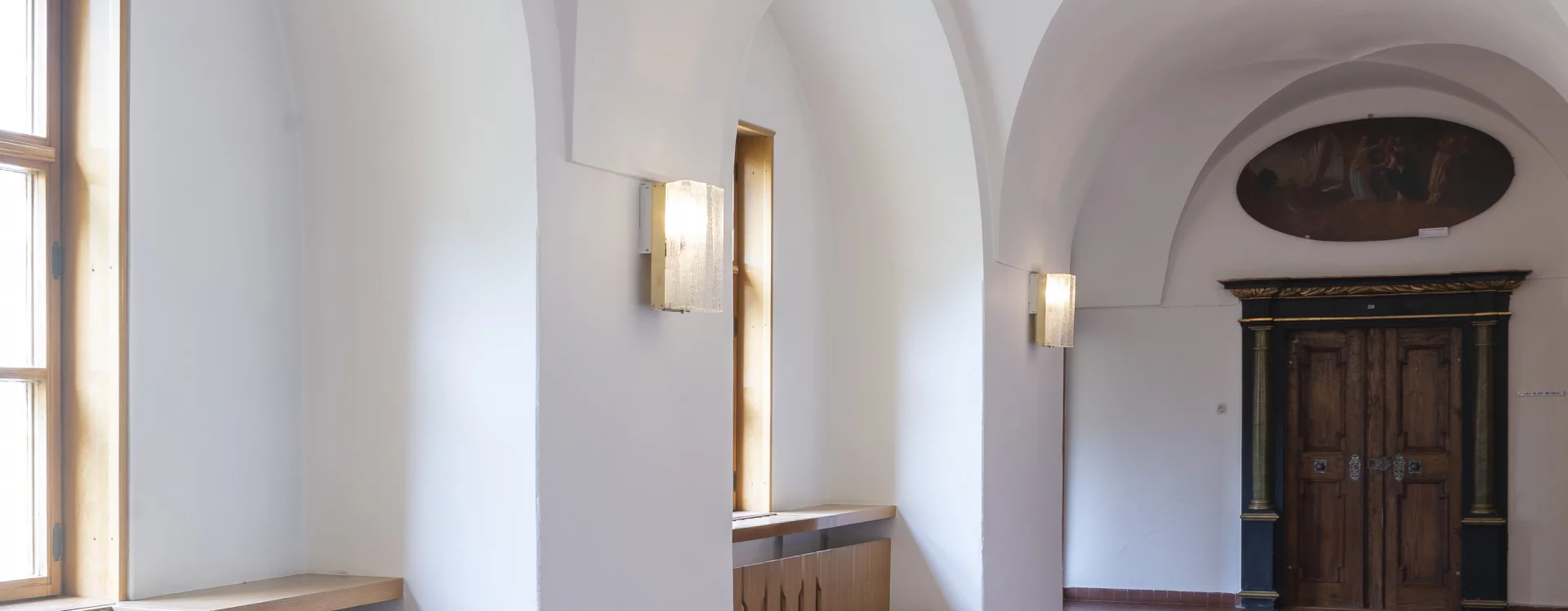
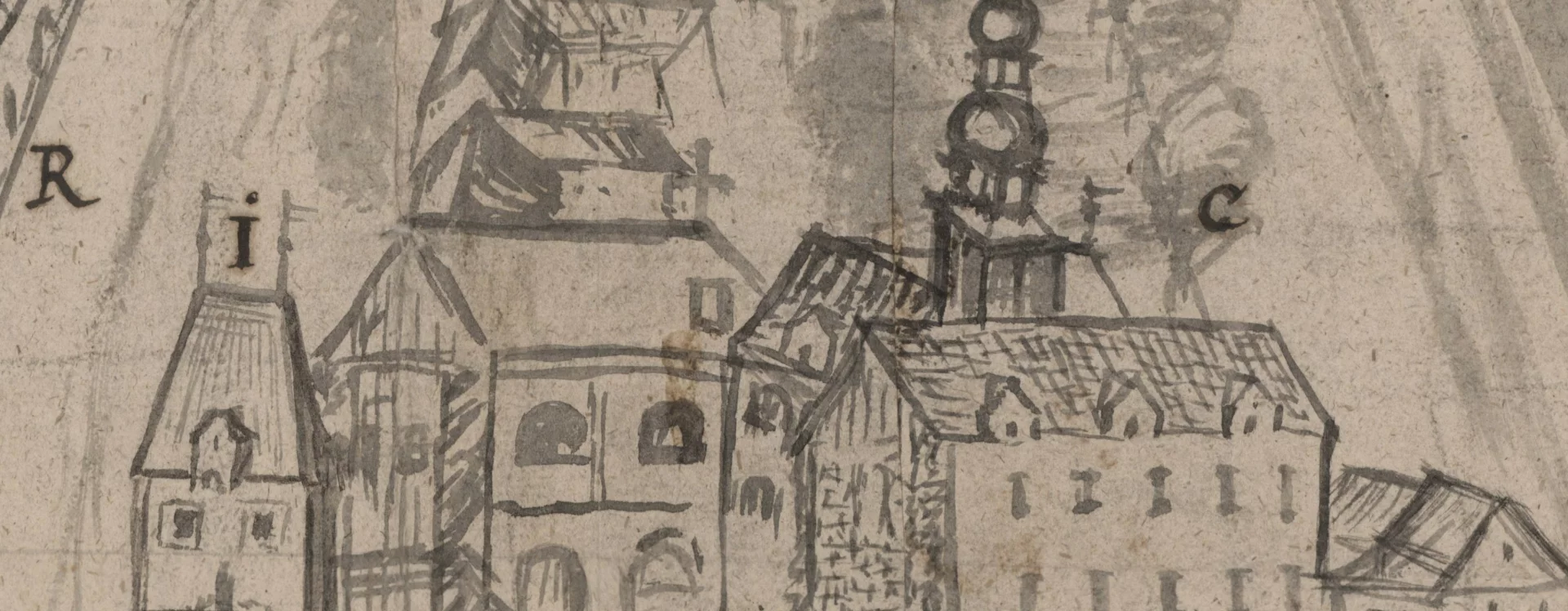
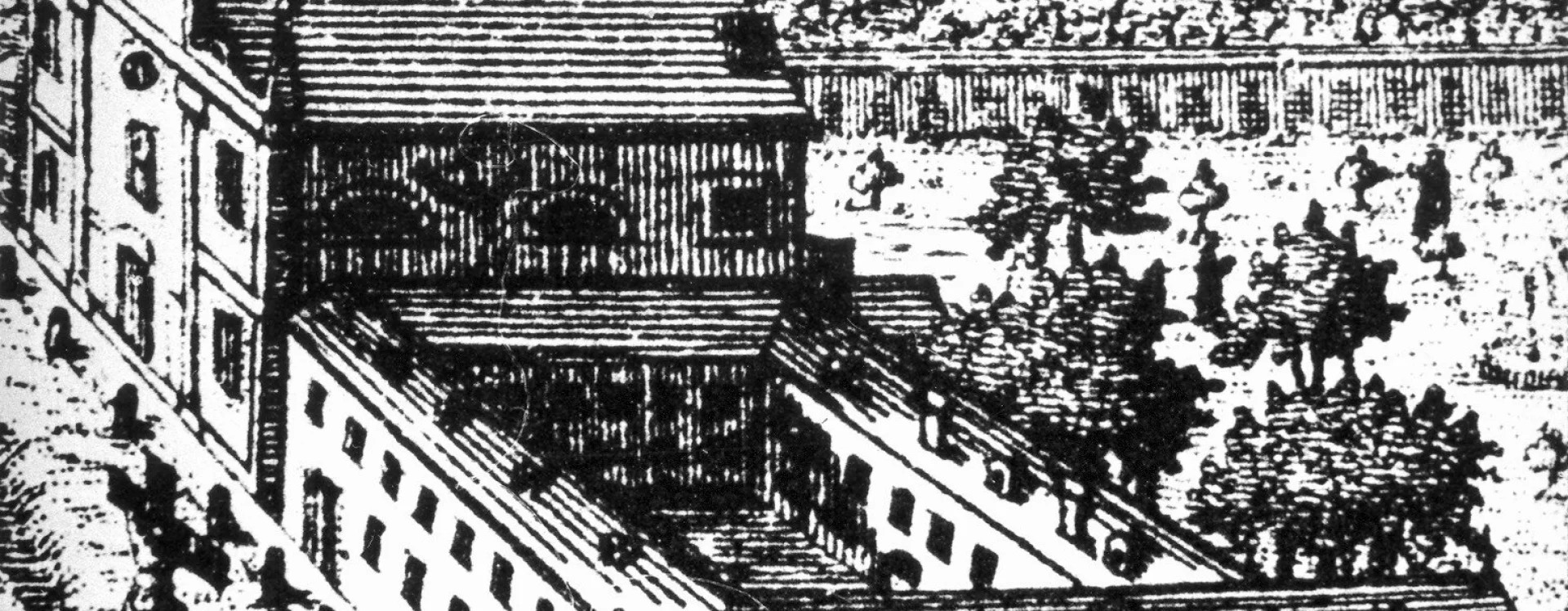
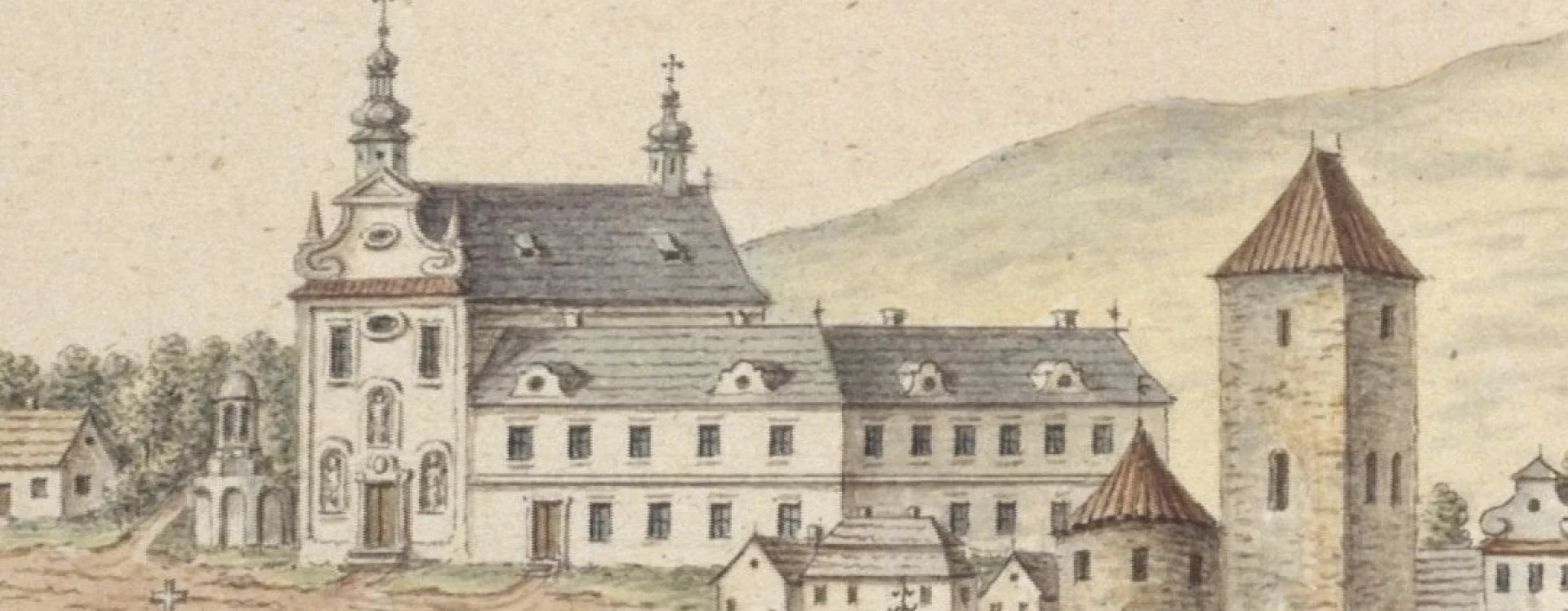
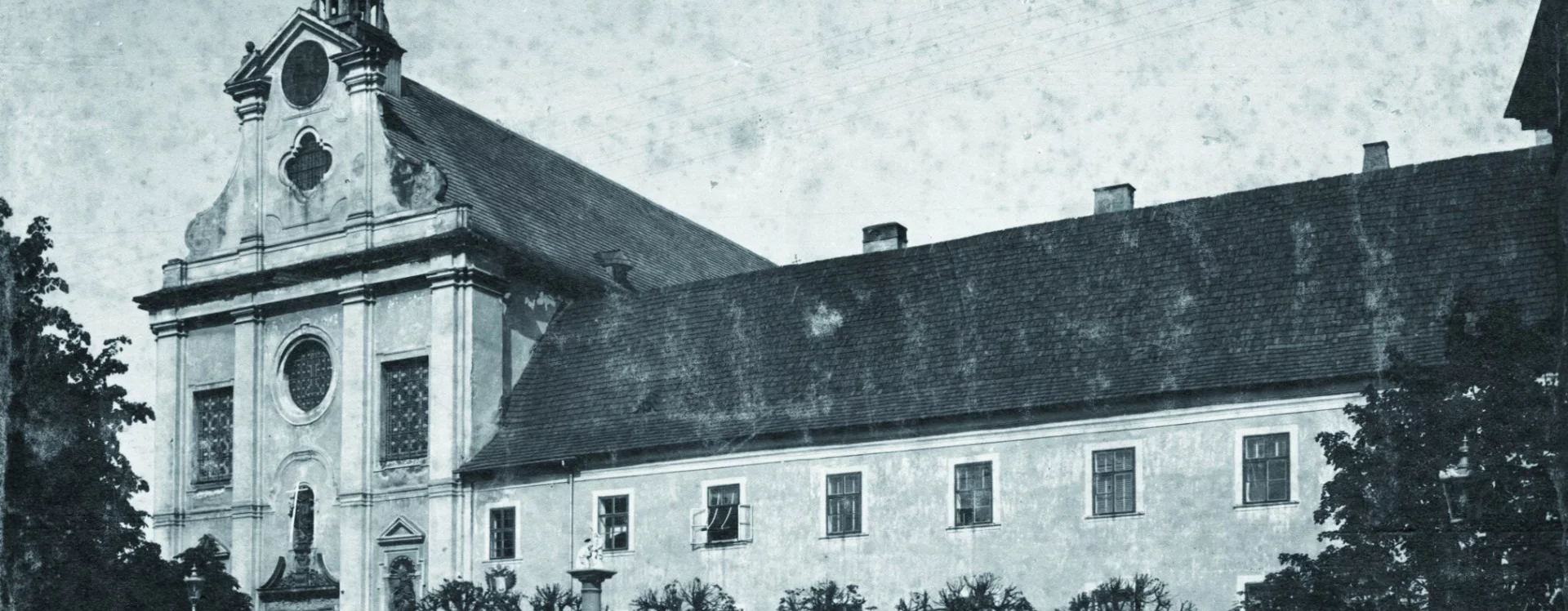
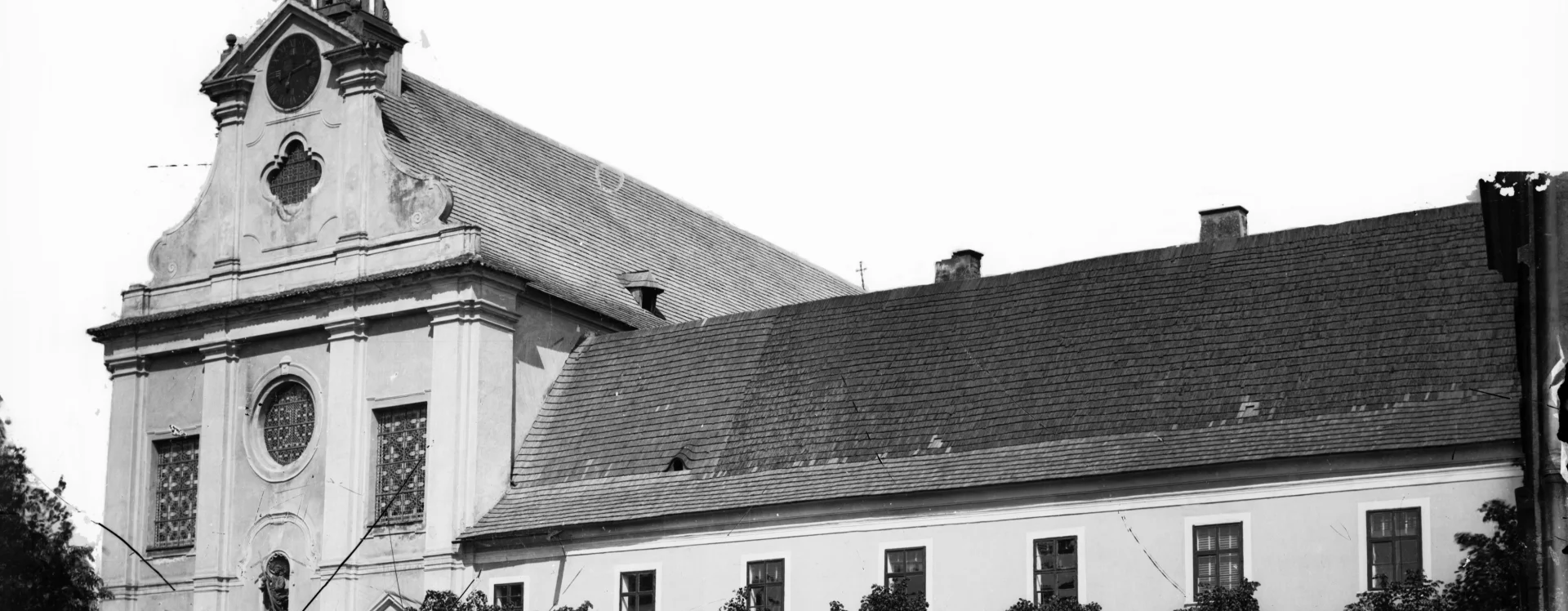
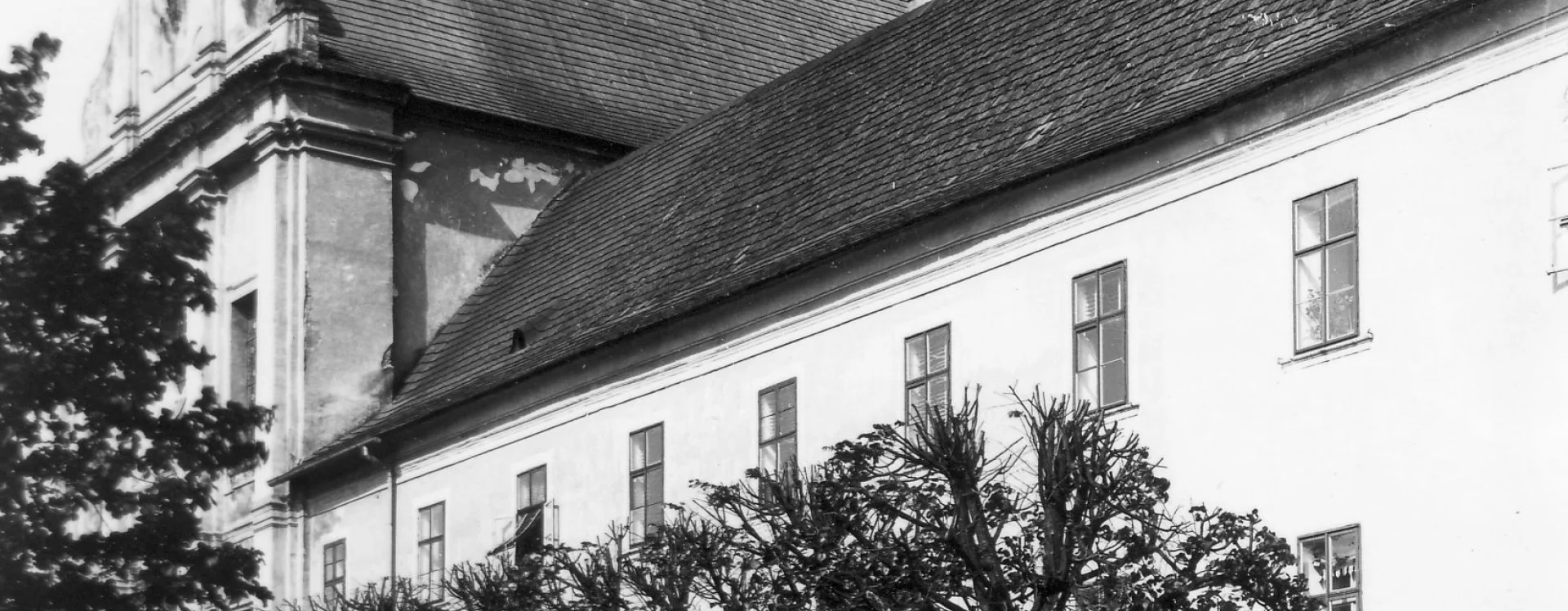
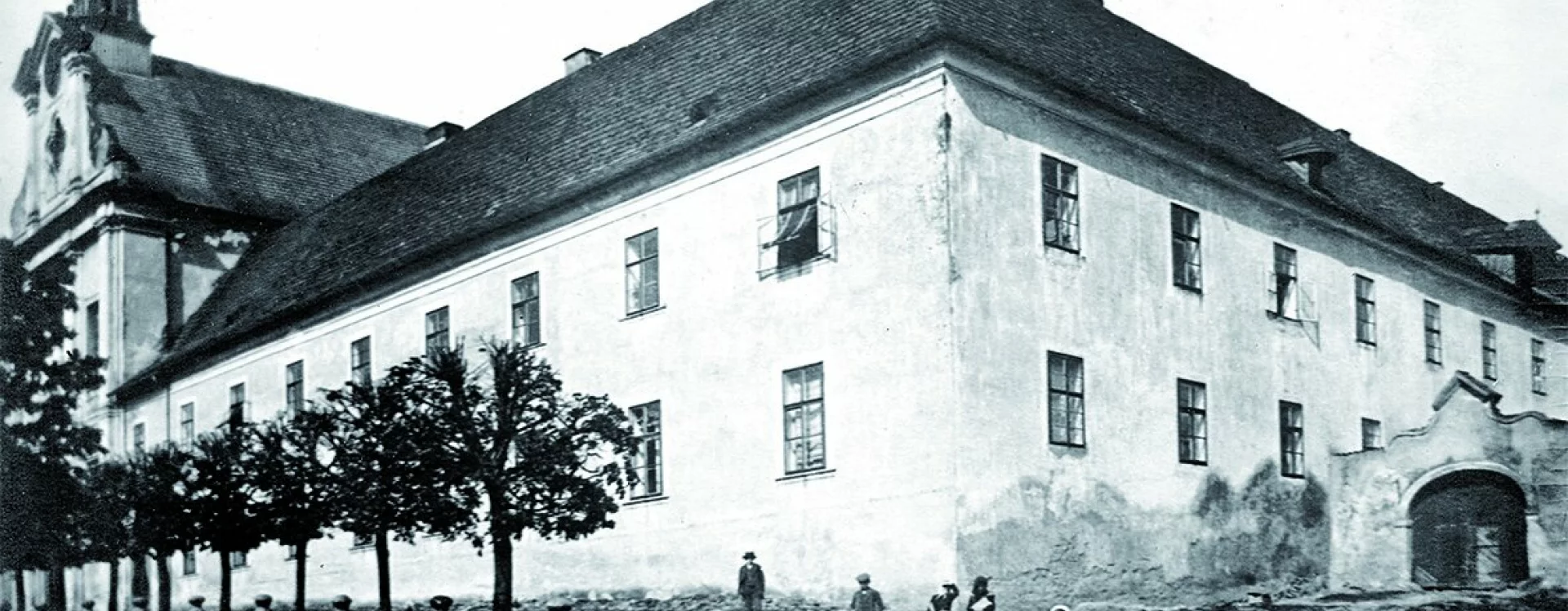
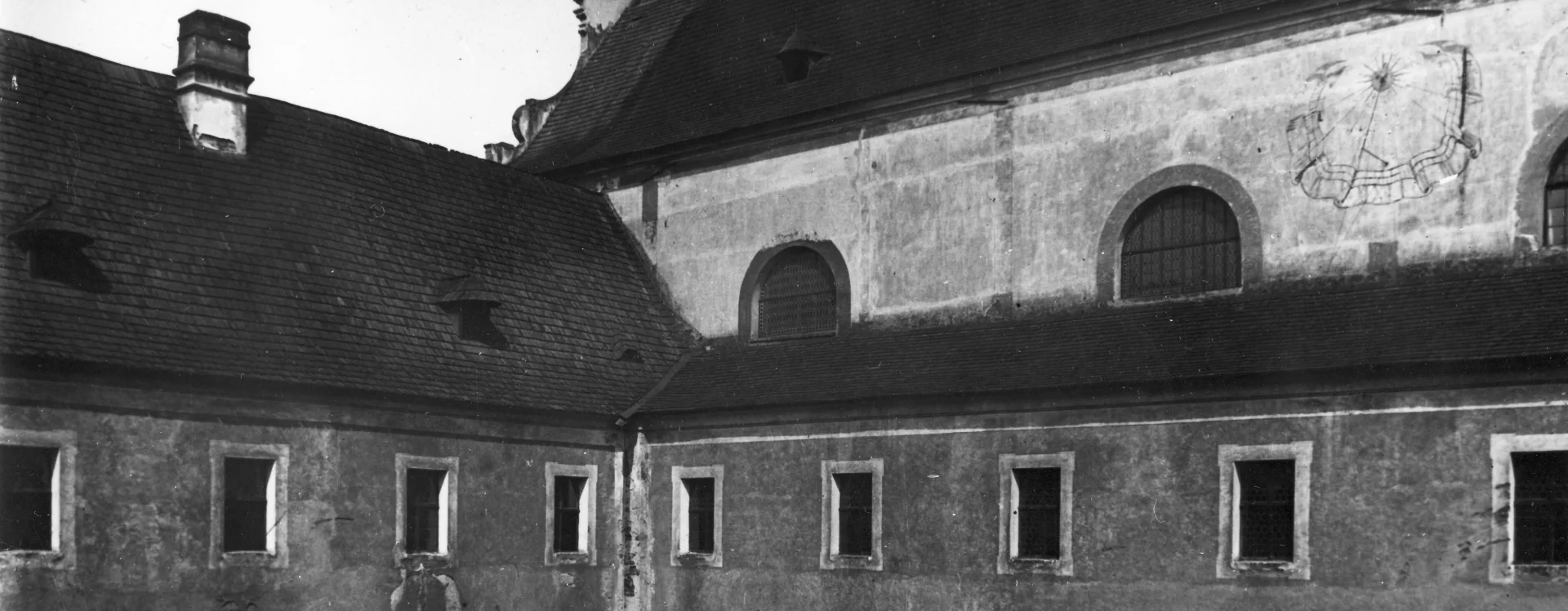
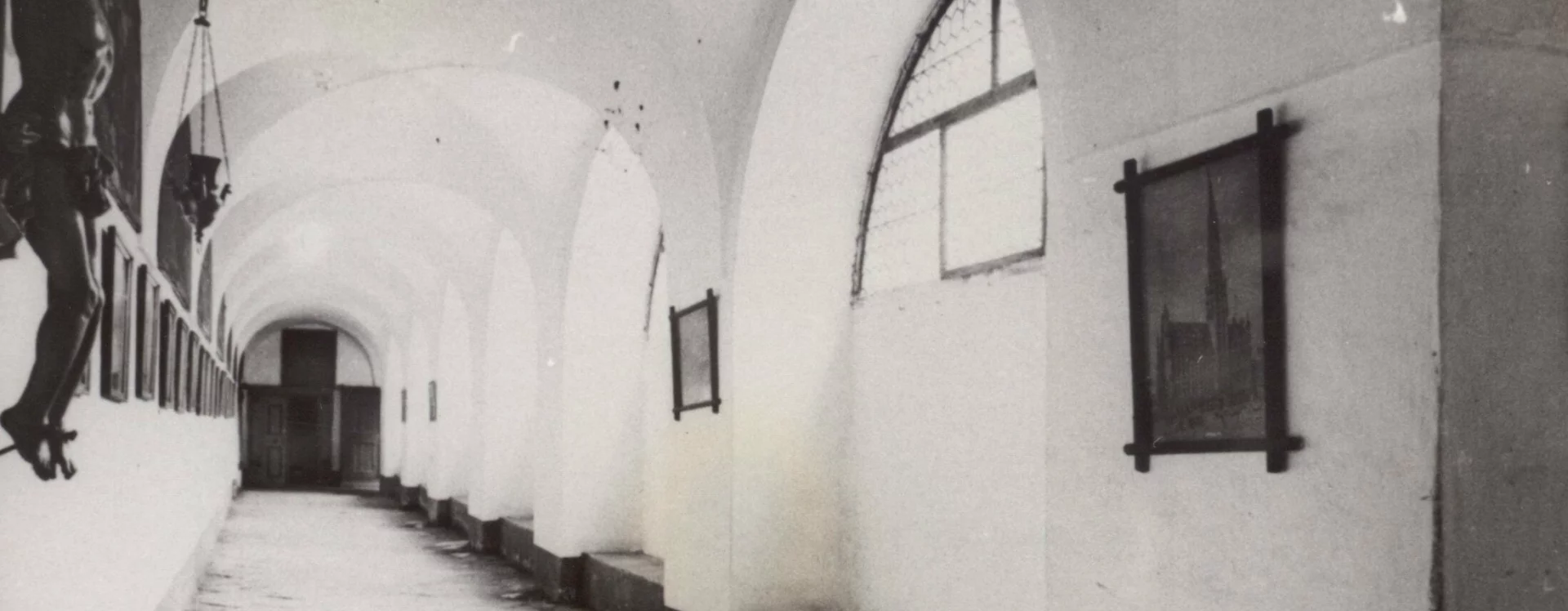
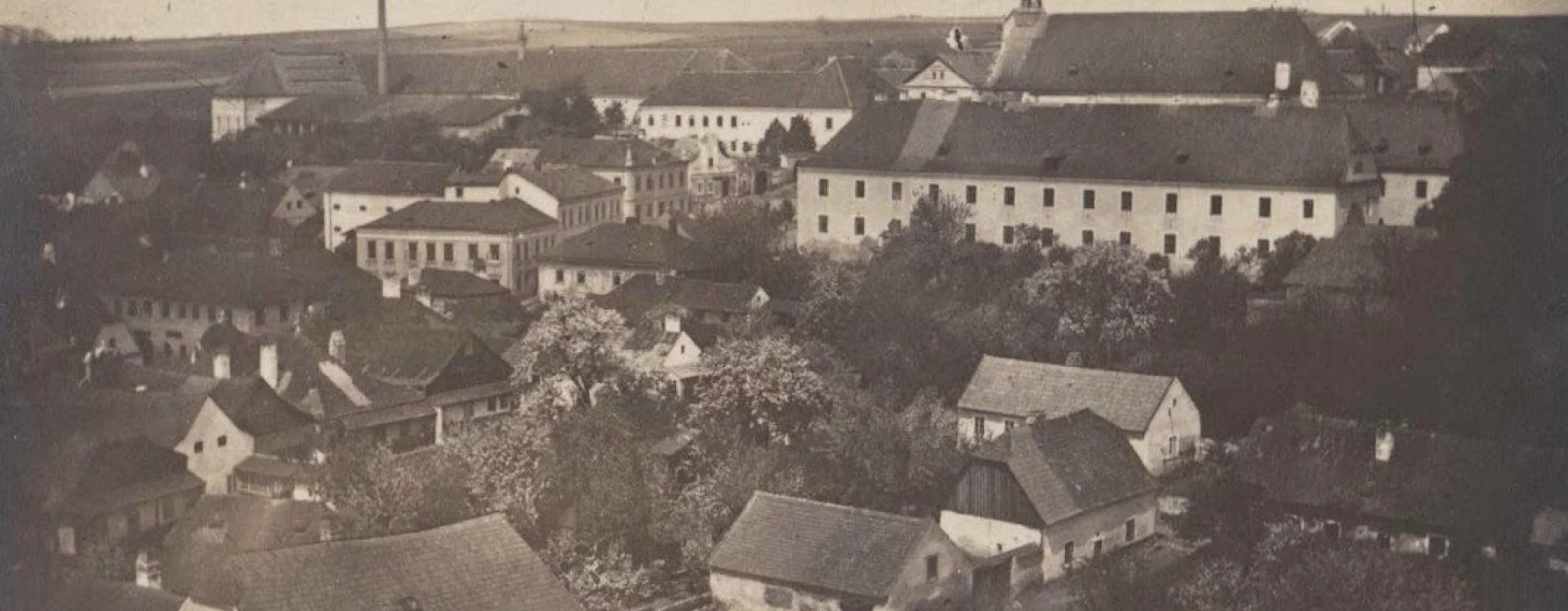
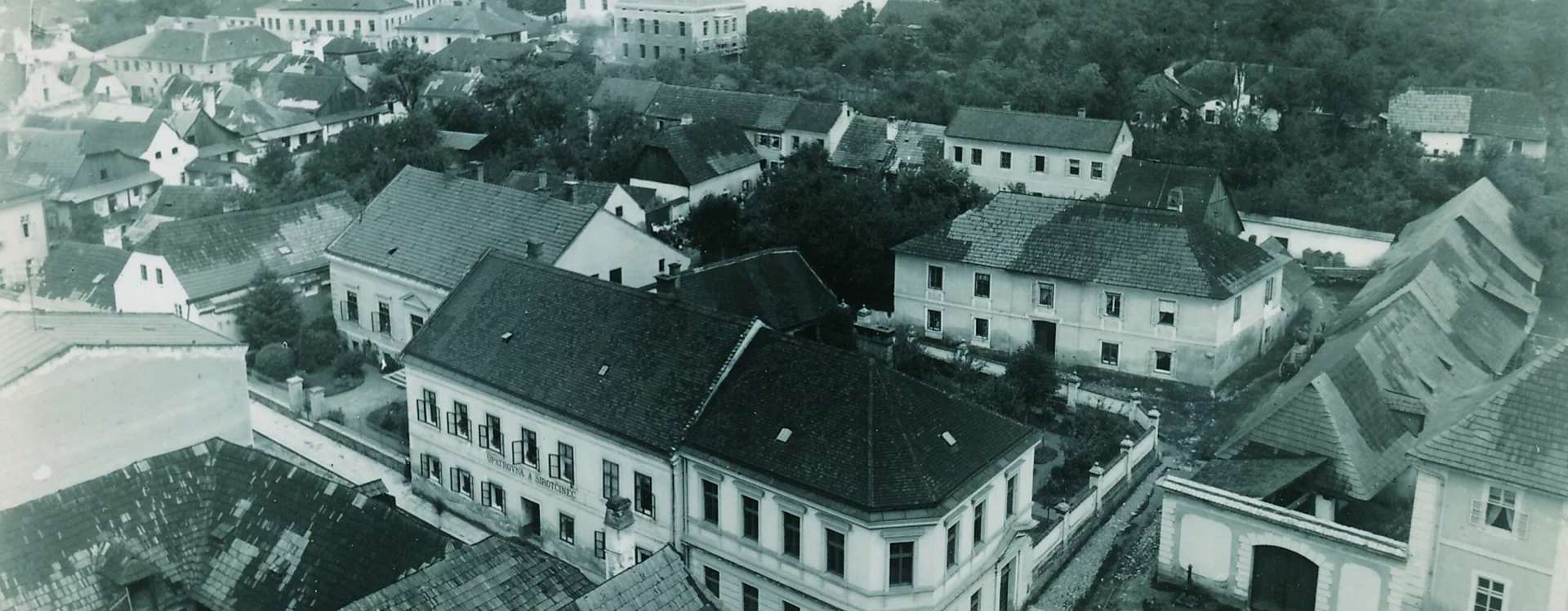
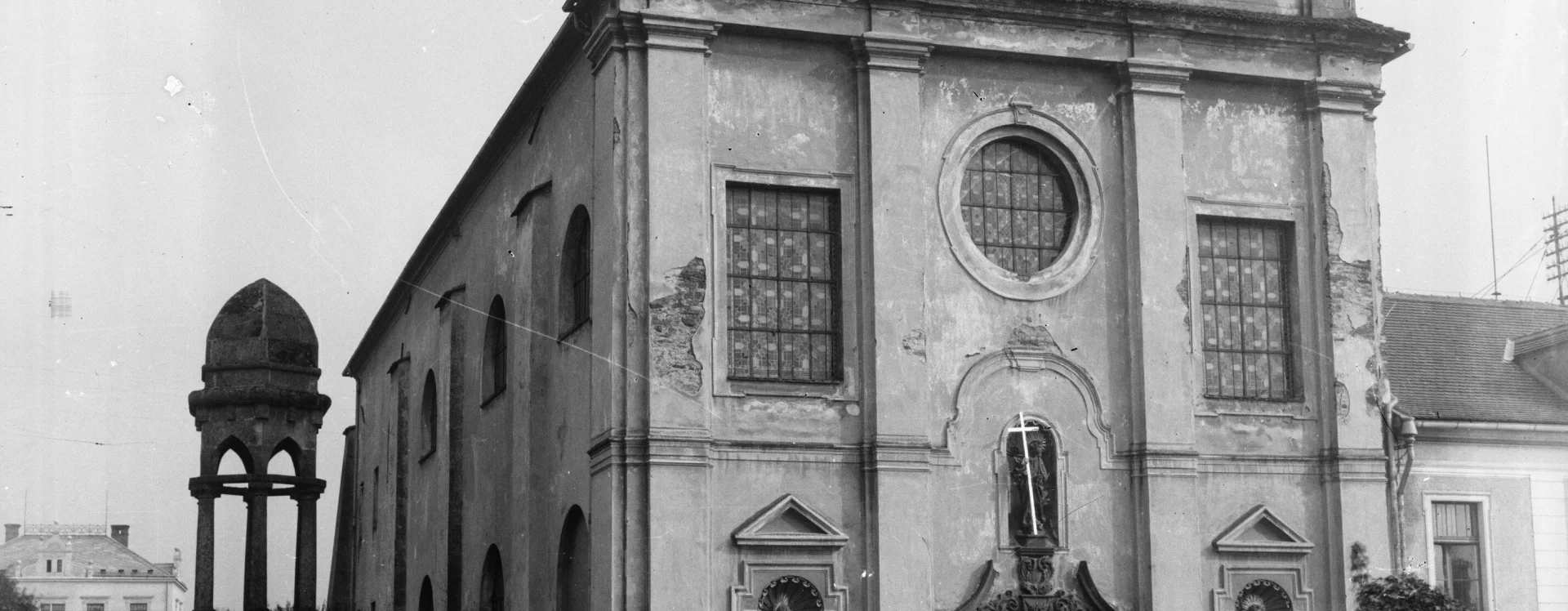
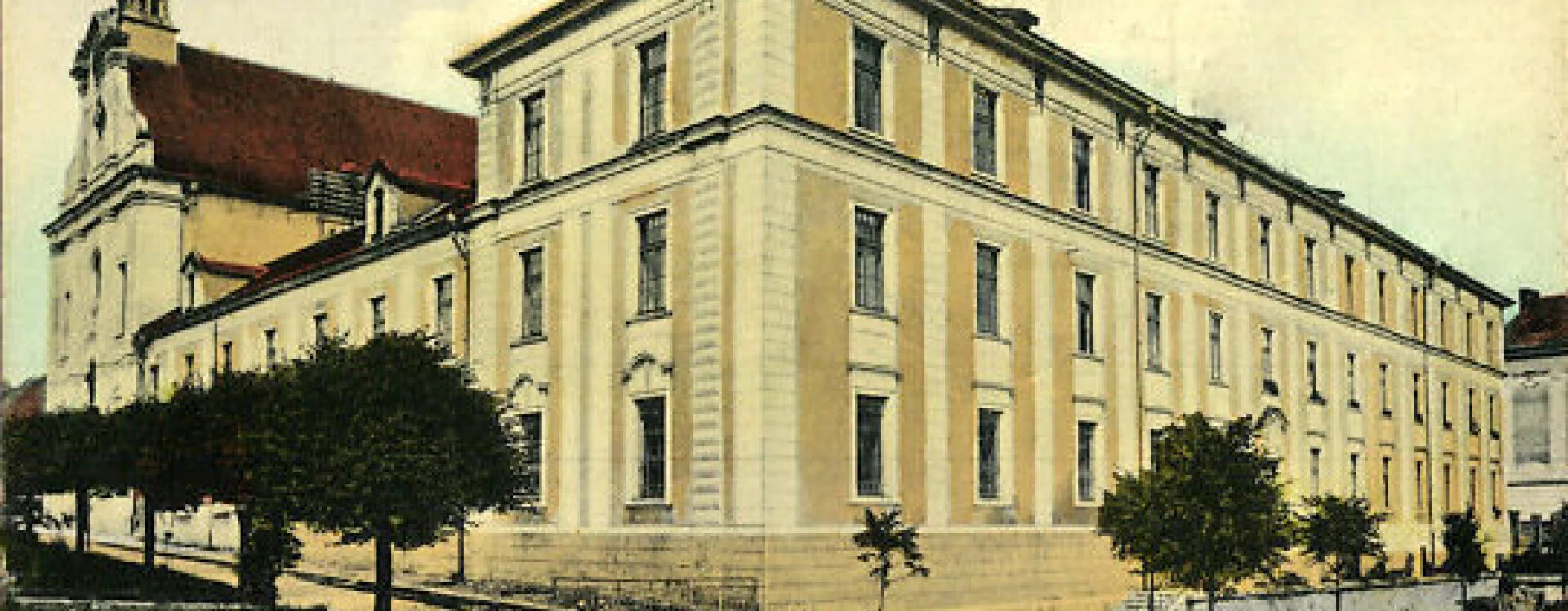
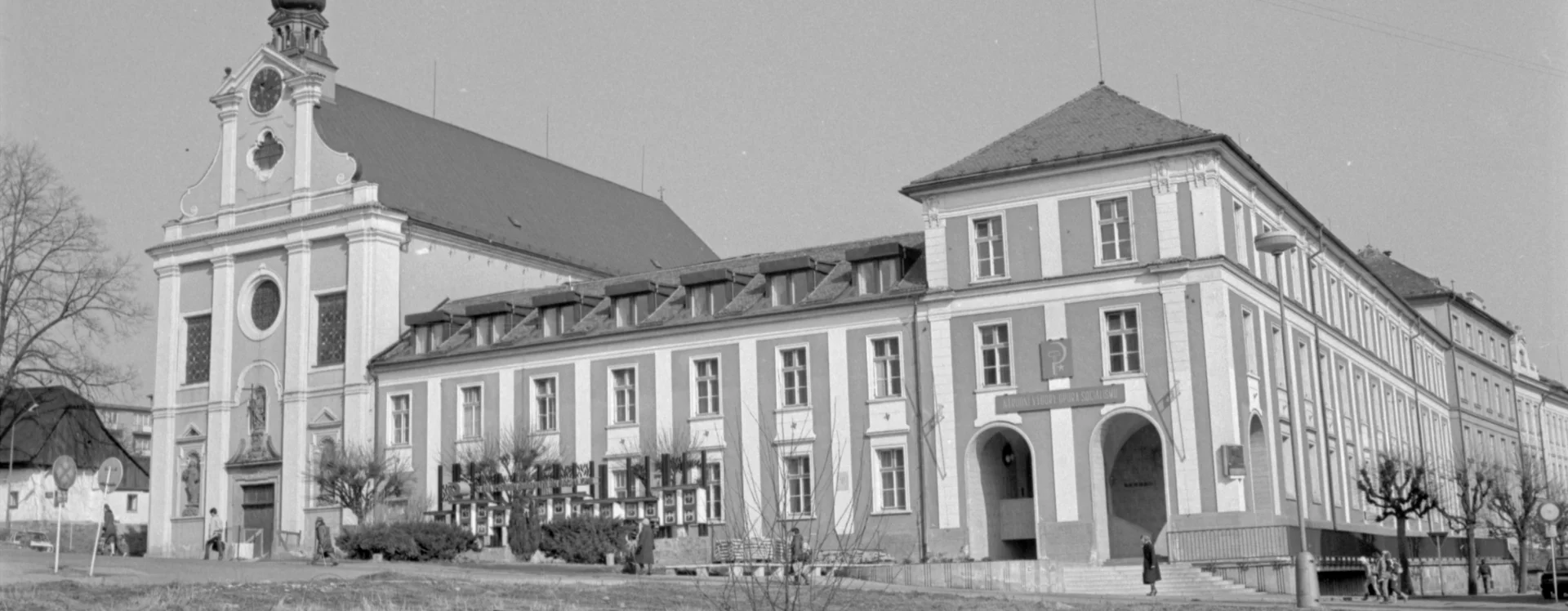
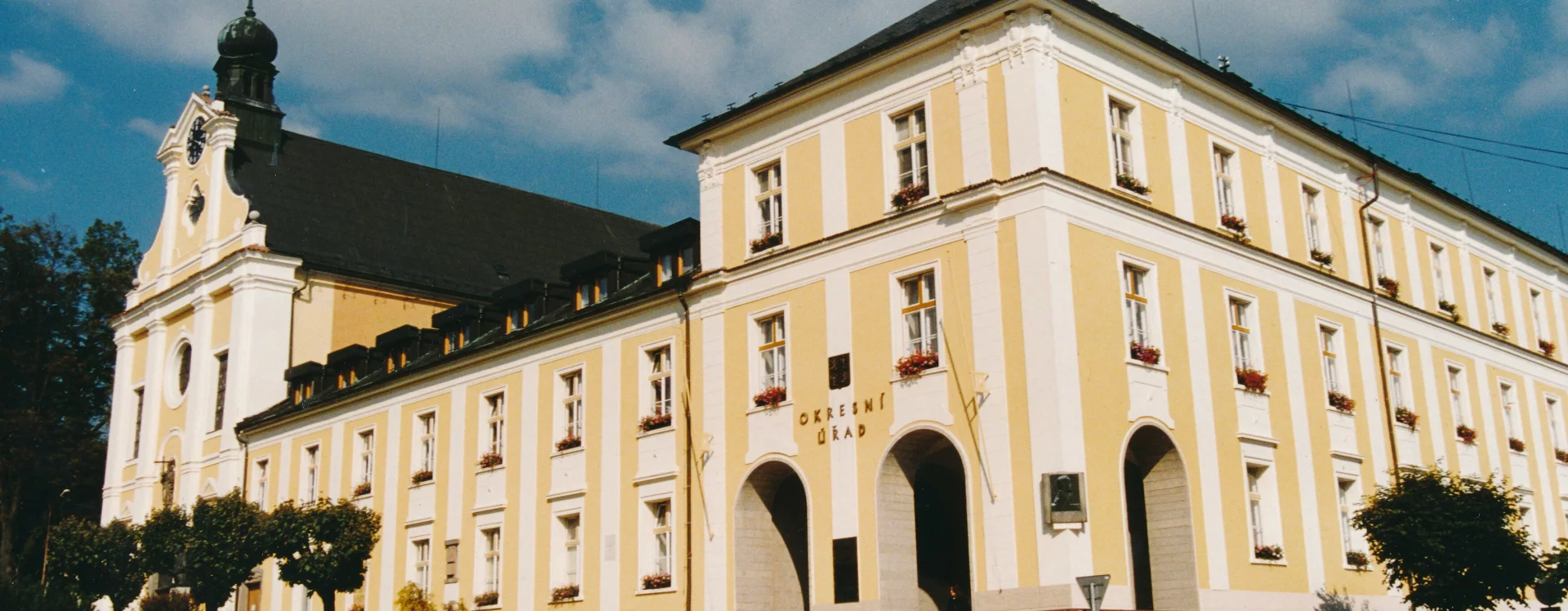
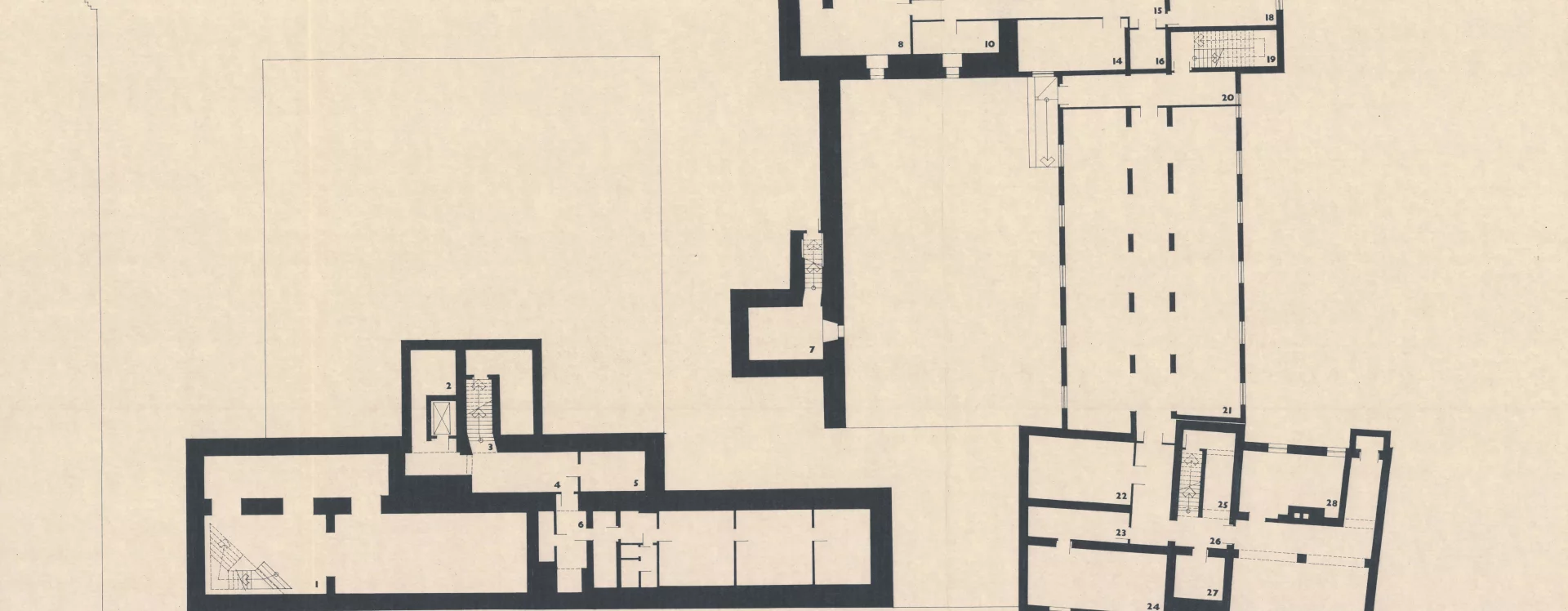
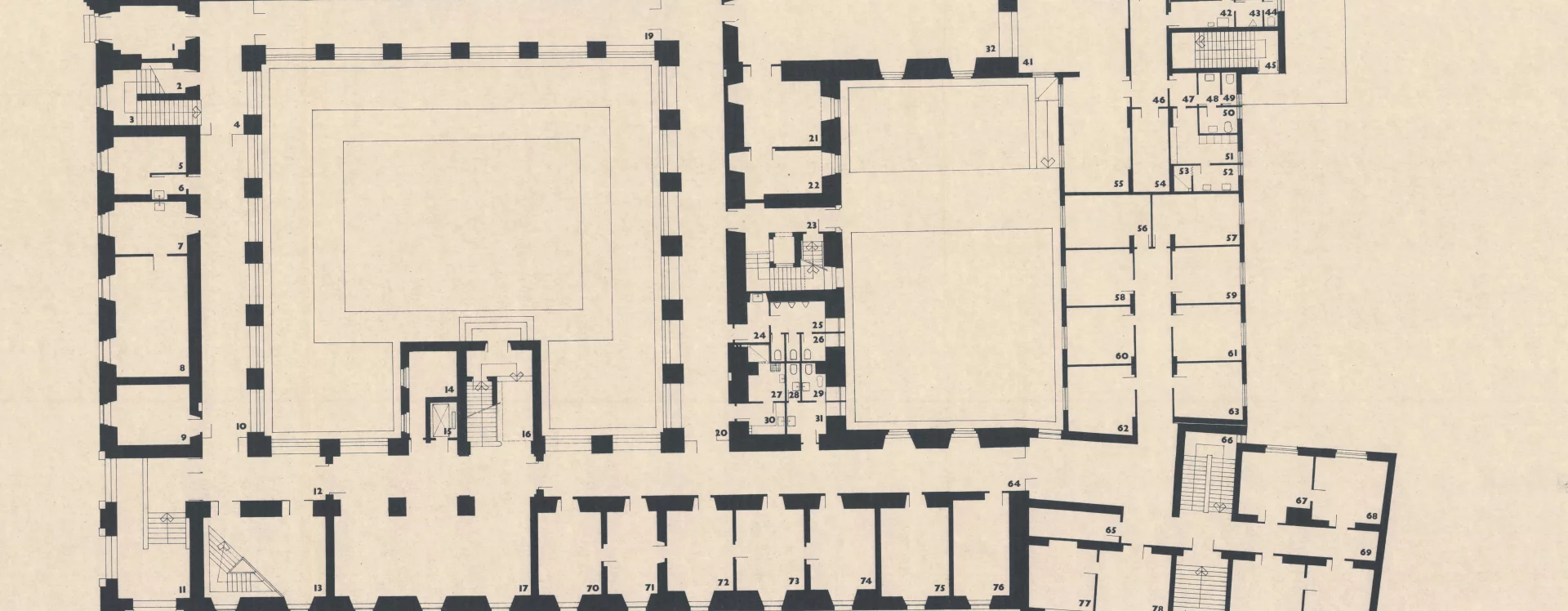
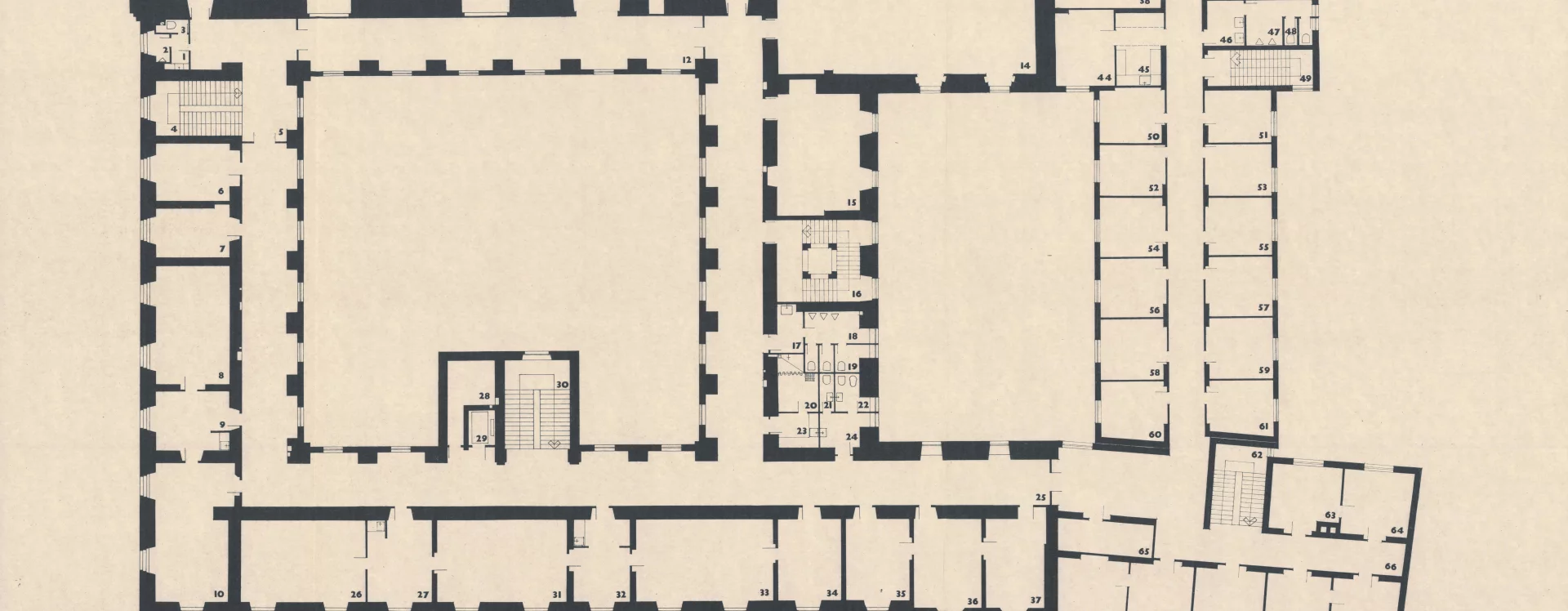
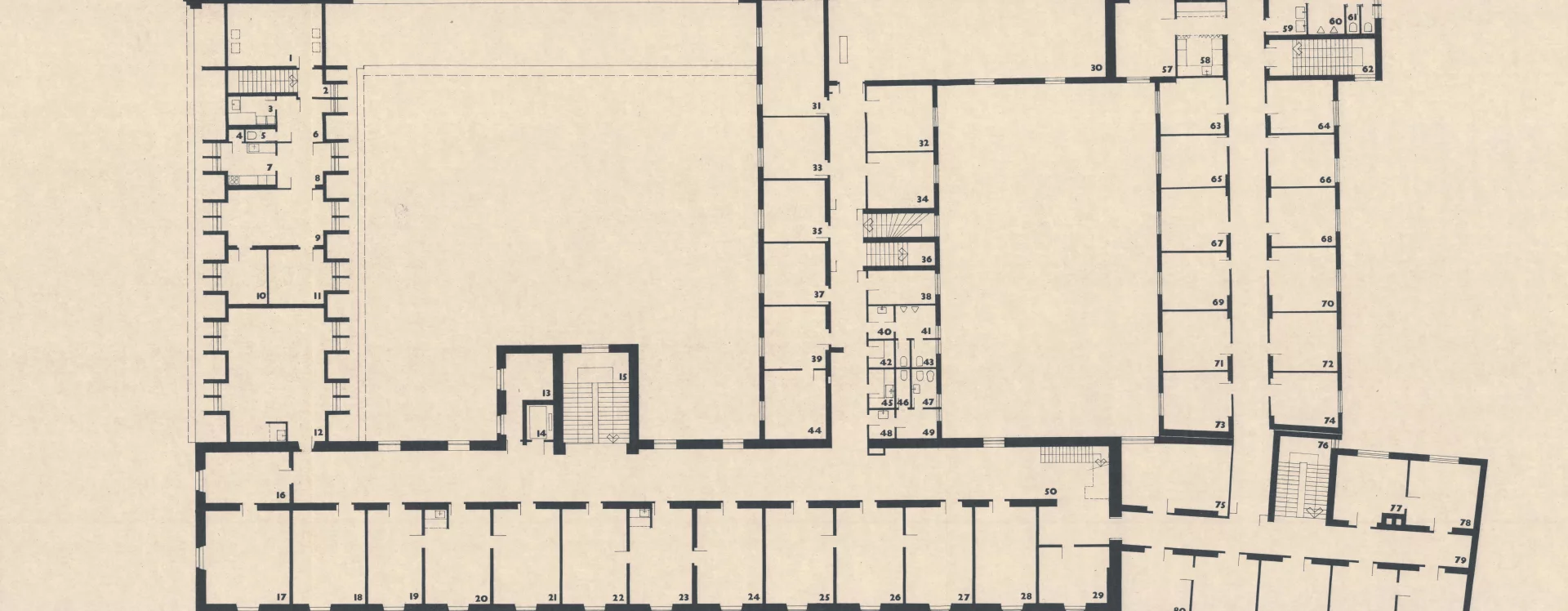
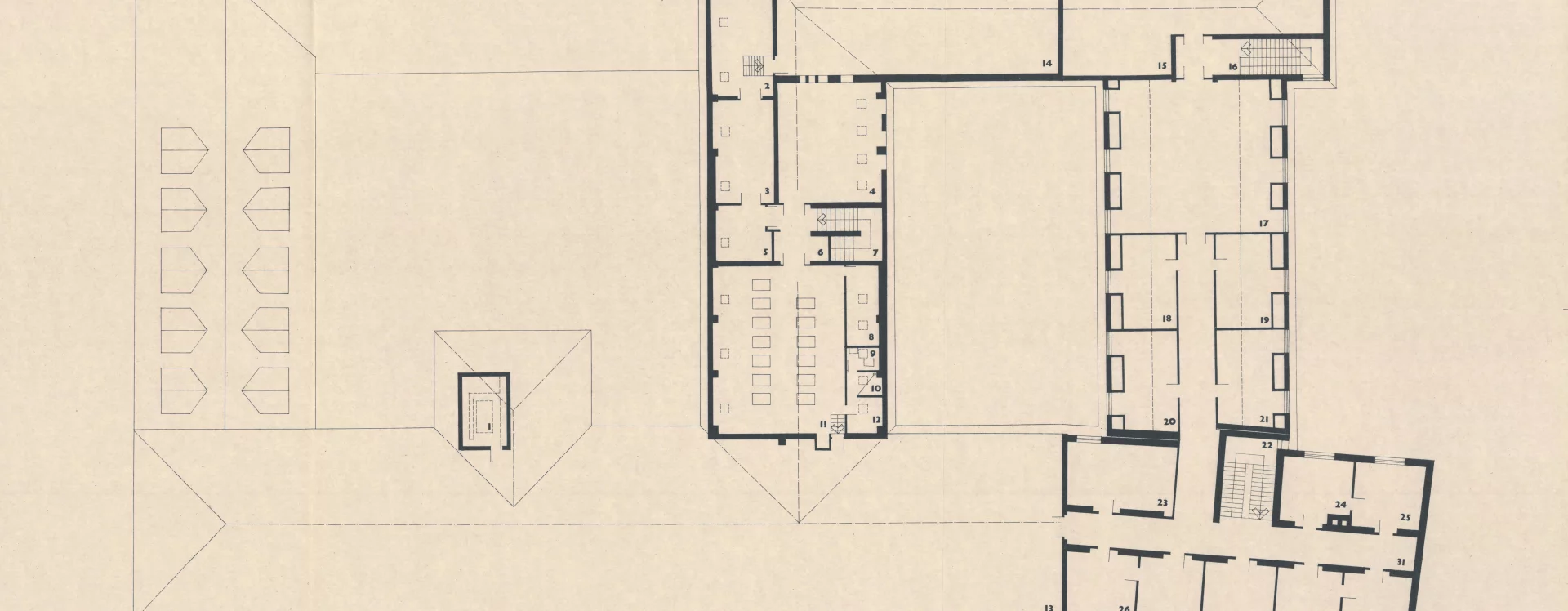
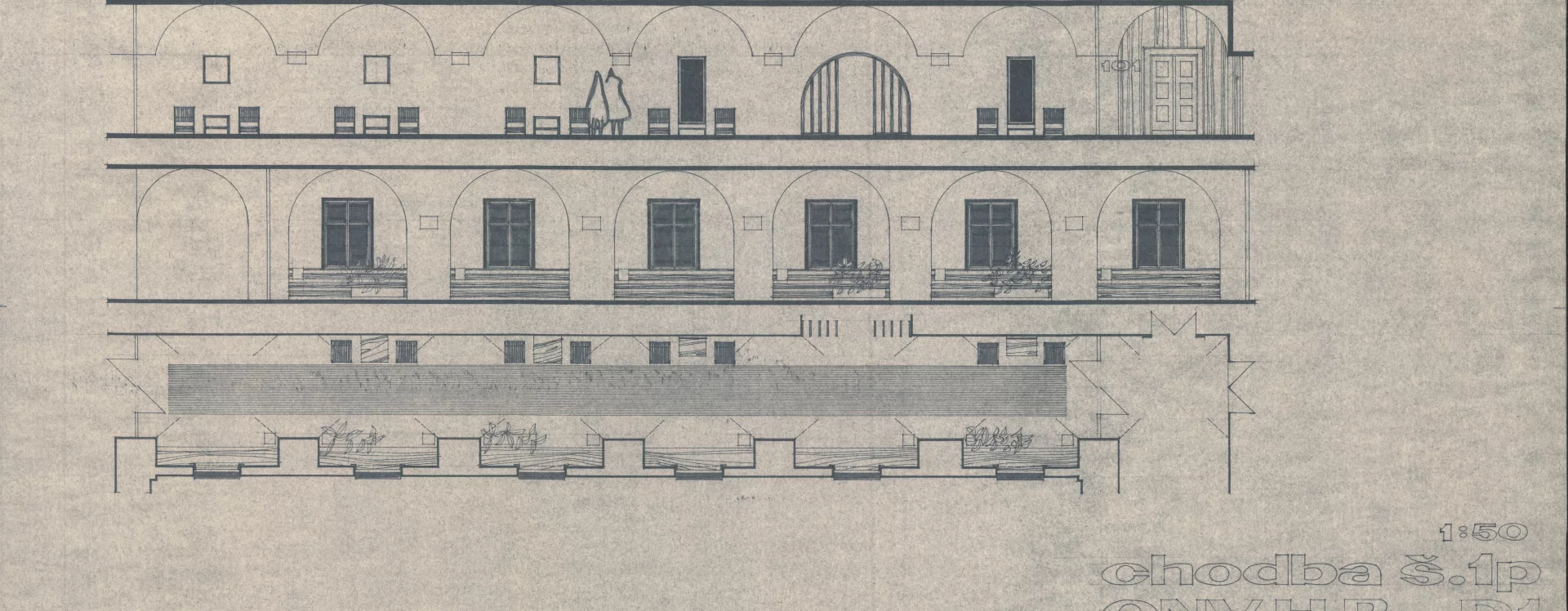
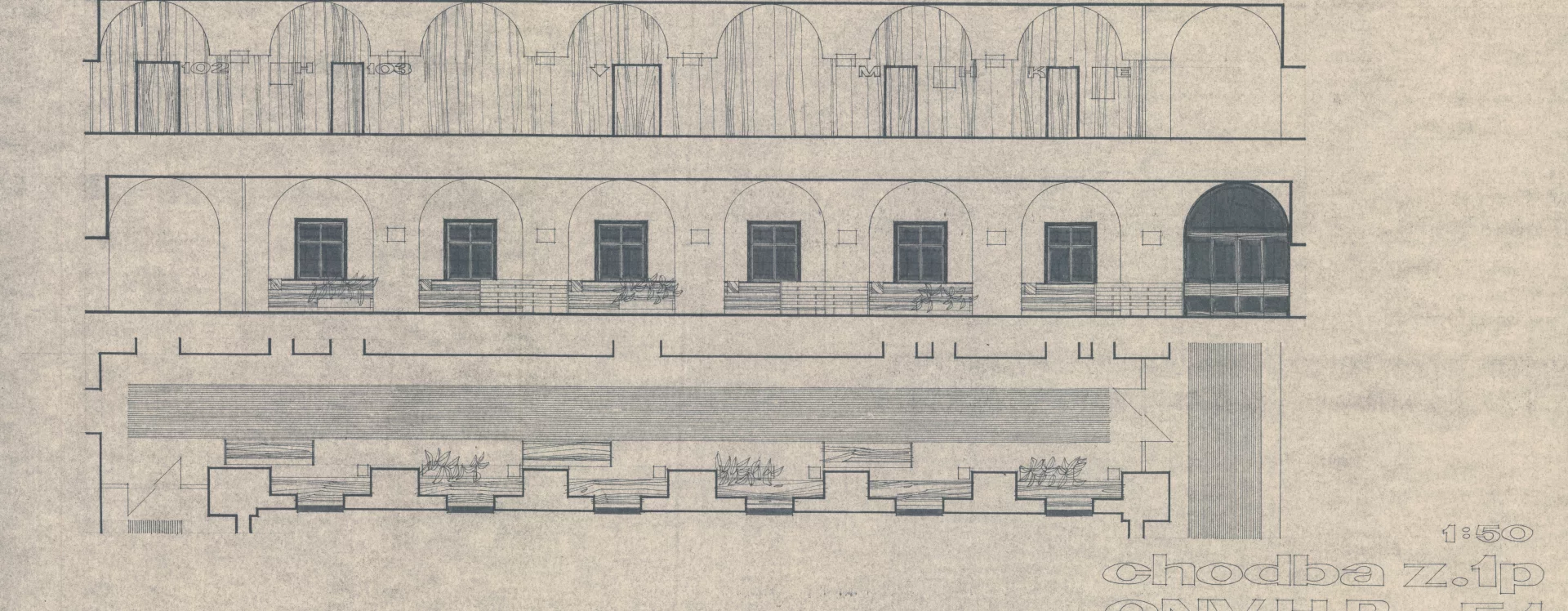
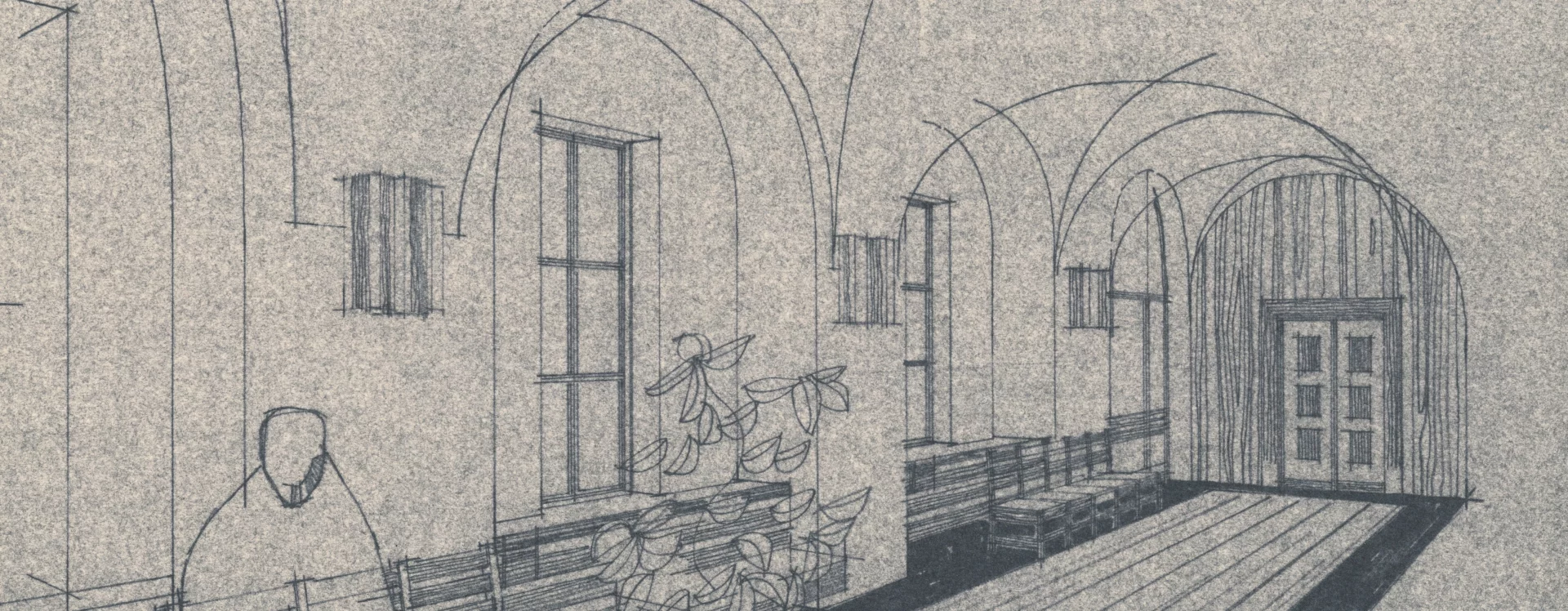
The extensive Baroque complex consisting of the former Augustinian monastery with the Church of the Holy Family, an adjacent convent and the Chapel of the Holy Sepulchre, was built between 1679 and 1733. The convent, which was abandoned by the monks as a result of Joseph II’s reforms, underwent renovation in 1815 to accommodate a secondary school. Since 1908, when the students moved into a newly built secondary school (HB-2004), the building has been occupied by the state administration, which carried out several renovations during the 20th century to meet its needs.
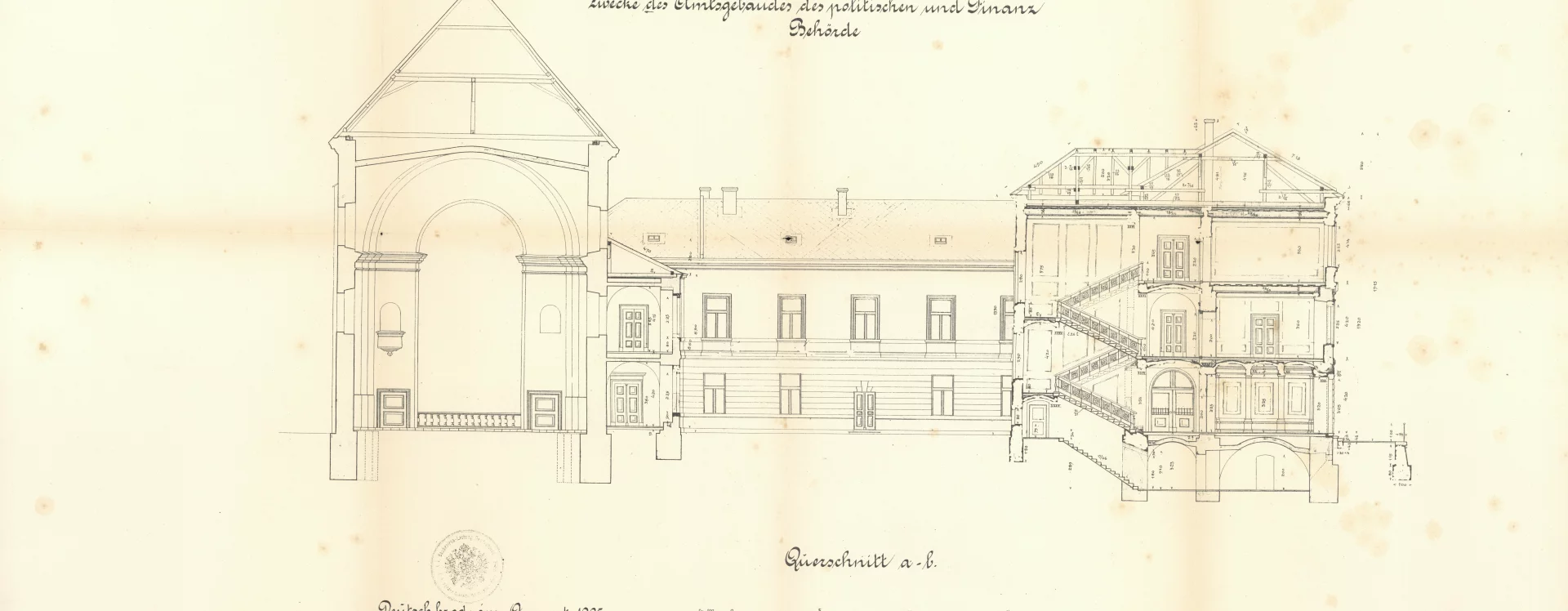
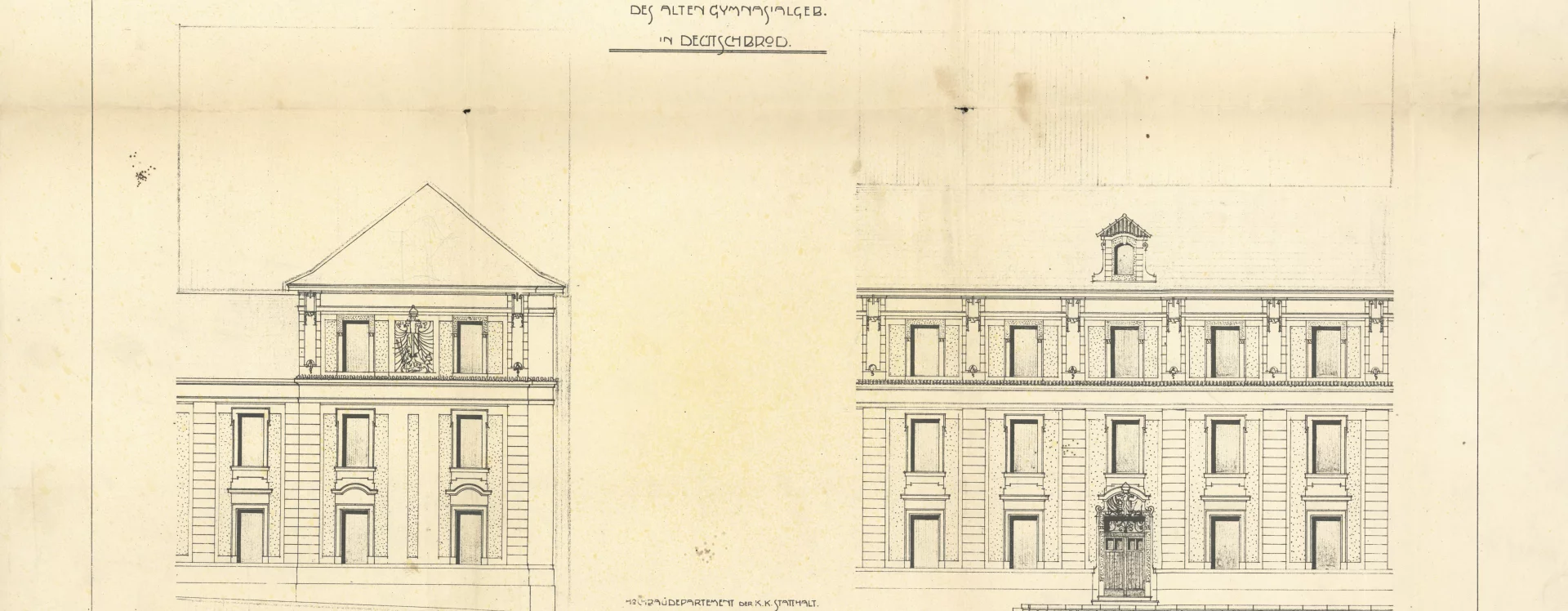
As early as 1905, the chief engineer Václav Koudelka drew up plans to use the complex for governmental and financial administration, which essentially meant a complete reconstruction of the entire building. The plans were then worked out in detail by the technical department of the imperial-royal Prague governor’s office in cooperation with the local chief engineer Bohumil Šel. Despite strong objections from the imperial-royal conservator Zdeněk Wirth – a representative from the monument preservation department who emphasised the building’s exceptional value – extensive alterations were carried out. These included the partial removal of the southeast wing, the destruction of the vaults, the enlargement of window openings throughout, and the installation of a two-storey staircase. The south wing was raised by another floor to create accommodation for the district governor, and the originally simple building with smooth walls was given a new facade with lesenes and pilasters in a historicist style. The roof was covered with tiles instead of shingles, which finally completed the destruction of the original appearance of the monastery building. Within the monastery complex, only the Church of the Holy Family with the adjacent Chapel of the Holy Sepulchre were spared from more significant interventions.
Another inappropriate transformation took place between 1961 and 1963, when a new building was added between the secondary school and the south wing of the monastery to expand the office space of the District National Committee (ONV), which took over the complex.
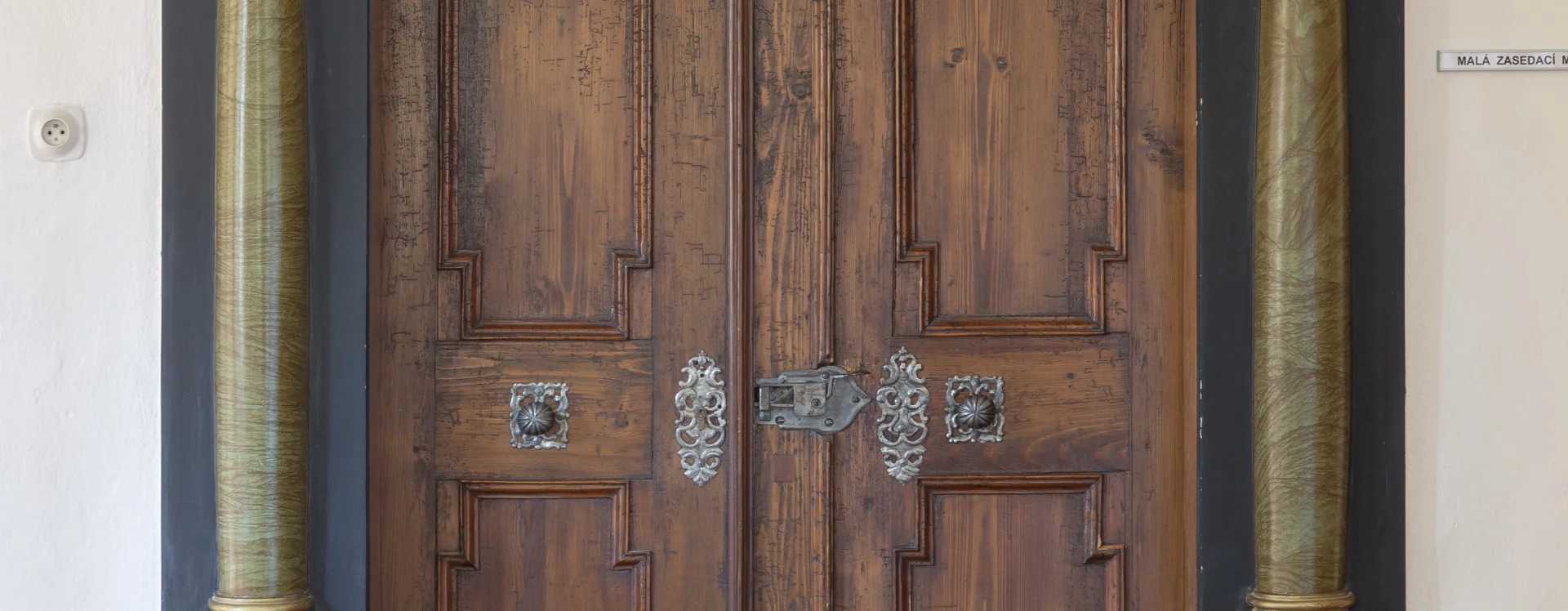
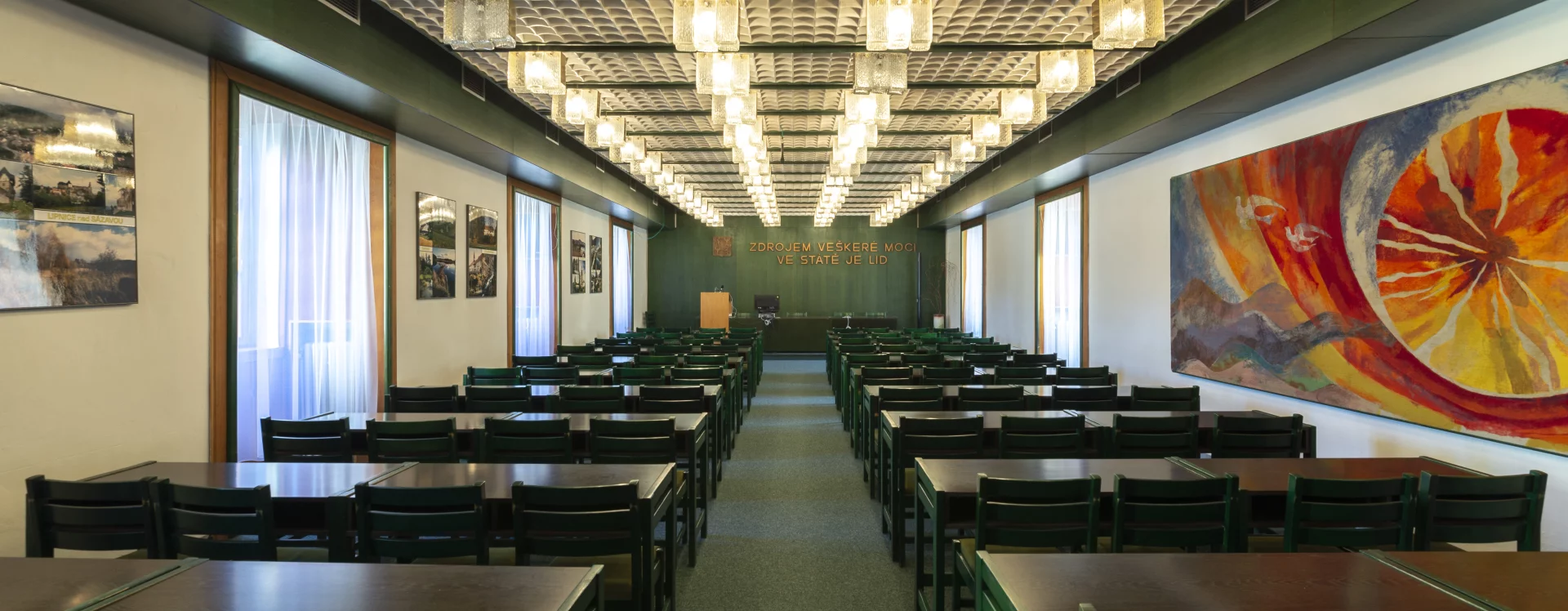
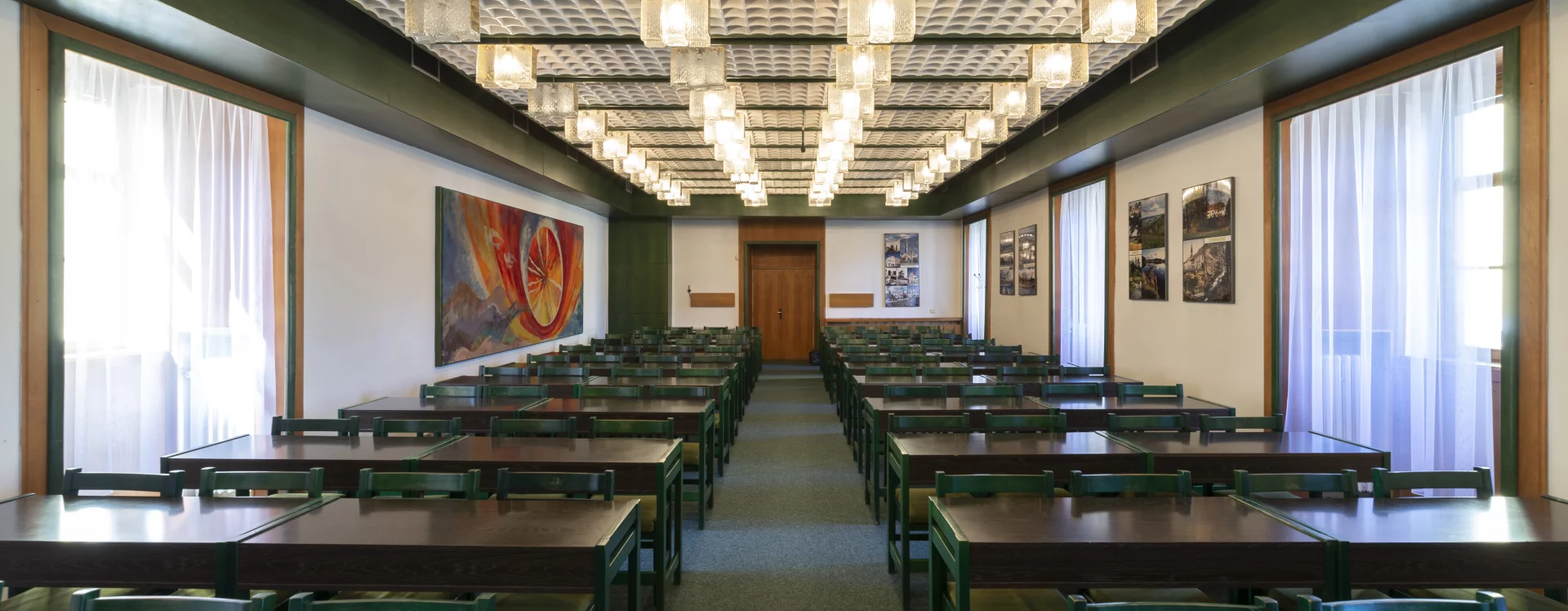
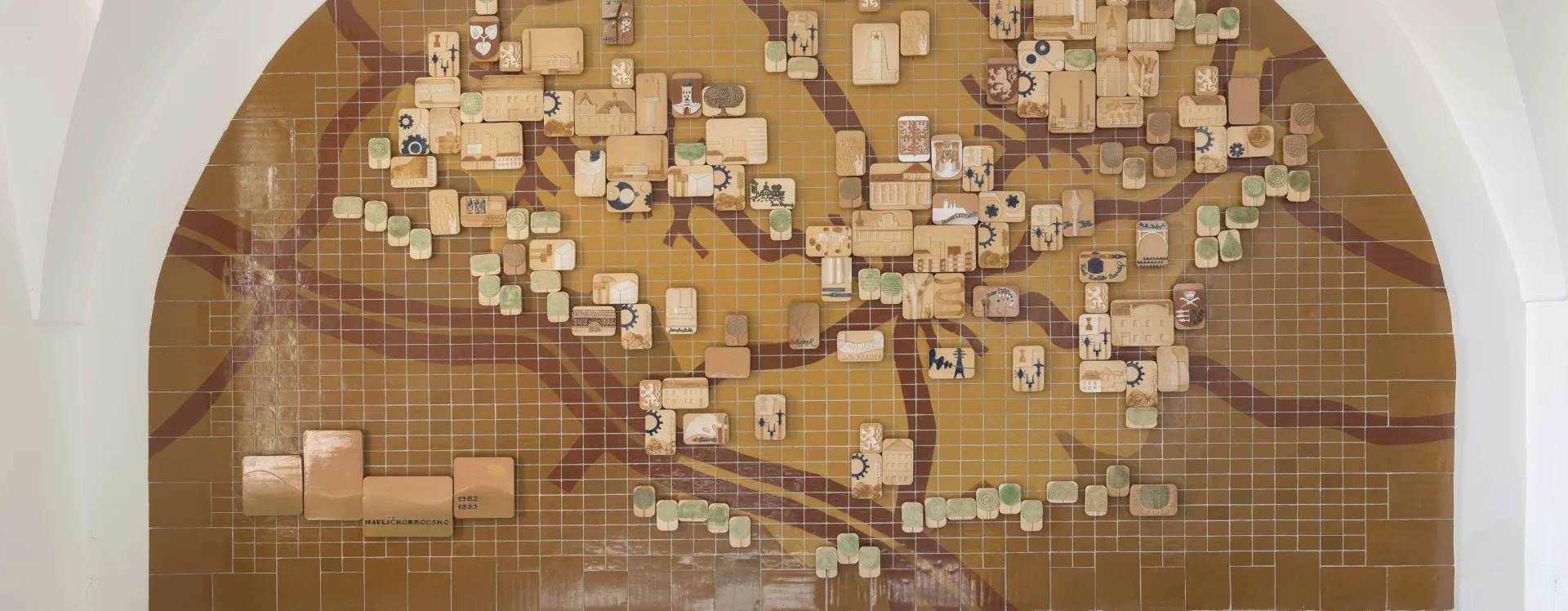
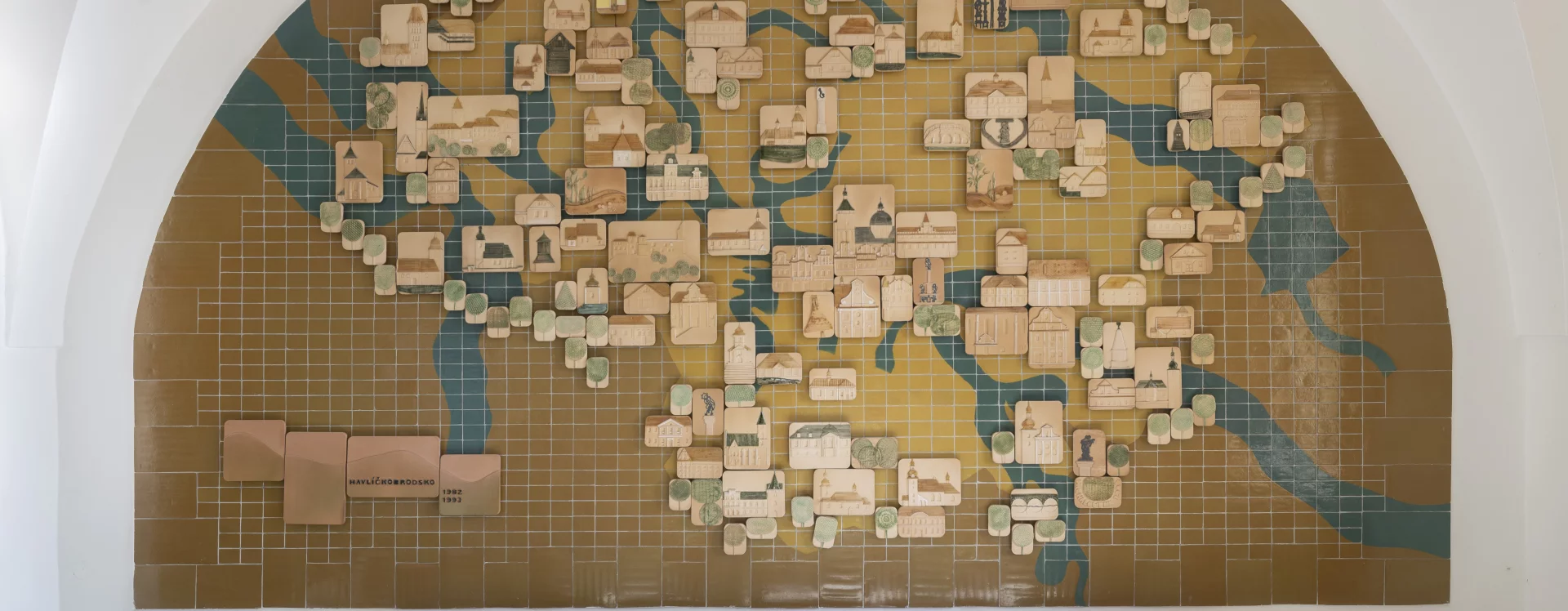
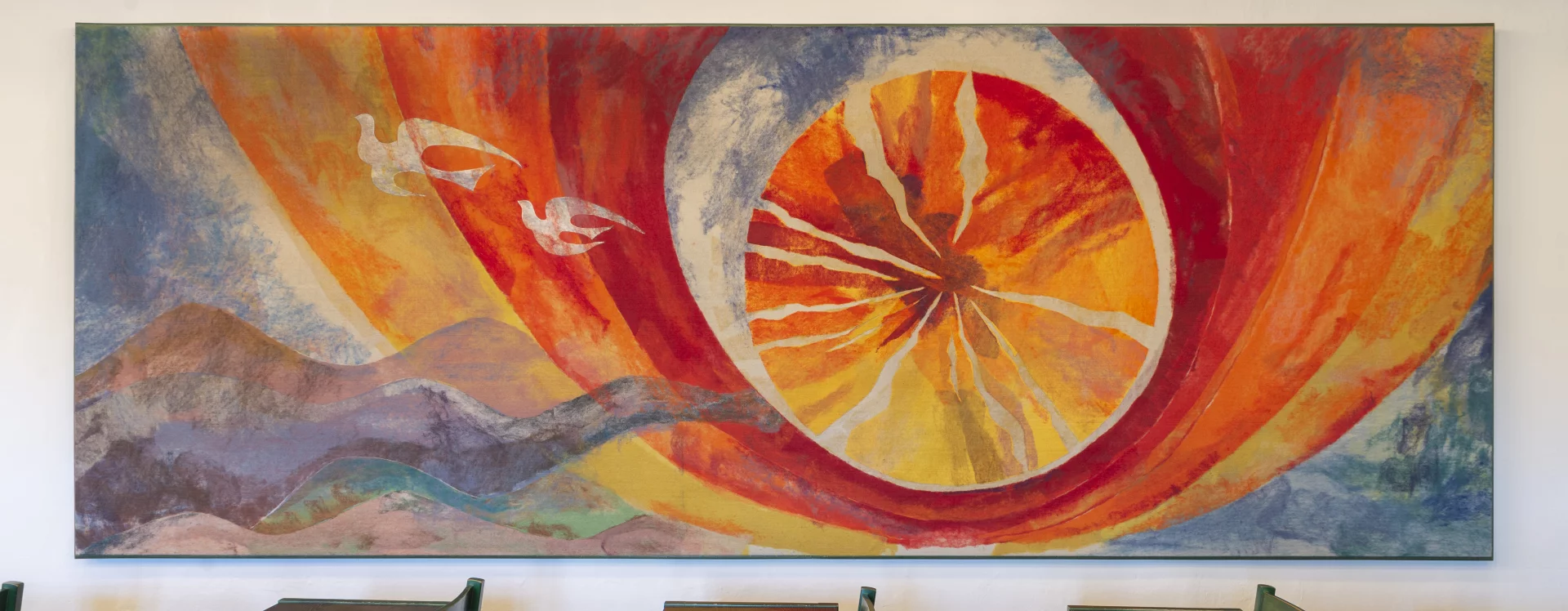
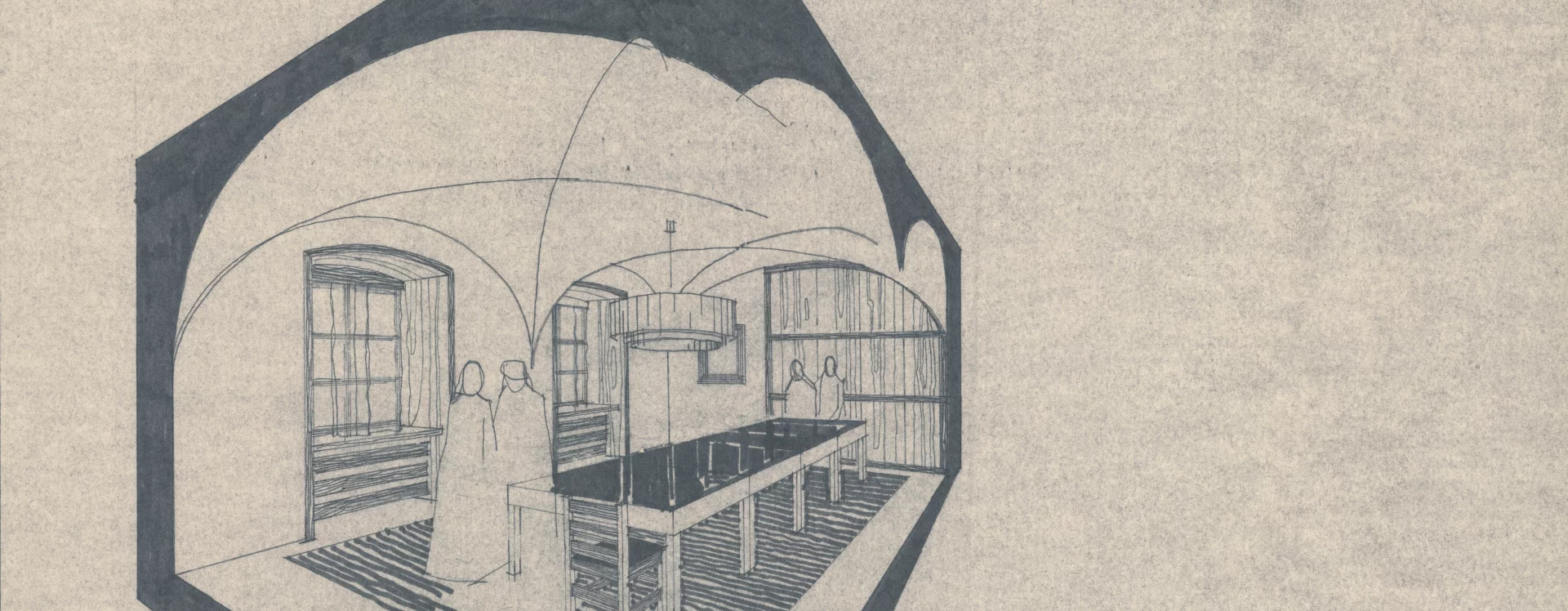
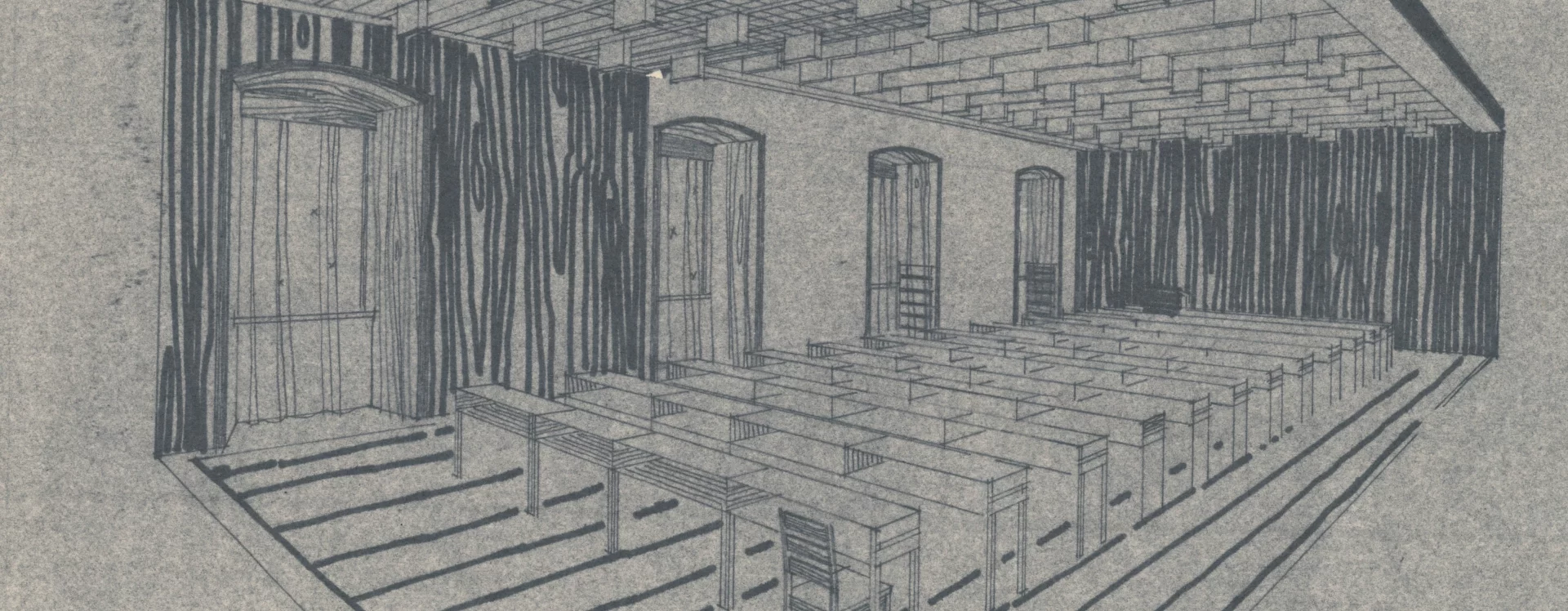
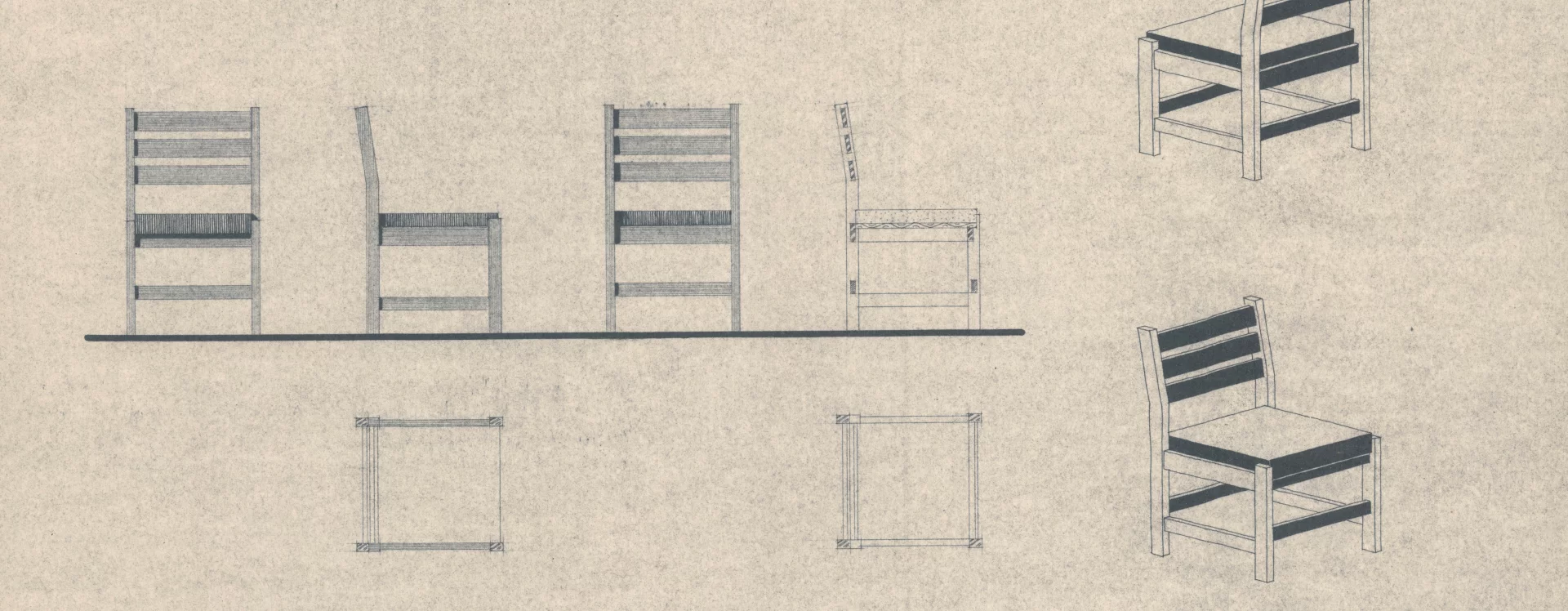
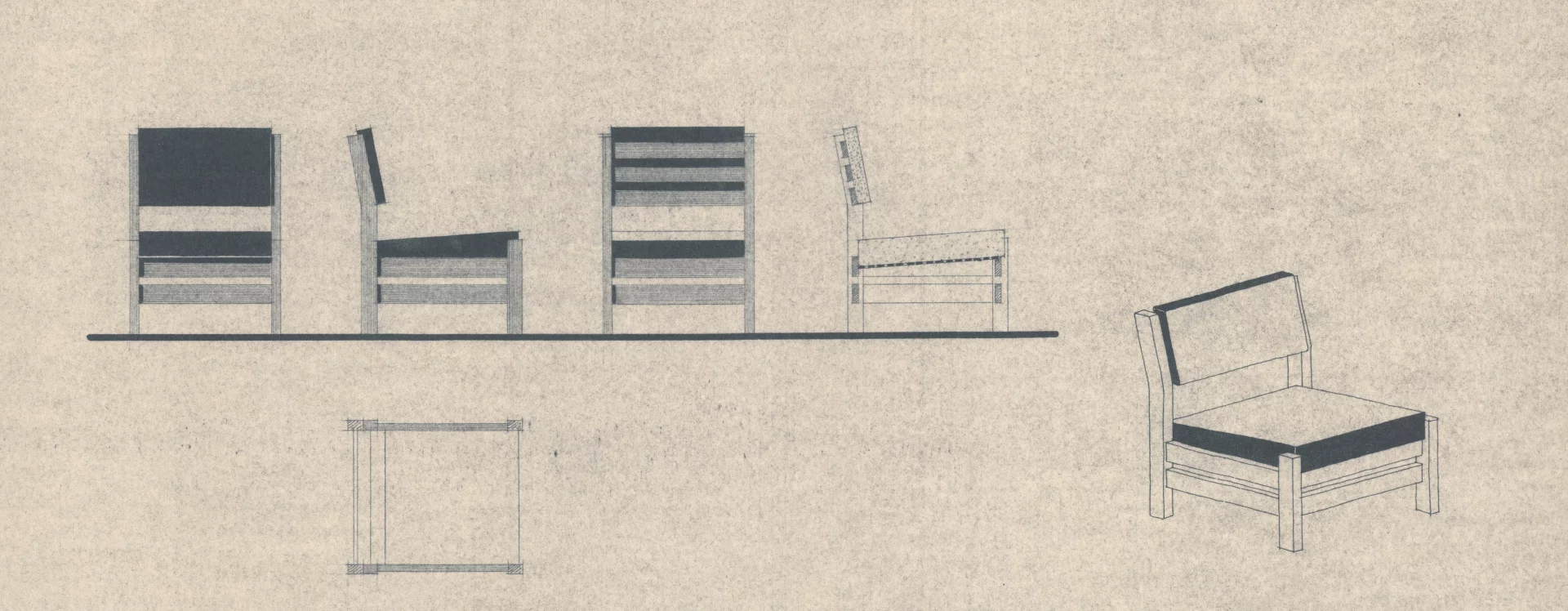
This was followed by extensive renovations in the 1970s and 1980s, based on a design by architect Ladislav Ziegler. A new entrance was built in the southwest corner of the building, additional offices were added to the attic, and the interiors also underwent significant changes. As part of the refurbishment, several artistic commissions were undertaken, including ceramic wall panels in the entrance hall by Miloslav Chaloupka and the decoration of the meeting rooms, to which Chaloupka (Peace Sun), J. Holinka (state emblem), and Ludoslav Matušík (etched glass for door panels and partitions) all contributed. The interiors, including the artistic decorations, have remained essentially unchanged to this day.
Aleš Veselý, 2025
Literature
Petr Horák. Mezi adorací a demolicí. Osudy vybraných děl českého výtvarného umění 50.–80. let 20. století po roce 1989 na území dnešního Kraje Vysočina. In: e-Monumentica. 2017, V/5.
František Petr. K dějinám bývalého kláštera v Německém Brodě. In: Zprávy Městského musea v Německém Brodě. Německý (Havlíčkův) Brod, 1916. p. 3-36.
Vladislava Říhová, Zuzana Křenková. Sochy a města. České umění 50.–80. let 20. století ve veřejném prostoru: evidence, průzkumy a restaurování. In: Sochy a města. Available from: https://sochyamesta.cz/.
Sources
Národní archiv, fond Památkový úřad Vídeň. sv. karton 10.
Státní okresní archiv Havlíčkův Brod, fond Okresní úřad Německý Brod. sv. karton 158.
Státní okresní archiv Havlíčkův Brod, fond Okresní národní výbor Havlíčkův Brod. sv. karton 1018.