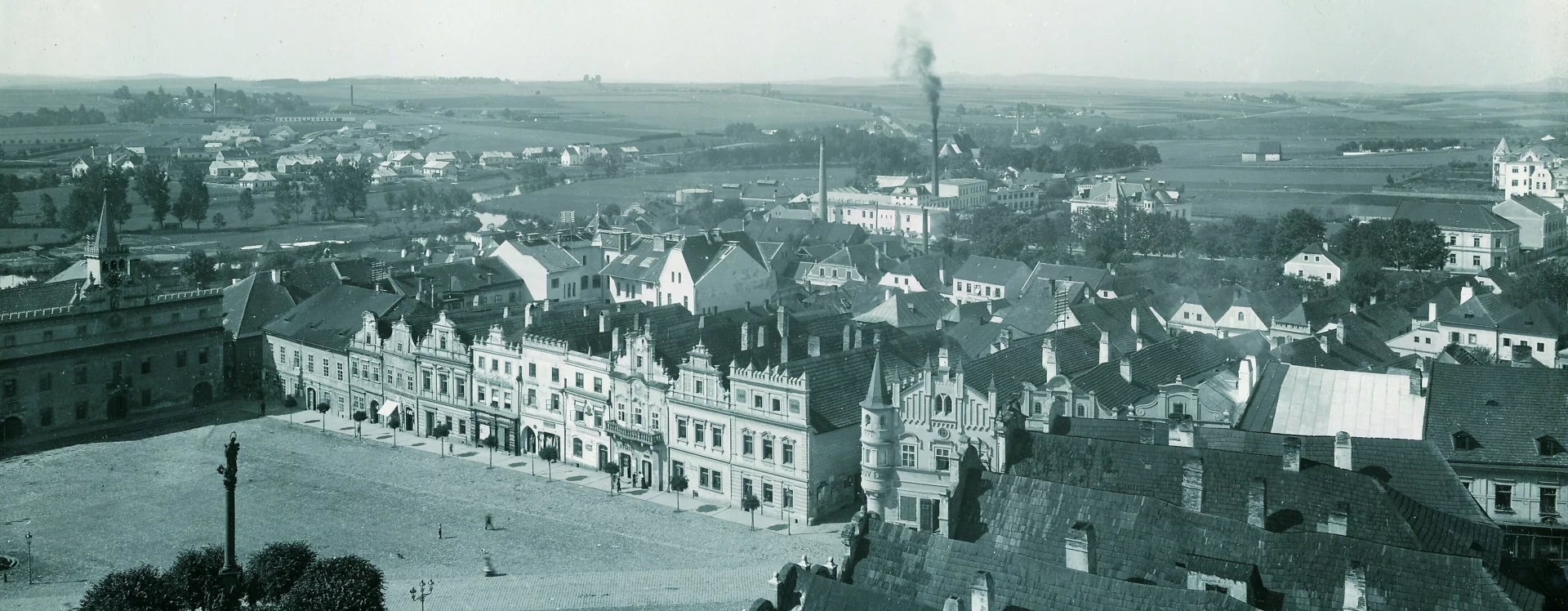
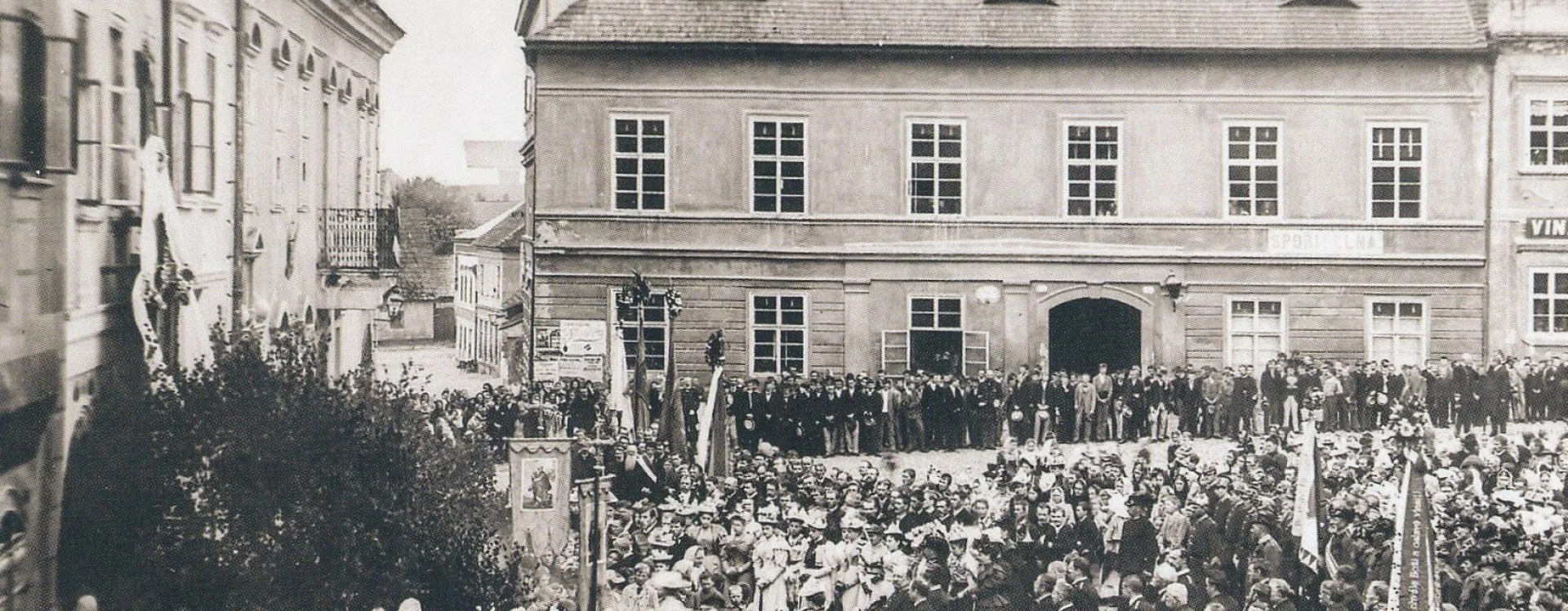
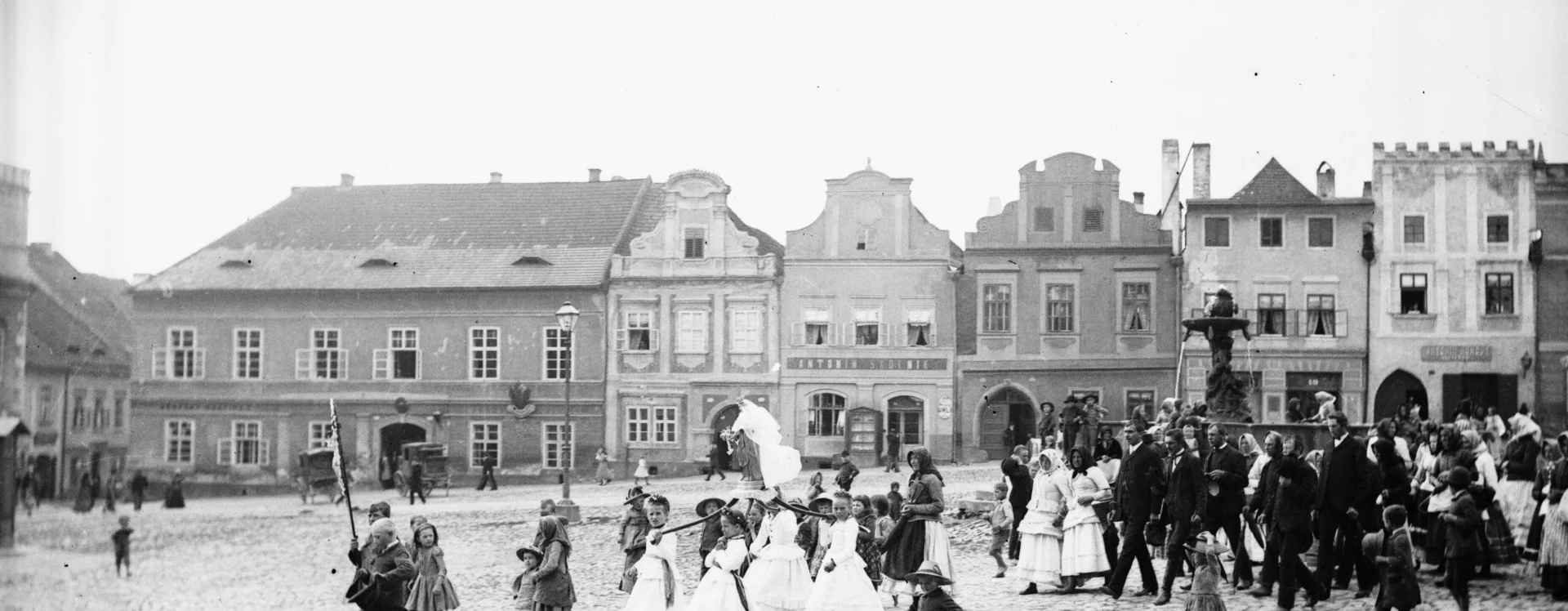
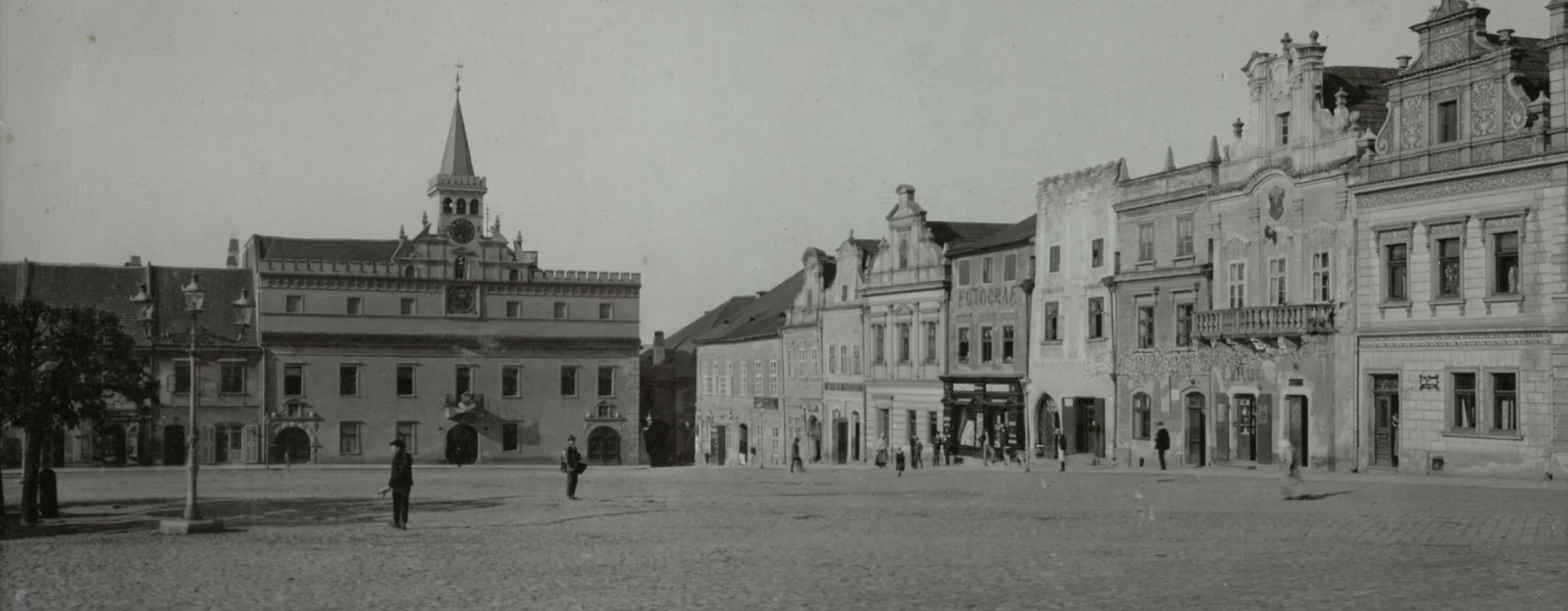
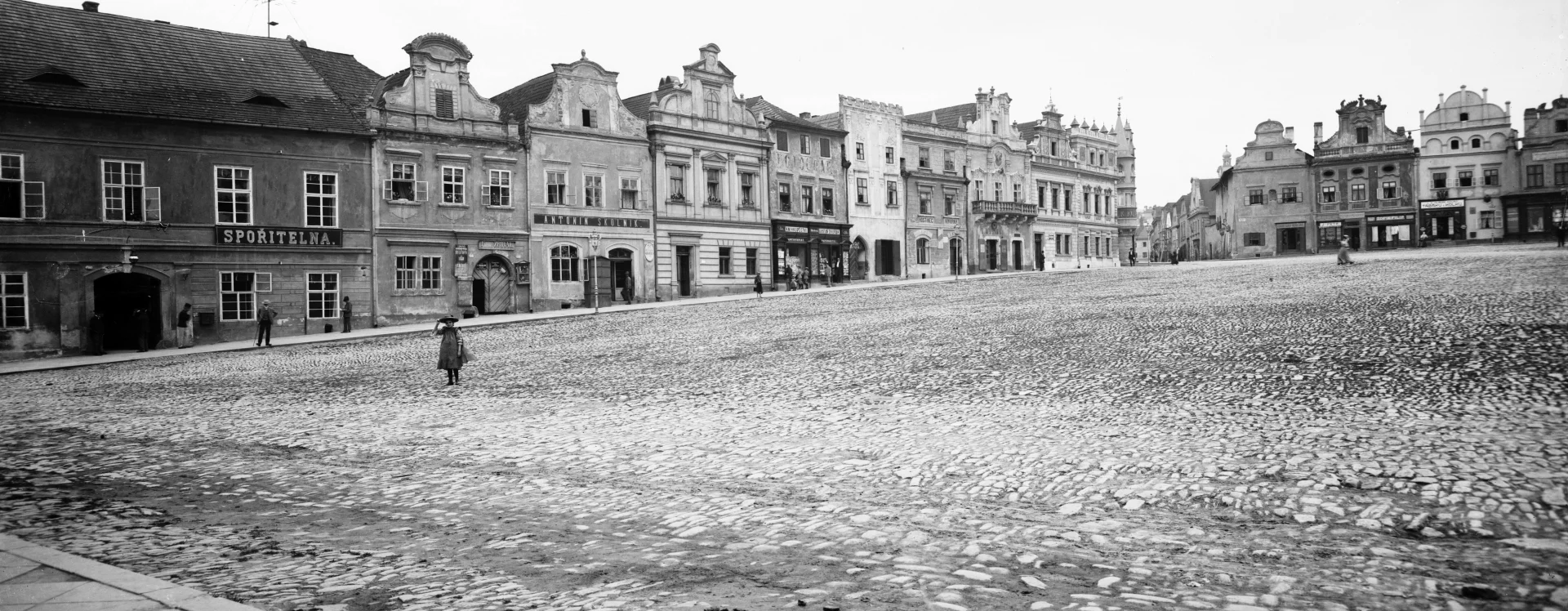
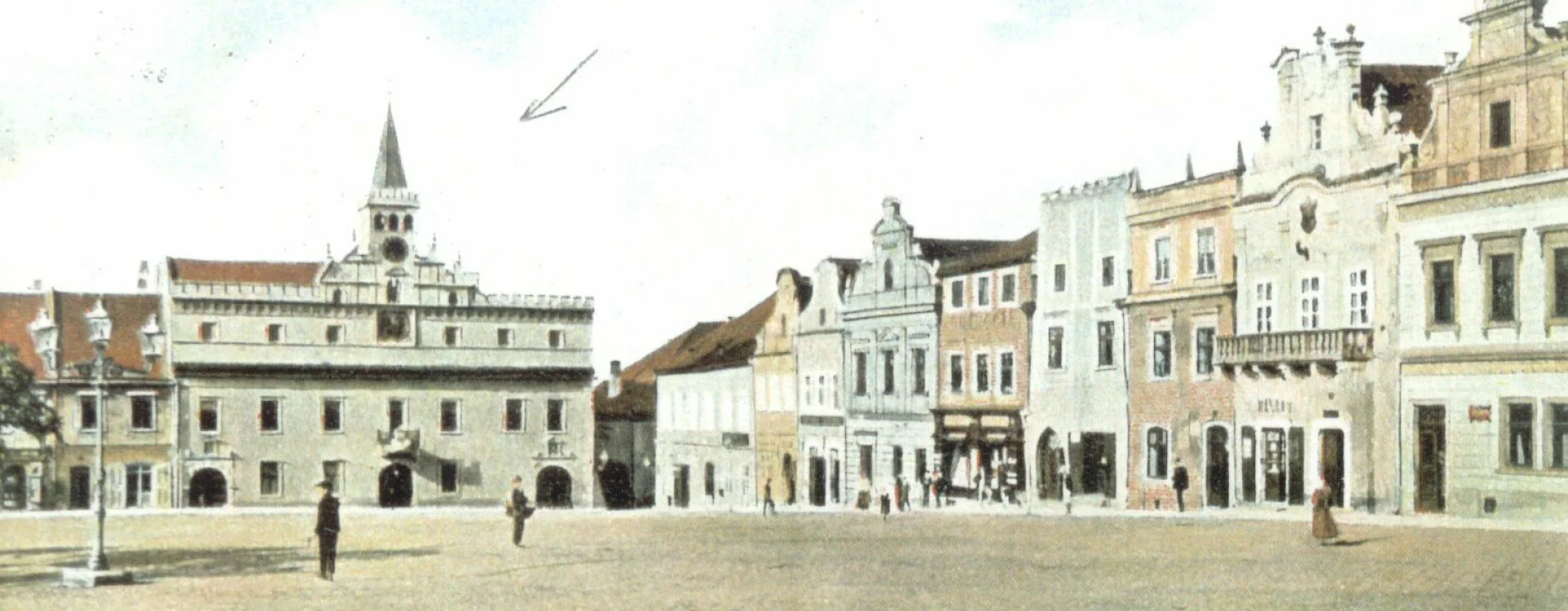
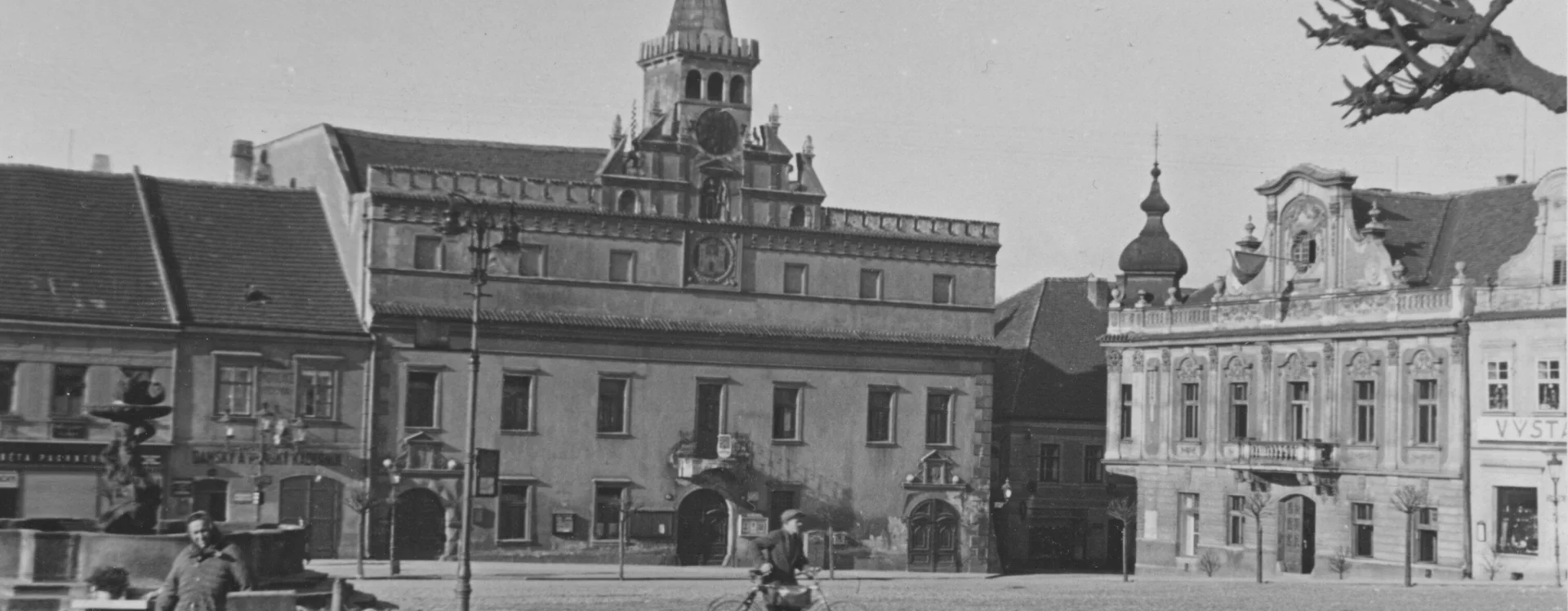
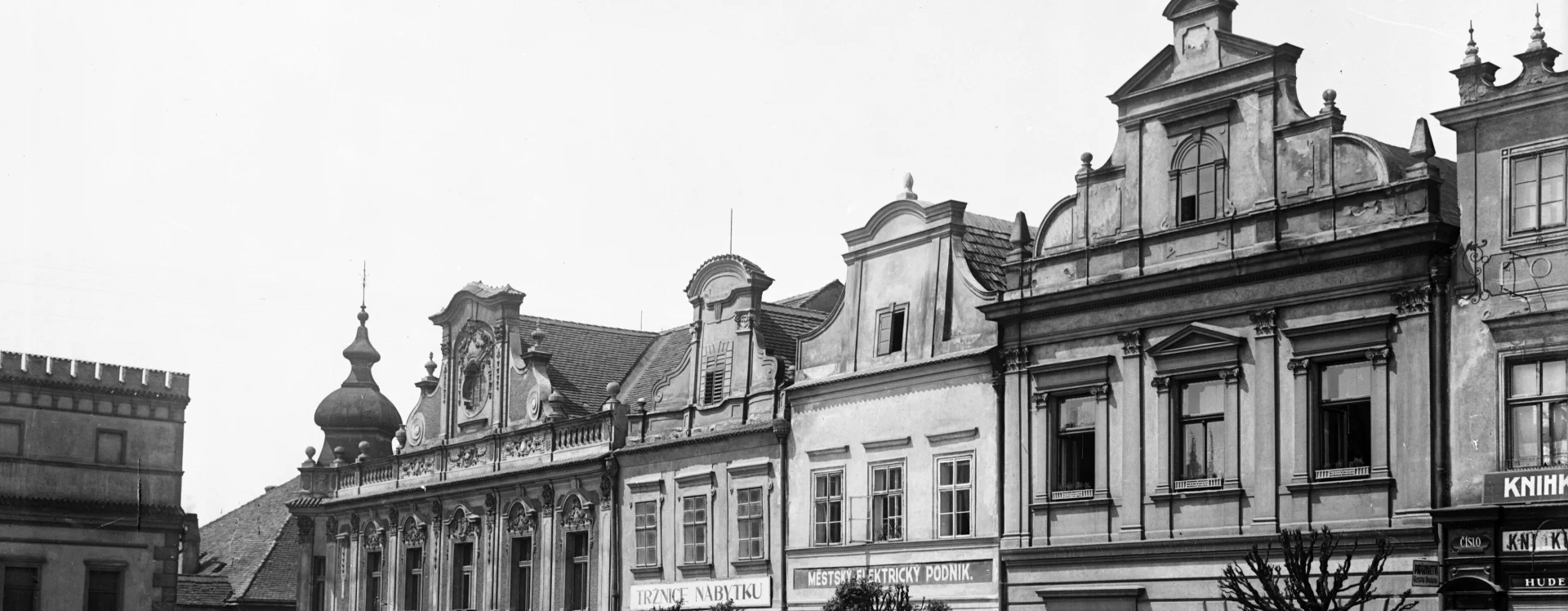
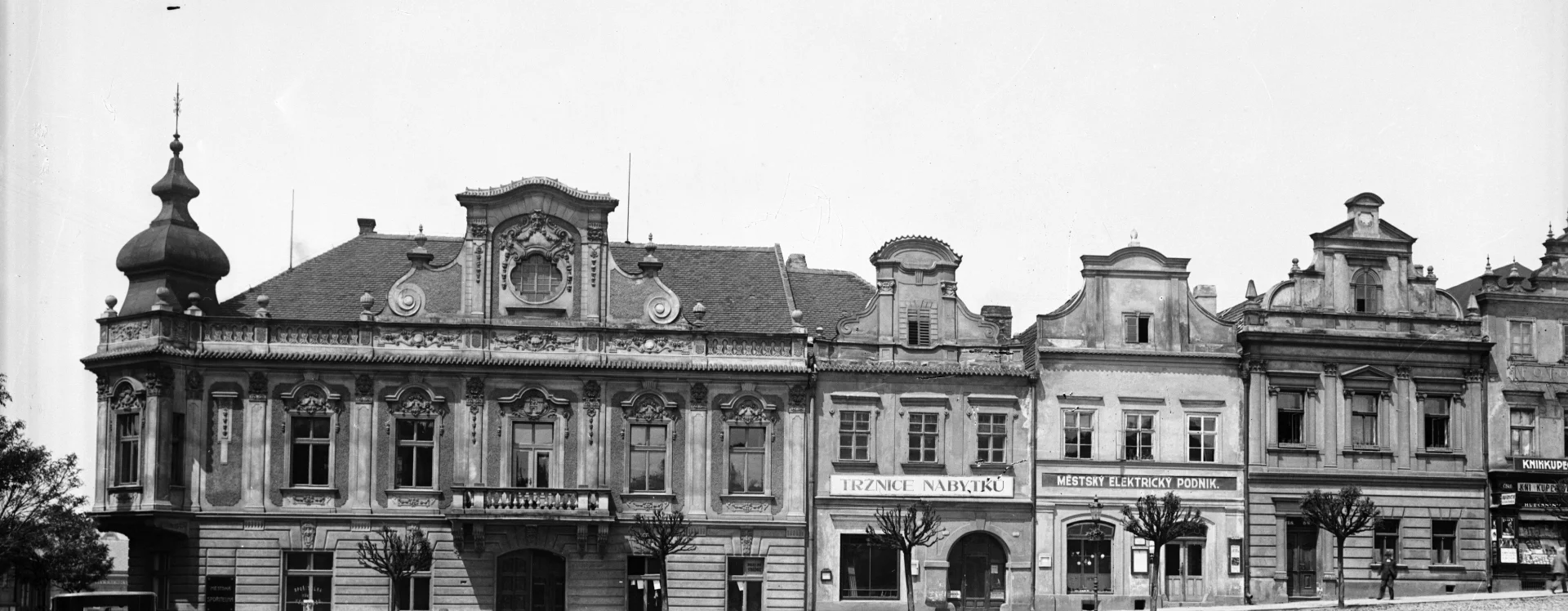
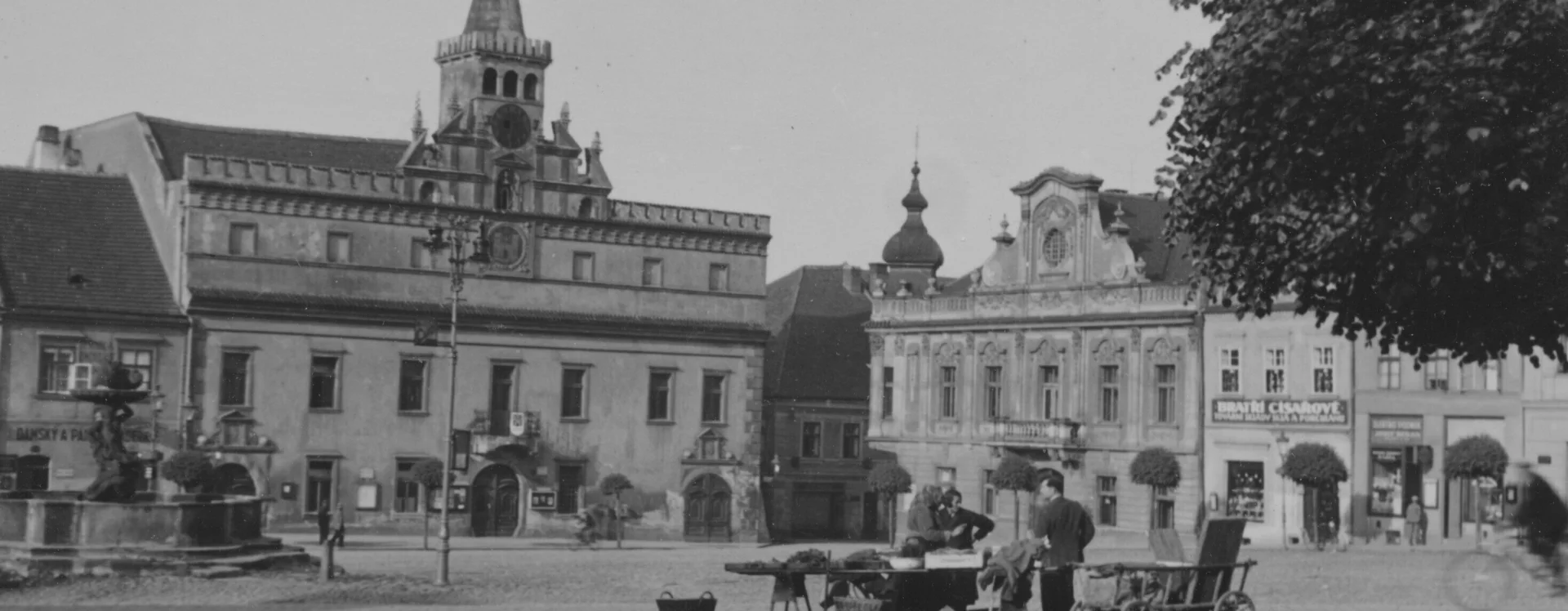
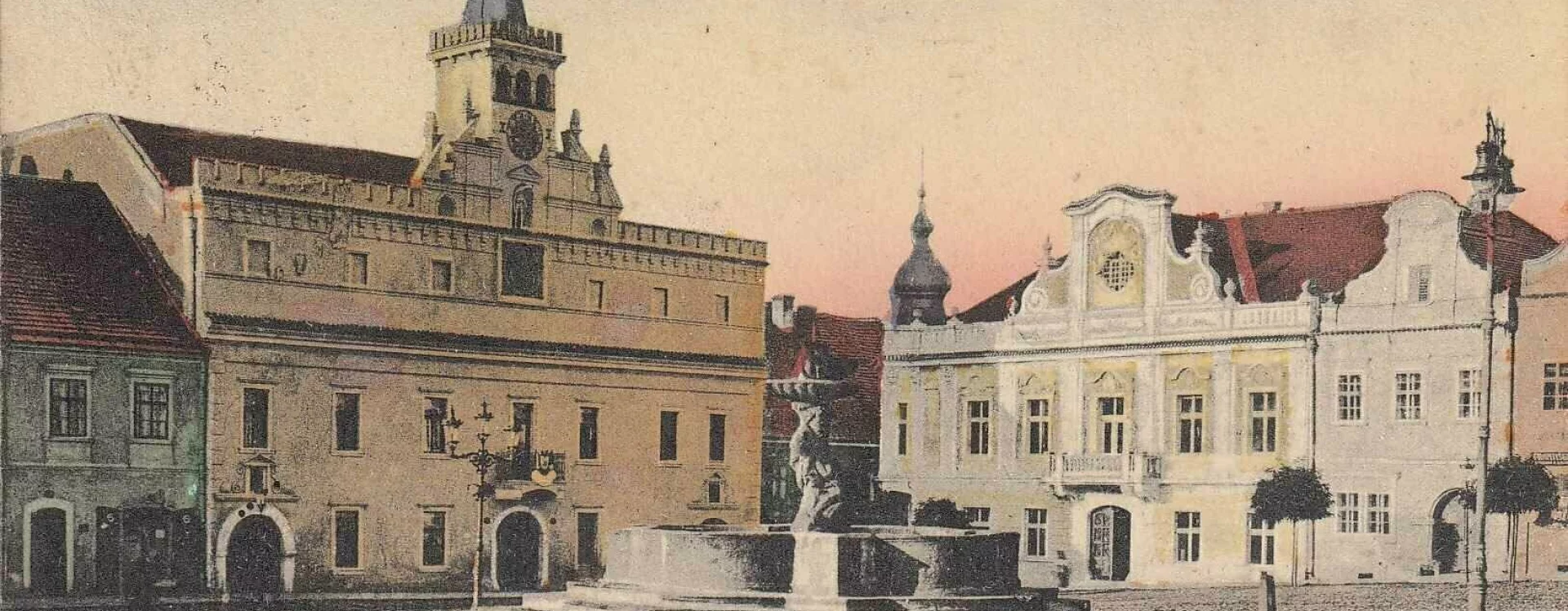
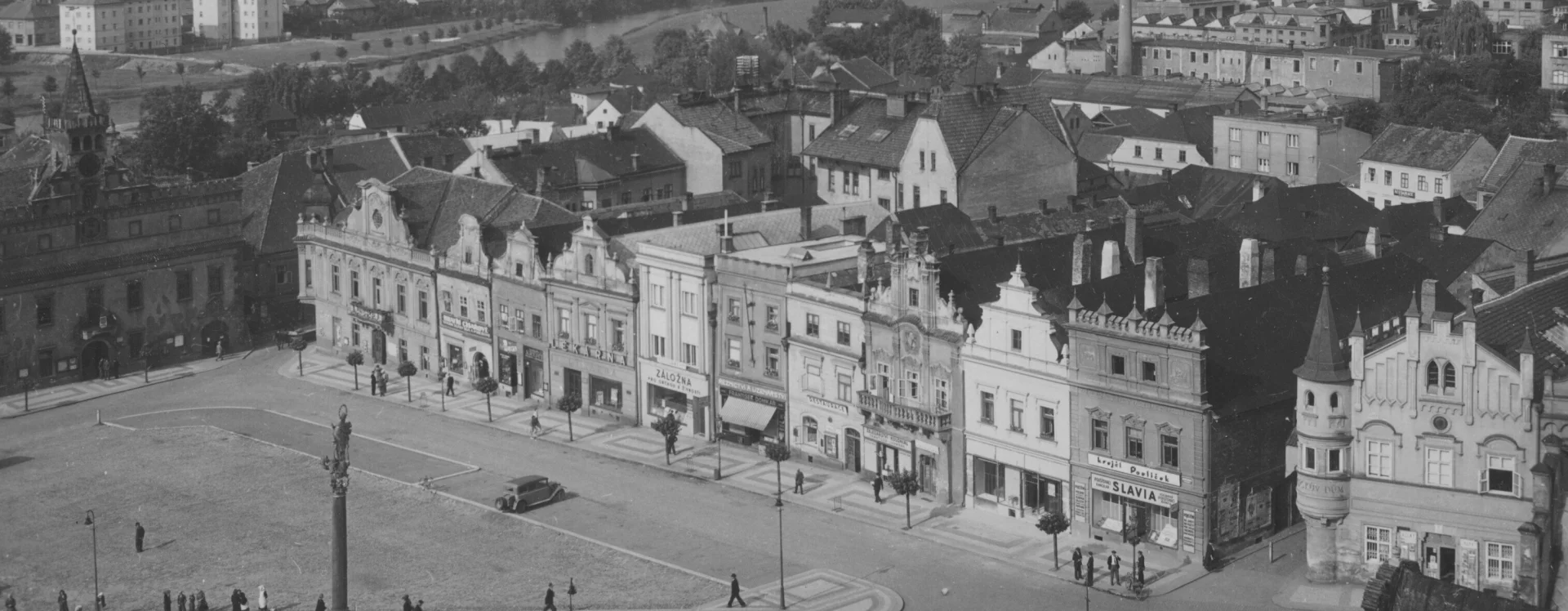
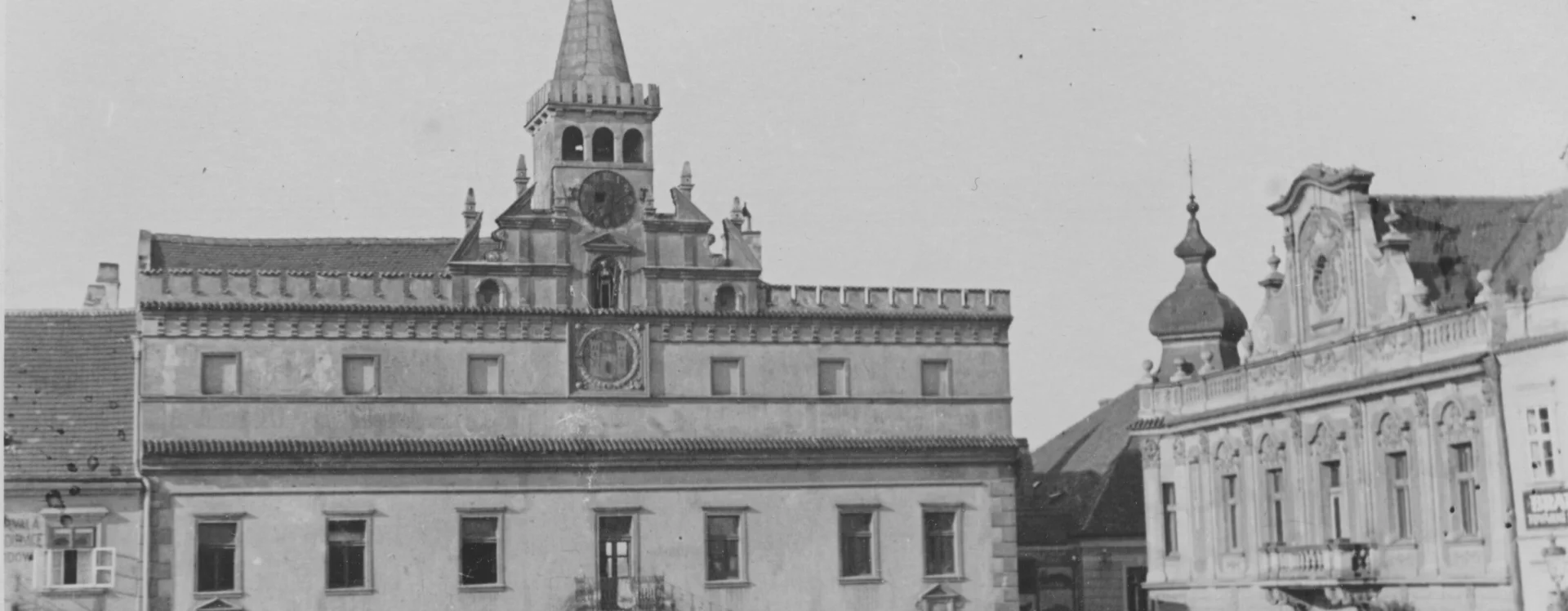
In 1850, Německý Brod was chosen as the seat of the sub-regional administrative office. This new function was accompanied by the establishment of a district court and a revenue office. The former magistrate was replaced by a municipal authority headed by a mayor and an elected council. This political reform strongly affected the town’s building activity: as an administrative centre for 150 surrounding municipalities, it began the construction of impressive buildings to house the newly established municipal and district institutions.
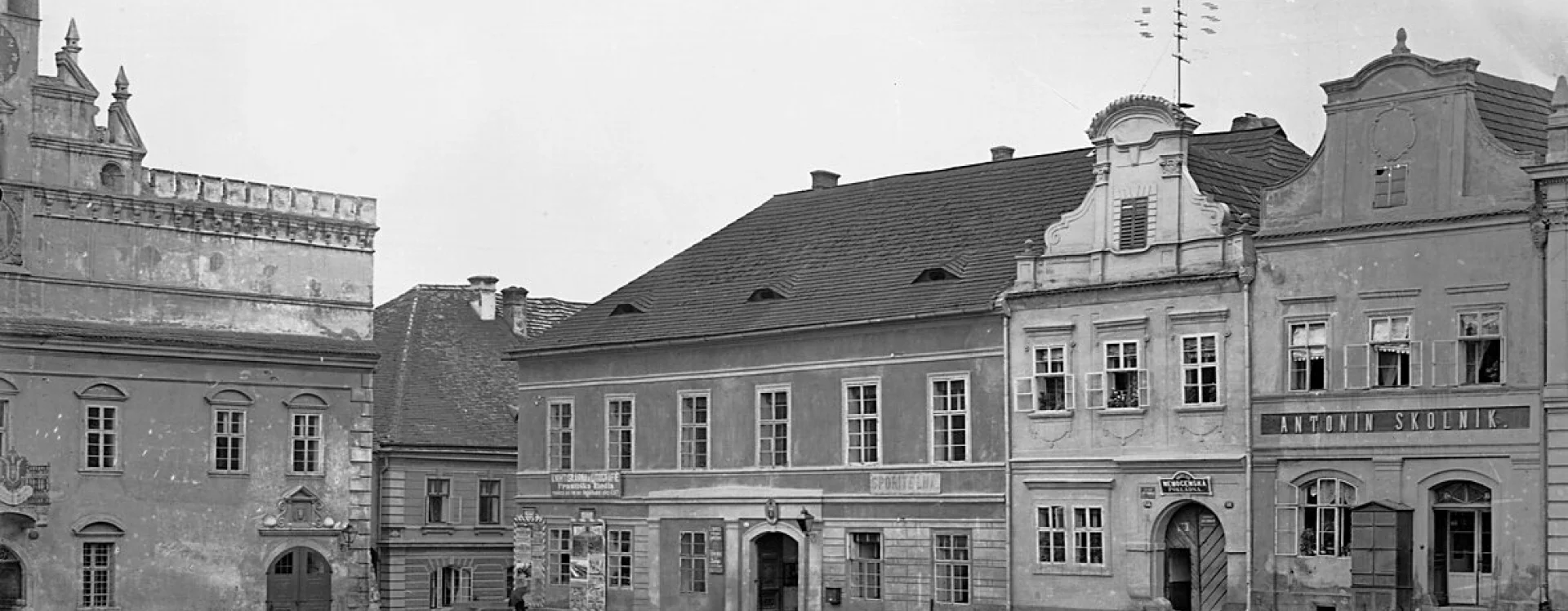
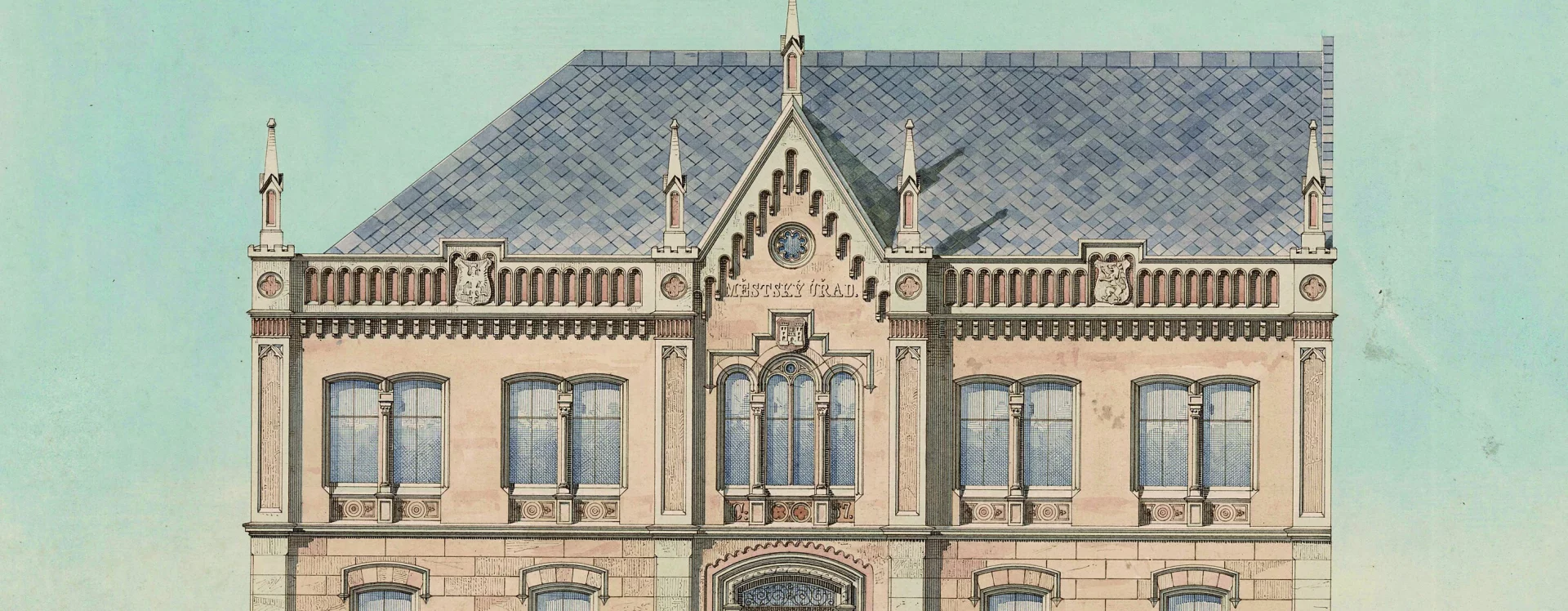
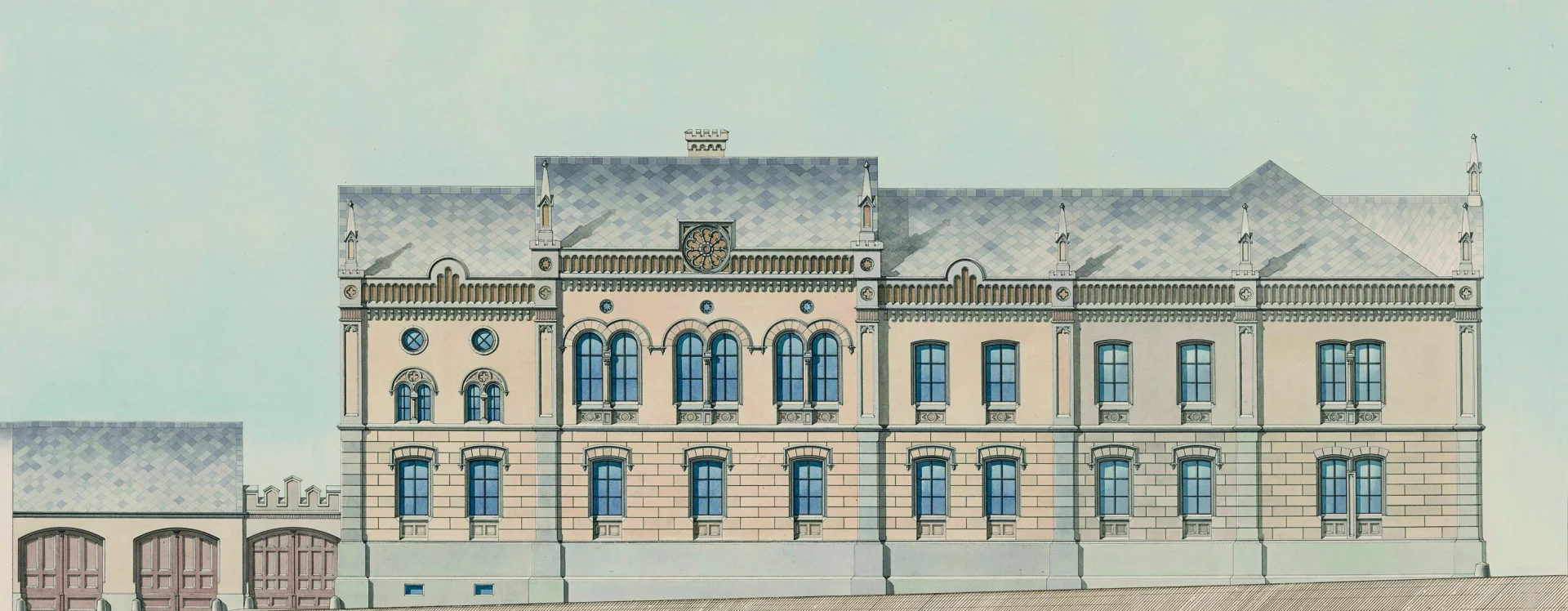
The municipality transferred its seat from the ‘old’ town hall (HB-87) to the newly established regional authorities and began searching for a site for a new building. It selected the ‘old reeve’s house’ at the south-western corner of the square, near to the town hall. Plans for its reconstruction were soon prepared in 1858 but were never carried out.
The transformation began in 1910, when the town mayor, Eduard Šubrt, presented a proposal during a council meeting, “…that the town hall and the municipal building…be adapted, adorned with a stylistic facade and a gable…” The plans were to be prepared by the town’s builder, and “…the architect Jurkovič was to be consulted for the design of the stylistic facade…” The facade was to harmonize “in every respect with the historic character of the square.” The local imperial–royal conservator, Zdeněk Wirth, added his own vision to the plan: “Externally, either the existing façade is sufficient, or a new one should be simple, without gables, stucco, or cartouches, etc.” He expressed concern over “decorativism, in the form of adding pseudo-Baroque or Renaissance gables.”
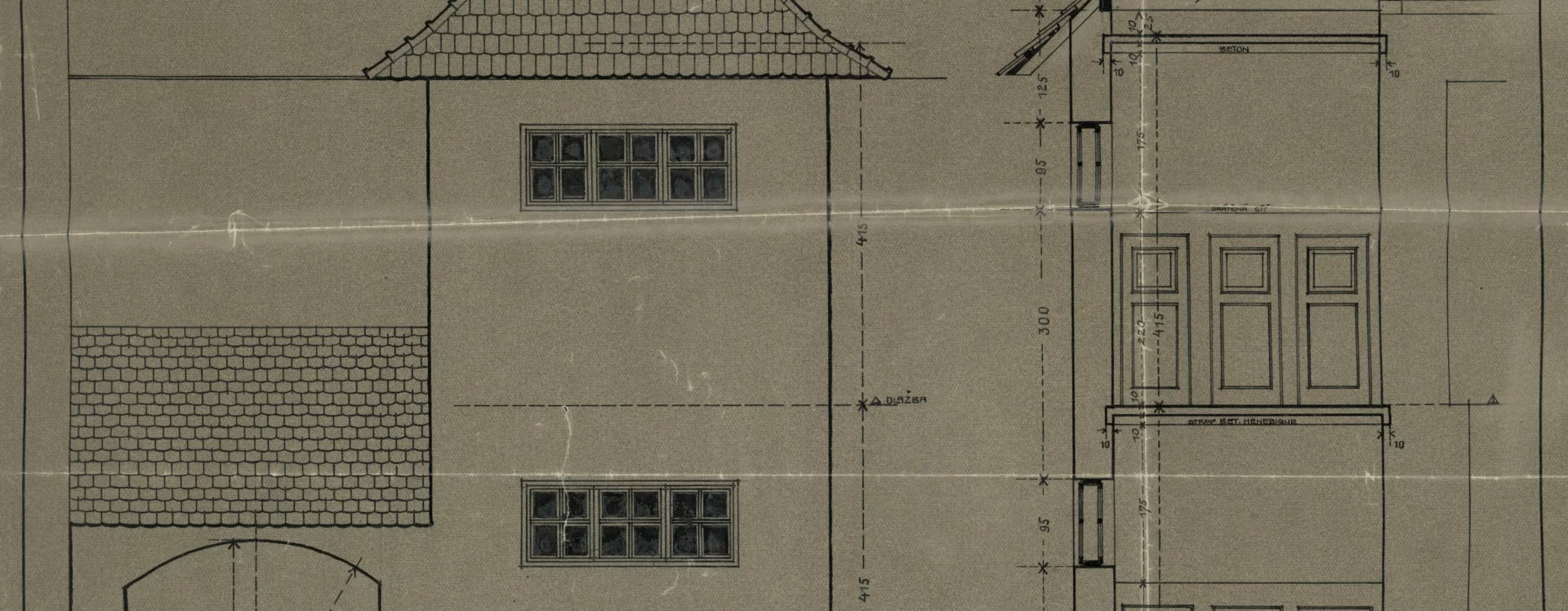
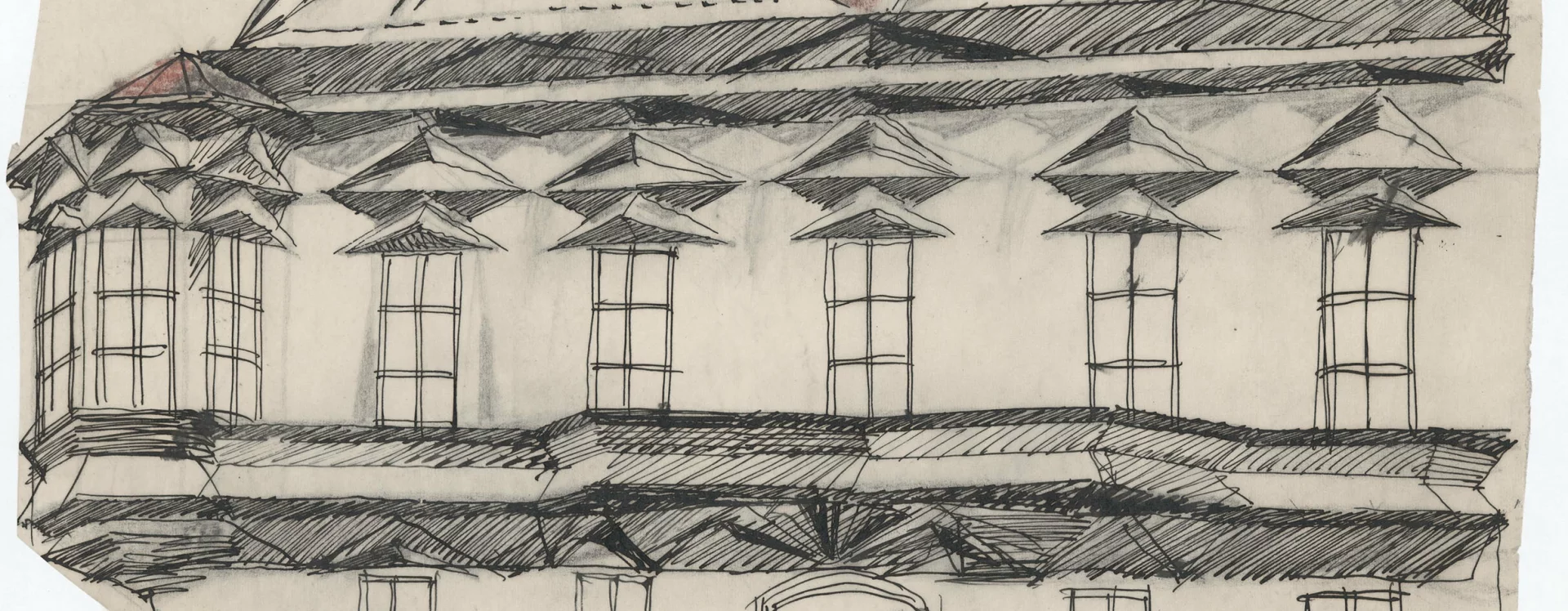
The work with Jurkovič (1911–1912) produced several minor proposals for interior modifications; however, the main objective—the facade—was still unresolved. Despite numerous reminders, only apologetic letters asking for patience were received. After a year, the town authorities refused to wait any longer and terminated the collaboration.
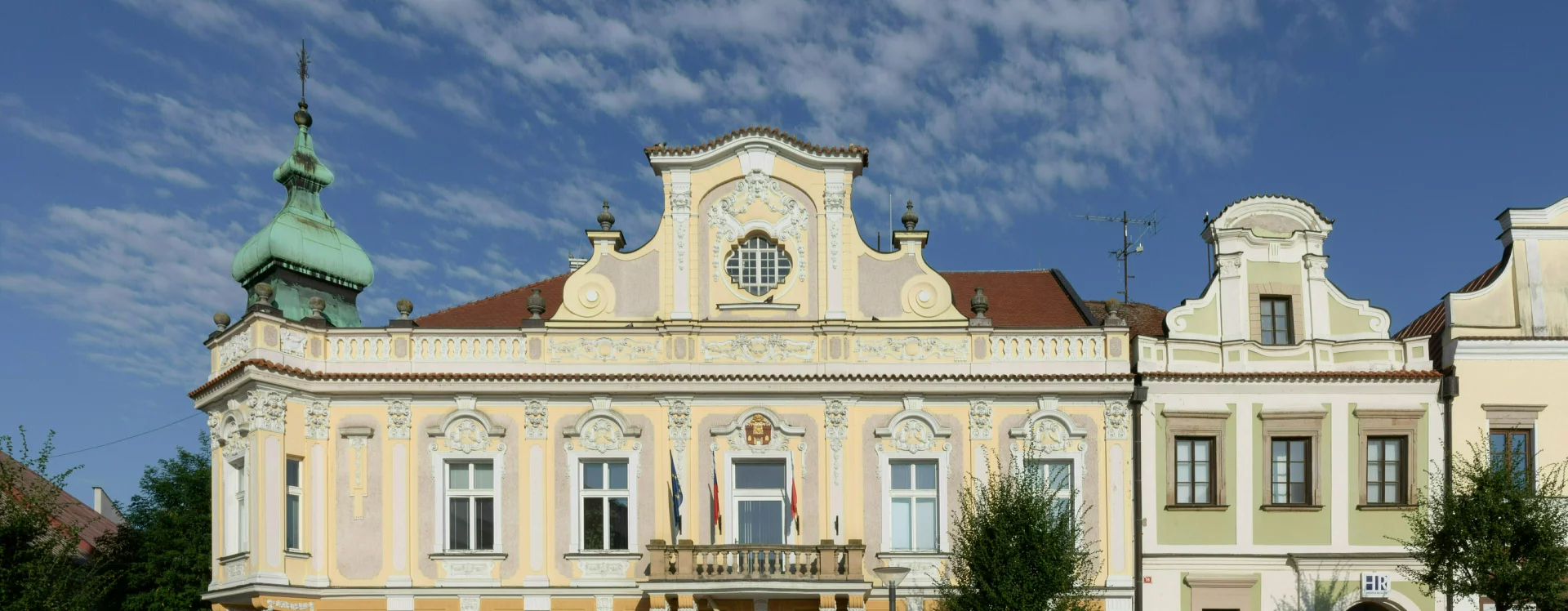
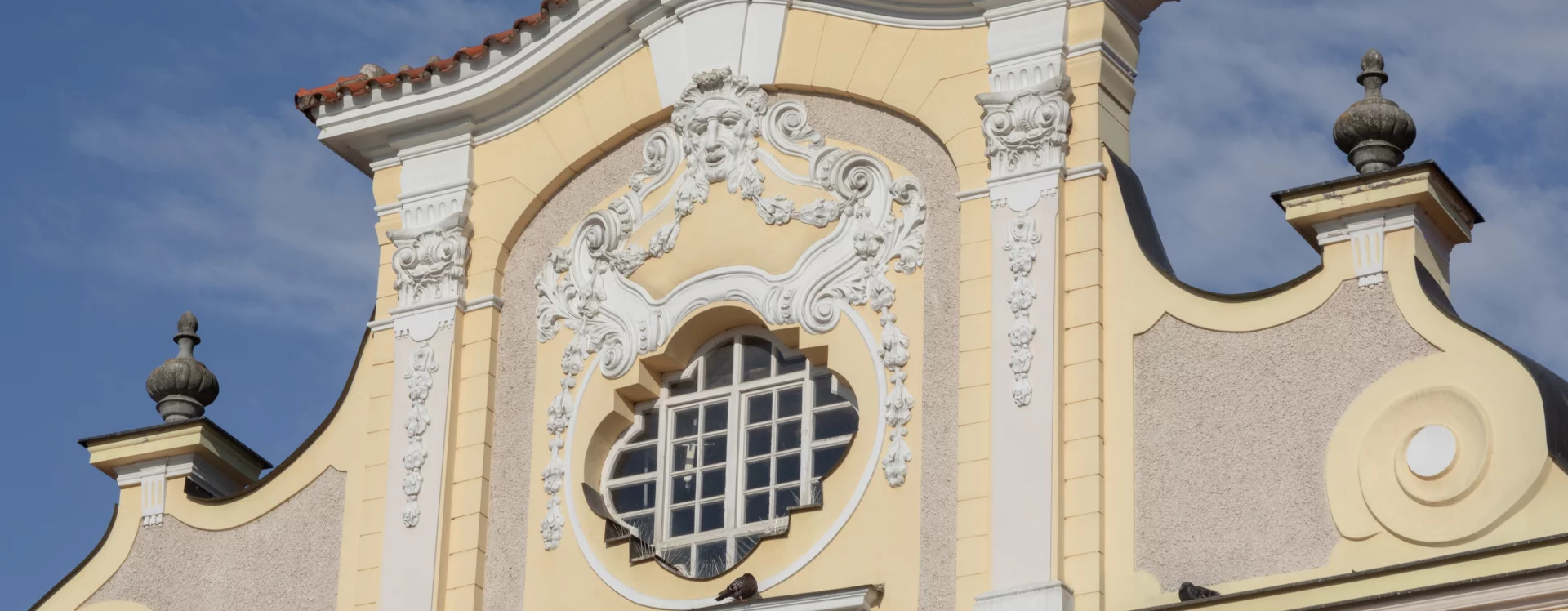
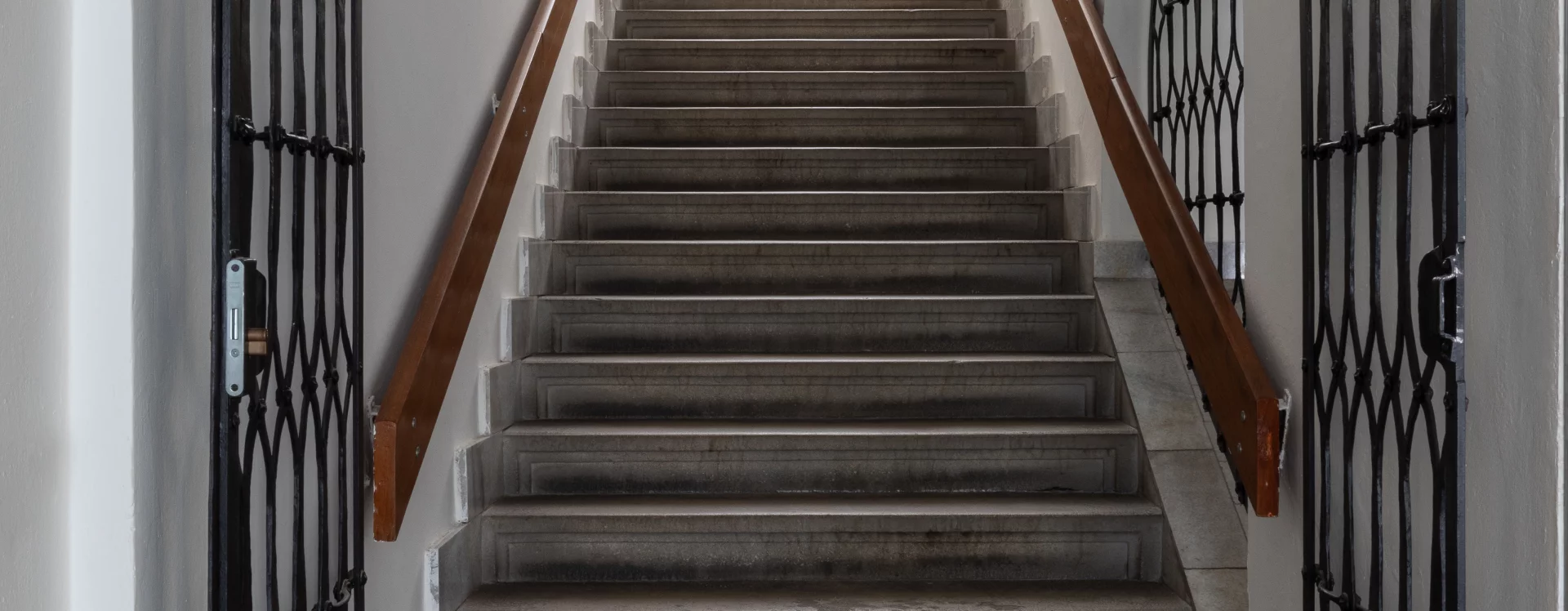
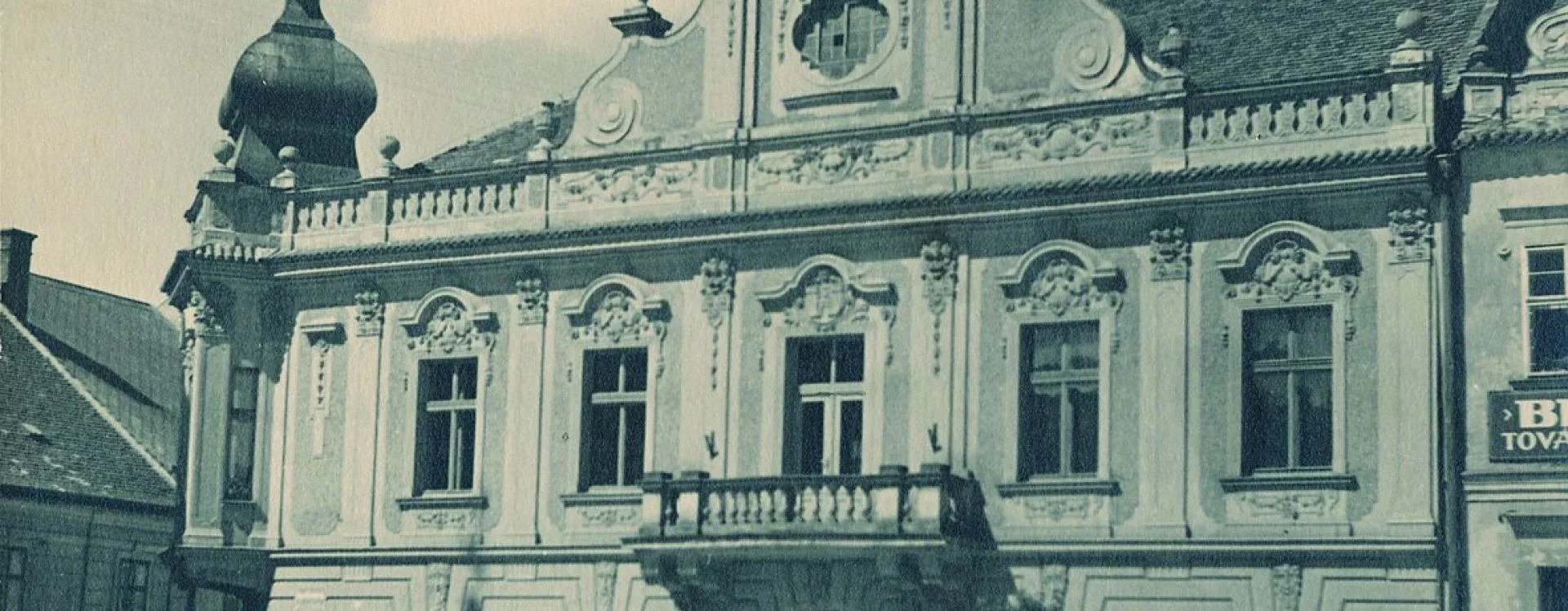
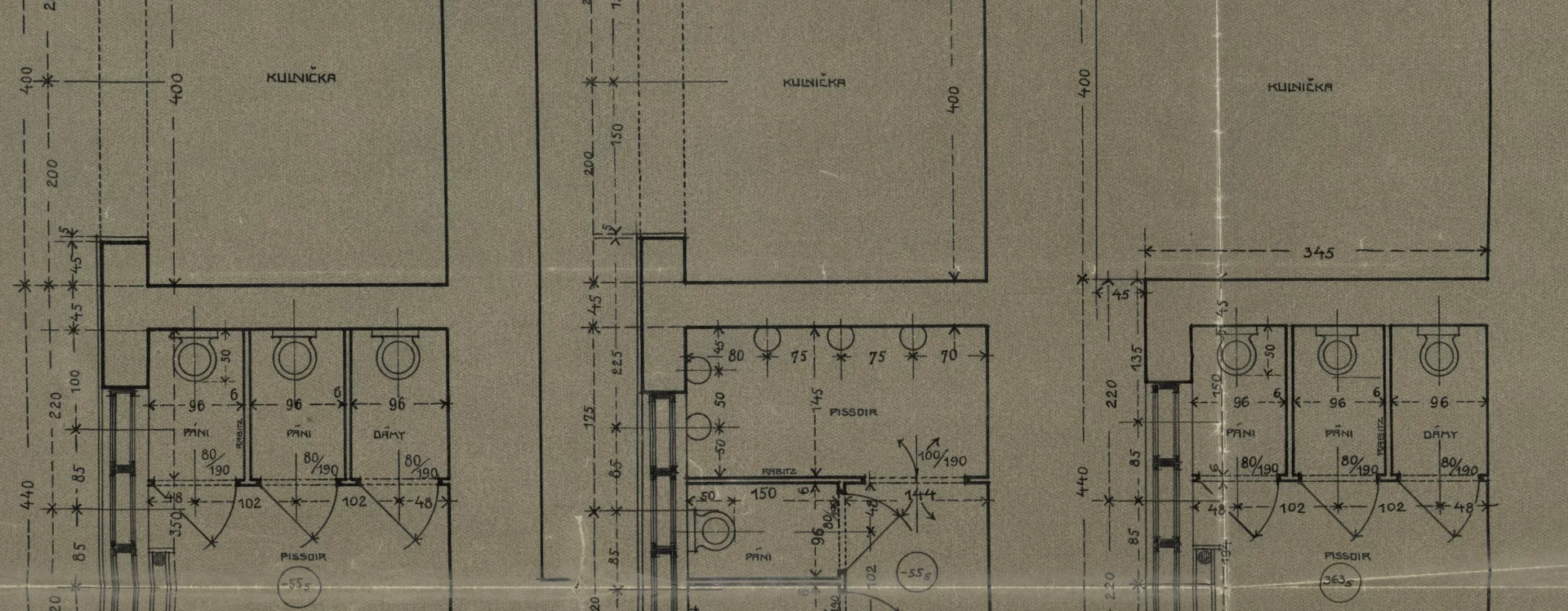
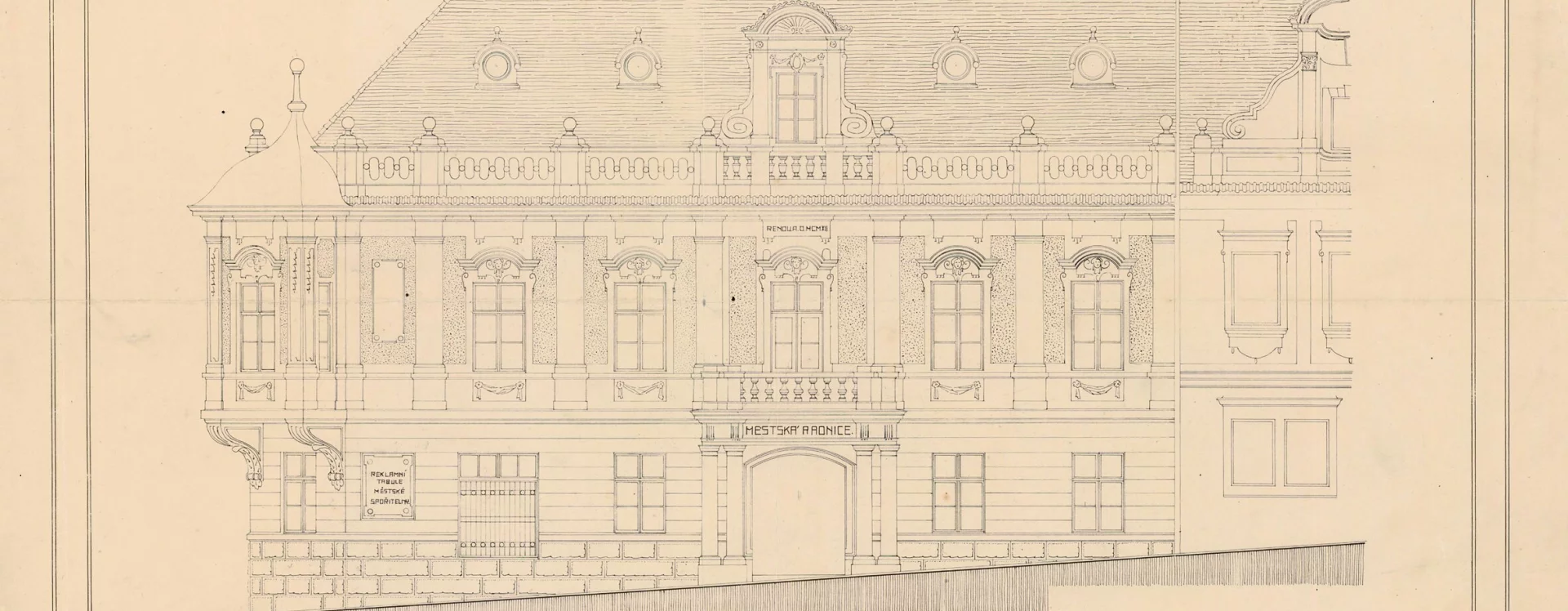
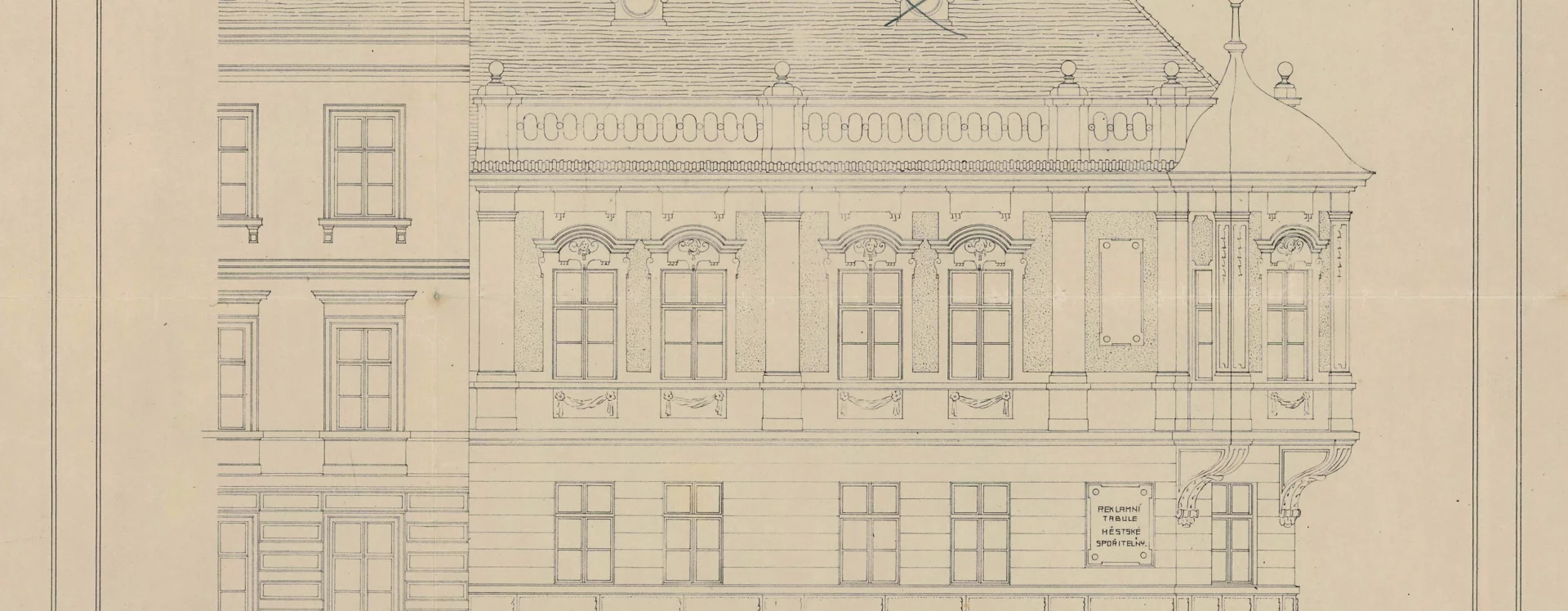
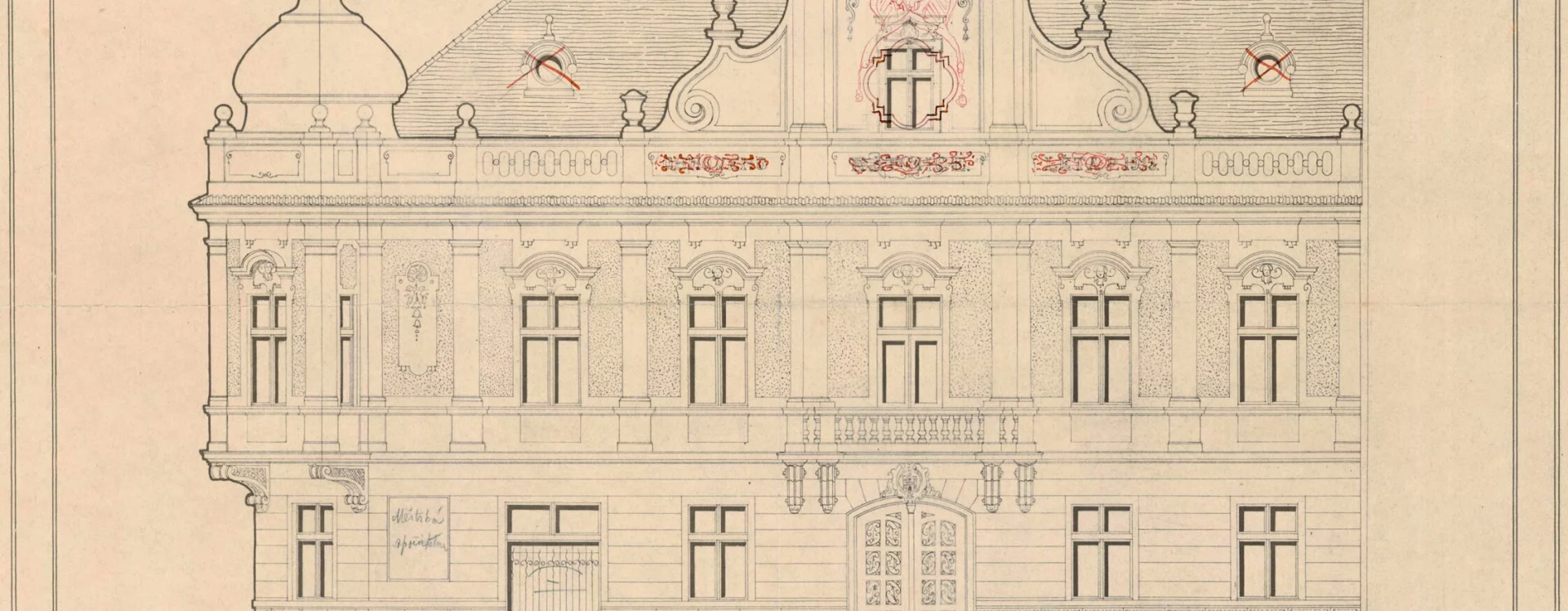
In August 1912, Šupich’s firm submitted detailed drawings incorporating Jurkovič’s proposals: modifications to the ground-floor corner layout (a chamfered corner design) to widen the previously narrow path from the square to Svatovojtěšská street; retention and brightening of the original staircase; removal of the balconies; various minor layout simplifications; the addition of toilets, and so on. For the first time, a proposal for the future facade of the New Town Hall also appeared, most likely prepared by Šupich, though unfortunately executed precisely in the manner Zdeněk Wirth had feared—a Neo-Baroque style, disregarding the rhythm of the gables and with excessive decoration. As soon as the imperial–royal conservator Wirth learned of this, he wrote directly to the town mayor (26 September 1912) and, instead of architect Jurkovič—whom he regarded as “an overly individualistic and, in a certain sense, undisciplined artist,” likely to disrespect the solemn unity of the square—recommended the architect Pavel Janák.
Having lost the renowned facade architect, the town now showed an interest in Janák’s project. At the same time, however, it prepared the documentation for a tender for the construction of the proposed building. The lowest bid was submitted by Šupich’s firm, whose co-owner was at the time a member of the town council, which provoked considerable outrage in the local press.
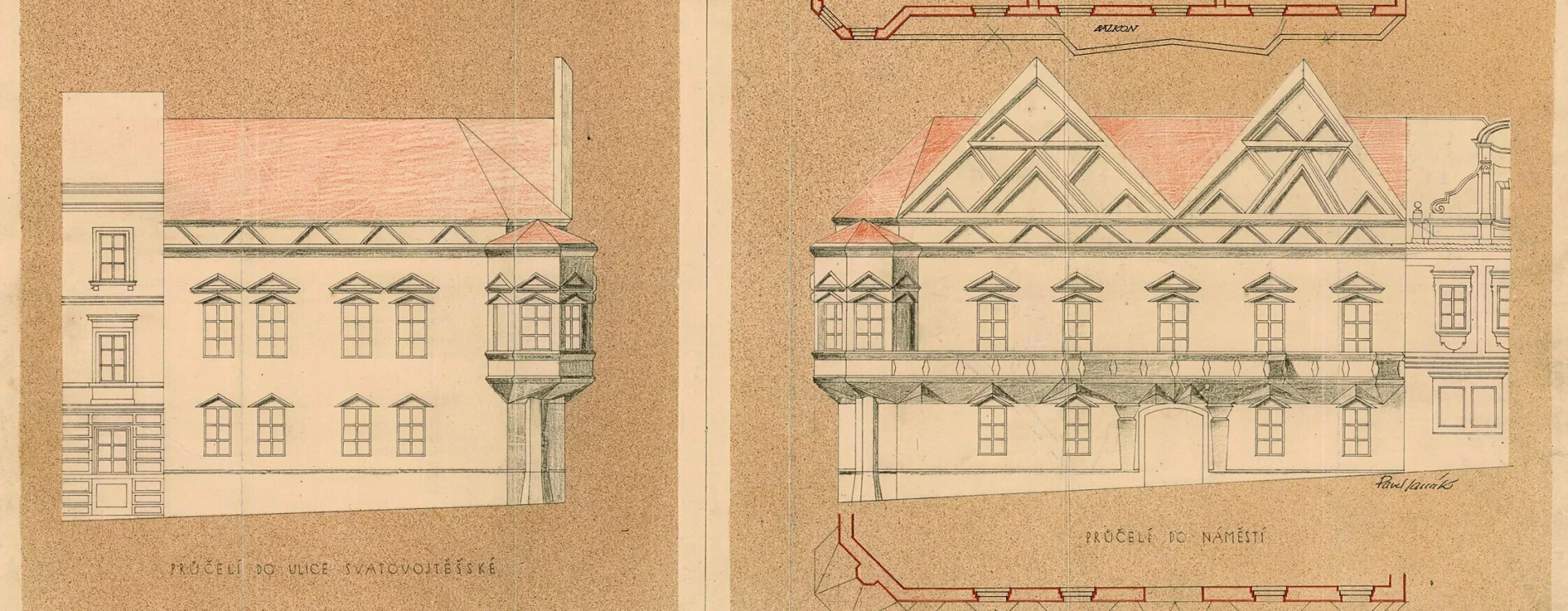
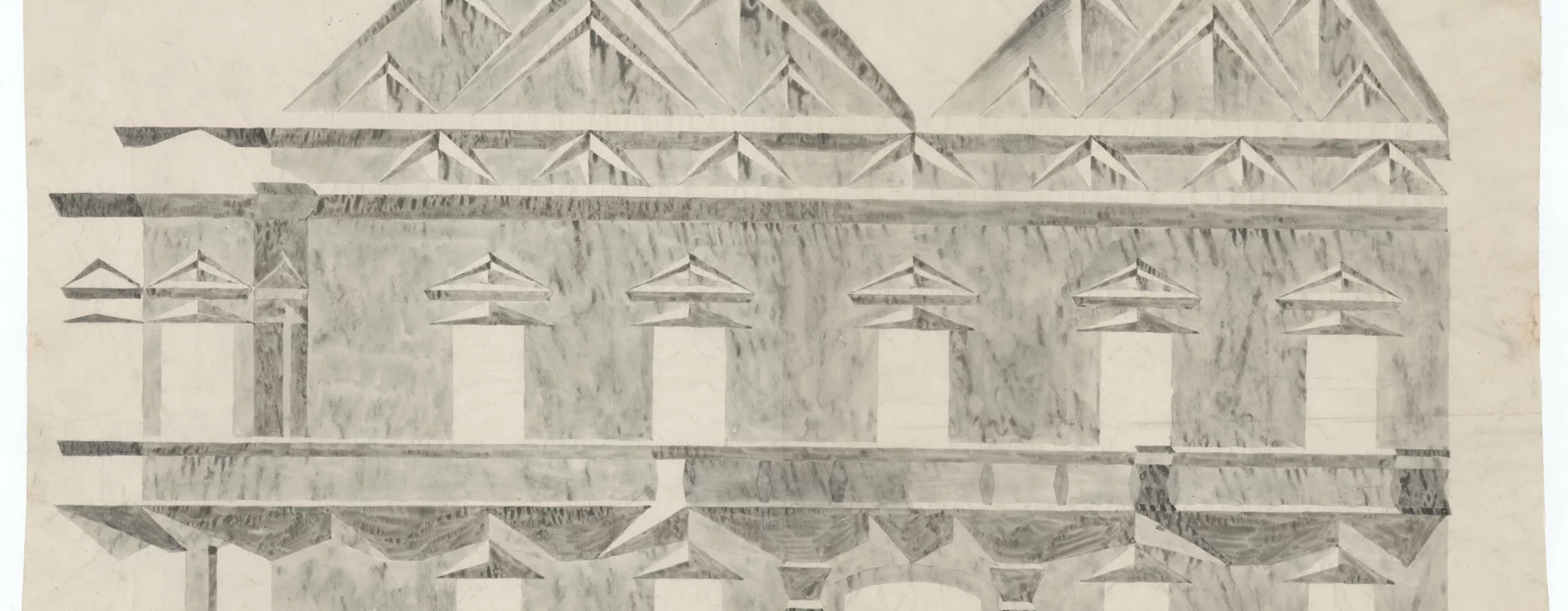
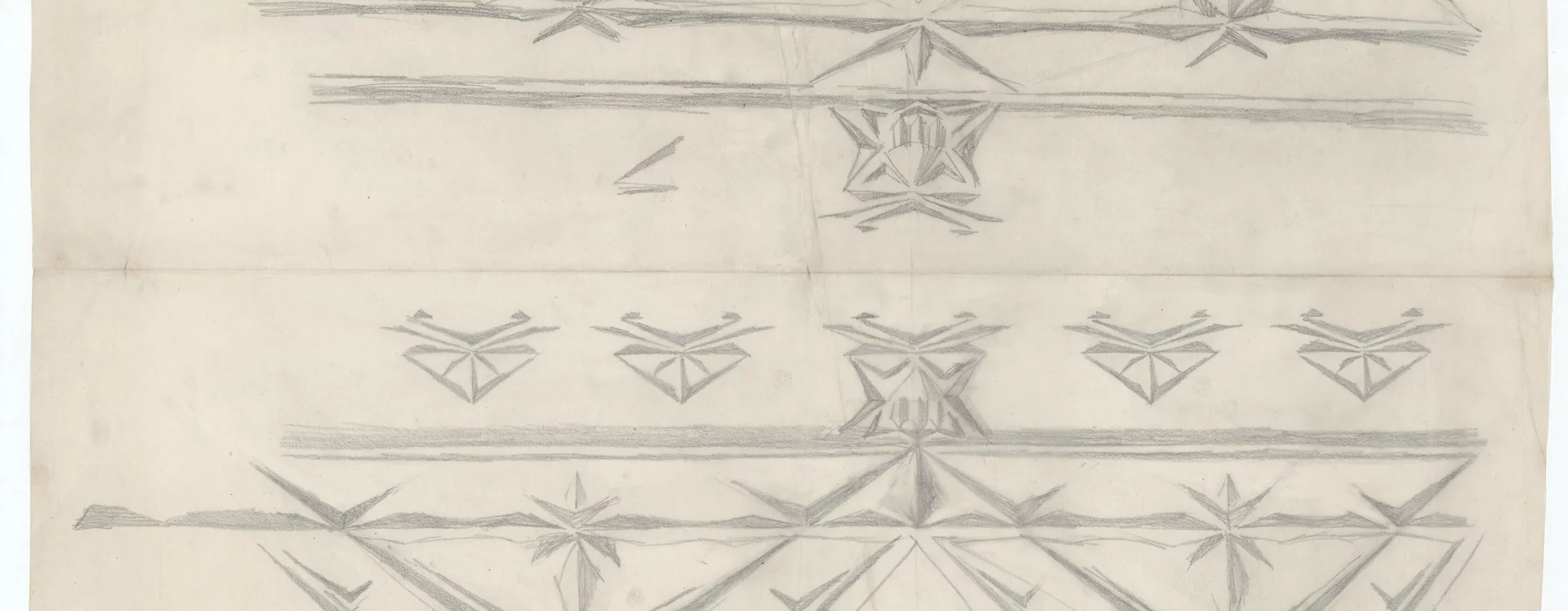
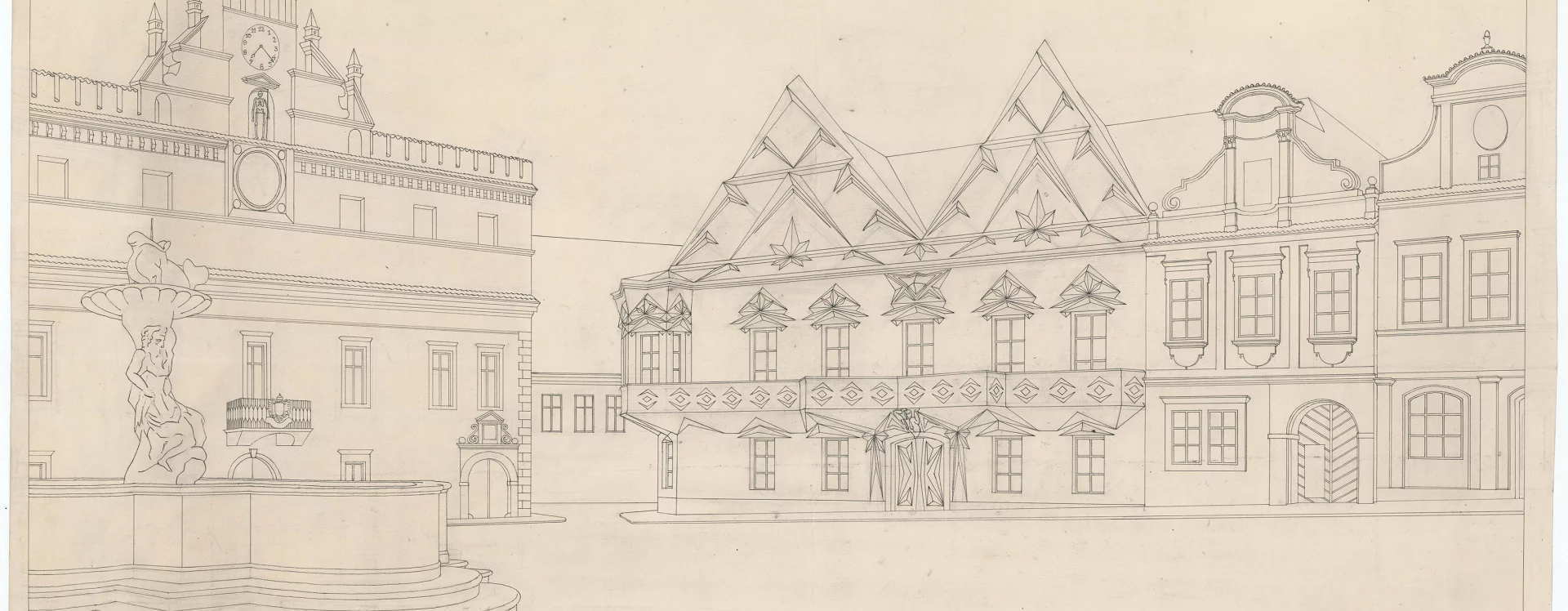
Janák’s proposal, later supported by a commendatory letter from Zdeněk Wirth, arrived on 14 November 1912. Its simple attic gable, referencing the historic character of the square yet otherwise contemporary in its detailing—drawing on leading examples of Cubist architecture in the country—was unfortunately too progressive for the representatives of the small town. The project was never realized, and Wirth’s concern was fully borne out, as he later learned from the chairman of the Brod curatorium, Josef Němec: “The town hall is already being demolished, but the gable will not be made according to Janák’s plan; it was disliked, and an expert from Prague, whom the mayor consulted, criticized it. It will be a somewhat modified plan, the one you saw here in the autumn.” Šupich’s firm altered the facade on another two occasions during construction, following the comments by this unknown Prague expert. The entire building was finally completed, with a slight delay, in October 1913.
From today’s perspective, and with the benefit of the archival materials mentioned above, it is regrettable that the highly capable councillors of the time—who had succeeded in developing the town in many areas (healthcare, the beginnings of negotiations for an asylum for the mentally ill, the development of education, etc.)—stood by their own aesthetic taste and refused to respect the advice and expertise of a leading art historian and imperial–royal conservator, and pursued their own approach to preserving the historic character of the town. Compared with the progressive design of architect Pavel Janák, the solution they put forward is, unfortunately, little more than an ‘artificial’ reminder of a past era and has very little in common with professional conservation, conceptual coherence, or respect for the Havlíčkův Brod square so admired by Wirth.
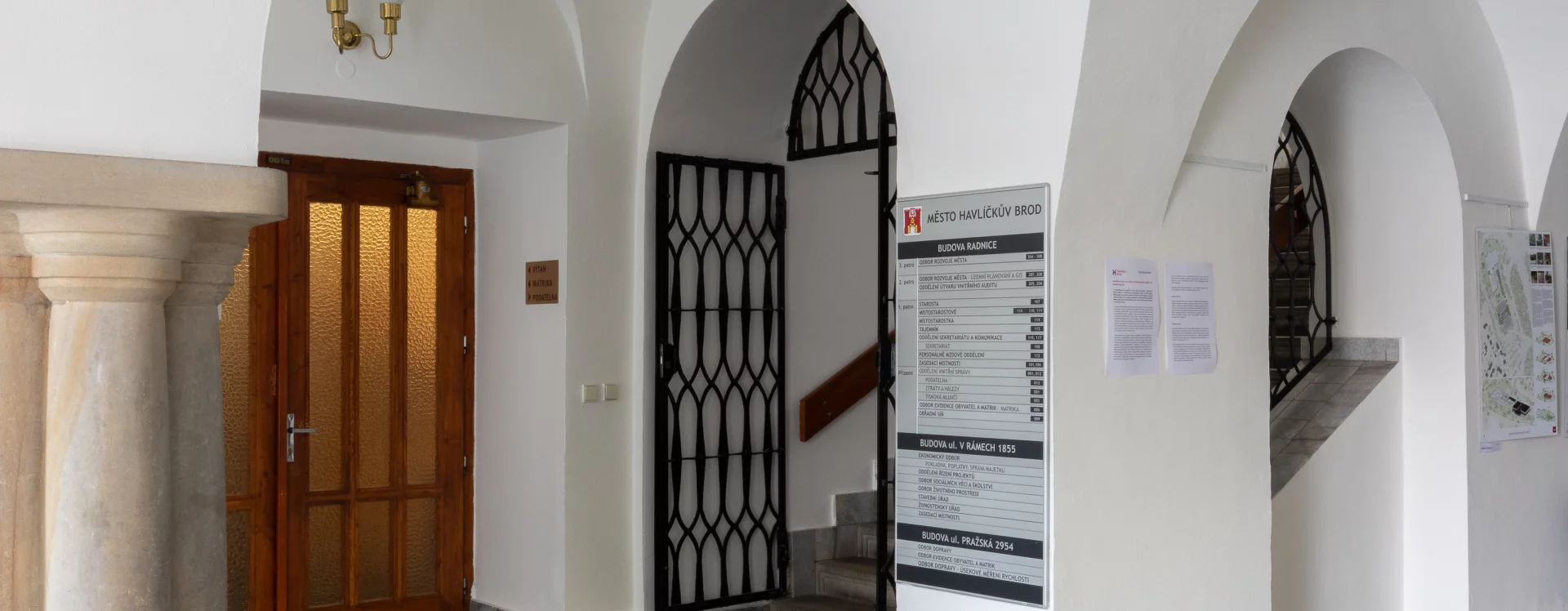
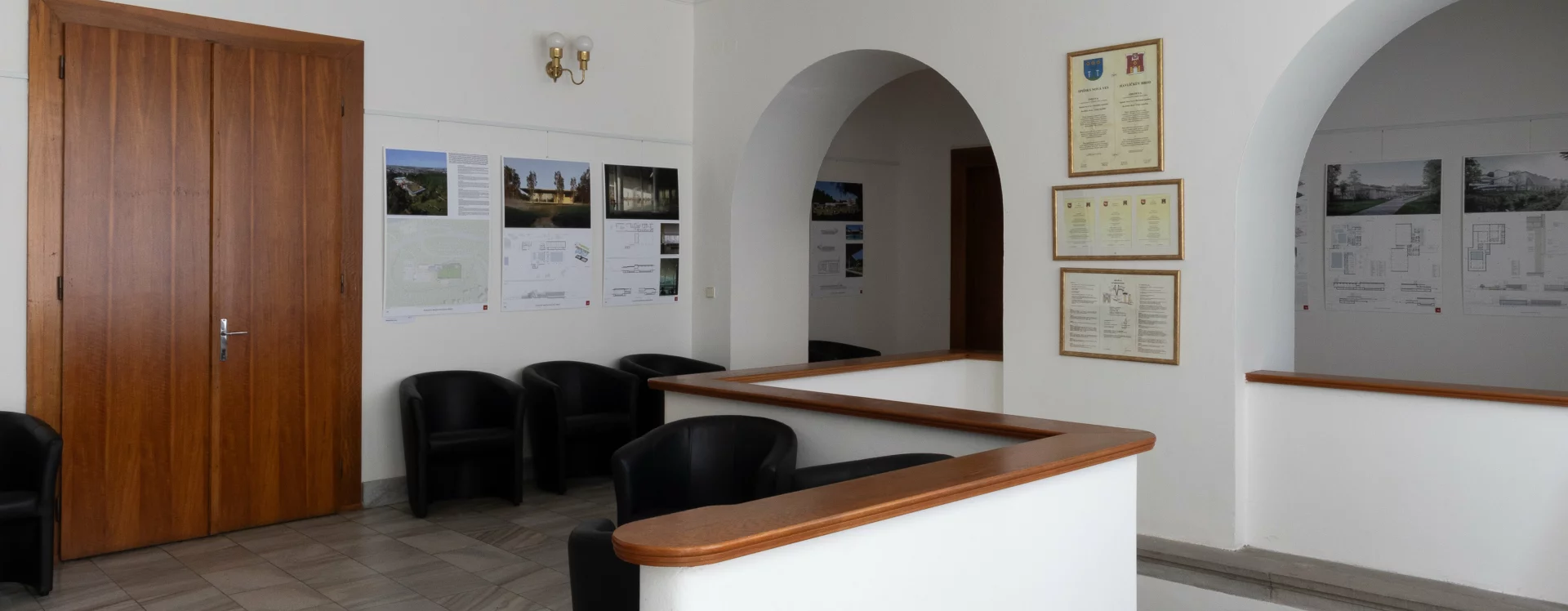
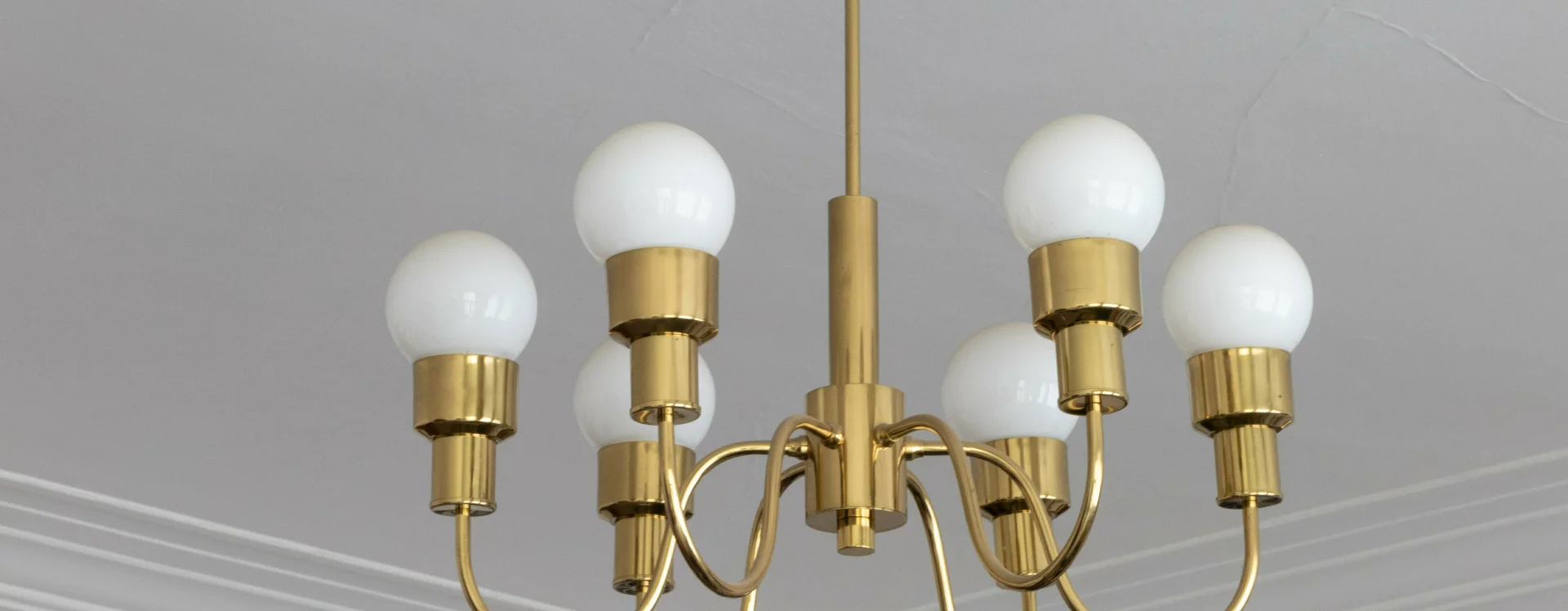
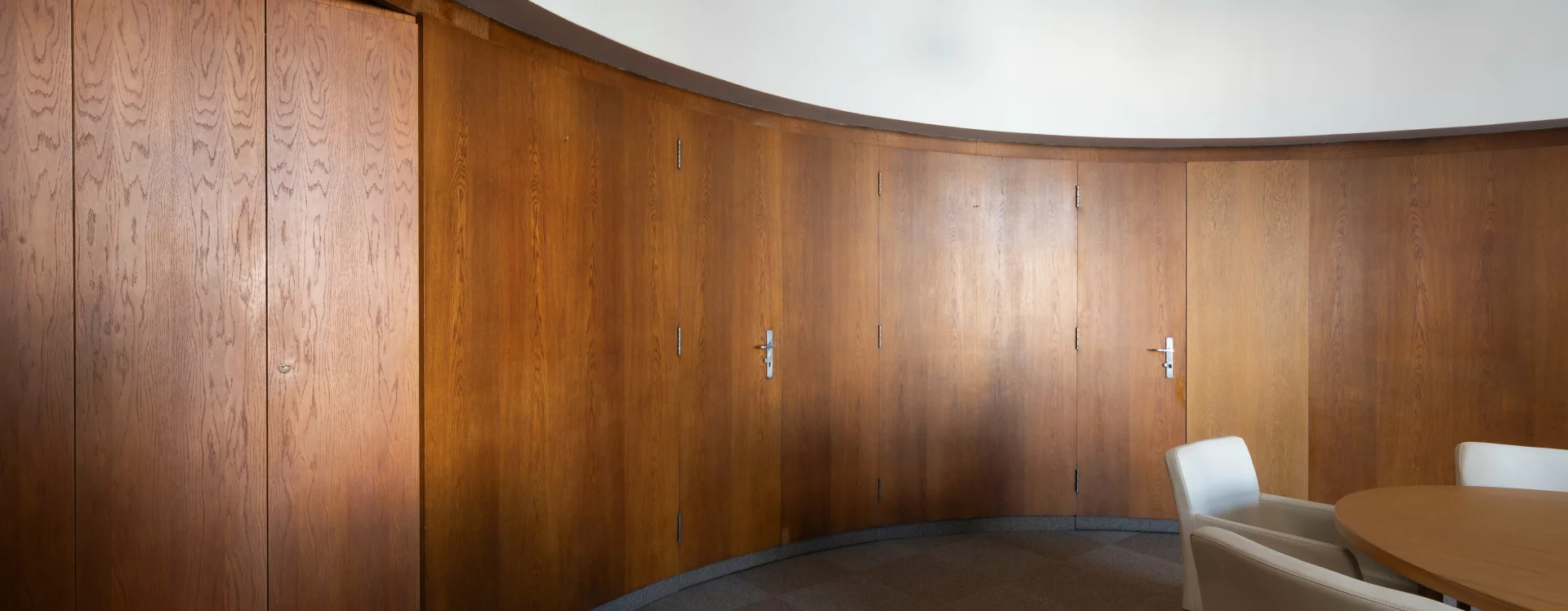
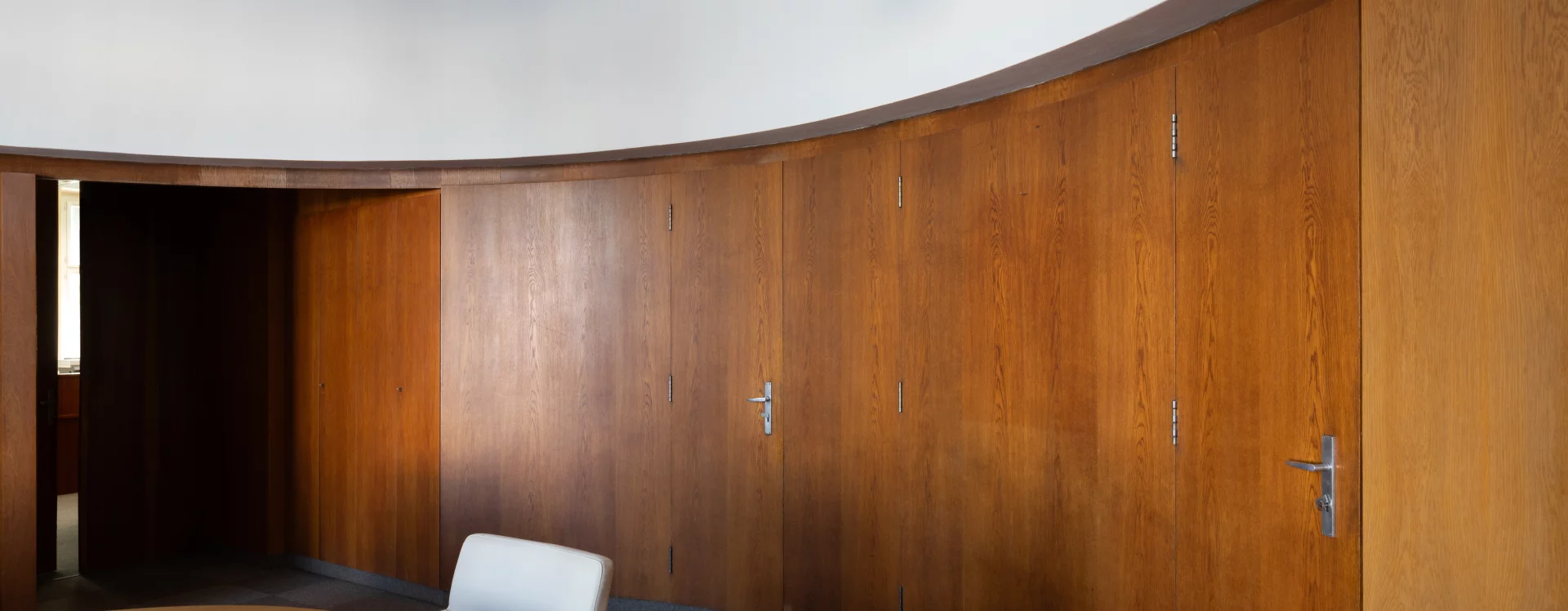
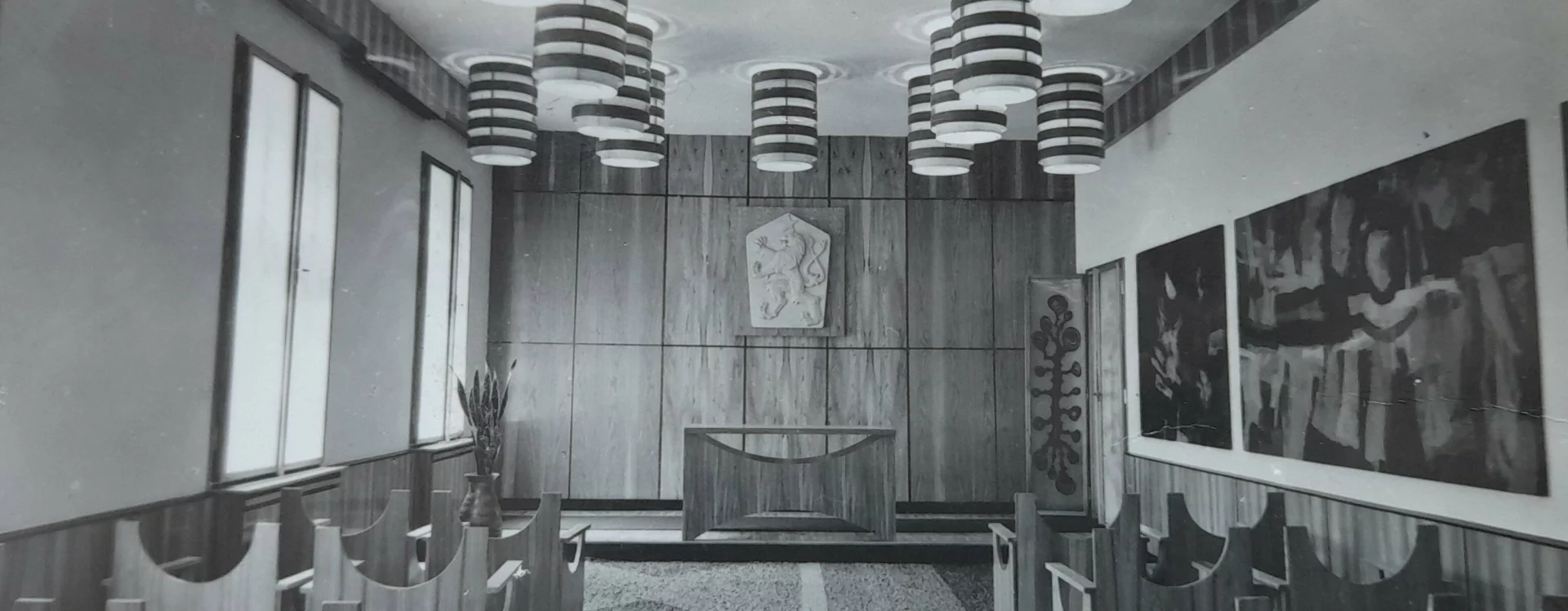
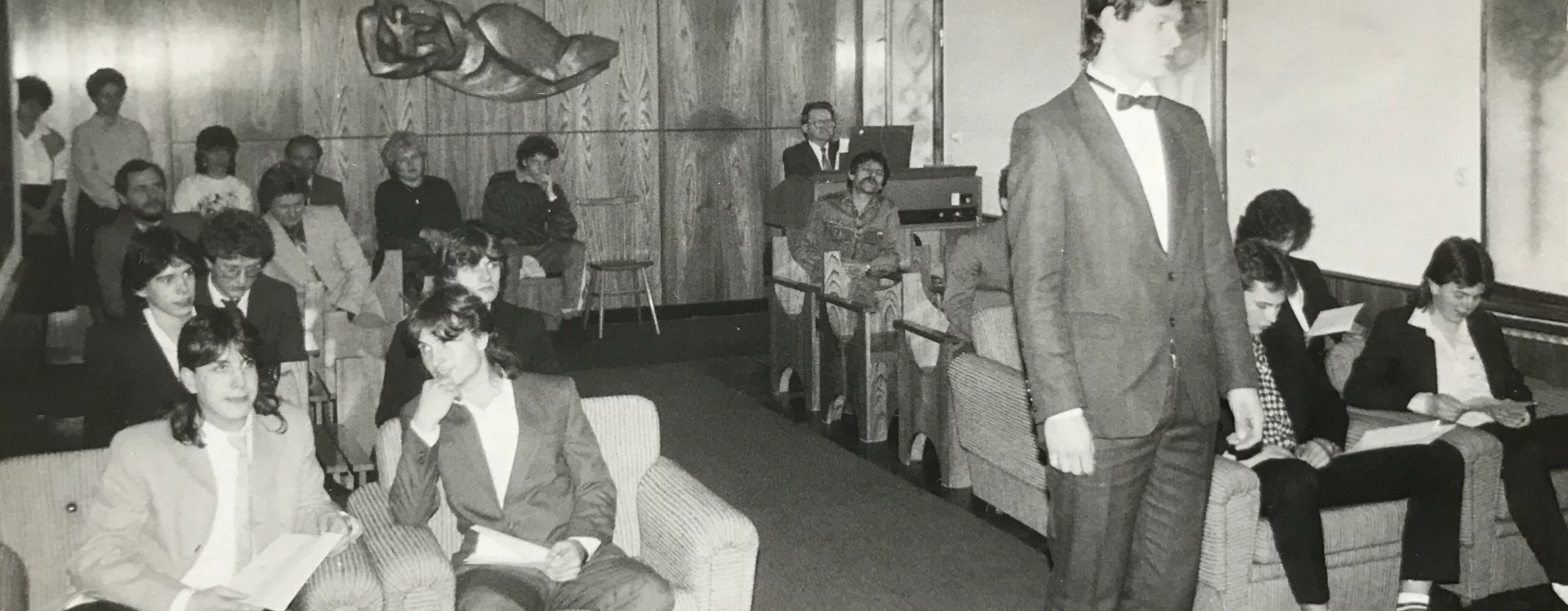
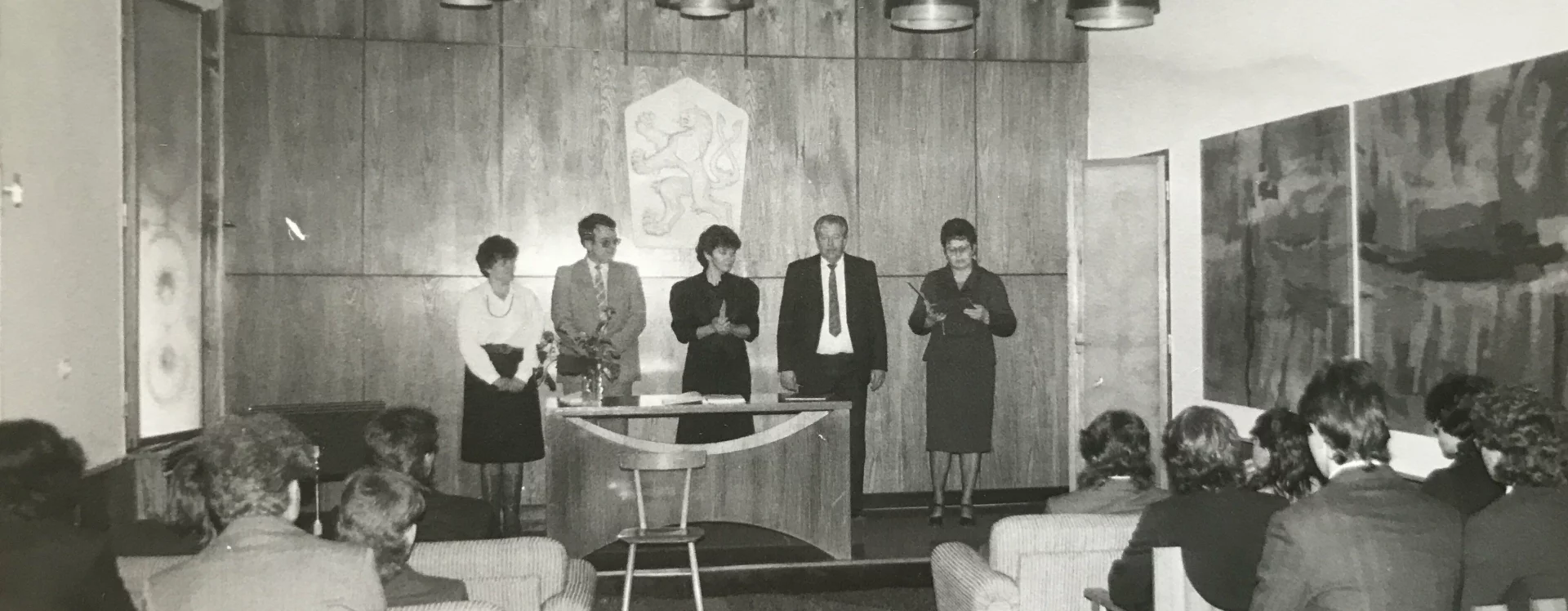
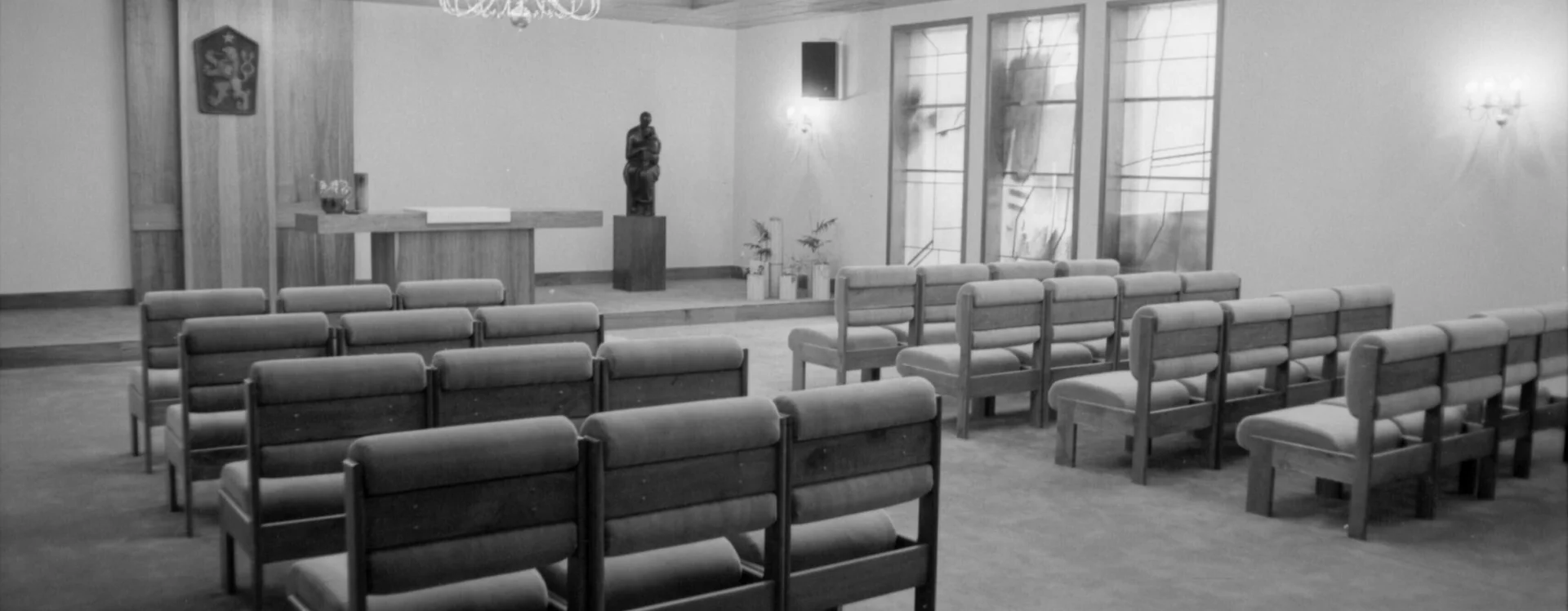
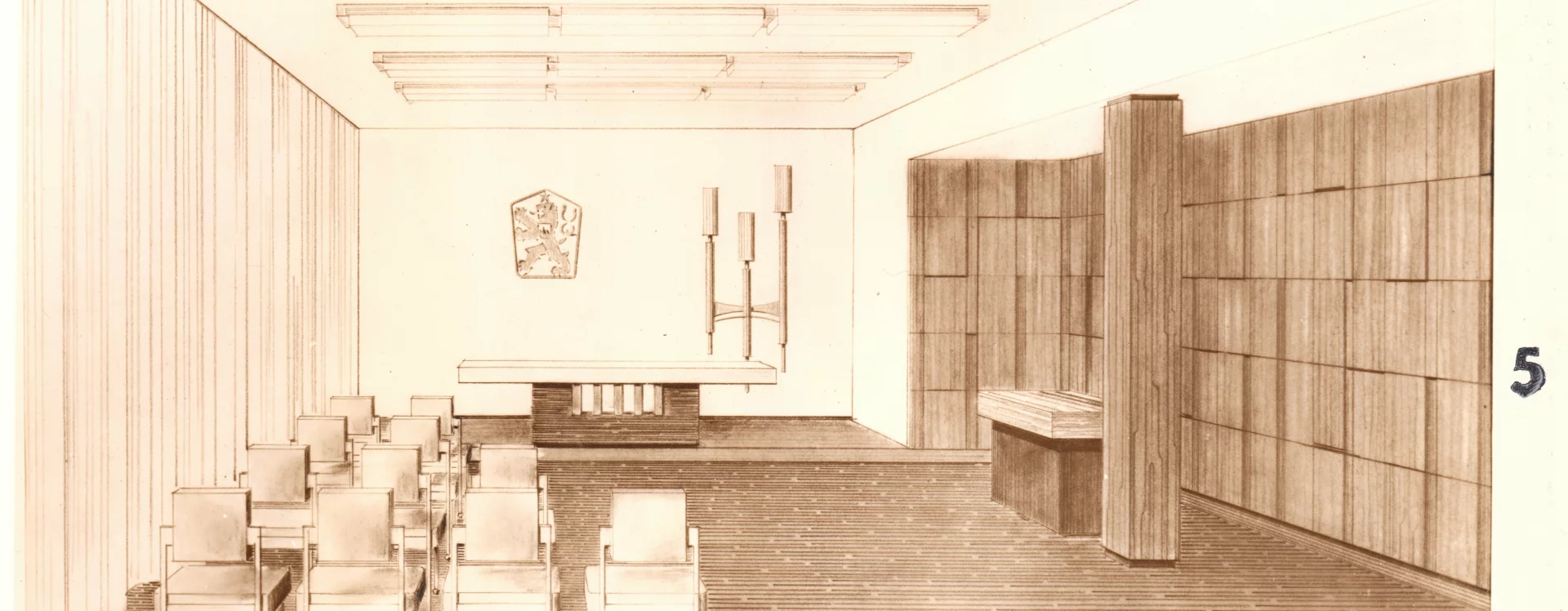
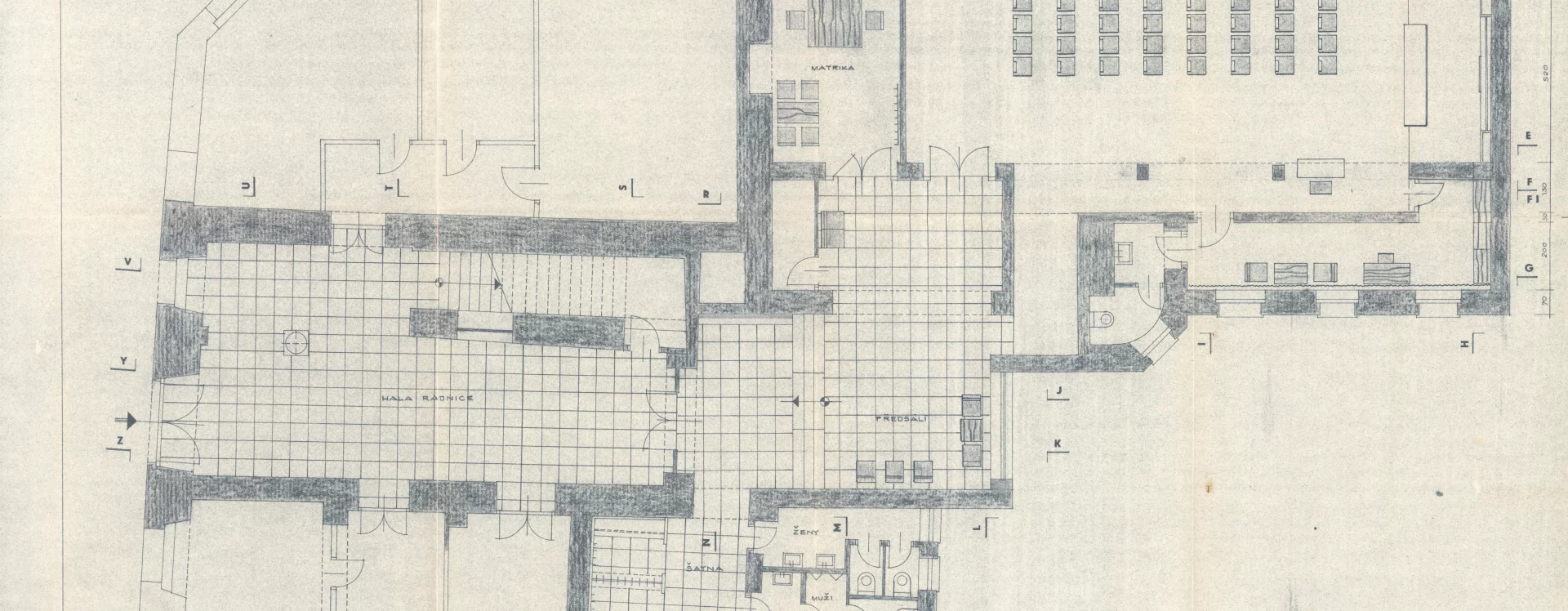
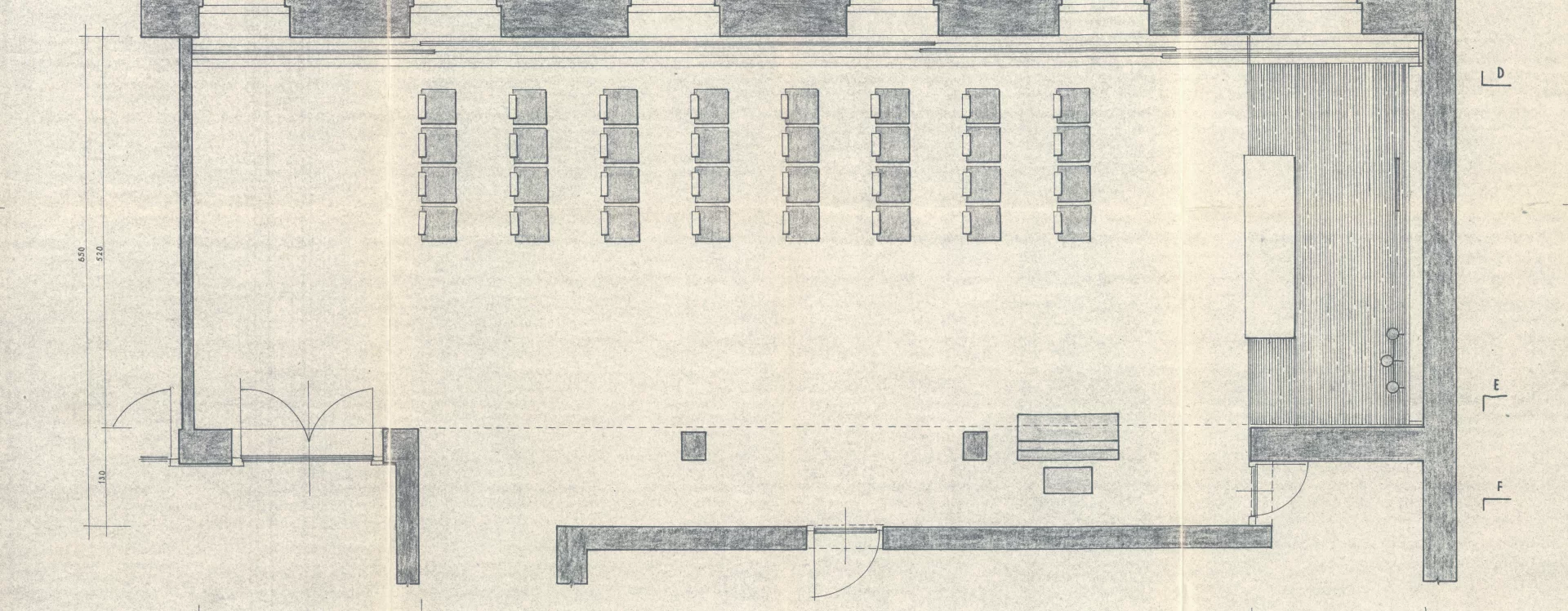
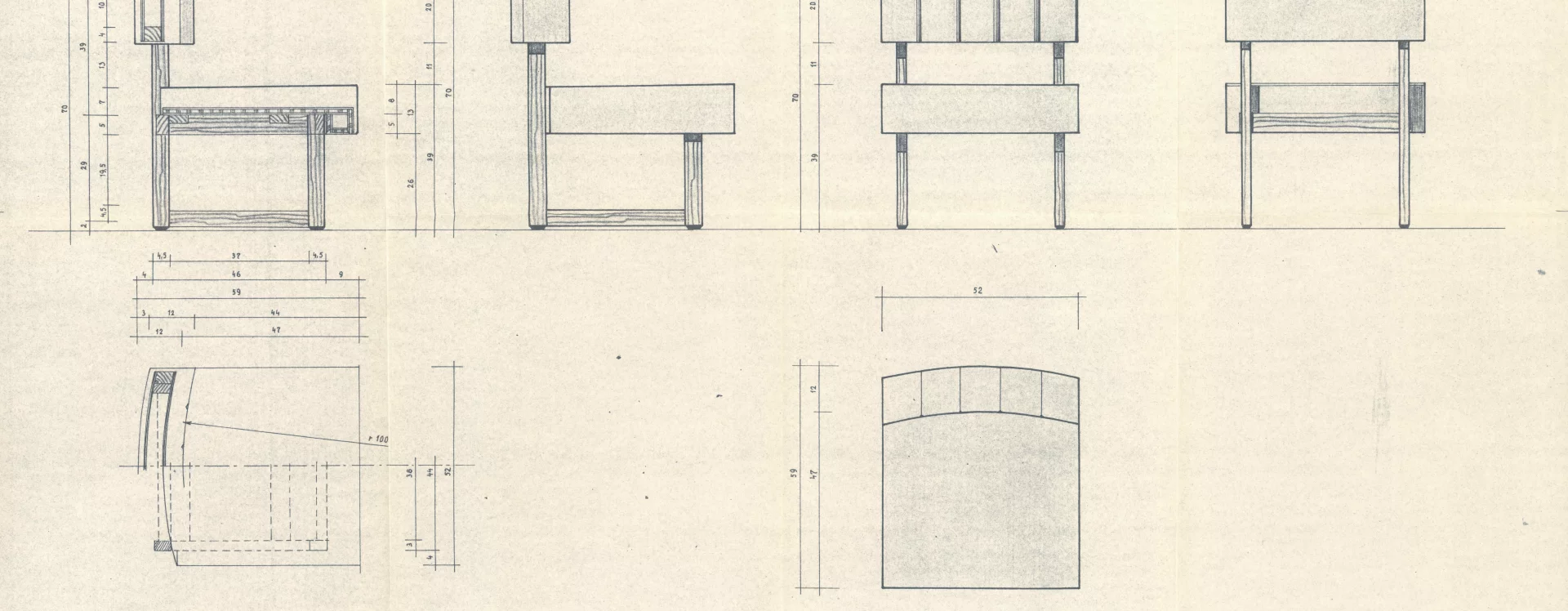
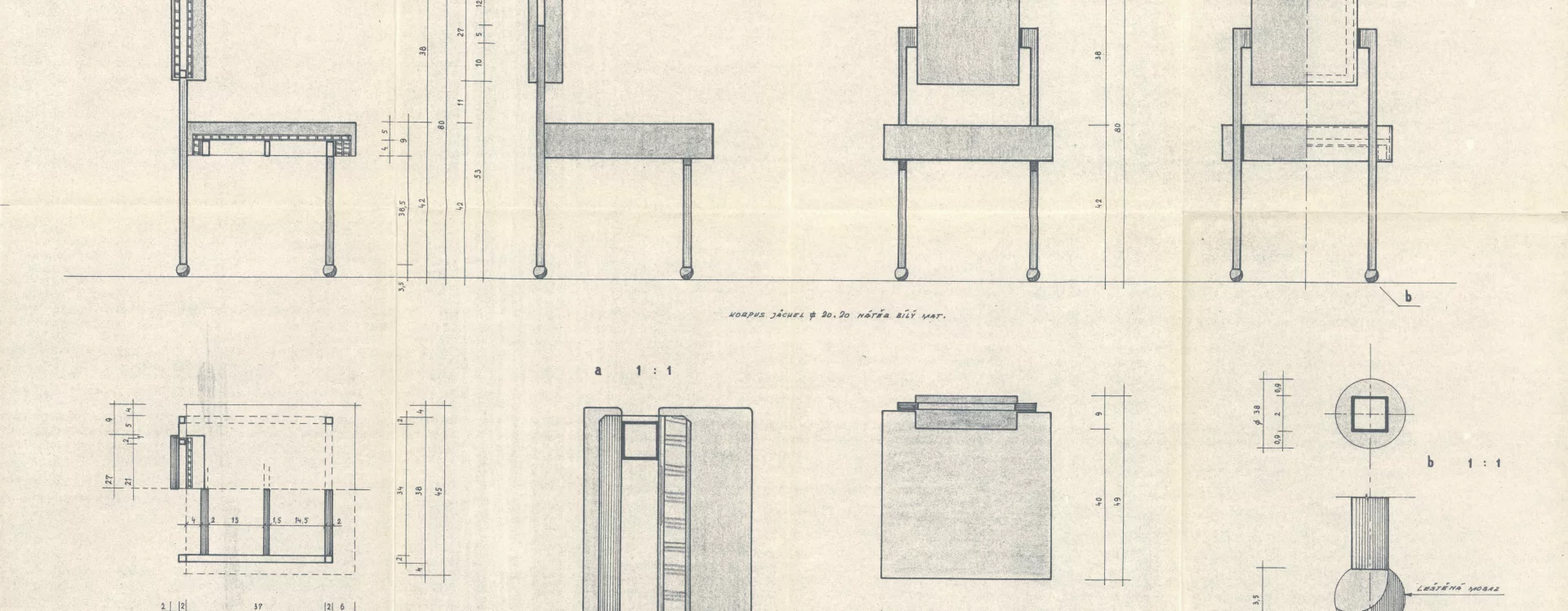
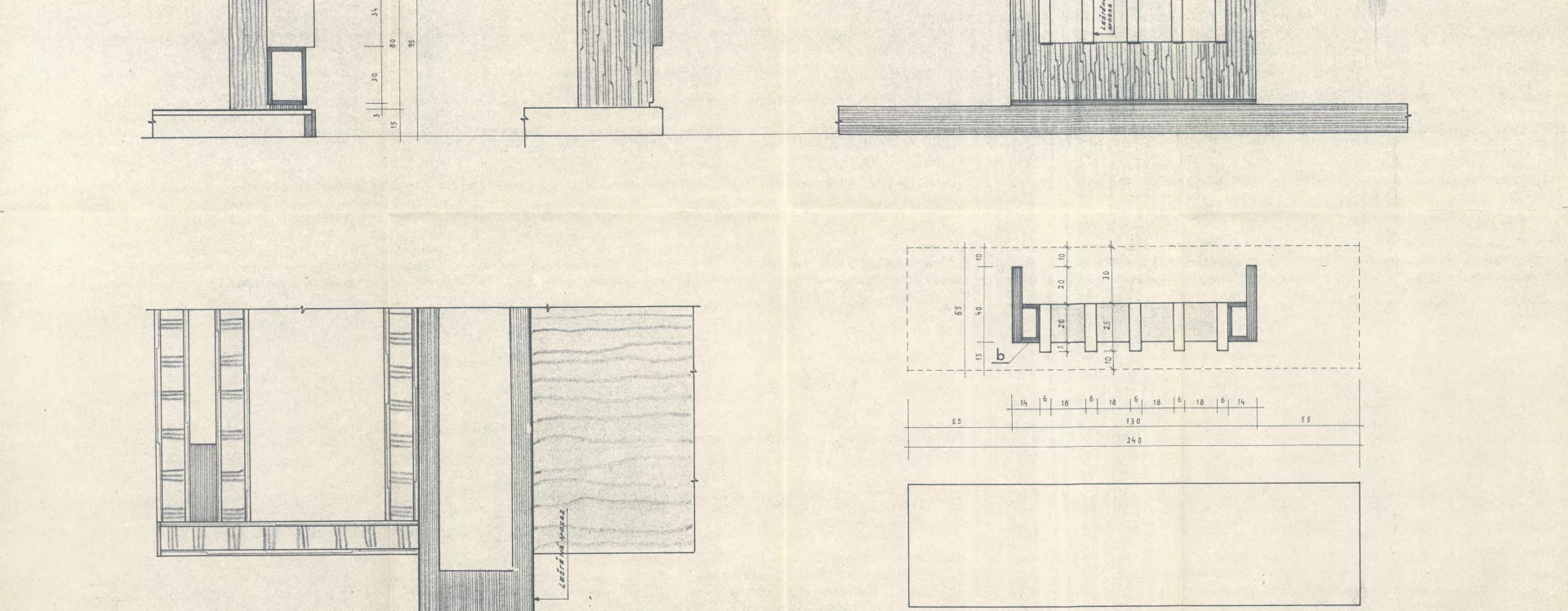
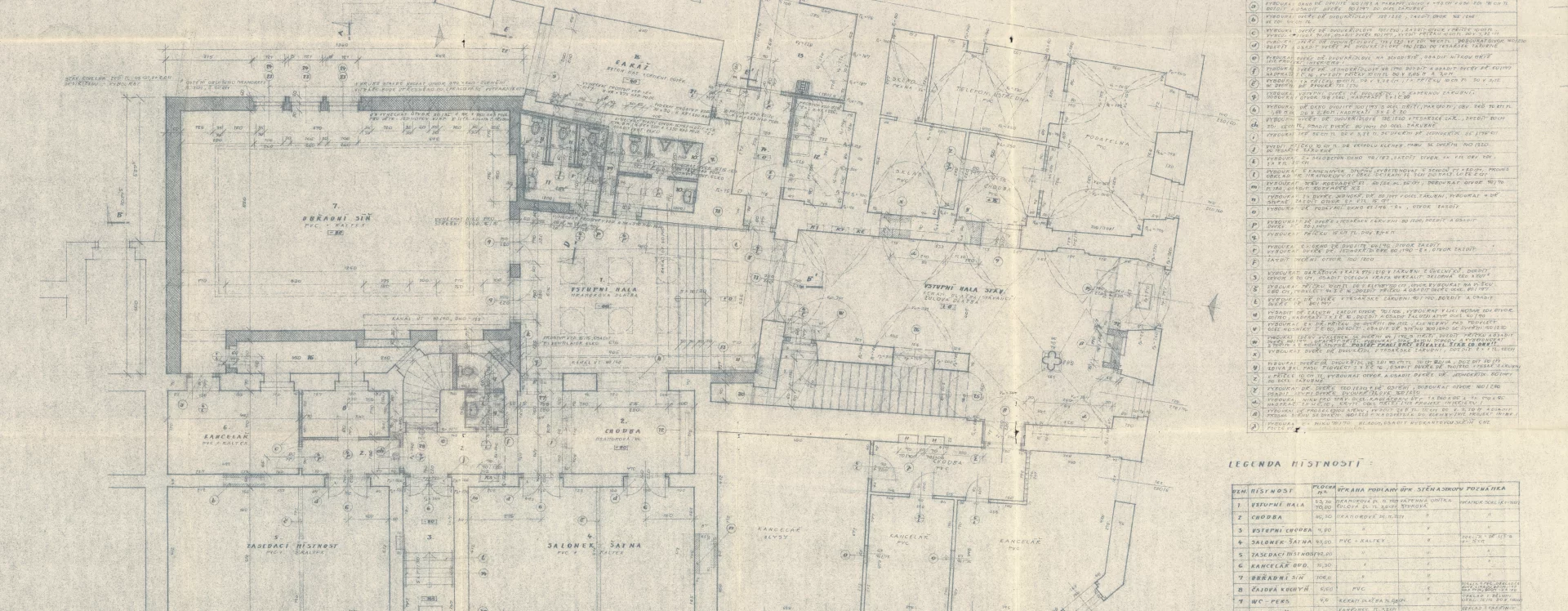
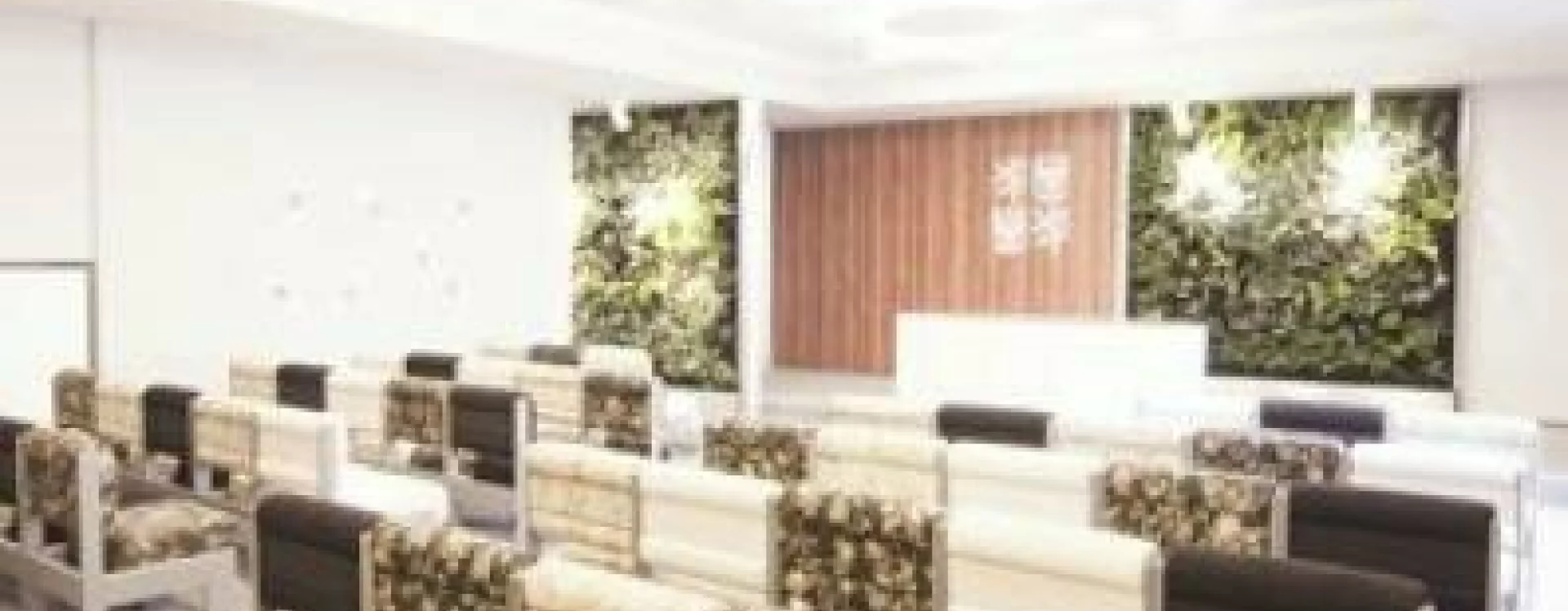
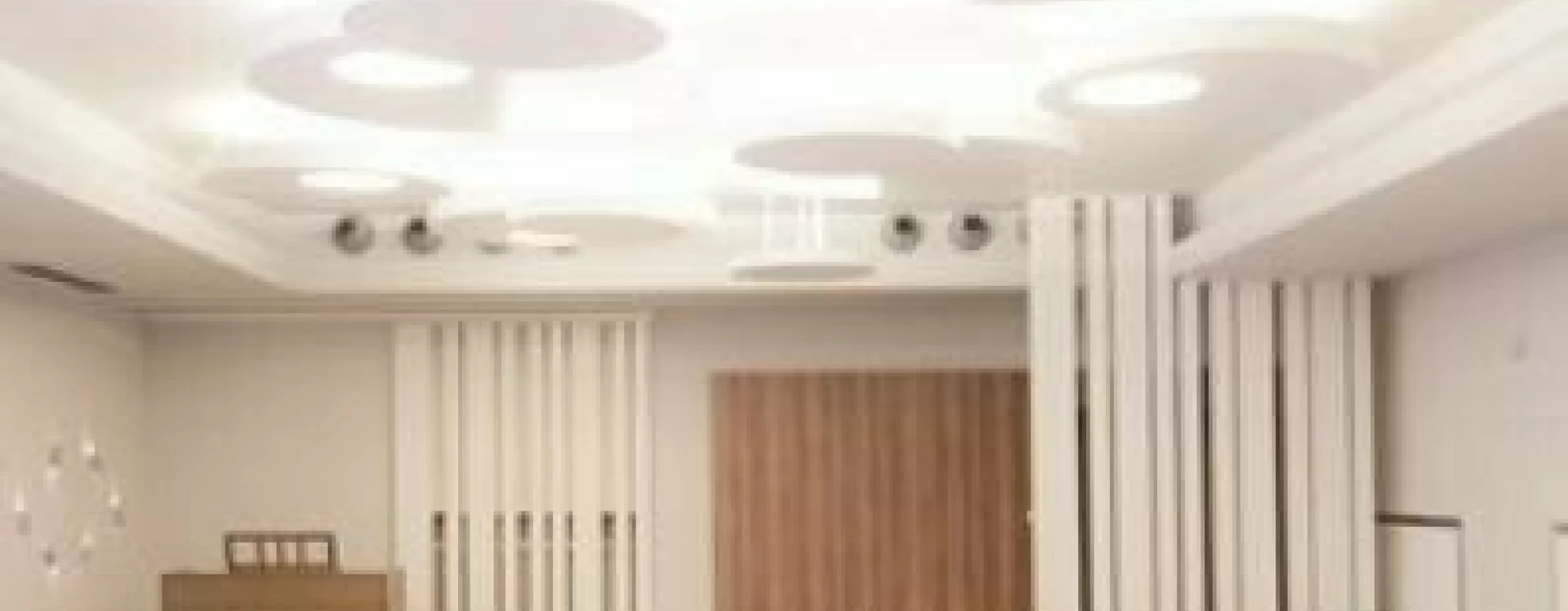
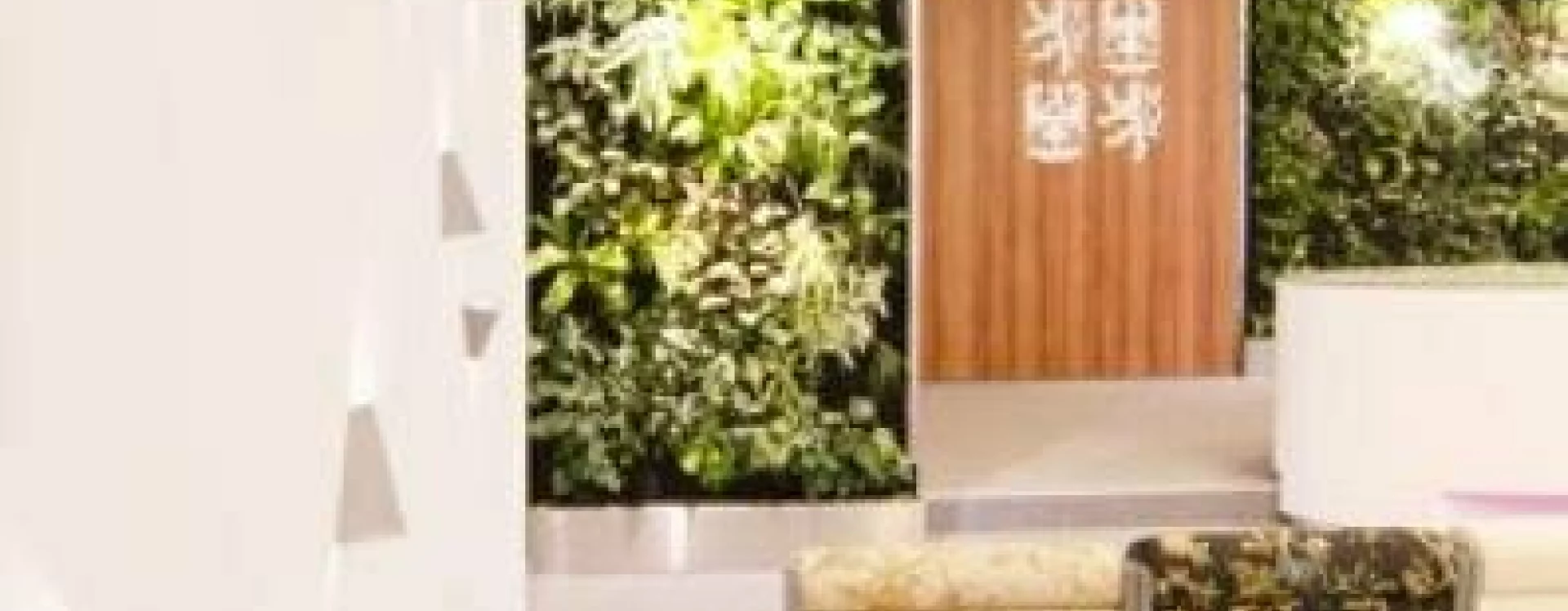
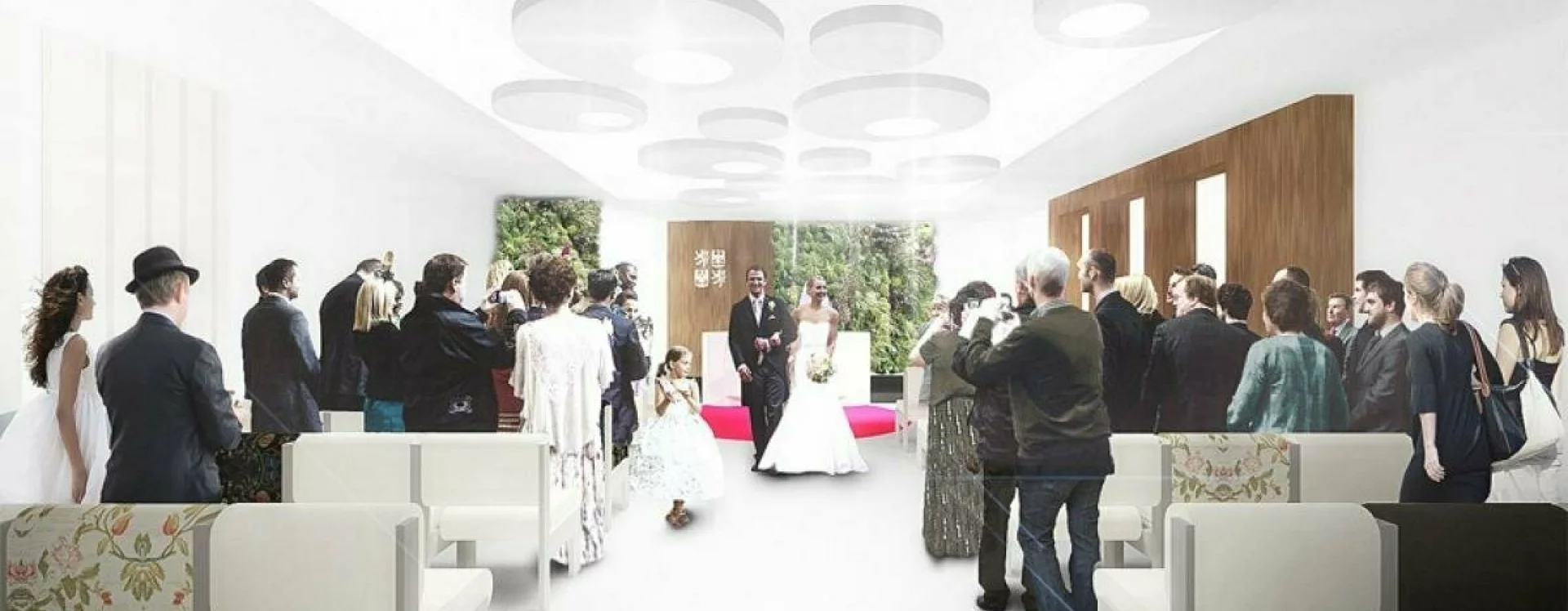
The Brod town hall building was adapted several times throughout the 20th century to meet the changing needs of the municipal office. Its appearance was most significantly affected by alterations to the entrance areas and the addition of a ceremonial hall in the 1980s, which was rather inappropriately renovated in 2014.
Dana Schlaichertová, 2025
Literature
Jaroslav Růžička. Stará rychta v Německém Brodě. In: Časopis Společnosti přátel starožitností českých v Praze. 1907, XV/1. p. 155-160.
Hlasy z Posázaví. 1910. Dobročinnost!, sv. 21. 12., p. 1.
Hlasy z Posázaví. 1911. Rozpočtová schůze obecního zastupitelstva, sv. 11. 1., p. 2.
Hlasy z Posázaví. 1912. Obecní zastupitelstvo v Něm. Brodě, sv. 17. 10., p. 1.
Hlasy z Posázaví. 1912. Komedie má se opakovat, sv. 24. 10., p. 2.
Dana Schlaichertová. Radnice v Německém (Havlíčkově) Brodě. In: Jakub Bachtík, Michal Kurz, Kristina Uhlíková (eds.). Boj o malé město 1900-1960: příběhy památek a jejich lidí. Praha, Artefactum, 2024, p. 232-241. ISBN 978-80-88283-96-6.
Vladislava Říhová, Zuzana Křenková. Sochy a města. České umění 50.–80. let 20. století ve veřejném prostoru: evidence, průzkumy a restaurování. In: Sochy a města. Available from: https://sochyamesta.cz/.
Dana Schlaichertová. Architektura a urbanismus Havlíčkova Brodu 1848-1938. Olomouc, Katedra teorie a dějin umění FF UP, 1998, Diplomová práce. p. 37-42.
Jiří Sochr, Marie Sochrová. Havlíčkův Brod a okolí. Havlíčkův Brod, Gradat, 1992.
Dana Schlaichertová. Radnice. In: Aleš Veselý (ed.). Příběhy brodských domů. Havlíčkův Brod, Galerie výtvarného umění v Havlíčkově Brodě, 2016, p. 24-35. ISBN 978-80-904726-9-3.
Sources
Archiv Ústavu dějin umění Akademie věd České republiky, fond Wirth Zdeněk. sv. korespondence N-NOS.
Městský úřad Havlíčkův Brod, archiv Stavebního úřadu. sv. č. p. 57.
Státní okresní archiv Havlíčkův Brod, fond Archiv města Havlíčkův Brod.
Státní okresní archiv Havlíčkův Brod, fond Městský národní výbor Havlíčkův Brod. sv. karton 59.
Státní okresní archiv Havlíčkův Brod, fond Městský úřad Německý Brod. sv. karton 351, 386.
Státní okresní archiv Havlíčkův Brod, fond Sbírka map a plánů. p. X/25.