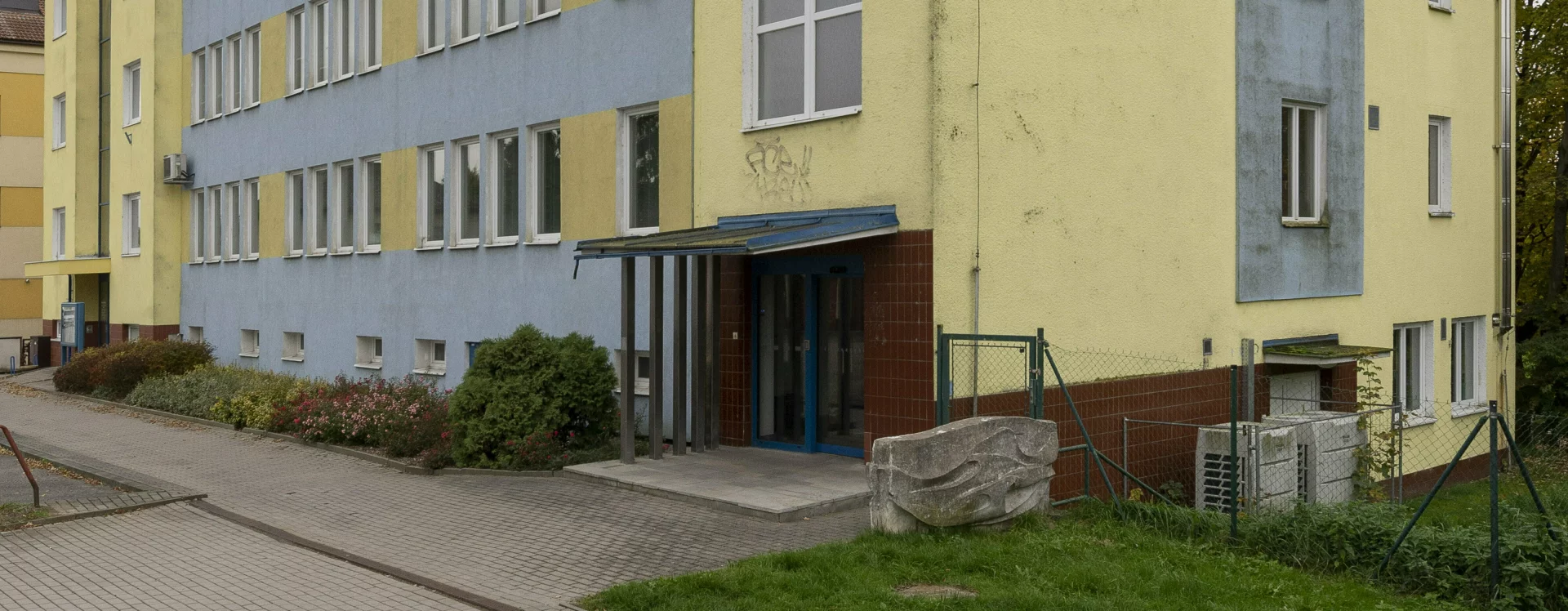
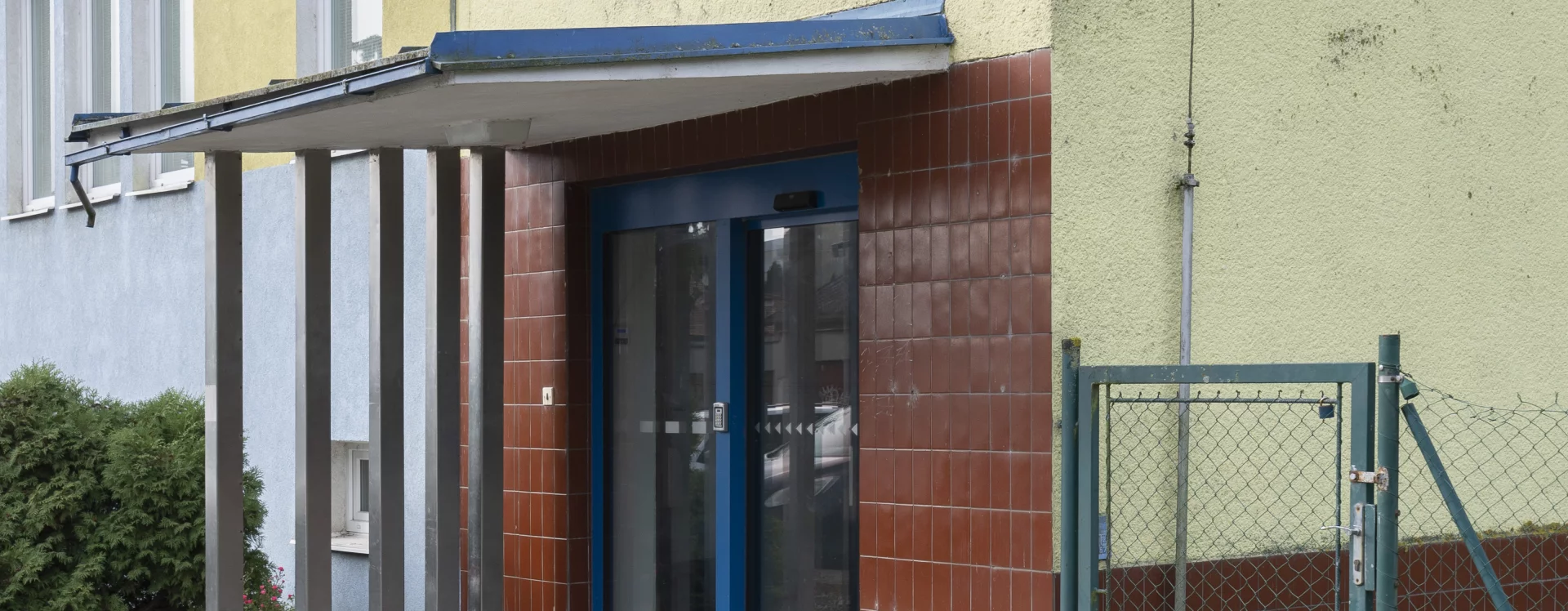
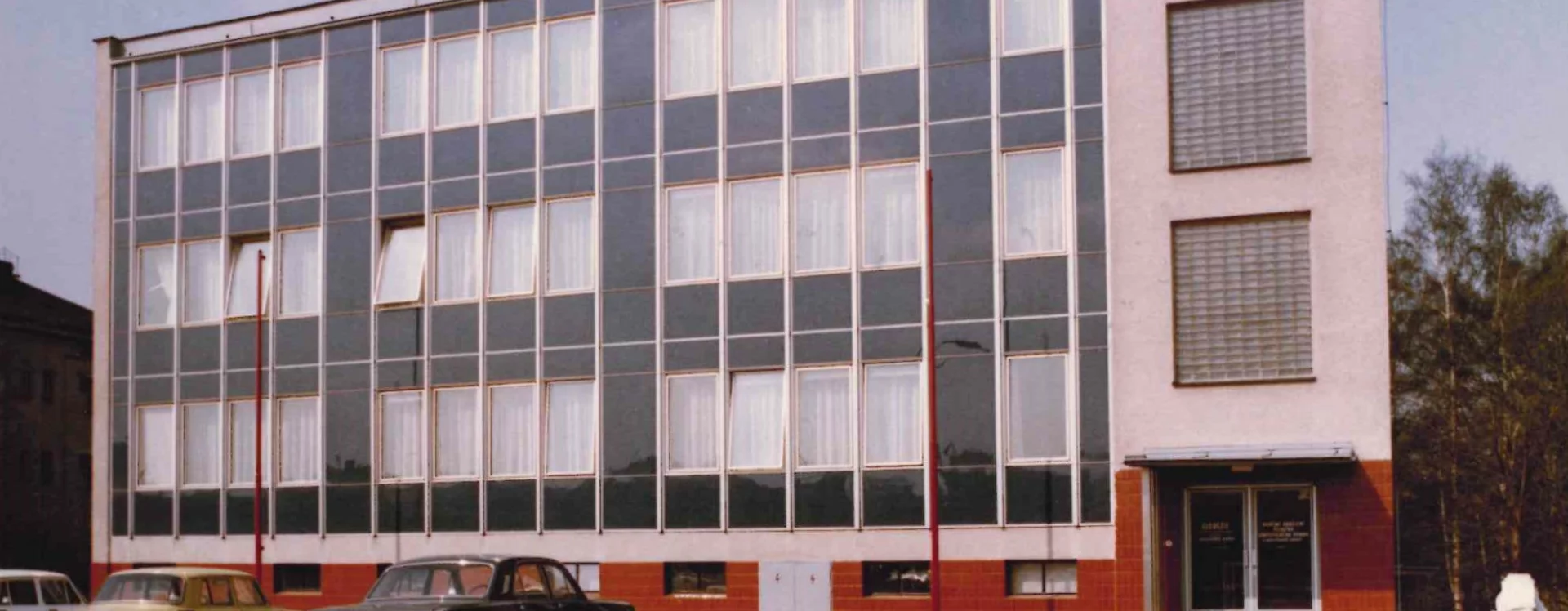
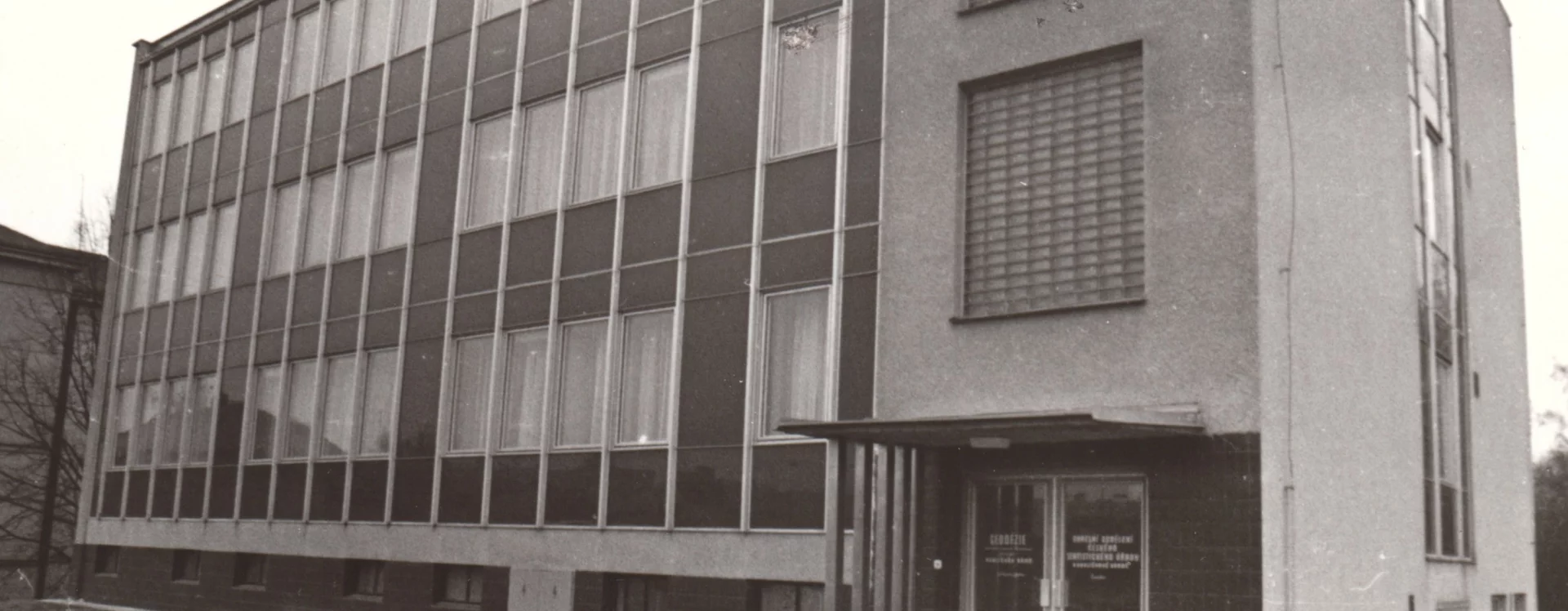
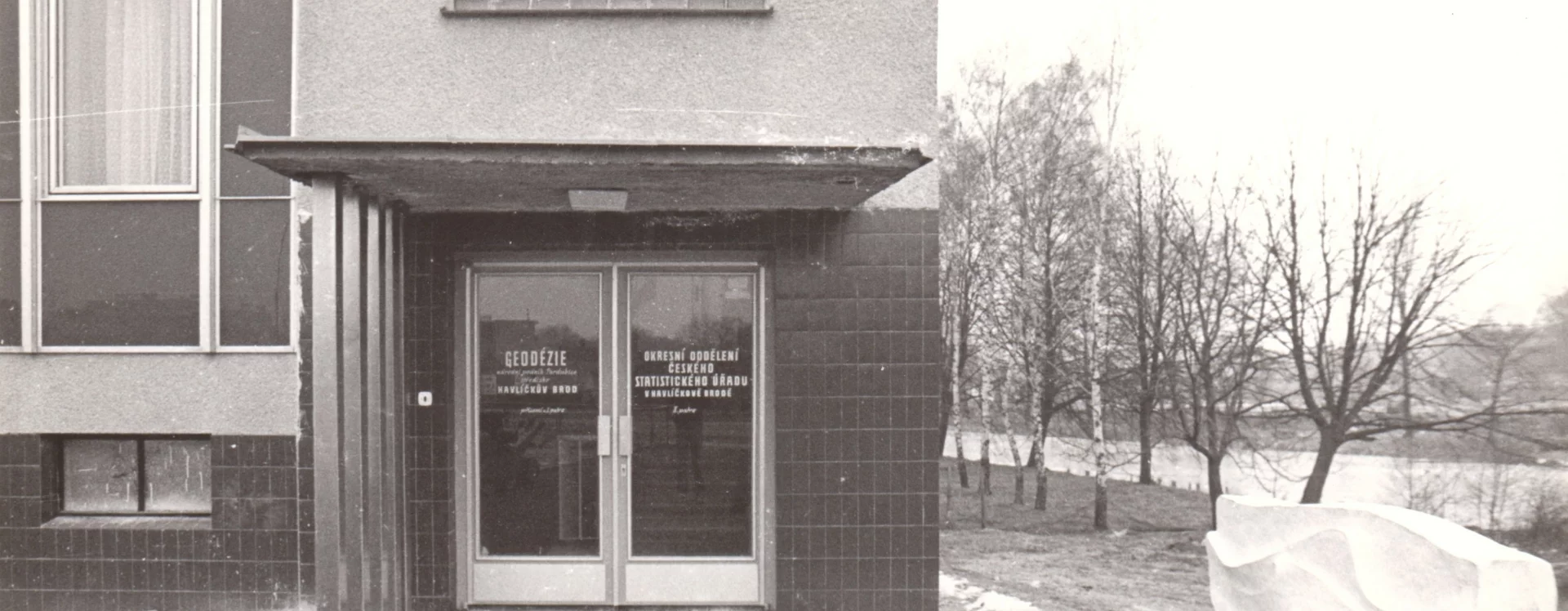
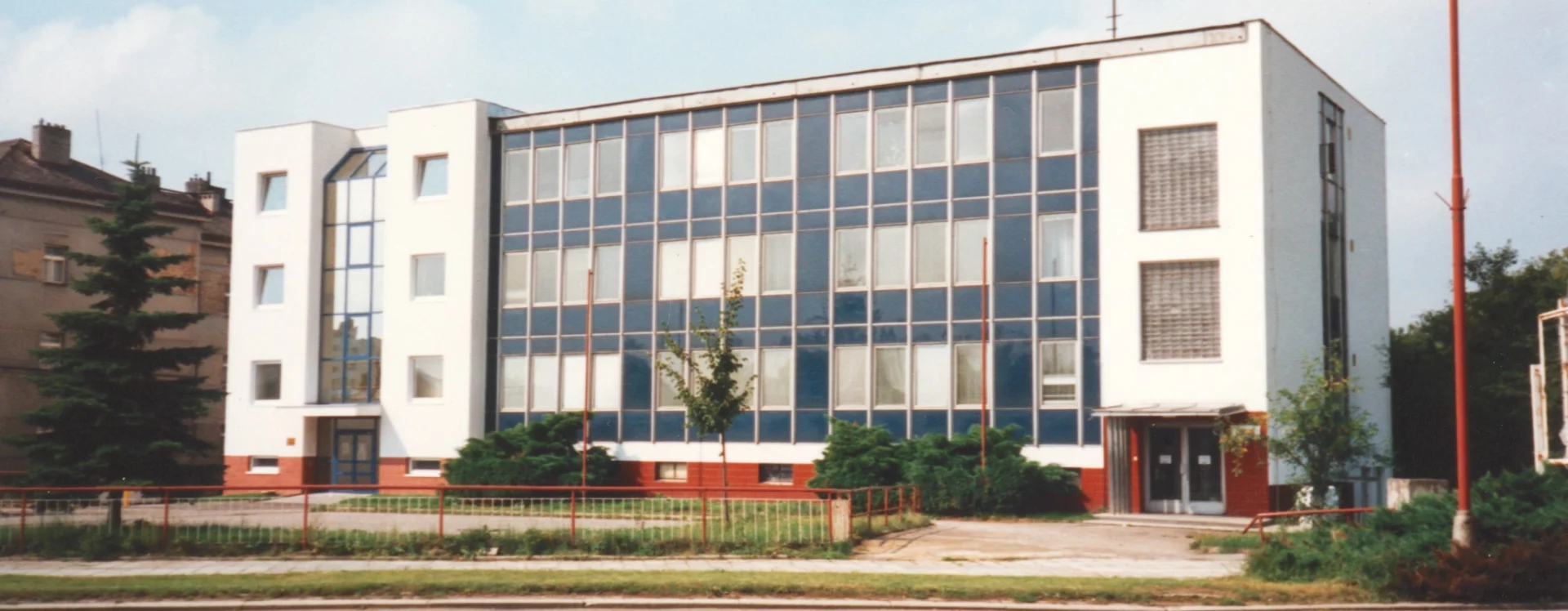
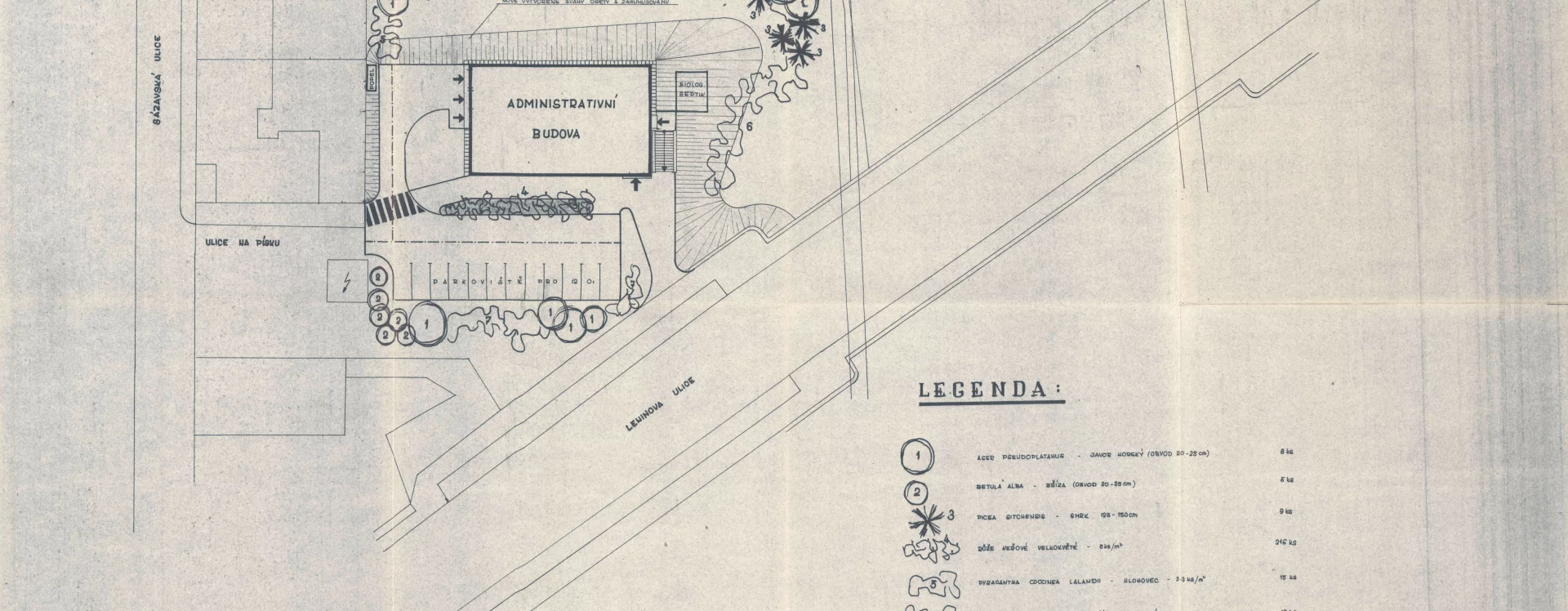
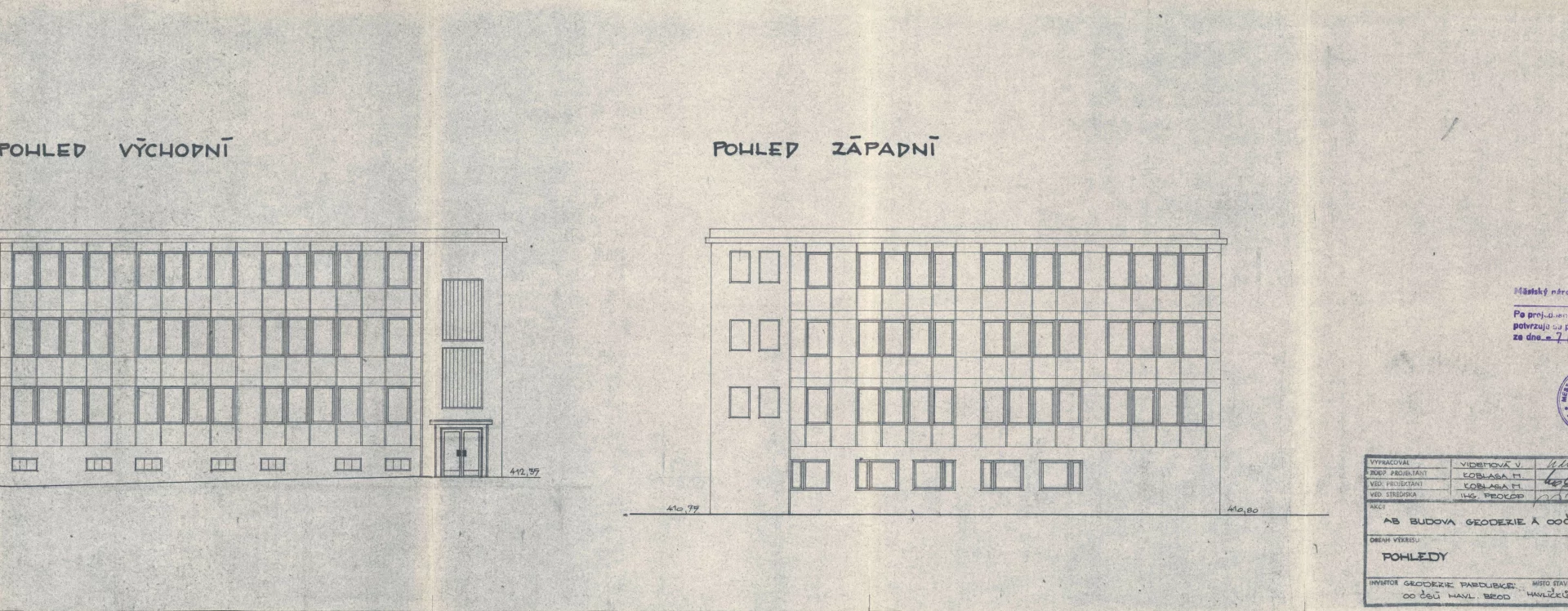
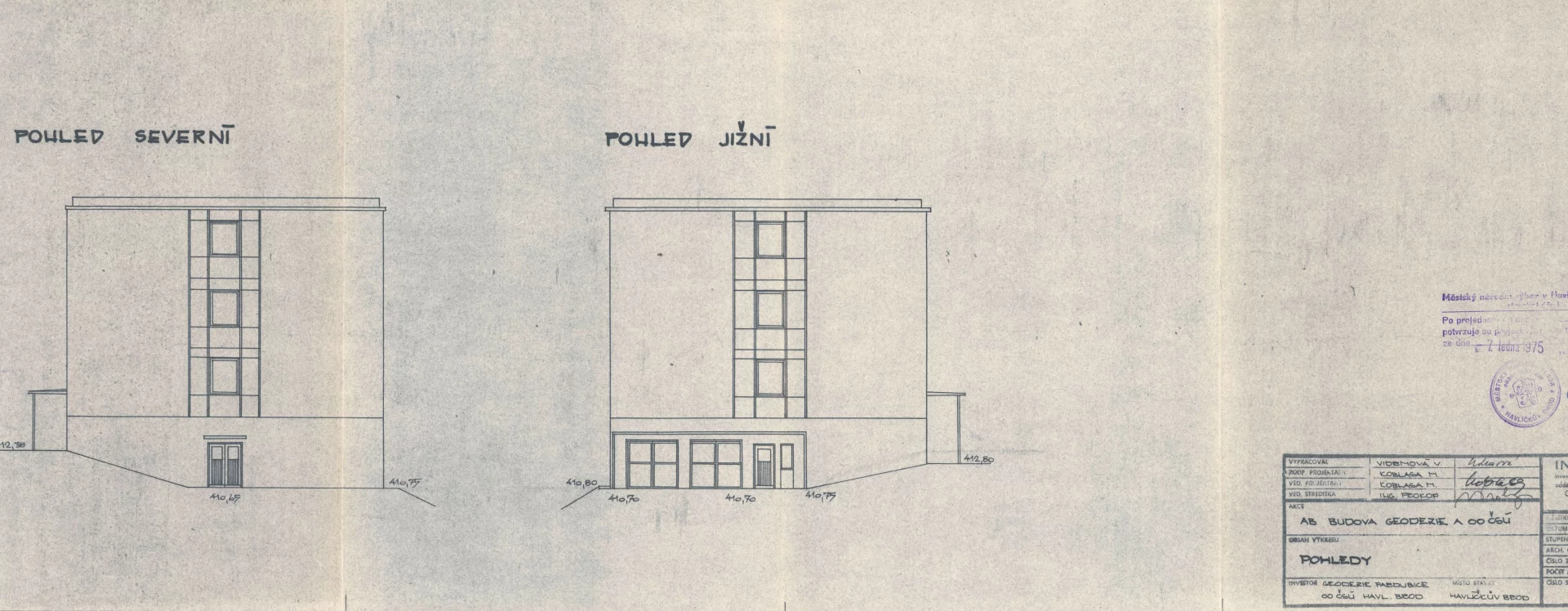
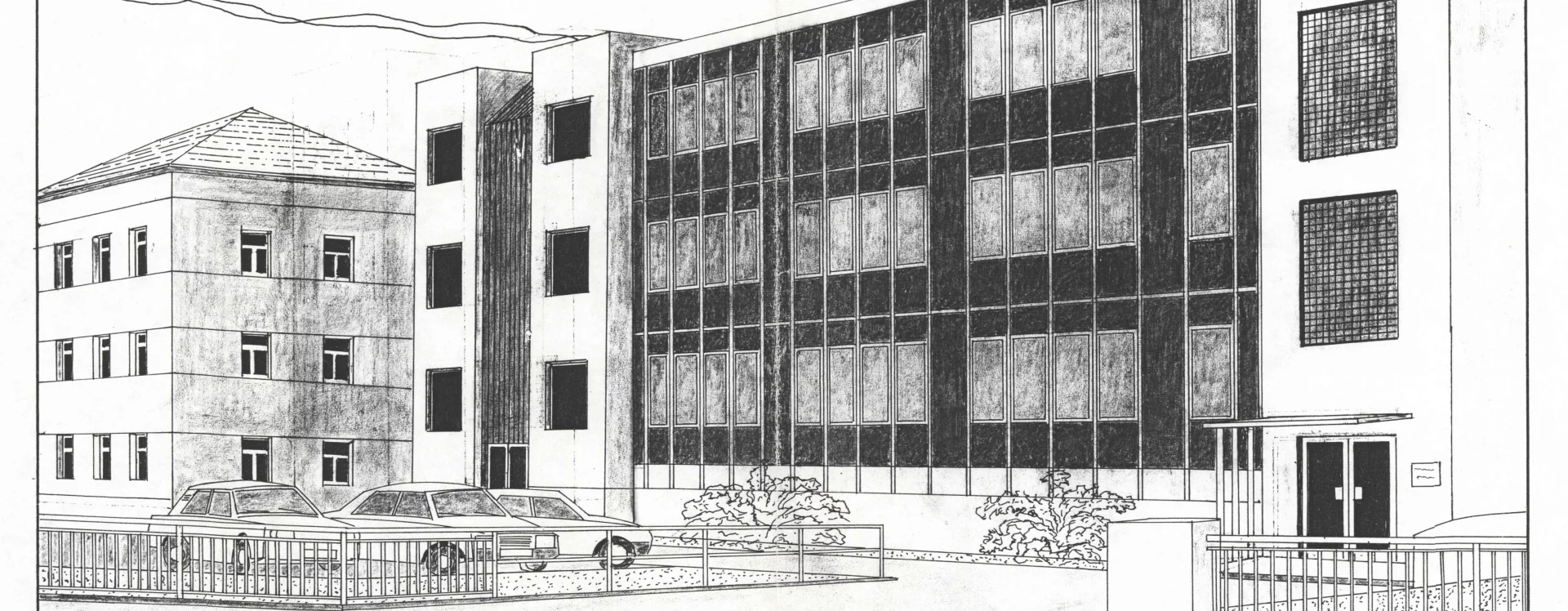
In the spring of 1979, a new building for the Havlíčkův Brod branch of the state-owned company Geodézie Pardubice was opened near the Sázava River, close to the newly built bridge on the I/38 motorway. Until then, the company had been based in the Agricultural Cooperative building (HB-397) near the train station. The simple building, partly constructed by the centre’s employees, had a facade made of Boletice panels, which was typical for its time. The main entrance led to Na Pískách street, as it does today, but was located on the corner facing the river.
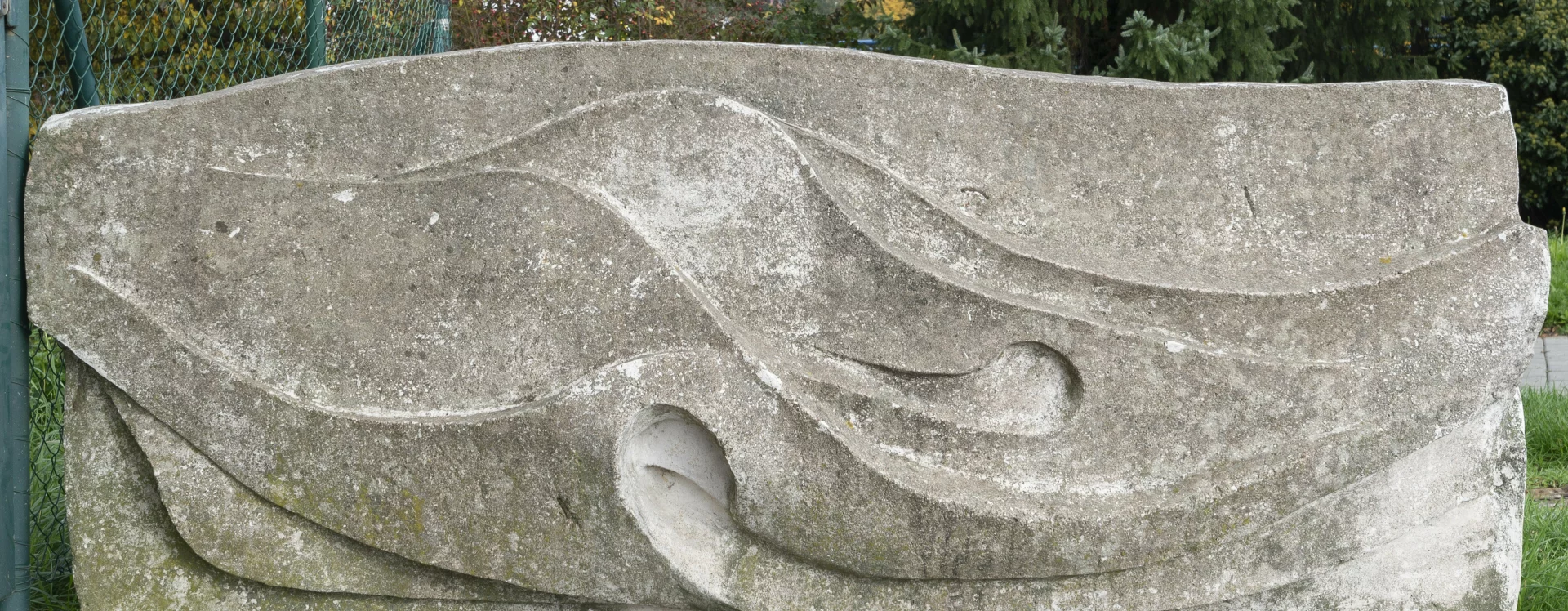
The entrance area was marked by a reinforced concrete sculpture, created to fulfil a legal requirement that a percentage of the construction budget be allocated to artworks. Art was subsequently supposed to enter public spaces and enrich the living environment of citizens in socialist Czechoslovakia.
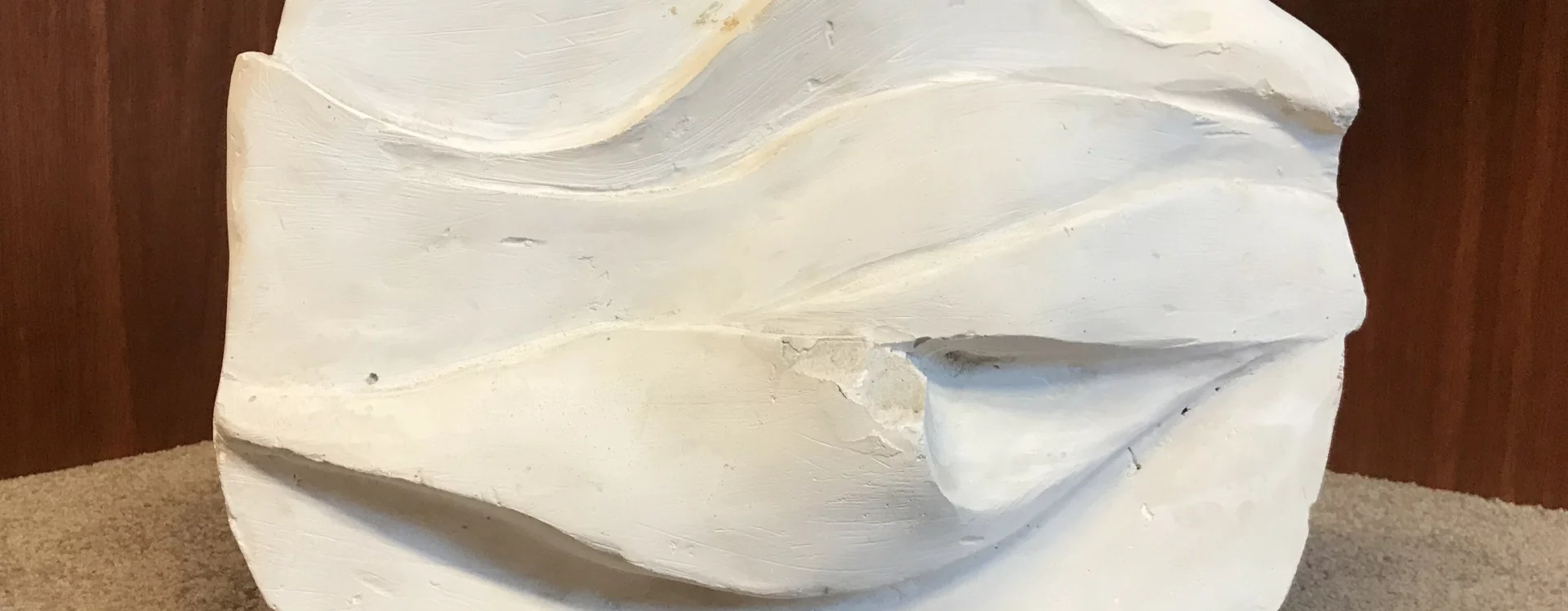
In this case, it was a horizontally designed object, divided by a deep relief of overlapping curves, reminiscent of rippling water. The proportions of the sculpture corresponded to the originally smaller scale of the building and the simpler natural terrain from the office towards the river.
The spatial situation would later change. In the 1990s, the Geodesy building was extended towards Humpolecká street, and the extension also included a new main entrance, which meant that the sculpture ended up at the less prominent end of the building. After 2000, the terrain in the immediate vicinity of the sculpture was modified and a nearby embankment and cycle path were built, which diminished the visual connection between the work and the river. As a result of all these changes, the sculpture became disproportionate in size to the Geodesy building and was overshadowed in the overall context of the site.
The sculpture is inconspicuous even in the context of the work of its designer, Roman Podrázský (1943–2001), a native of Přibyslav. His later, more distinctive figural works in stone and metal frequently explored religious themes or the subject of political persecution under the communist regime, which he openly opposed. The sculpture in Havlíčkův Brod, created during the socialist era in Czechoslovakia, was one of the few official commissions he was able to carry out. Reflecting on the location of the new Geodesy building, the artist chose the motif of a wave as a harmonious, moderate and artistically engaging theme which allowed him to avoid the political content of the work.
Zuzana Trnková, 2025
Literature
Petr Horák. Mezi adorací a demolicí. Osudy vybraných děl českého výtvarného umění 50.–80. let 20. století po roce 1989 na území dnešního Kraje Vysočina. In: e-Monumentica. 2017, V/5.
Pavel Jajtner, Josef Chalupa. Roman Podrázský: život a dílo : 1943-2001. Přibyslav, KZM Přibyslav, 2001. p. 20-21. ISBN 978-80-87718-04-9.
Vladislava Říhová, Zuzana Křenková. Sochy a města. České umění 50.–80. let 20. století ve veřejném prostoru: evidence, průzkumy a restaurování. In: Sochy a města. Available from: https://sochyamesta.cz/.
Sources
Osobní rozhovor s Jaroslavem Beránkem, vedoucím Katastrálního úřadu pro Vysočinu, pracoviště Havlíčkův Brod, 6. 6. 2025.
Fotoarchiv Katastrálního úřadu pro Vysočinu, pracoviště Havlíčkův Brod. Katastrální úřadu pro Vysočinu, pracoviště Havlíčkův Brod.
Městský úřad Havlíčkův Brod, archiv Stavebního úřadu. sv. č. p. 1346.