The Vojtěch Weidenhoffer (1826–1901) Memorial, ceremoniously unveiled in the autumn of 1997, commemorates one of the most important figures in the political and economic life of Německý Brod in the second half of the 19th century. Vojtěch Weidenhoffer was a textile merchant and owner of a mill and starch factory, where he introduced the latest technical innovations, such as being the first person in Brod to acquire a steam engine. He was a long-serving town representative and councillor and, from 1883 to 1895, was a member of the provincial assembly for the National Party. He contributed to the construction of the railway in Německý (Havlíčkův) Brod and was a patron of the arts and influential figure in local associations.
The idea to create a memorial came from a descendant of Vojtěch Weidenhoffer in the 1990s. It was approved by the then mayor of Brod, Jaroslav Kruntorád, who contributed to its realization not only as the head of the municipal office but also as an architect. He invited the internationally renowned glass artist Jan Exnar (b. 1951) from Havlíčkův Brod to participate in the project.
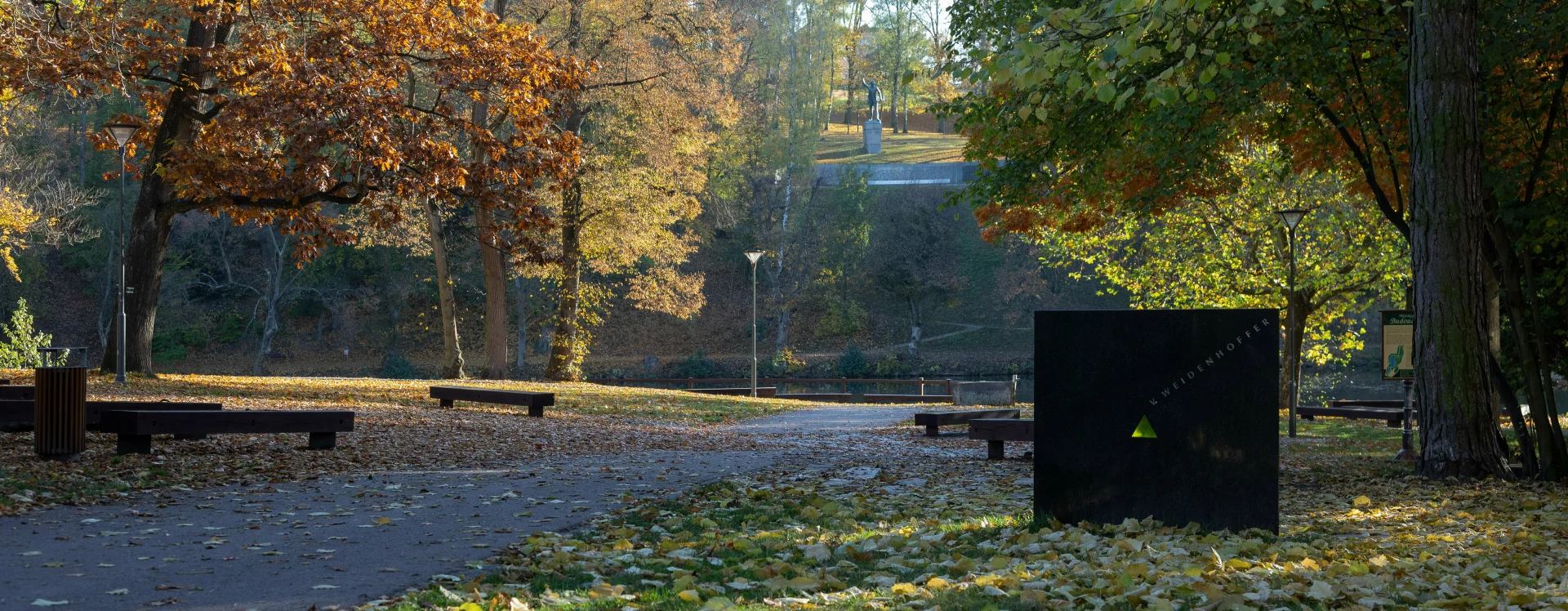
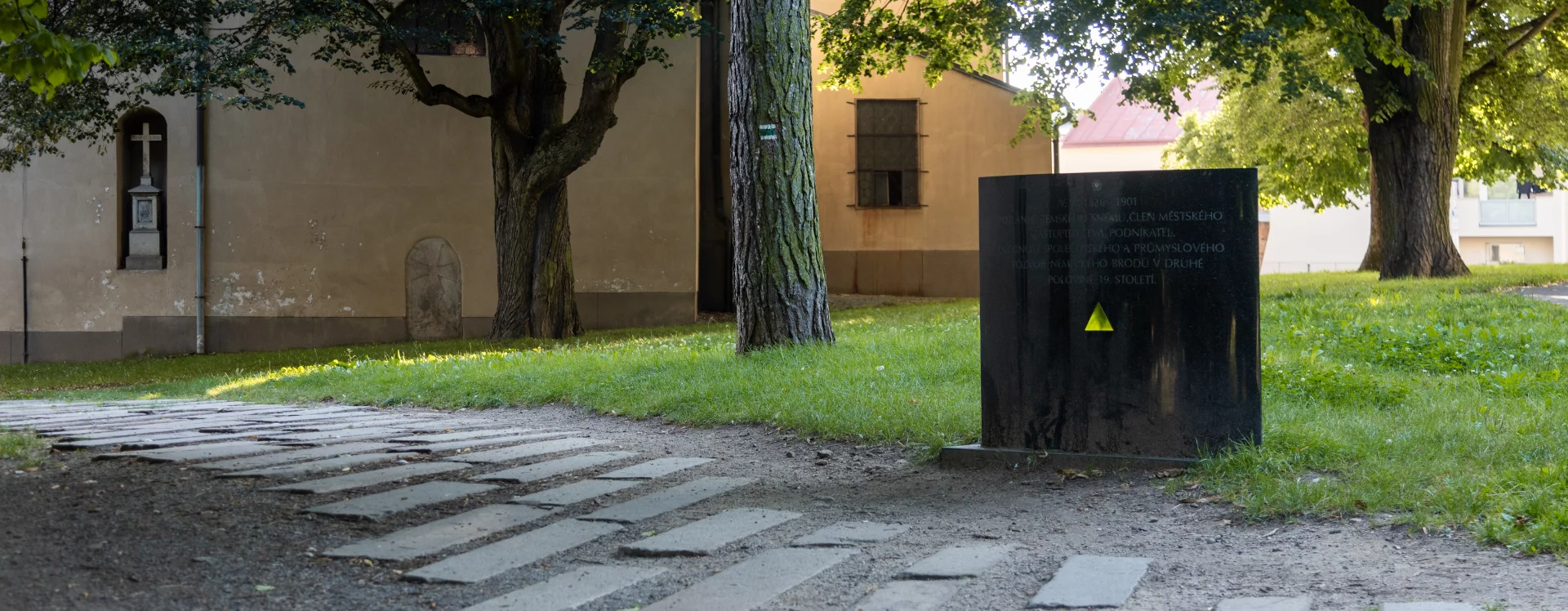
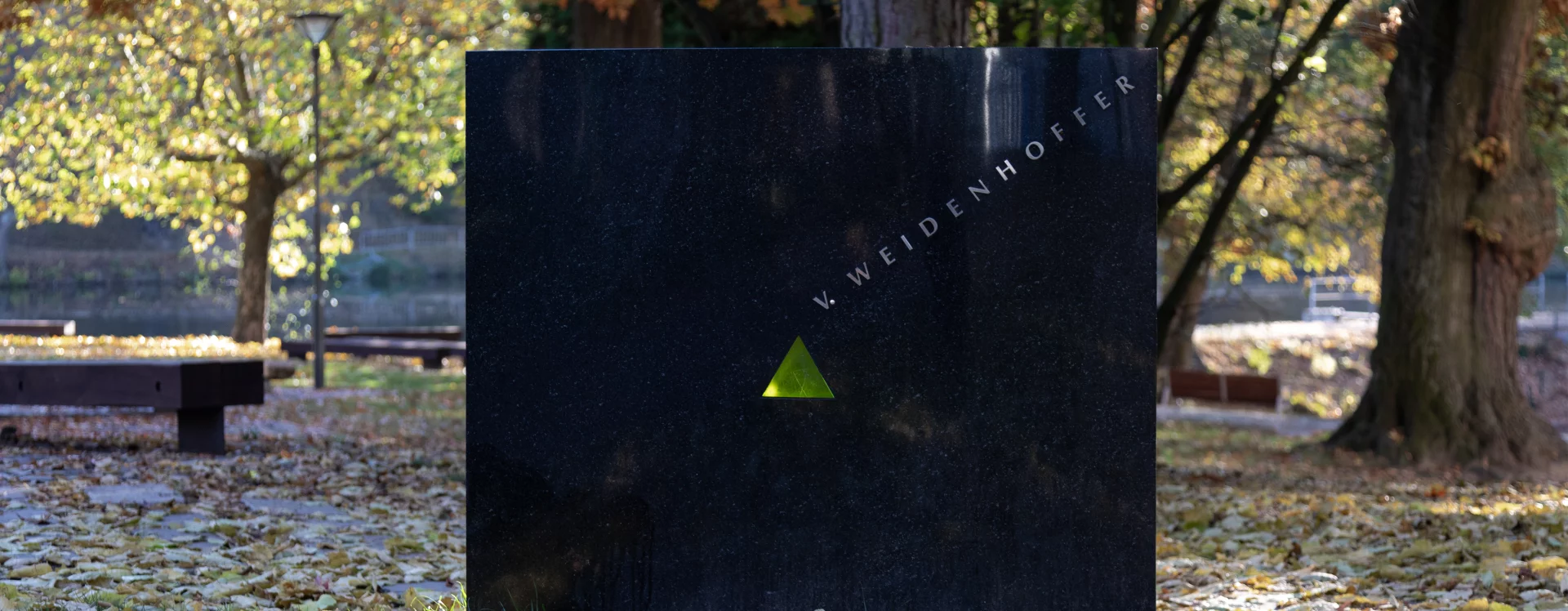
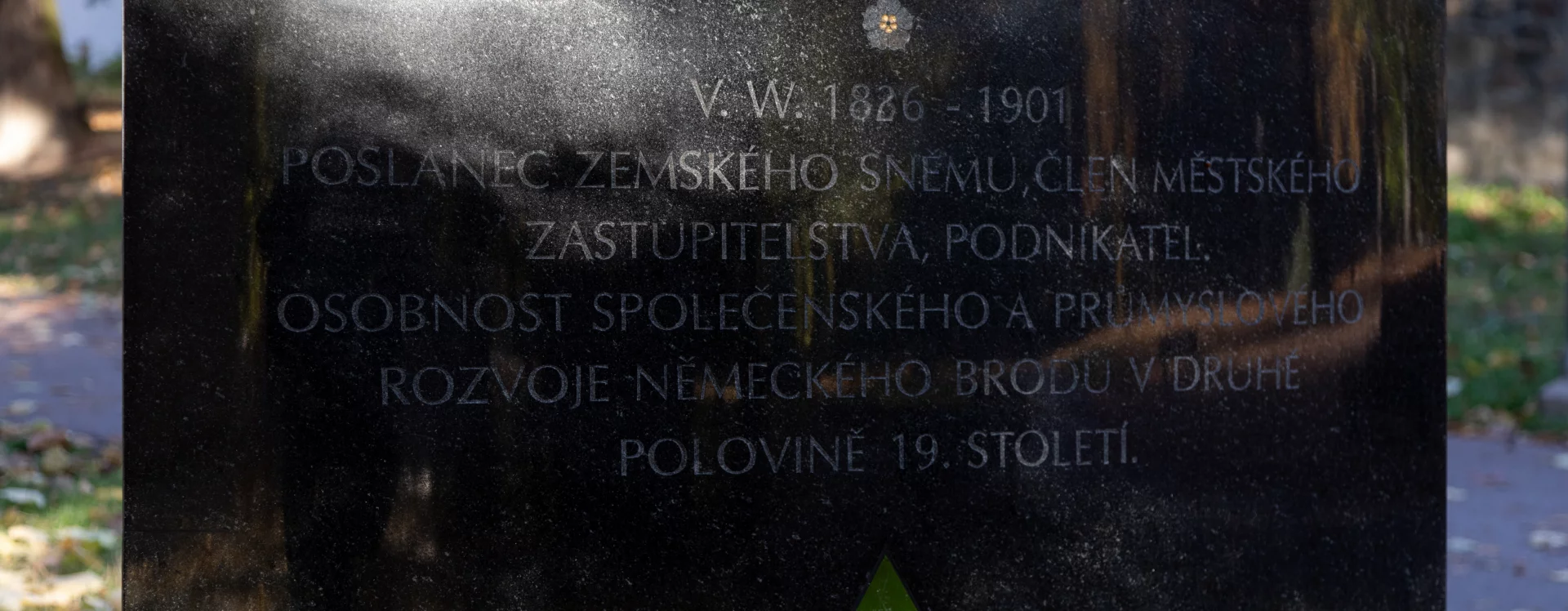
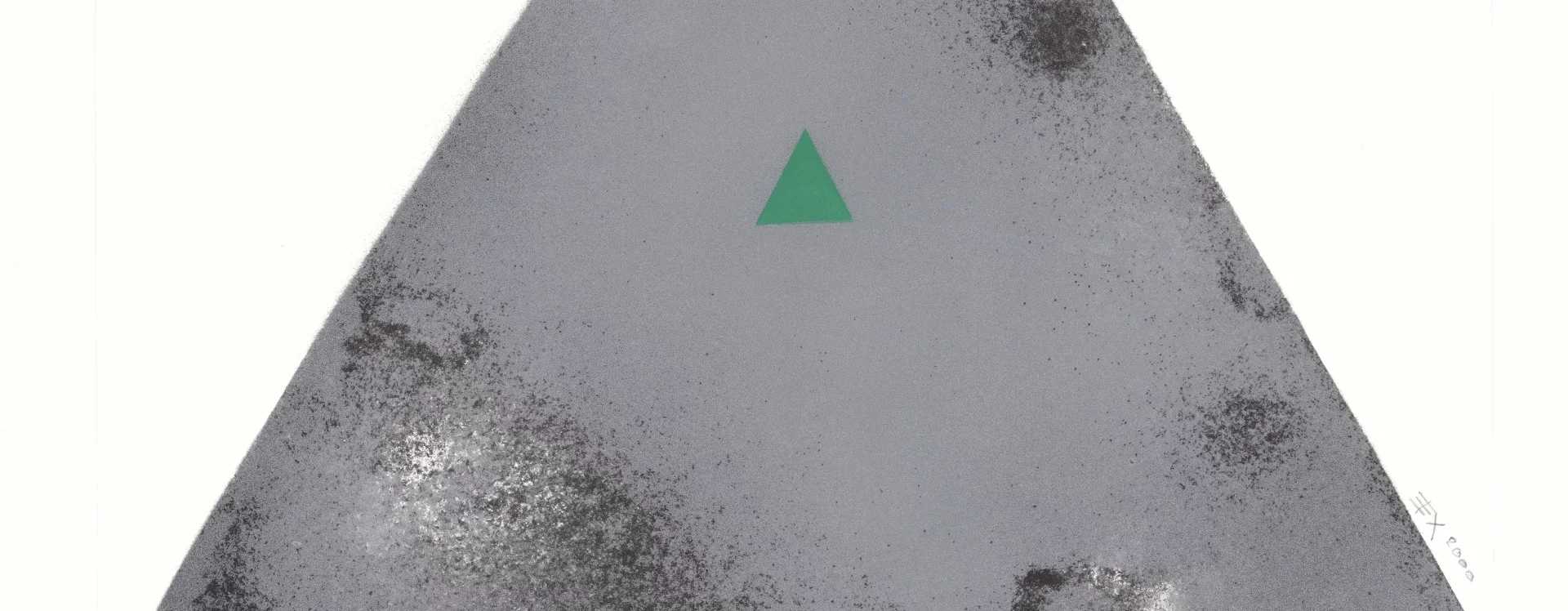
The memorial consists of a meticulously crafted stone block with a tapered oval base. It is made of black granite mixed with amphibole—a mineral that appears in the stone as light sparkling crystals. A light-green triangular glass insert runs through the block, making the object visually transparent and open to its surroundings. On one side, the name V. WEIDENHOFFER is inscribed in metal letters, while on the other is a polished inscription describing Weidenhoffer’s main activities.
Such complex objects are rarely the work of one person, and this memorial, designed by Jan Exnar, was made with the collaboration of stonemason Jaroslav Fieger from Světlá nad Sázavou and the glassworks in Škrdlovice, where the glass insert was cast.
The memorial’s location at the entrance to Budoucnost Park (HB-VP-R-PB) behind the deanery church was not by chance. It refers to Weidenhoffer’s involvement in the activities of the Beautification Society, which began building the park at the end of the 19th century. At the same time, it is located near the main square in Brod (HB-VP-R-HN), whose paving he subsidized, and the former poorhouse at 191 Příčná Street, which he had built at his own expense. It also stands in a sloping section of the park within view of the monumental Karel Havlíček Memorial (HB-pc1736_1), a peer and friend of Vojtěch Weidenhoffer.
The Weidenhoffer Memorial was not the first object to be named after this famous Brod native. His name was also given to a wooden gazebo, built in 1890, which stood in Budoucnost Park until approximately 1937. Like the gazebo, the new monument—with its simple form incorporating elements of transparency and reflection—seems to create and expand space rather than demand attention—much like the man it commemorates.
Zuzana Trnková, 2025
Literature
Michal Kamp. Půl století Vojtěcha Weidenhoffera. In: Havlíčkobrodsko. Havlíčkův Brod, 2011, roč. 25, p. 60-104.
Miloš Tajovský. Měšťanský chudobinec. In: Aleš Veselý (ed.). Příběhy brodských domů. Havlíčkův Brod, Galerie výtvarného umění v Havlíčkově Brodě, 2016, p. 84-86. ISBN 978-80-904726-9-3.
Sources
Osobní rozhovor s Janem Exnarem. 31. 7. 2025.
Archiv Jana a Hany Exnarových.
Zina Zborovská. Evidence pomníků, památníků, pamětních desek a soch na území města Havlíčkův Brod. Havlíčkův Brod, 2012. p. 113-114.