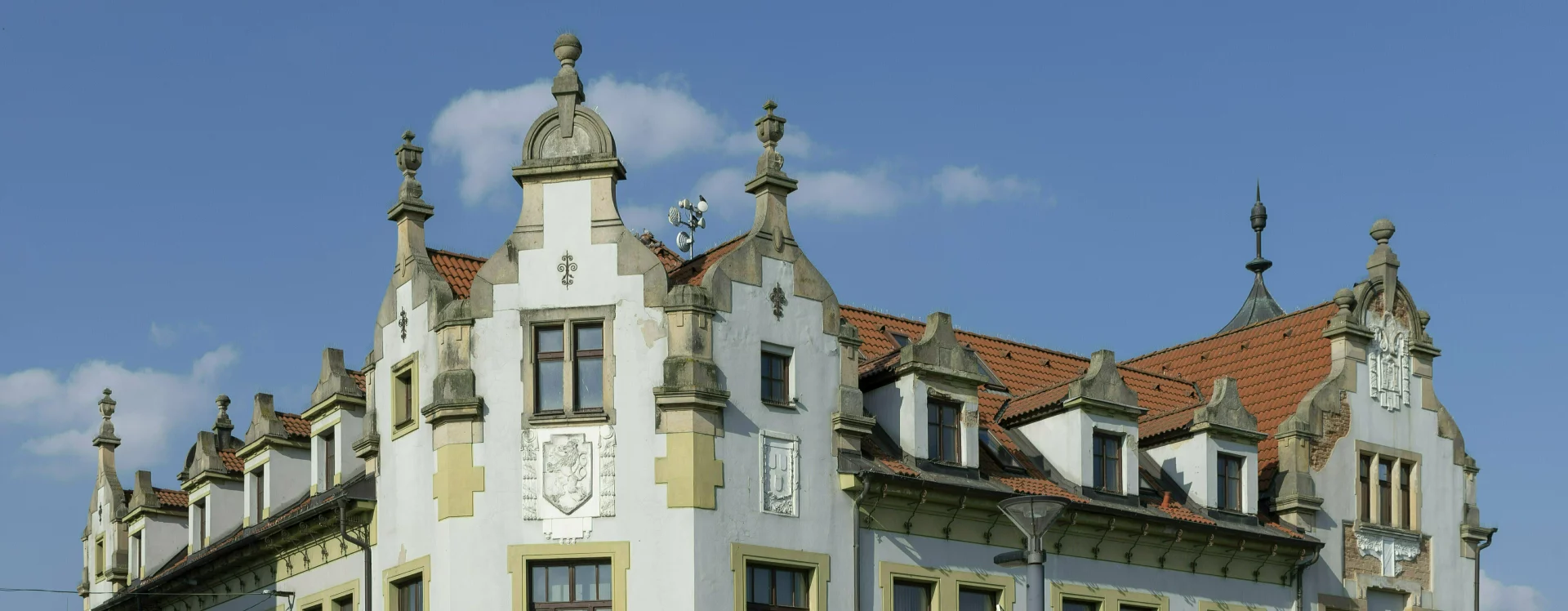
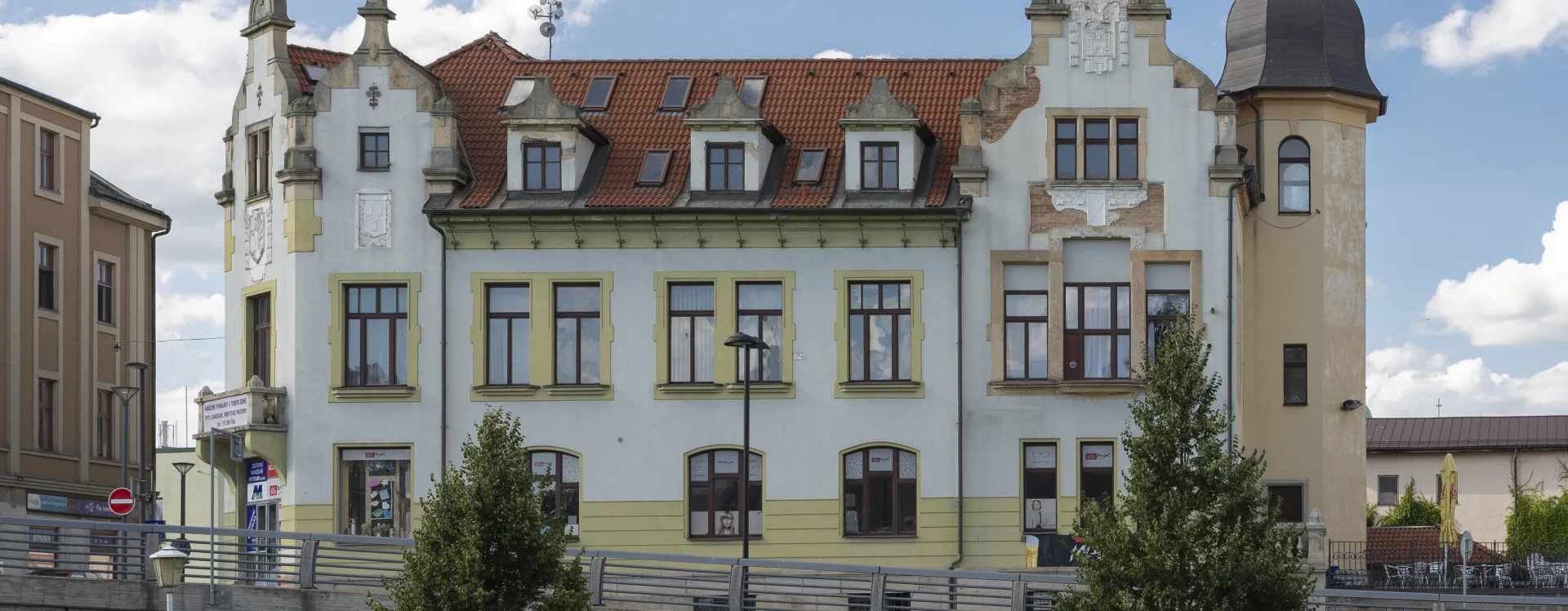
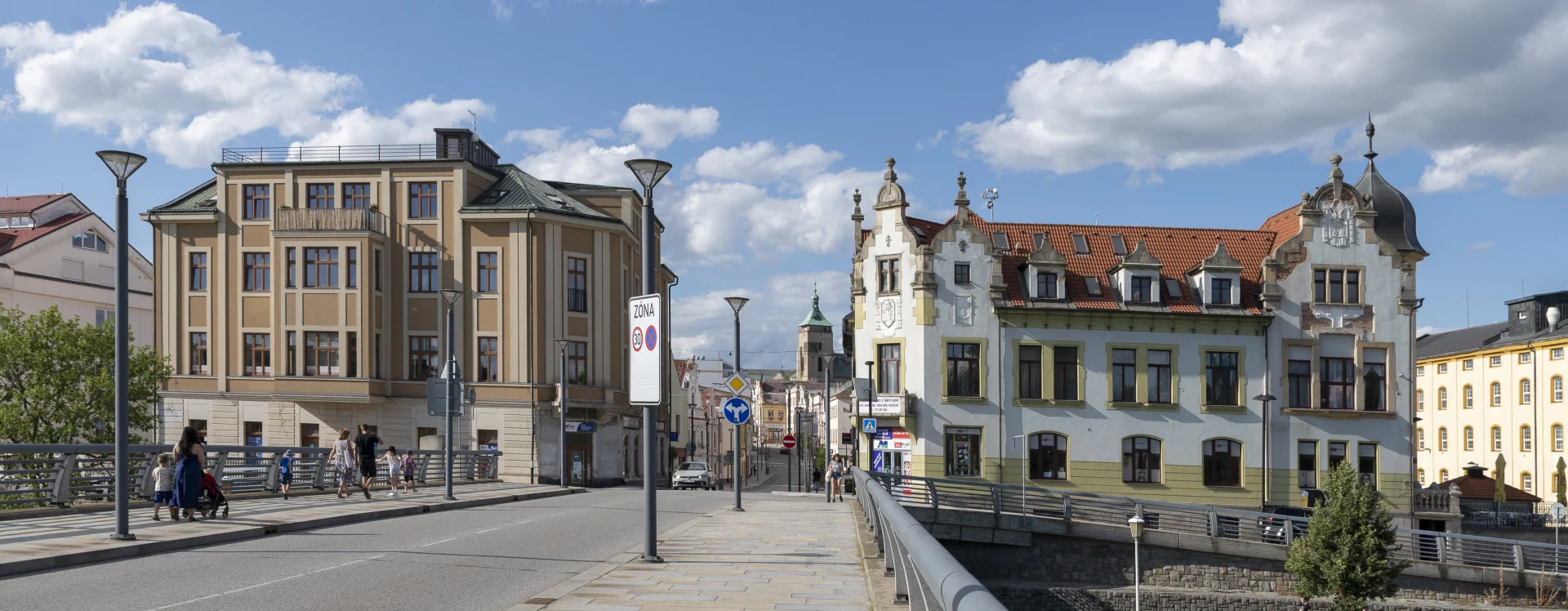
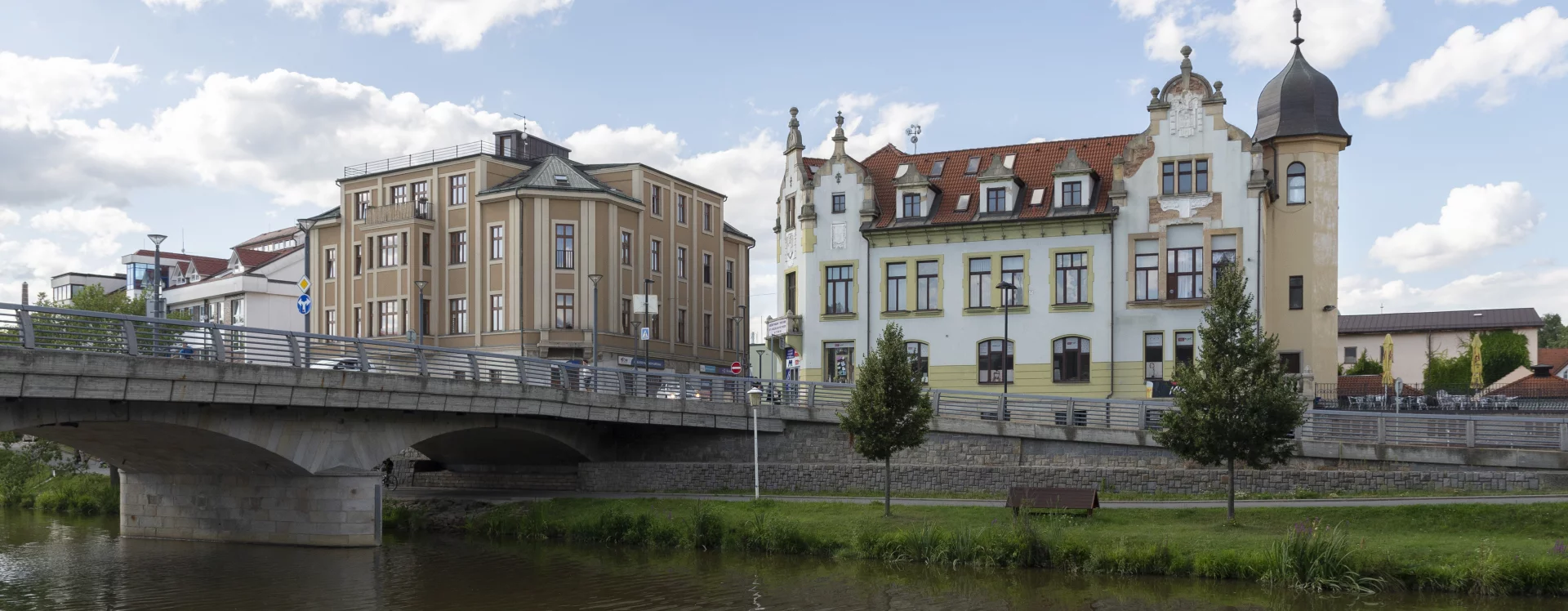
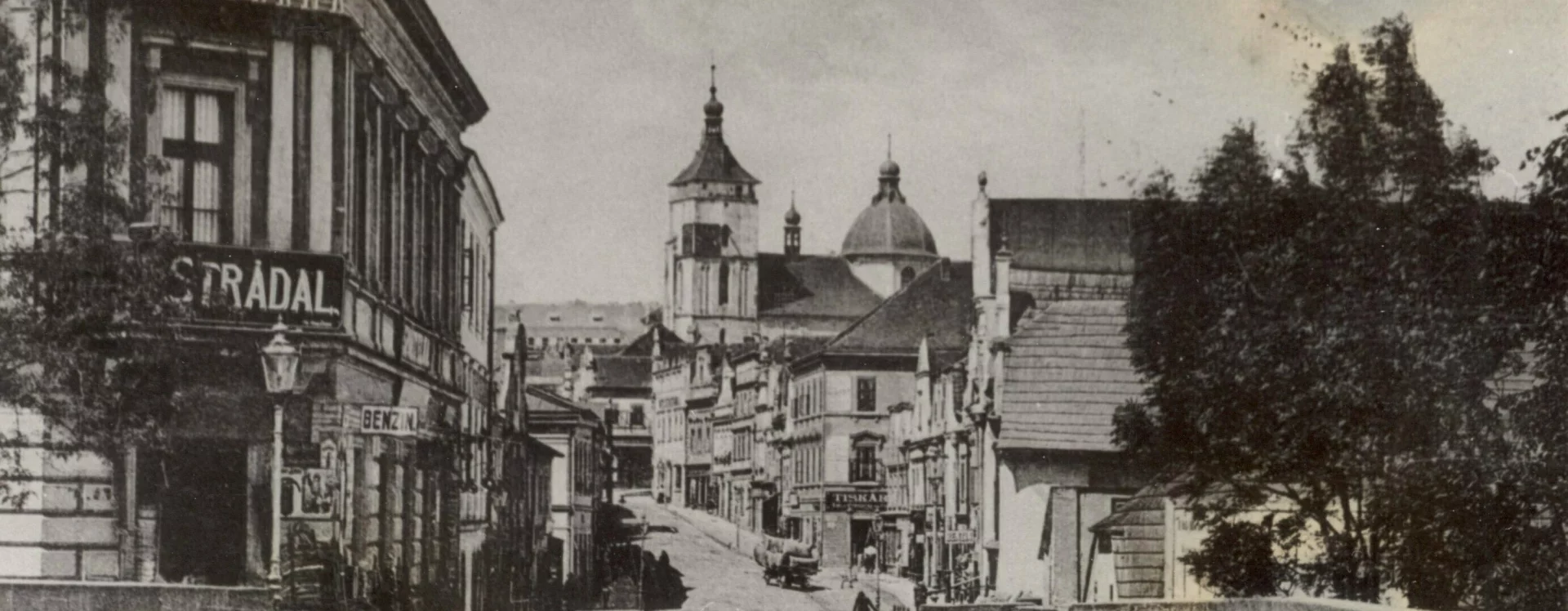
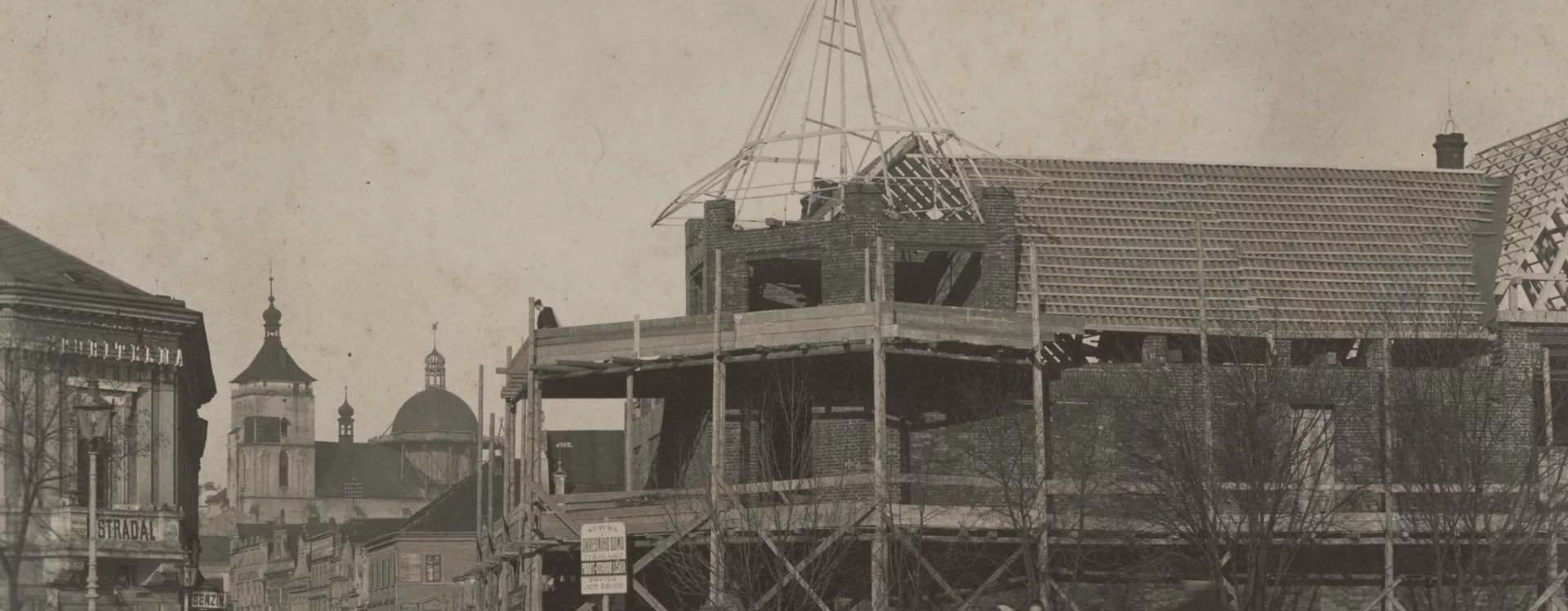
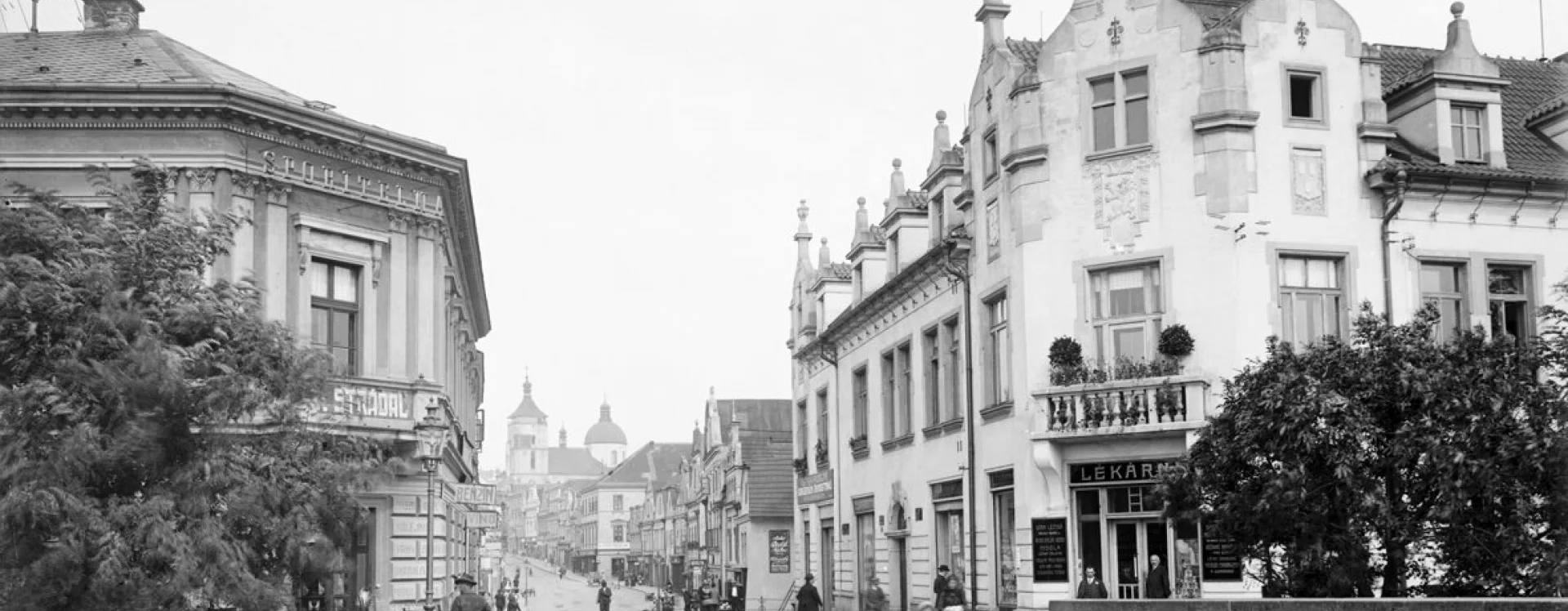
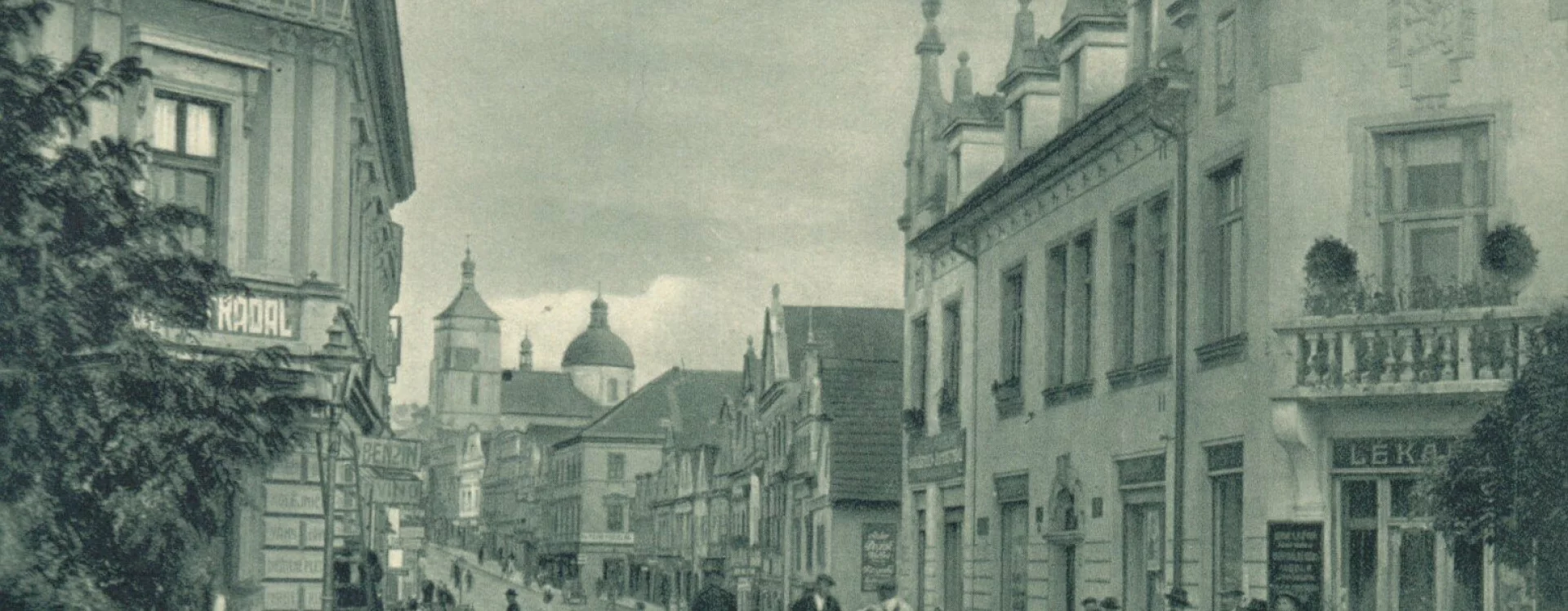
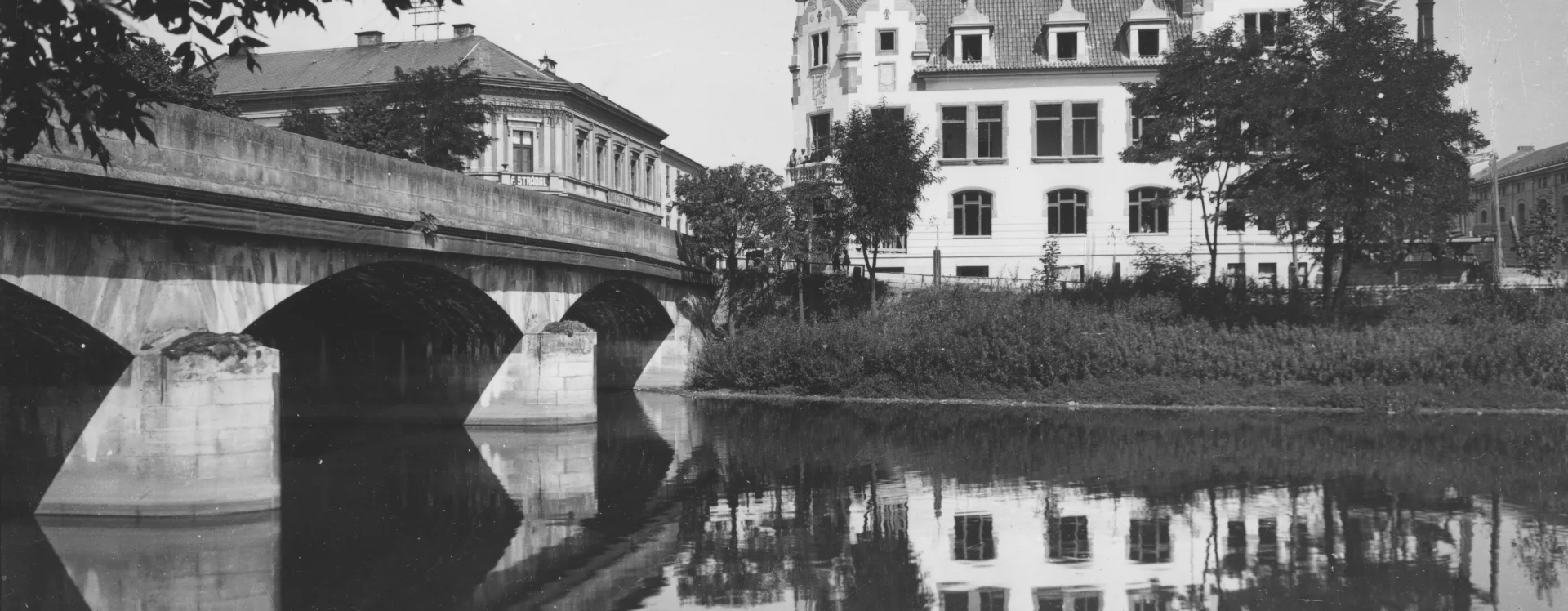
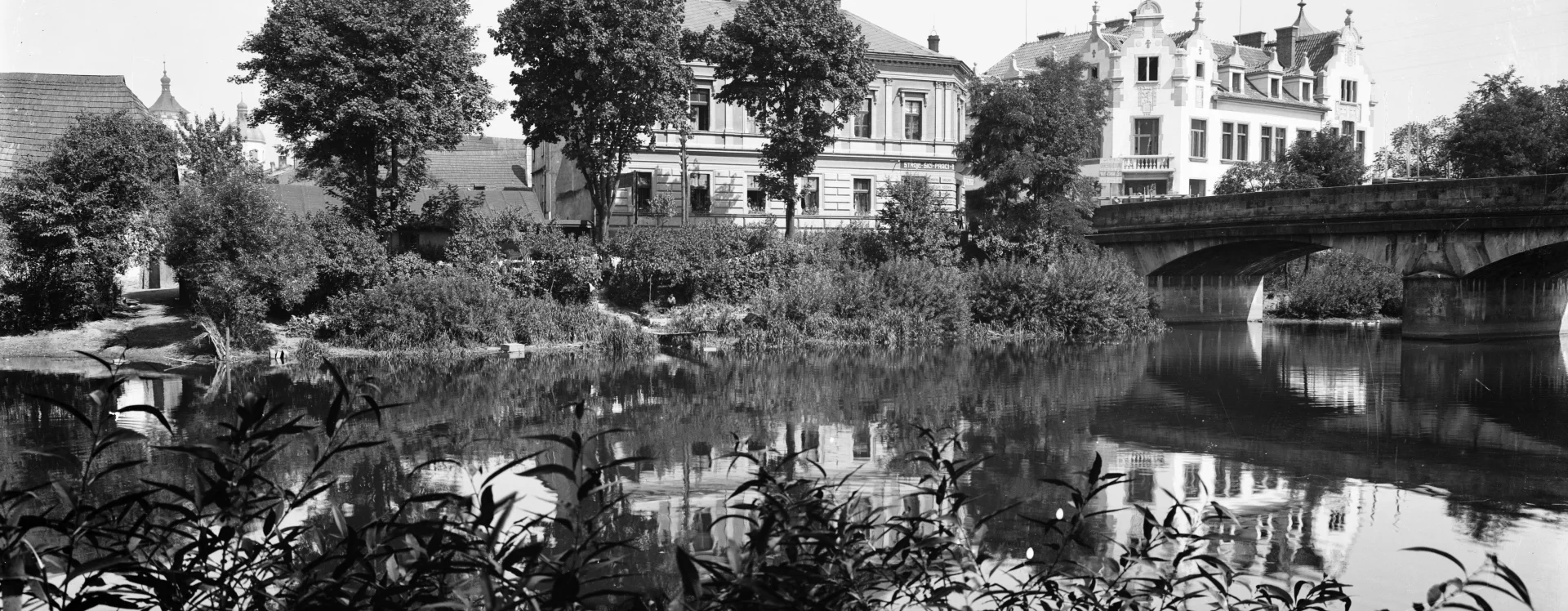
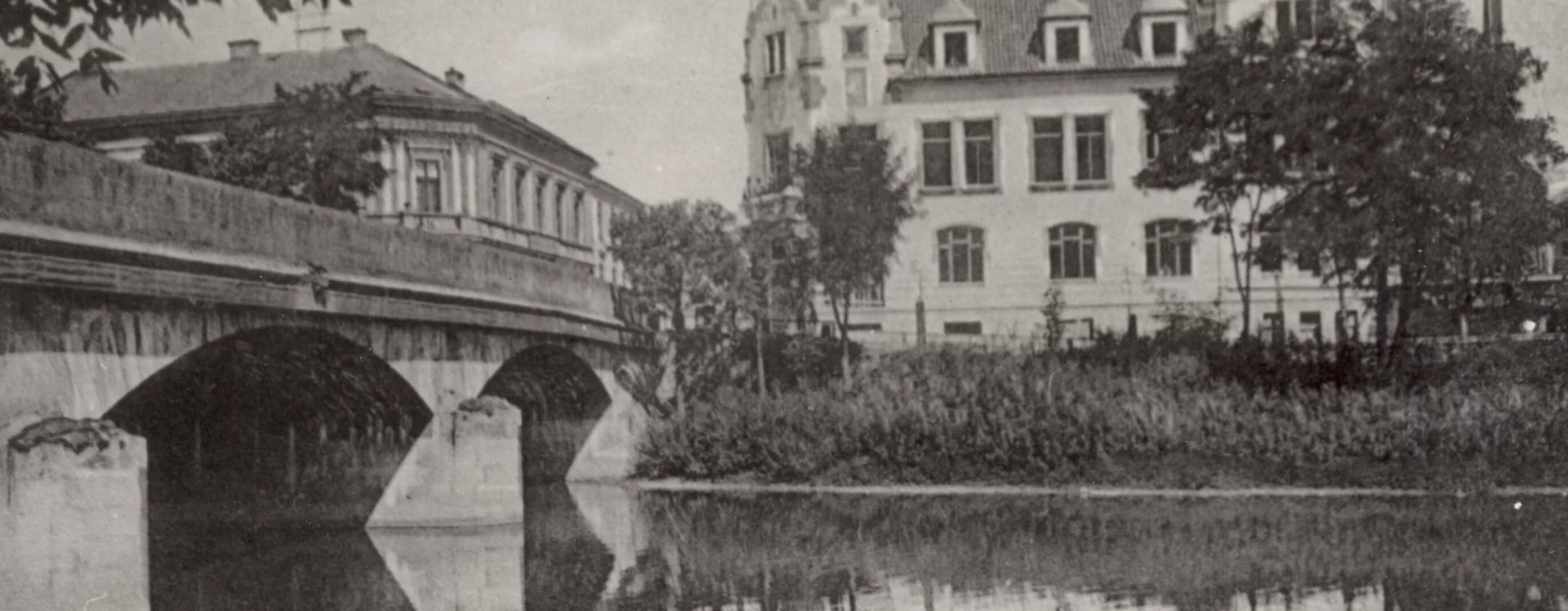
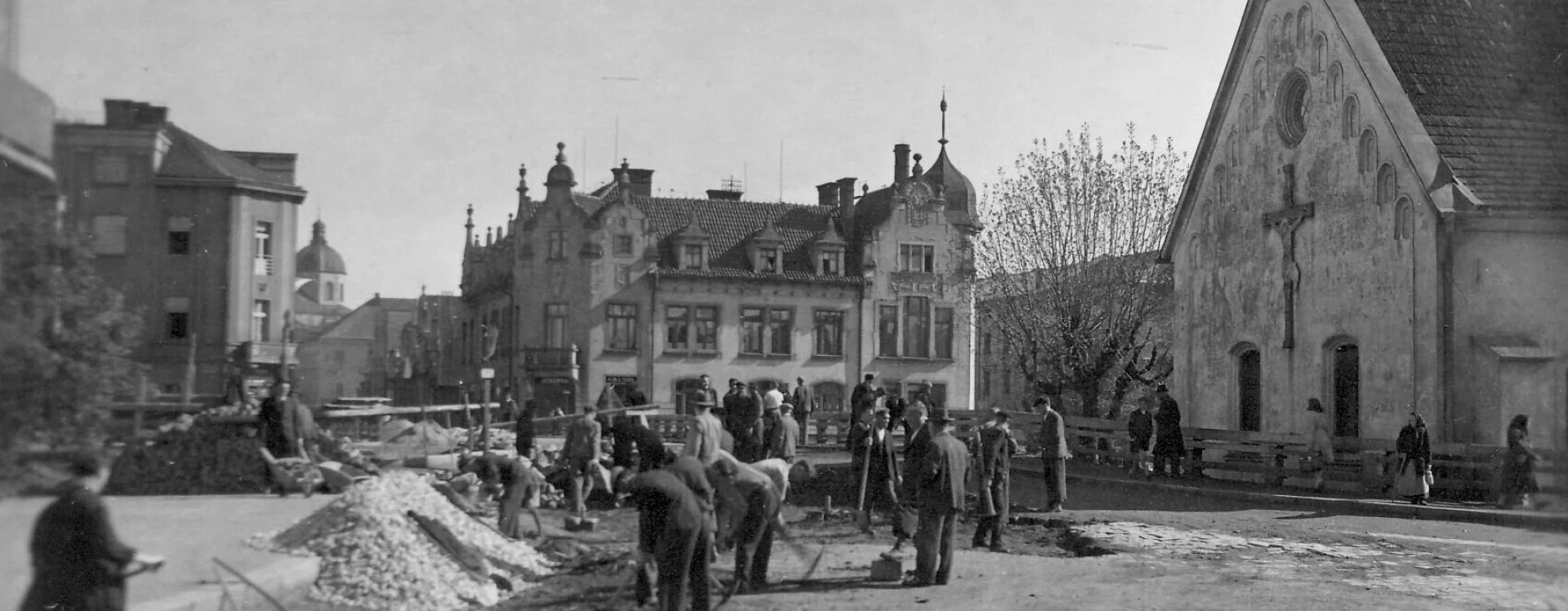
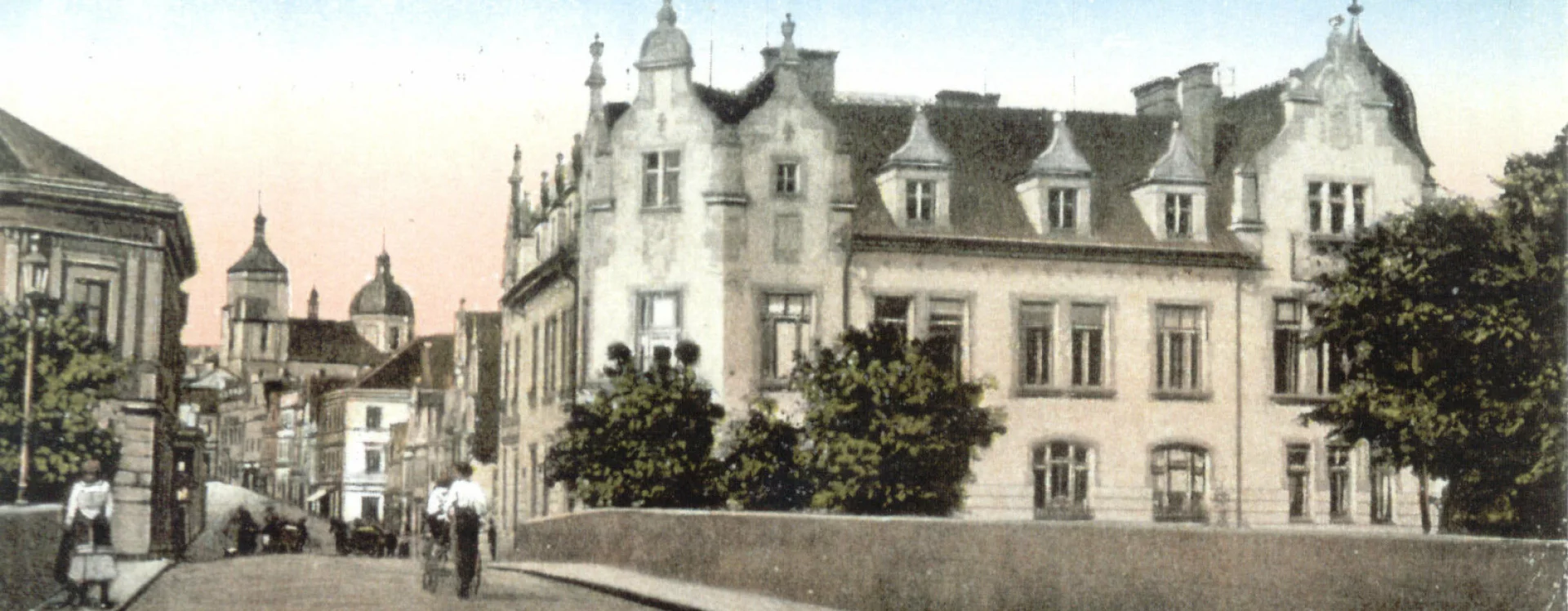
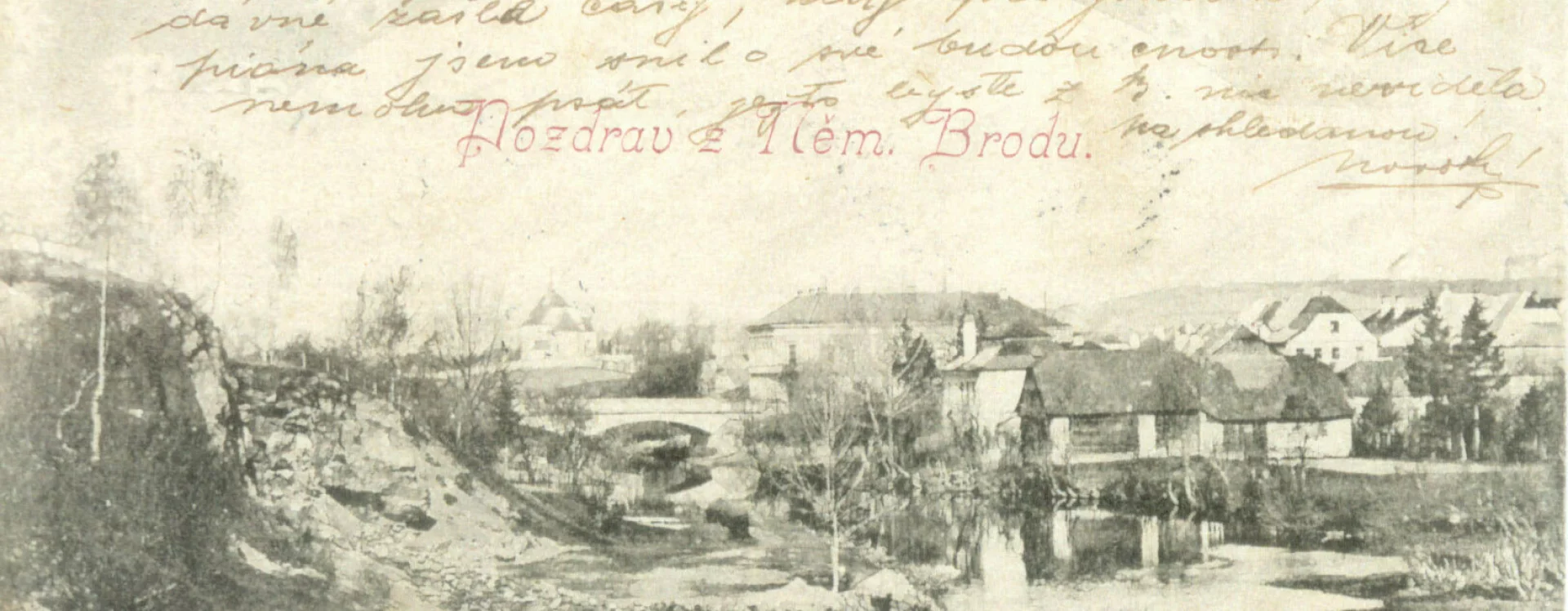
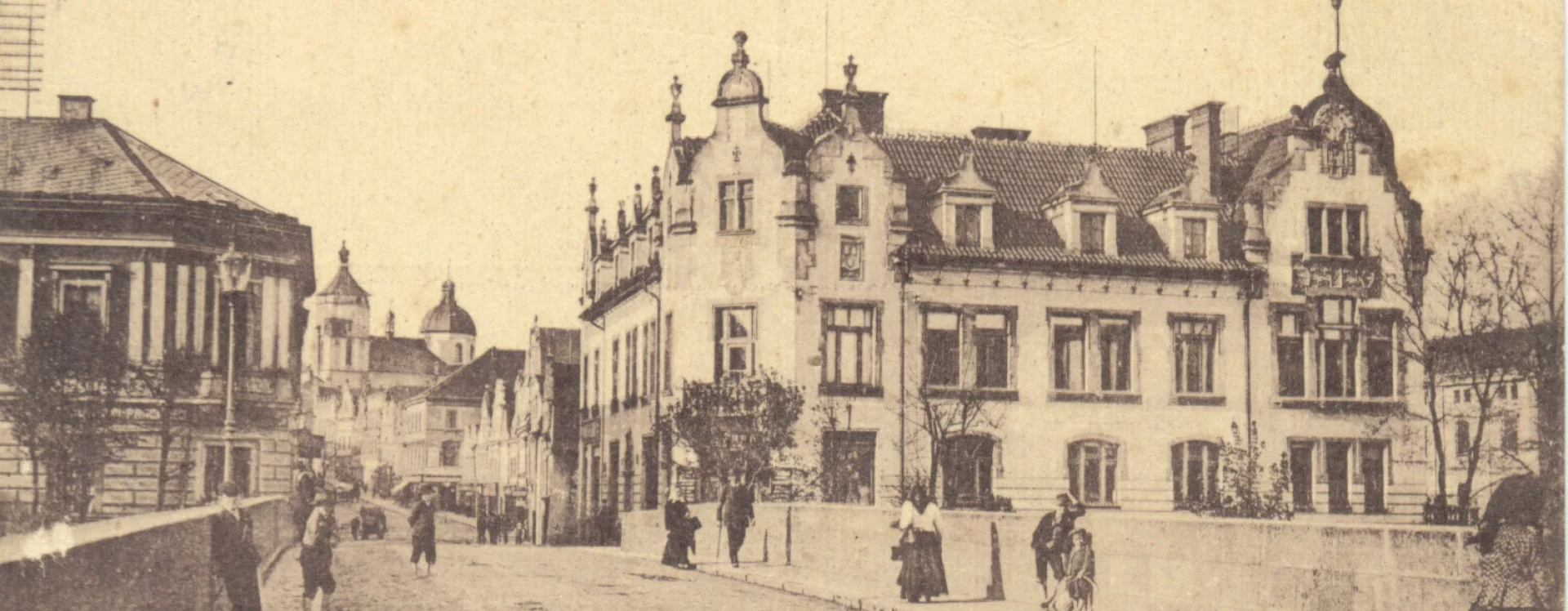
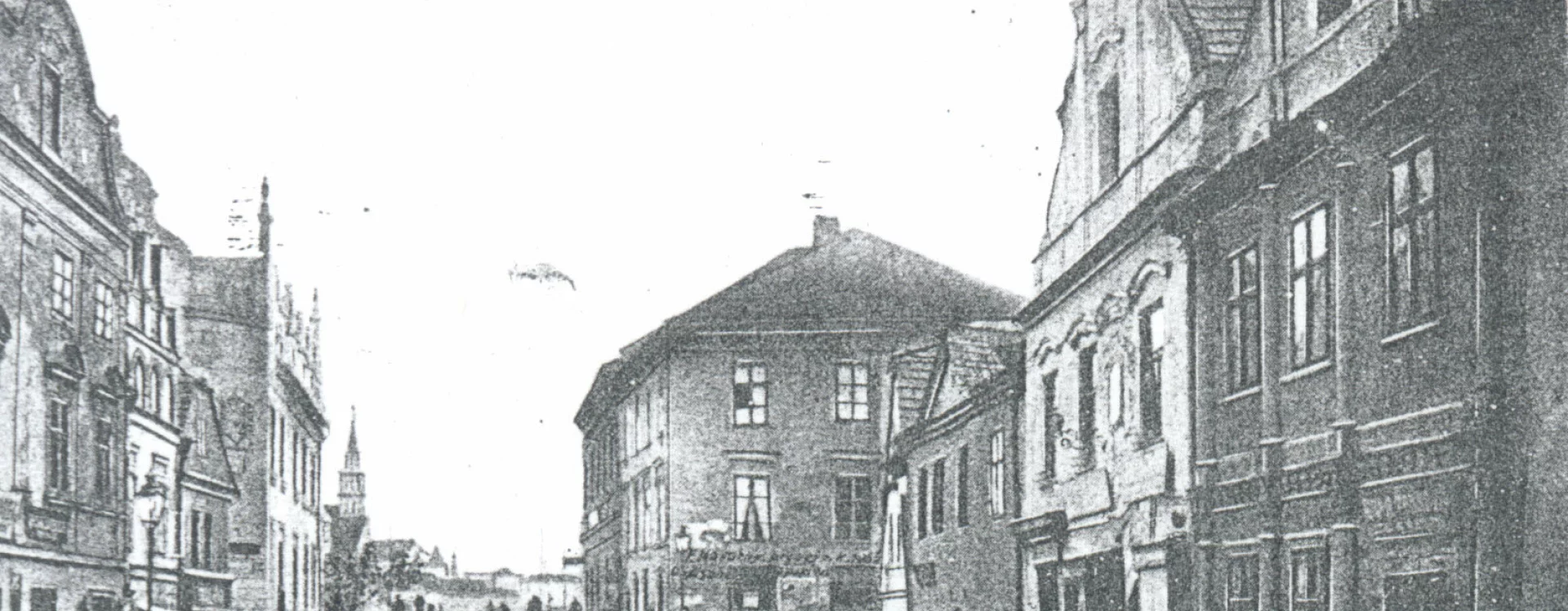
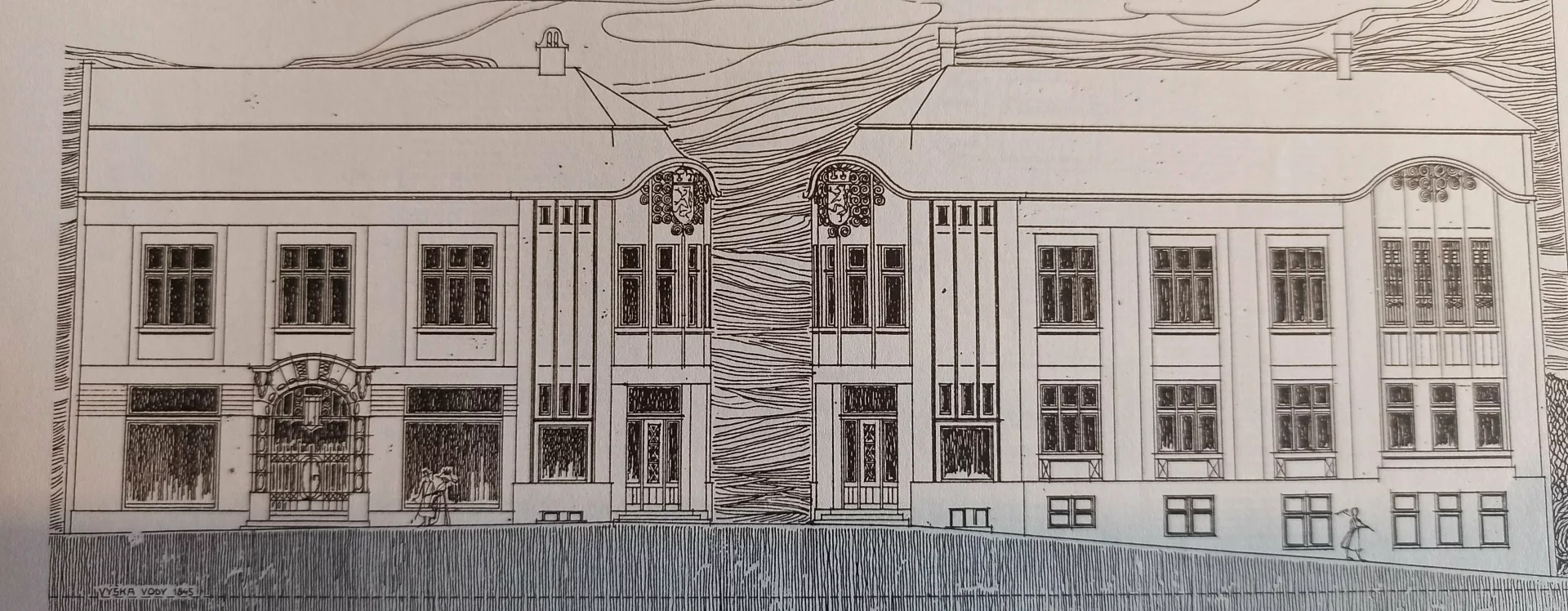
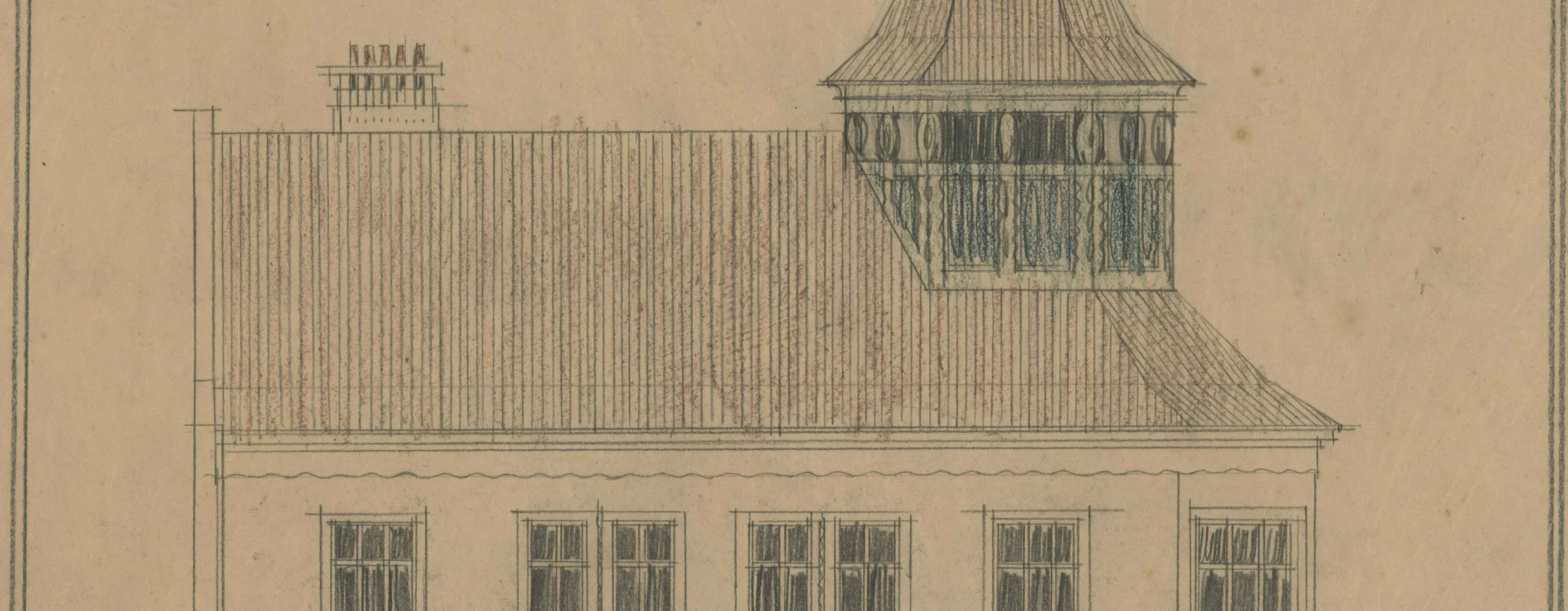
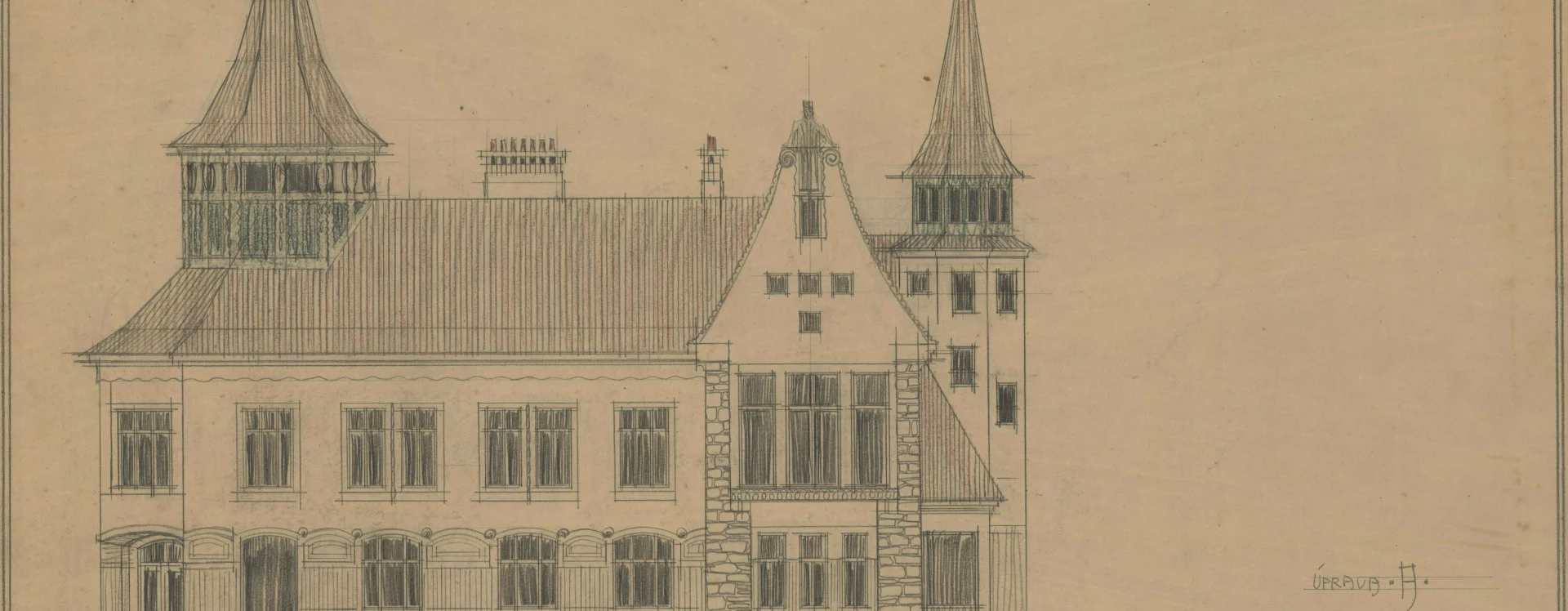
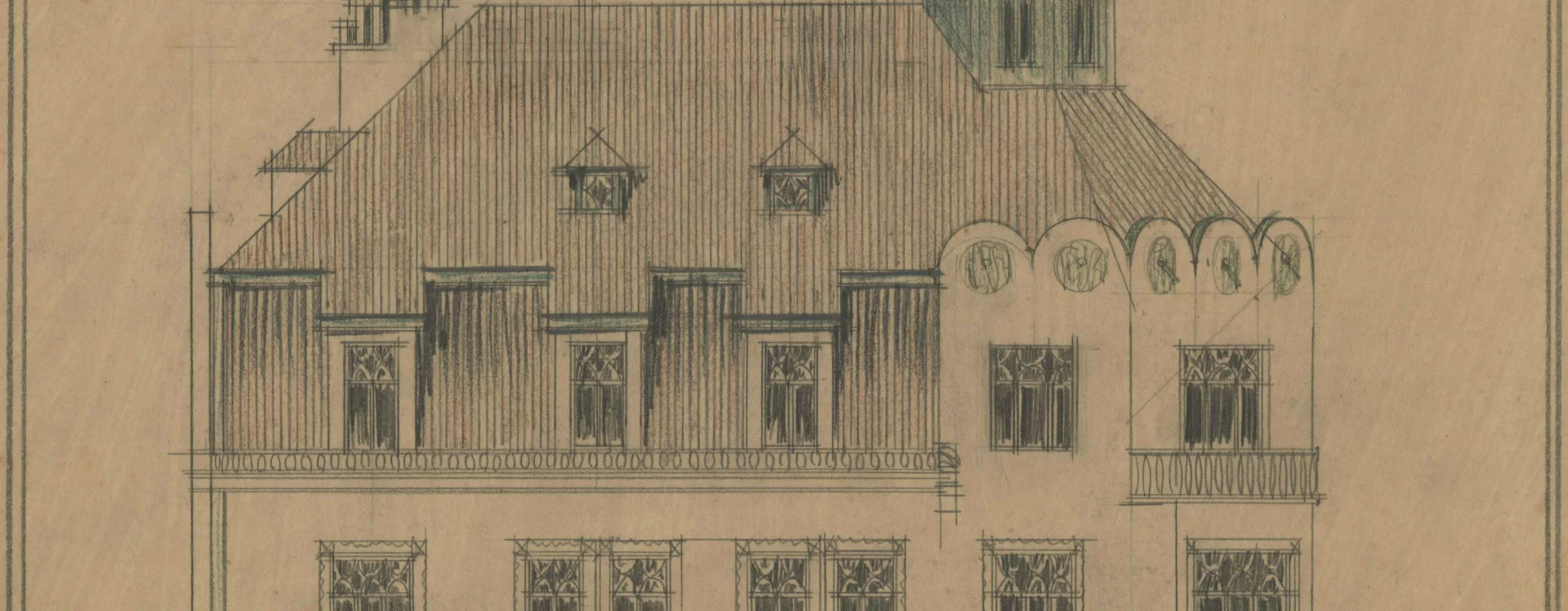
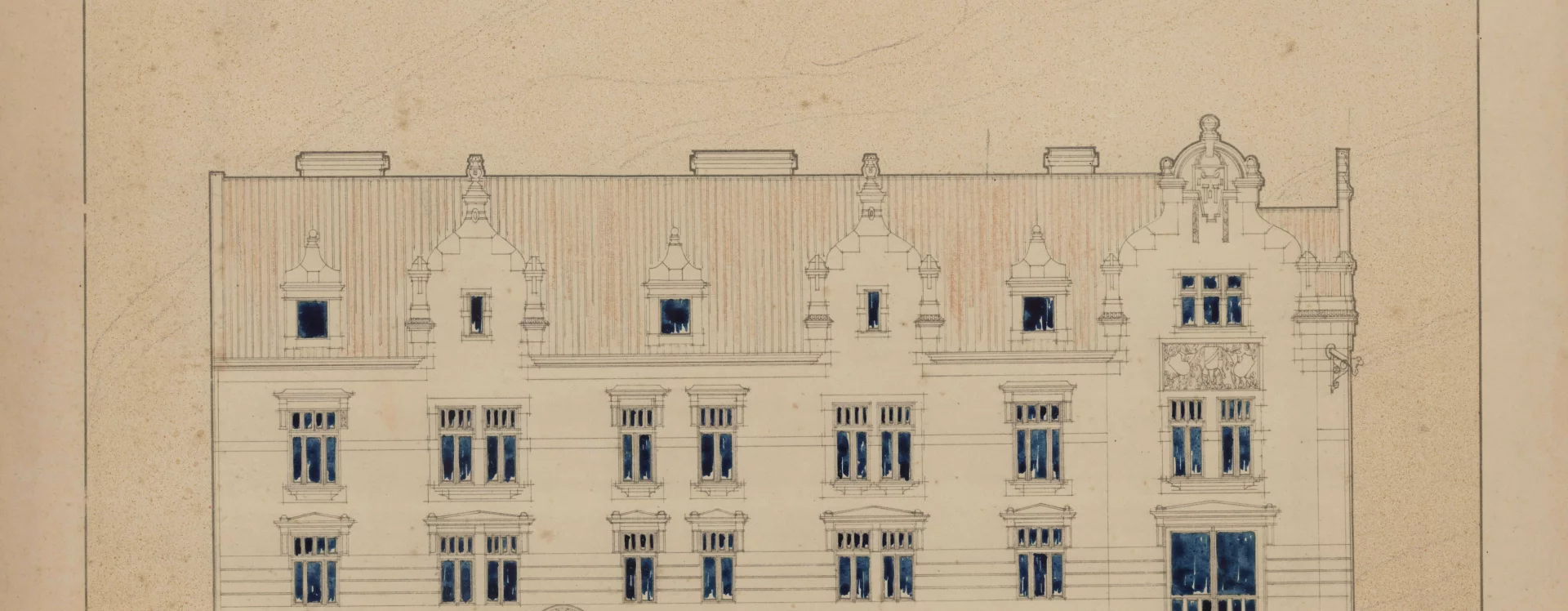
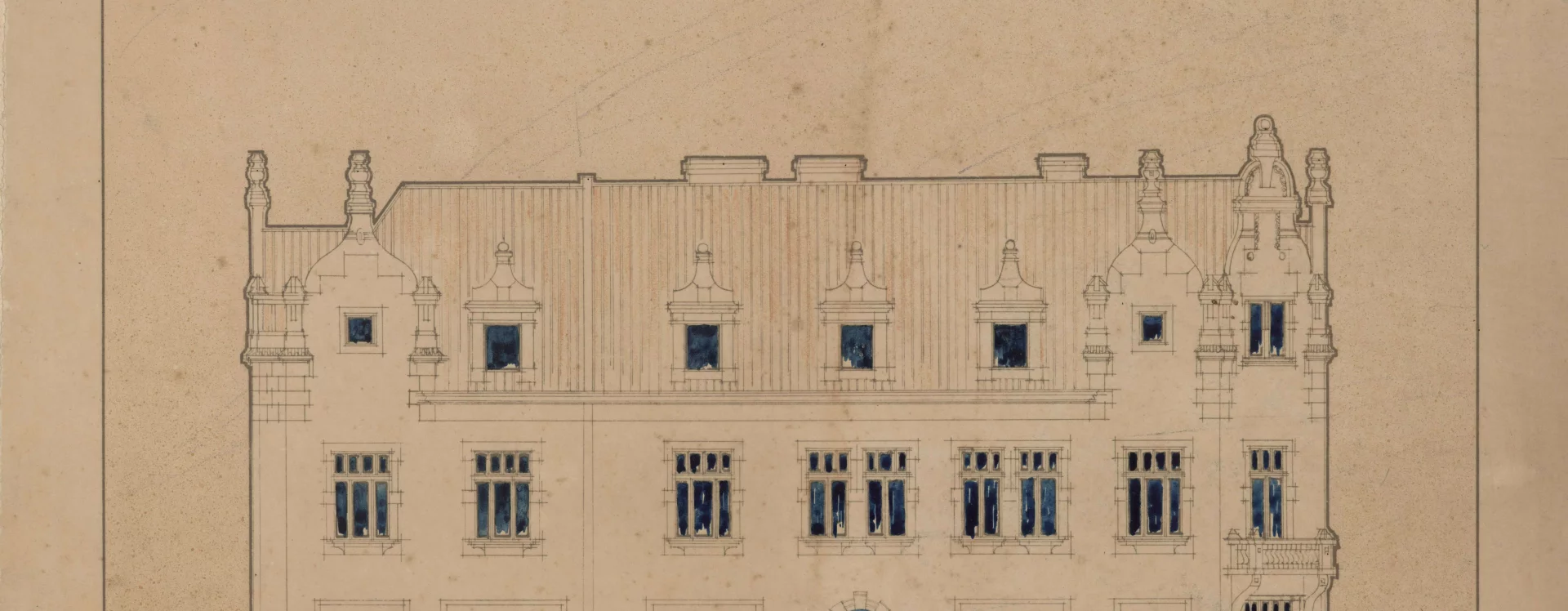
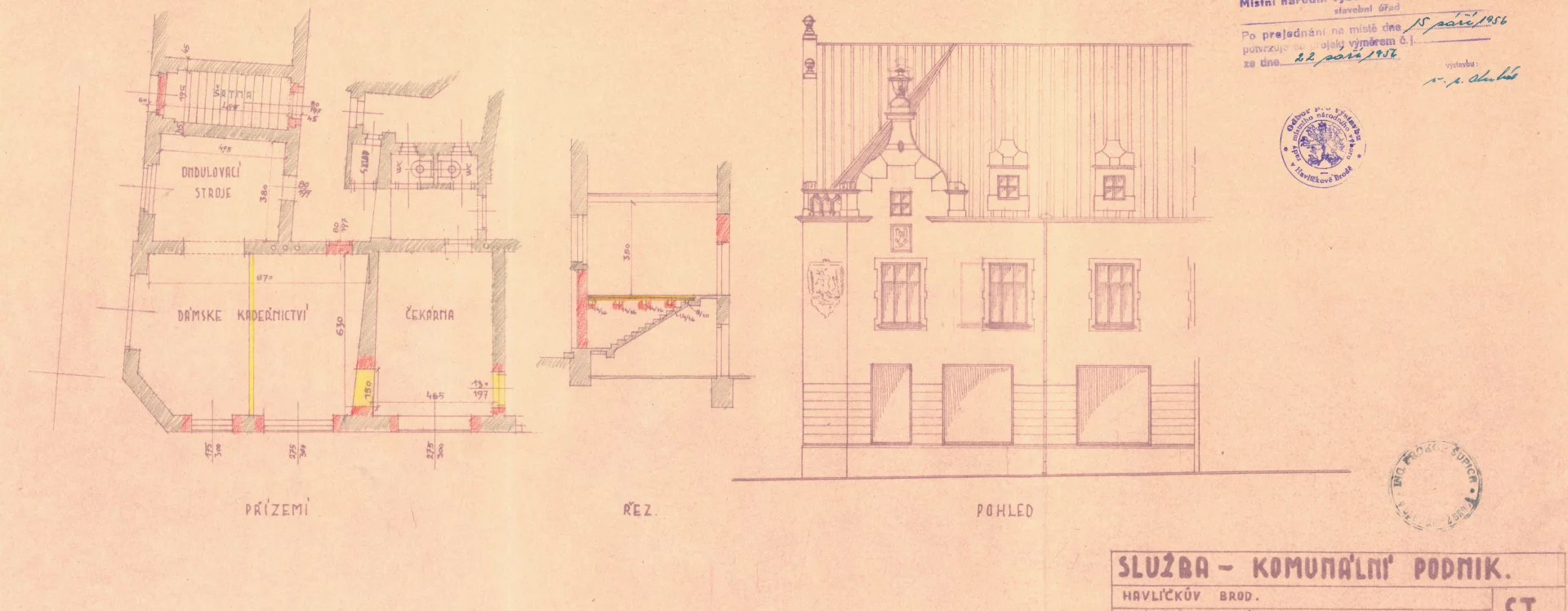
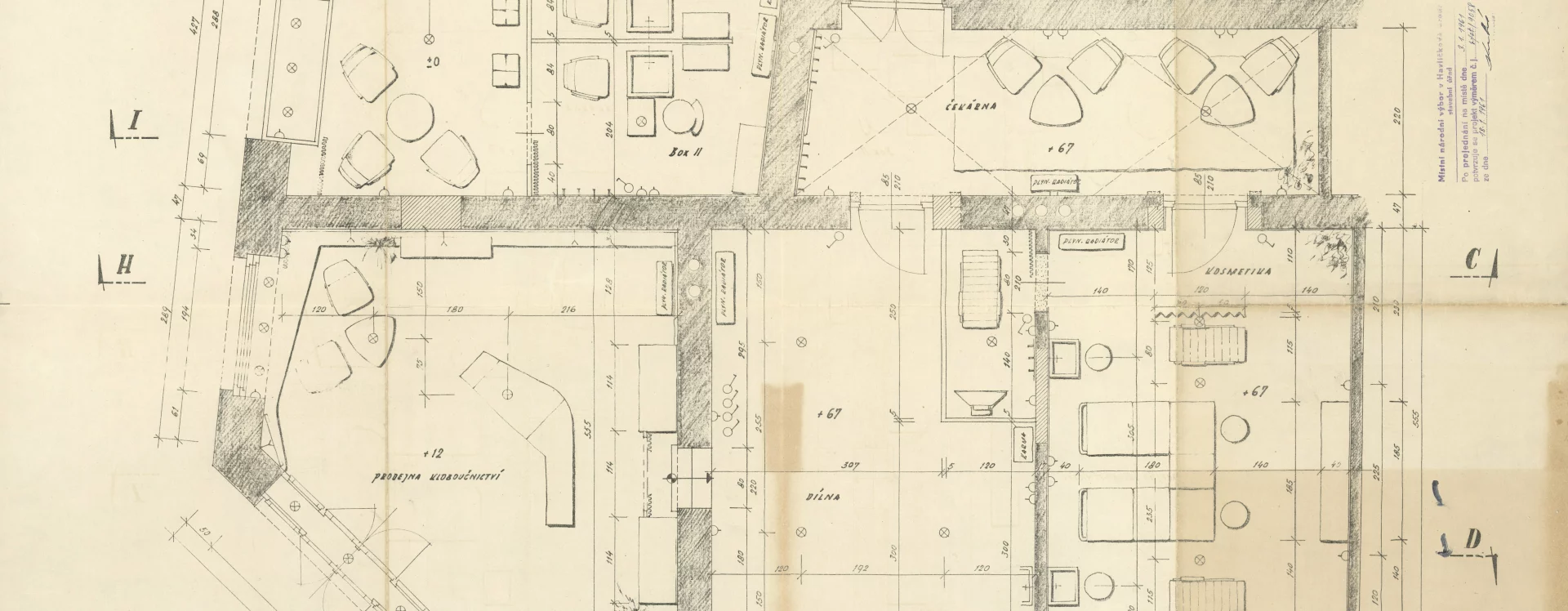
In 1850, Německý Brod was chosen as the seat of the district office. As a result, the town began constructing prestigious buildings for the newly established municipal and district institutions. The courthouse was located in the old town hall (HB-87), while the administrative building of the district governor’s office was constructed between 1908 and 1911 within the premises of the Augustinian monastery (HB-2003).
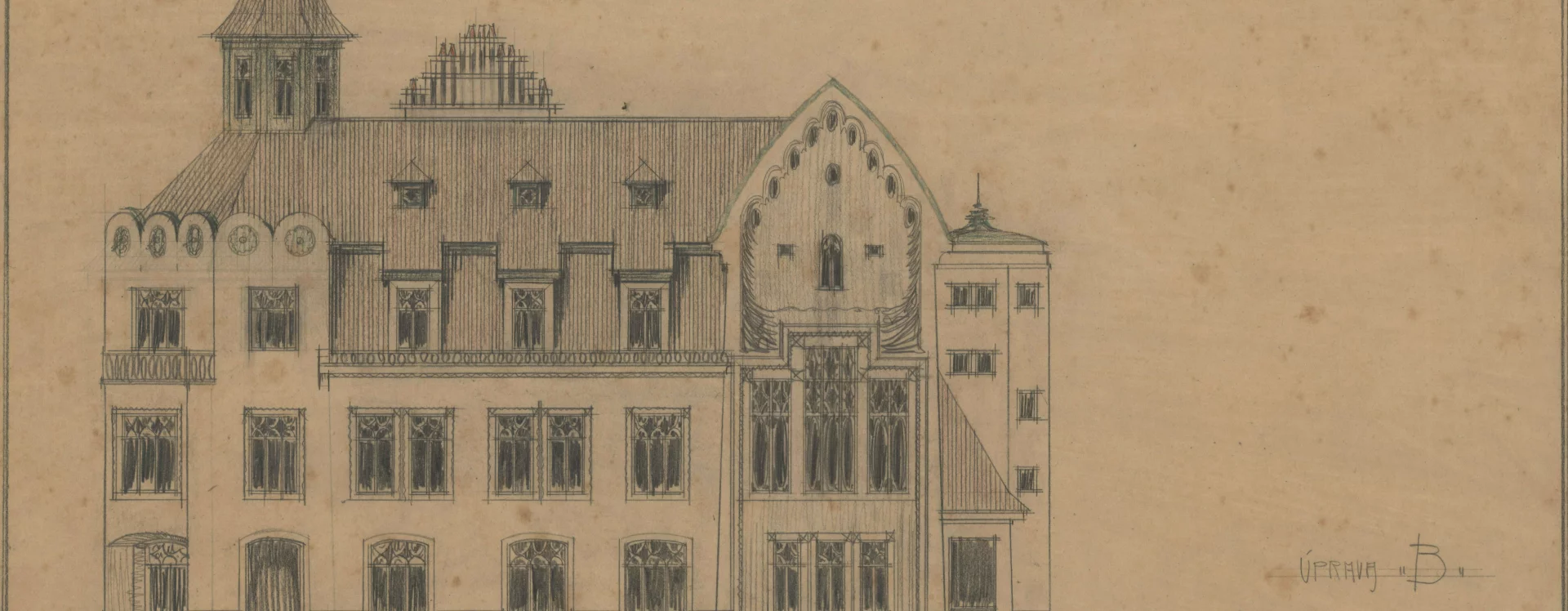
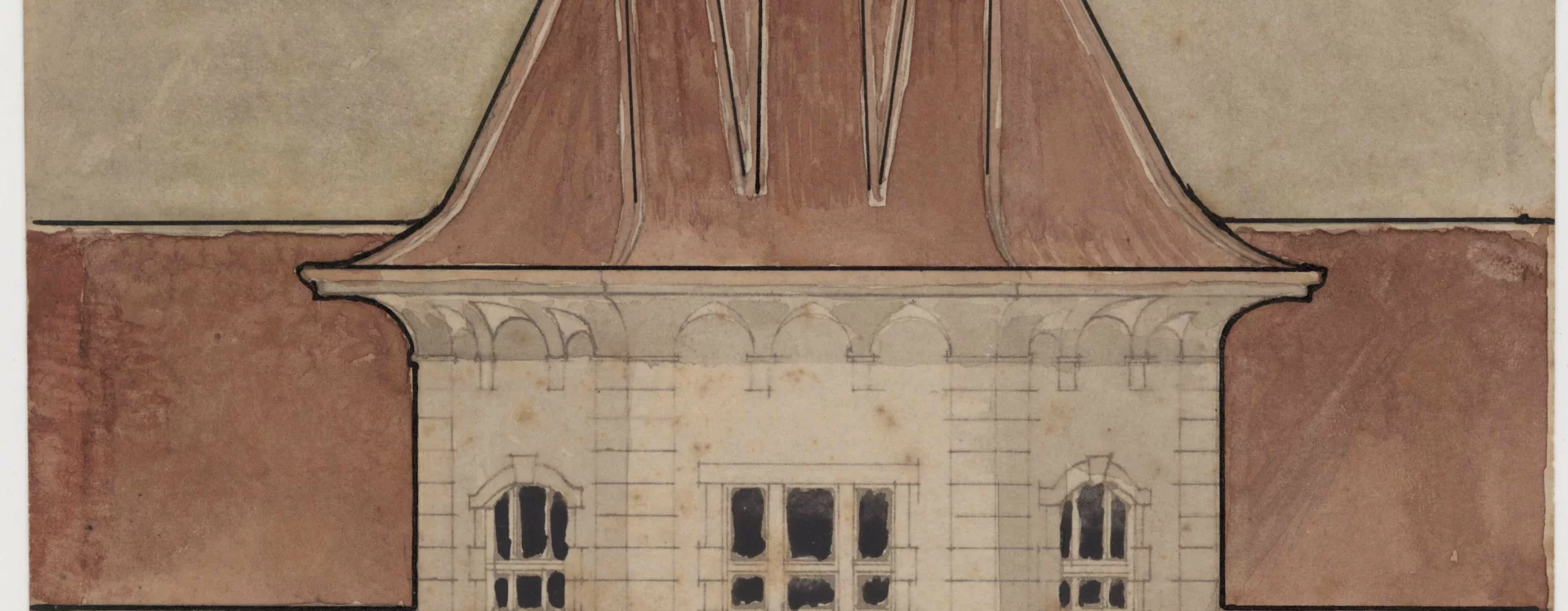
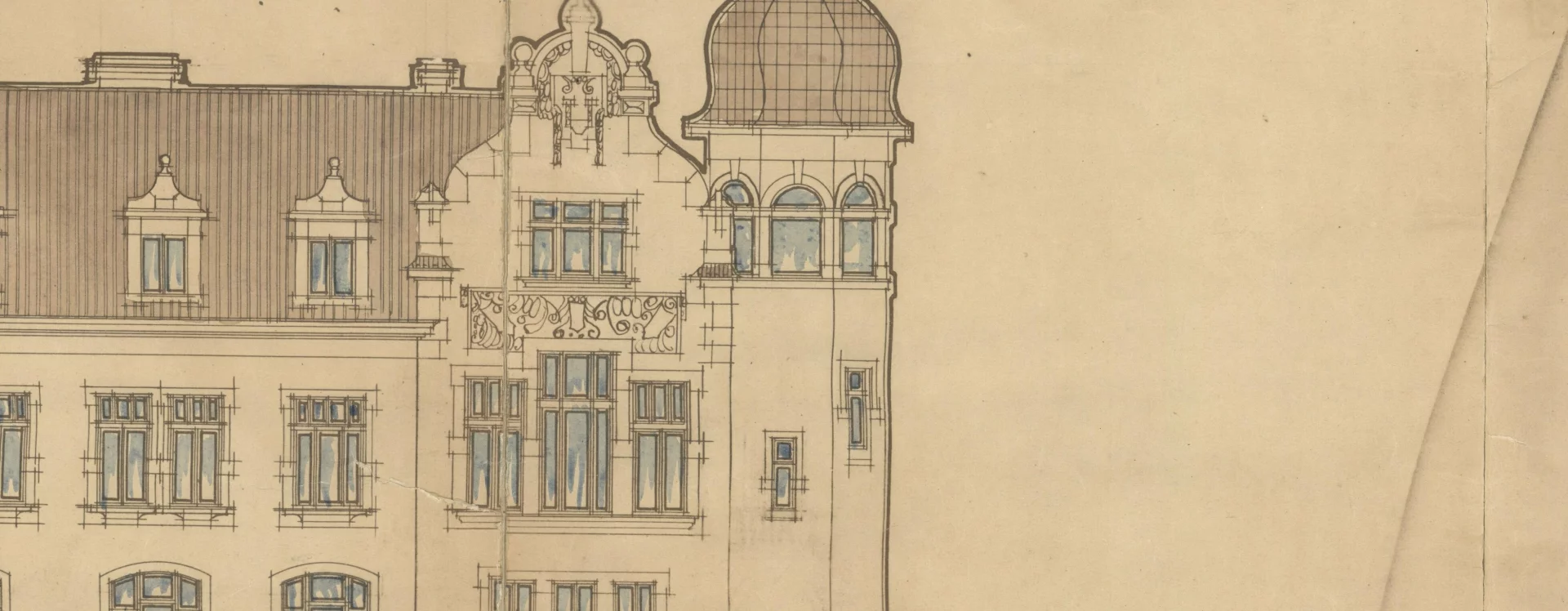
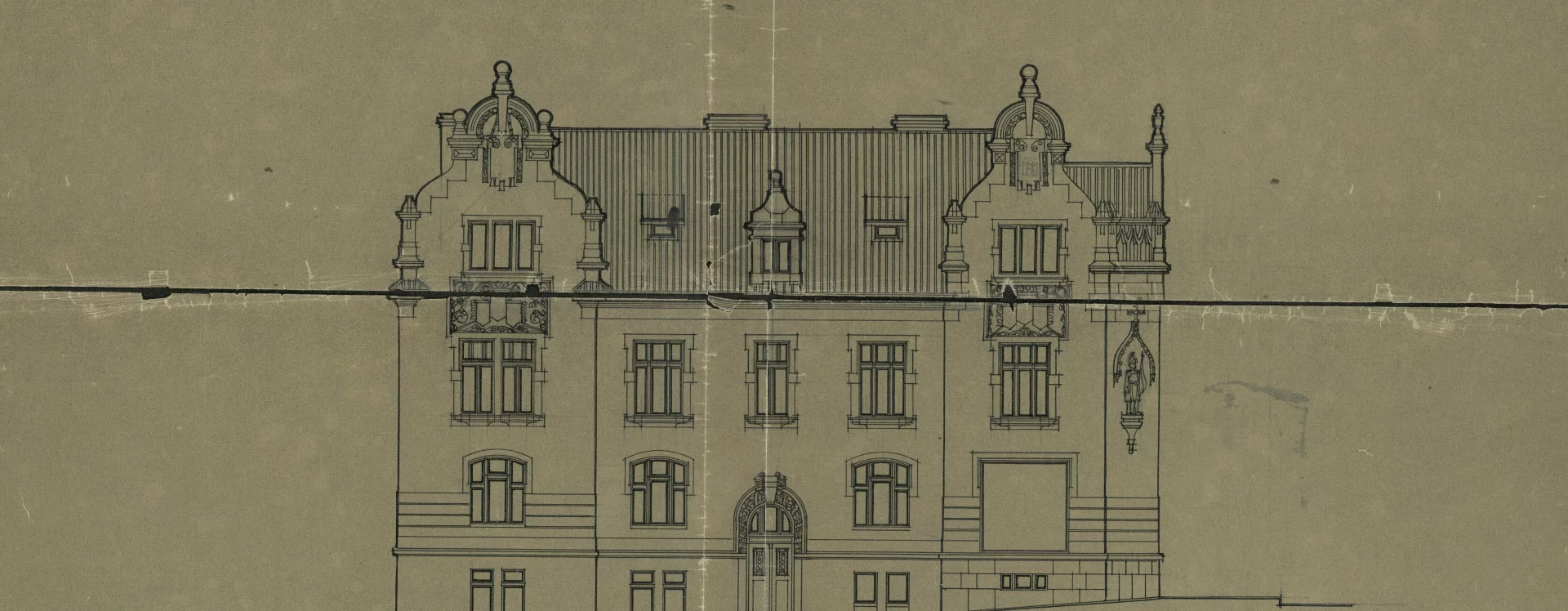
Construction of the District Office, whose primary purpose was to provide an appropriate setting for the district authorities, began in 1910. Its design resulted from an architectural competition, but the identity of the designer of the winning proposal cannot be stated with certainty.
Construction was begun by the Liška firm on 8 August 1910, but—as reported in the local newspaper Hlasy z Posázaví on 12 April 1911—some aspects of the building’s design still had not been resolved during the process. This concerned, for example, the design of the front tower, which “had already required so much deliberation that architect Dušan Jurkovič was also asked to assist in finding a solution. According to this decision, the front turret …will be omitted altogether…”. The already partly built tower was indeed dismantled and the plans were subsequently revised.
On a gently sloping plot along the right bank of the River Sázava, close to what was then the town’s only stone bridge, a freestanding, imposing office building was constructed. Richly modelled and adorned with delicate decorative detail, due to its location it formed a kind of ‘gateway’ to the town.
The interior spaces were divided into a basement with storage rooms, cellars and accommodation (probably for the caretaker); a ground floor comprising areas for commercial use (three shops) and a spacious three-room flat overlooking the river; and an upper floor containing the administrative section, including the mayor’s office in the most prestigious corner room with a balcony, as well as premises intended for a savings bank.
On the day the building was approved (1911), planning permission for an extension on the northern side of the structure—with its own entrance and intended primarily for residential use—came into effect. For that reason, it was not advisable for the two sections to be interconnected. The building as we know it today was not completed until October 1912.
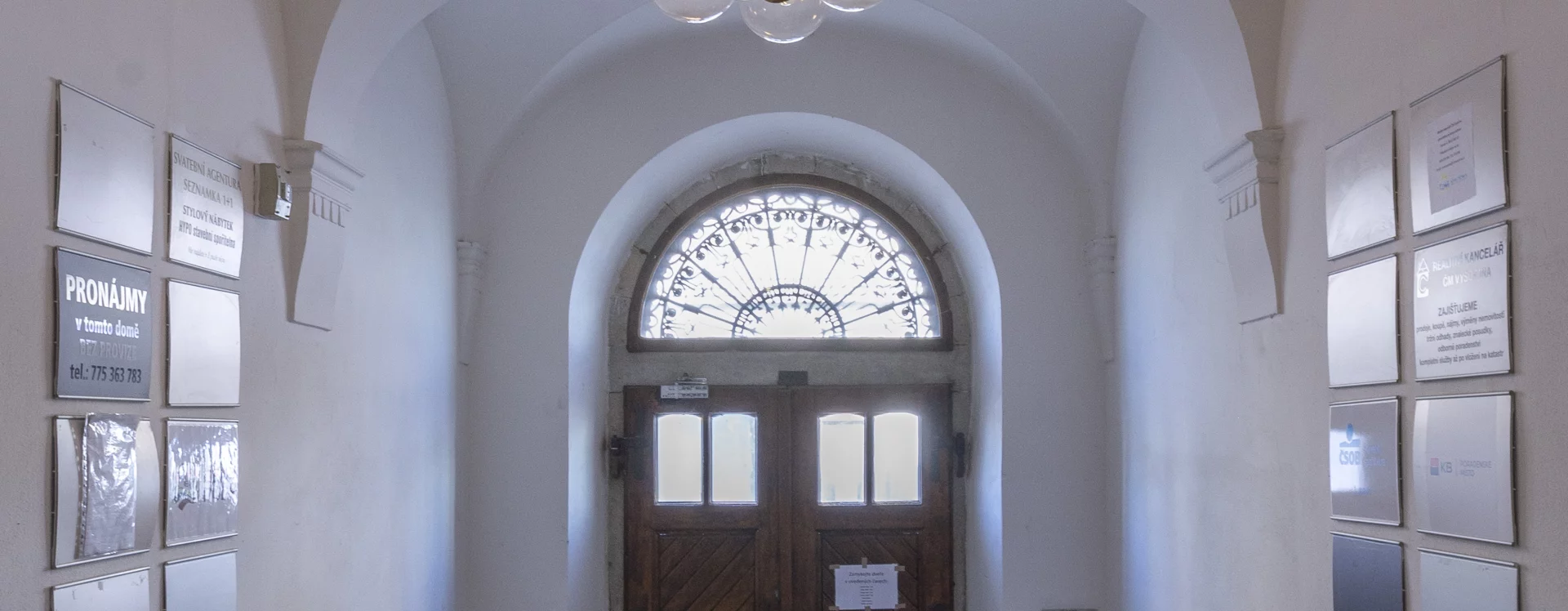
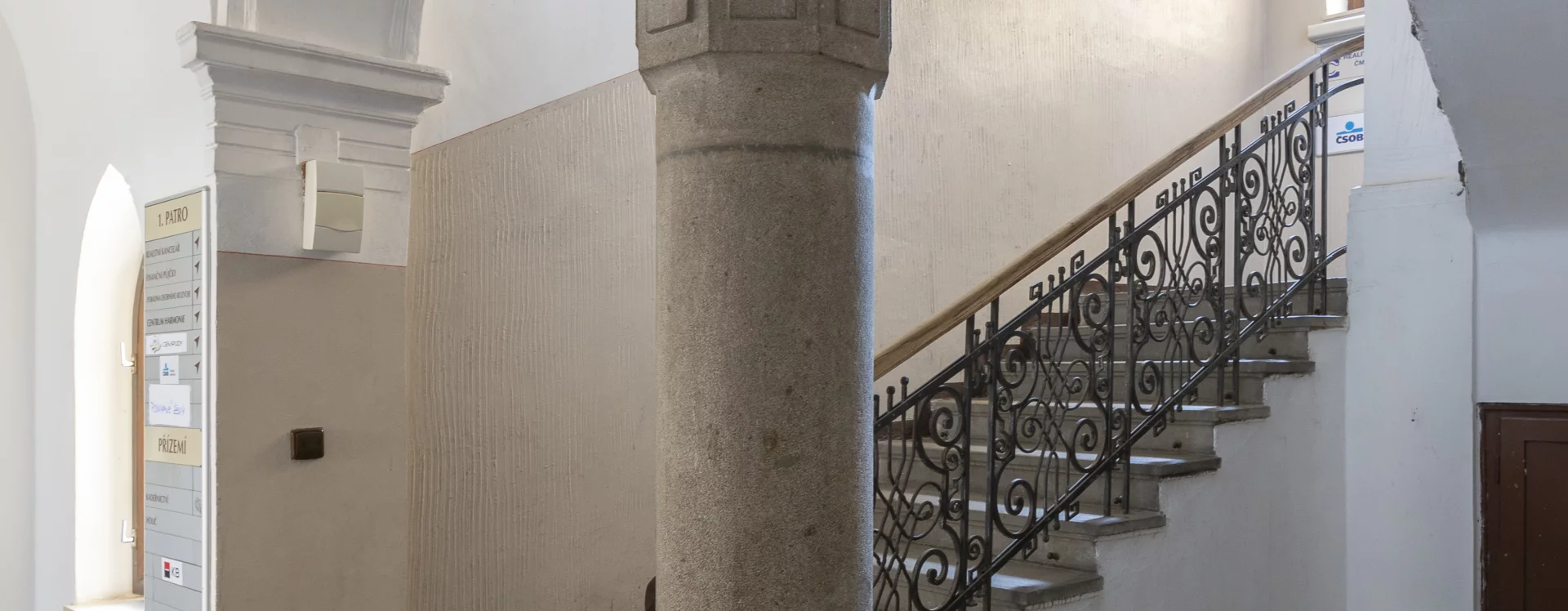
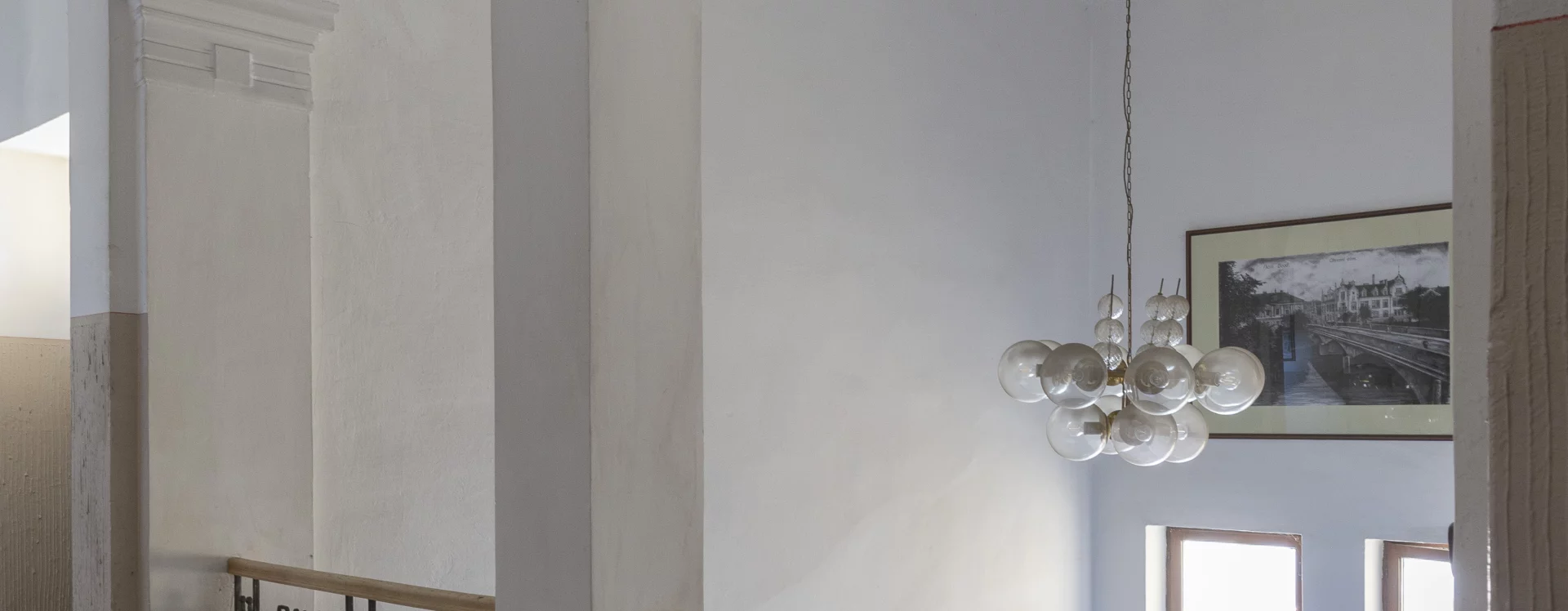
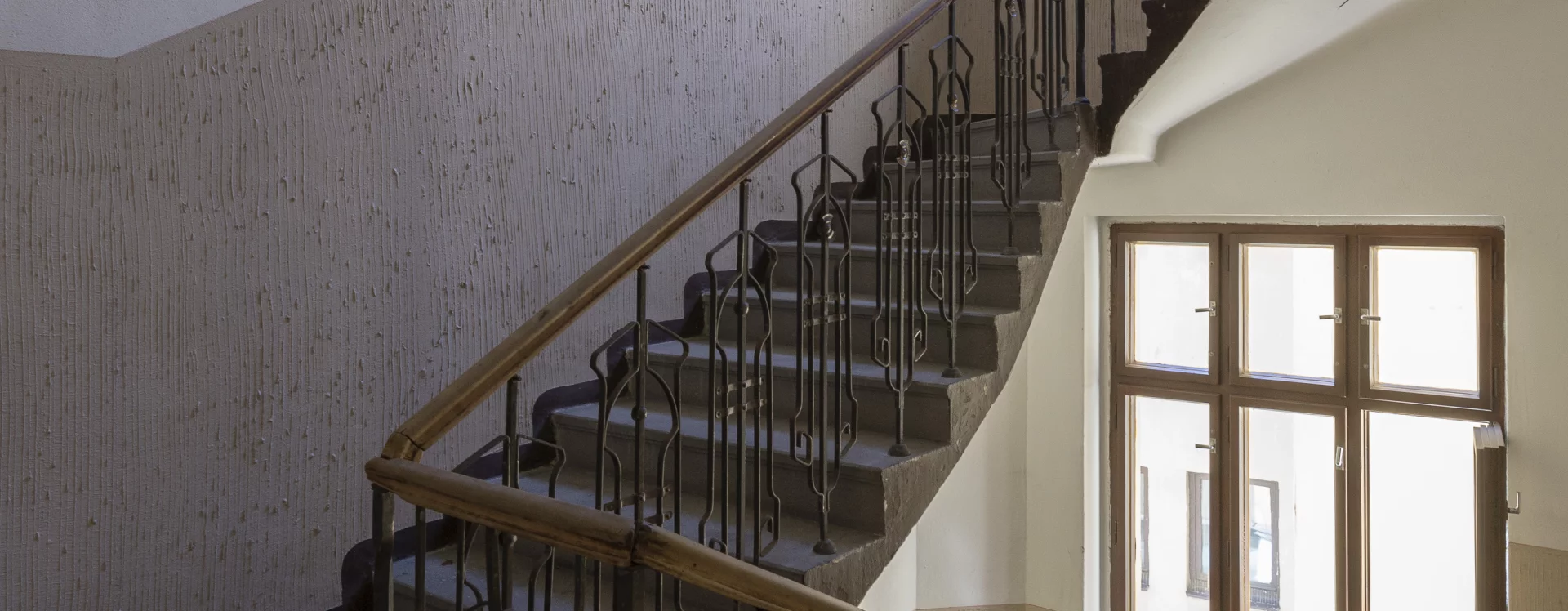
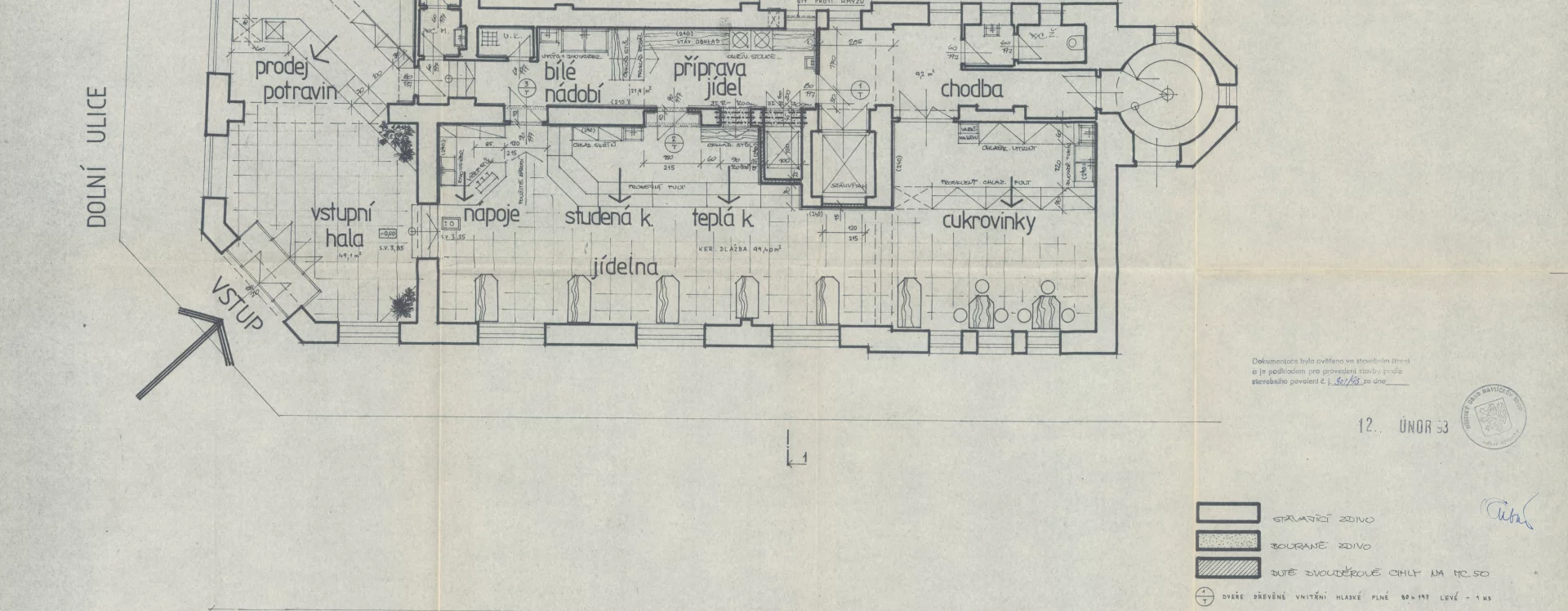
After the war, the layout of the building began to change in connection with its new uses. These changes culminated in the 1960s, when small businesses from various parts of the town gradually started moving into the property, which was managed by the municipal housing authority. Eventually, it became a commercial and service centre, and was completely renovated for this purpose at the very end of the socialist Czechoslovak era (final inspection 7 March 1989). People came here for everyday needs, from chimney sweeping and pest control to a haircut, beauty treatment, or a light snack. These functions have evolved continuously—and still do today—though regrettably without the elegance and refinement that was characteristic of its construction in the early 20th century, as the surviving fragments of its interior decoration, such as the staircase and mosaic flooring, quietly remind us.
Dana Schlaichertová, 2025
Literature
Hlasy z Posázaví. 1911. sv. 12. 4., p. 1.
Dana Schlaichertová. Architektura a urbanismus Havlíčkova Brodu 1848-1938. Olomouc, Katedra teorie a dějin umění FF UP, 1998, Diplomová práce. p. 35-37.
Dana Schlaichertová. Okresní dům. In: Aleš Veselý (ed.). Příběhy brodských domů. Havlíčkův Brod, Galerie výtvarného umění v Havlíčkově Brodě, 2016, p. 36-39. ISBN 978-80-904726-9-3.
Sources
Městský úřad Havlíčkův Brod, archiv Stavebního úřadu. sv. č. p. 227.
Státní okresní archiv Havlíčkův Brod, fond Sbírka map a plánů. p. X/39, X/43.