The origins of today’s Havlíčkův Brod hospital date back to the late 19th century, when the first hospital buildings began to be constructed with the title General Public District Hospital of Emperor and King Franz Joseph I in Německý Brod. As a result of systematic developments, a respected specialist medical centre emerged within a relatively short period, continuously evolving thanks to important contributions from its directors.
Surprisingly, even during the economic crisis, the hospital continued to expand due to the exceptional diligence of its director, Dr Pavel Trnka. Immediately after taking office in 1926, Trnka initiated the construction of an additional storey to the main surgical building (1927–1928). In 1928–1929, a new boiler house and technical room were built, followed shortly afterwards by a two-storey pavilion for infectious diseases, while the construction of a three-storey pavilion for surgical tuberculosis (HB-2623) began in 1931. Archival sources state that all the aforementioned buildings were equipped to a world-class standard.
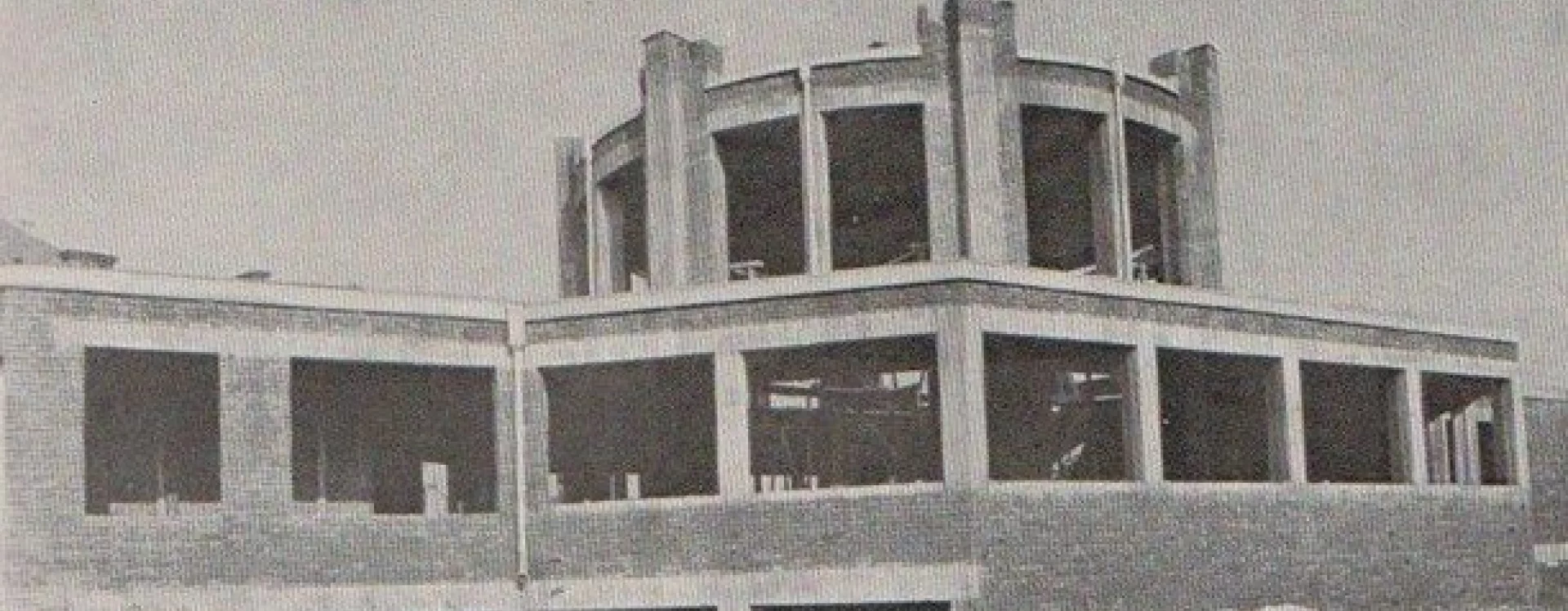
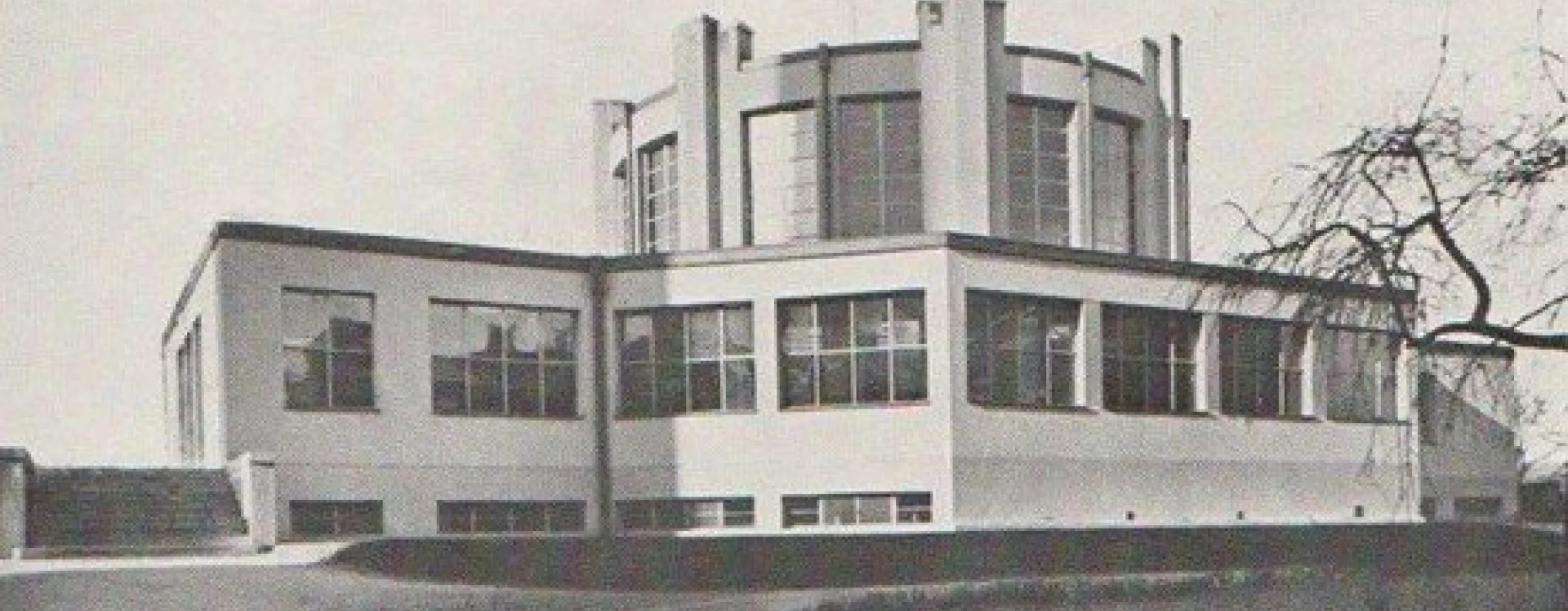
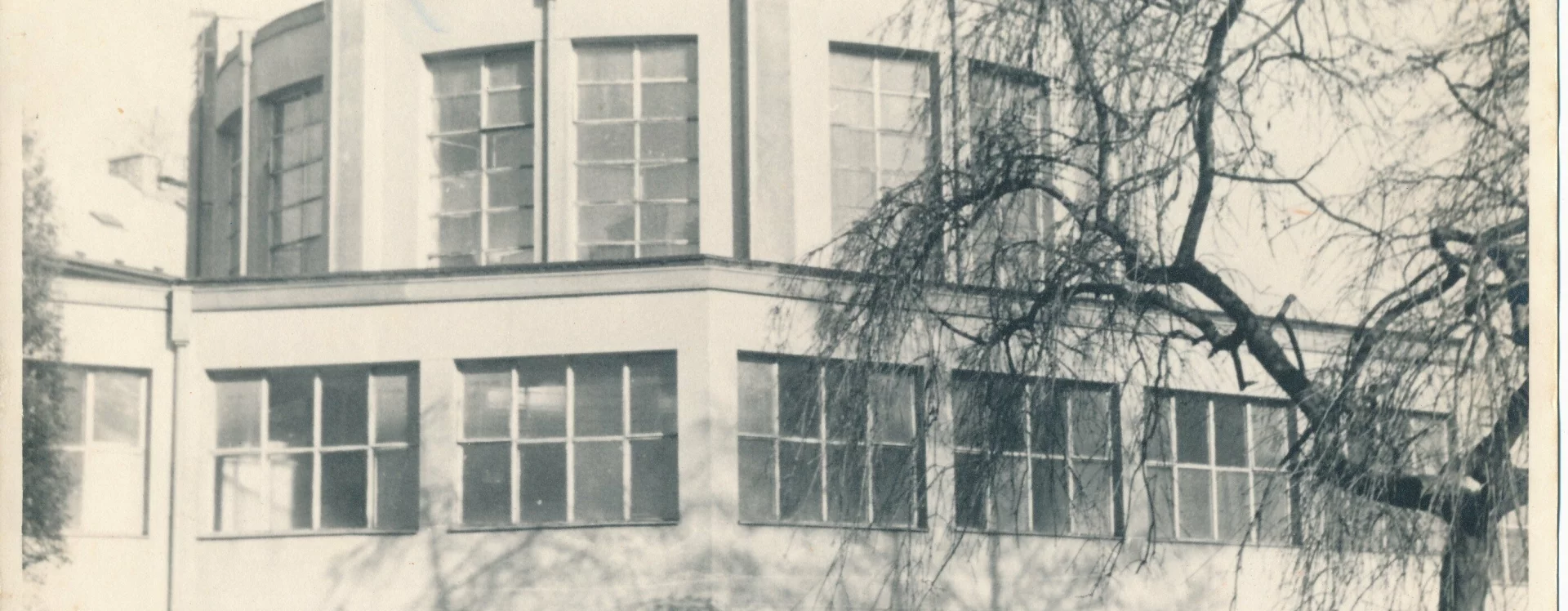
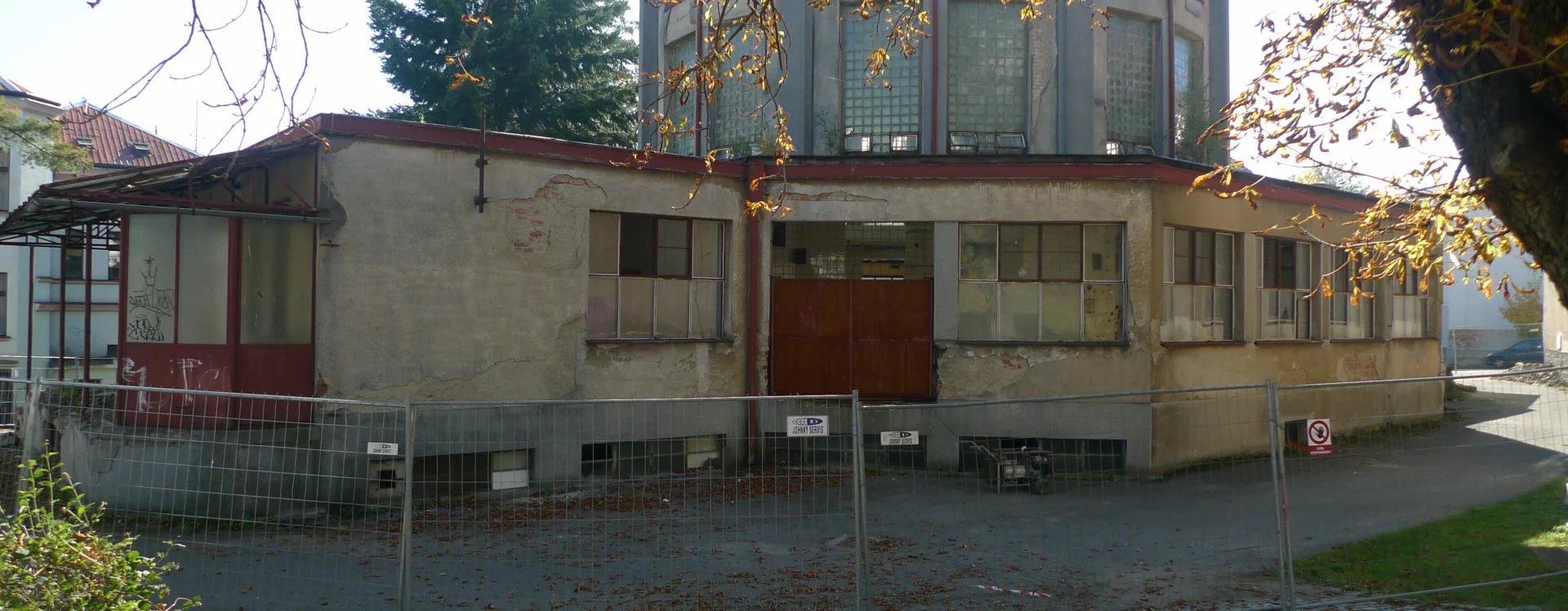
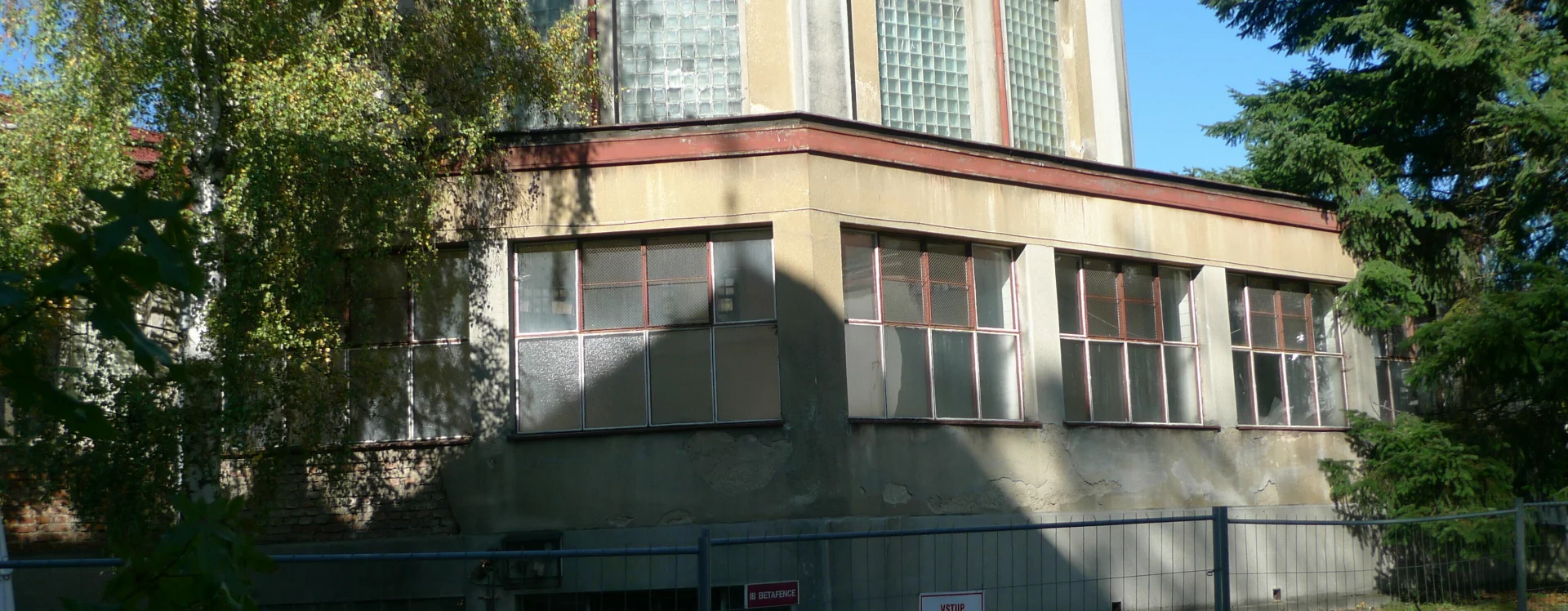
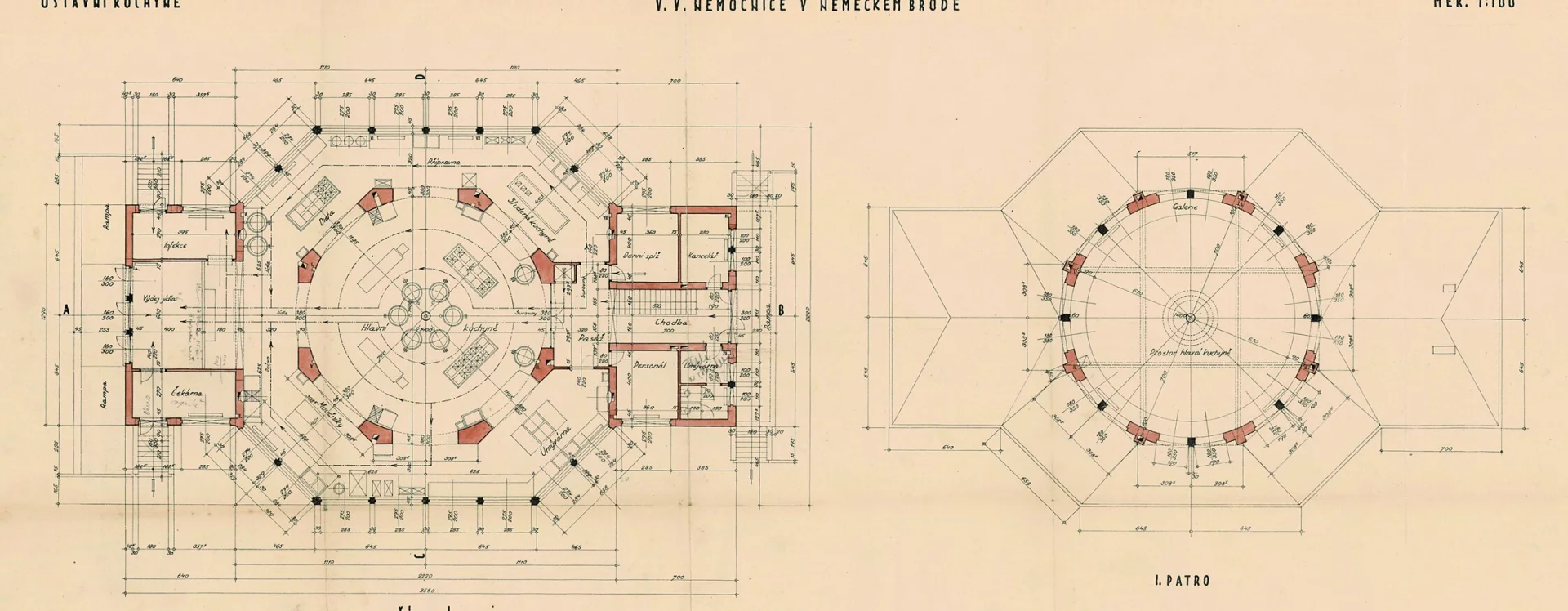
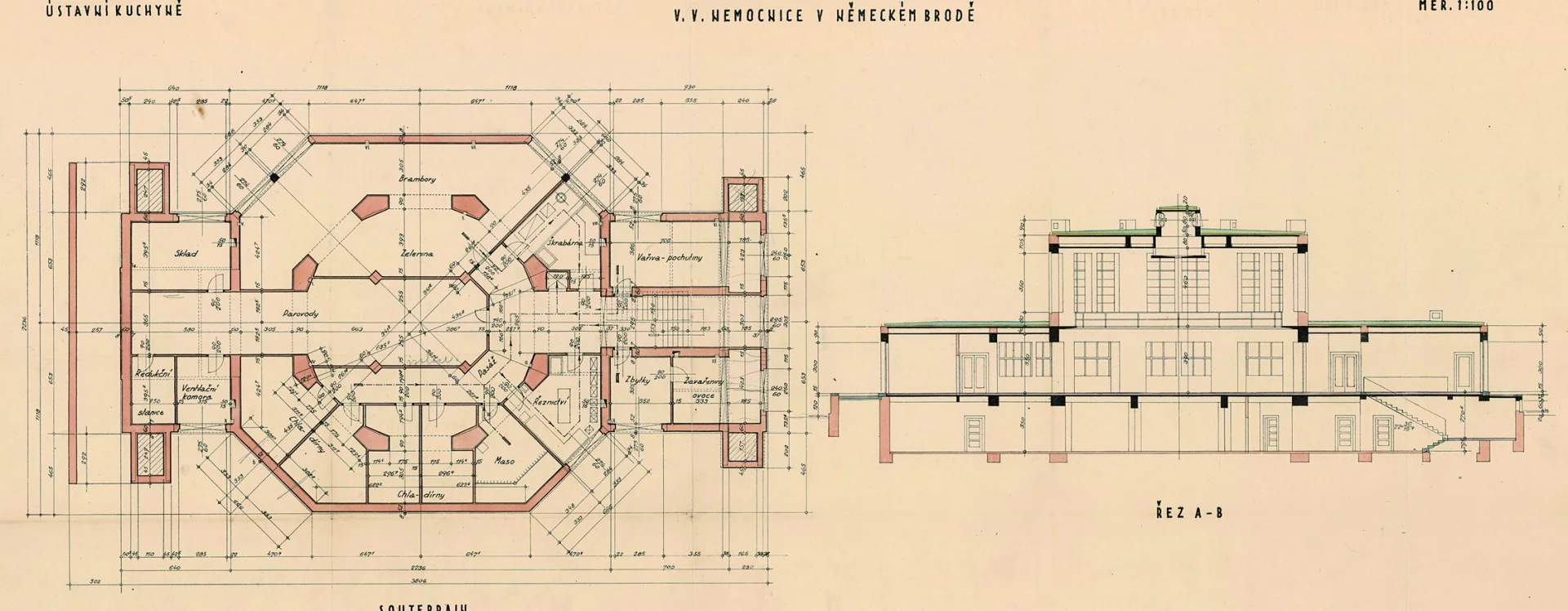
Another building, certainly not as essential for medical care but interesting from an architectural point of view, was the single-storey hospital kitchen which was constructed between 1935 and 1936 on Husova street. The person behind the progressive design was the Prague architect Vladimír Wallenfels (1895–1962), a pupil of Kotěra and Gočár at the Academy of Fine Arts. He was not unknown in the Brod area, as at that time the Provincial Institute for the Mentally Ill (1920–1934) (HB-2322) was being completed according to his design.
Wallenfels, by then an established architect known for his large-scale projects such as the Institute of Social Care in Železný Brod (1926–1928) and the Klára Institute for the Blind in Prague (1930–1933), demonstrated with this design that even a modest utilitarian building, when executed with artistic quality, could hold its own and rank among structures of higher social significance.
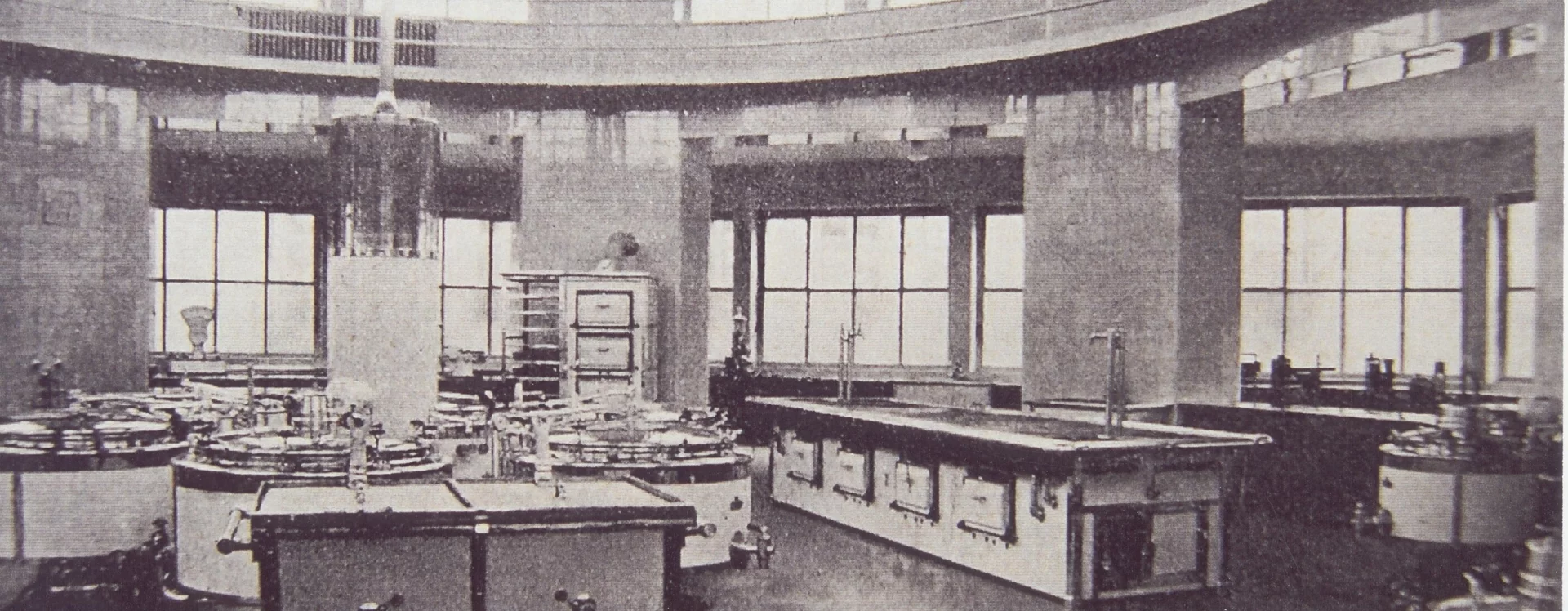
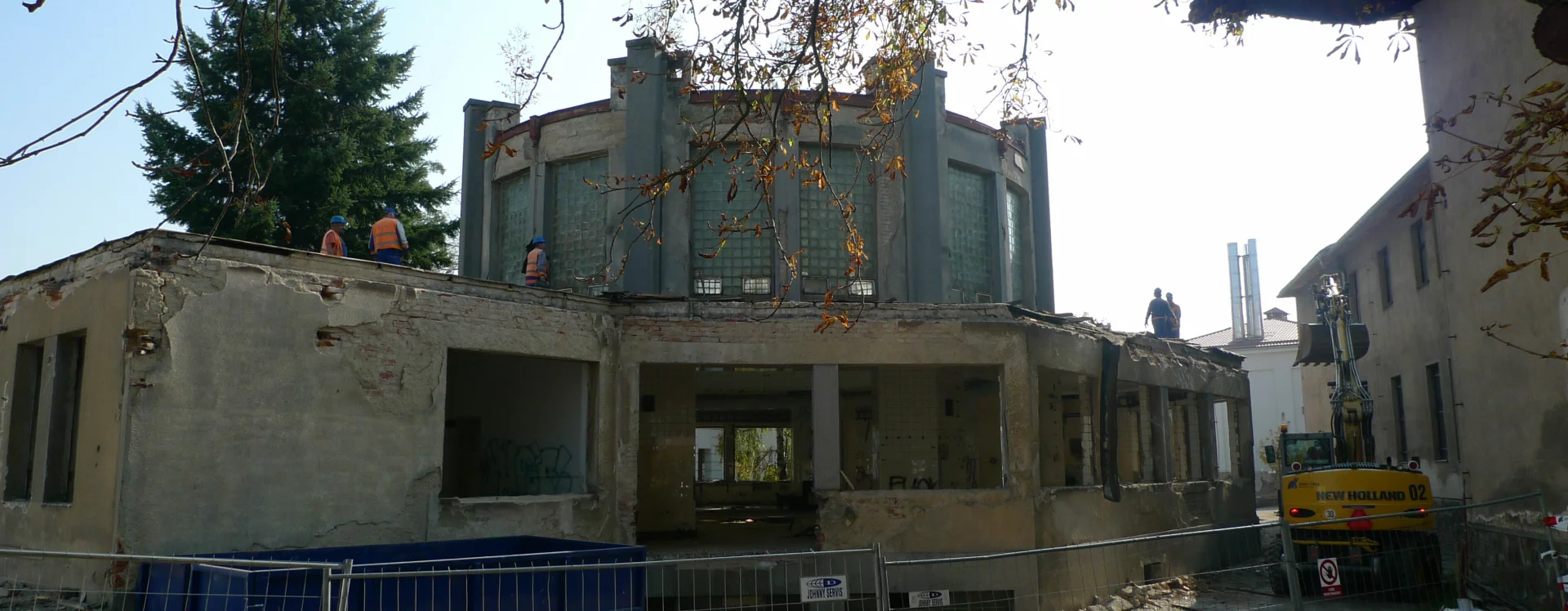
The sole architectural task—the artistic concept the architect set for himself here—was to provide a fully functioning kitchen area for a large hospital complex. Striving for maximum efficiency and clarity of operation, he chose a central layout, placing the cooking area at the notional centre of the building. Such a solution can be found in other buildings of this type as well; however, the uniqueness of his design lay in the open acknowledgment of the circular layout scheme (an octagon) in the building’s ground plan, which extends only on the northern and southern sides by rectangular wings.
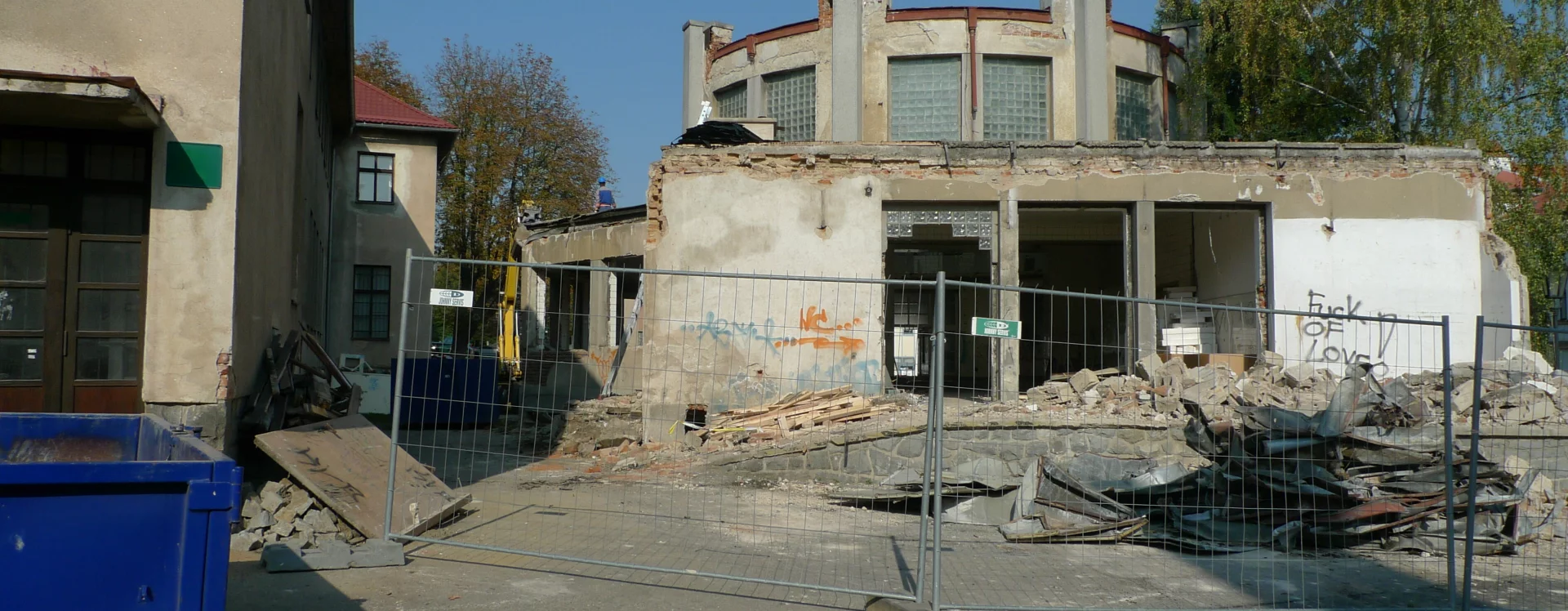
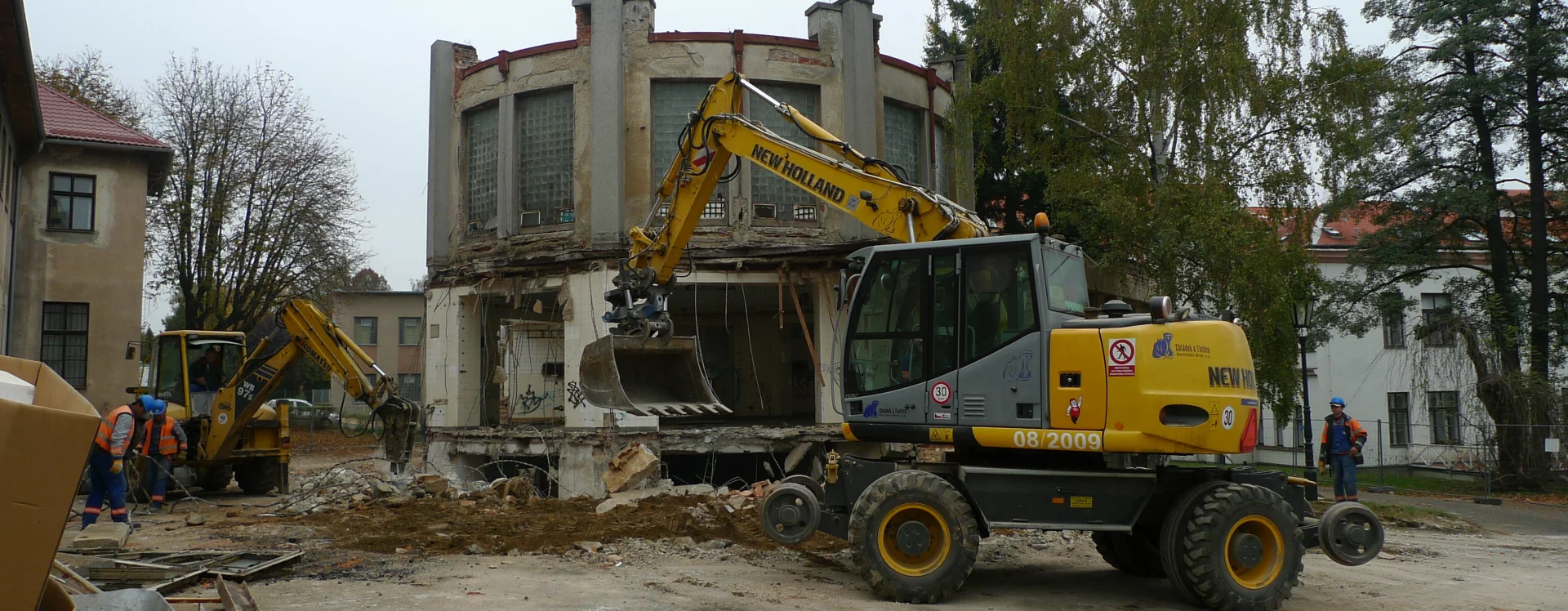
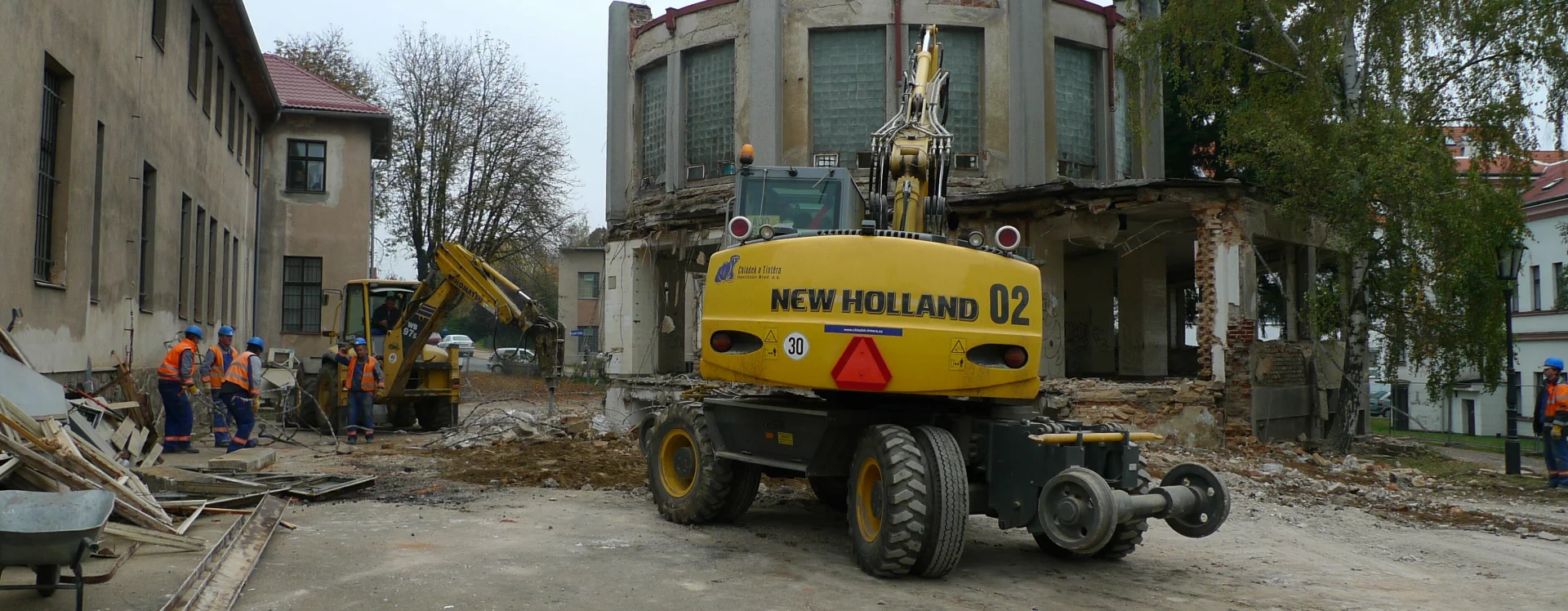
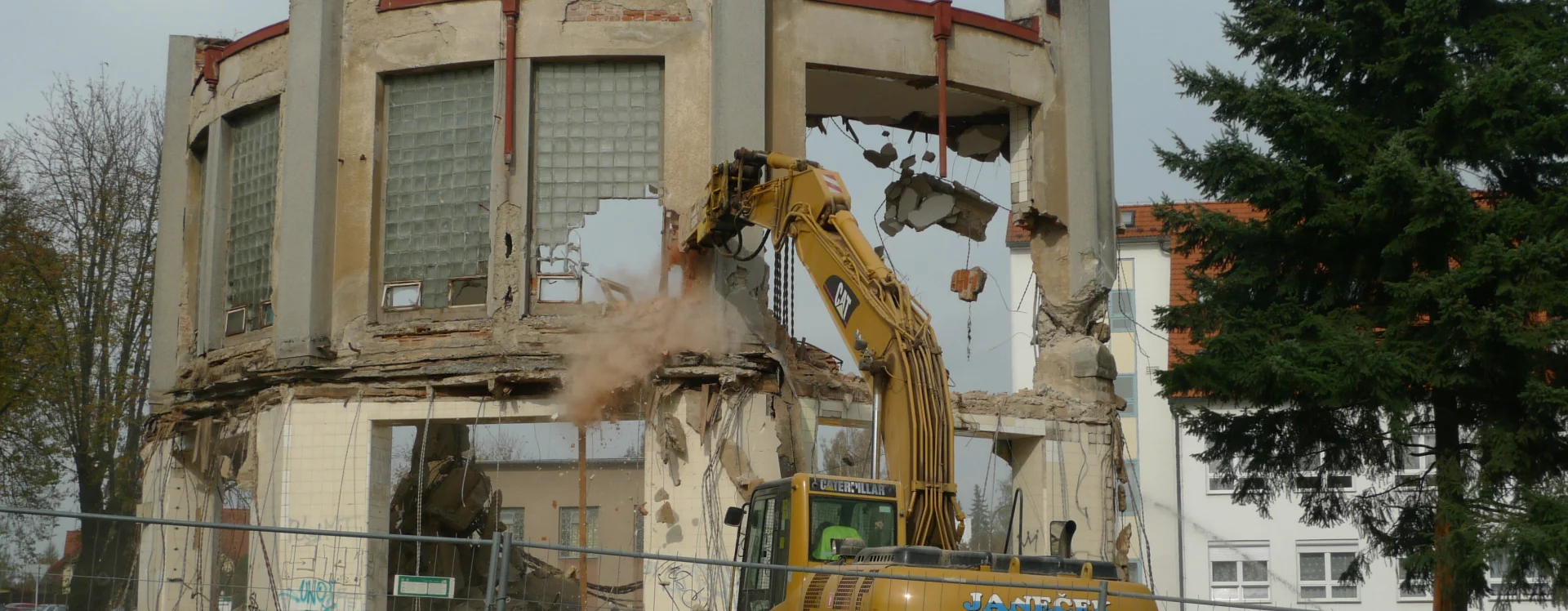
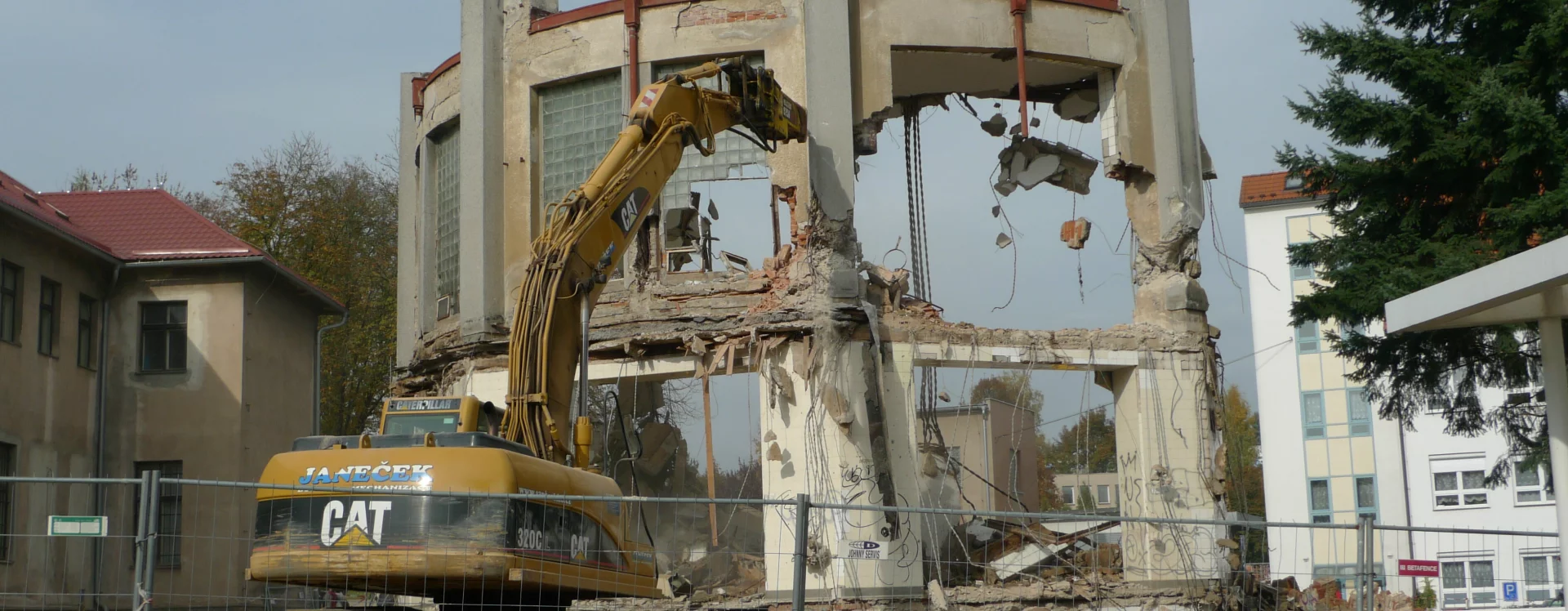
Thanks to its unconventional layout, together with the lightness achieved through its reinforced concrete structure, the brightness provided by a dense sequence of rectangular windows, and the smooth forms of its facade, Wallenfels’s building looked more like a spaceship, a laboratory, or an operating theatre from one of the nearby pavilions. The building attracted attention even at the time of its construction, as indicated by a record in the town chronicle: “…a new kitchen was built, likewise a first-rate piece of construction with progressive mechanics… It will feature the most modern conveniences of the time…” At one million crowns, the overall cost of the building reflected its quality.
The hospital kitchen was demolished in 2010.
Dana Schlaichertová, 2025
Literature
Almanach ke stému výročí Okresní nemocnice v Havlíčkově Brodě. Havlíčkův Brod, Tobiáš, 1996. p. 19-25.
Dana Schlaichertová. Architektura a urbanismus Havlíčkova Brodu 1848-1938. Olomouc, Katedra teorie a dějin umění FF UP, 1998, Diplomová práce. p. 82-83.
Pavel Trnka, Ladislav Labohý, Emill Pokorný. Zpráva o činnosti Všeobecné veřejné okresní nemocnice v Německém Brodě za rok 1936. Německý Brod, 1937.
Dana Schlaichertová. Nemocniční kuchyně. In: Aleš Veselý (ed.). Příběhy brodských domů. Havlíčkův Brod, Galerie výtvarného umění v Havlíčkově Brodě, 2016, p. 92-95. ISBN 978-80-904726-9-3.
František Zahradnický. Všeobecná veřejná okresní nemocnice císaře a krále Františka Josefa I. v Německém Brodě v patnáctiletí od 1. prosince roku 1897 do 31. prosince roku 1912. Německý Brod, 1914.
Sources
Archiv Nemocnice Havlíčkův Brod.
Státní okresní archiv Havlíčkův Brod, fond Okresní úřad Německý Brod. sv. karton 168-177.
Pamětní kniha Německého Brodu II. 1930-1969. Státní okresní archiv Havlíčkův Brod, fond Městský národní výbor Havlíčkův Brod, Městský národní výbor Havlíčkův Brod.