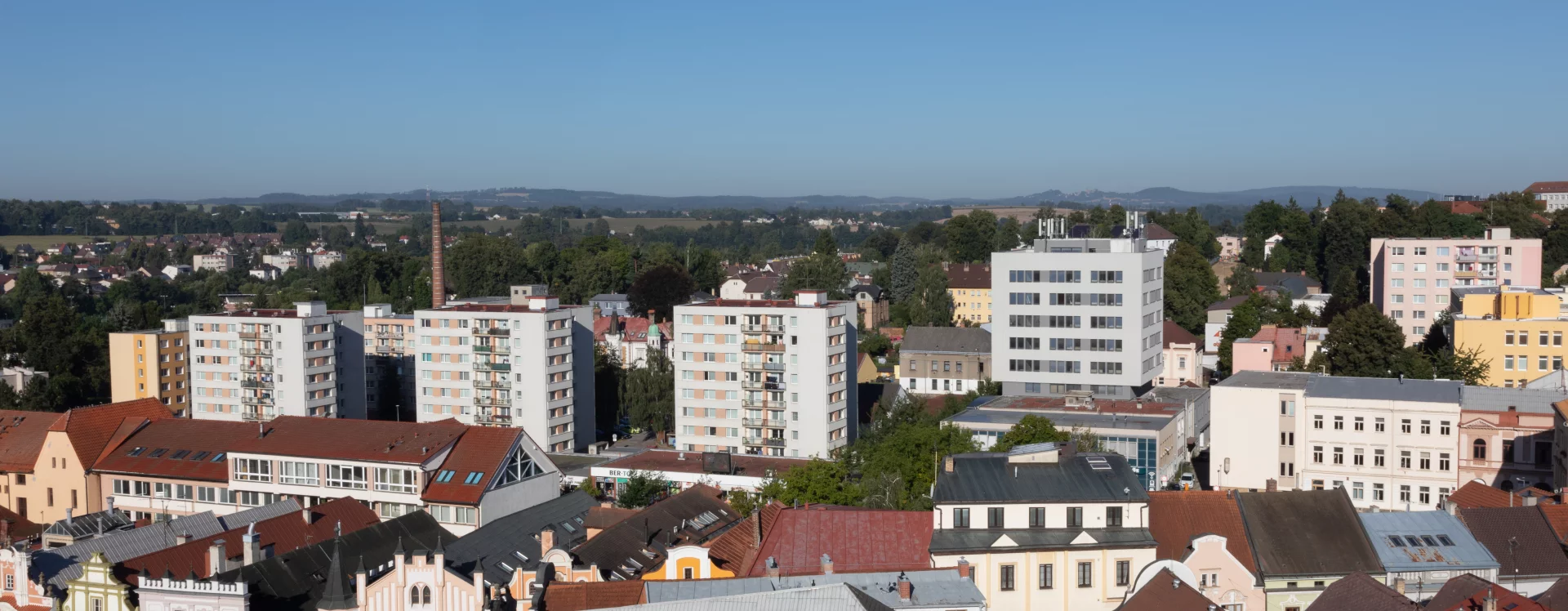
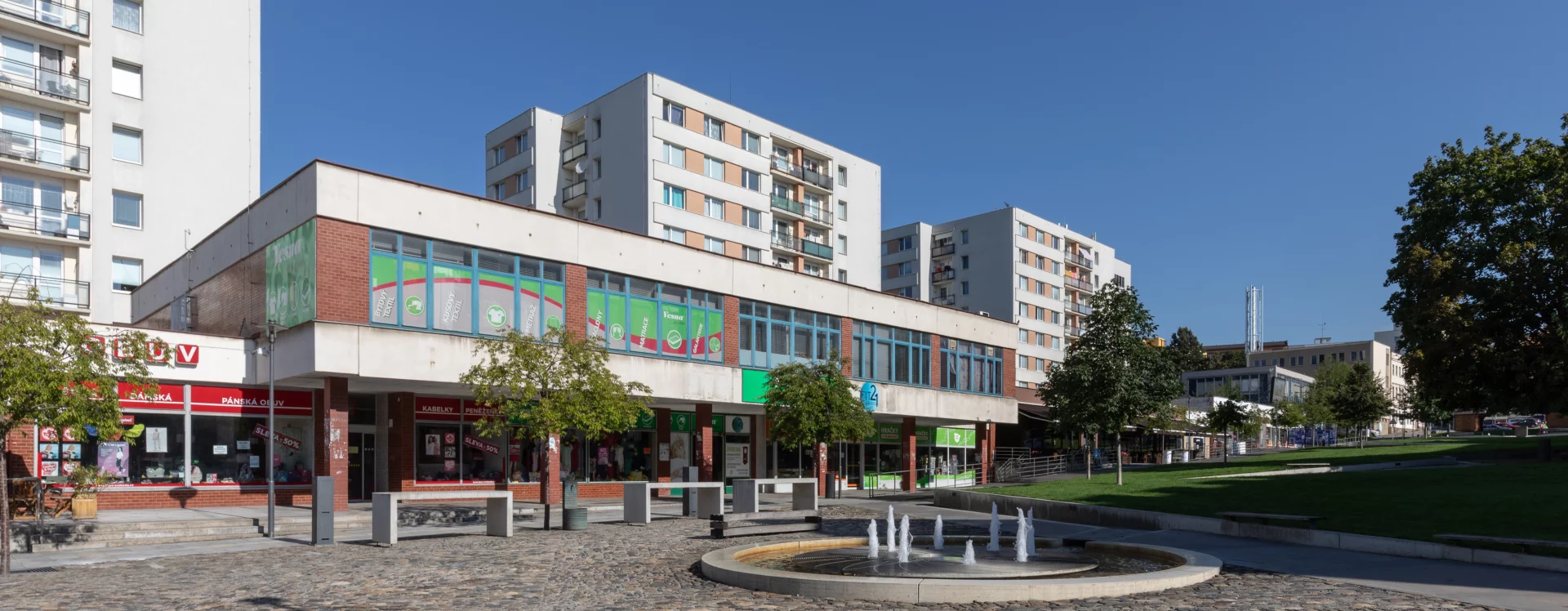
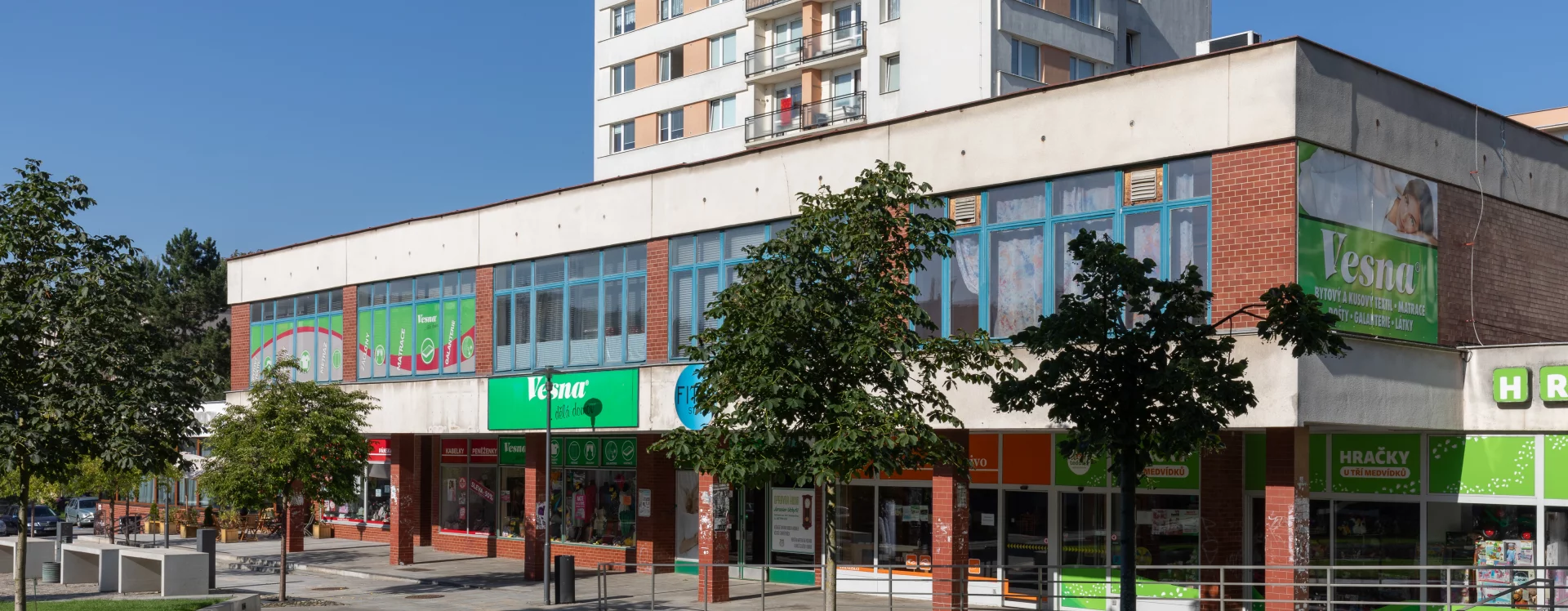
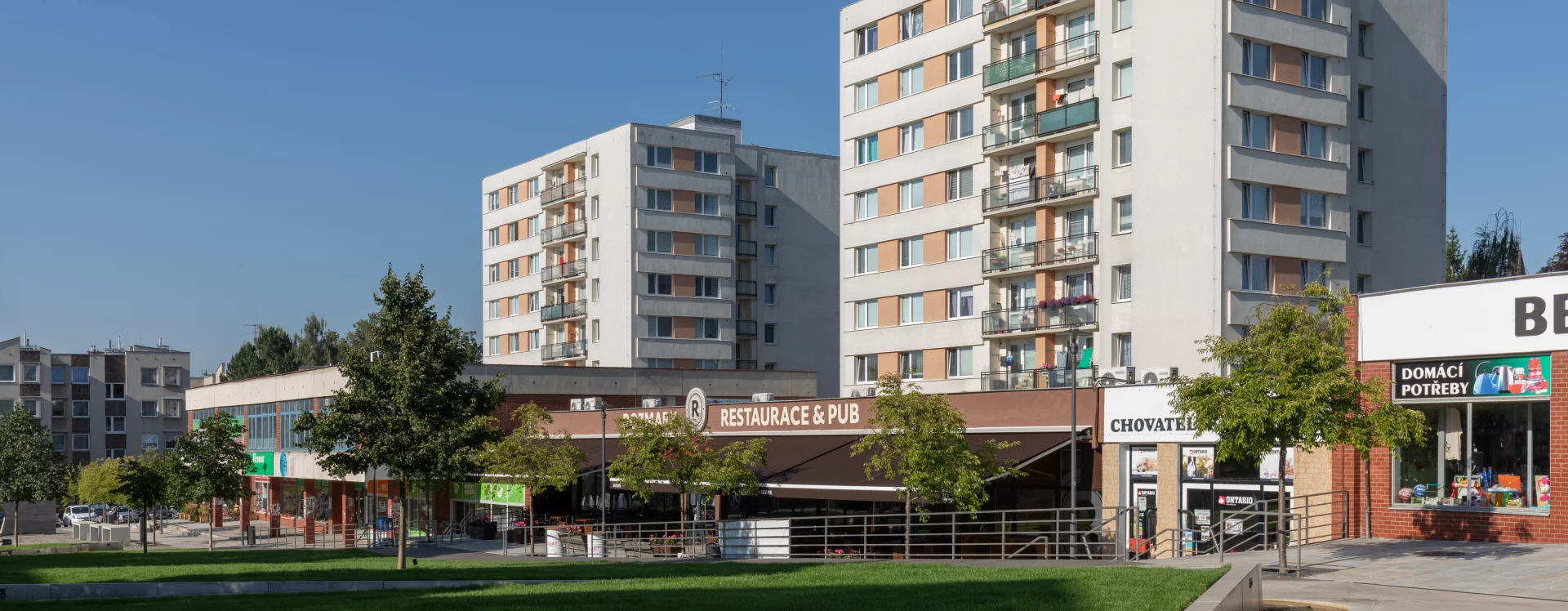
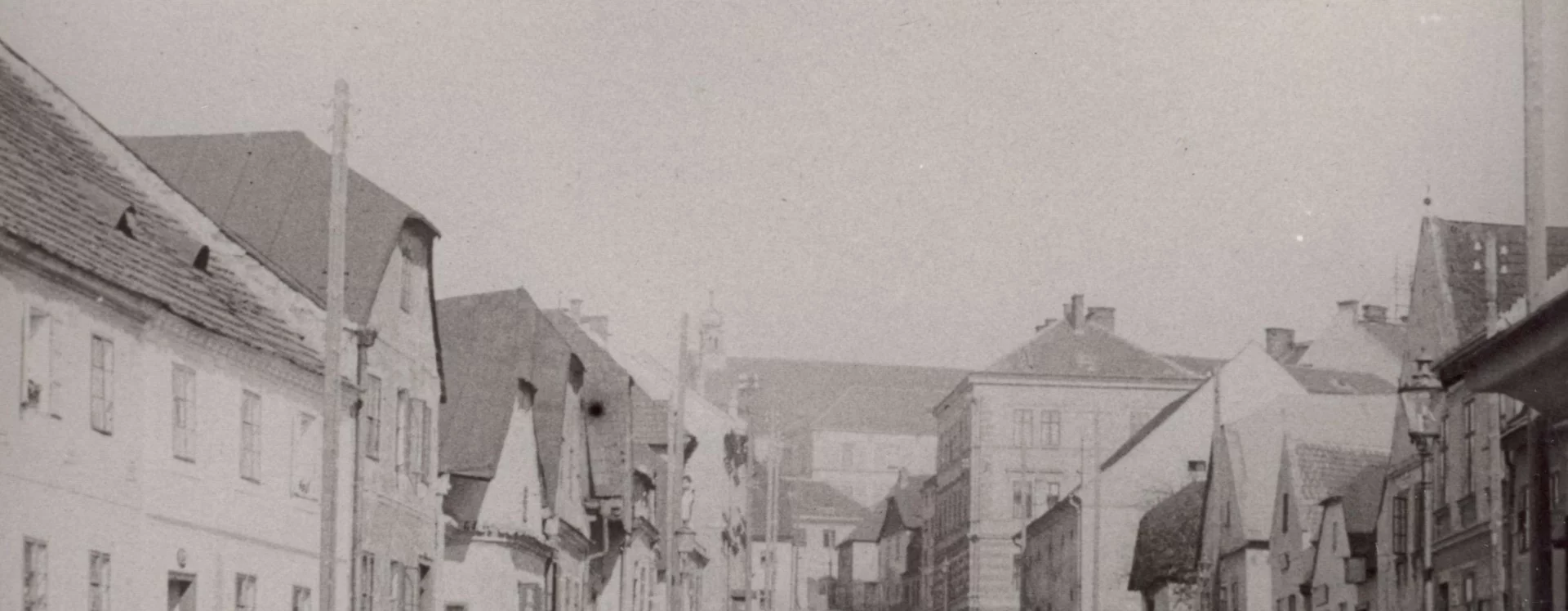
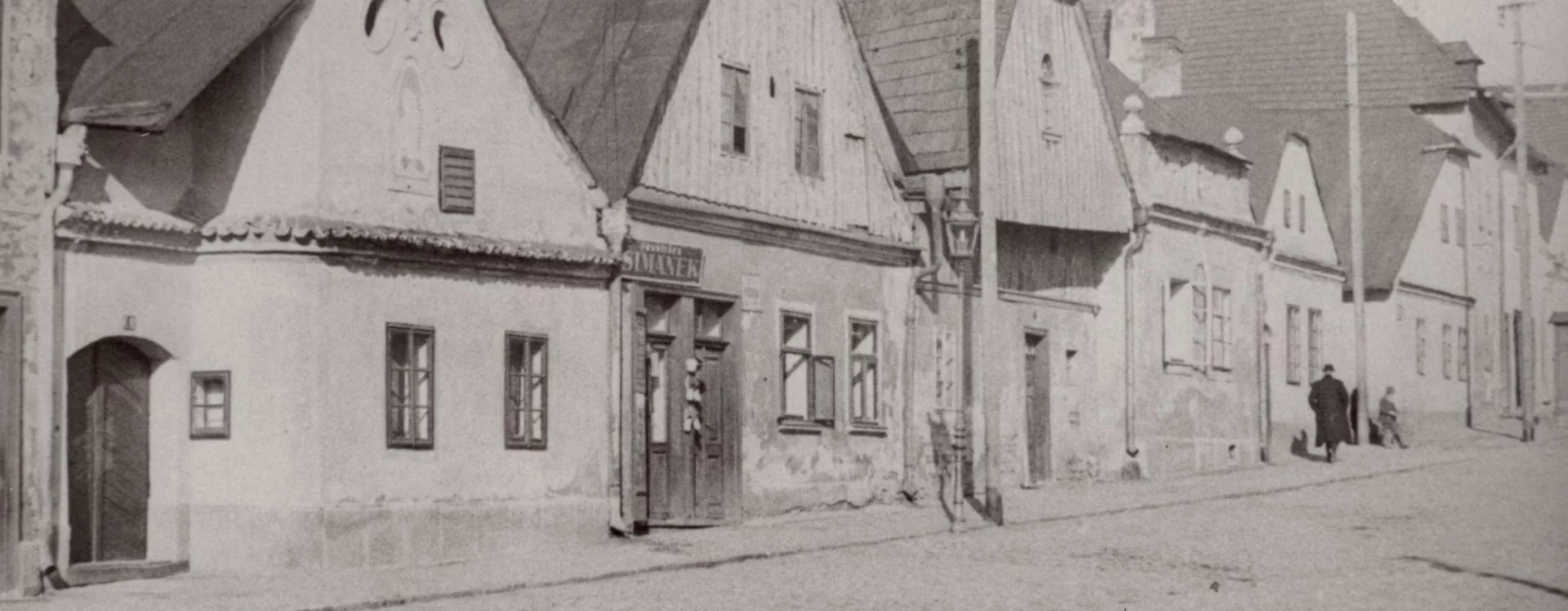
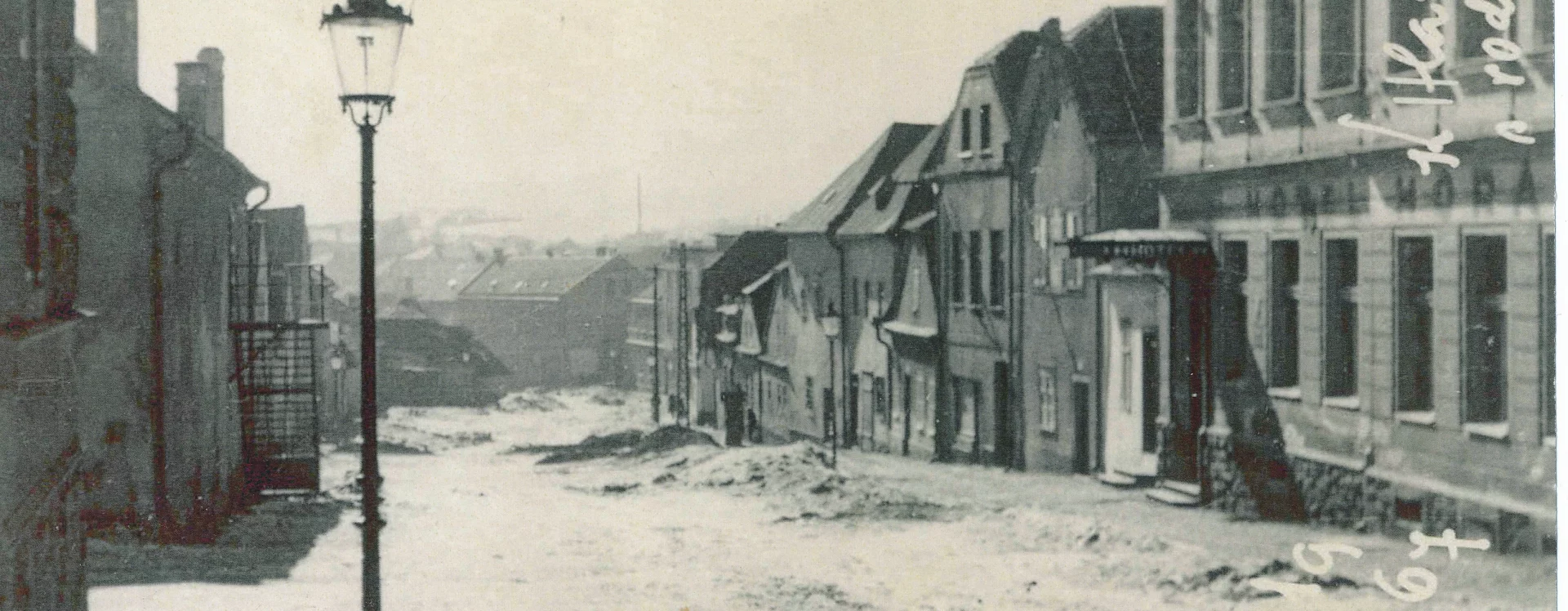
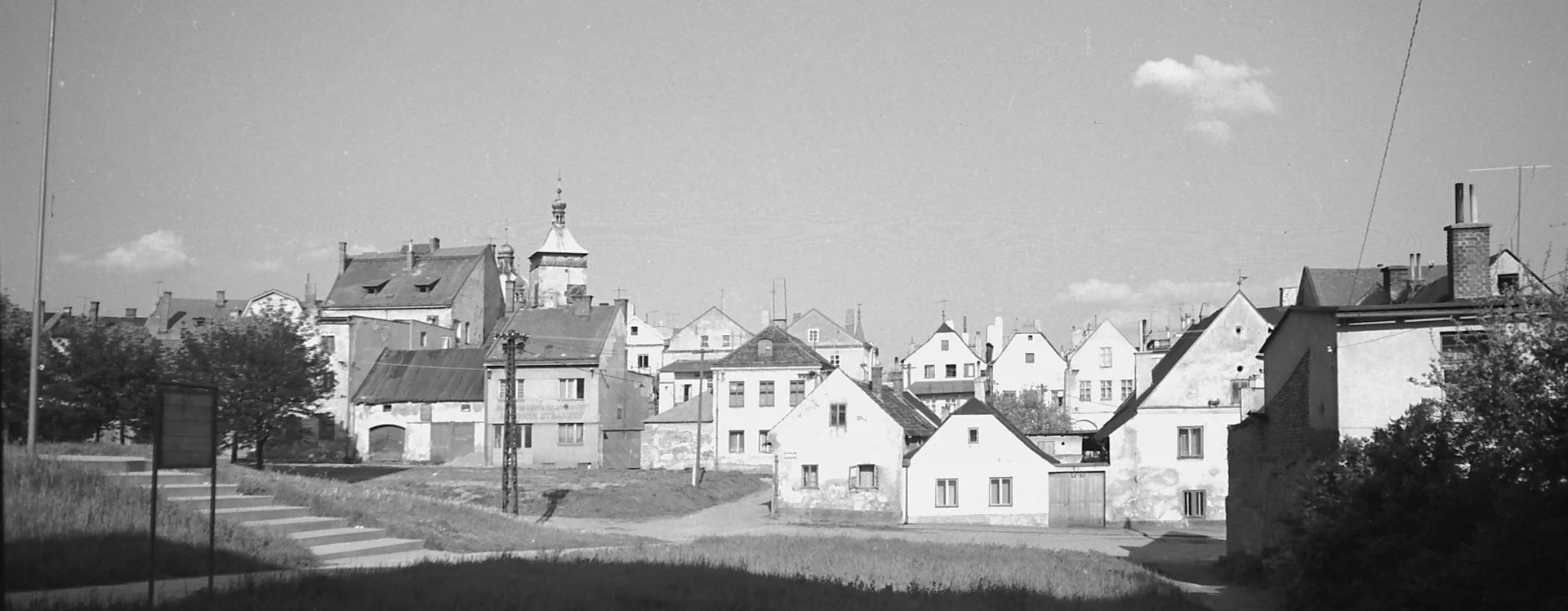
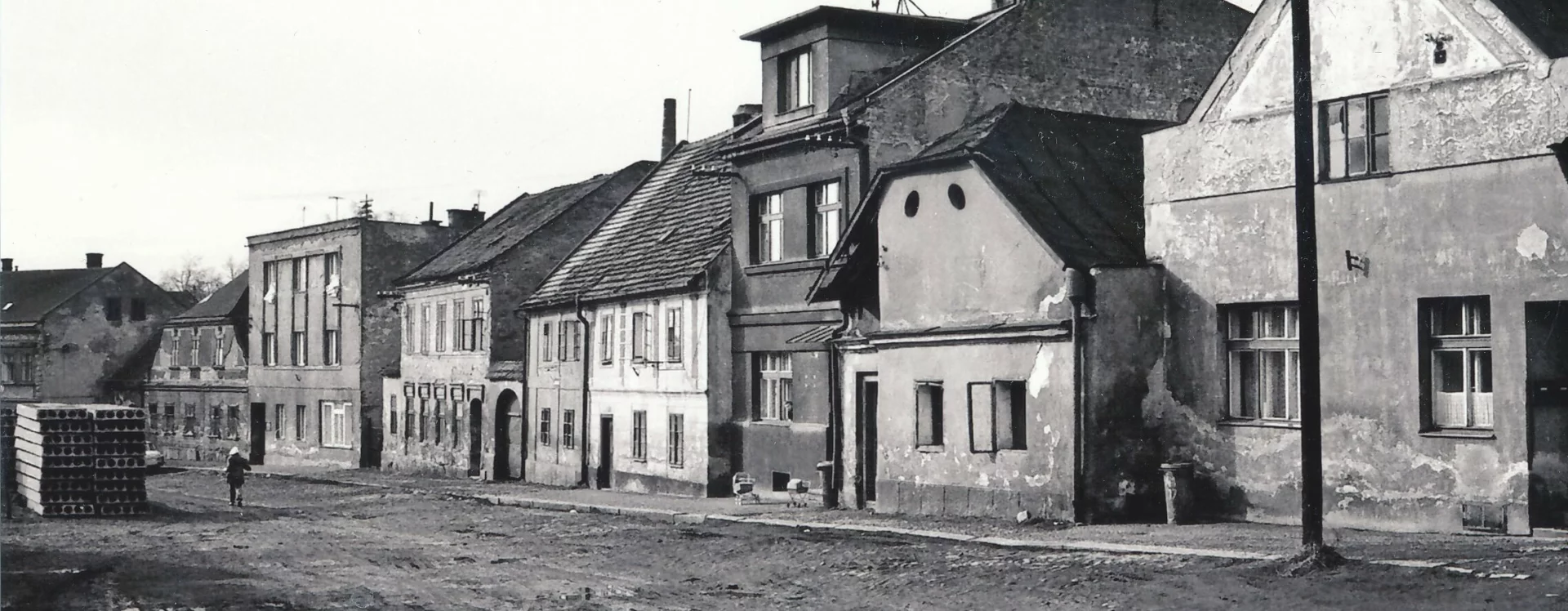
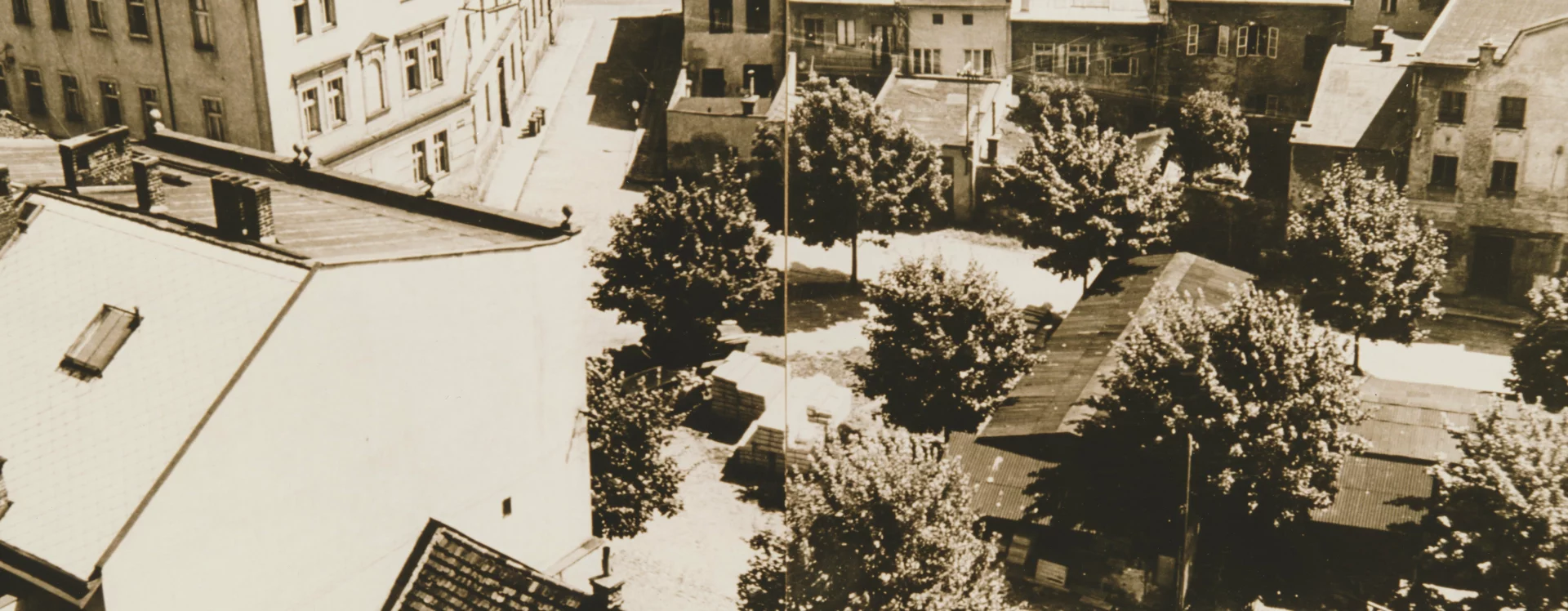
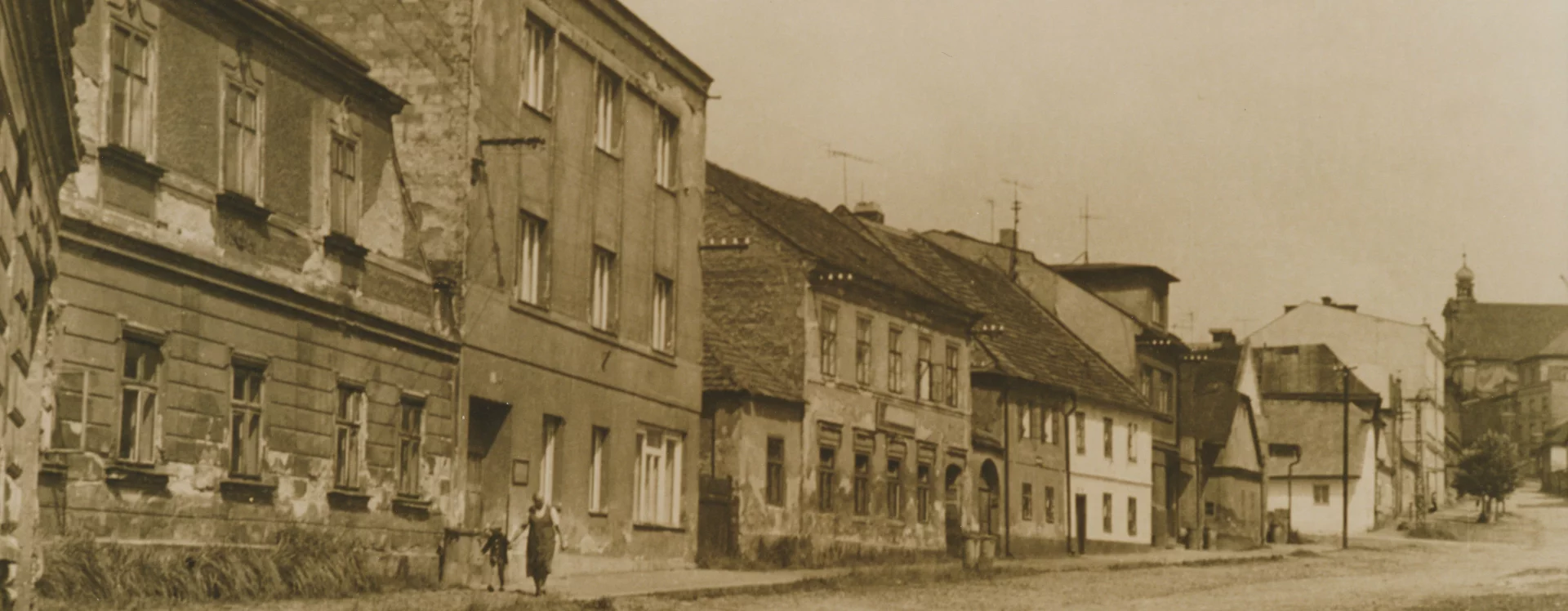
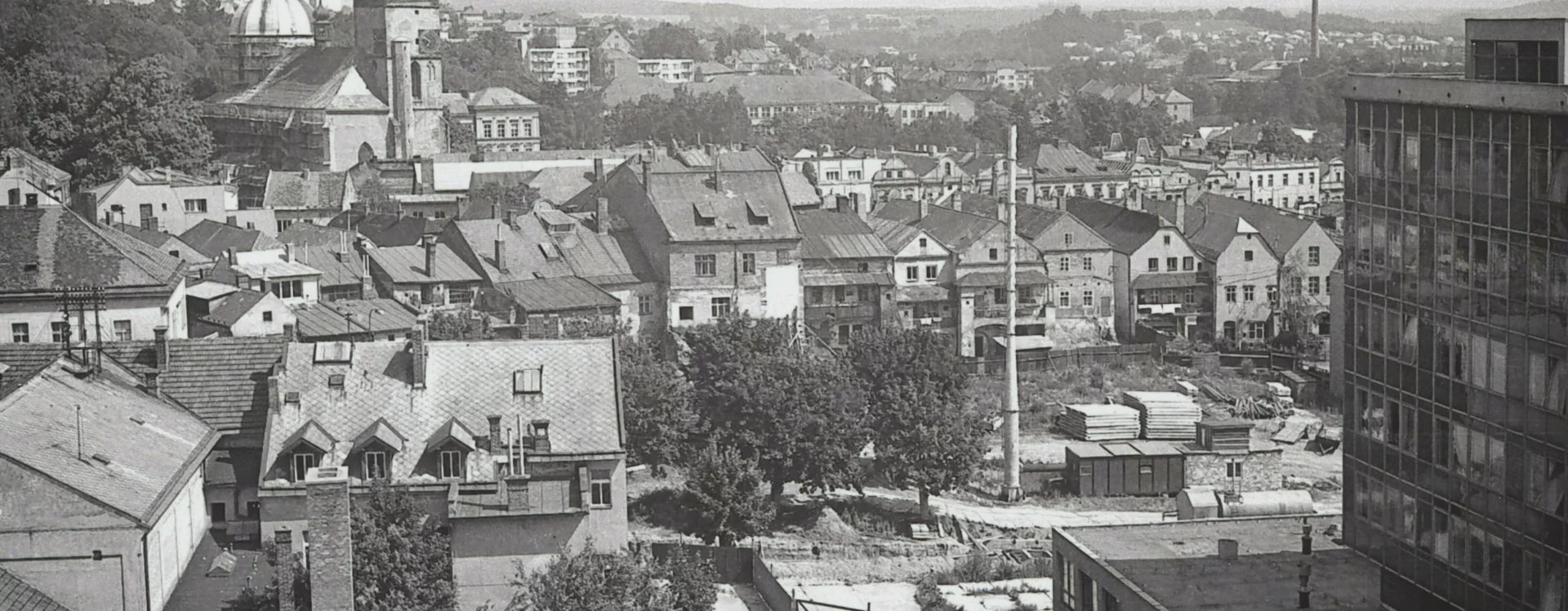
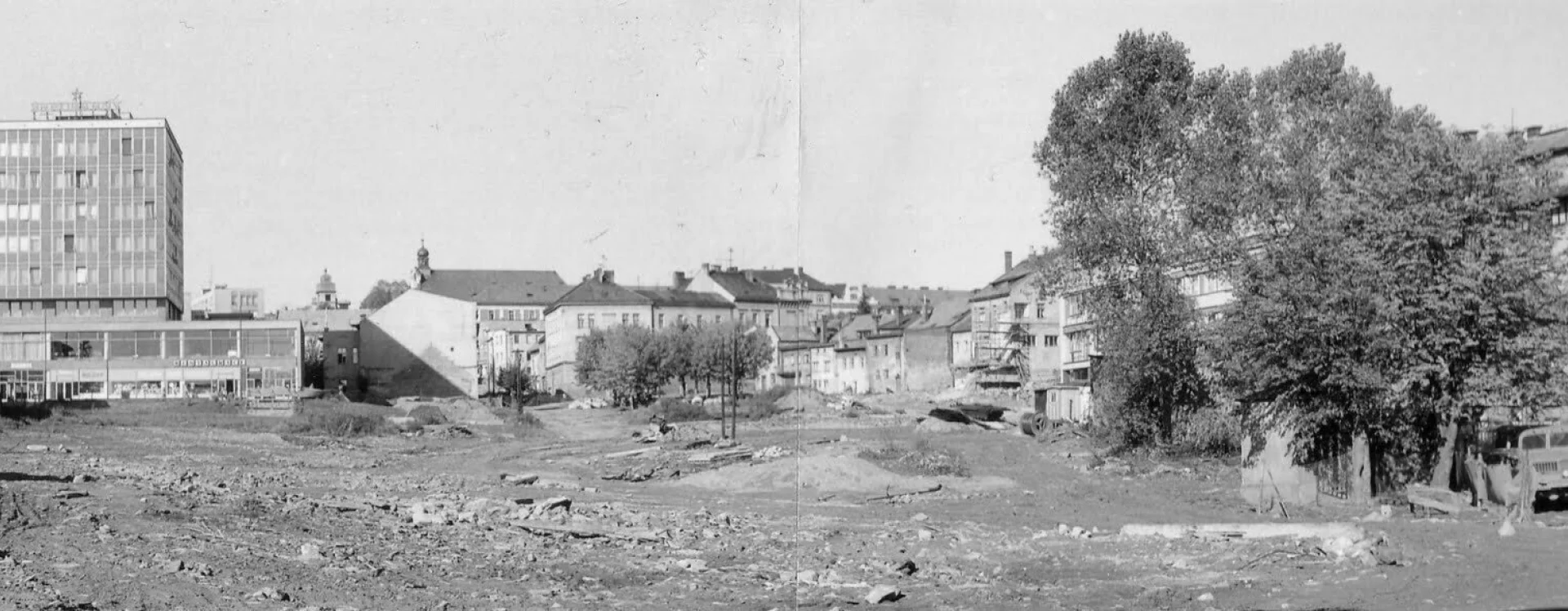
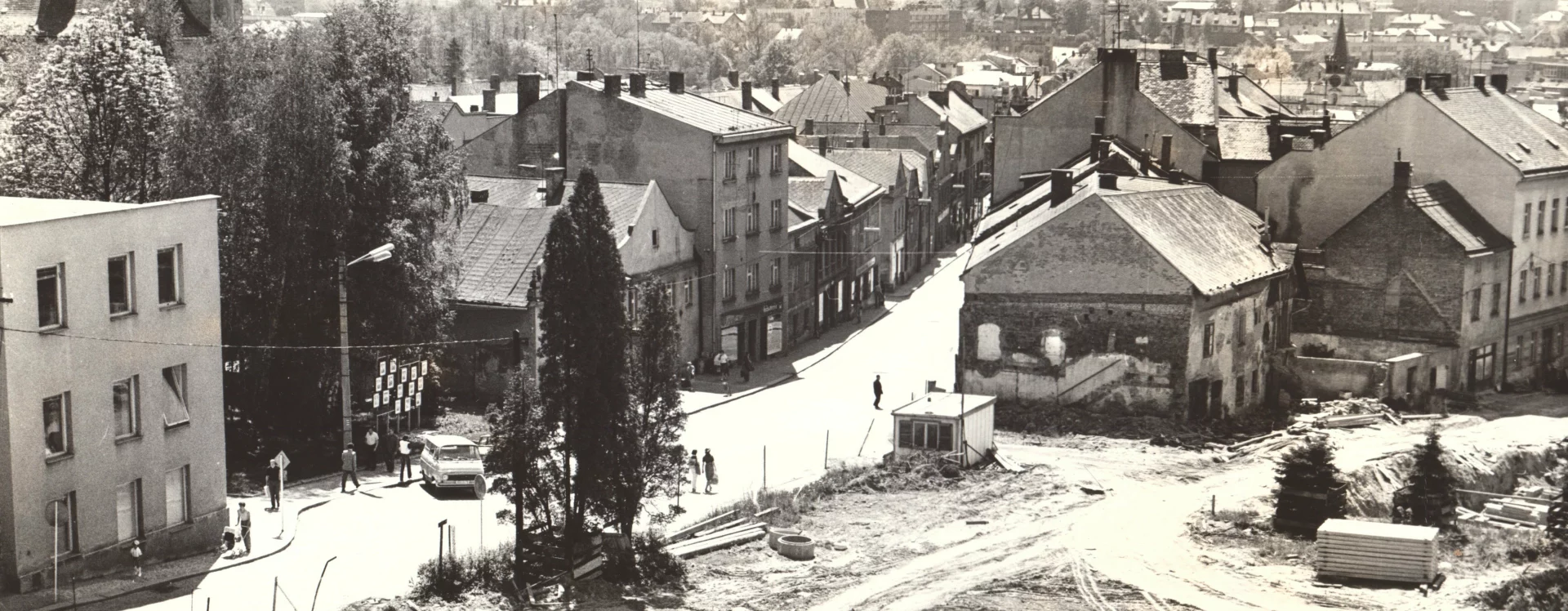
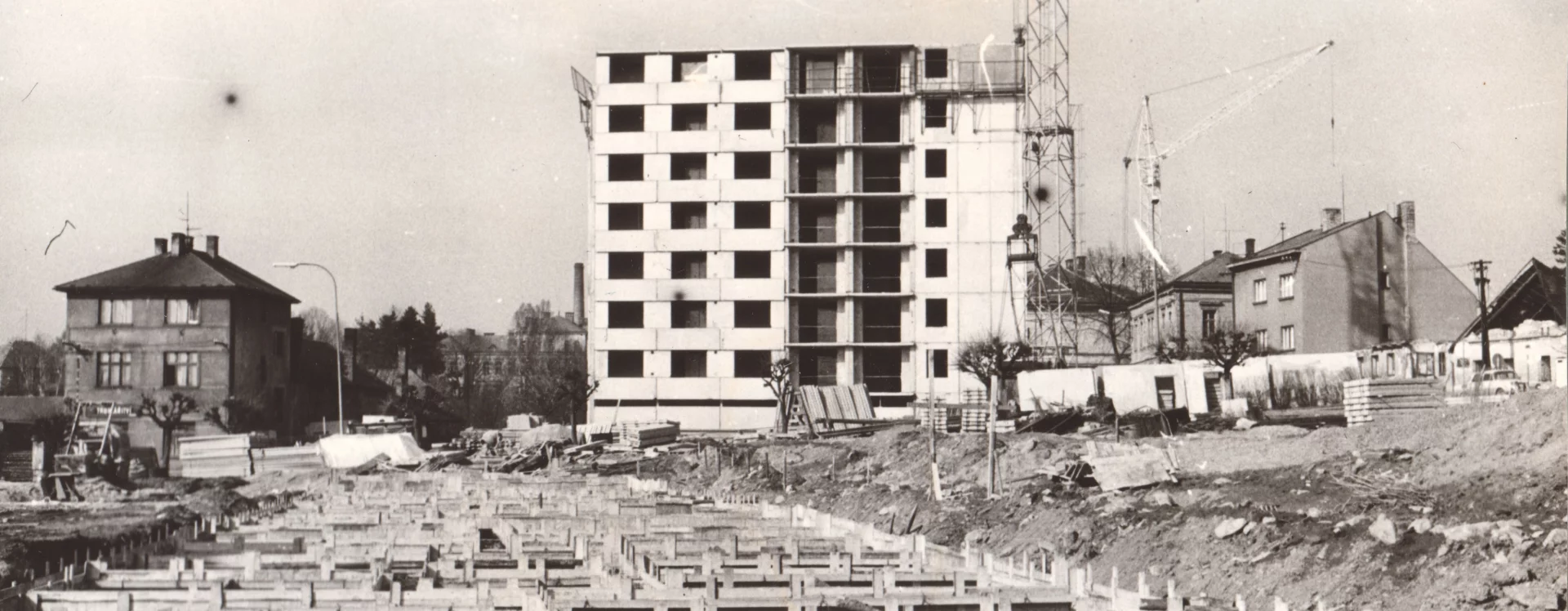
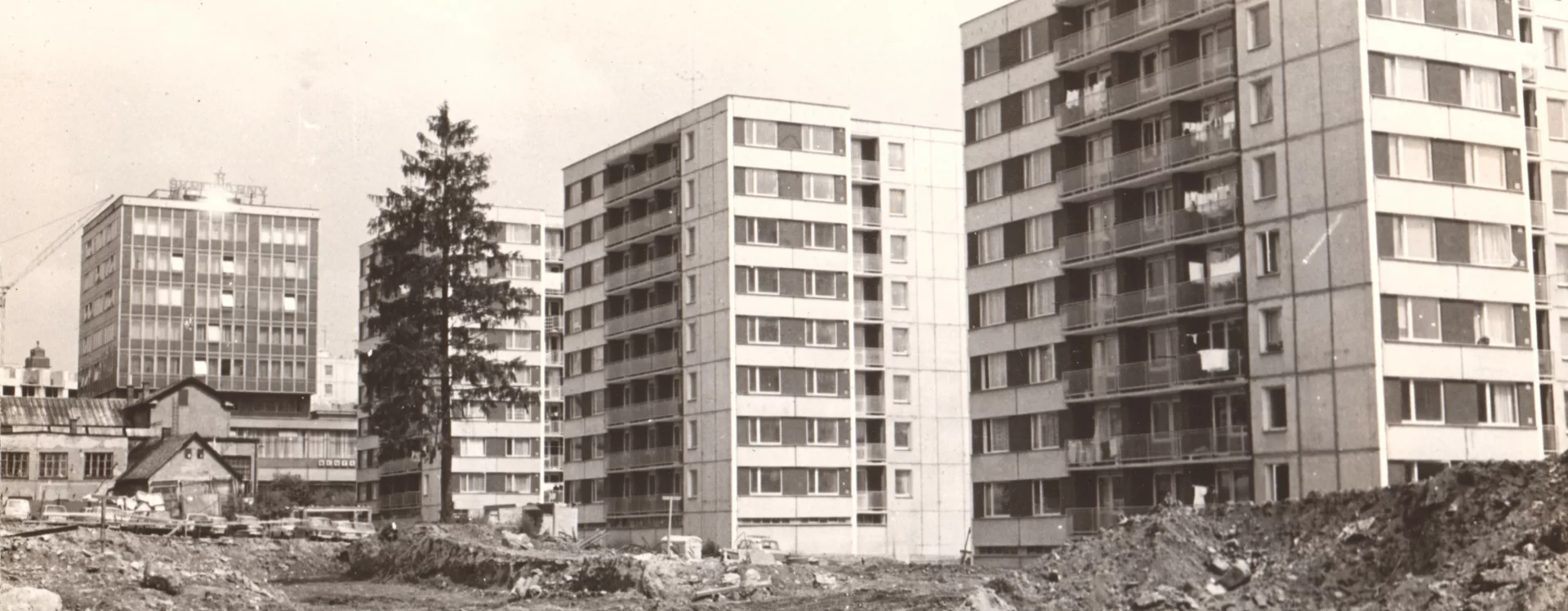
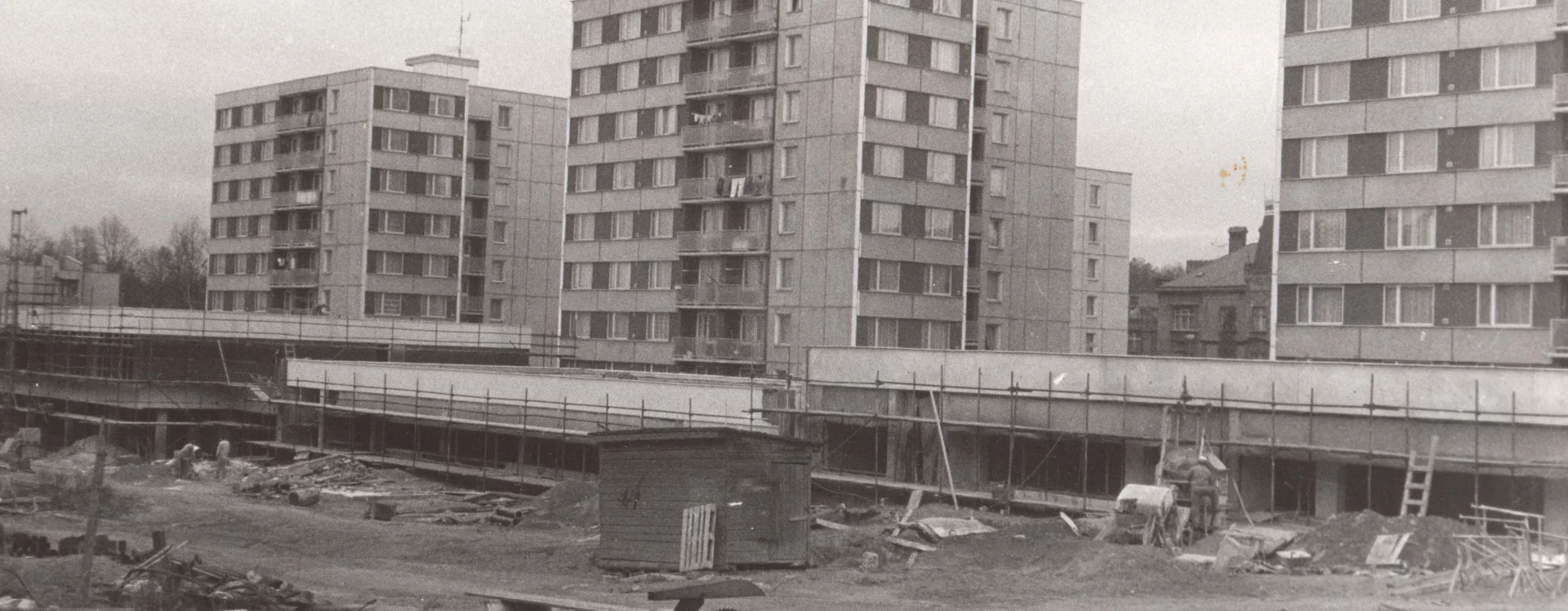
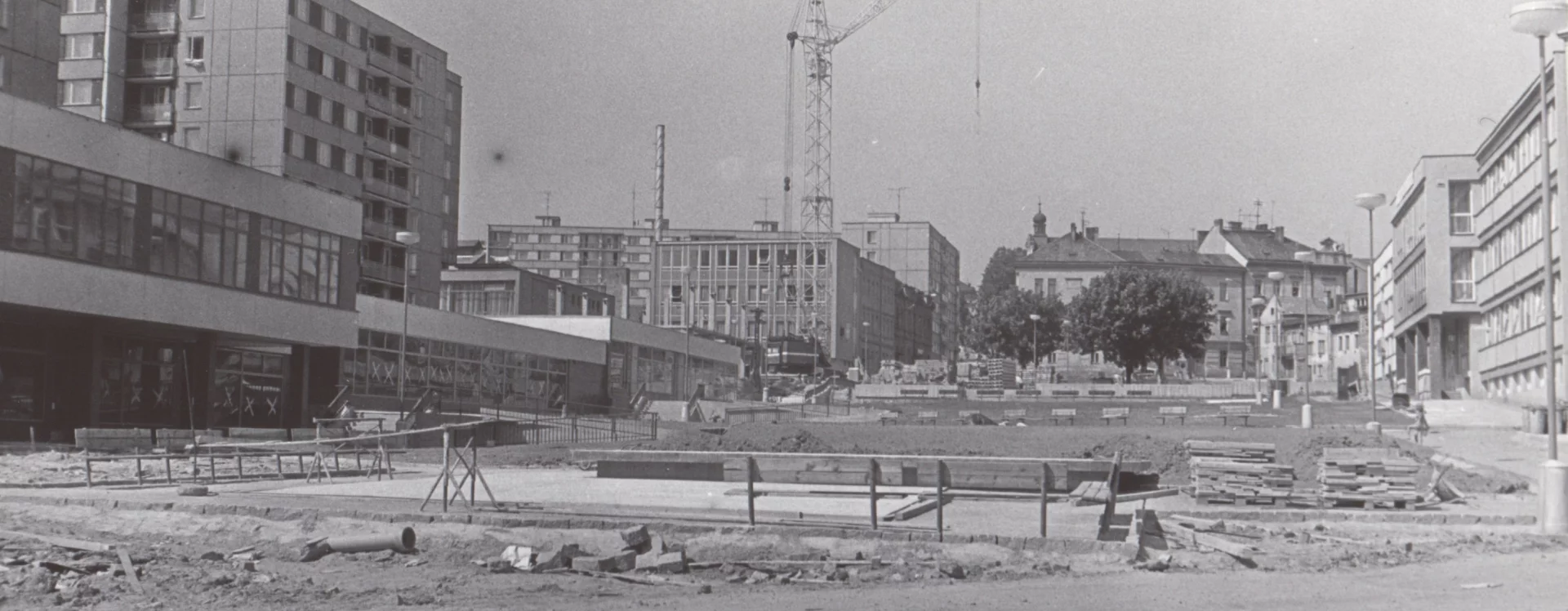
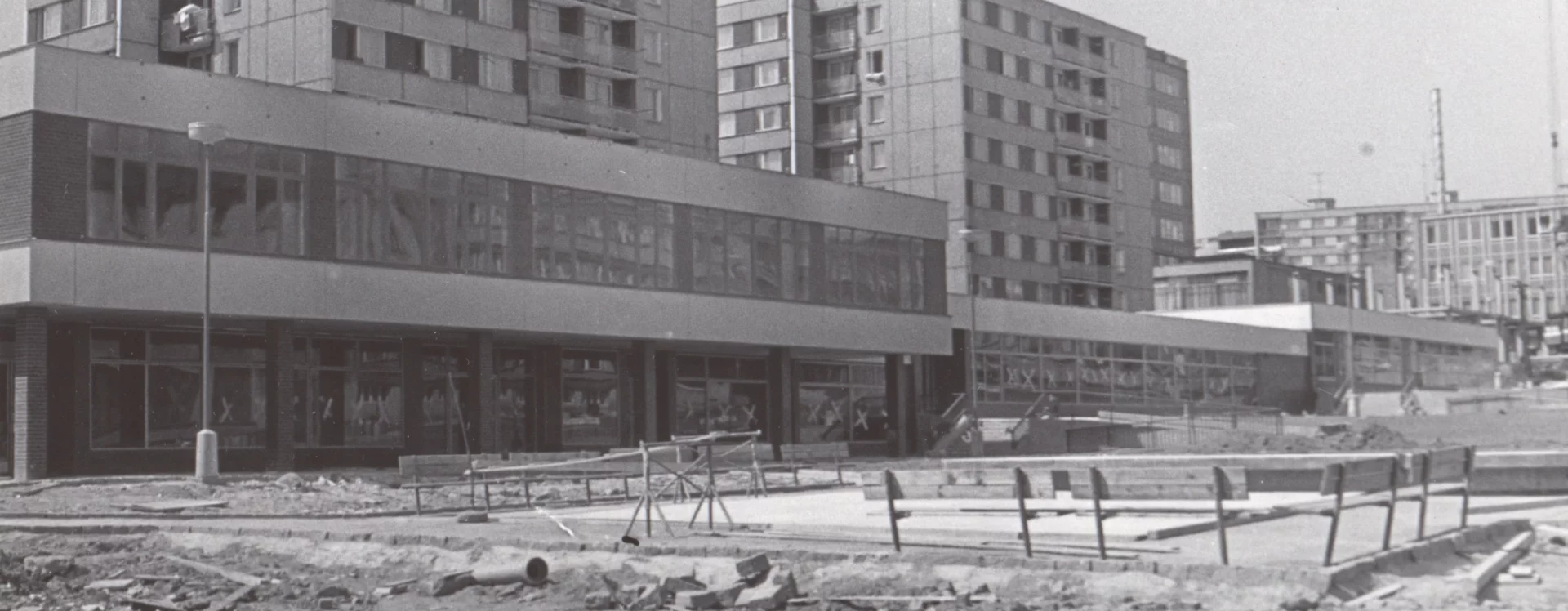
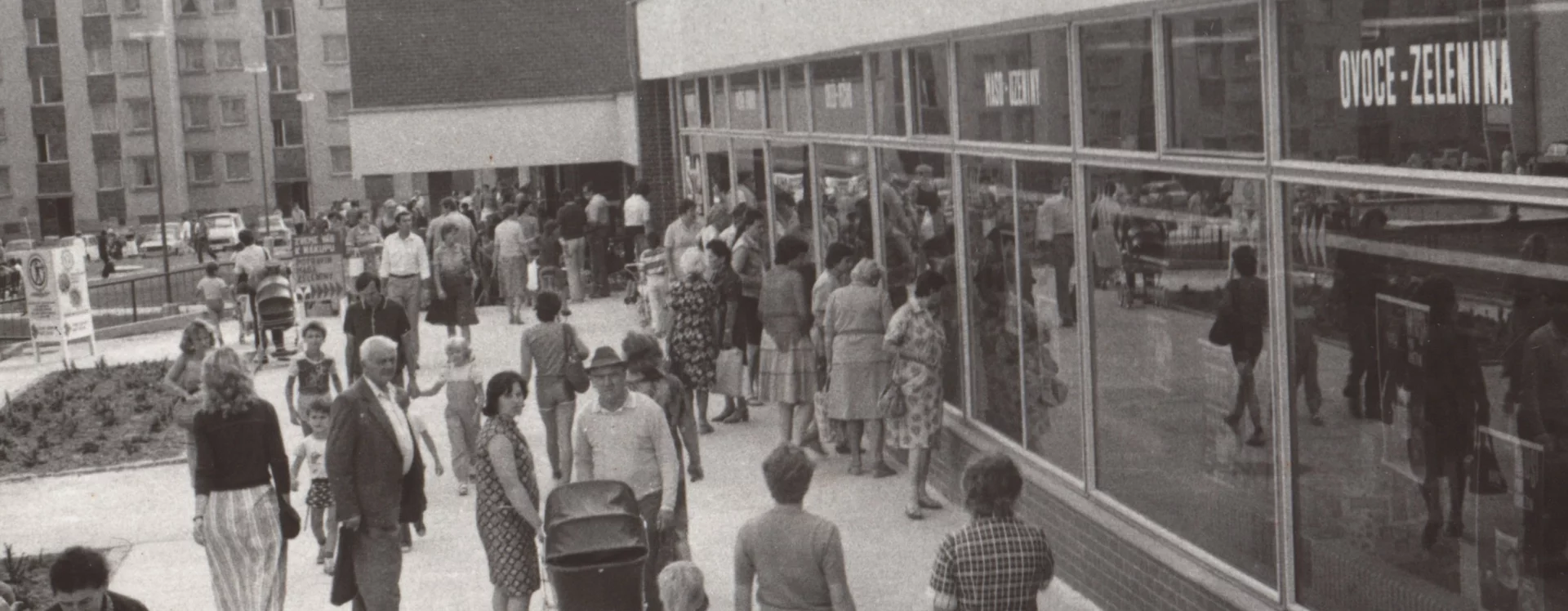
The original historic buildings adjacent to the main Havlíček Square were replaced by housing estates in the 1970s and 1980s. The decision to demolish the old square and the adjacent Louže district and replace them with a modern housing estate was made by the Havlíčkův Brod Municipal National Committee in 1966 due to the dilapidated state of the housing stock and engineering networks. The new housing estate was intended to help address the critical housing situation the expanding town of Havlíčkův Brod had been facing since the beginning of the 20th century.
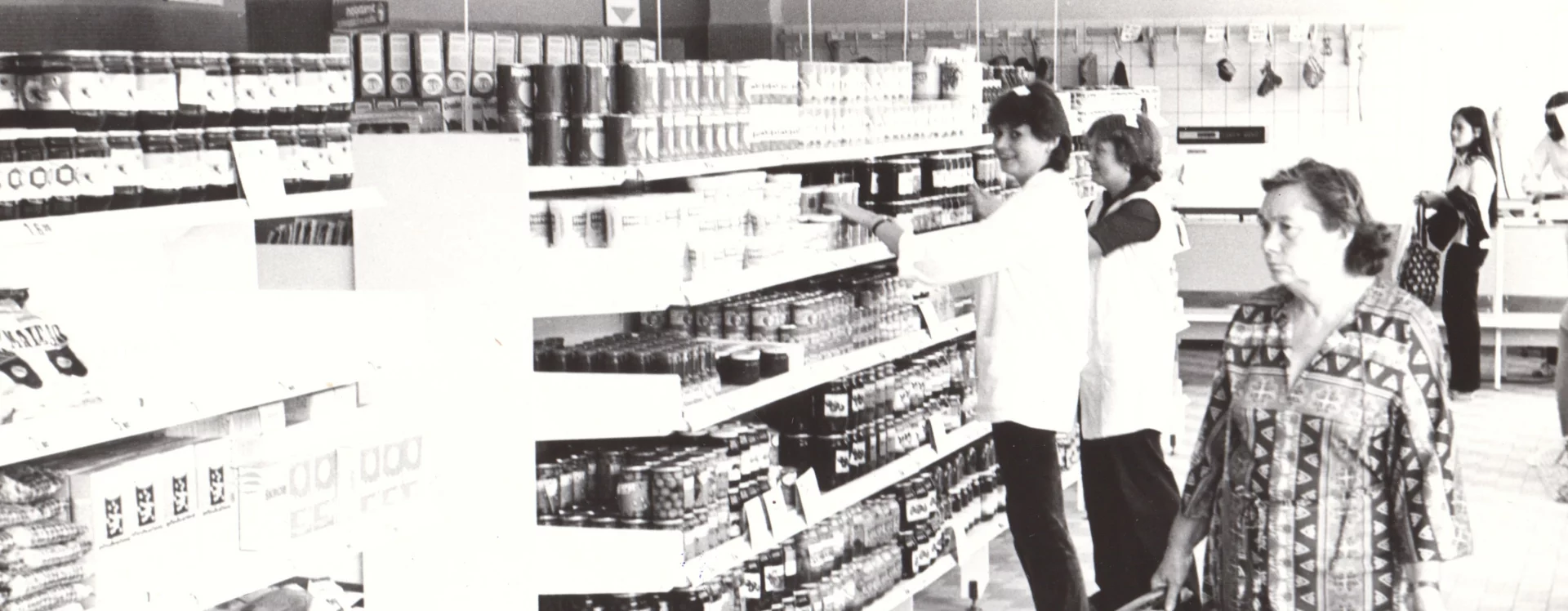
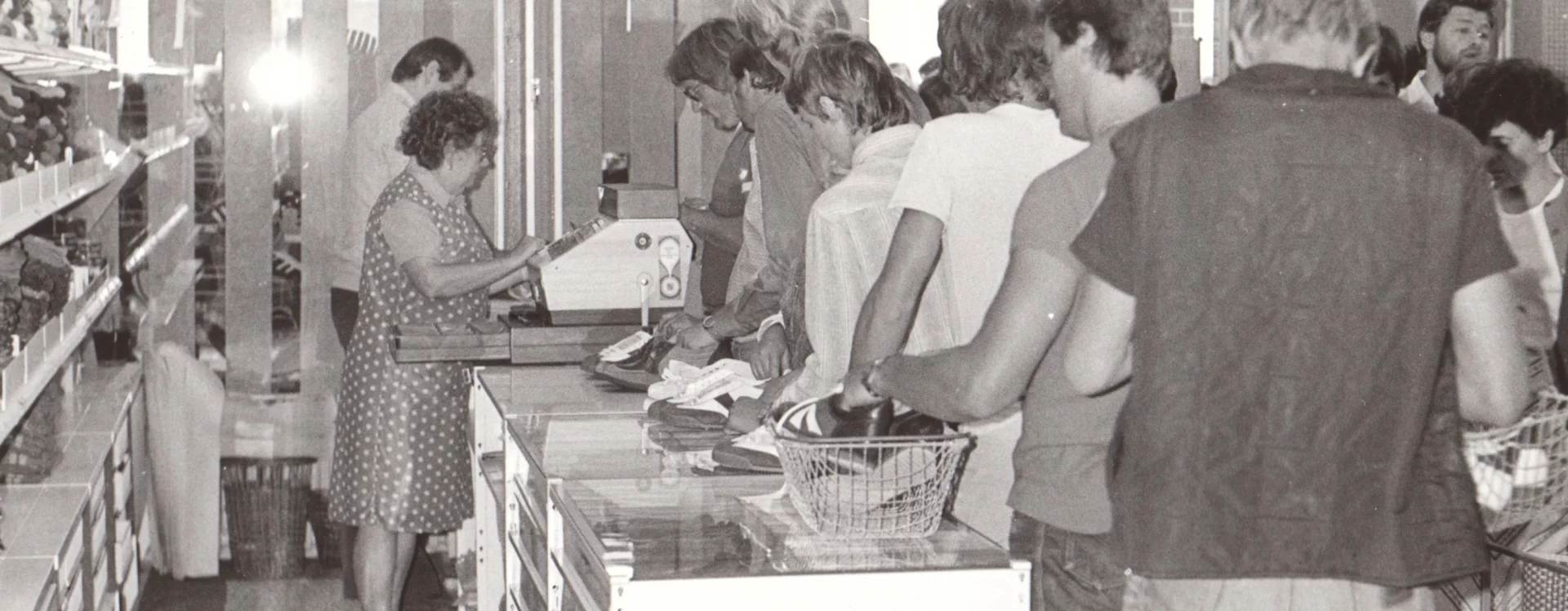
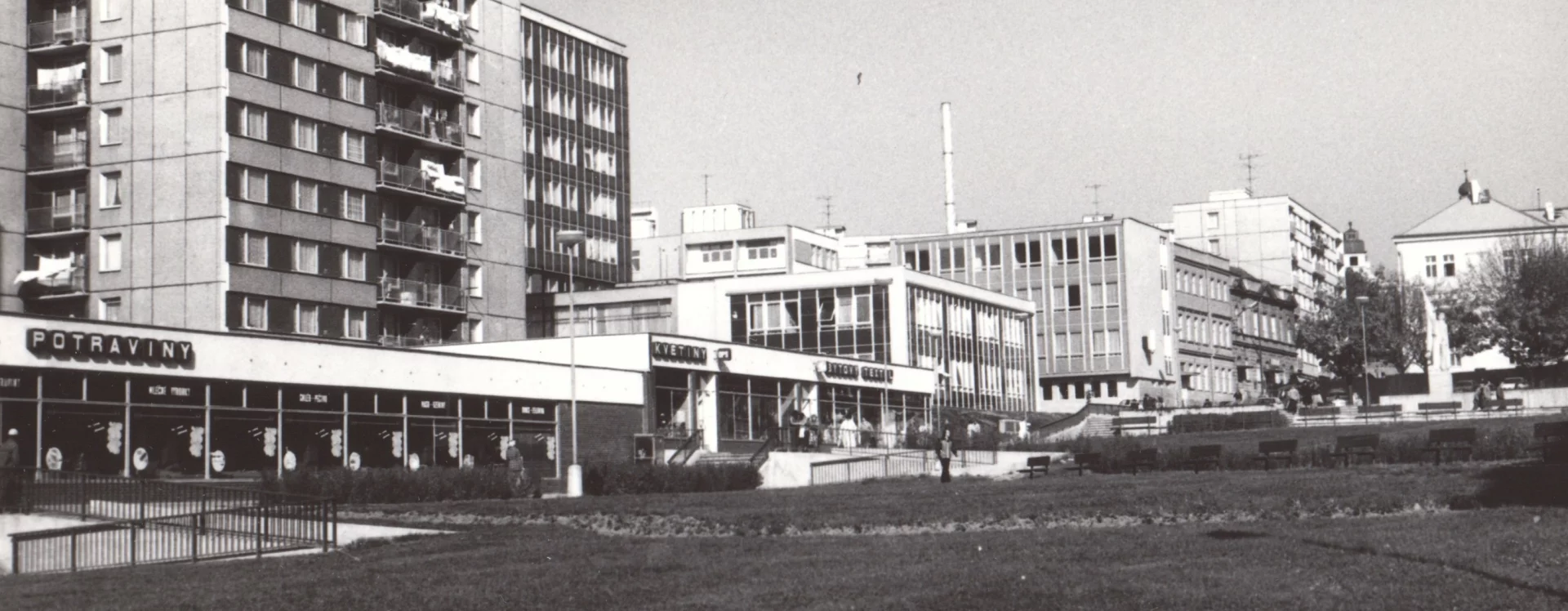
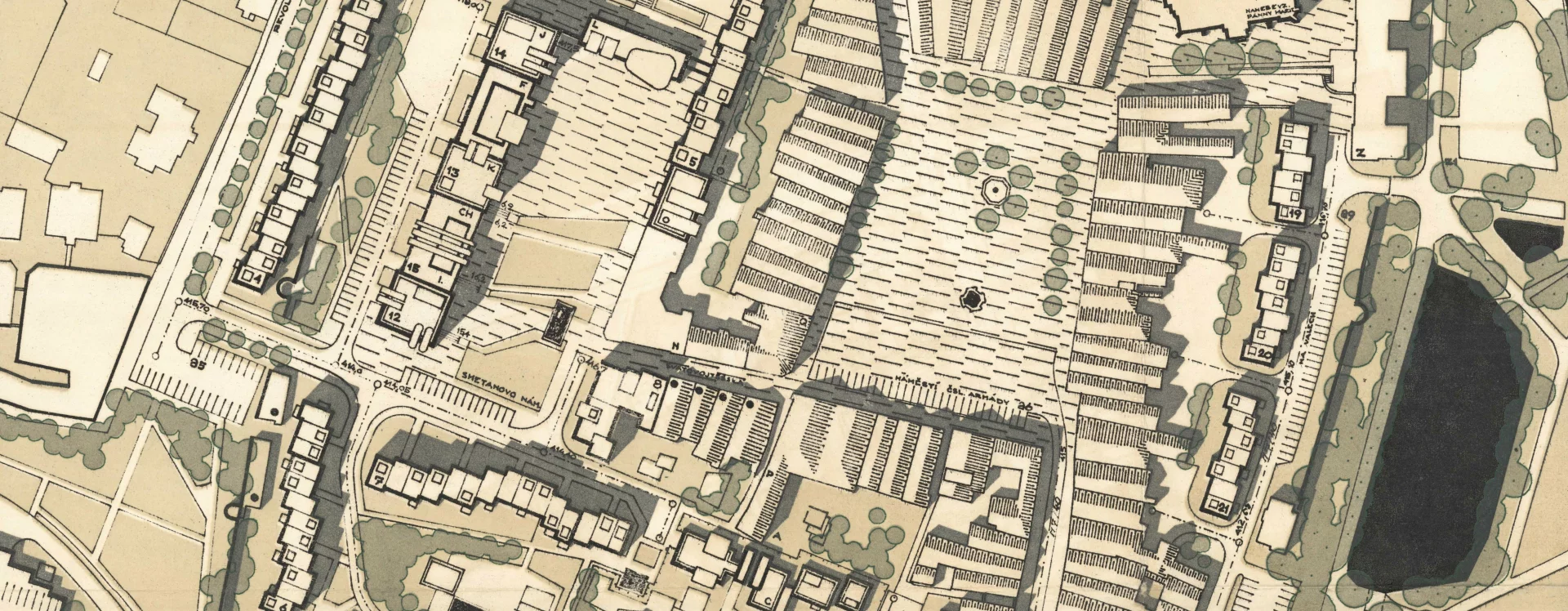
The urban design and construction were developed by Stavoprojekt Hradec Králové in a detailed zoning plan following a public tender. The competition was won by Pardubice architect Lubomír Driml, who became the project’s principal designer. The plan was drawn up in 1972 in accordance with an architectural-historical assessment by the State Institute for the Reconstruction of Historic Towns and Buildings in Prague. Driml’s project envisaged the construction of 688 new residential units divided into three separate blocks, a nursery school for 120 children, a crèche for 55 children, a shopping centre, a grocer’s, a restaurant, an exhibition and wedding hall, a telecommunications building, and 100 collective garages. The entire area was intended to be dominated by four point blocks on pedestals: three residential buildings atop the shopping centre pedestal, and a fourth building serving as the headquarters of the Škrobárny Starch Works industrial enterprise (HB-261).
Ahead of construction, residential and industrial buildings on Smetana Square were demolished and some residents were relocated to new homes on Klement Gottwald Square (now the corner of Jihlavská and Nádražní) and the Pražská housing estate, which was completed in 1971.
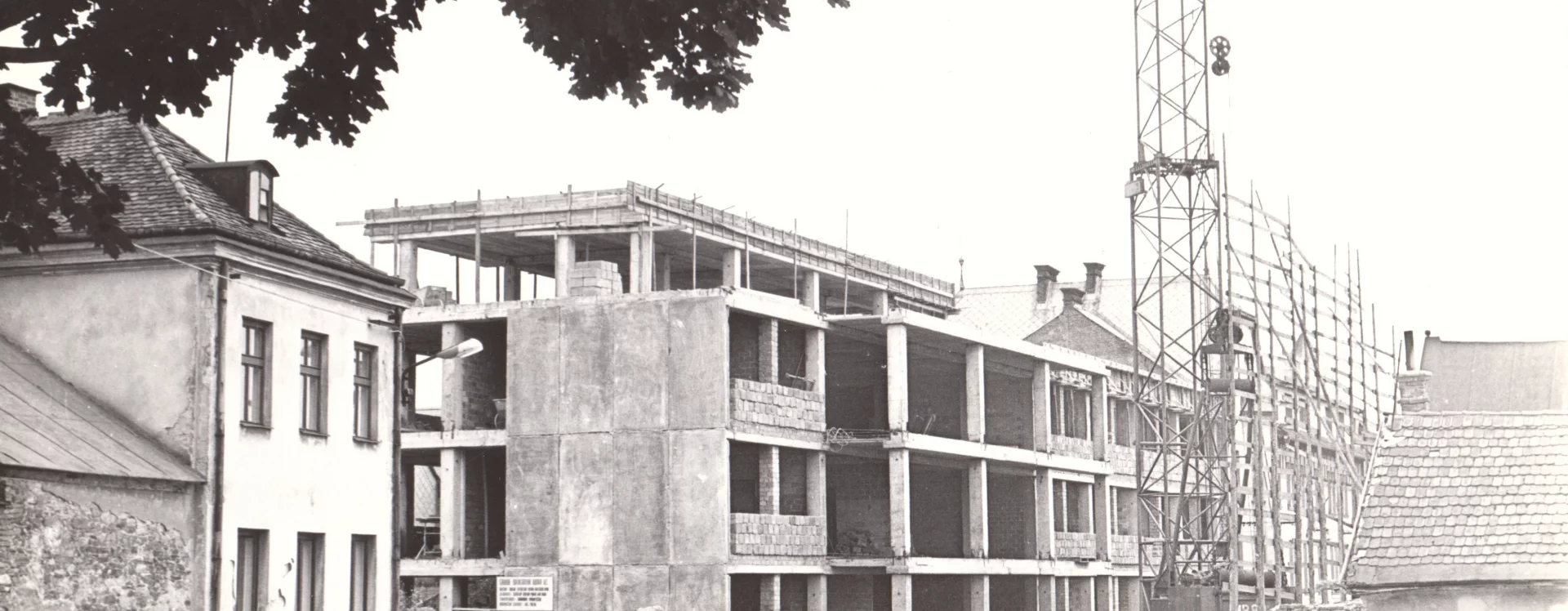
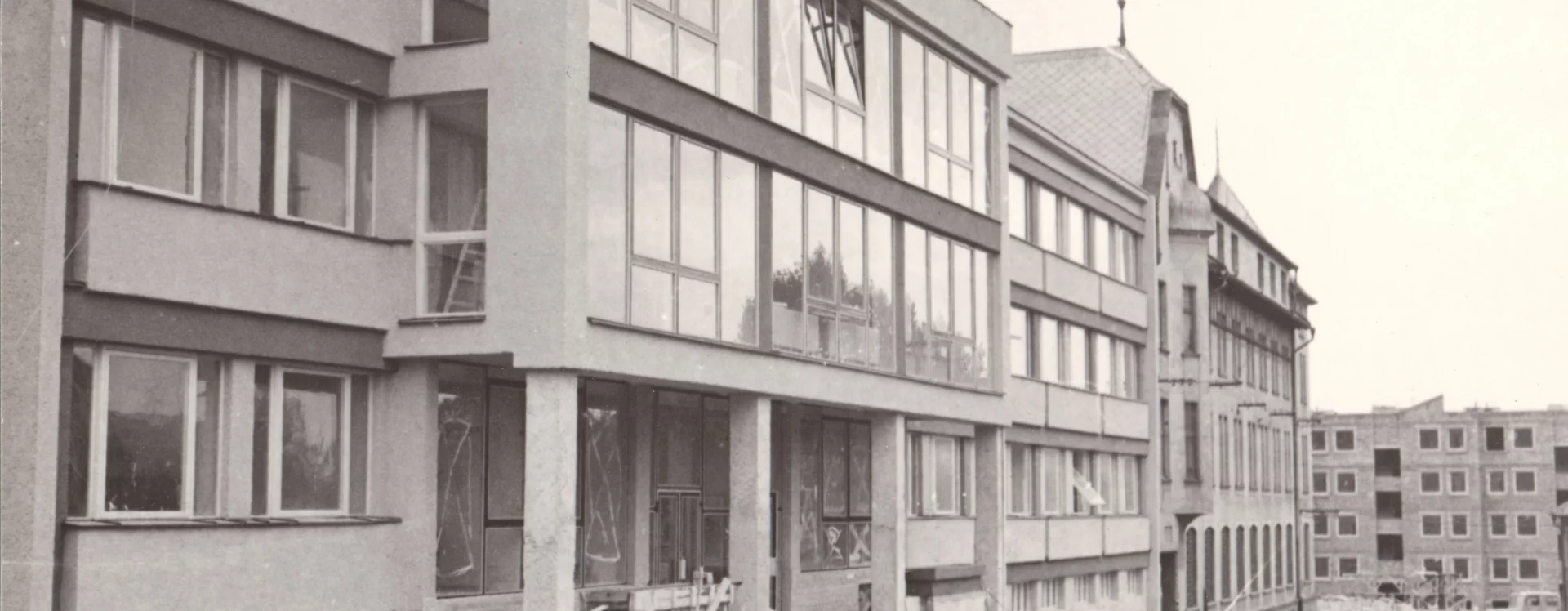
In the first stage, which began in 1973, four-storey buildings were constructed in the southern part of the designated area according to Driml’s design through cooperative construction; these now form V Rámech and Trčkova streets (HB-VP-SN1). A year later, an administrative building for the District Agricultural Administration, designed by the Pardubice branch of Agroprojekt (Mr Sobel), was built, which, together with the post office building, defined the eastern side of the new square.
In the second stage, which began in 1978, both the main designer and the contractor changed: architect František Příborský took over as designer, while Pozemní stavby Pardubice became the contractor. The second-stage team abandoned Driml’s plan for three-point houses atop the shopping centre, opting instead for T06B prefabricated houses—typical in East Bohemia—for residential construction in the centre and upper part of the square. The exhibition and ceremonial hall were omitted and the telecommunications building was moved. The shopping centre, which opened in 1982, then closed off the western side of the square.
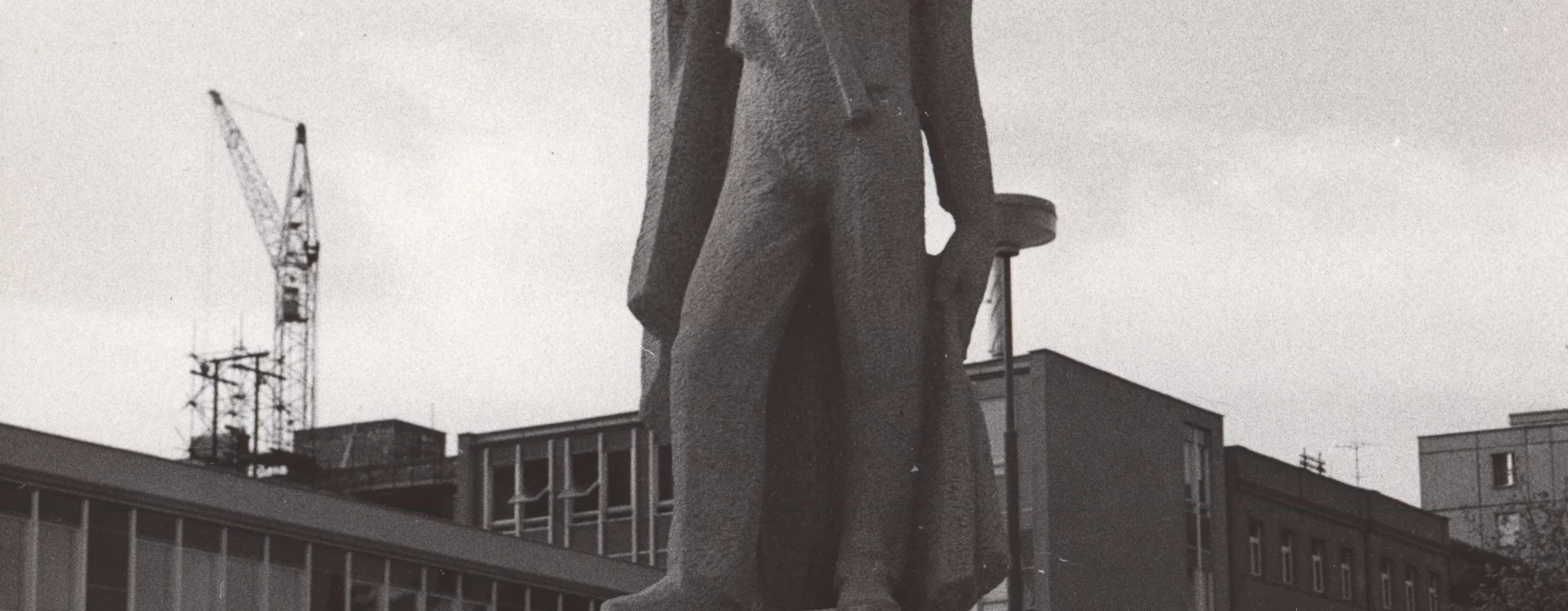
Originally planned for 1971–1977, the project extended until 1984, concluding with the installation of a militiaman statue by Havlíčkův Brod sculptor Karel Hyliš. Deviations from Lubomír Driml’s concept failed to improve the square’s appearance, though this was partially remedied by the Burian‑Křivinka office in 2018 (HB‑VP-R-SN).
Aleš Veselý, 2025
Literature
Cesty Vysočiny. 1969. sv. 10/28.
Vladislava Říhová, Zuzana Křenková. Sochy a města. České umění 50.–80. let 20. století ve veřejném prostoru: evidence, průzkumy a restaurování. In: Sochy a města. Available from: https://sochyamesta.cz/.
Sources
Městský úřad Havlíčkův Brod, archiv Stavebního úřadu. sv. č. p. 261, 279.
Státní okresní archiv Havlíčkův Brod, fond Okresní národní výbor Havlíčkův Brod. sv. fasc. 93.
Kronika, město Havlíčkův Brod, okres Havlíčkův Brod, III. 1970-1989. Státní okresní archiv Havlíčkův Brod, fond Městský národní výbor Havlíčkův Brod, Městský národní výbor Havlíčkův Brod.