At the beginning of the 20th century, a number of new cemeteries were created beyond built-up areas within the Czech lands. This was driven both by hygiene concerns and by the limited space available in historic town cemeteries. It was at this time that the New Cemetery in Havlíčkův Brod was established.
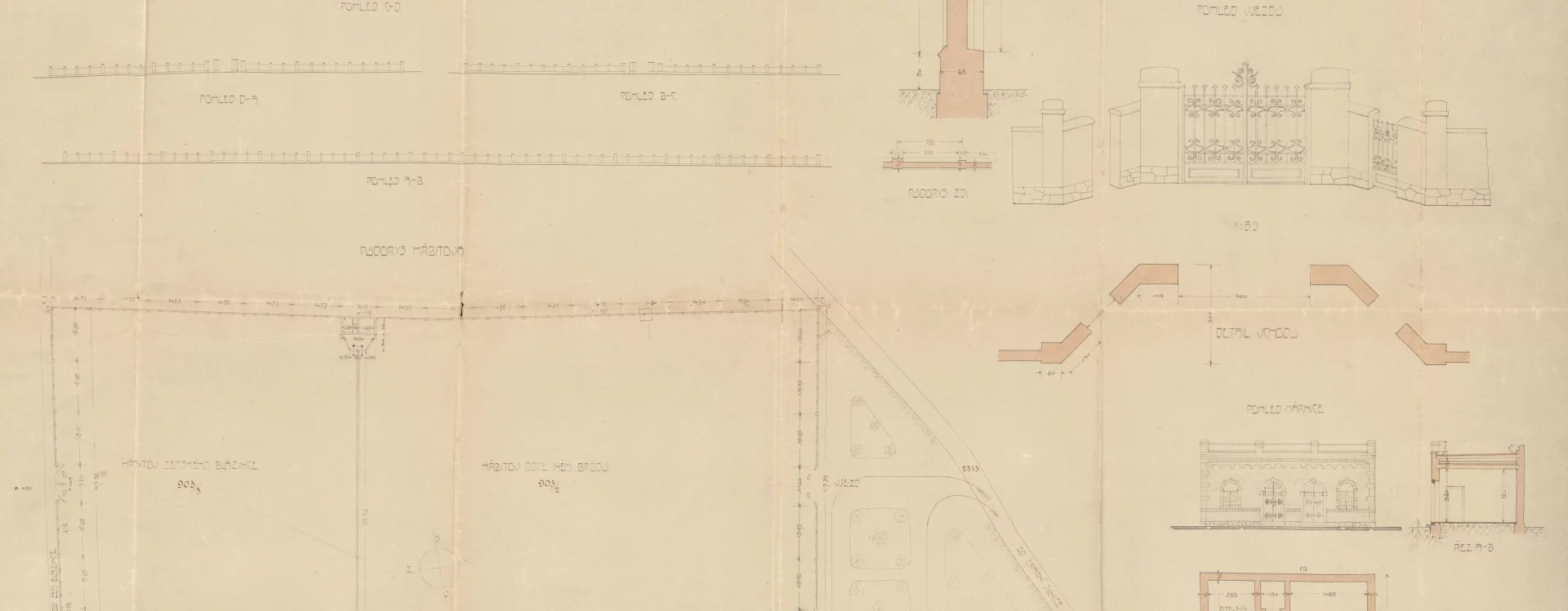
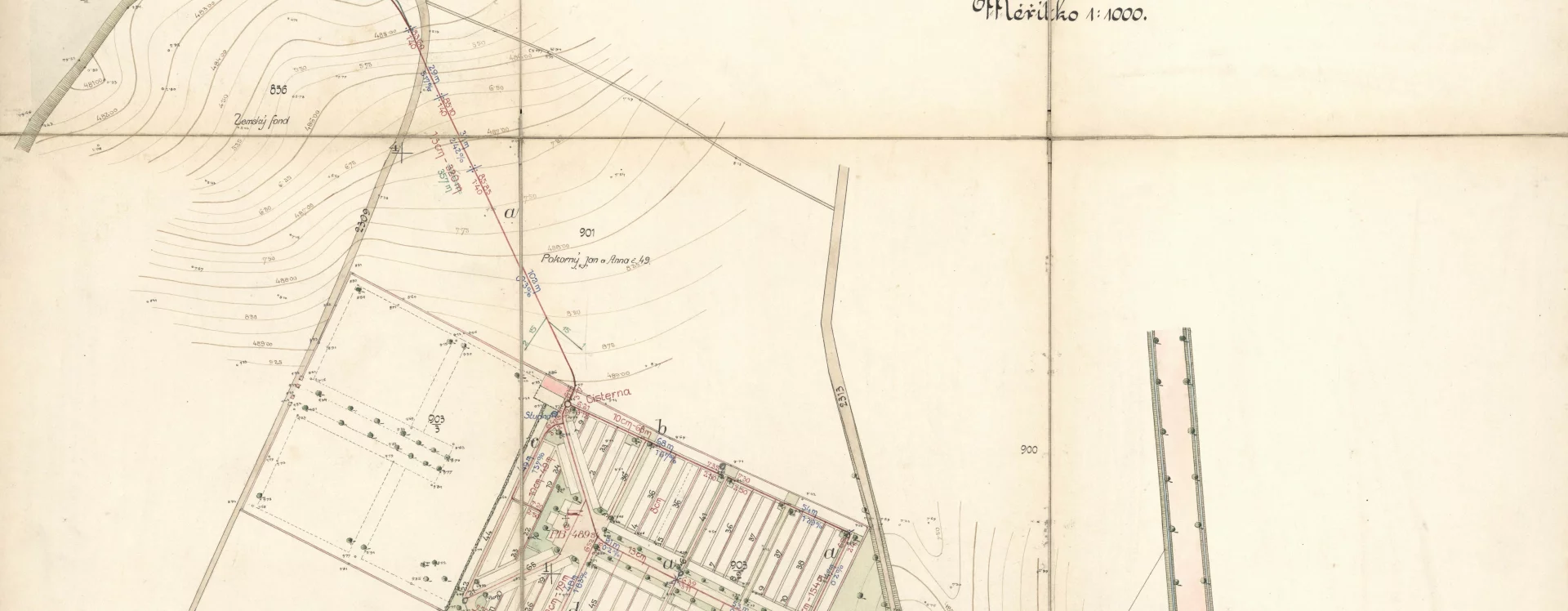
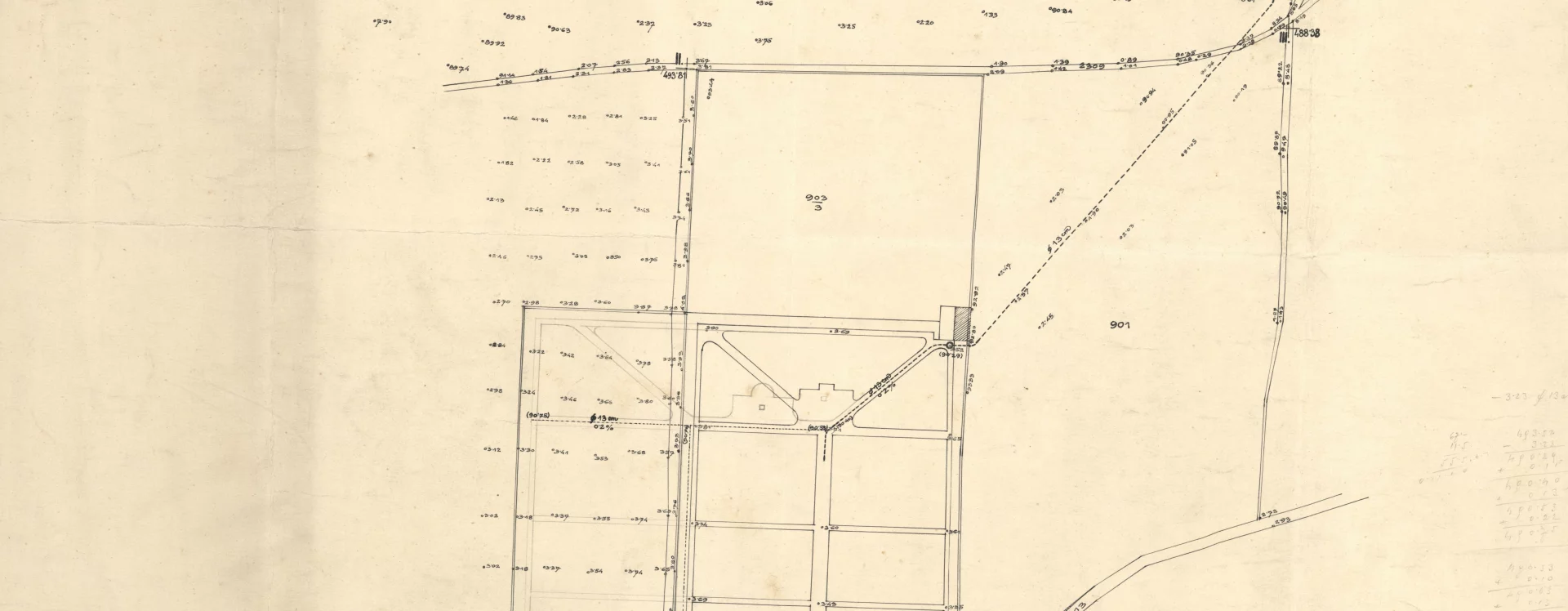
The selected plots of land along the Prague road were then almost one kilometre away from the last of the town’s buildings. The rectangular area of the cemetery originally consisted of two parts. To the east, facing the access road, was the municipal cemetery. The western part, facing the fields, was occupied by a slightly smaller cemetery belonging to the Provincial Institute for the Mentally Ill (HB-2322). The construction of the institute itself was delayed, with the first patients arriving in 1928. The institute cemetery was therefore ready long before the institute opened.
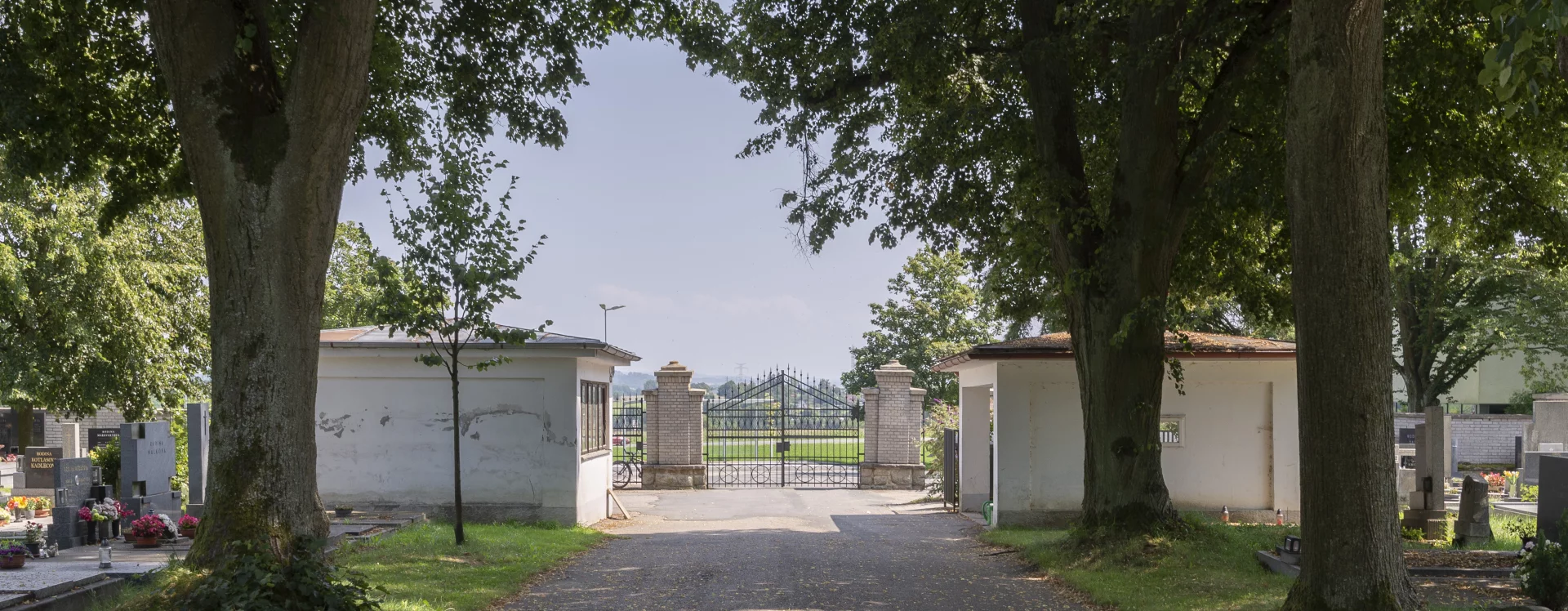
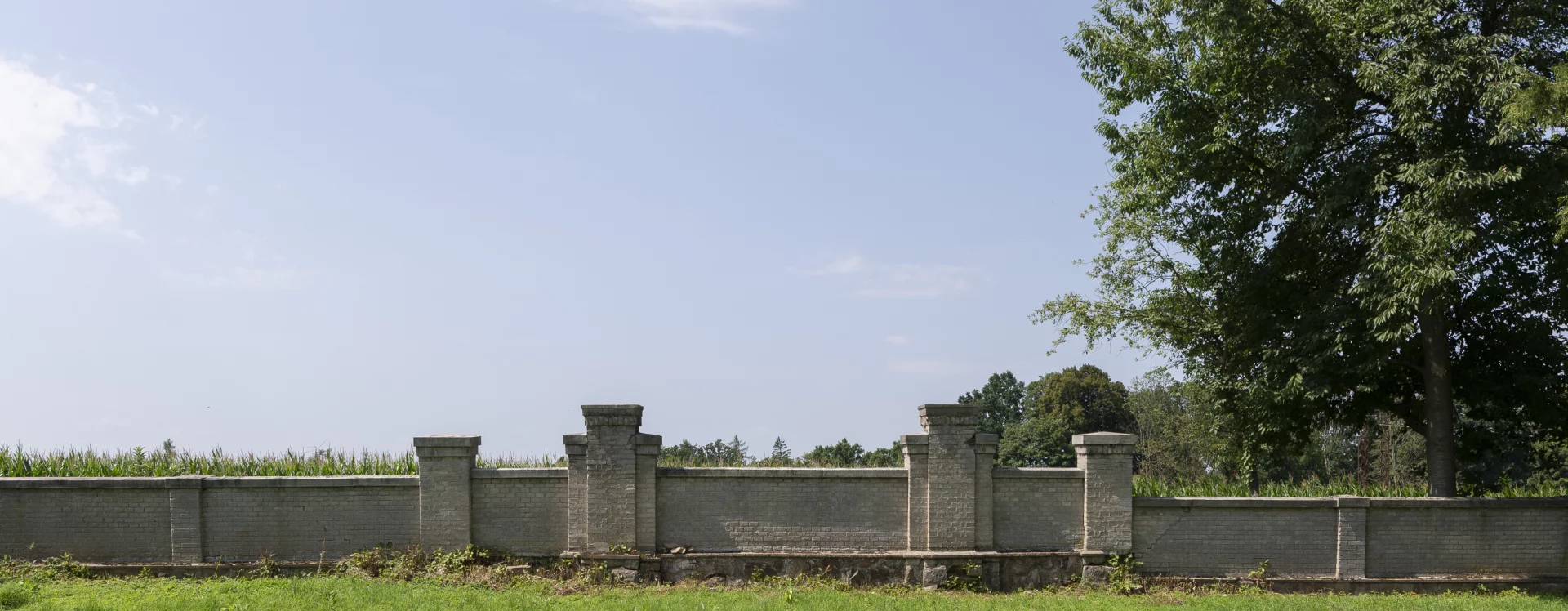
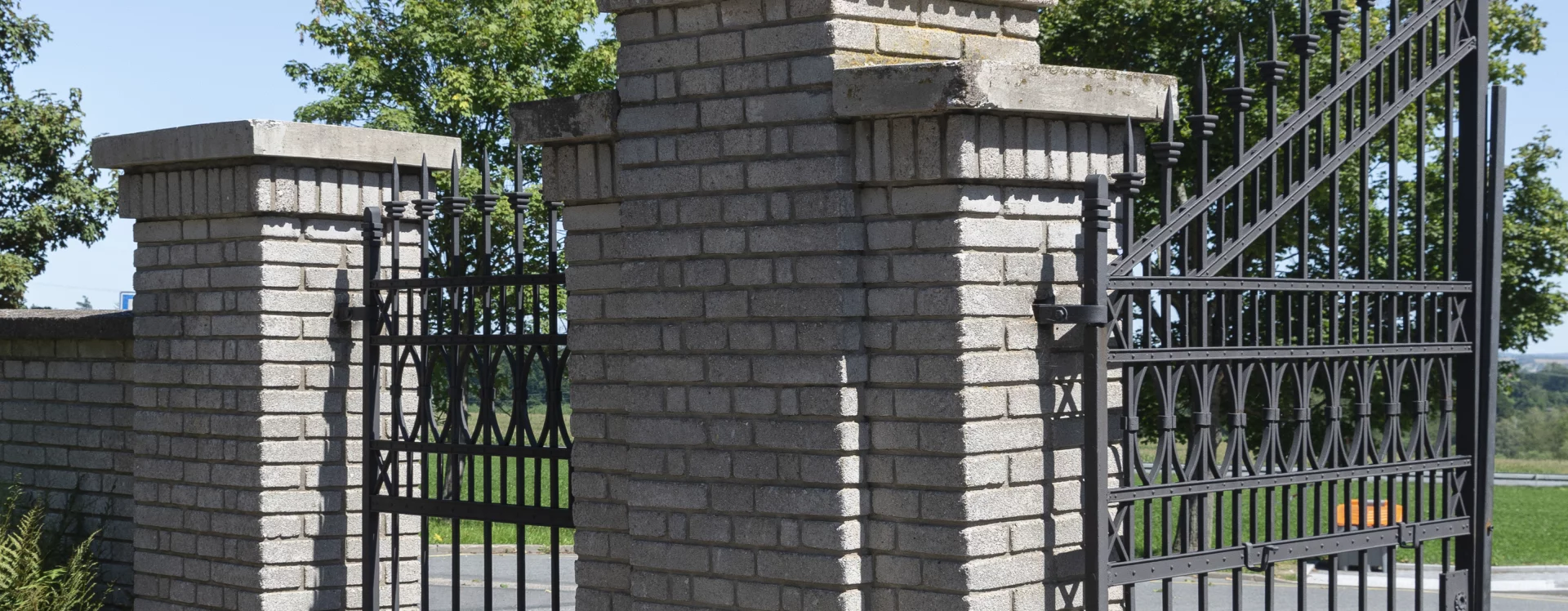
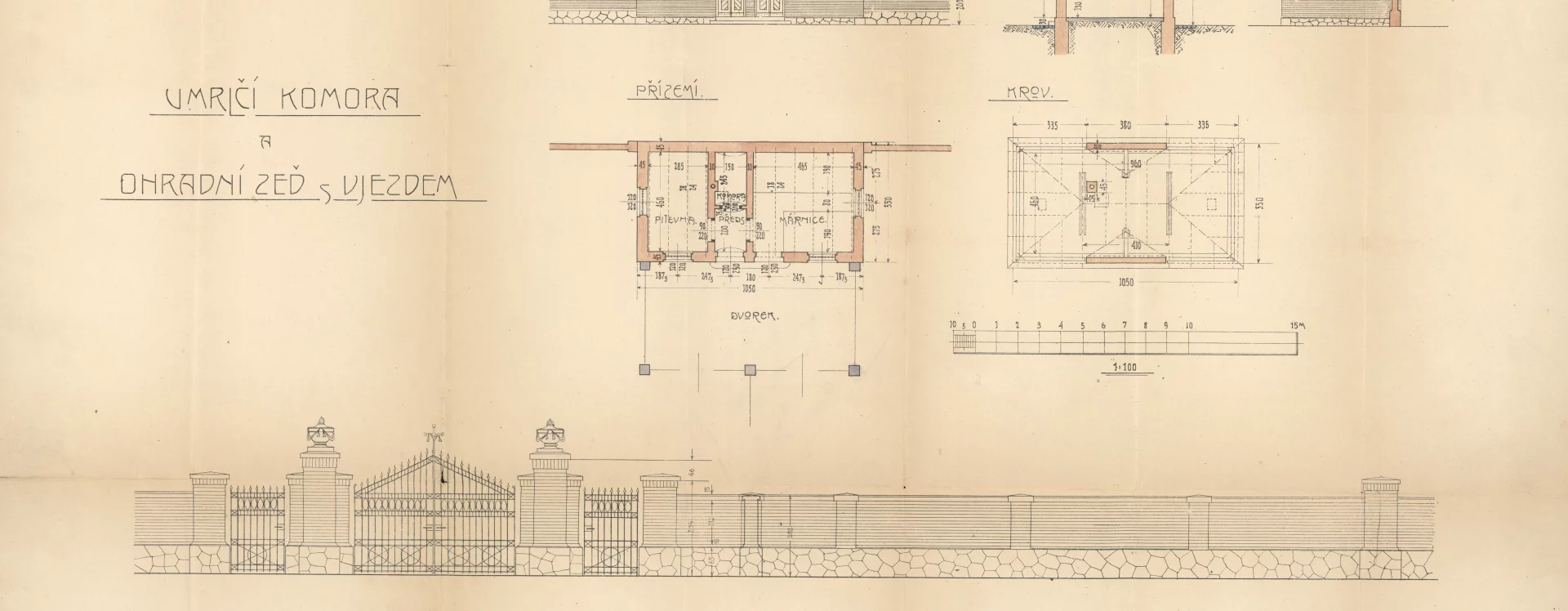
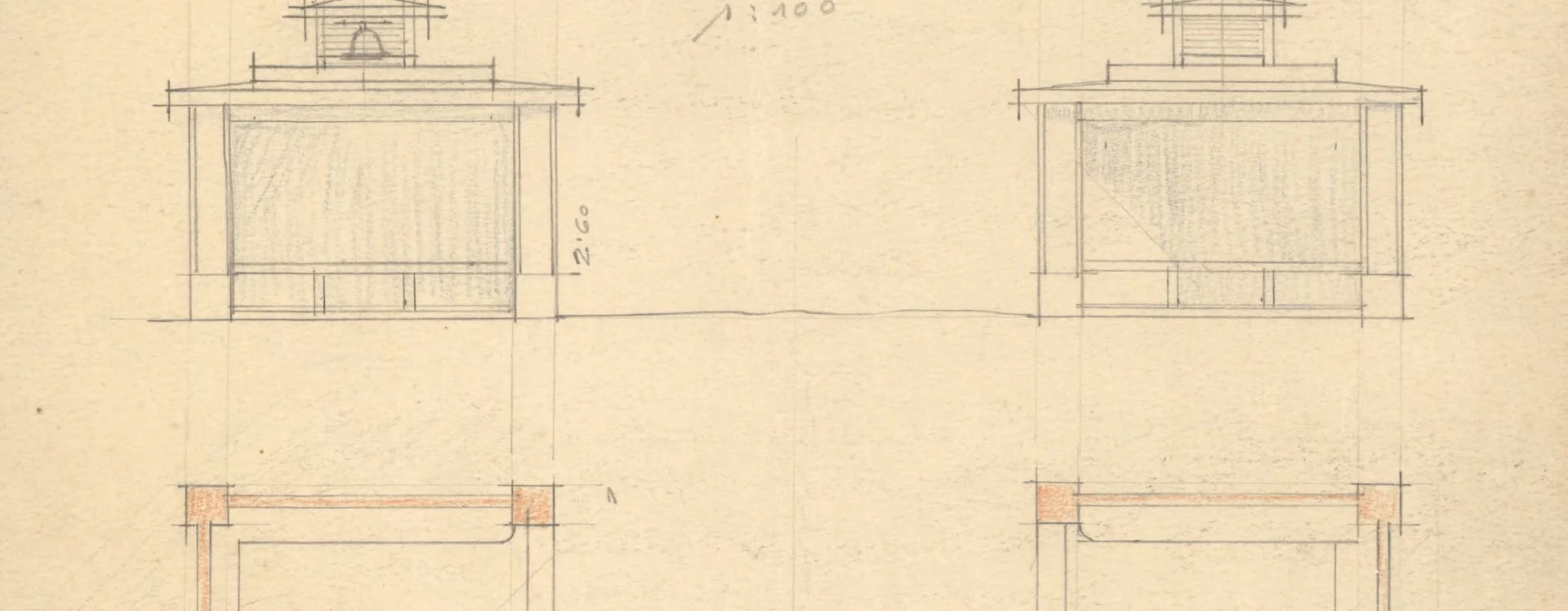
The specifications for the architectural competition for the New Cemetery were drawn up in 1909 by the engineer and architect Prokop Frič. The contract was awarded to a local construction company owned by the brothers Otakar and František Liška, who designed the cemetery enclosure wall separating the two parts, as well as the adjacent morgue with an autopsy room, located on the site of today’s sanitary facilities. The project was subsequently revised by Prokop Frič, who modified the appearance of the enclosure wall and buildings, and designed the layout of the cemetery grounds.
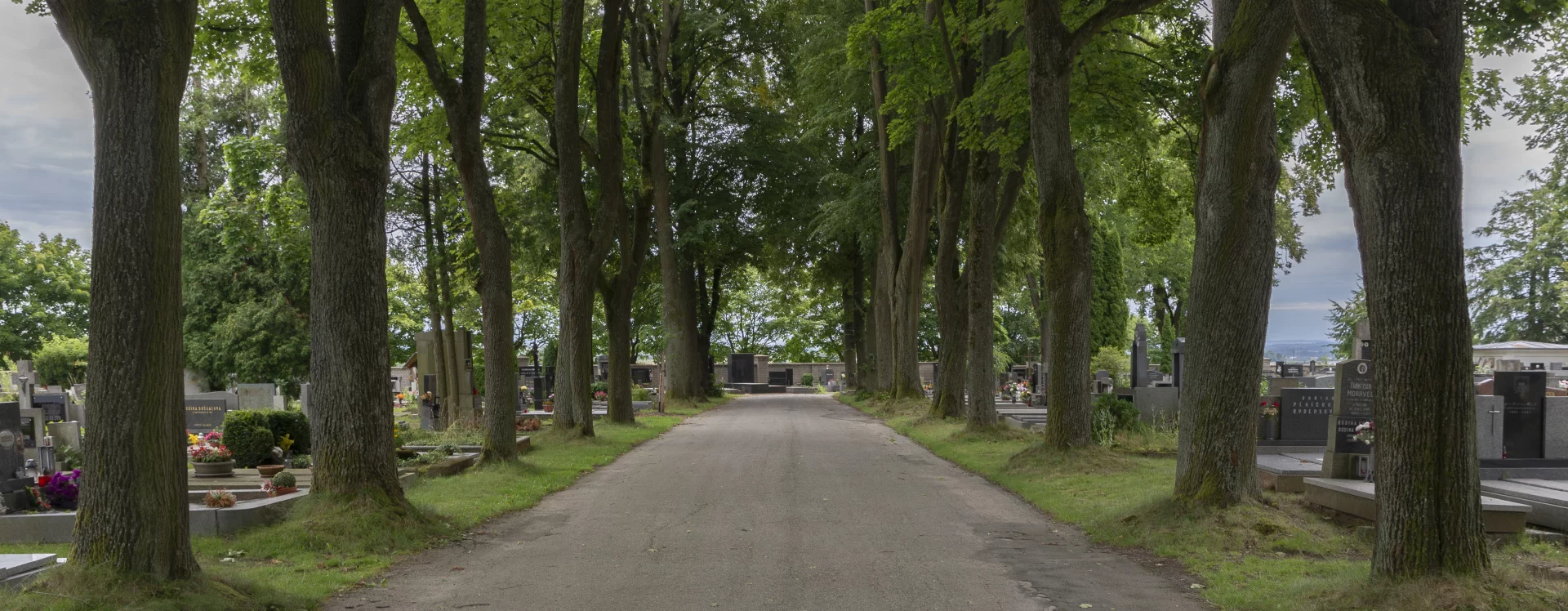
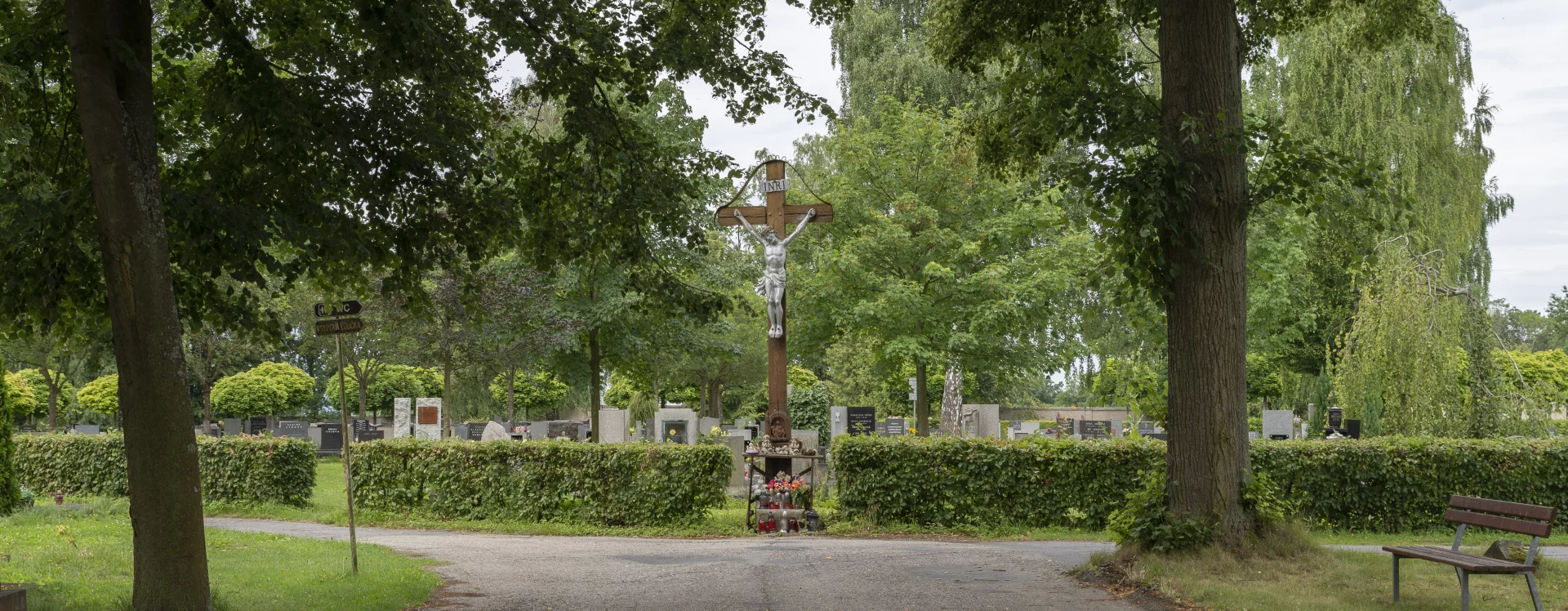
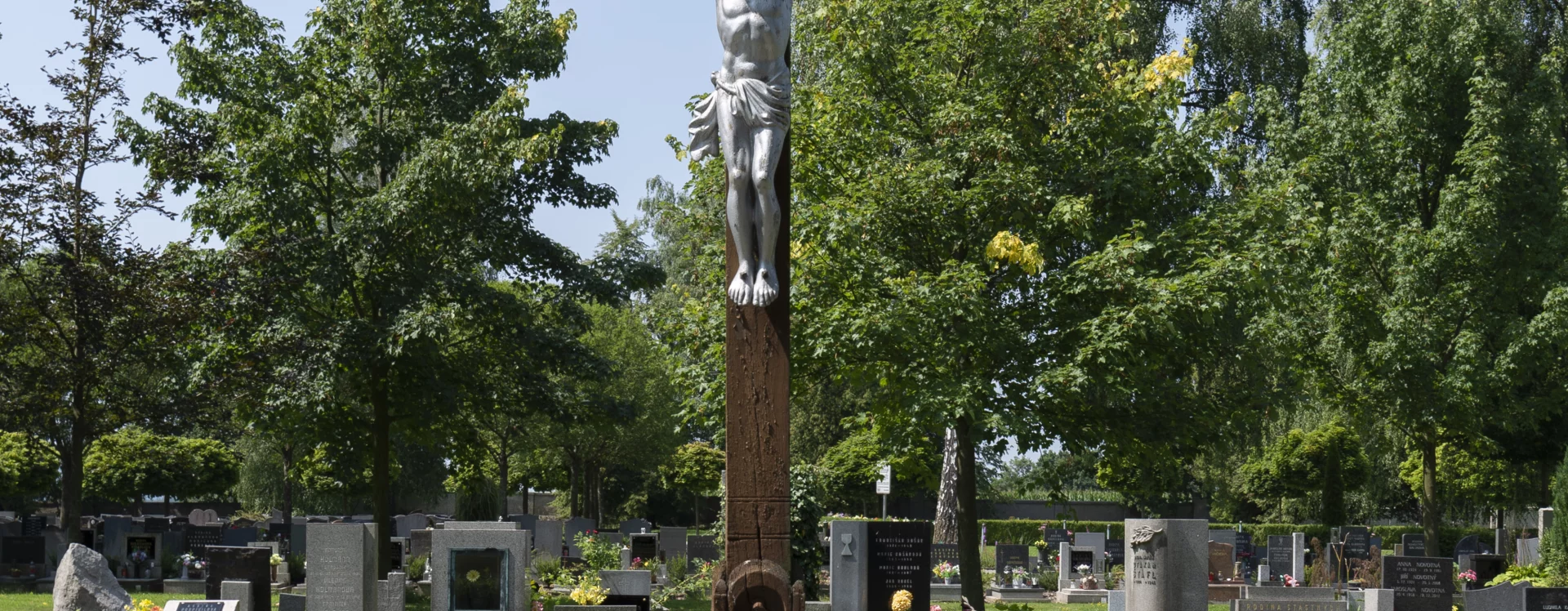
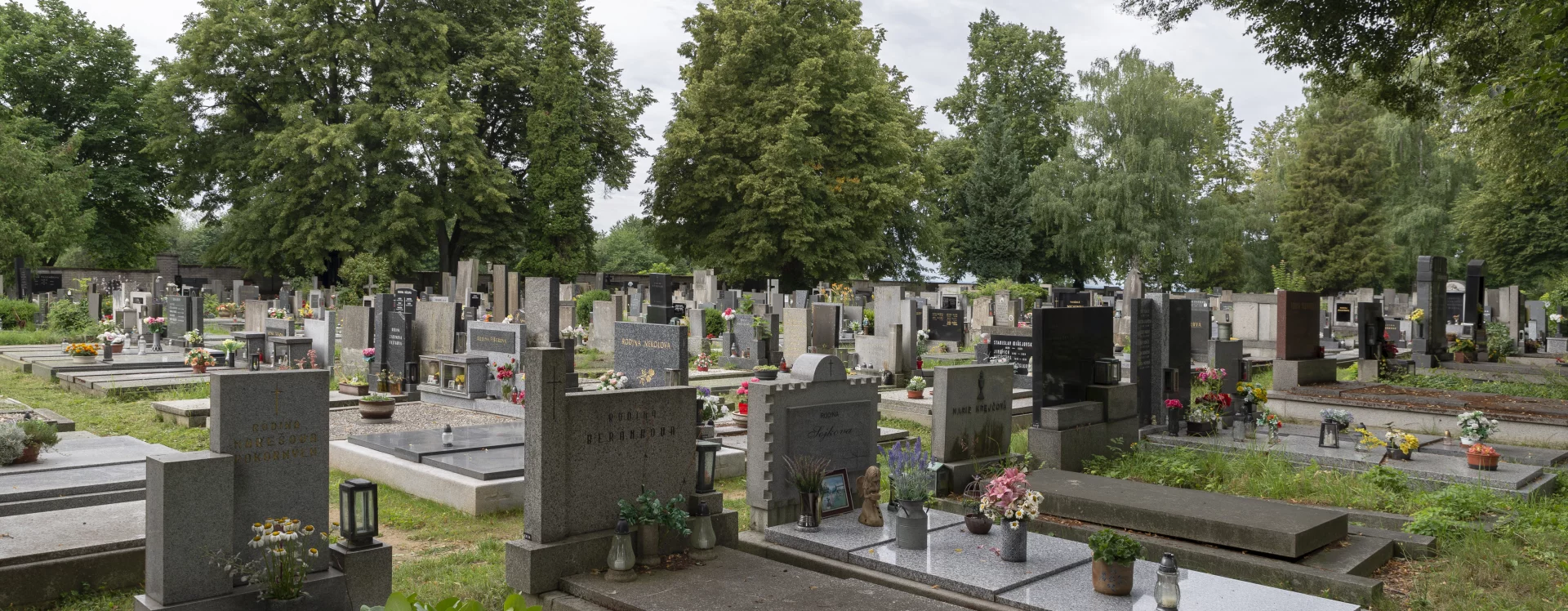
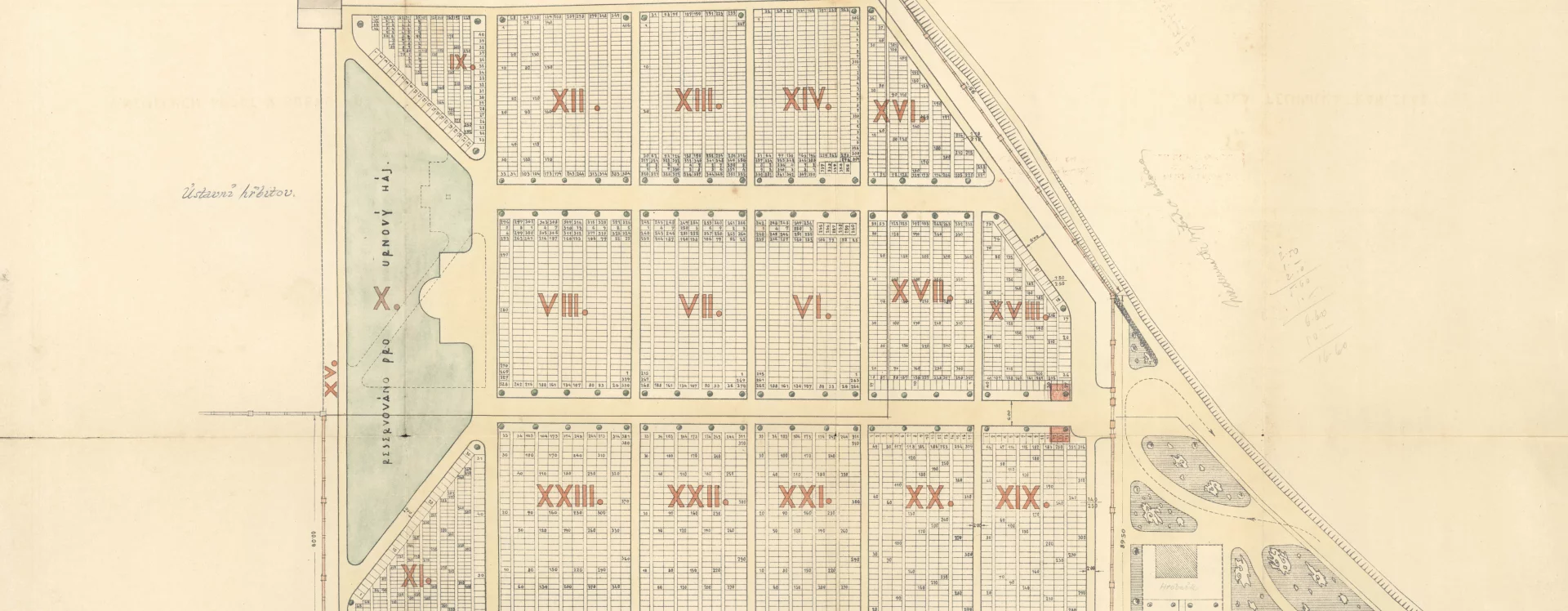
The cemetery was completed in 1911. A wide path ran through the centre of the town district to the main cemetery cross, around which Frič proposed to place “three graves on each side for men who had rendered outstanding service to their country and humanity”. Two diagonally laid paths ran from the cross to the rear corners of the municipal cemetery. The architect also recommended placing more prominent graves at their ends as a “point de vue”. Cemetery sectors were designated in advance for tombs and row graves, with separate areas for permanent graves and for temporary ones acquired for a period of ten years. Another sector was reserved for children’s graves. For the deceased of the Protestant faith, a location without a view of the main cross was selected, as the cross was a symbol largely avoided by the Protestant Church.
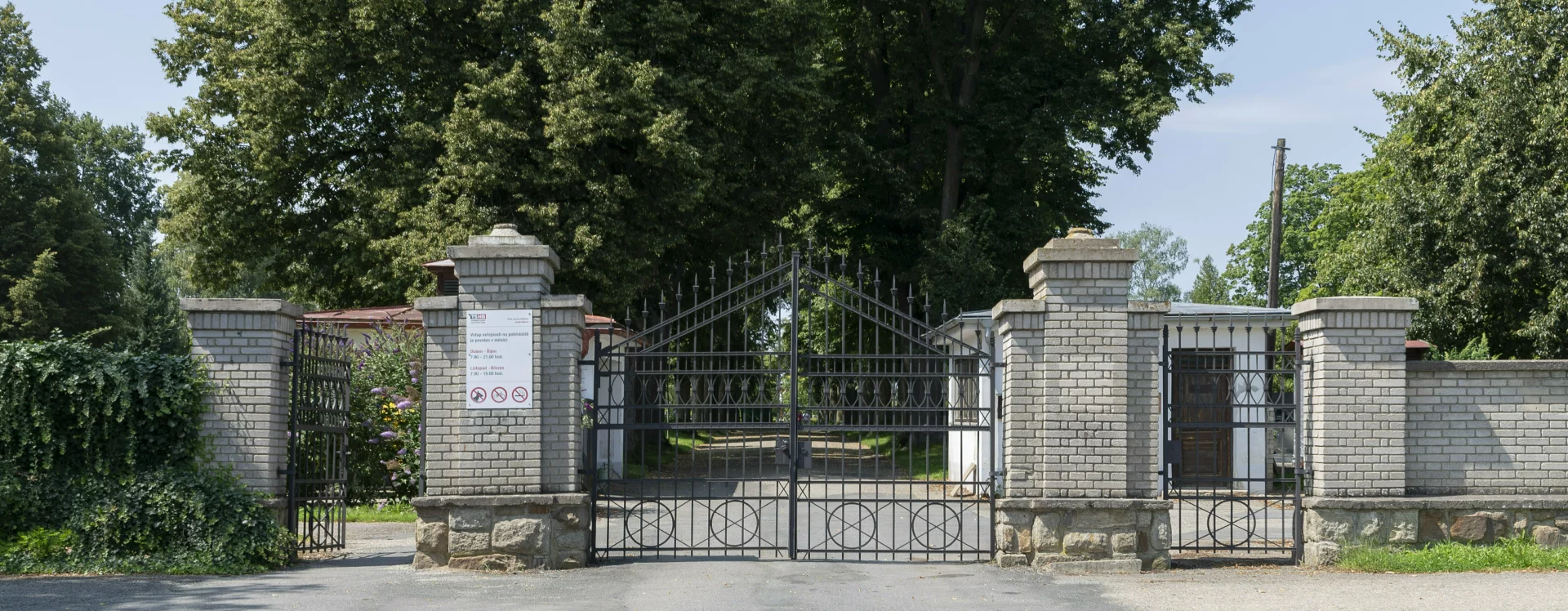
Each part of the cemetery had its own gate, originally opposite each other on the shorter sides of the plot. The triangular space between the gate of the municipal cemetery and the municipal road was landscaped as a park, with a gravel driveway for carriages leading through it.
At the end of the 1920s, the cemetery was expanded in both directions, losing its original symmetrical layout. The municipal cemetery was also slightly enlarged at the expense of the institutional cemetery. The gate of the institutional cemetery was moved to the southern fence wall around this time, perhaps in connection with the completion of the Institute for the Mentally Ill and the modification of the field road beyond the western border of the town, which connected the institute grounds and its cemetery.
At the beginning of the 1930s, there were plans to build a crematorium. After burials were banned at the overcrowded Old Cemetery at St Adalbert’s in 1933, plans were made to build a gravedigger’s house on the site where the ceremonial hall stands today (HB-2949). However, neither of these projects was ever realized.
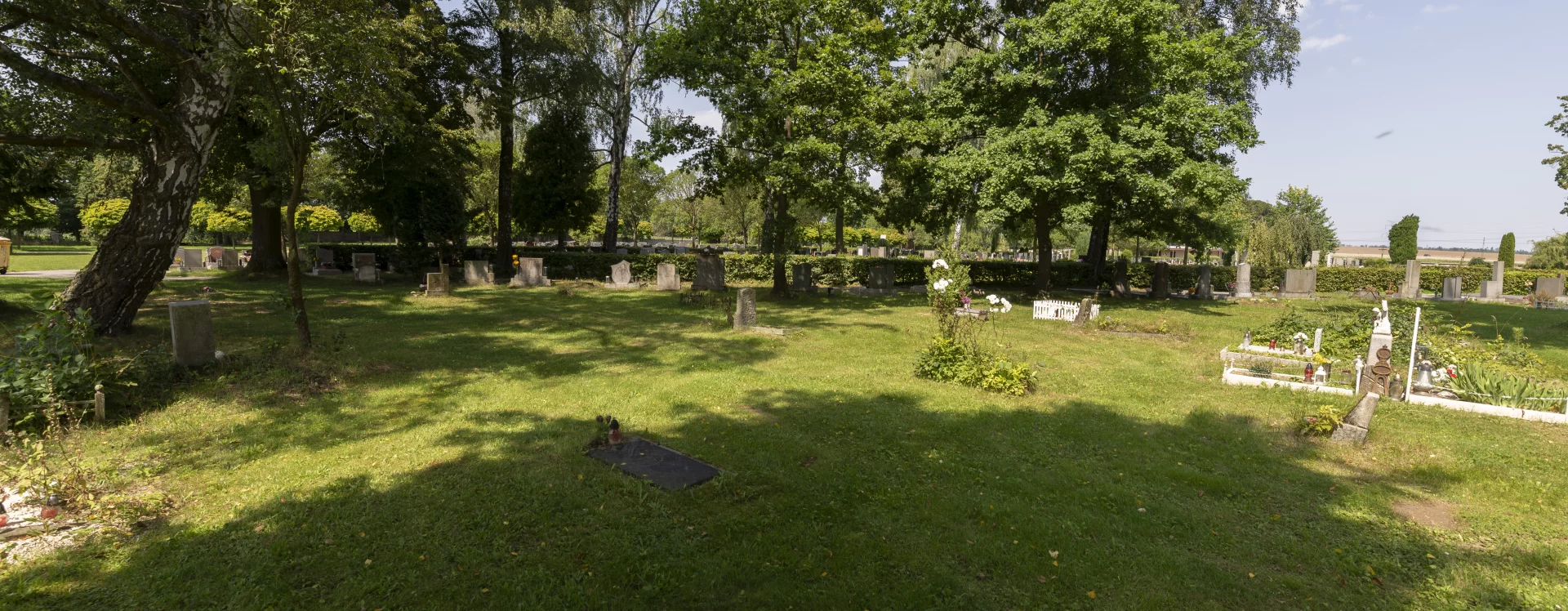
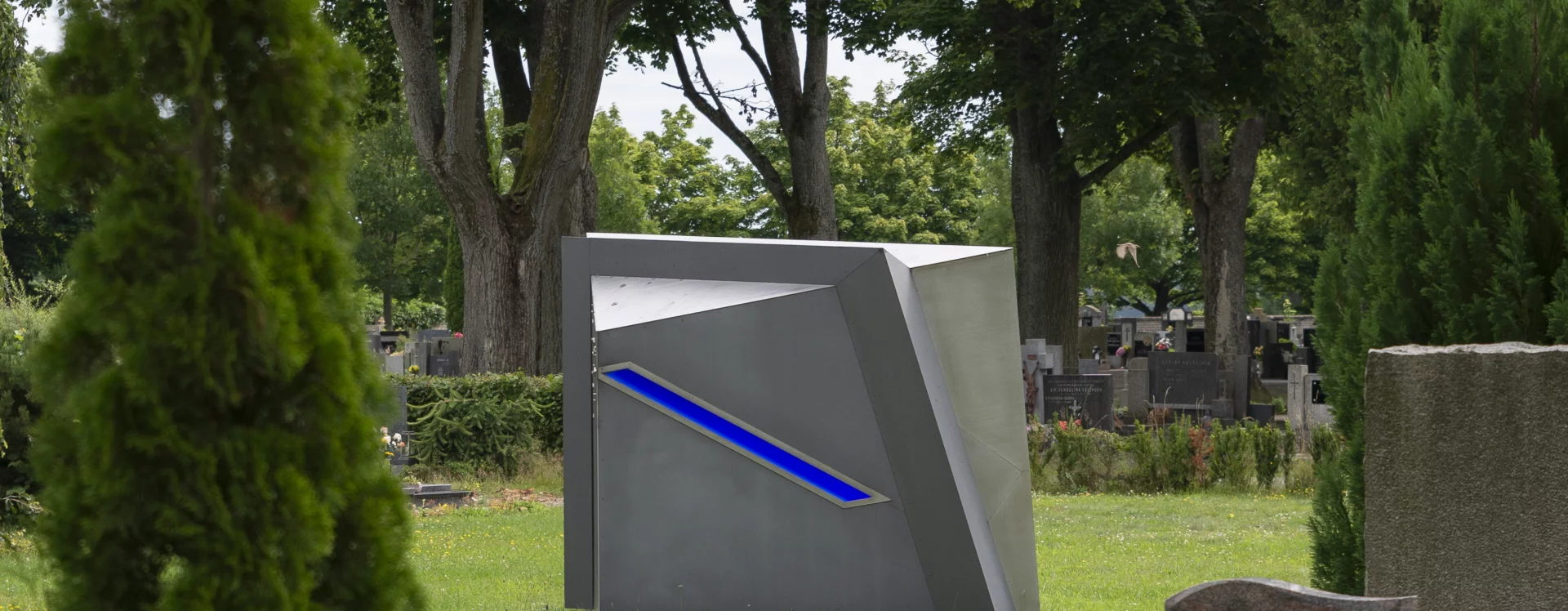
In 1932, a mass grave was created in the cemetery for soldiers from World War I, whose remains were gathered from various parts of the cemetery and placed at the site of today’s memorial to the fallen (HB-pc903_2). In response to changes in burial practices, an urn grove was established nearby, followed later by a scattering meadow. The remaining area of the institutional cemetery is also now designated for urn burials, which are currently chosen by more than three-quarters of Czech society.
Zuzana Trnková, 2025
Literature
Libor Blažek. V Havlíčkově Brodě rozšíří Nový hřbitov. In: VYSOČINA NEWS.cz. 3. 3. 2022. Available from: https://vysocina-news.cz/v-havlickove-brode-rozsiri-novy-hrbitov/ [accessed 12. 8. 2025]
Národní geoportál INSPIRE. Available from: https://geoportal.gov.cz/web/guest/home [accessed 4. 8. 2025]
Šárka Steinová, Roman Zámečník, Stanislava Ottomanská. Zahradní umění první Československé republiky a její zahradníci. Praha, Národní zemědělské muzeum, 2017. p. 174. ISBN 978-80-86874-79-1.
Miloš Tajovský. Město známe i neznáme: Nový hřbitov. In: Havlíčkobrodské listy. Havlíčkův Brod, 2011, roč. 7, č. 11, p. 2.
Sources
Státní okresní archiv Havlíčkův Brod, fond Městský národní výbor Havlíčkův Brod. sv. karton 349.
Státní okresní archiv Havlíčkův Brod, fond Mapy a plány II. p. 11.
Pamětní kniha Německého Brodu. 1923-1930. p. 271-272. Státní okresní úřad Havlíčkův Brod, fond Archiv města Havlíčkův Brod, Archiv města Havlíčkův Brod.
Pamětní kniha Německého Brodu II. 1930-1969. p. 107-108. Státní okresní archiv Havlíčkův Brod, fond Městský národní výbor Havlíčkův Brod, Městský národní výbor Havlíčkův Brod.