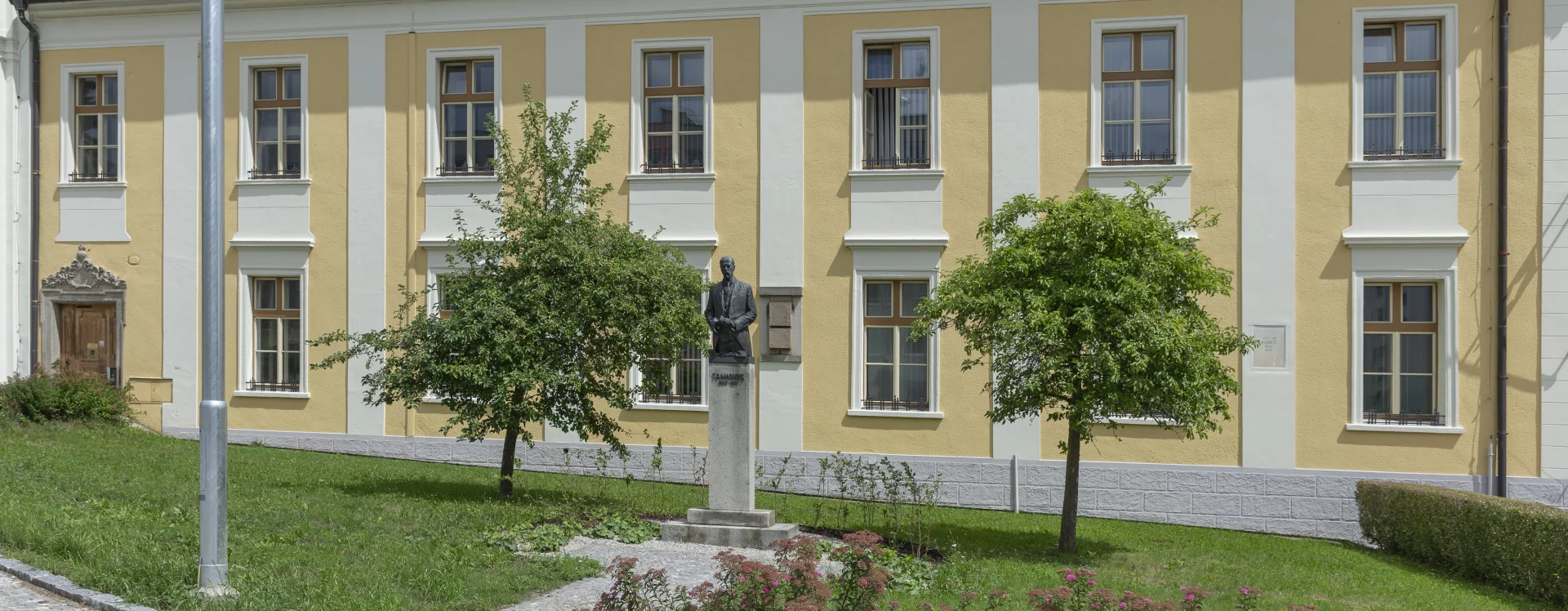
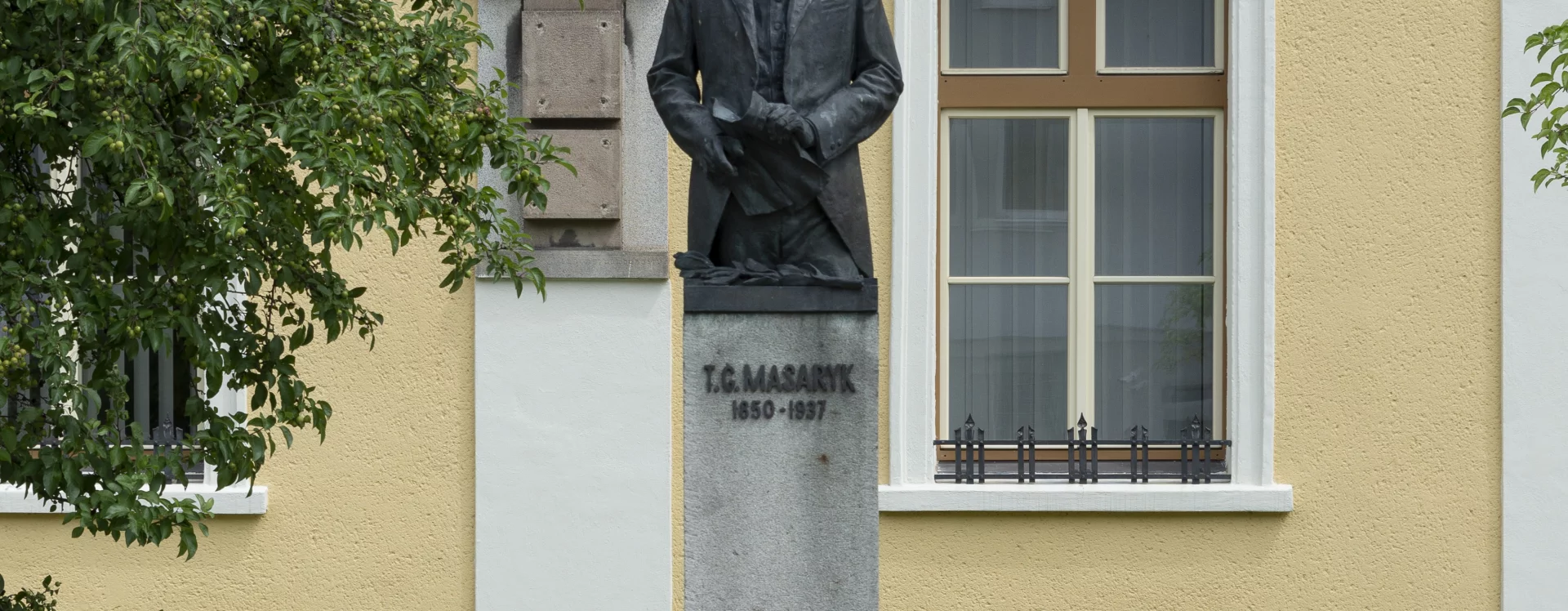
It is highly likely that every town in the First Czechoslovak Republic considered building a monument to Tomáš Garrigue Masaryk (1850–1937). In Německý (Havlíčkův) Brod, this idea first appeared in connection with an exhibition by sculptor Jan Štursa (1880–1925), which took place in the early 1930s at the Hus Congregation and included a half-length figure of the president from 1920–1921.
Antonín Šouba, co-organizer of Štursa’s exhibition, a teacher at local boys’ schools, and an active Brod patriot, decided at that time to erect a monument to Masaryk in Brod. He was joined by other Brod teachers—Marie Šteflíčková, Josef Kuna and St. Breininger—who also involved their students in the project. The children contributed not only financially to the fund for purchasing the statue, but also organizationally, assisting with negotiations over its location and helping prepare the ceremony for the monument’s unveiling.
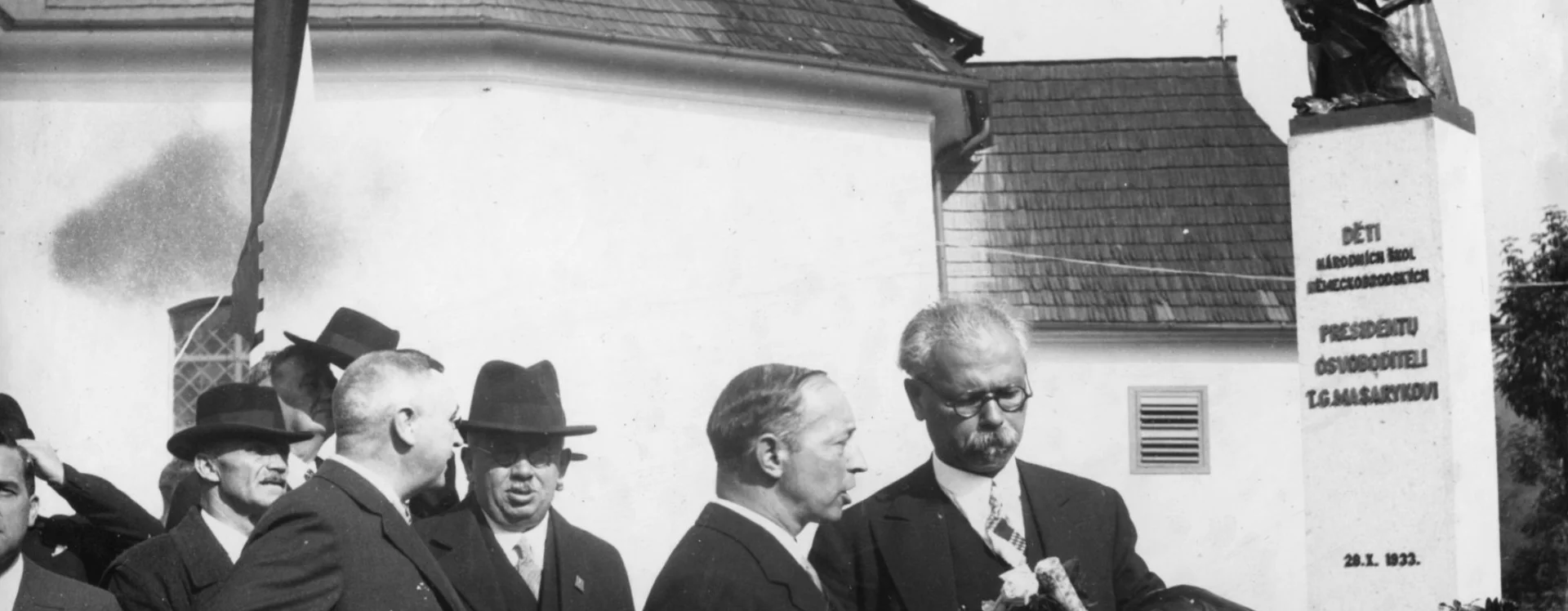
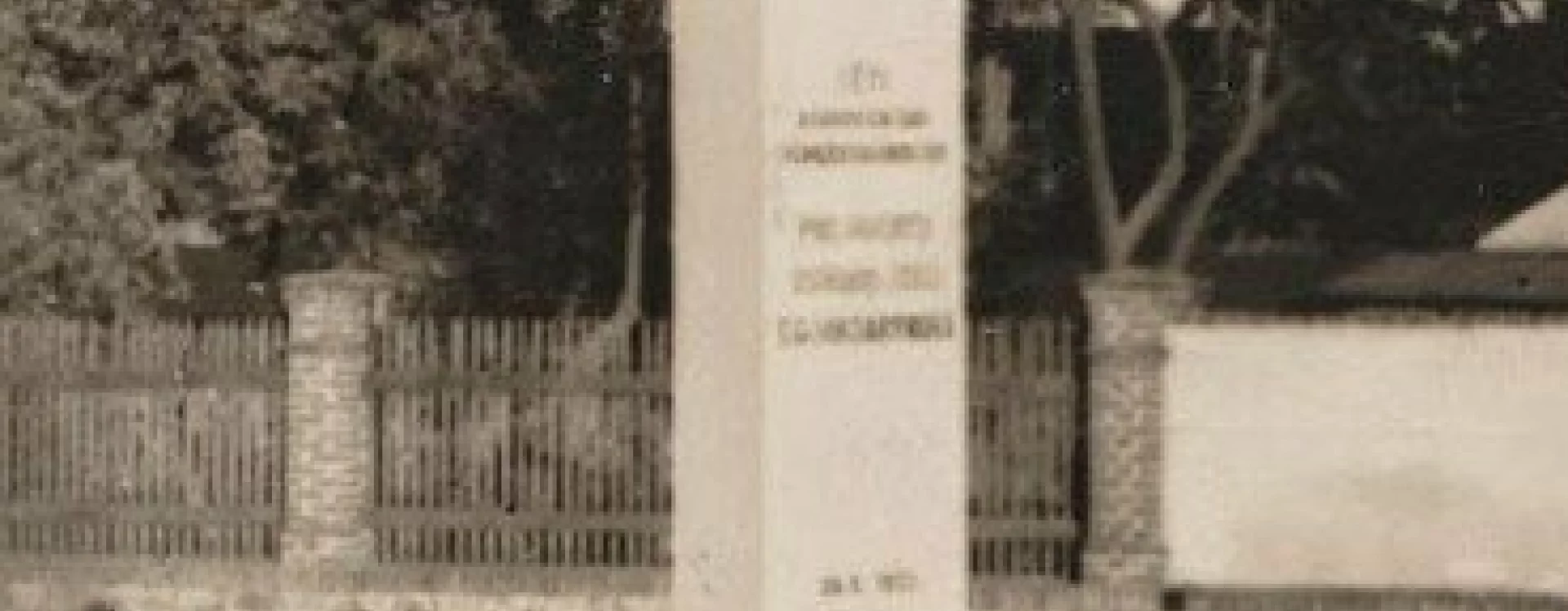
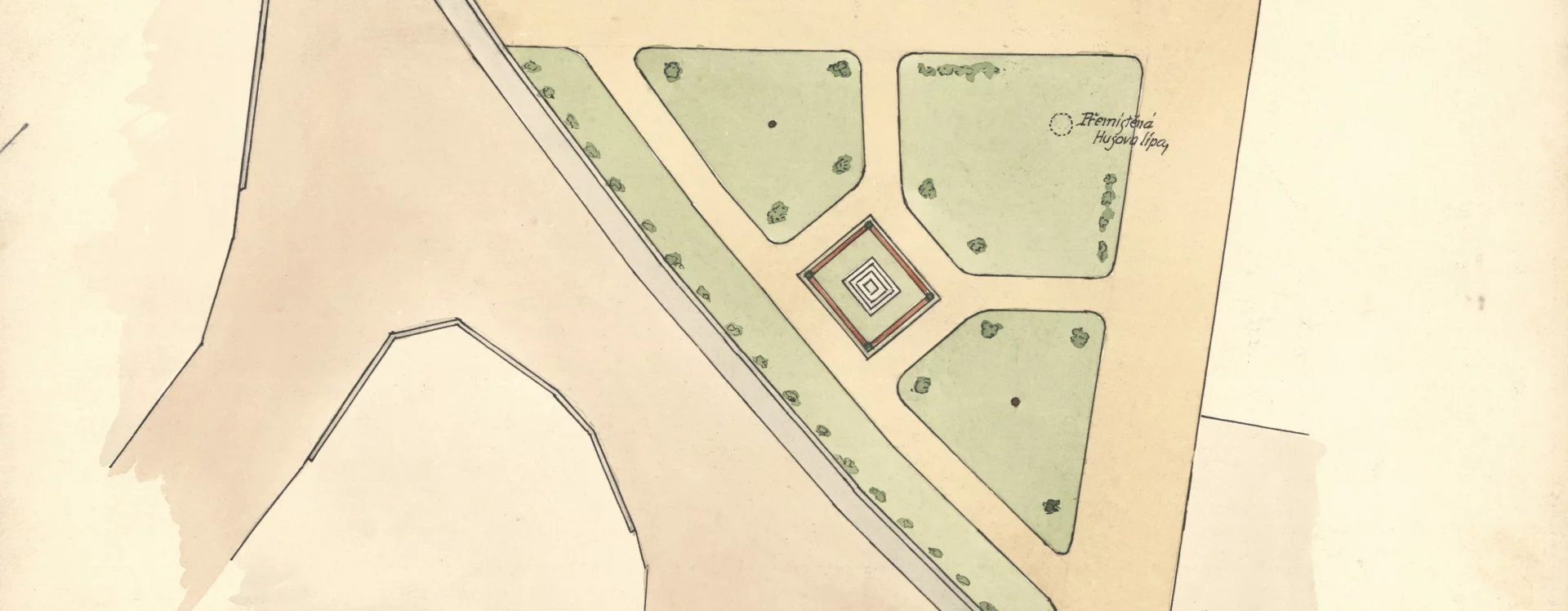
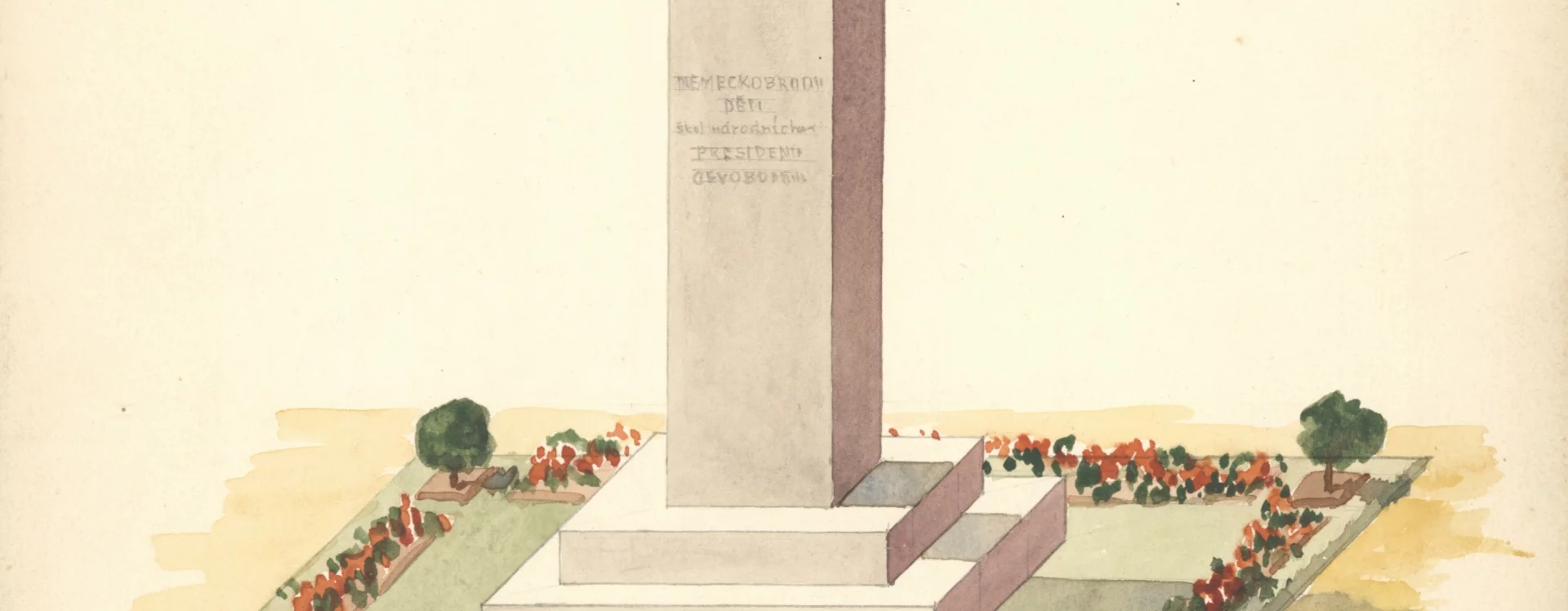
Štursa’s half-length statue of the first president was chosen for the figurative part of the monument. In March 1933, the children informed the town council that the bronze cast of the statue had been paid for and delivered to Brod, and requested permission to erect the monument in the park near St Catherine’s Church. The town gave its approval for the location of the monument. A simple, slender granite pedestal featured an inscription from metal letters, produced and donated by the State Industrial School in Hradec Králové: CHILDREN OF THE NATIONAL SCHOOLS OF NĚMECKÝ BROD TO PRESIDENT AND LIBERATOR T. G. MASARYK 28. X. 1933.
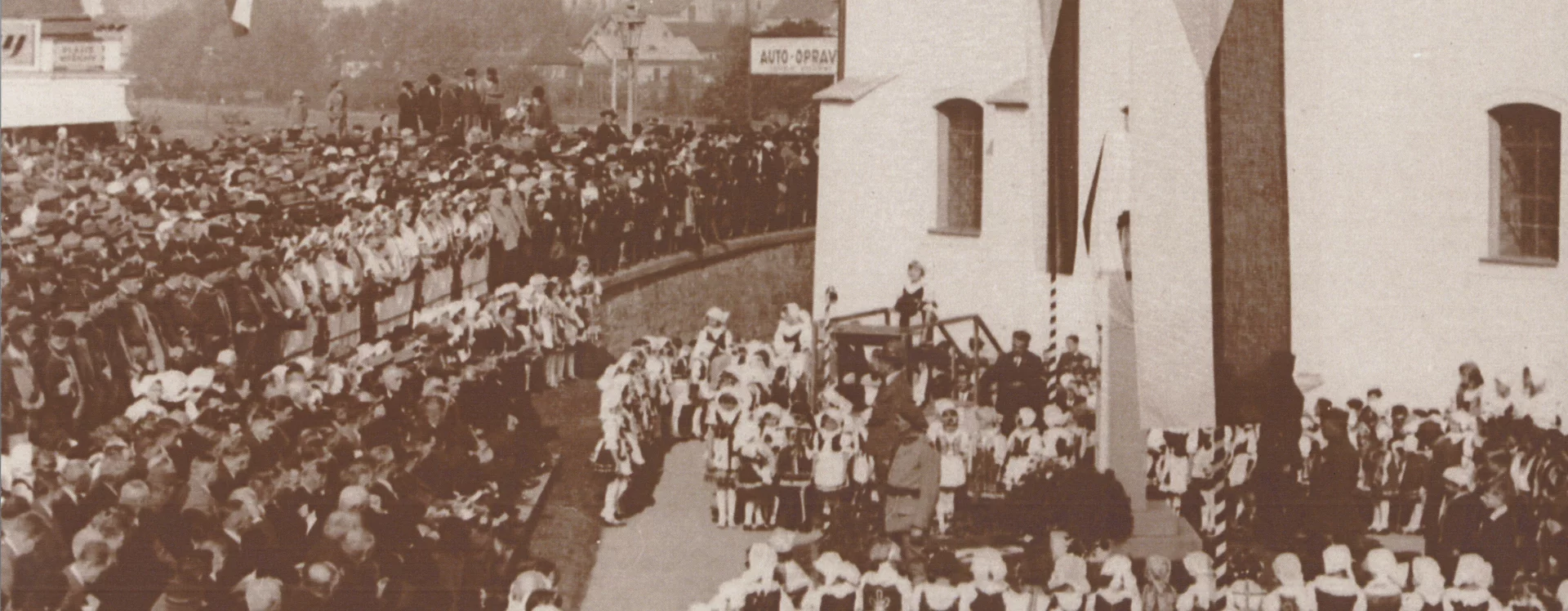
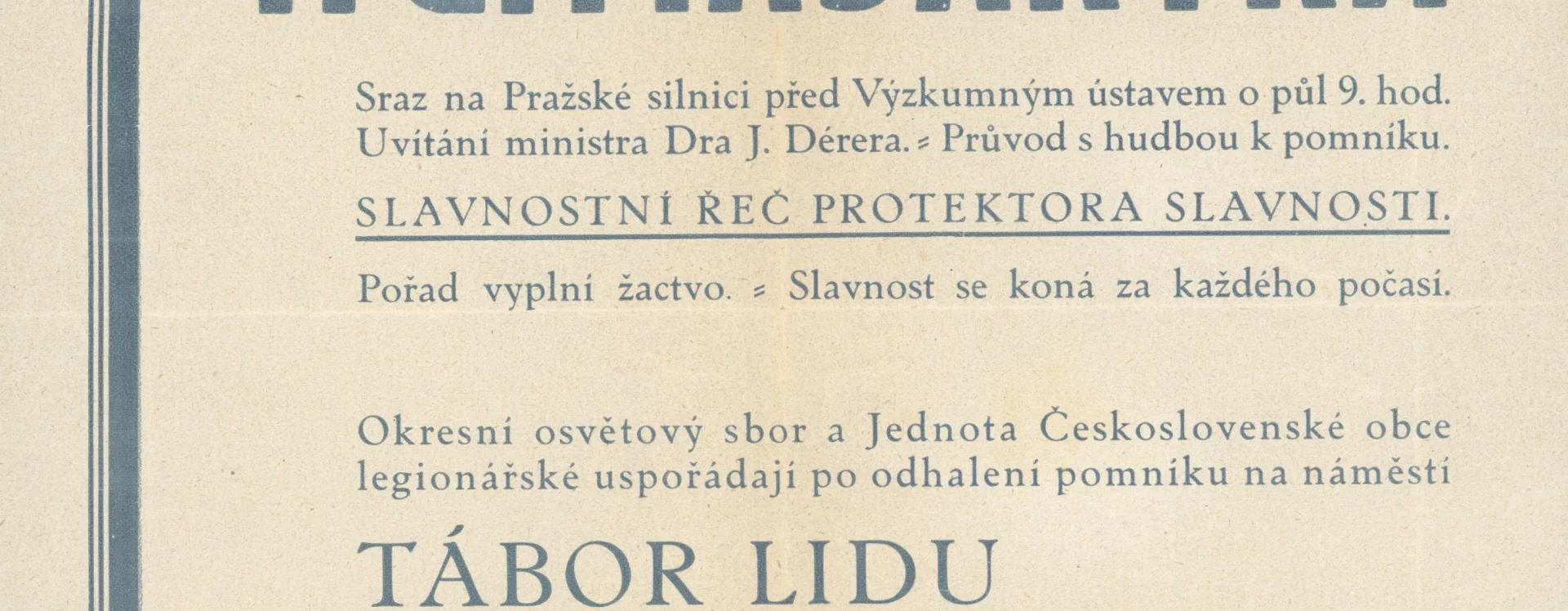
The monument was unveiled on Sunday 1 October 1933, and was attended by approximately 5,000 people, including about 2,000 schoolchildren. After the opening speech by the minister of education and national enlightenment, Dr Ivan Dérer, in front of the Potato Research Institute, a procession followed to St Catherine’s Park and a gathering of people in the town square.
Sadly, the monument was lost at the start of the Second World War, when it was confiscated in 1940 to be melted down for the war effort. After the war, the town—by then renamed Havlíčkův Brod—began searching for its statues. In the case of Masaryk’s bust, the search proved successful: the Josef Bruckner and Sons factory in Hostivař had buried the statue, thereby saving it. A letter of thanks was soon sent from Brod to all those who “helped in this dangerous work”.
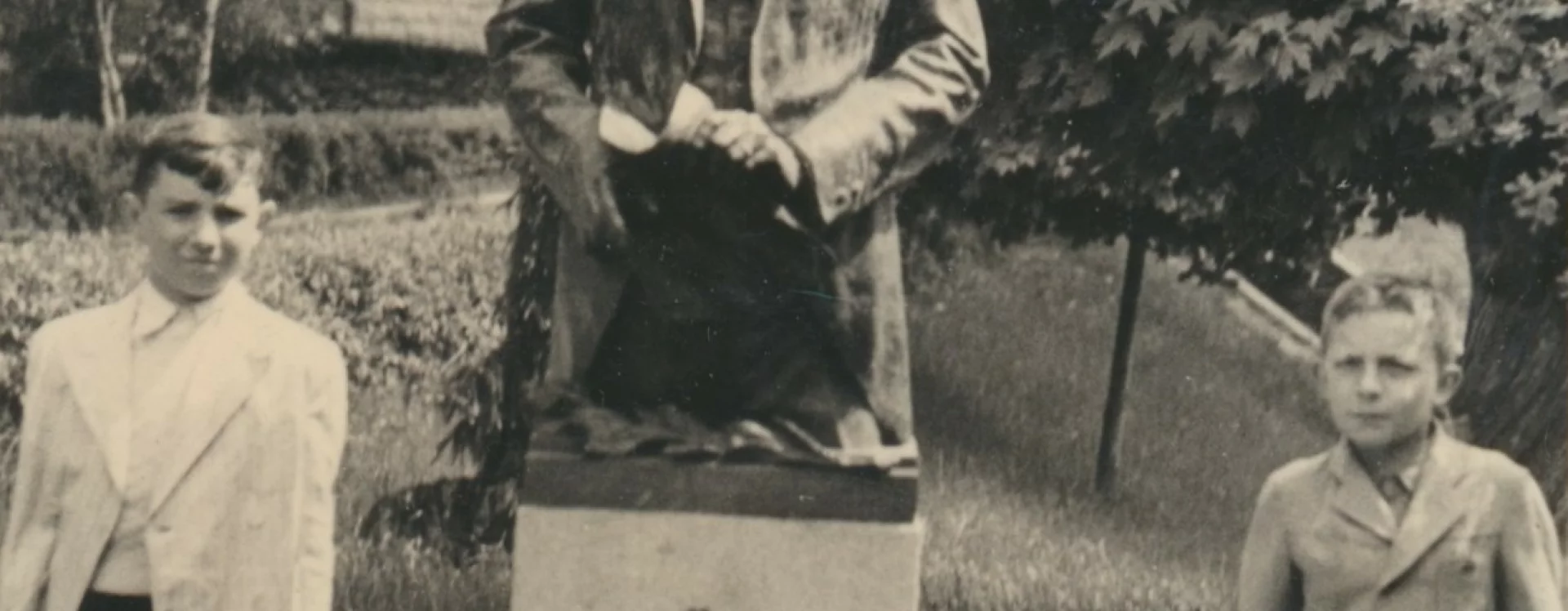
However, Masaryk’s monument was not returned to its original location. The new bridge over the Sázava River (HB-pc2434_55) changed the layout of the park, but more importantly, the political situation had changed. The statue was re-erected in 1949 with little fanfare and in a less prominent location in Budoucnost Park (HB-VP-R-PB), near the Obora Pond. Twelve years later, on the night of 8 March 1961, the statue, which had gone through so much, was destroyed. The perpetrators were never found, nor was the suspicion of political motivation investigated. Shortly thereafter, a bust of Josefina Havlíčková (HB-pc201-a) was moved to the vacant spot.
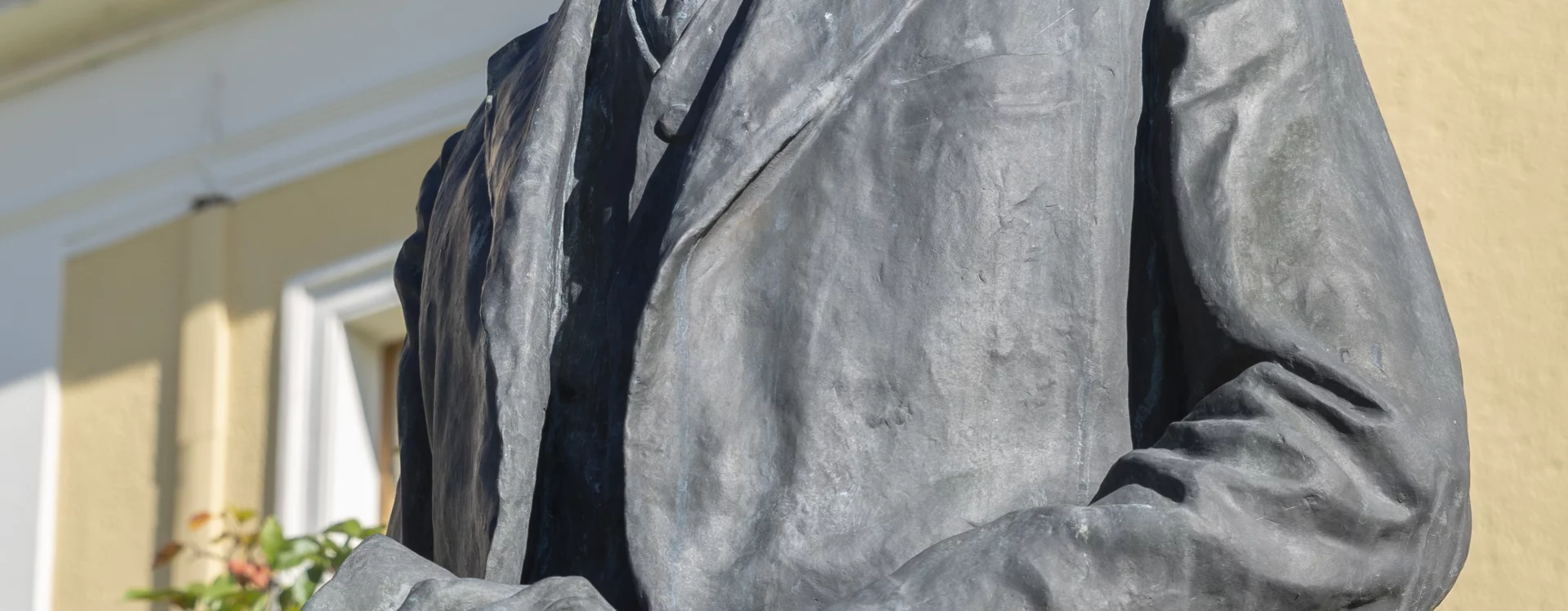
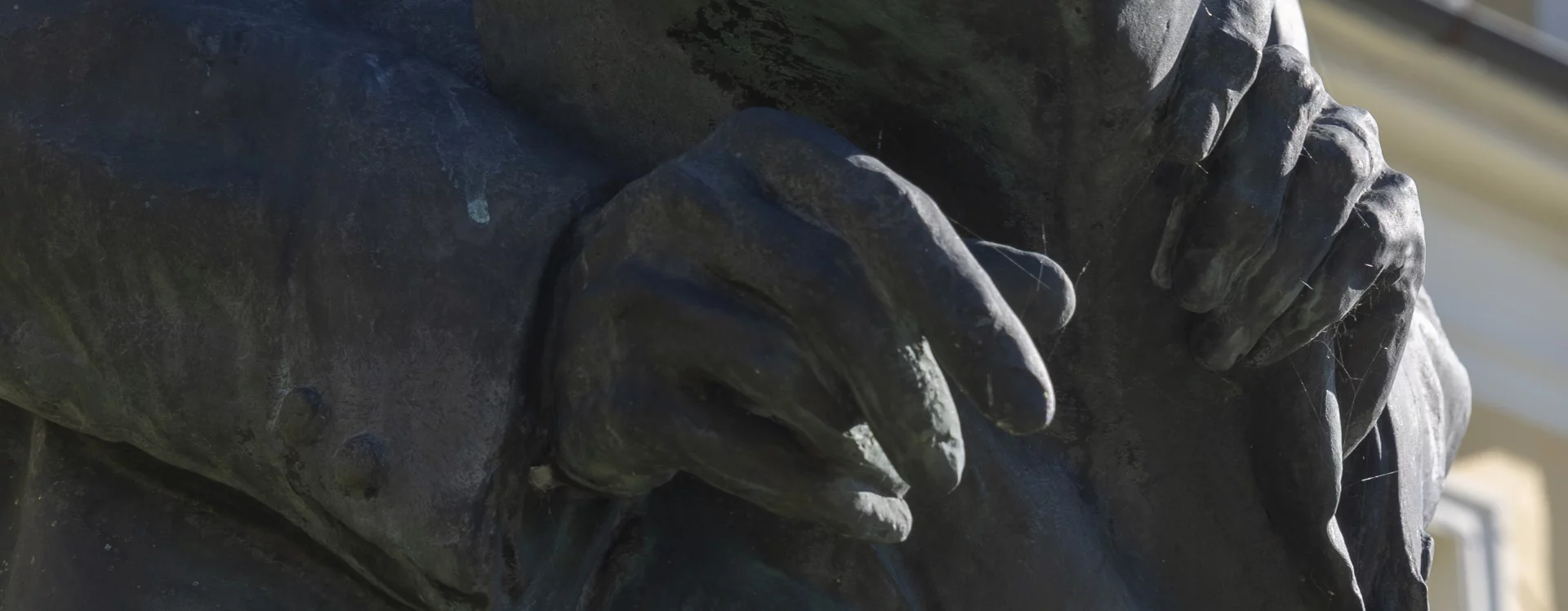
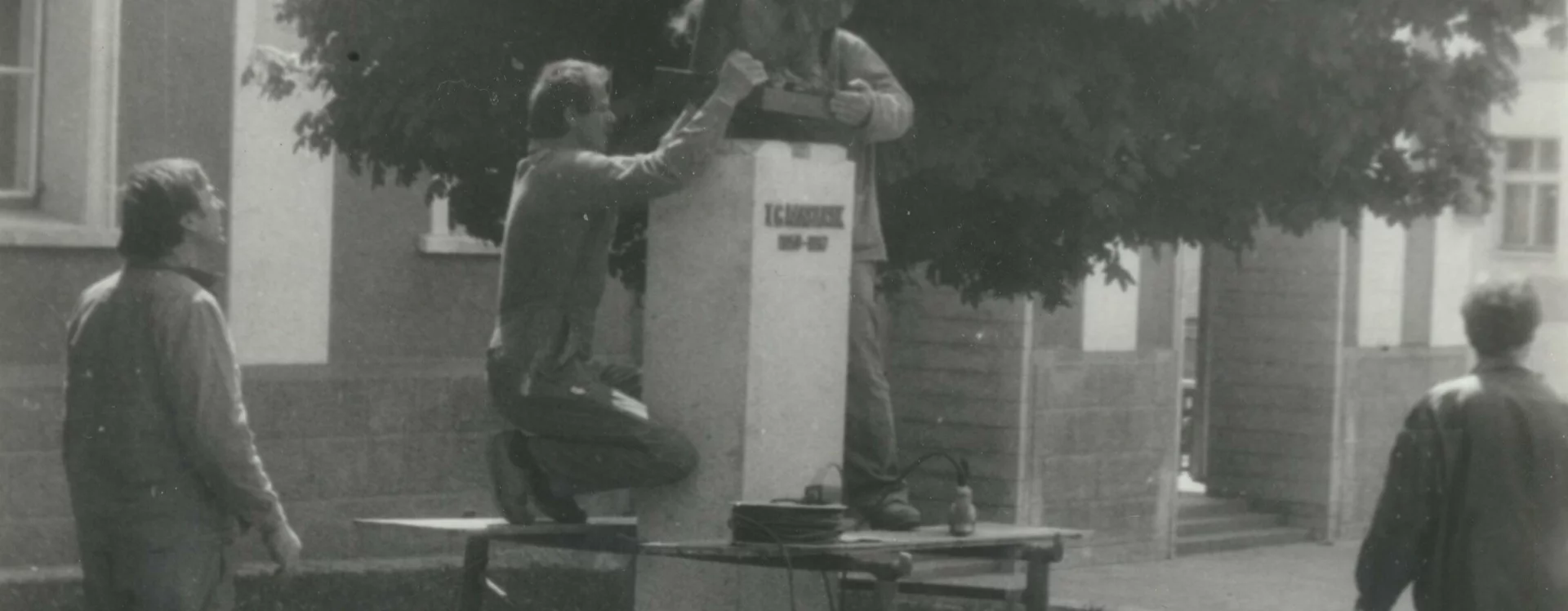
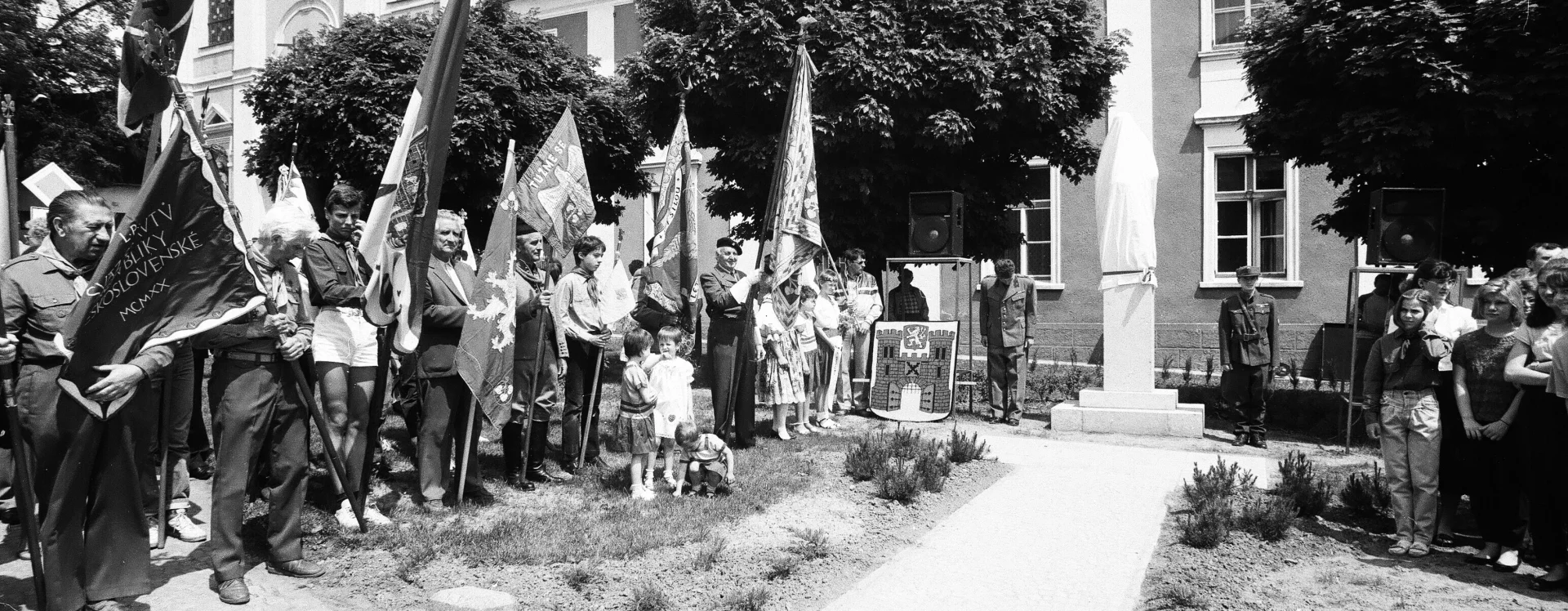
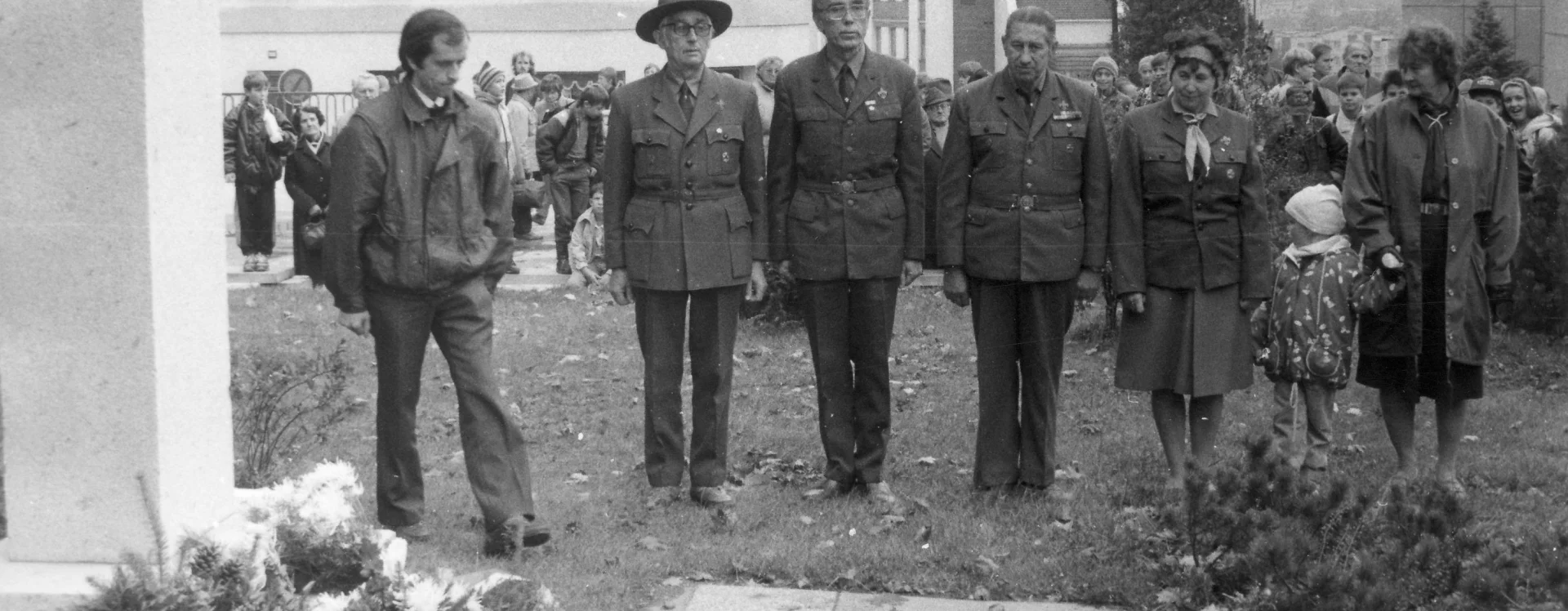
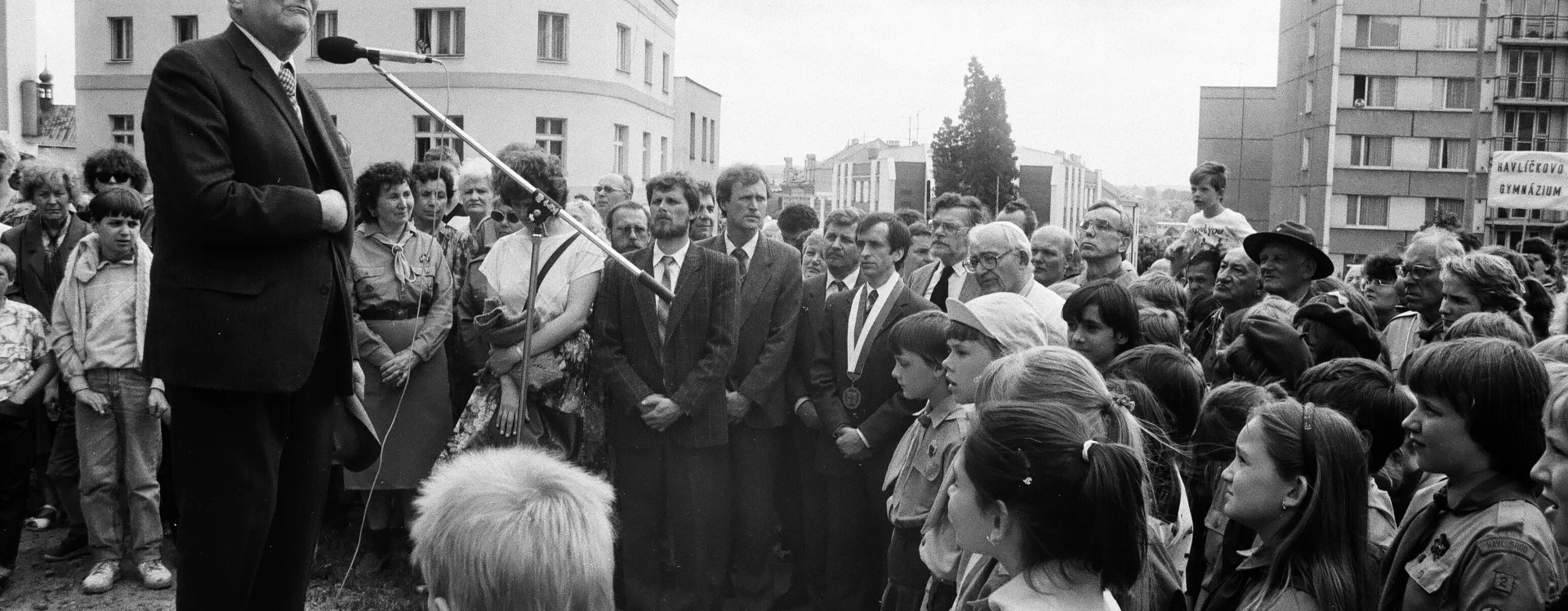
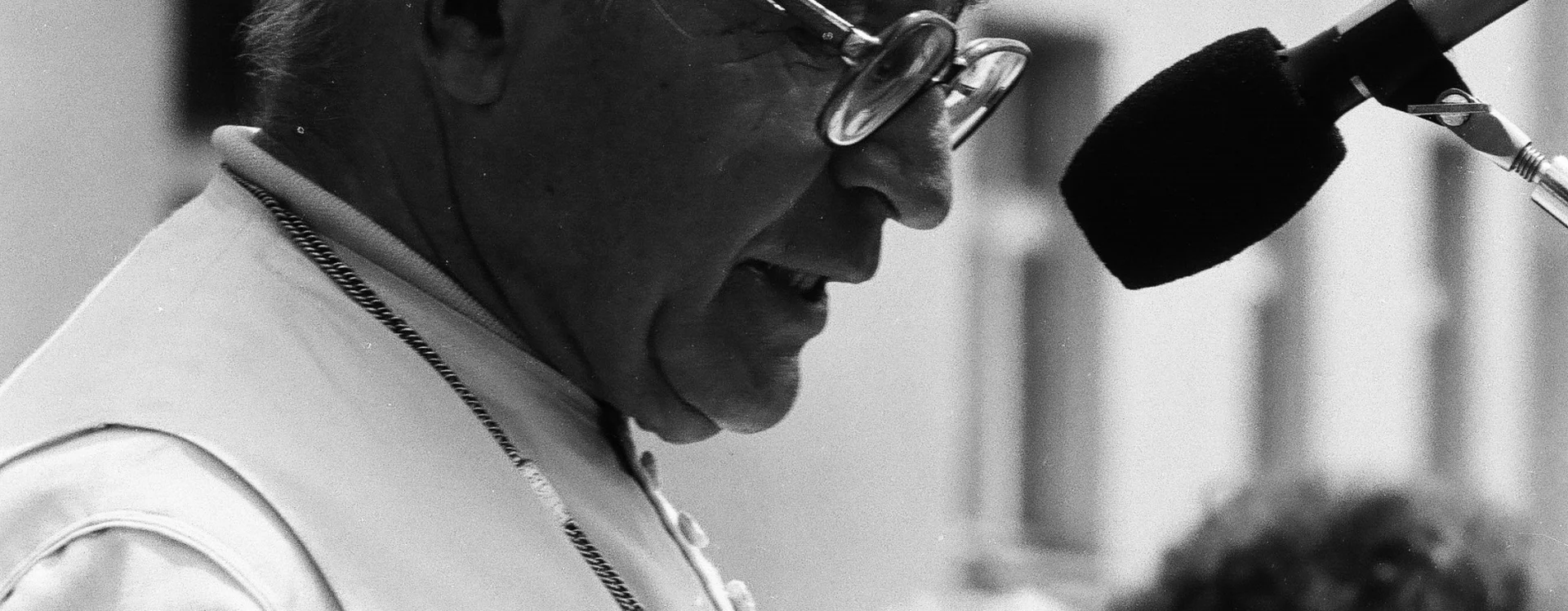
After 1989, the local Civic Forum organization decided to restore the monument. A new location was chosen for it in front of the former Augustinian monastery, which was the district office at the time. At the unveiling on 15 June 1991, speeches were delivered by Milan Machovec, philosopher, university professor, and signatory of Charter 77, and Vít Tajovský, abbot of the Želiv Monastery and former political prisoner. The new monument closely resembles the original. The recast of Štursa’s statue, produced at the Blansko ironworks, was once again mounted on a slender pedestal. The only change was the inscription: the dedication by the children of the Německý Brod schools was replaced with the name of President Masaryk and the dates of his birth and death.
Zuzana Trnková, 2025
Literature
Prager Presse. 1933. sv. 13/269, p. 3.
Jiří Sochr, Marie Sochrová. Havlíčkův Brod a okolí. Havlíčkův Brod, Gradat, 1992. p. 40.
Sources
Státní okresní archiv Havlíčkův Brod, fond Archiv města Havlíčkův Brod. sv. karton 354.
Státní okresní archiv Havlíčkův Brod, fond Městský národní výbor Havlíčkův Brod. sv. karton 21.
Státní okresní archiv Havlíčkův Brod, fond Pěvecko-hudební spolek Jasoň Havlíčkův Brod. sv. karton 2.
Pamětní kniha Německého Brodu II. 1930-1969. p. 106-107. Státní okresní archiv Havlíčkův Brod, fond Městský národní výbor Havlíčkův Brod, Městský národní výbor Havlíčkův Brod.
Zina Zborovská. Evidence pomníků, památníků, pamětních desek a soch na území města Havlíčkův Brod. Havlíčkův Brod, 2012. p. 134-136.