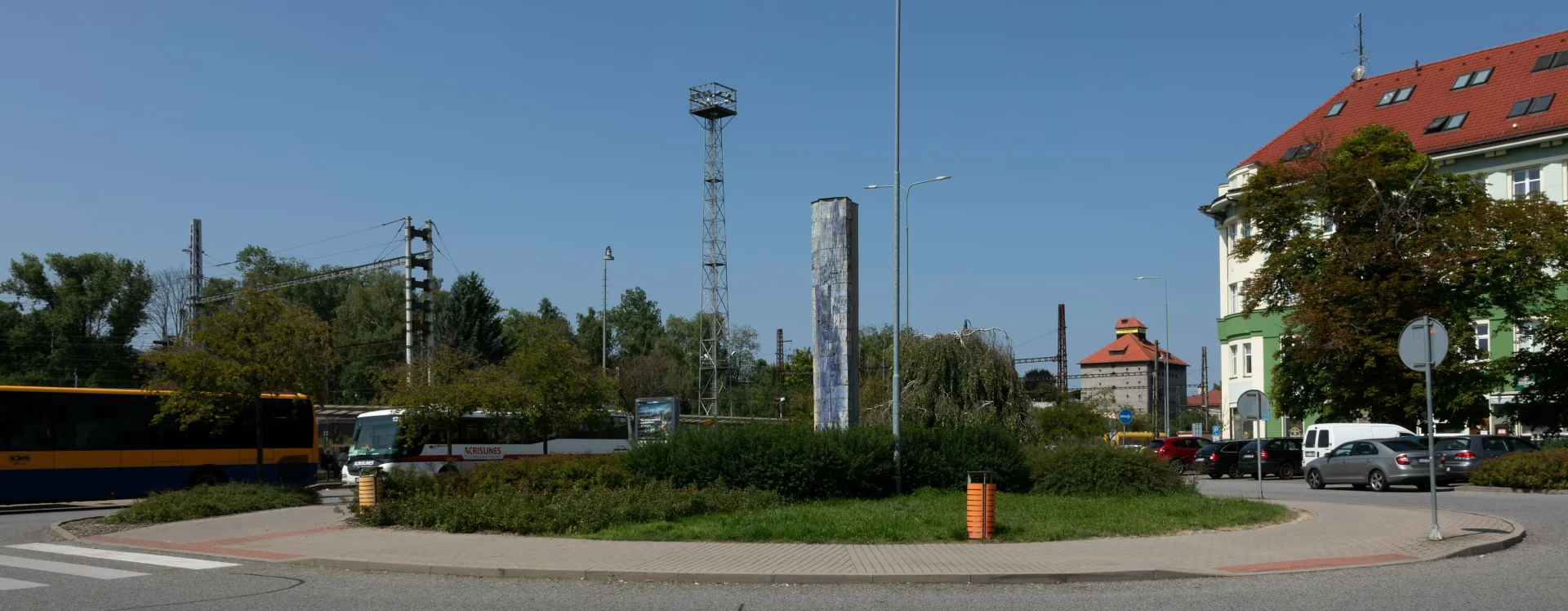
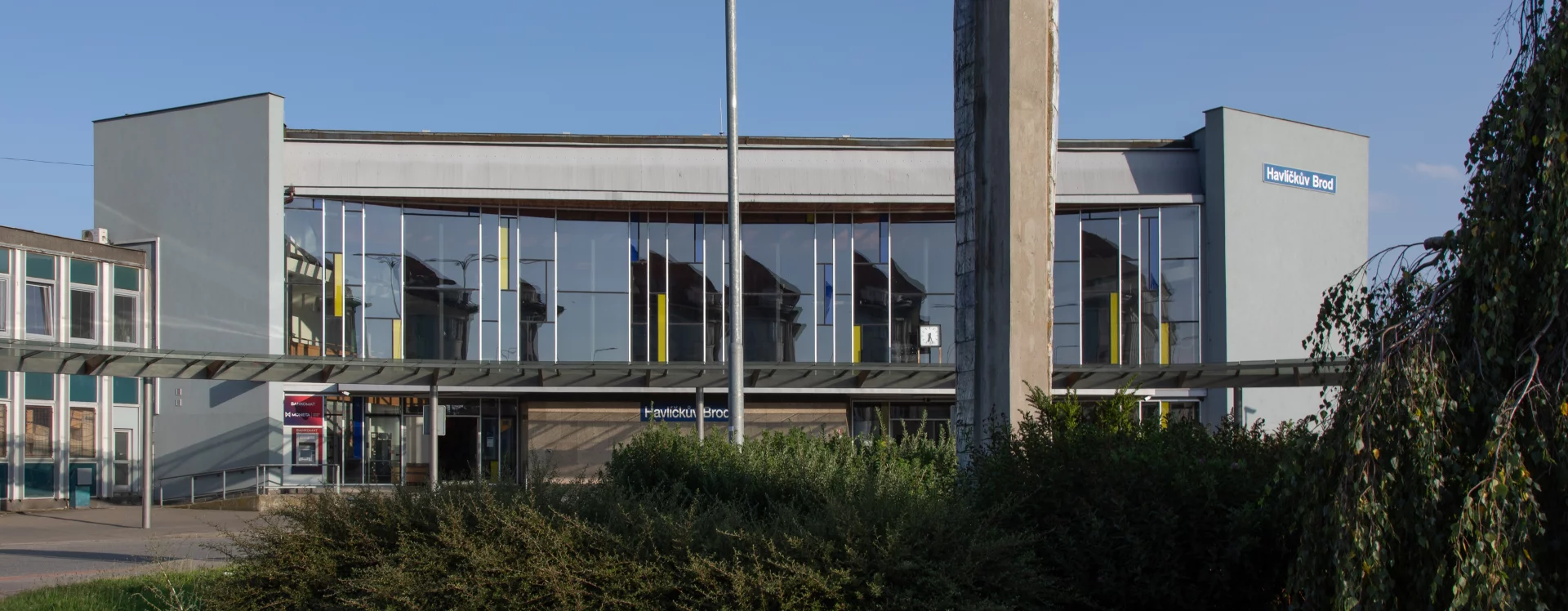
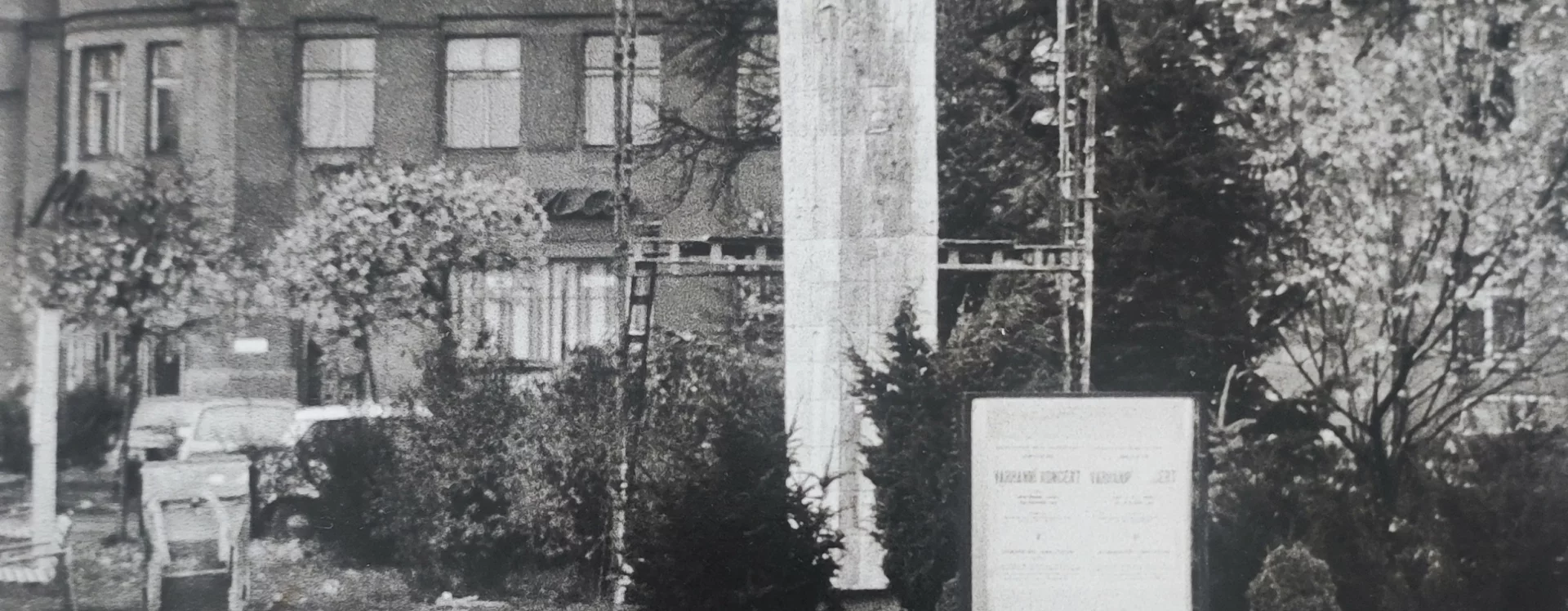
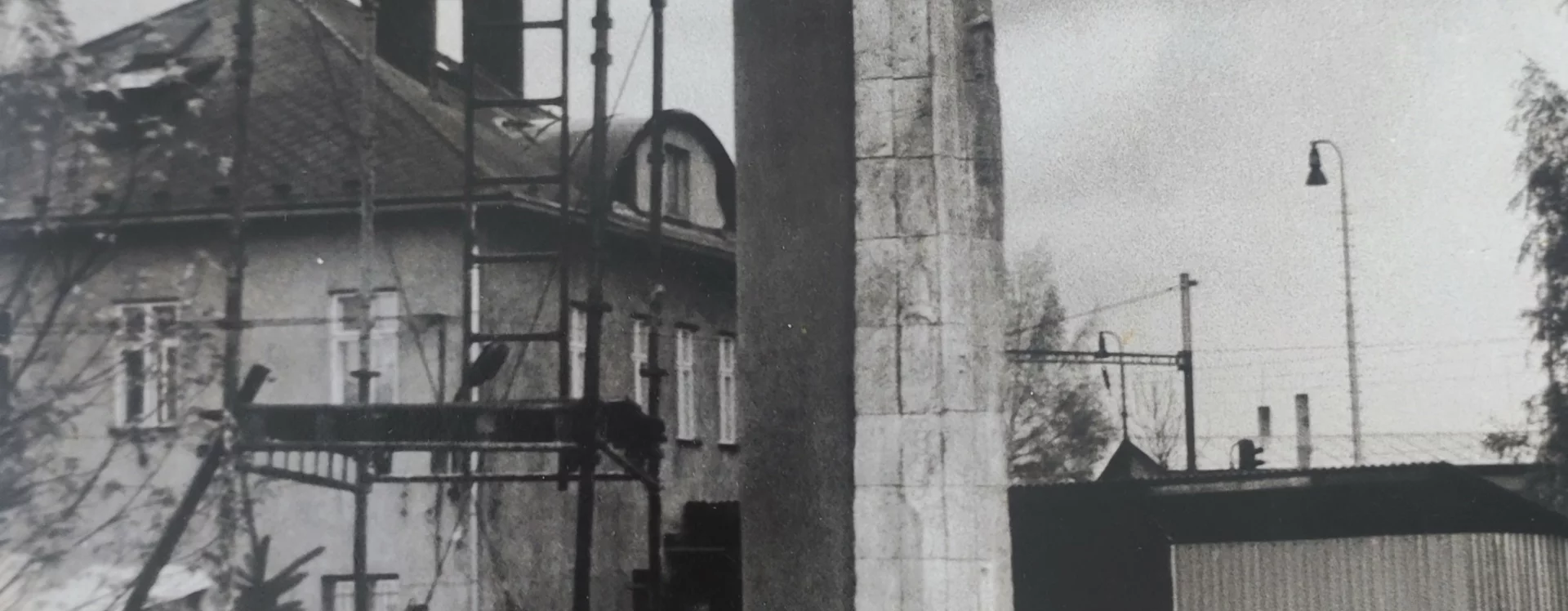
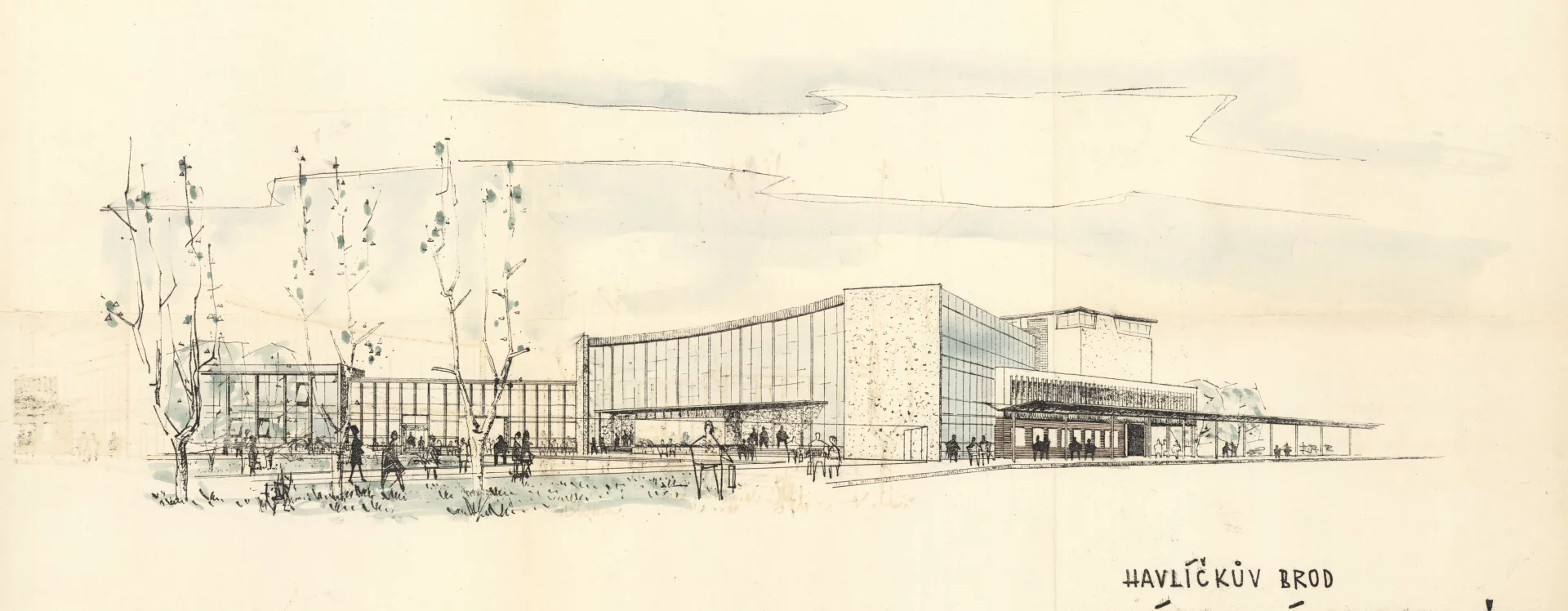
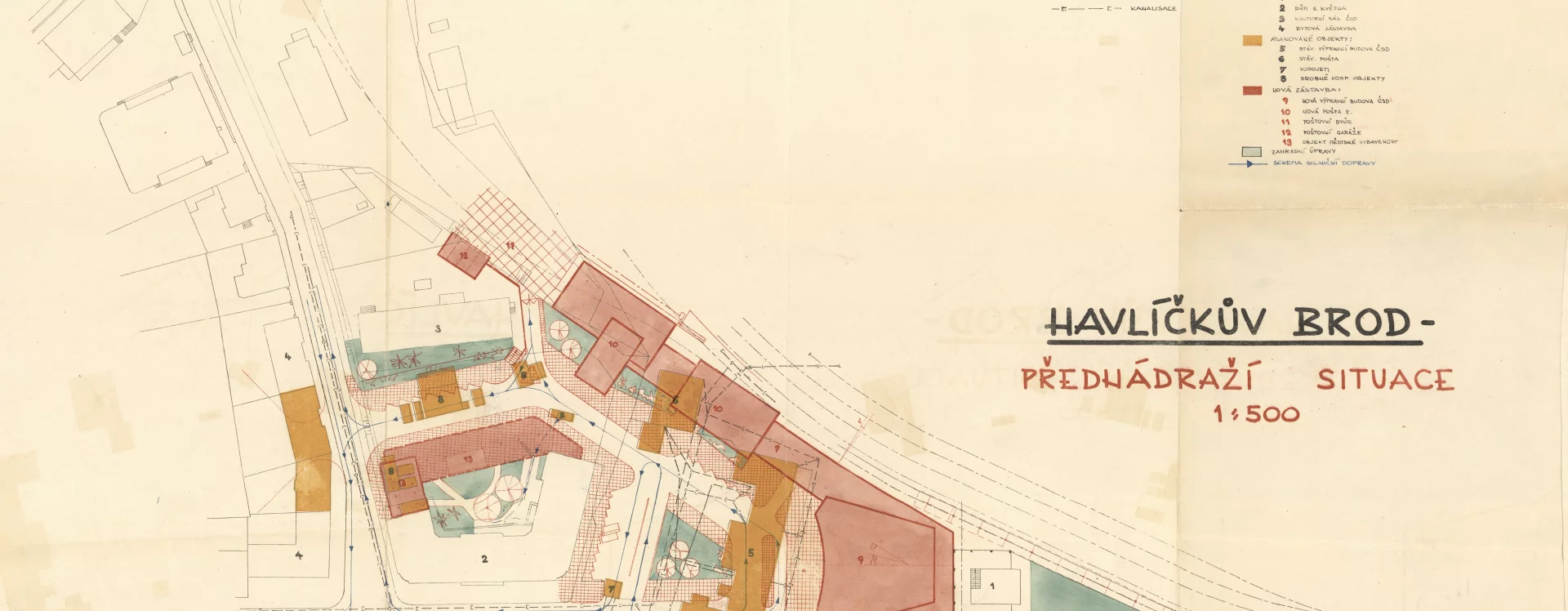
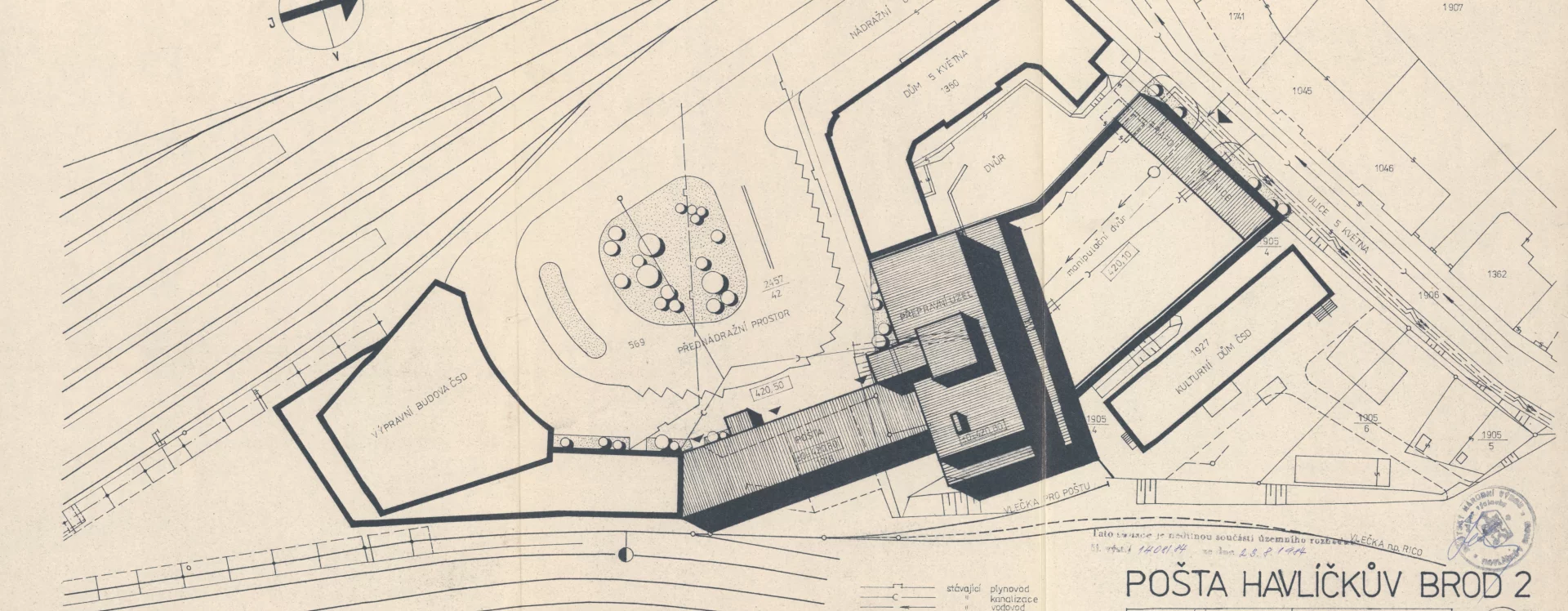
Standing roughly at the centre of today’s square in front of the railway station in Německý (Havlíčkův) Brod was the town’s first station building, erected in 1870 in the historicist style. The plan to transform this area into a landscaped public space was part of a wide-ranging urban design scheme by architect Lubomír Srna. This scheme included the construction of a modern railway facility which seamlessly connected with a new station building and post office.
The opposite side of the square was bordered by the railway tracks, while the side facing the town was delimited by the Agricultural Cooperative Building (HB-397). One of the design studies even considered enclosing the space on the side of today’s bus station, so that it would open only towards Nádražní street—the historic route linking the station with the town centre. However, this version was never implemented.
The landscaping of the square began after the completion of the new station building and the demolition of the historic one in mid-1981. The installation of an artwork was planned for the centre.
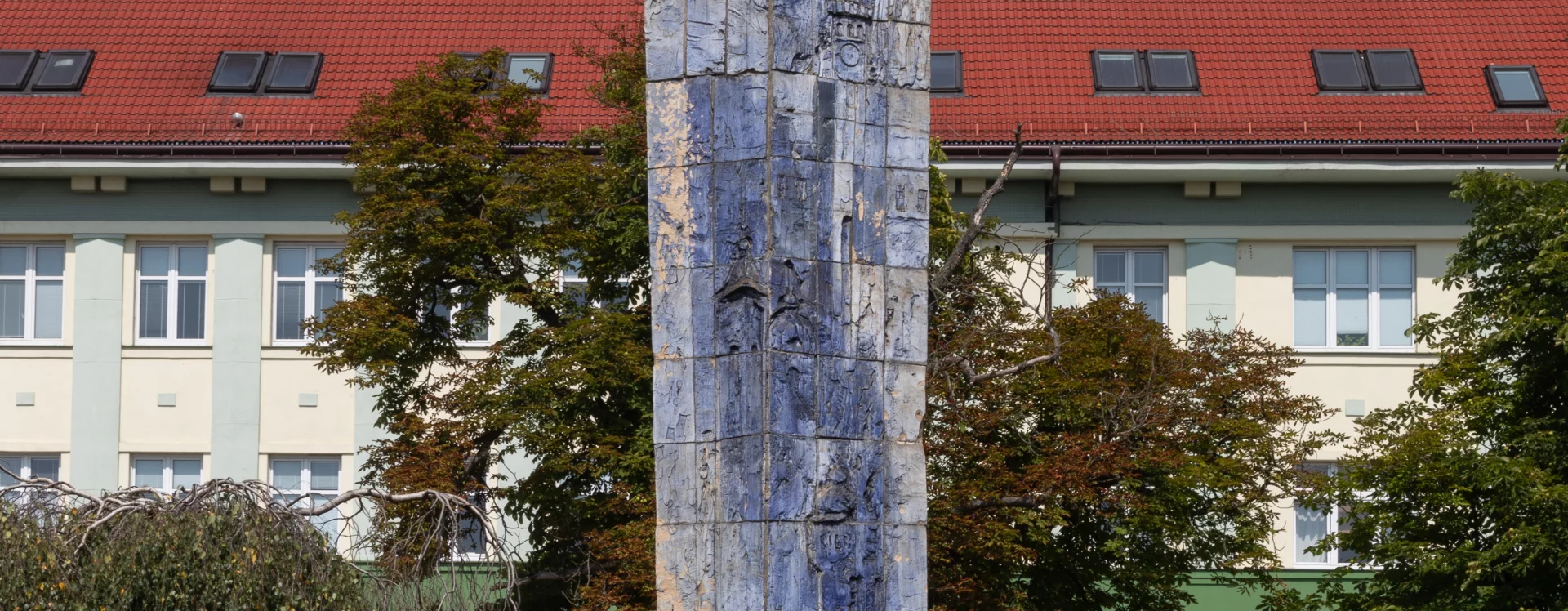
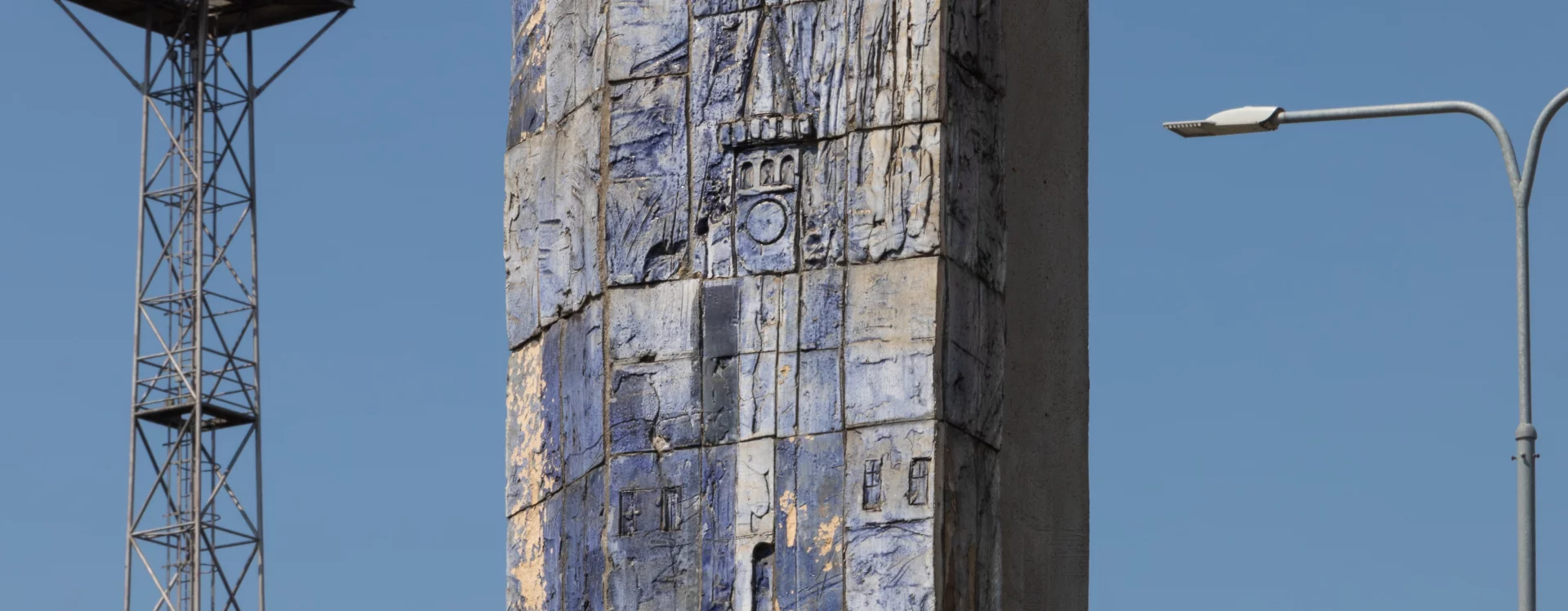
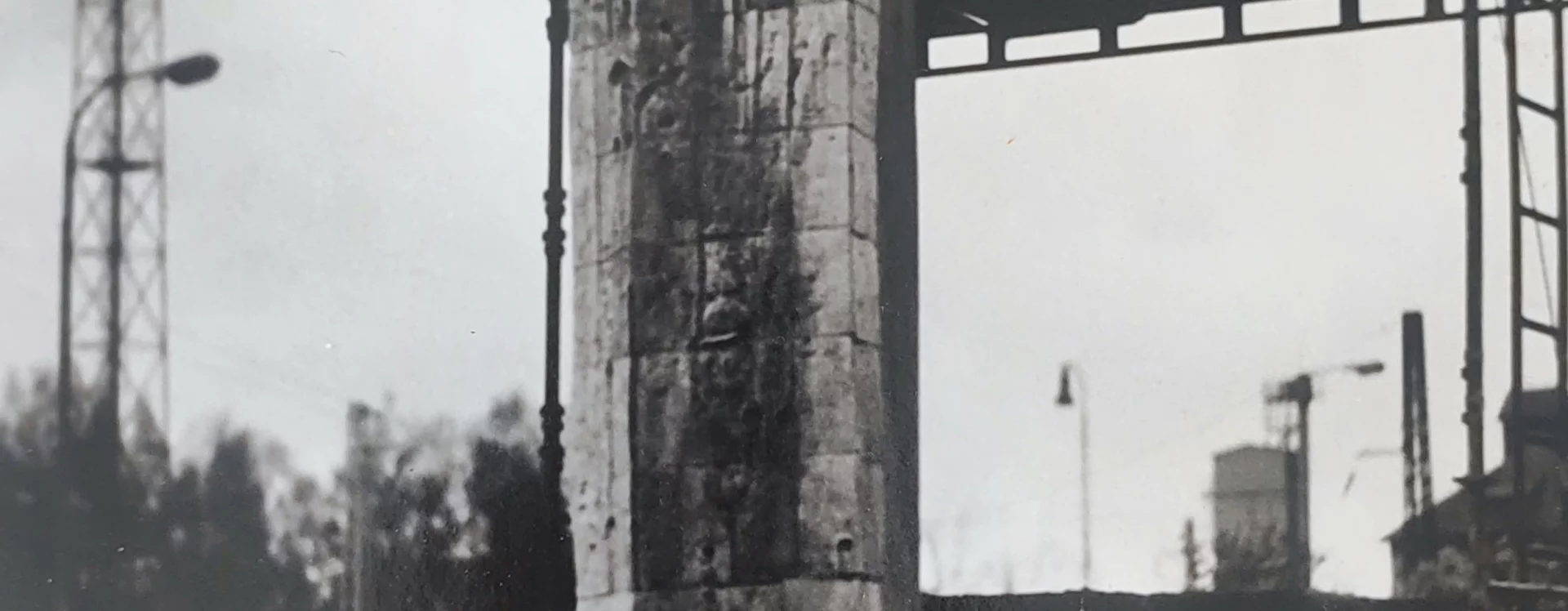
The young sculptor Anna Klimešová (born 1959) designed for this space a large, slender column that symbolically opens the way towards the town. Its concrete core, on the three sides facing the station building, was clad with glazed ceramic tiles fired at the Moravian Firebrick Works in Letovice. From the textured ceramic surface, rendered in shades of blue, white and beige, emerged subtle silhouettes and outlines depicting Havlíčkův Brod’s historic landmarks such as the Dean’s Church, the Old Town Hall, Havlíček’s House, the Church of St Wenceslas and the Marian Column on the main square, thereby presenting the town which visitors were about to enter from the station.
From 1965 onwards, all artworks intended for public spaces were subject to approval by a state commission which assessed both their artistic quality and political appropriateness. In this case, the commission specifically required the depiction of Havlíčkův Brod’s landmarks, including the statue of a militiaman from the newly built Smetana Square (HB-VP-SN2). The sculptor sought to promote a less literal interpretation of the reliefs, and the design process therefore involved repeated consultations with the Commission for Cooperation between Artists and Architects of the Union of Czechoslovak Fine Artists in Hradec Králové. The realization and installation of the column were also demanding, not only because of the size of the structure but also due to the technologically complex process of producing large-scale ceramic works.
The now considerably deteriorated column, like the entire square, awaits a comprehensive urban redesign which would bring greater clarity and a more welcoming character to this urban space.
Zuzana Trnková, 2025
Literature
Vladislava Říhová, Zuzana Křenková. Sochy a města. České umění 50.–80. let 20. století ve veřejném prostoru: evidence, průzkumy a restaurování. In: Sochy a města. Available from: https://sochyamesta.cz/.
Webové stránky sochařky Anny Klimešové. Available from: http://www.annaklimesova.cz/ [accessed 1. 8. 2025]
Prameny
Telefonický rozhovor a emailová komunikace s Annou Klimešovou. 23. 6. a 4. 8. 2025.
Archiv Anny Klimešové.
Městský úřad Havlíčkův Brod, archiv Stavebního úřadu. sv. č, p. 72.
Zina Zborovská. Evidence pomníků, památníků, pamětních desek a soch na území města Havlíčkův Brod. Havlíčkův Brod, 2012. s. 122-124.