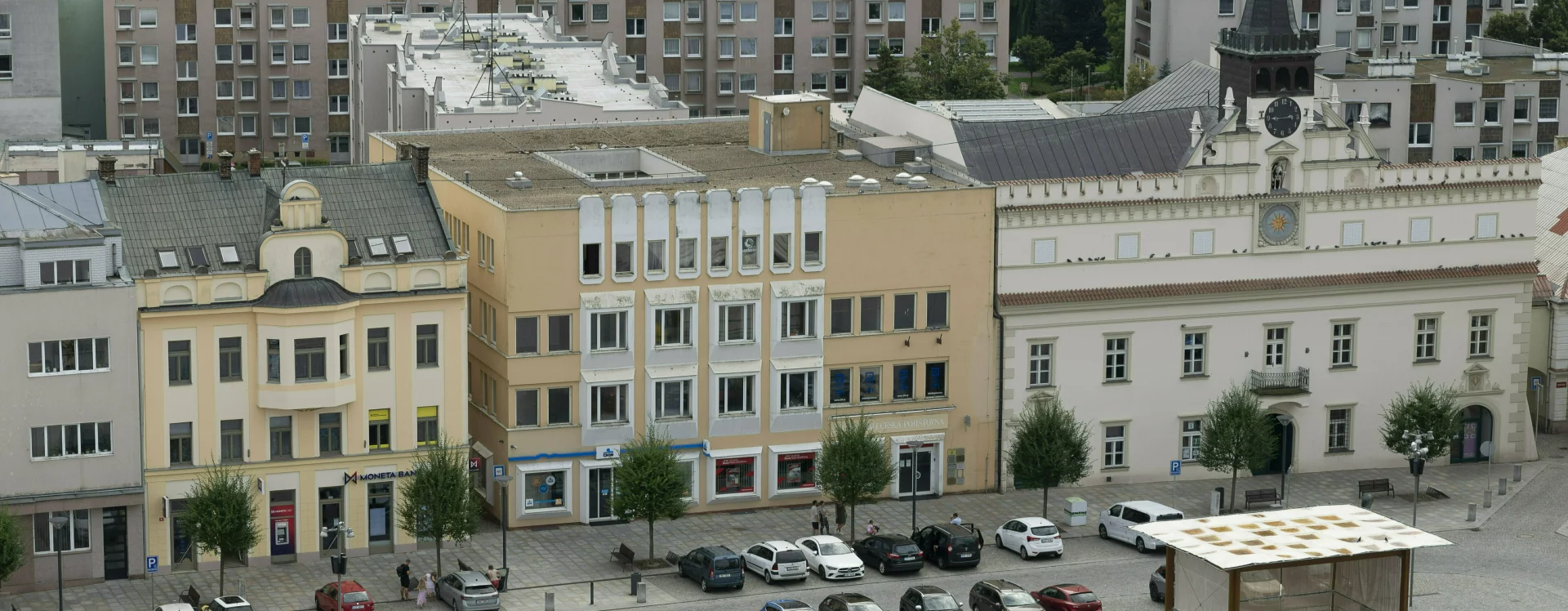
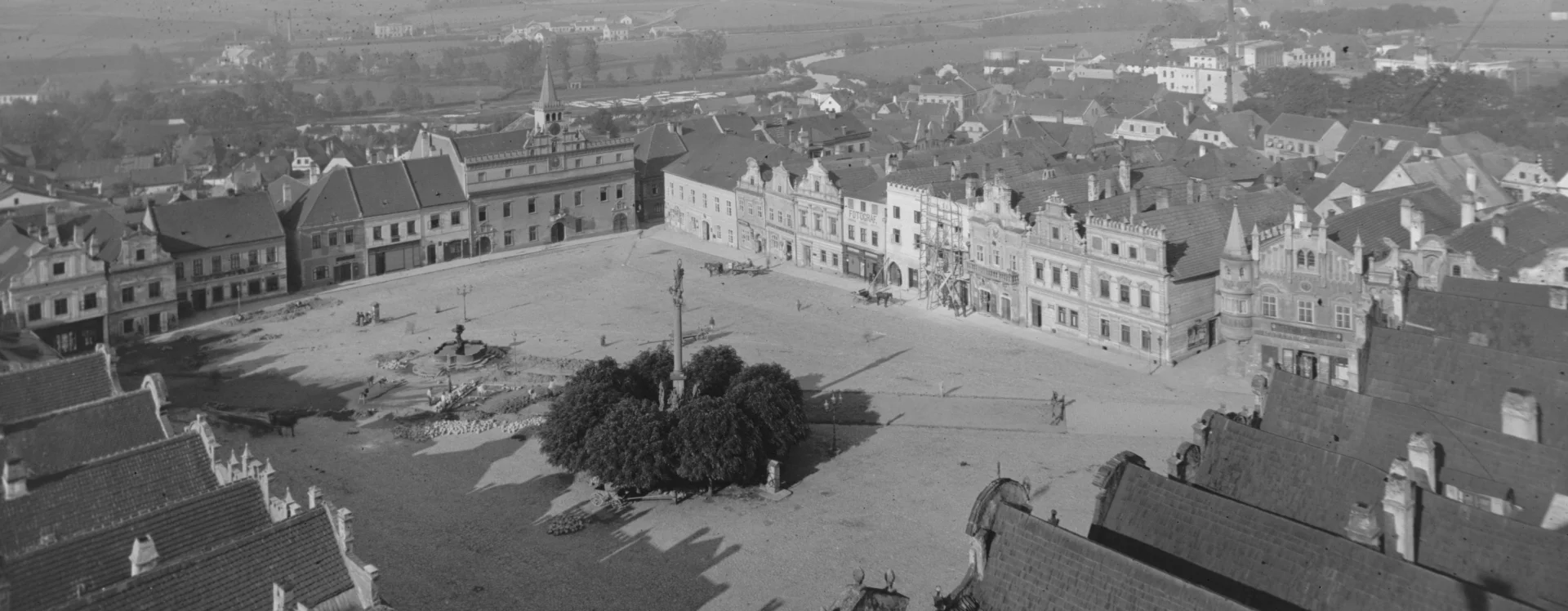
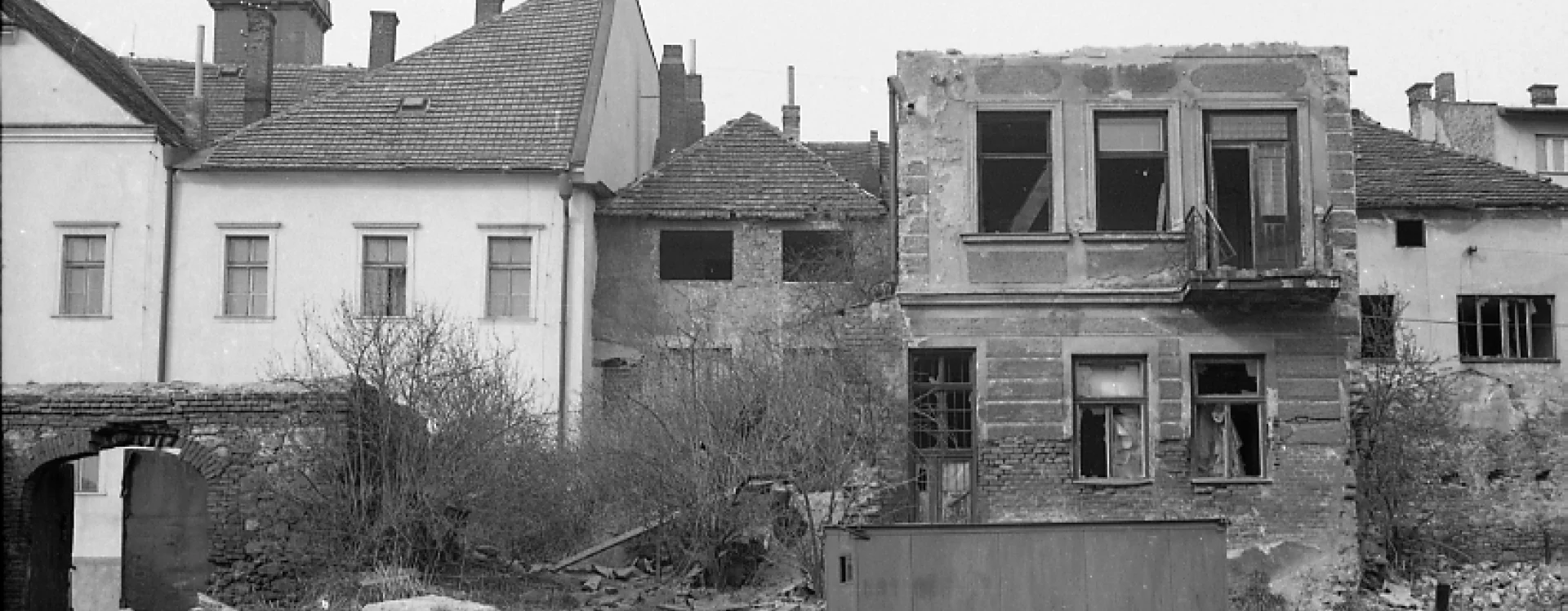
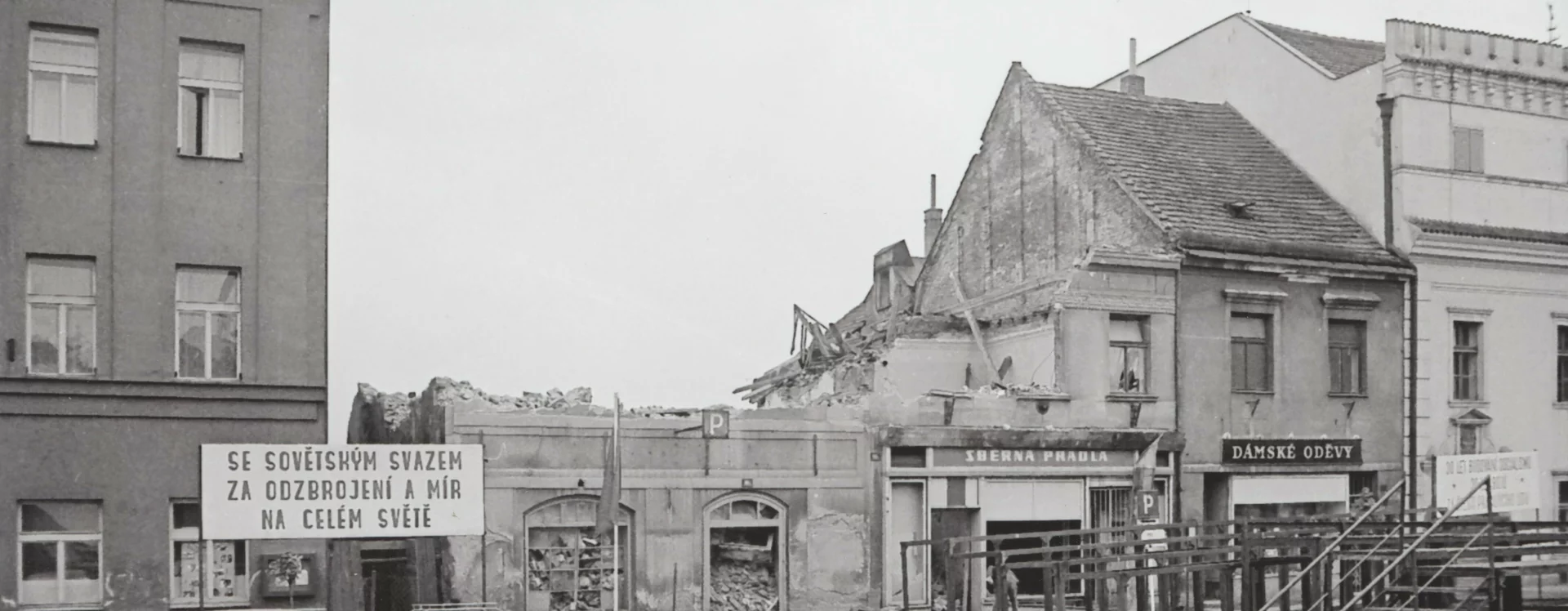
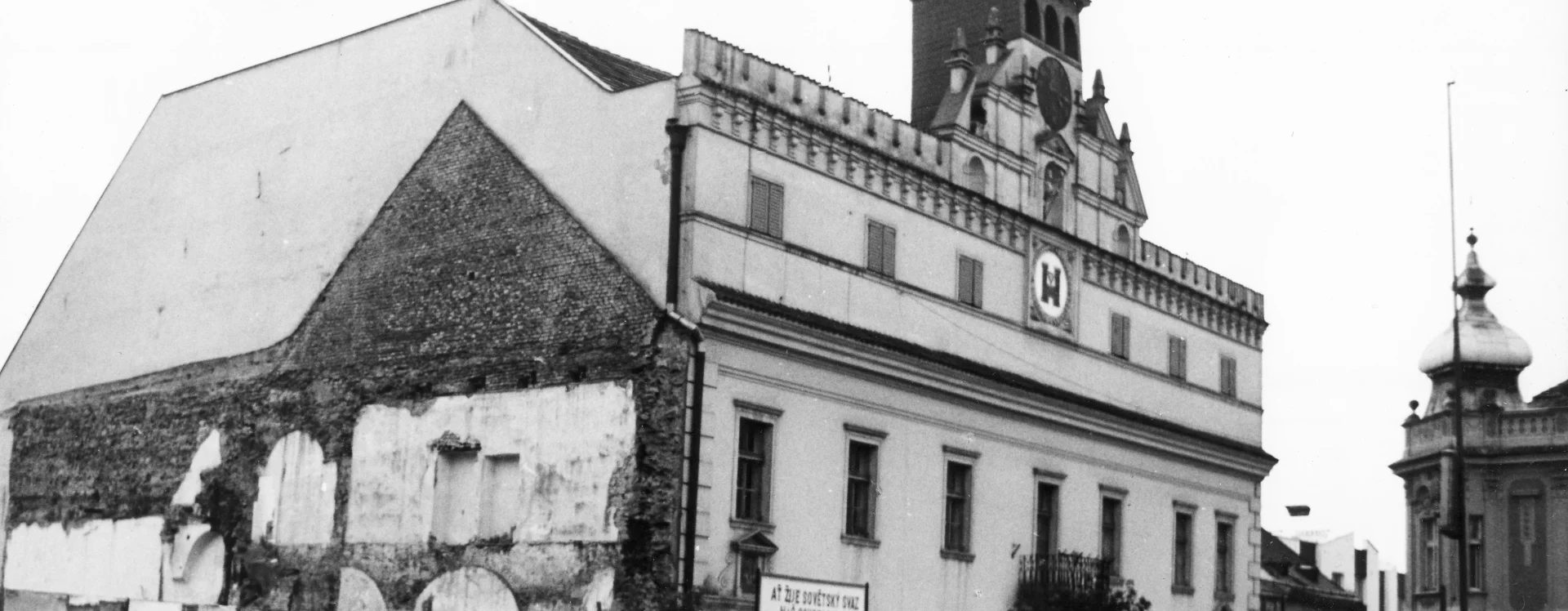
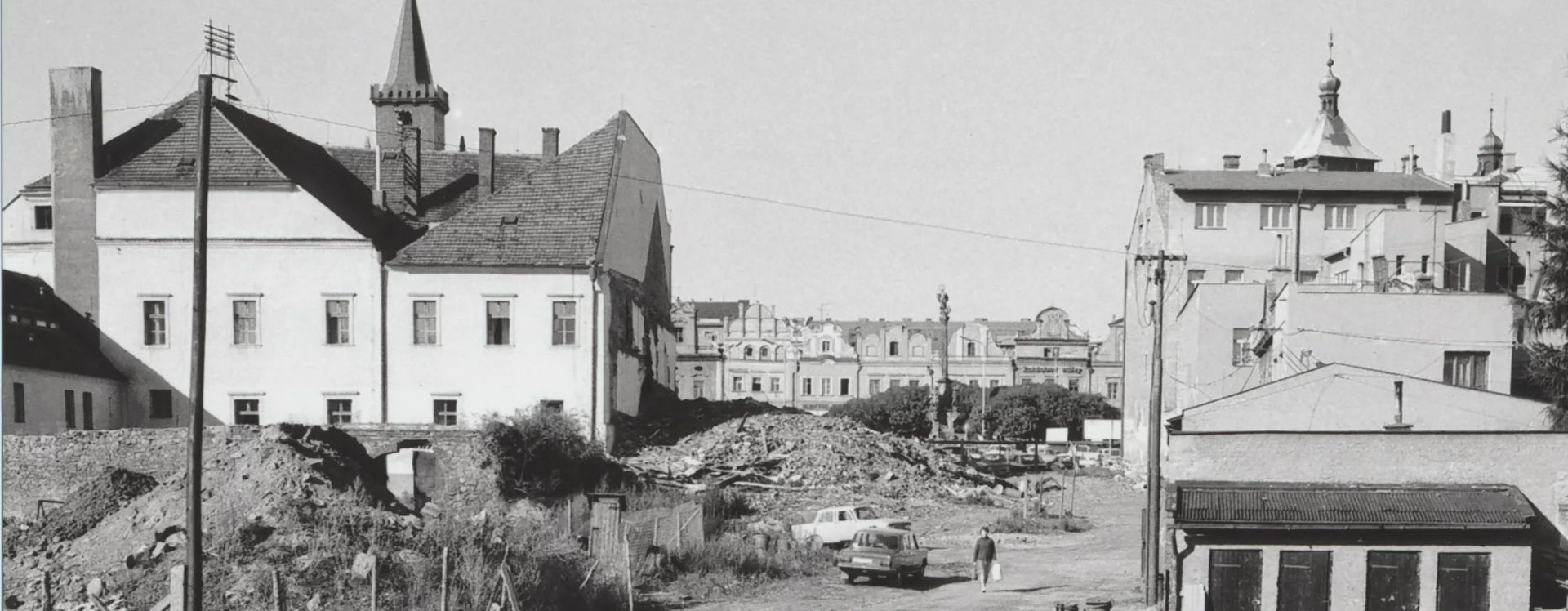
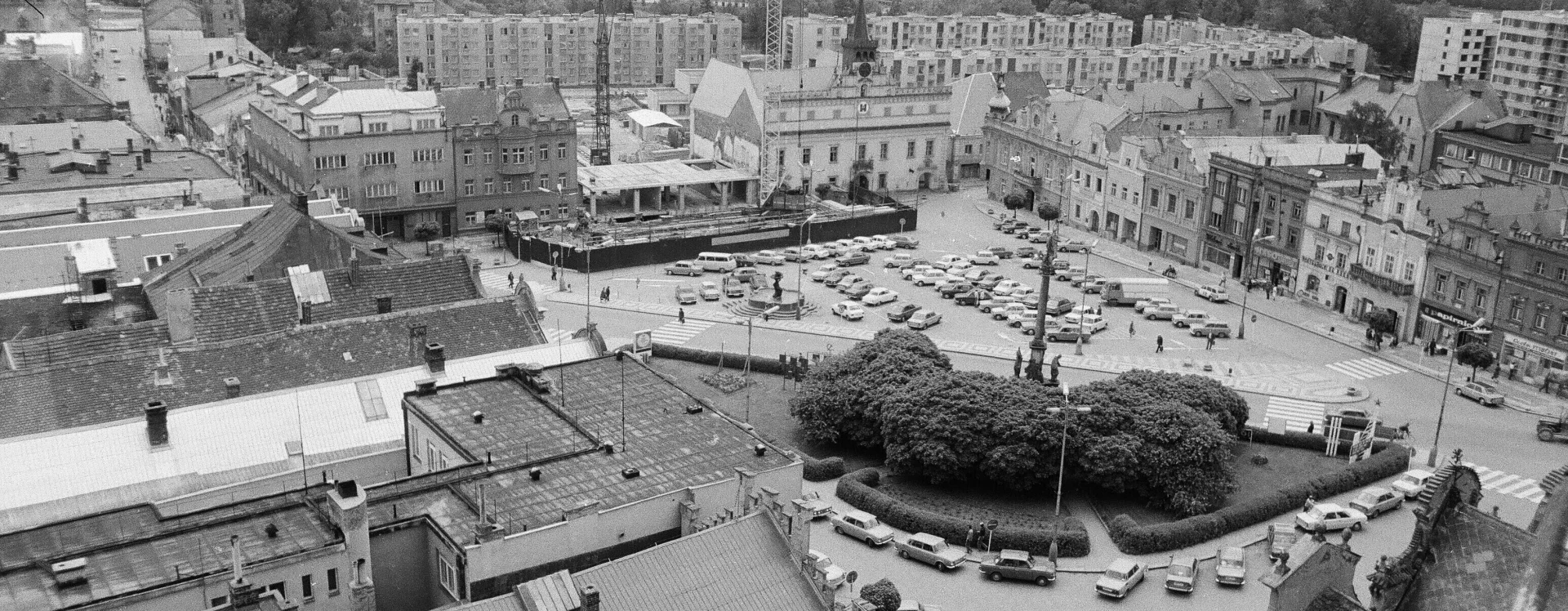
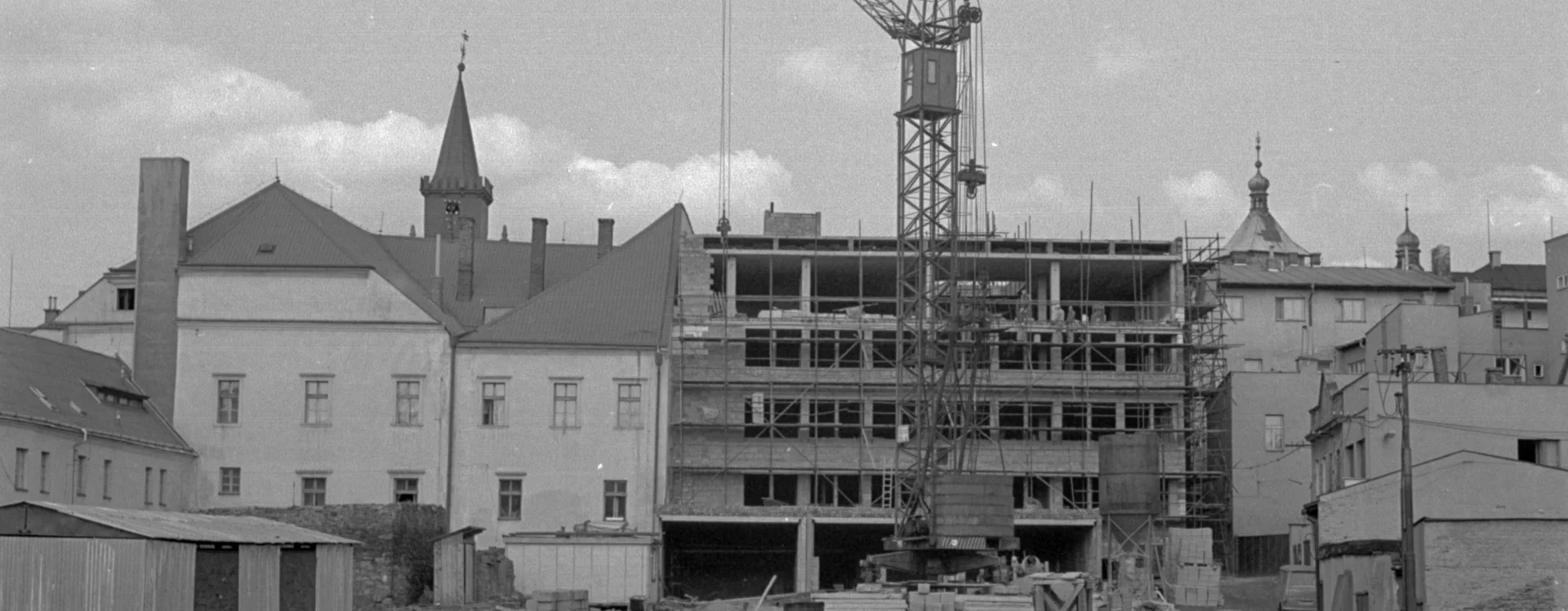
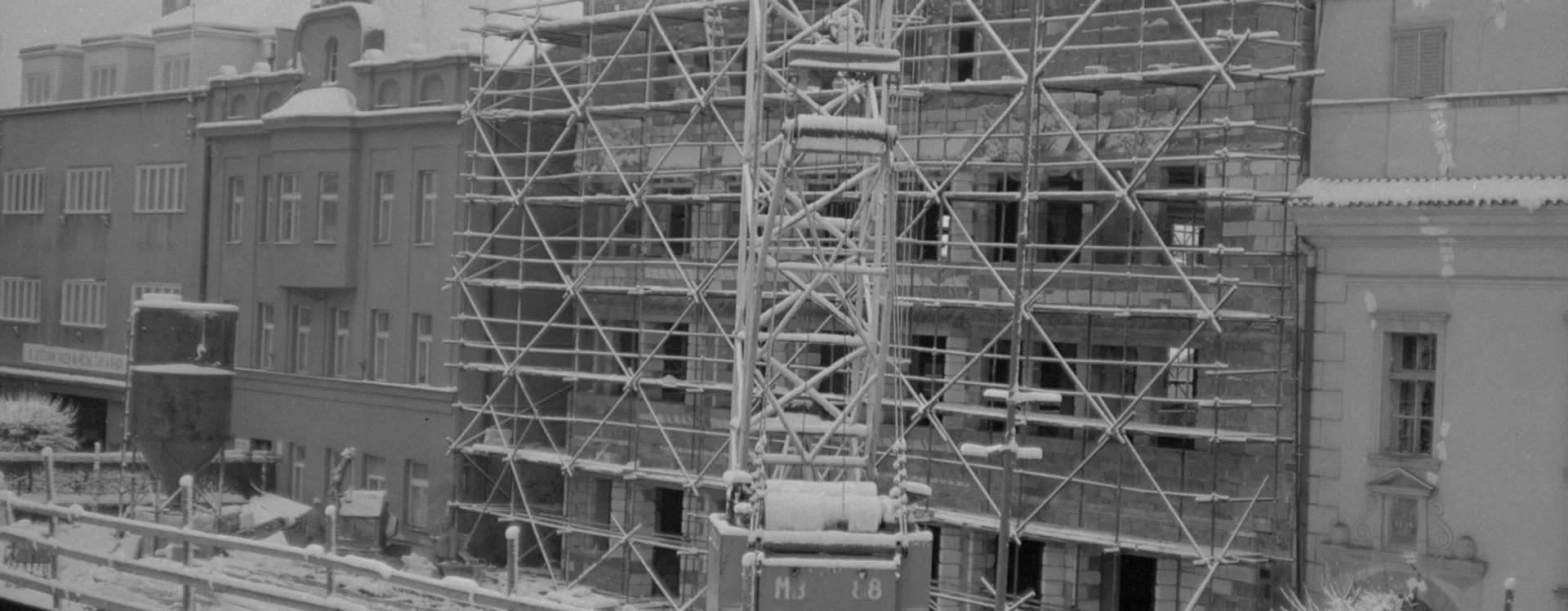
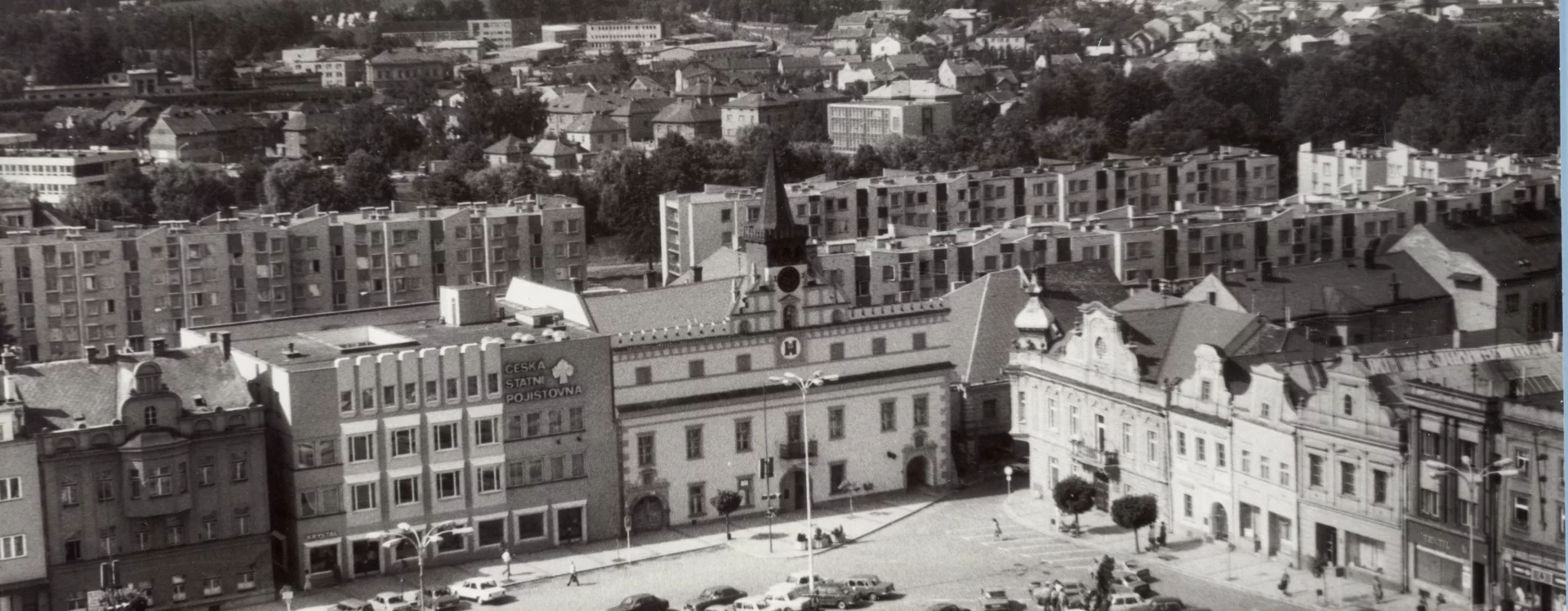
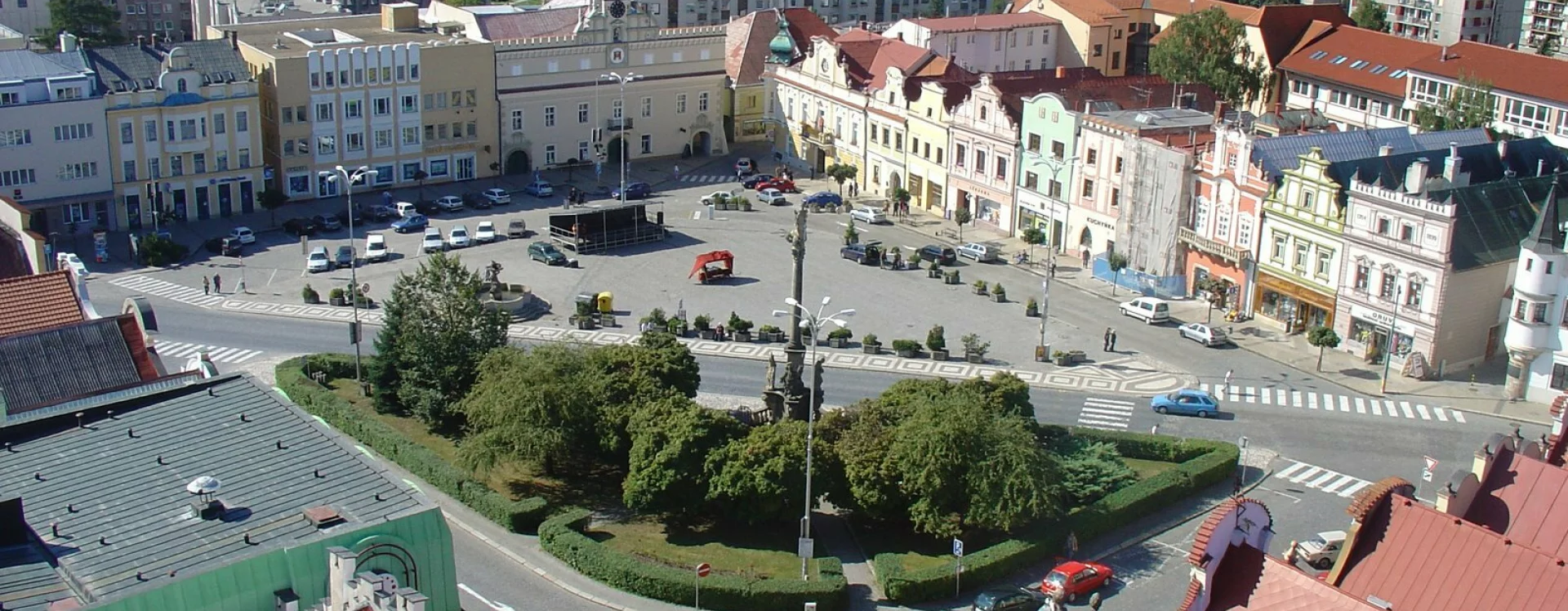
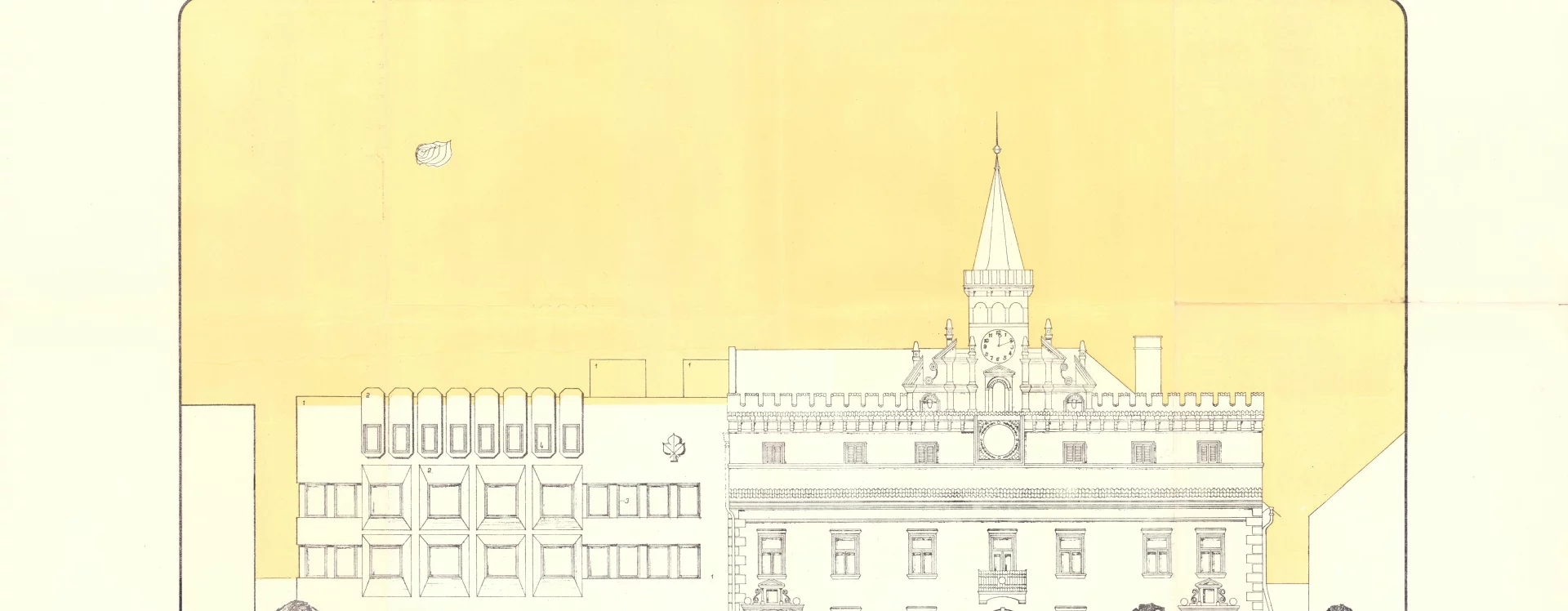
Lubomír Driml, an architect from the Pardubice branch of Stavoprojekt, was invited to design the Czech State Insurance Company building, which was to be constructed on a plot of land vacated by demolished buildings on what is now Havlíček Square. The architect, who had experience with buildings in the immediate vicinity of historic centres, specifically in Havlíčkův Brod (Trčkova / V Rámech housing estate) (HB_VP-SN1), collaborated on the project with architect Miroslav Řepa. They had both already worked on similar projects in the past (Czech State Insurance Company in Pardubice, Hotel Labe in Pardubice) and were selected by the investor based on their excellent reputation. Nevertheless, Lubomír Driml in particular faced the difficult task of integrating the new building into an area with its own architectural and visual memory in the immediate vicinity of the historic Old Town Hall building.
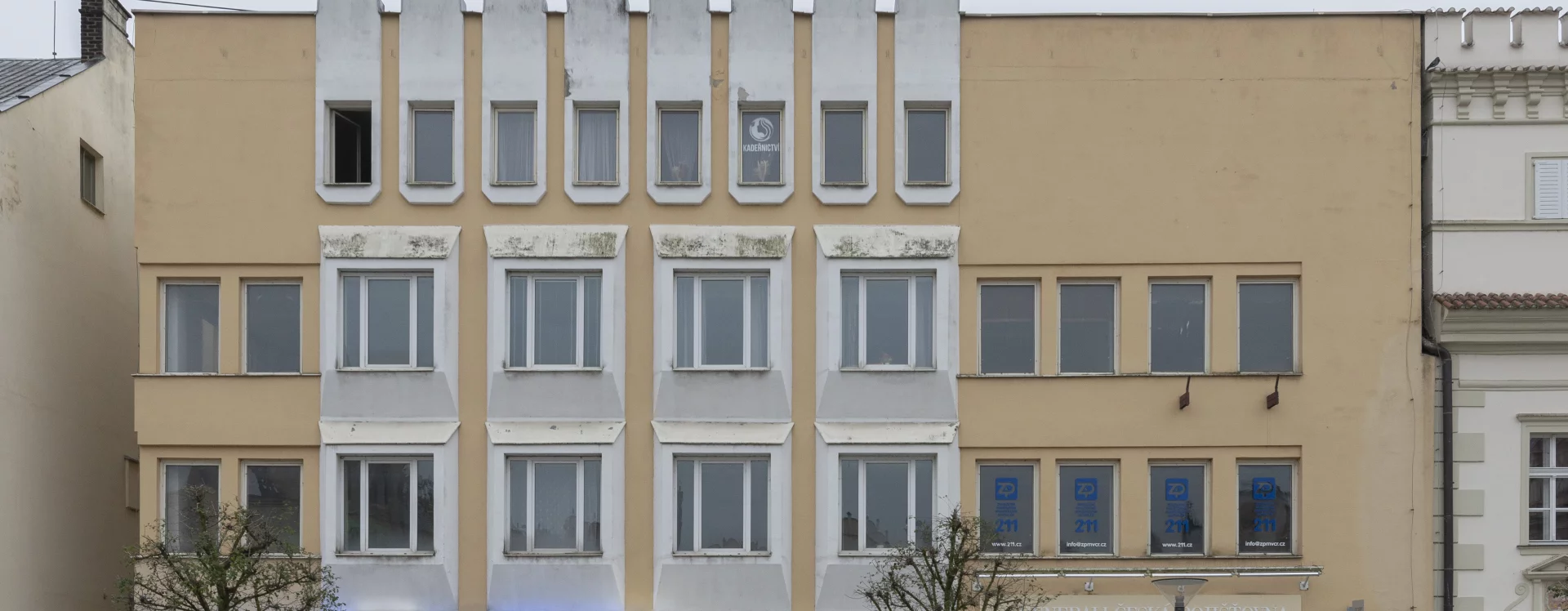
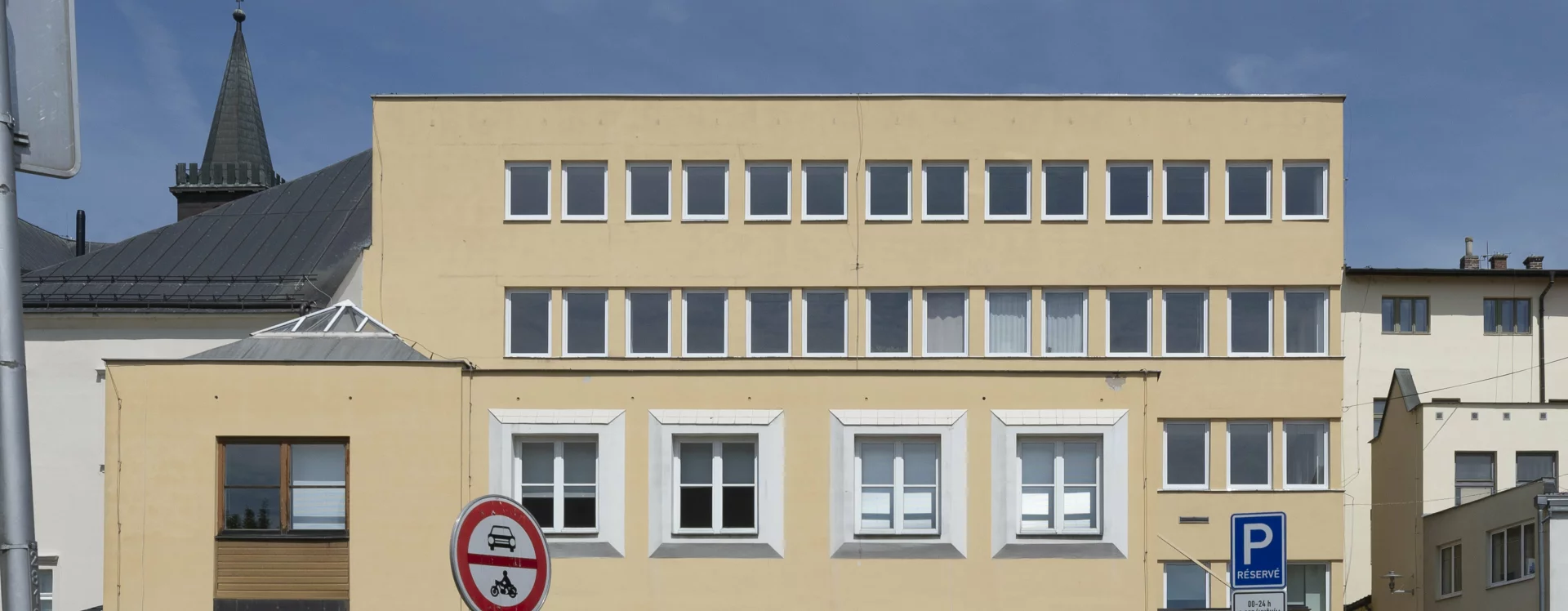
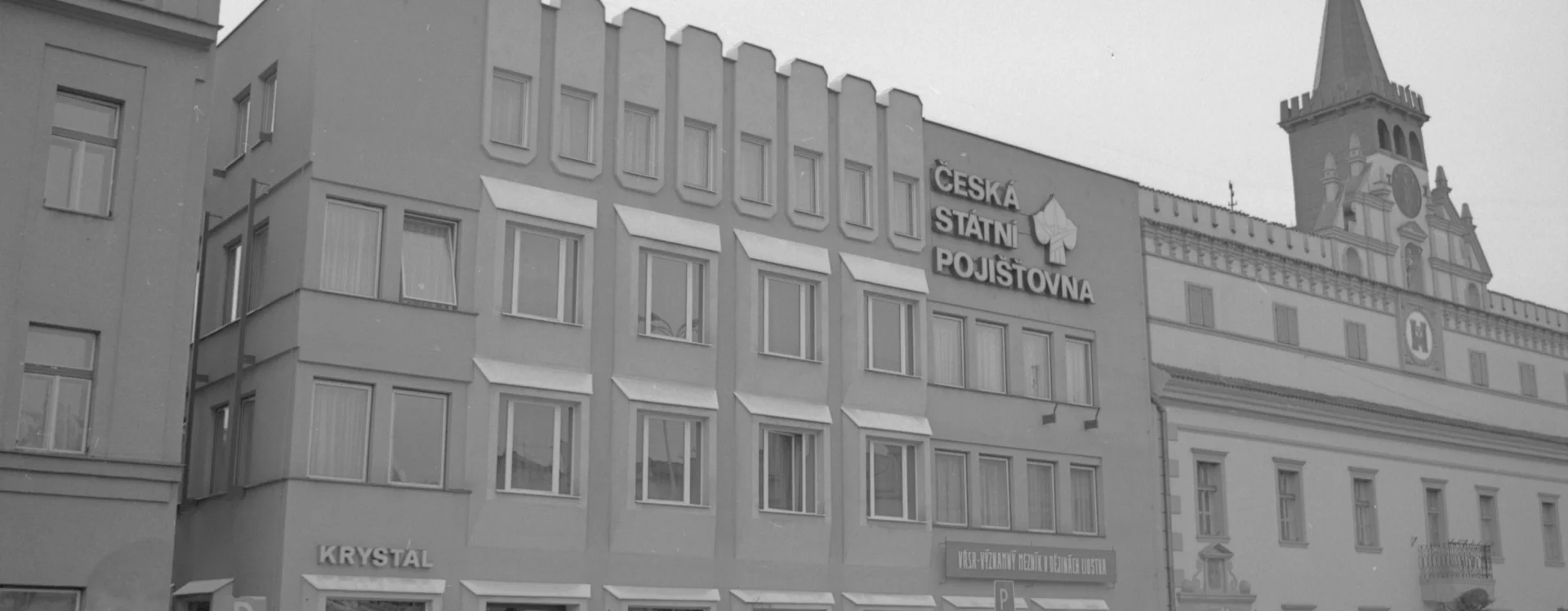
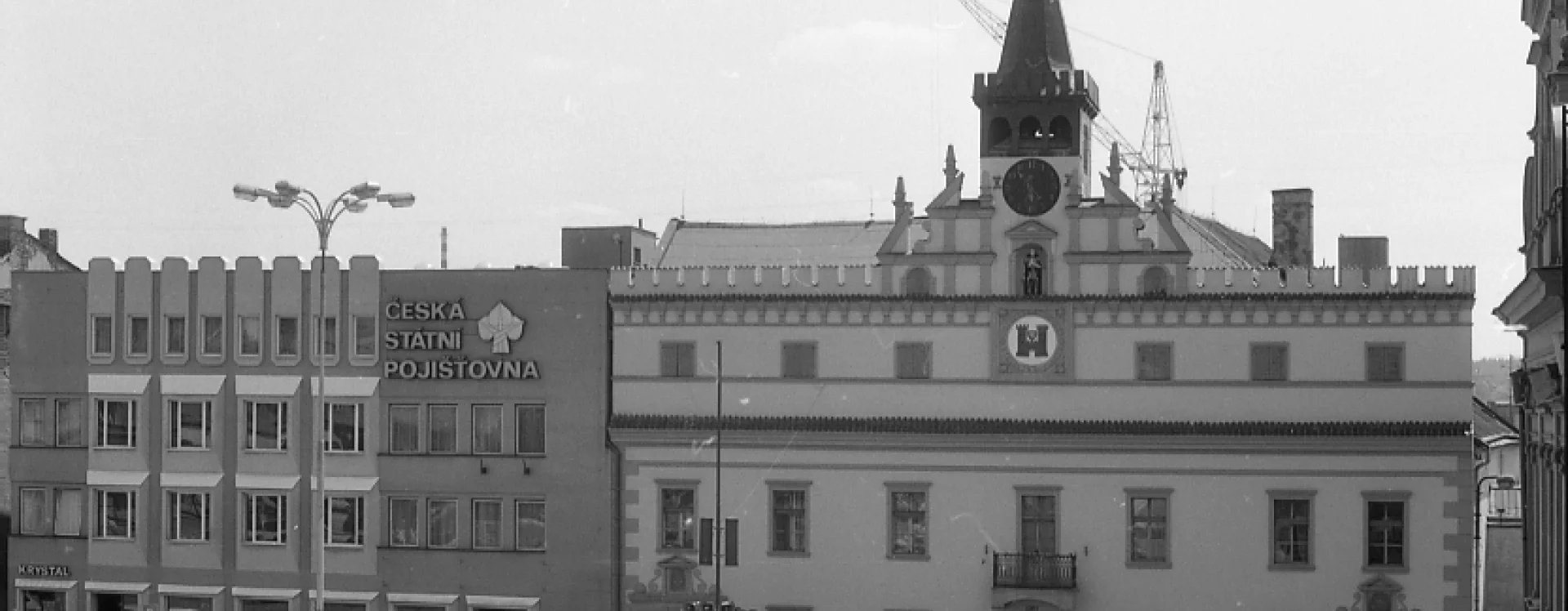
The location required an unconventional yet sensitive solution. The architect designed the new building with respect for its surroundings, opting for a three-storey cubic form whose height precisely matches that of the adjacent former town hall. He applied his inventiveness to the design of the window grids. The width of the windows varies according to the floor: on the ground floor, wide frames serve as display windows; on the first and second floors, standard-width windows provide light for the offices; and on the top floor, narrow windows echo the Renaissance character of the attic spaces. The windows on the top floor are additionally set in a sculptural high frame that exceeds the mass of the building itself, thus further resembling the surrounding historic buildings. On the ground floor and at the building’s notional centre, the architect set the windows within projecting sculptural grids shaped like four-sided truncated pyramids. The facade’s plasticity, in turn, creates a postmodern dialogue with the modelled surfaces of the neighbouring Renaissance building. The new building does not attempt to hide in the shadow of the historic structure, but rather draws from its form the fundamental architectural elements, reinterpreted in a then-modern guise—in the case of Lubomír Driml, in the spirit of postmodern architectural principles.
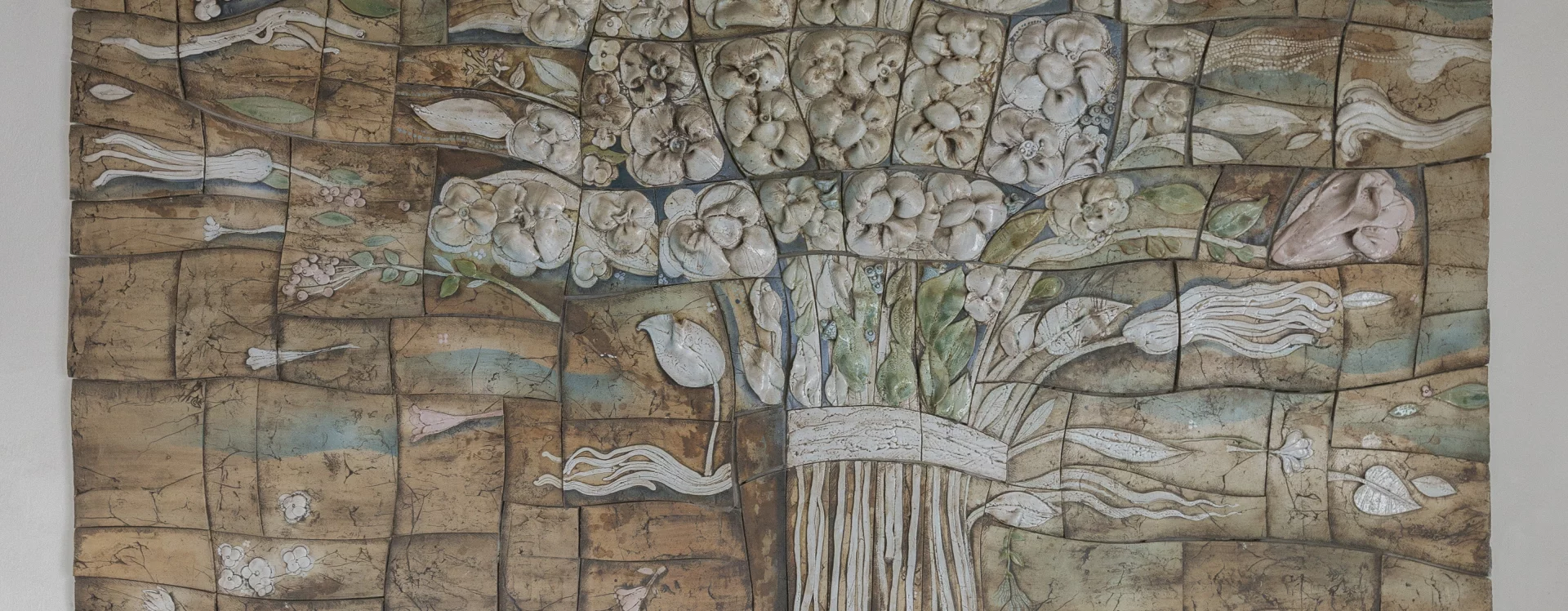
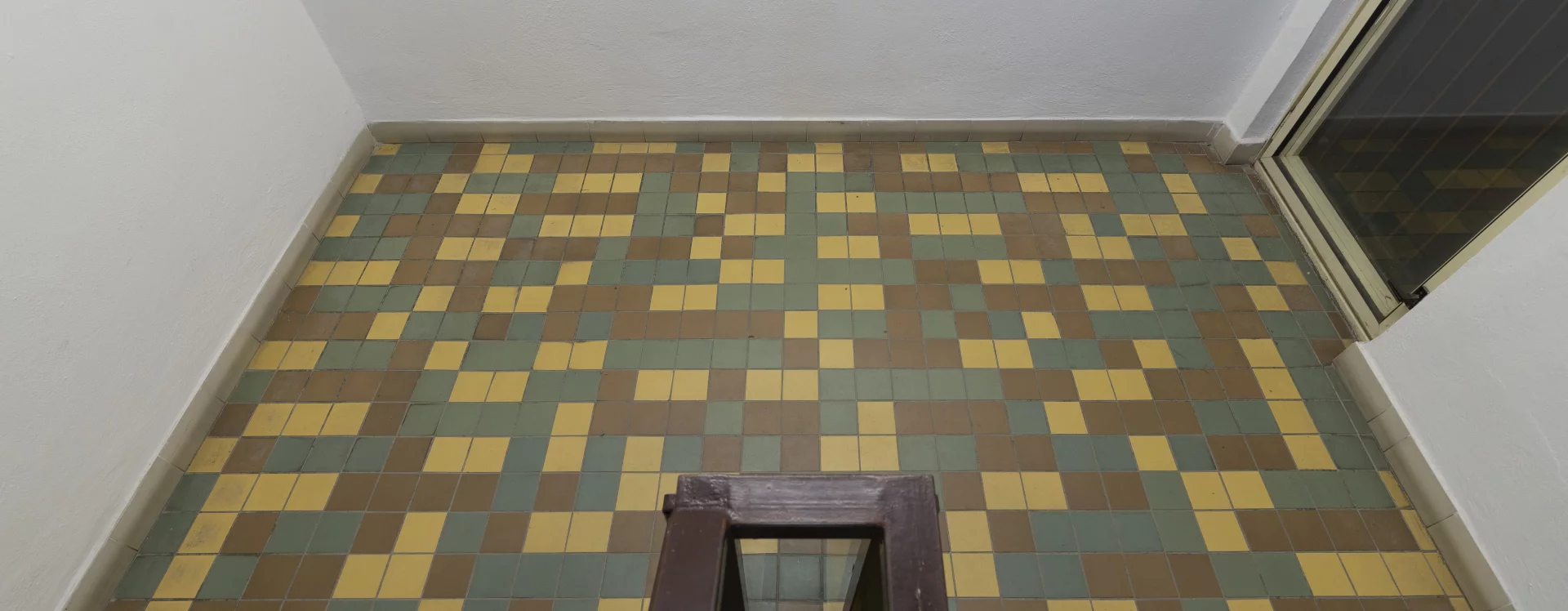
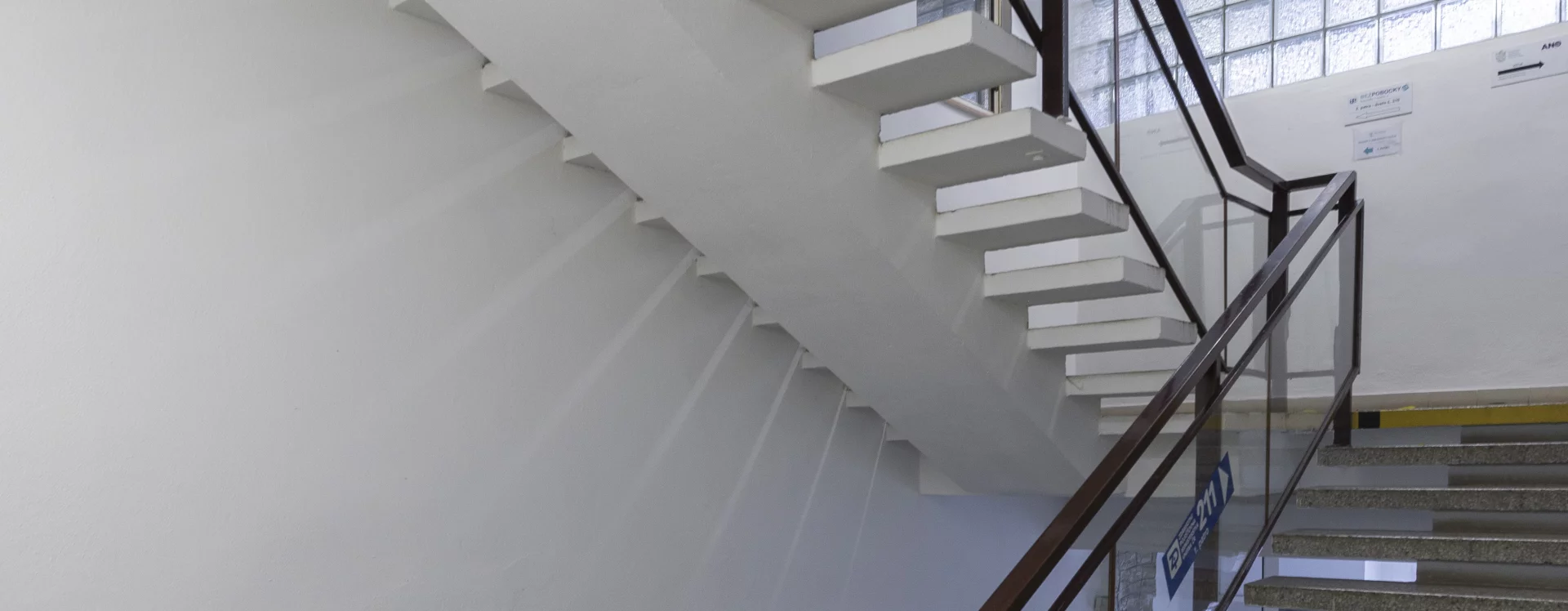
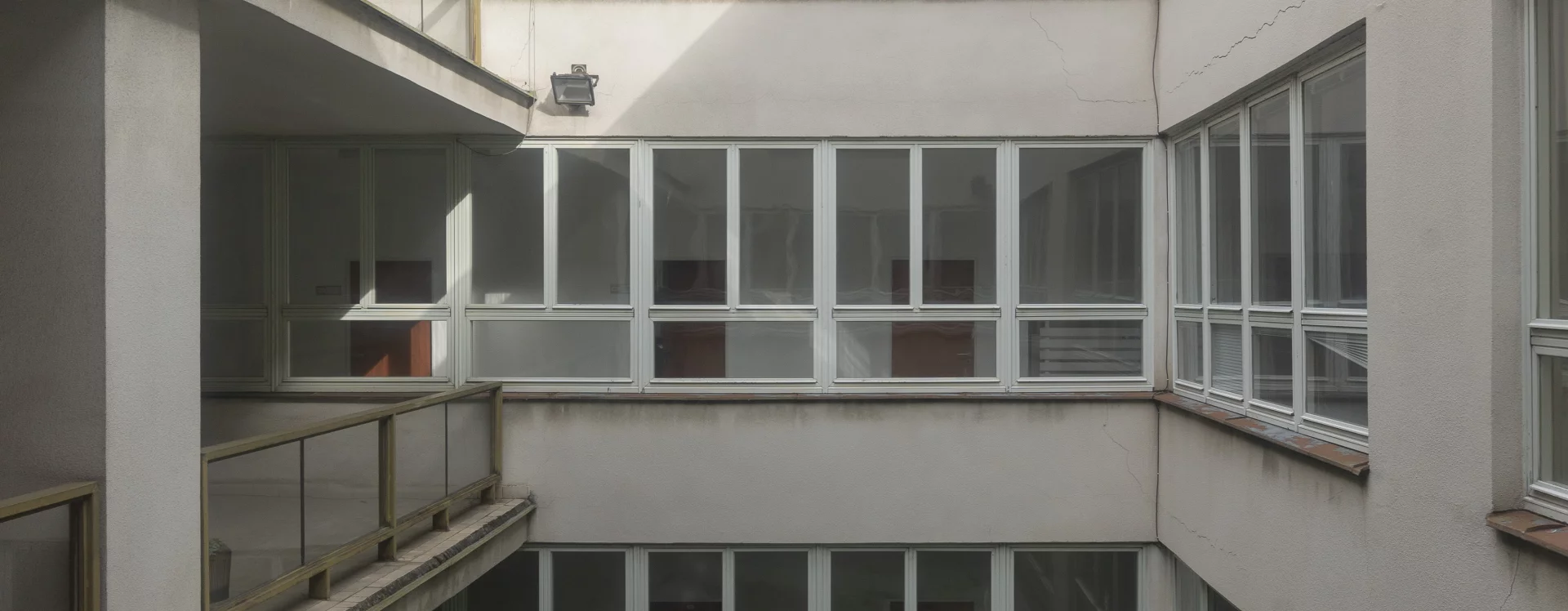
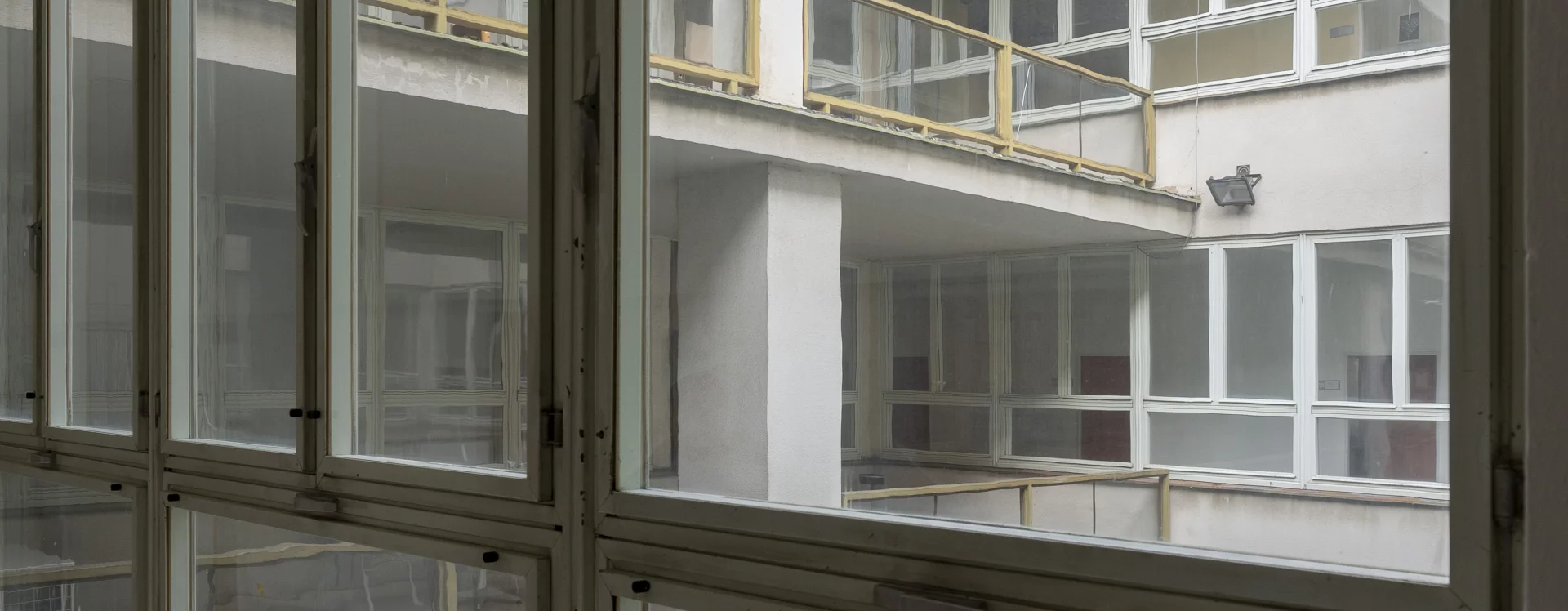
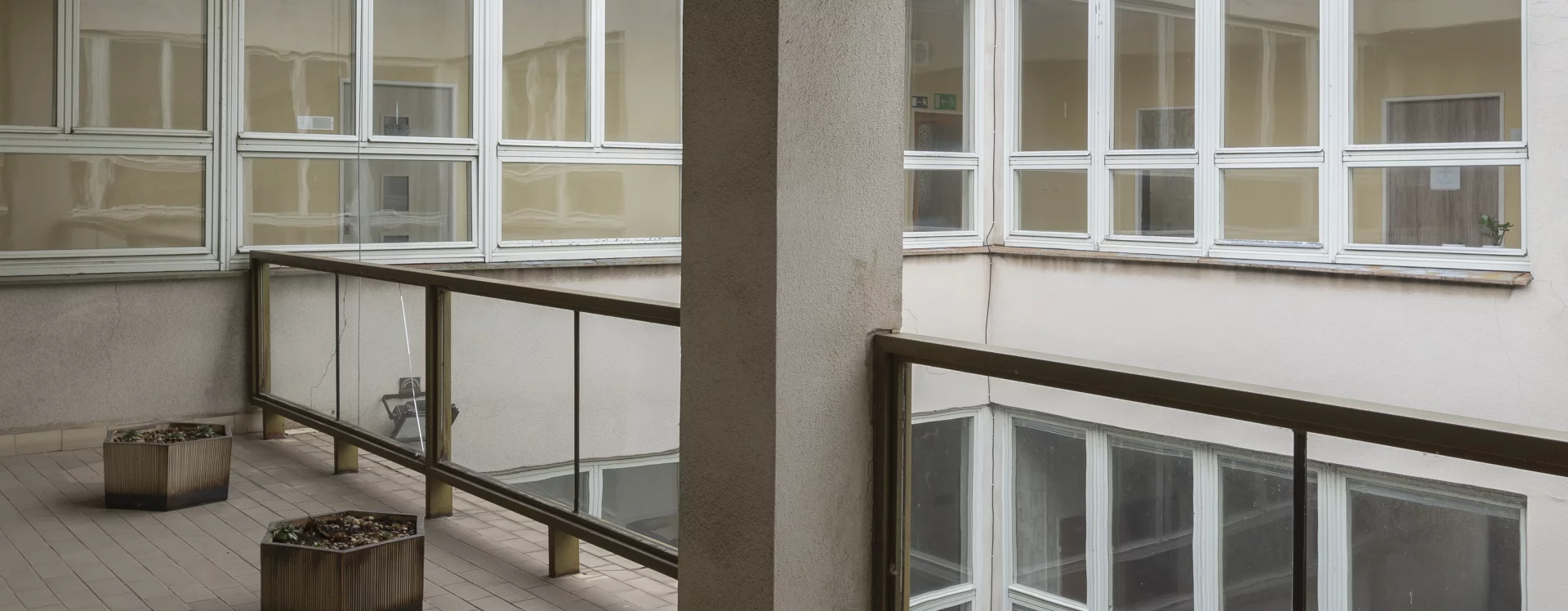
Driml allowed himself to approach the interior with greater inventiveness than the exterior. A key element is the ‘internal exterior space’, extending through three storeys and forming a hidden courtyard that brings daylight into the heart of the building. Around the atrium runs the main circulation corridor, providing access to the adjoining functional areas. The interiors were designed with a sense of lightness, even though the building’s exterior does not suggest this. Miroslav Řepa worked on the interior design, inviting prominent Czechoslovak artists with whom he had previously collaborated on interior projects, such as ceramicist Marta Taberyová, glass artists František Vízner and Ivo Burian, and painter Zbyněk Slavíček.
Eliška Jedličková, 2025
Literature
Cesty Vysočiny. 1981. sv. číslo 44.
Ladislav Konopka. Česká státní pojišťovna v Havlíčkově Brodě. In: Architektura ČSR. 1985, XLIV/7, p. 317-319.
Respektuji okolní zástavbu. In: Havlíčkobrodský zpravodaj. Havlíčkův Brod, 1981, VIII/10, p. 12.