
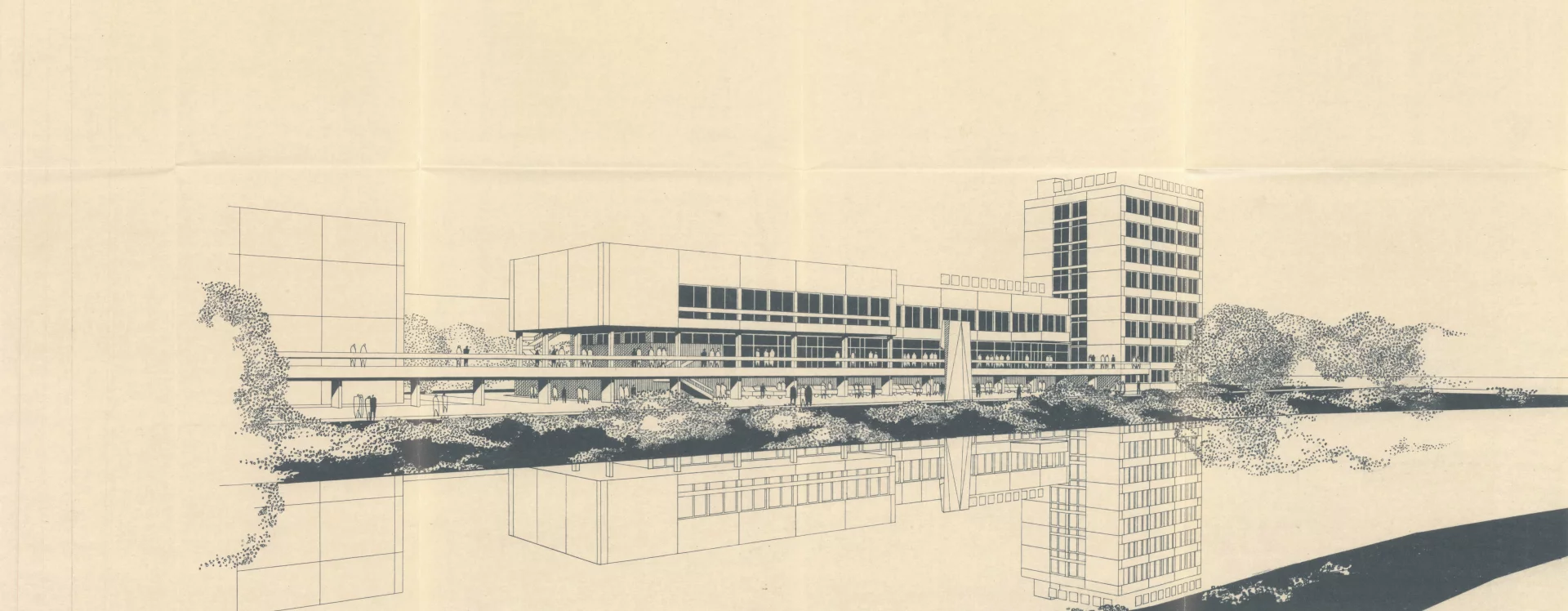
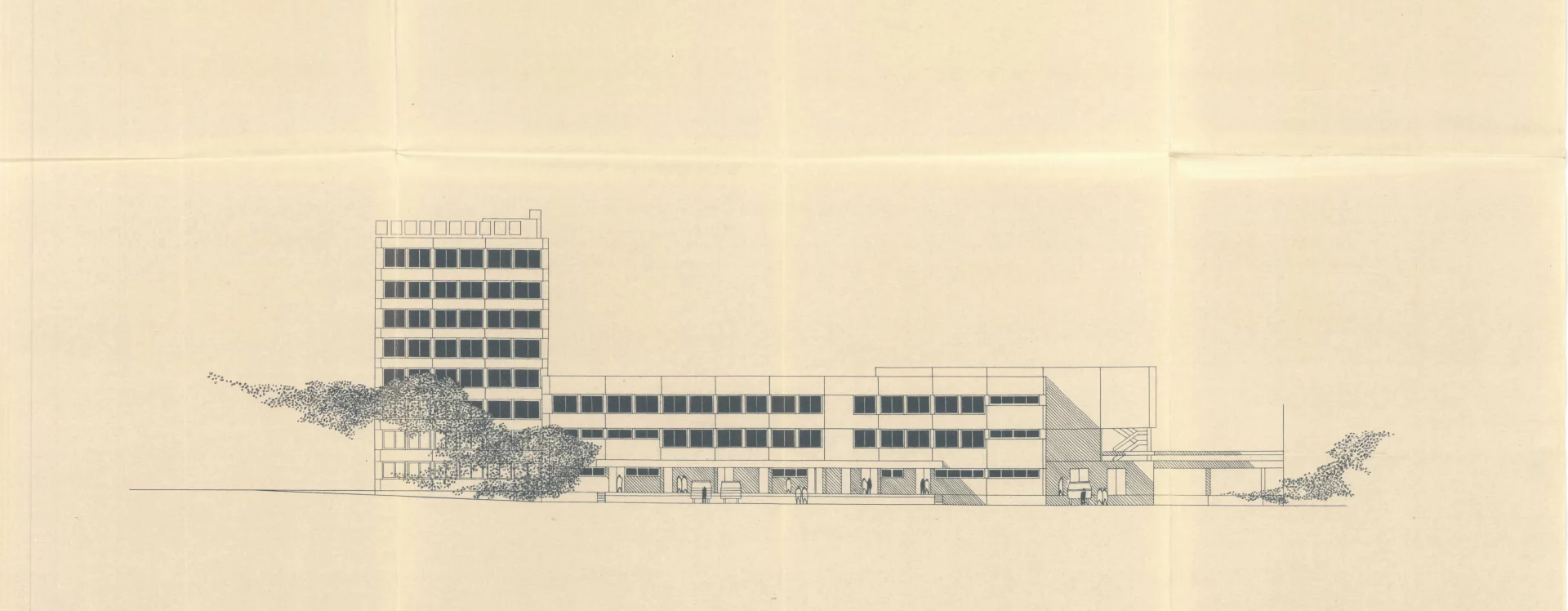
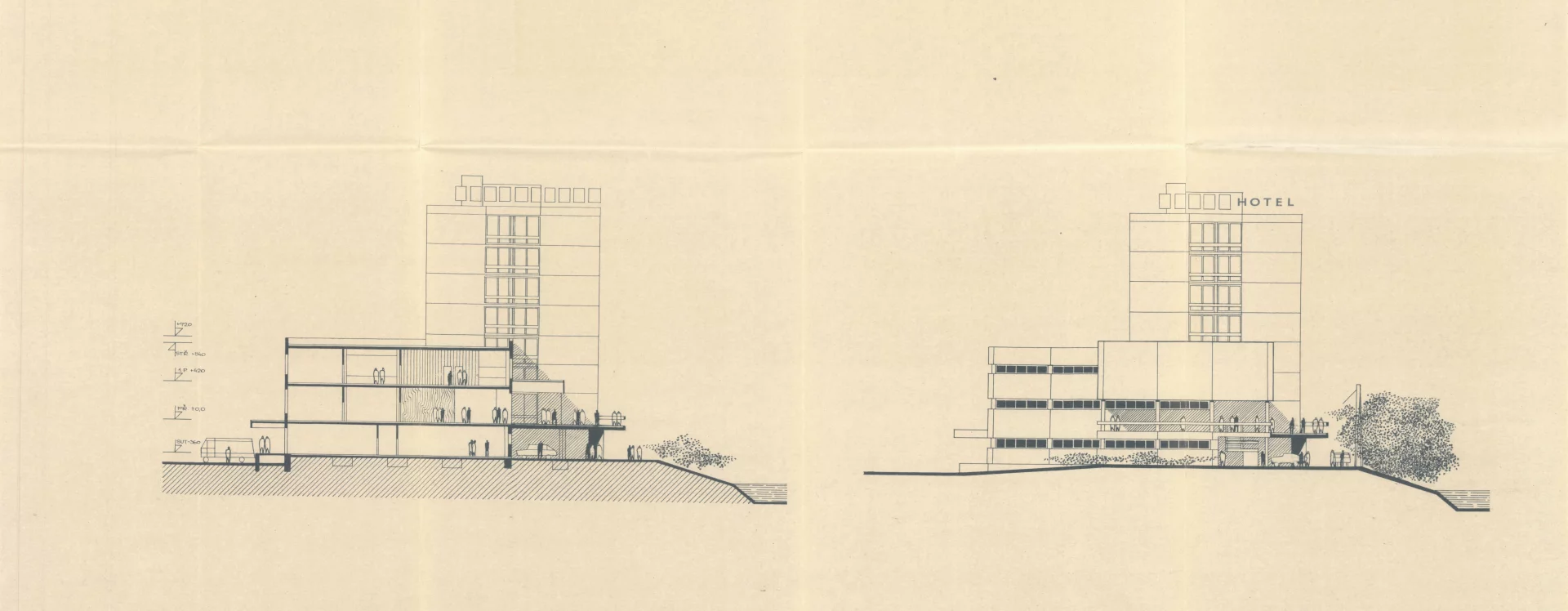
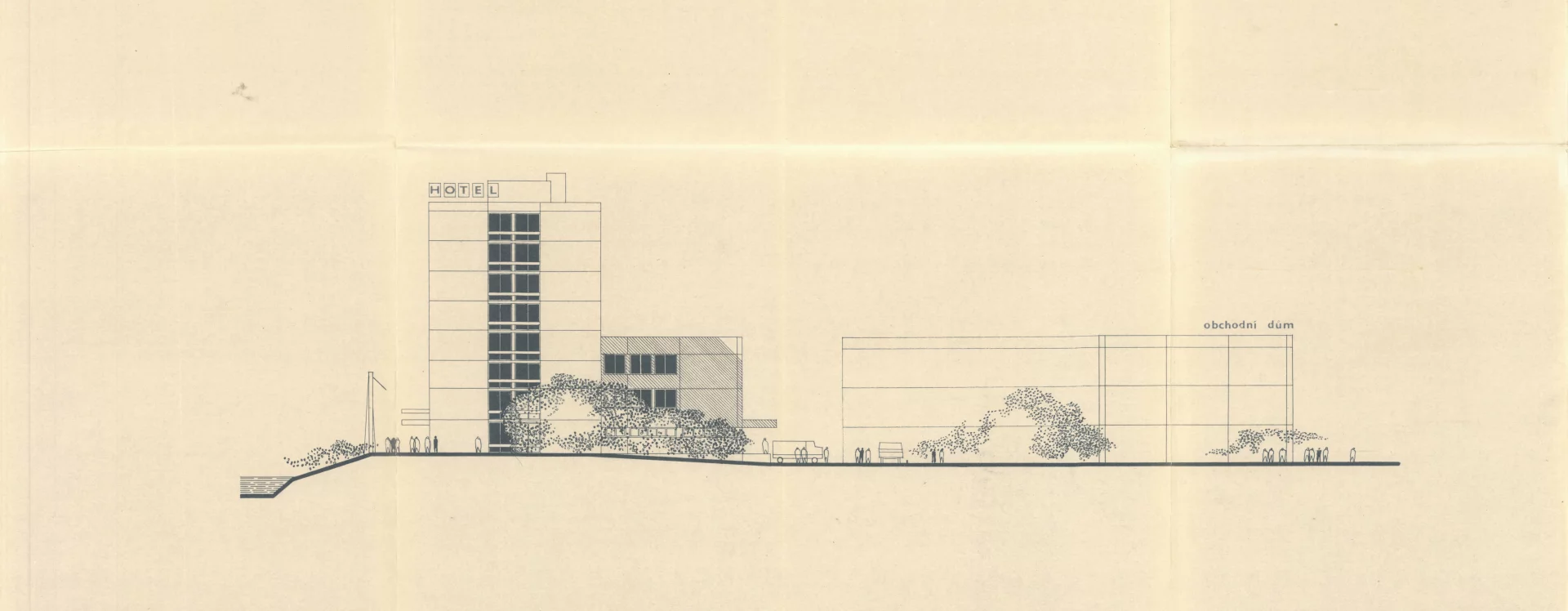
Situated on the transit route between Prague and Vienna, Havlíčkův Brod was identified in the early 1960s as a promising tourist destination in the Bohemian-Moravian Highlands. Within the framework of state planning concepts, the need repeatedly arose to build a large-capacity hotel capable of accommodating both supra-regional and foreign clientele. The initiative came from the management of the Havlíčkův Brod Restaurants and Canteens enterprise, which sought to have the construction included in mandatory investment plans.
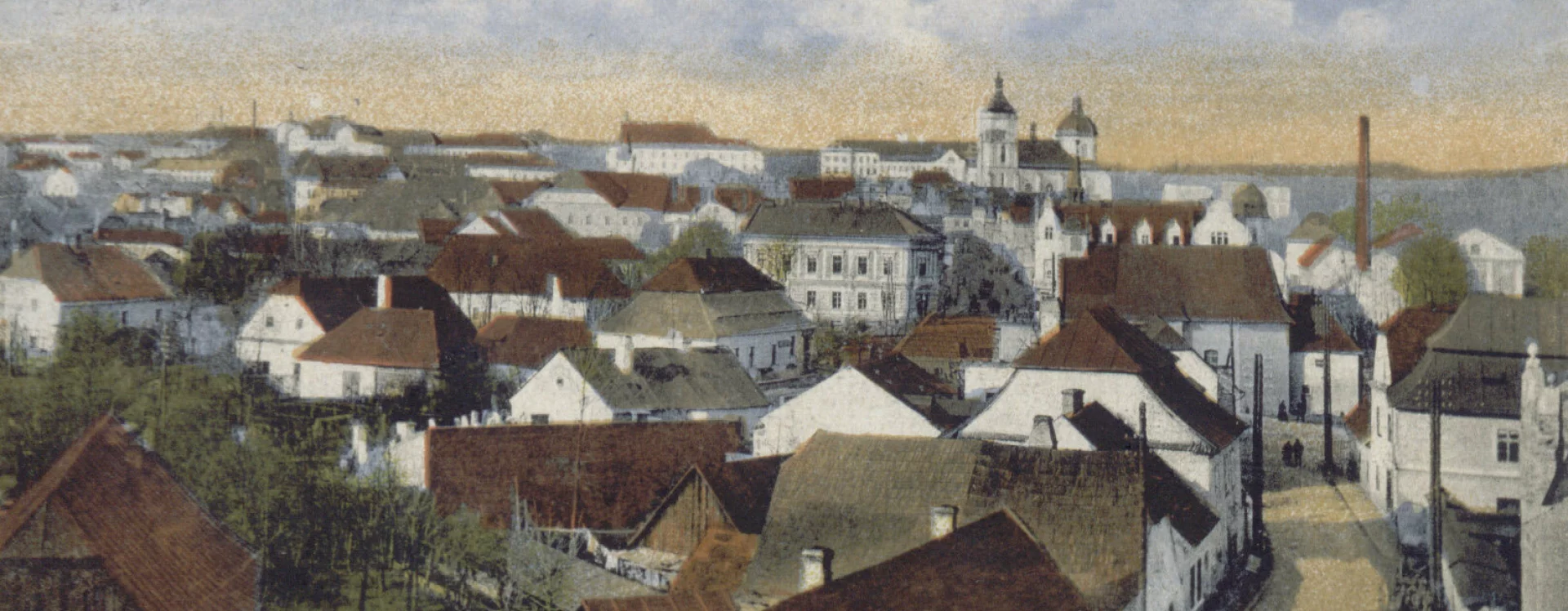
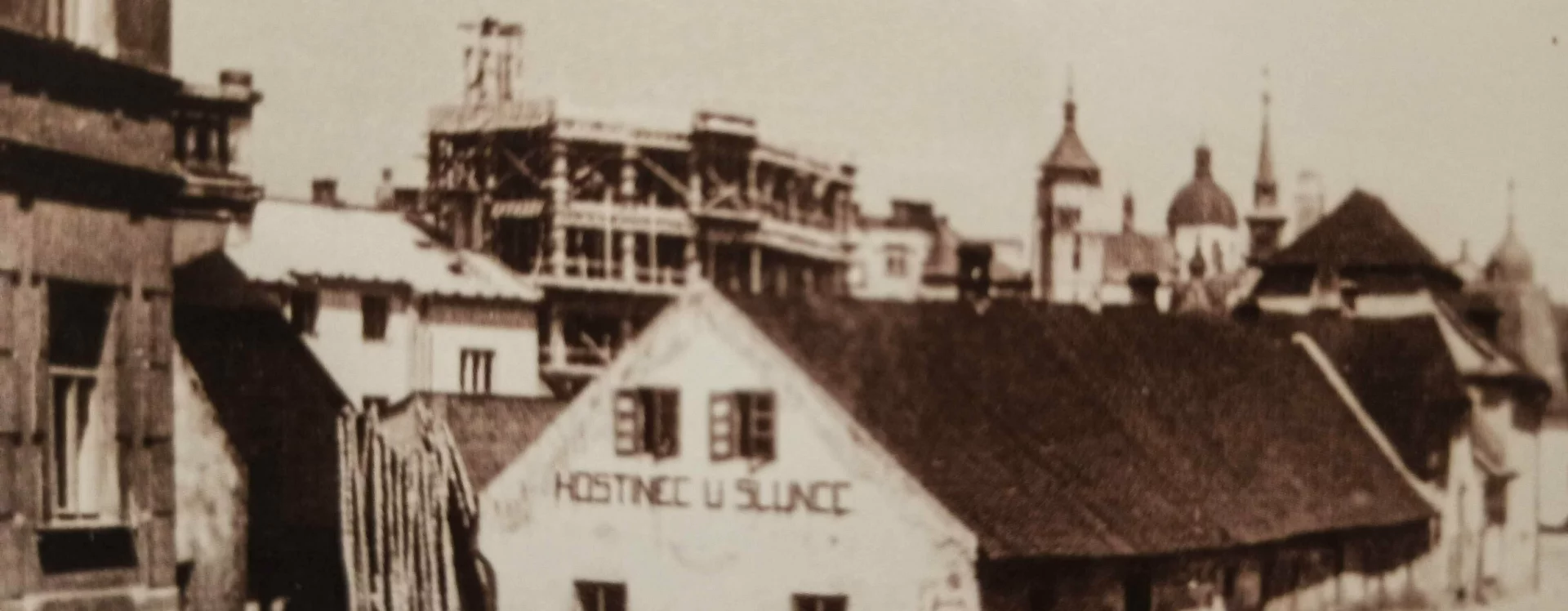
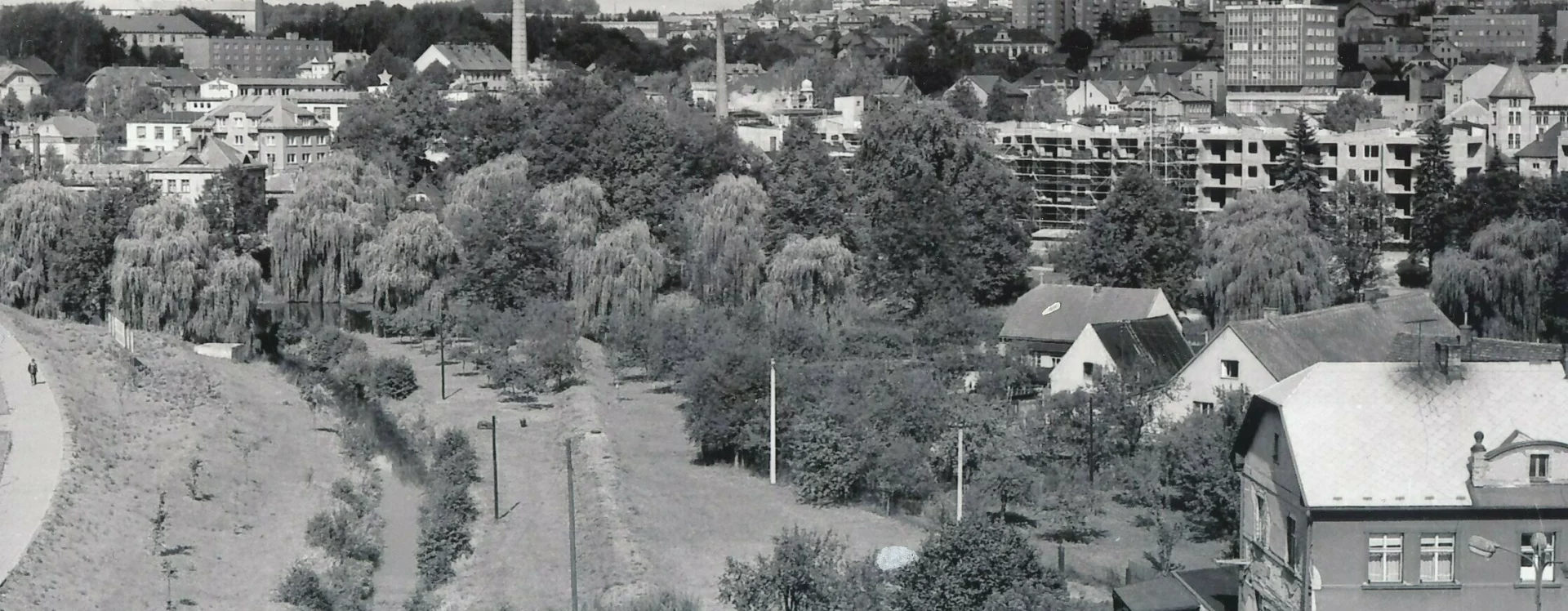
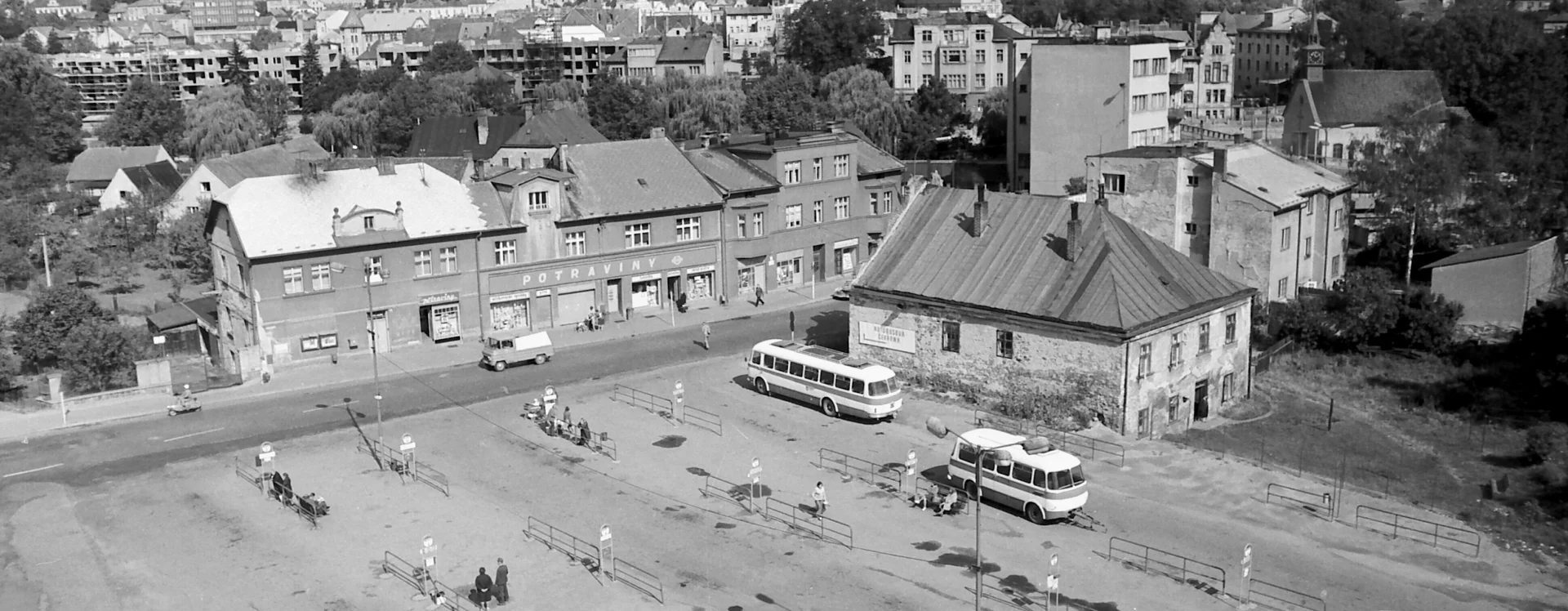
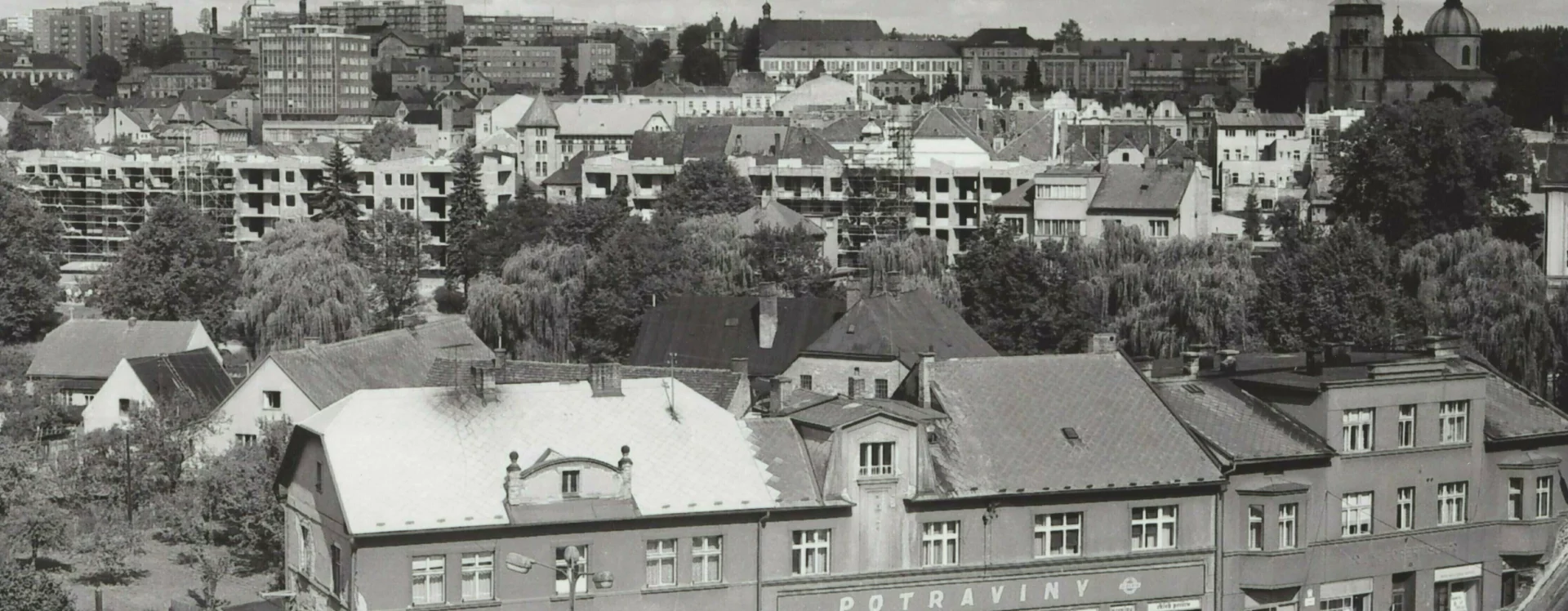
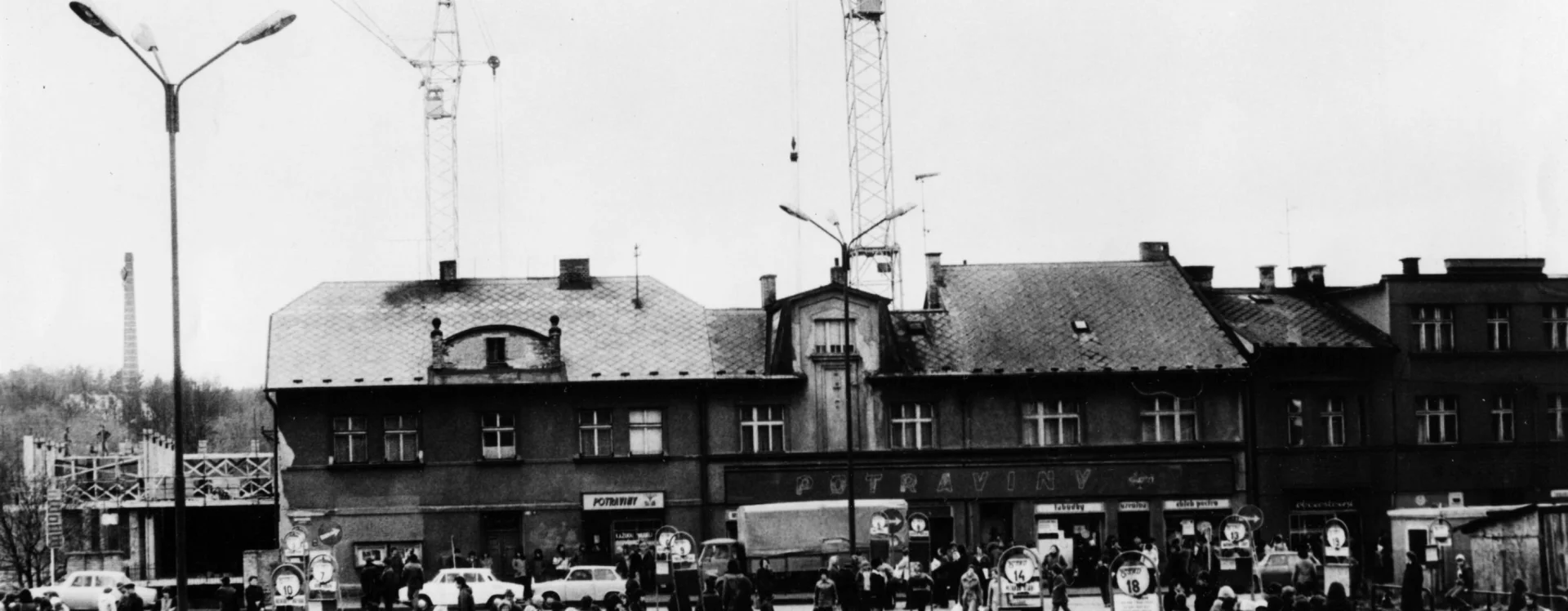
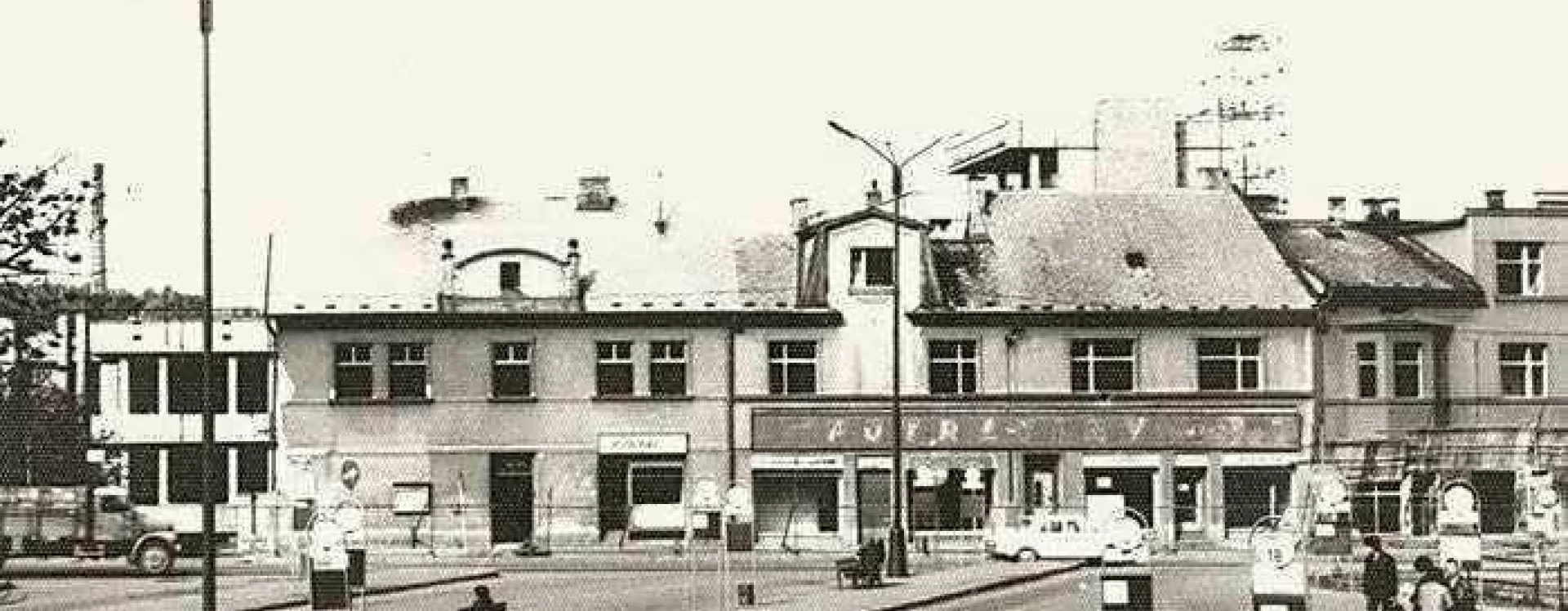
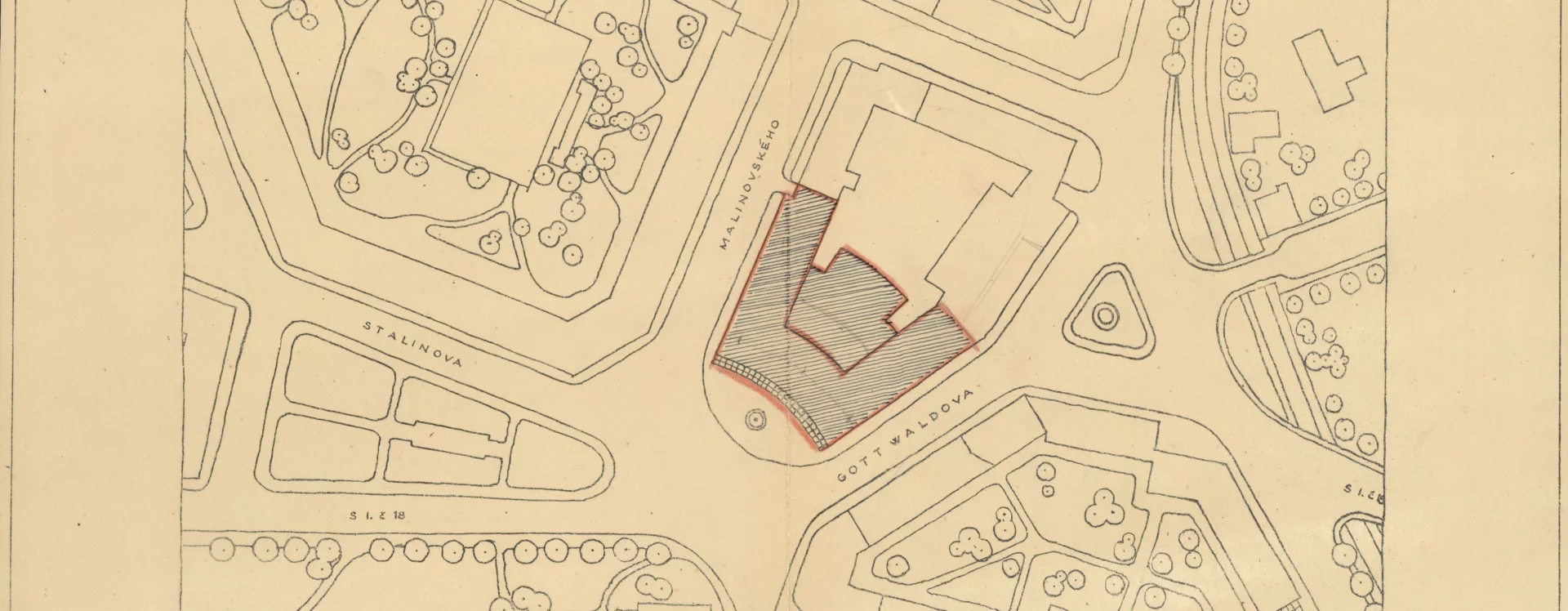
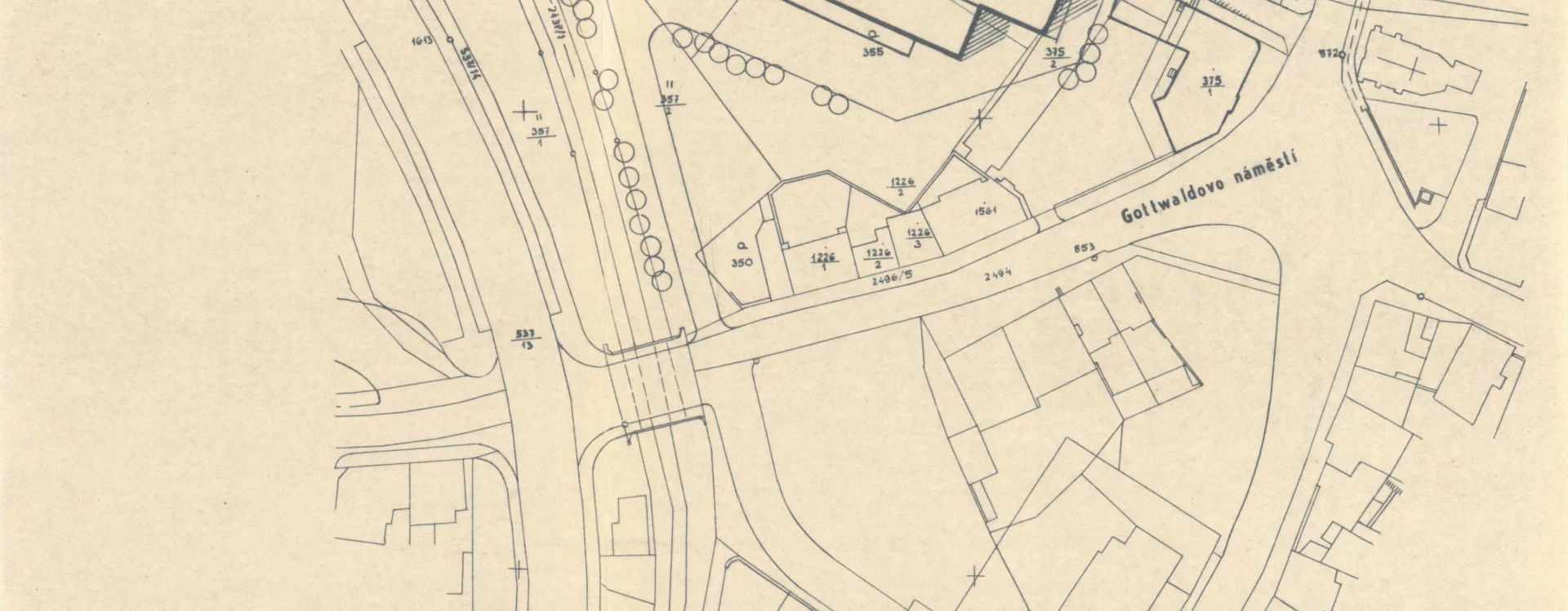
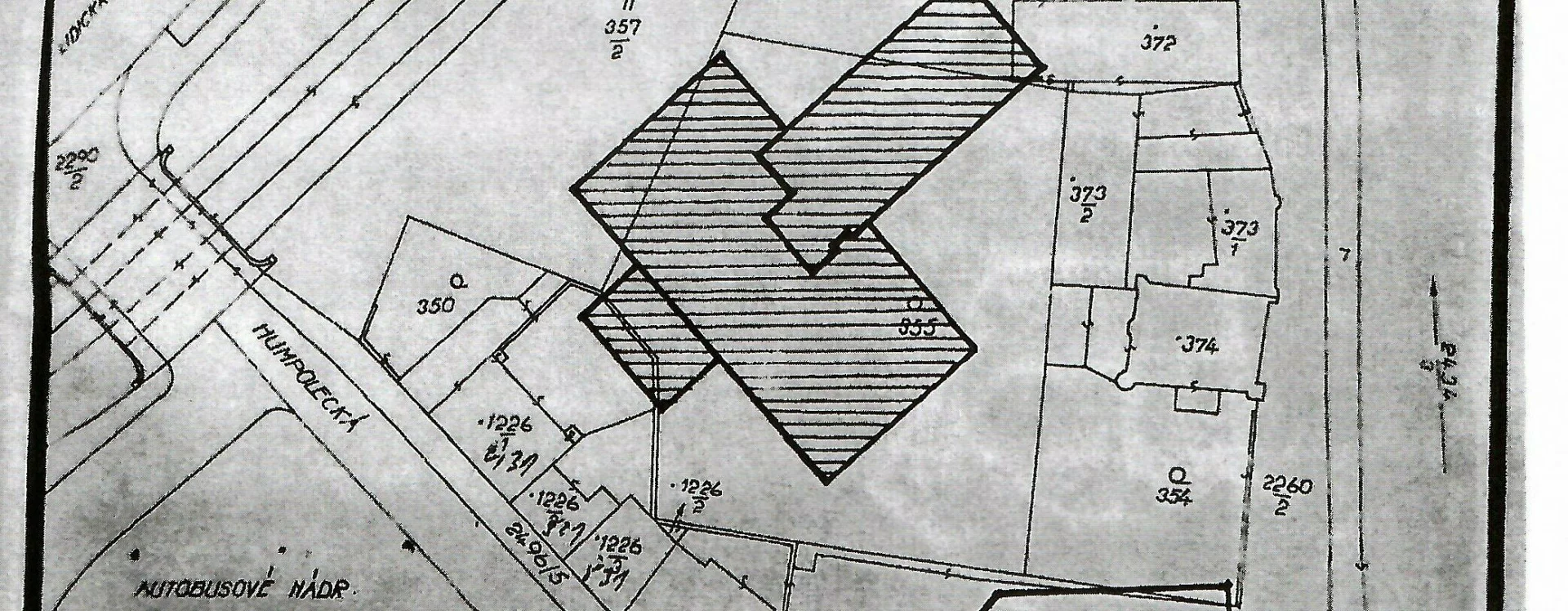
From the outset, the area around today’s roundabout by the Church of St Catherine—then called Gottwald Square—was the focus of interest. This area extended into a zone characterized mainly by historic block development along Humpolecká street, leading towards what is now the main crossroads.
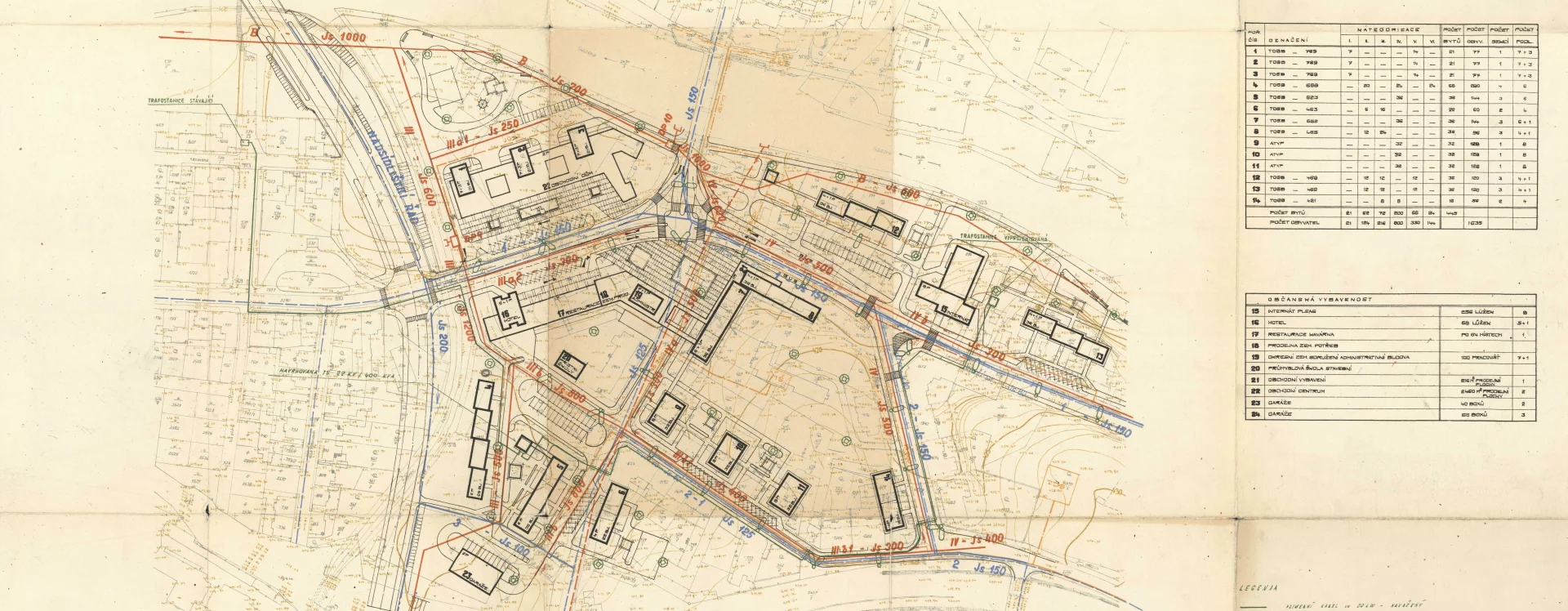
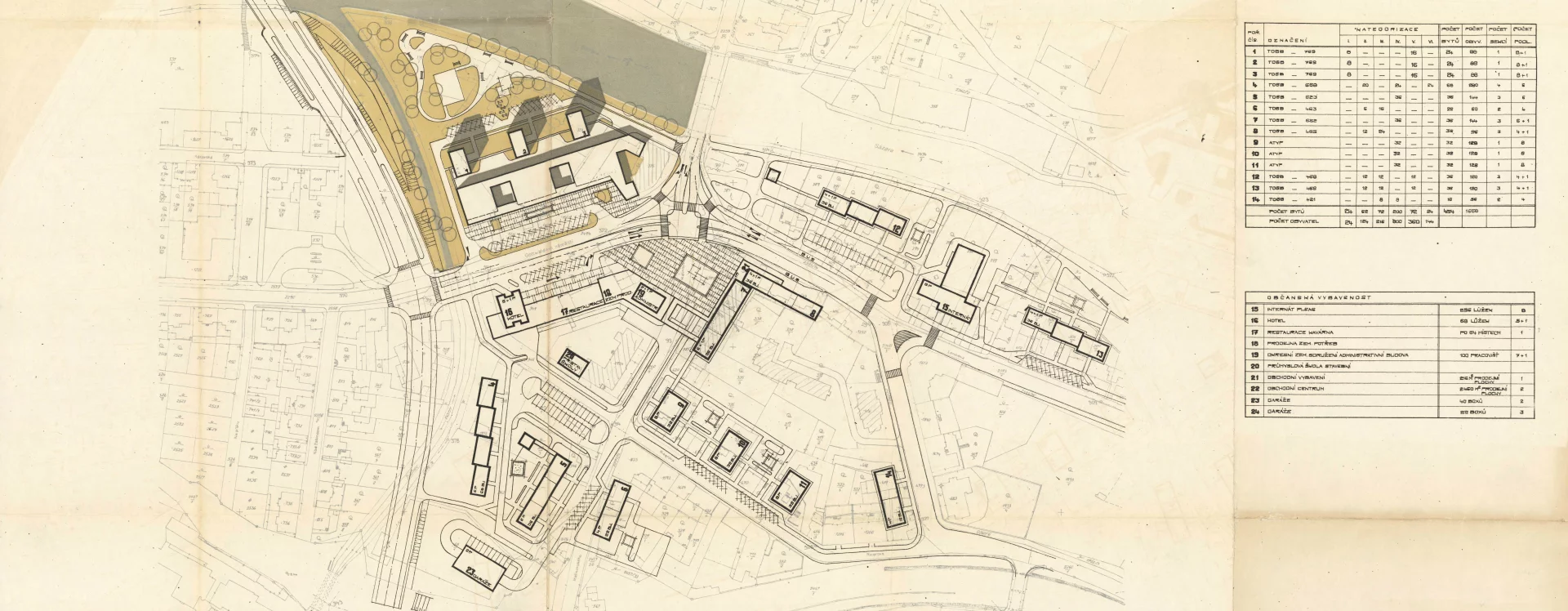
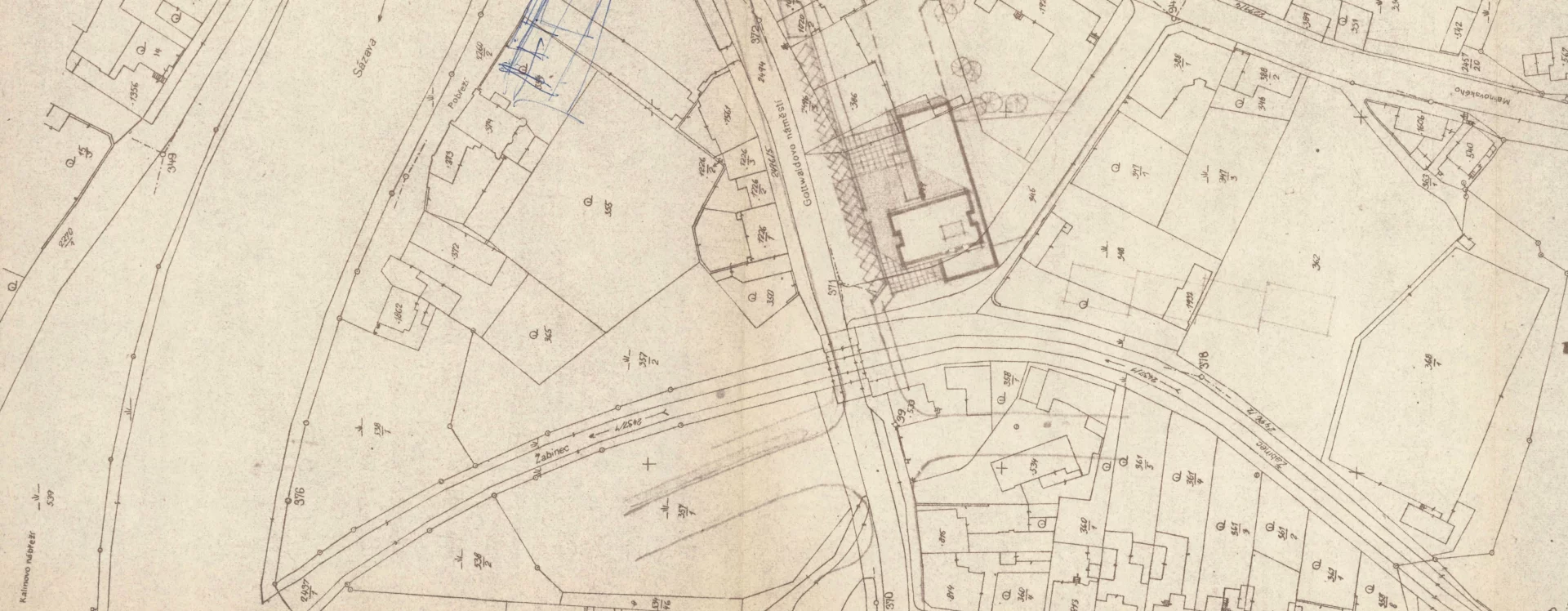
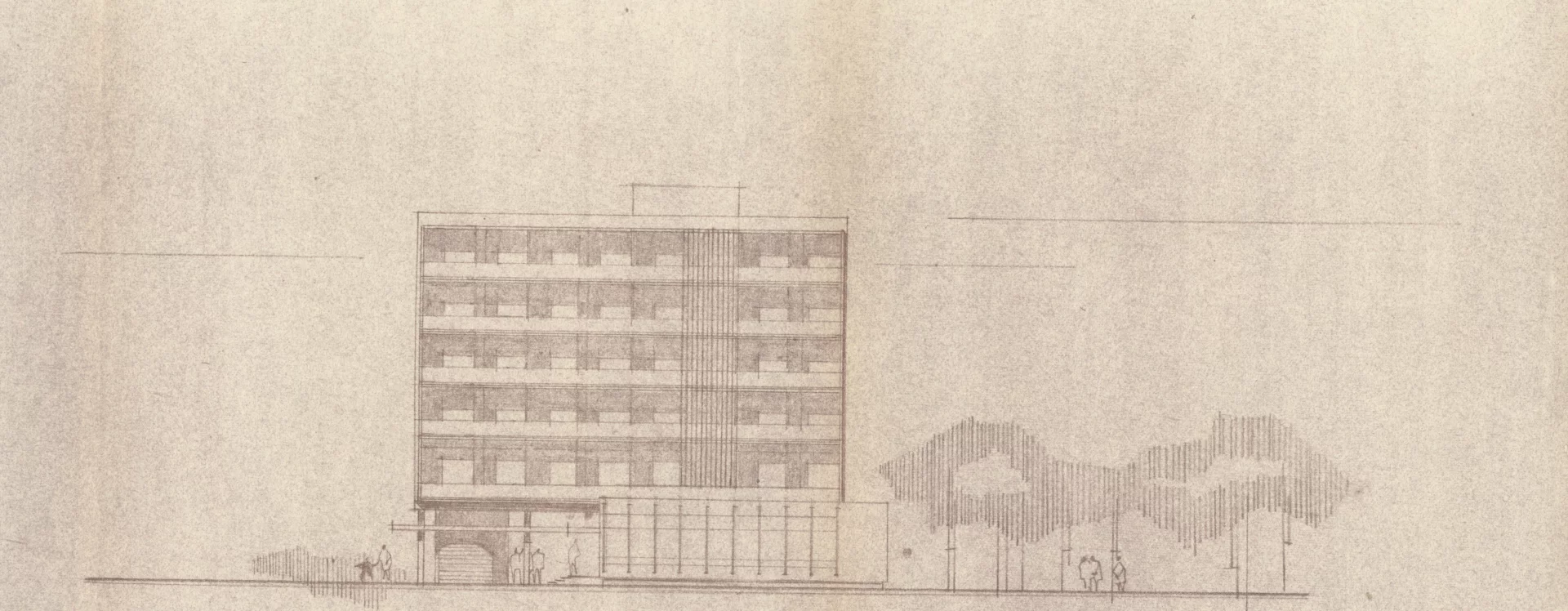
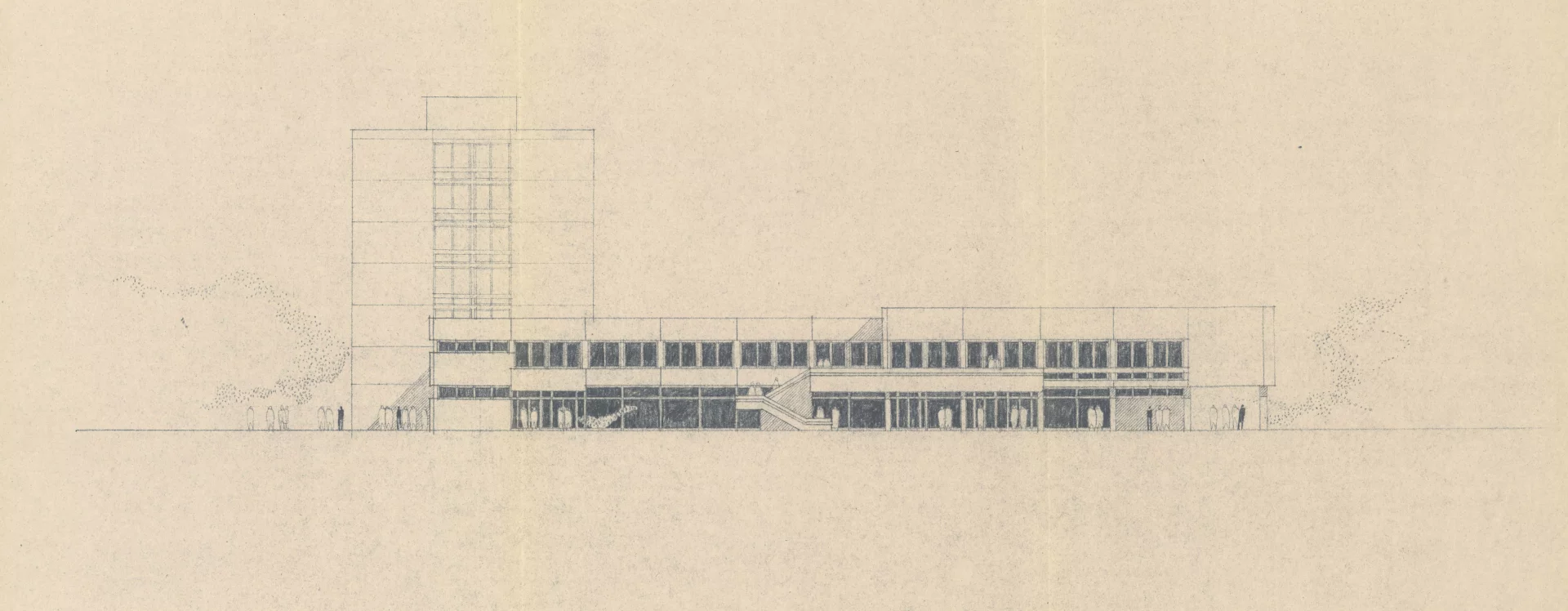
The first specific design for a hotel, prepared in 1968 under the patronage of the Restaurants of Pardubice enterprise, was submitted by architect Lubomír Driml (1935–2005) of Stavoprojekt Pardubice, who at that time was also completing designs for the Rámy housing estate (1967, HB-VP-SN1) and the ceremonial hall at the New Cemetery (1967, HB-2949) in Havlíčkův Brod. The hotel, offering ninety beds, was to be situated next to the industrial school along the main road. The building also formed part of a broader concept for transforming the locality, set out in the Urban Redevelopment Concept and developed within a detailed urban plan for Gottwald Square (November 1968). As part of this plan, the hotel appeared as an integral component of a civic amenities centre, alongside retail and service facilities with a total area exceeding 3,200m². These concepts reflected the period’s prevailing ambition for the comprehensive redevelopment of the historic urban fabric in favour of modern functionalist structures.
Driml’s design was ultimately removed from the investment plan, most likely due to a lack of construction capacity.
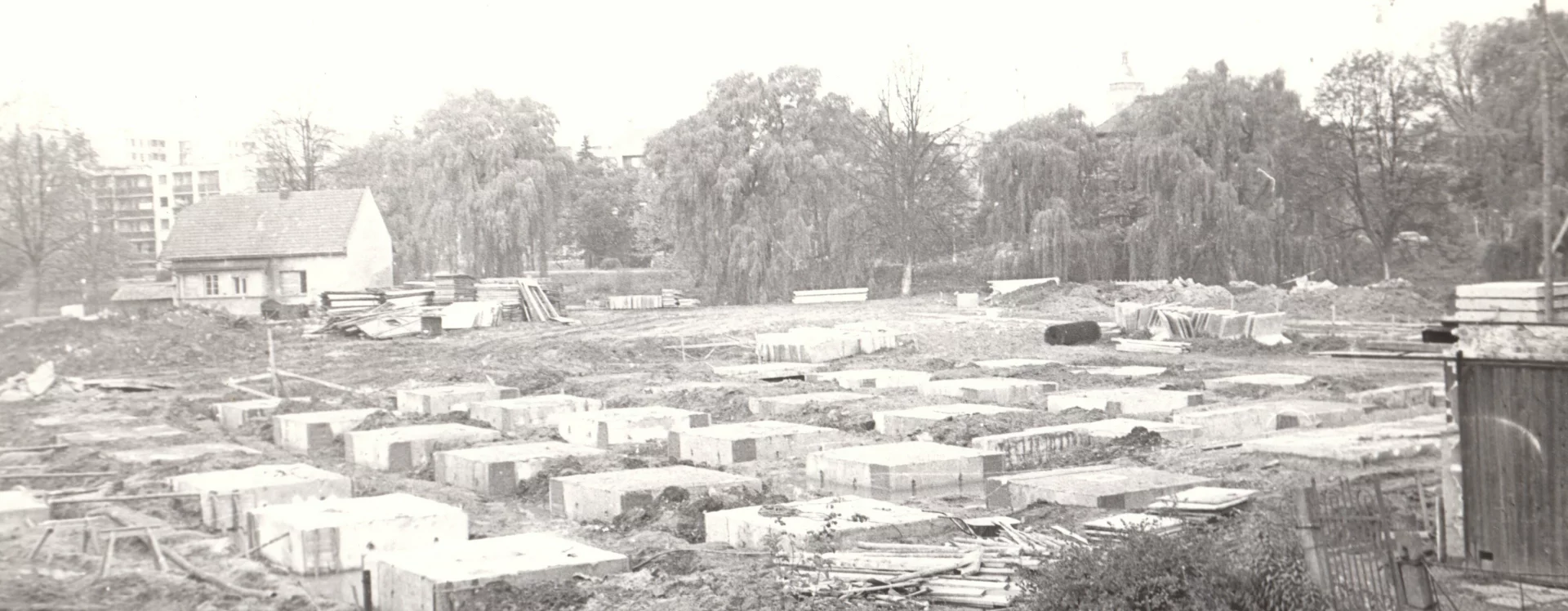
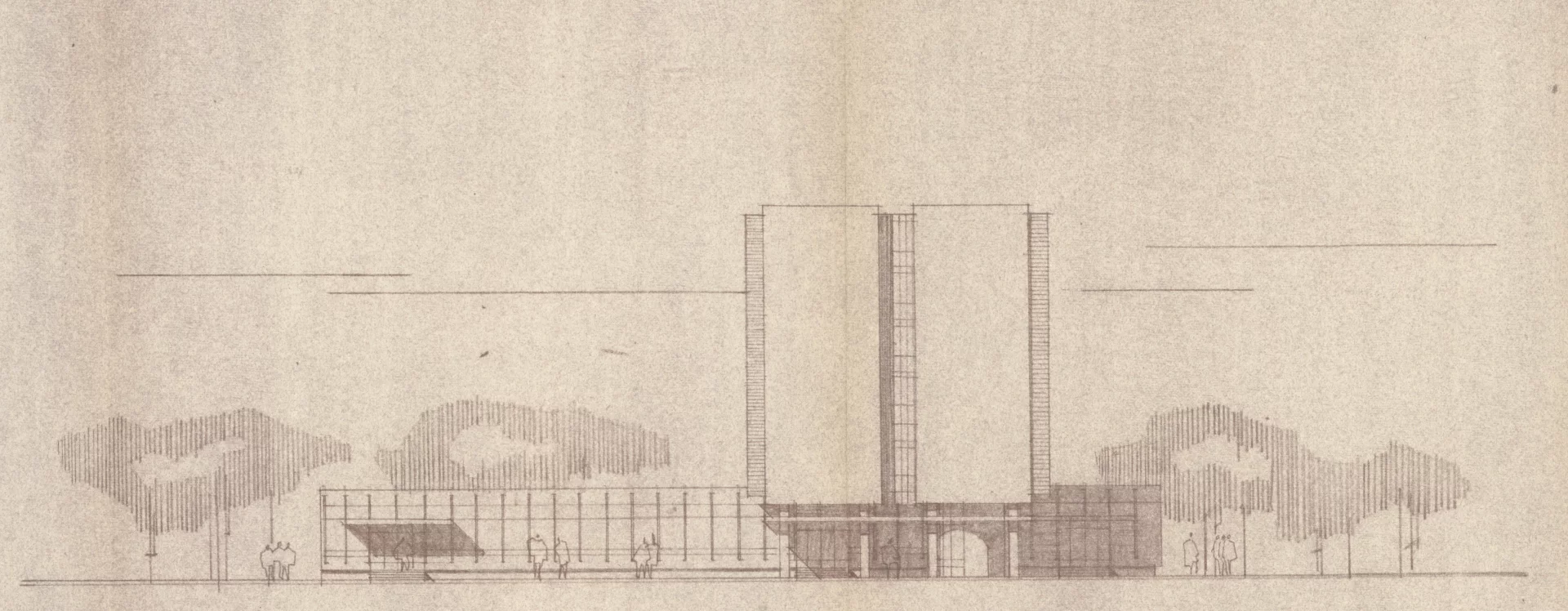
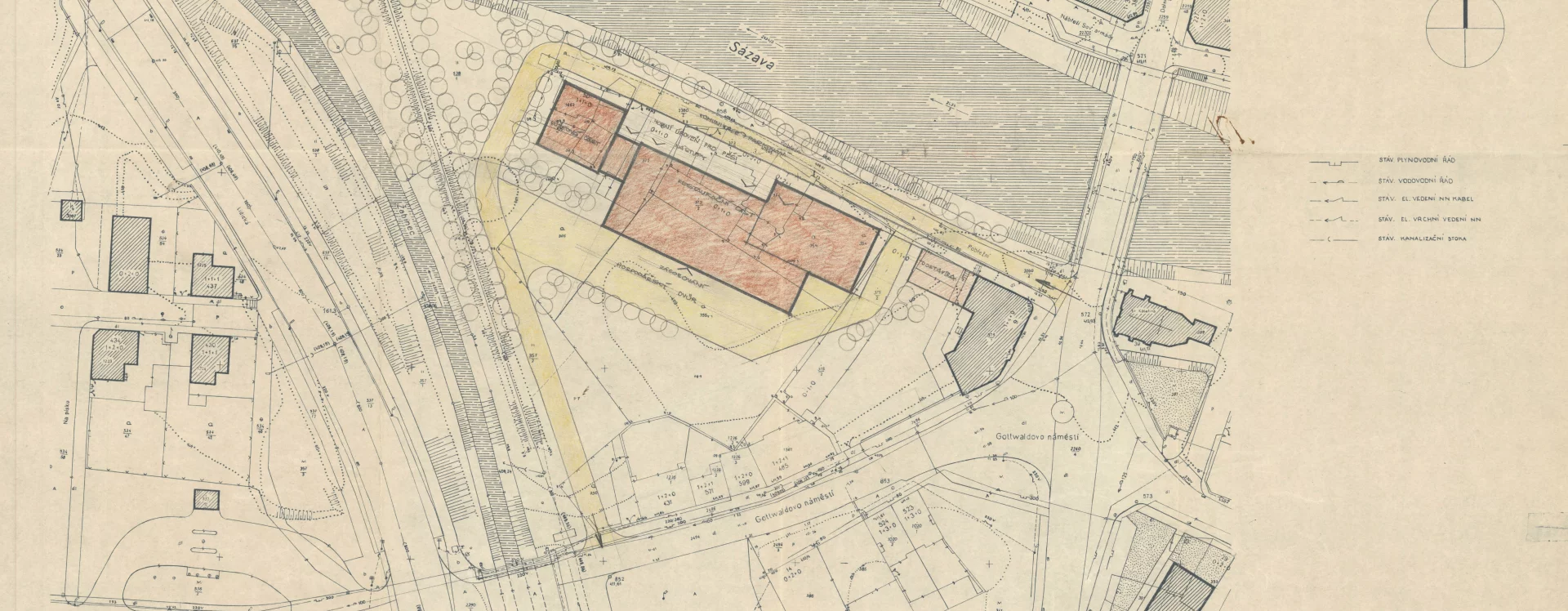
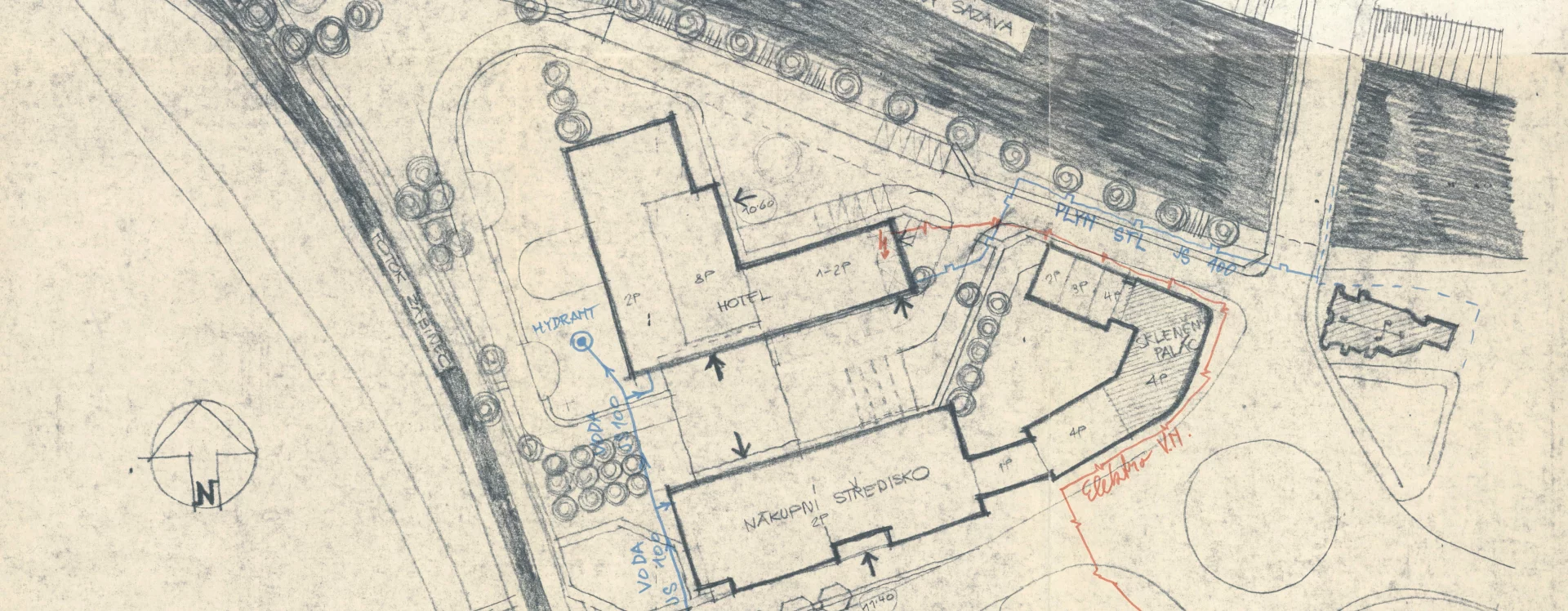
In the early 1970s, a second attempt emerged, this time developed by the State Design Institute of Trade in Brno. In 1974, the architect Josef Opatřil (born 1934) designed an ambitious hotel complex with a capacity of 102 beds, its longer facade following the bank of the River Sázava. The hotel rooms were oriented towards the river, offering views of the historic part of the town. According to the brief, the project also included the completion of the residential building no. 9 (HB-9). However, the urbanistically attractive location lay within a floodplain, requiring extensive clearance works and costly measures against groundwater. Despite the advanced stage of design development, the proposal was never realized.
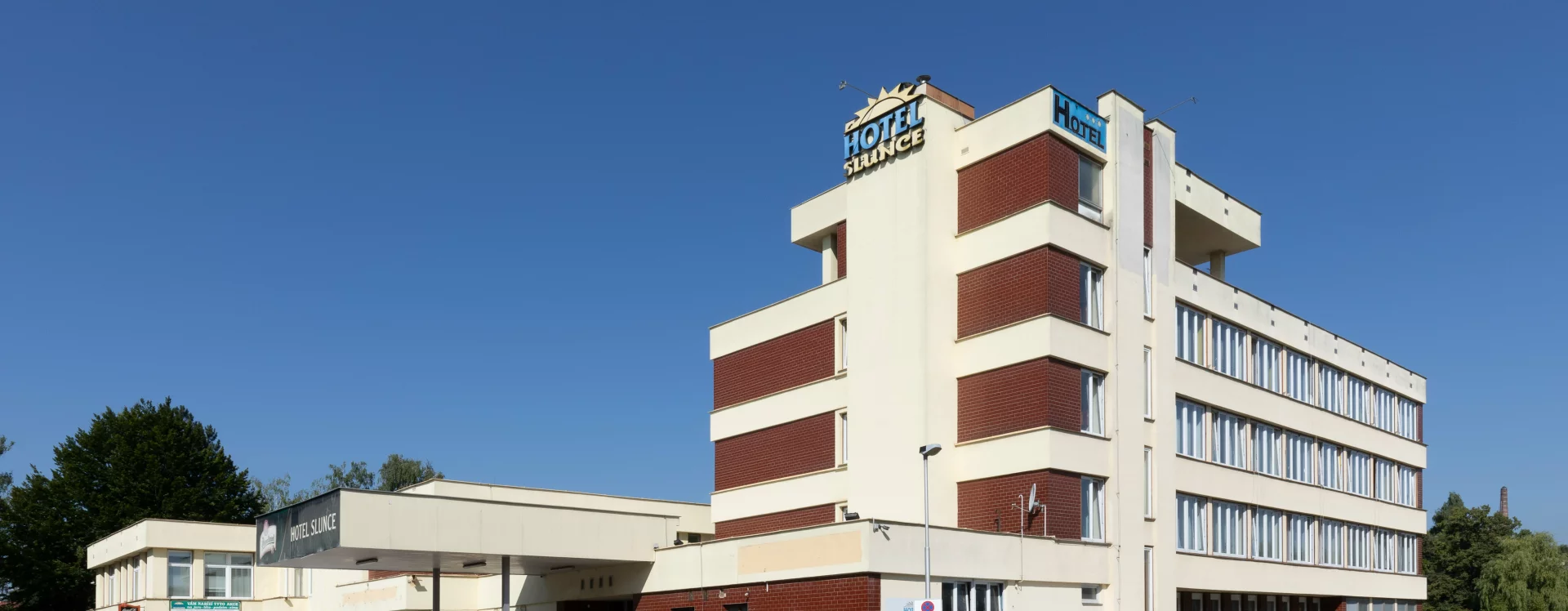
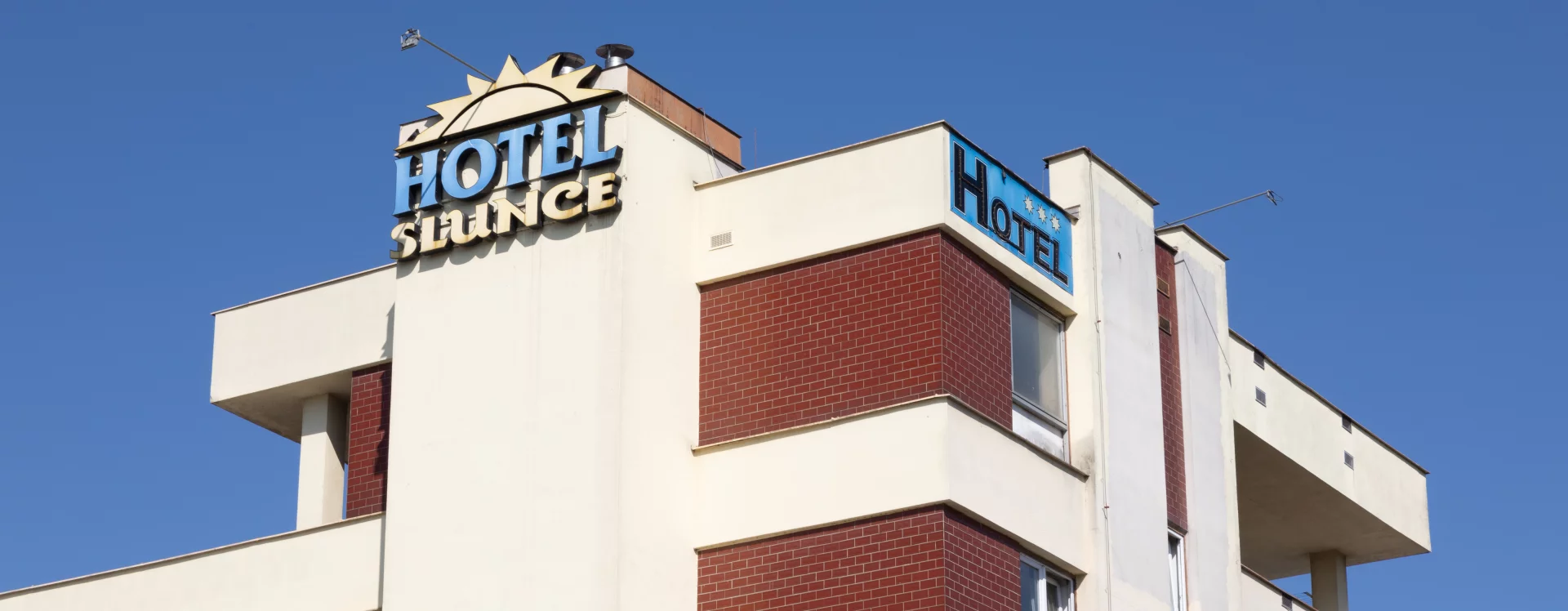
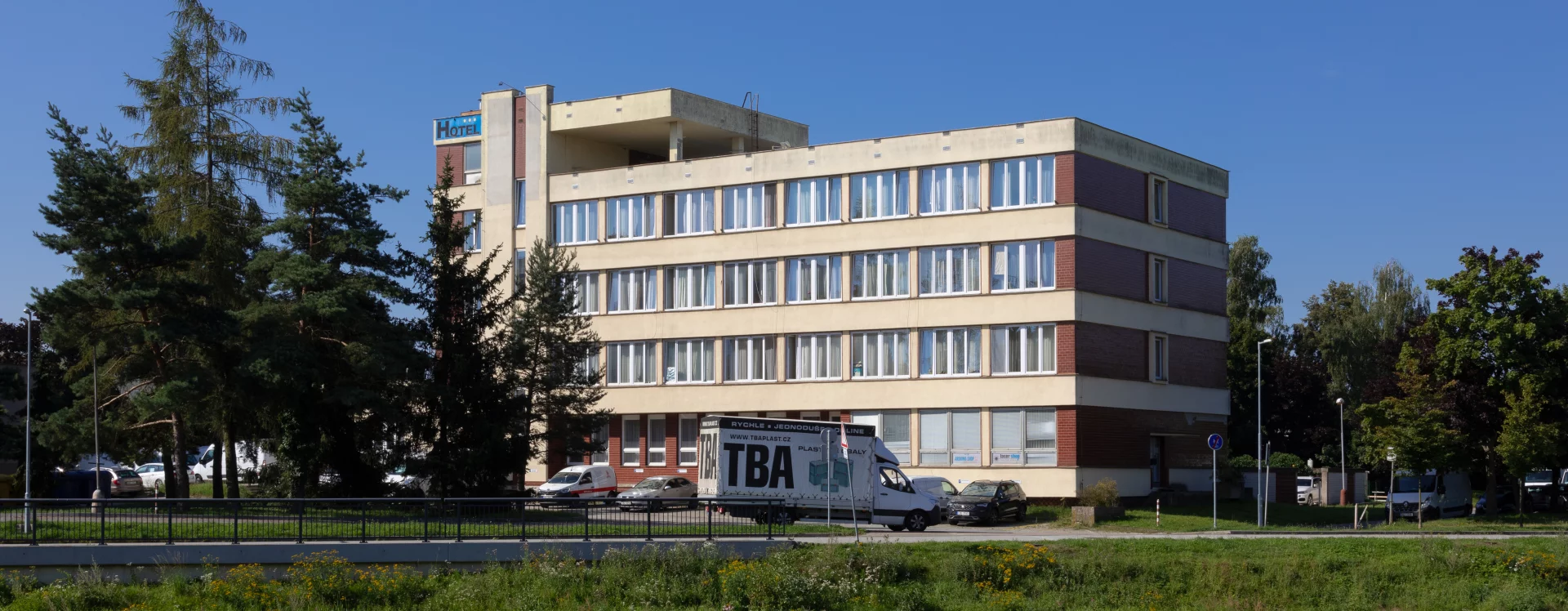
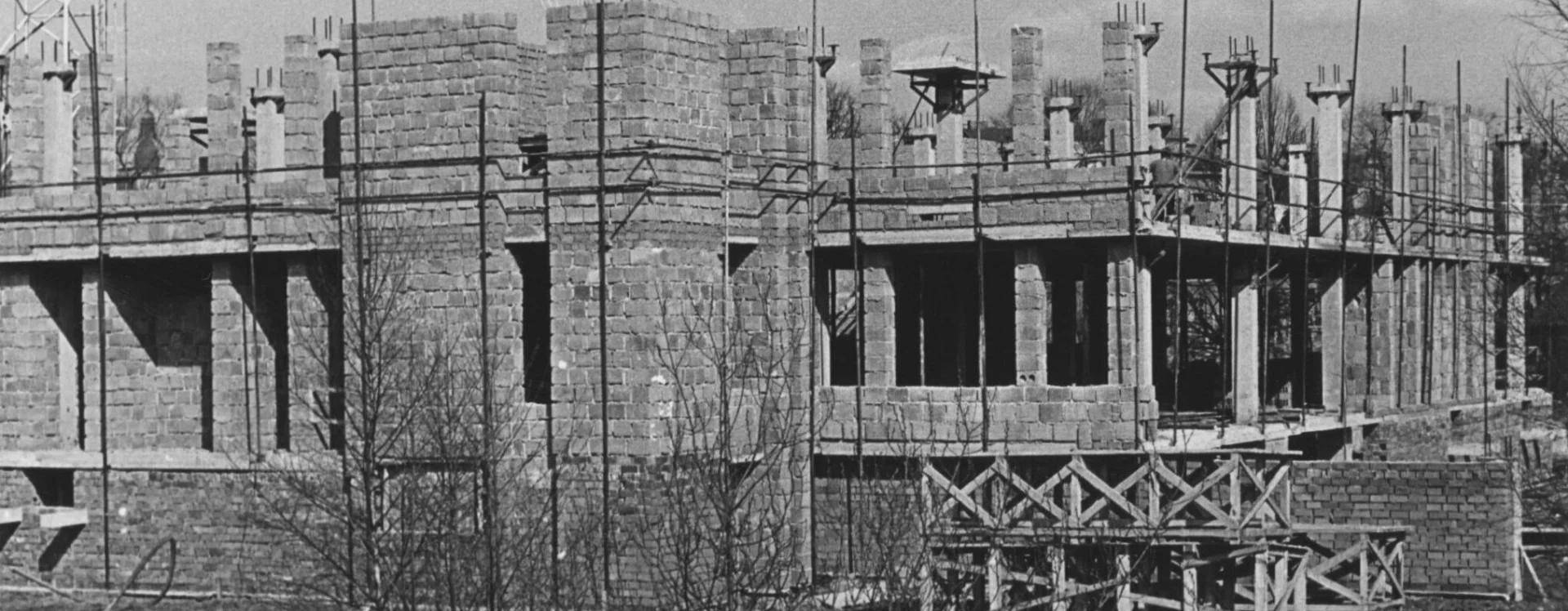
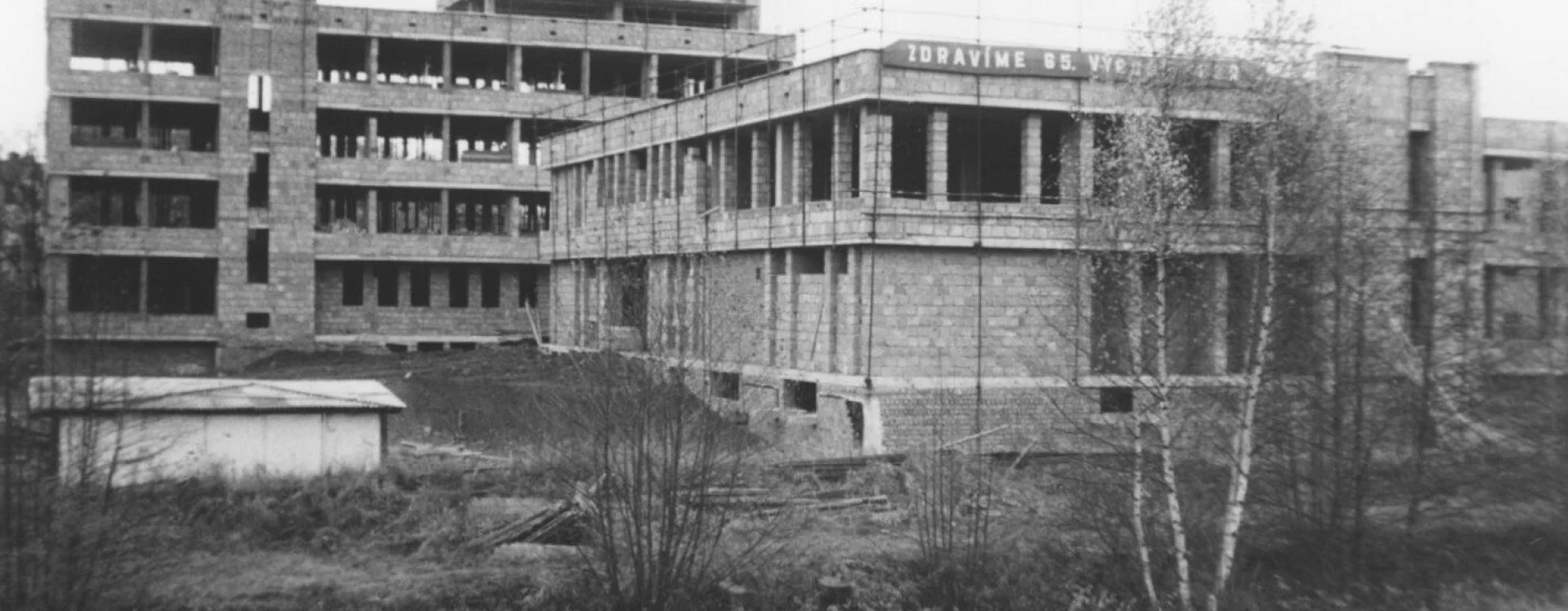
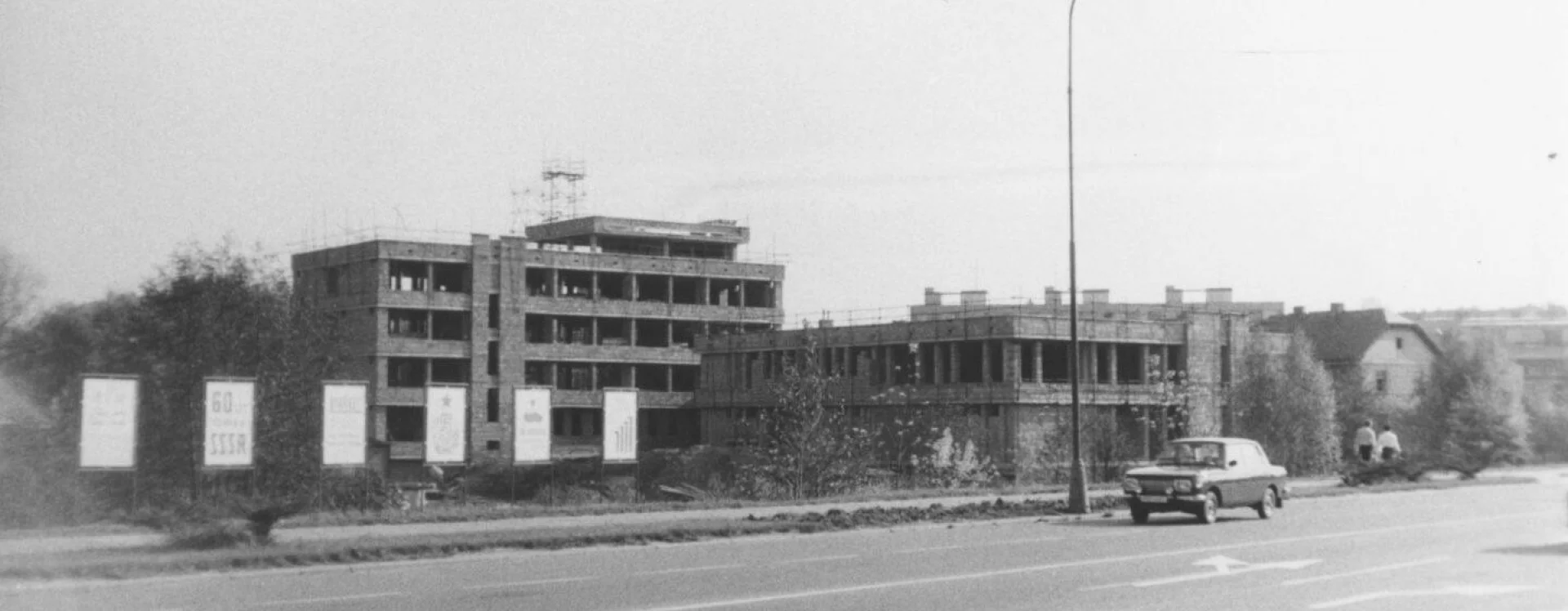
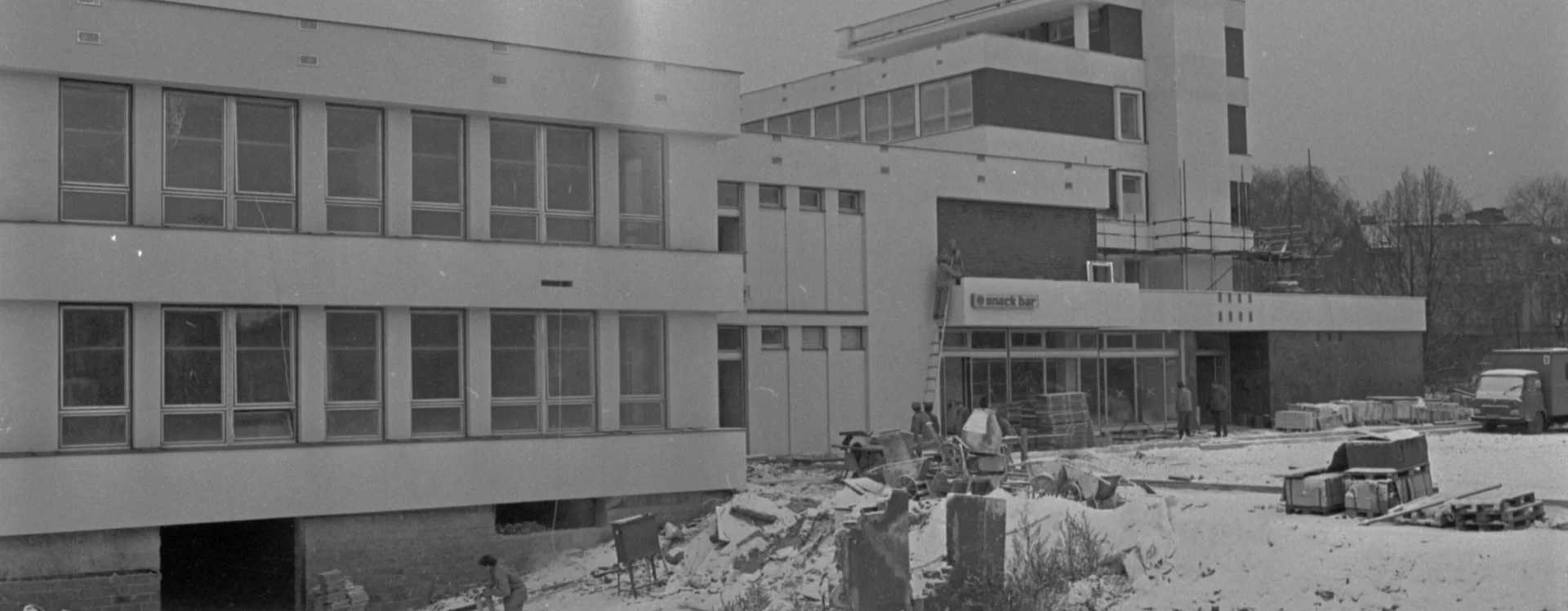
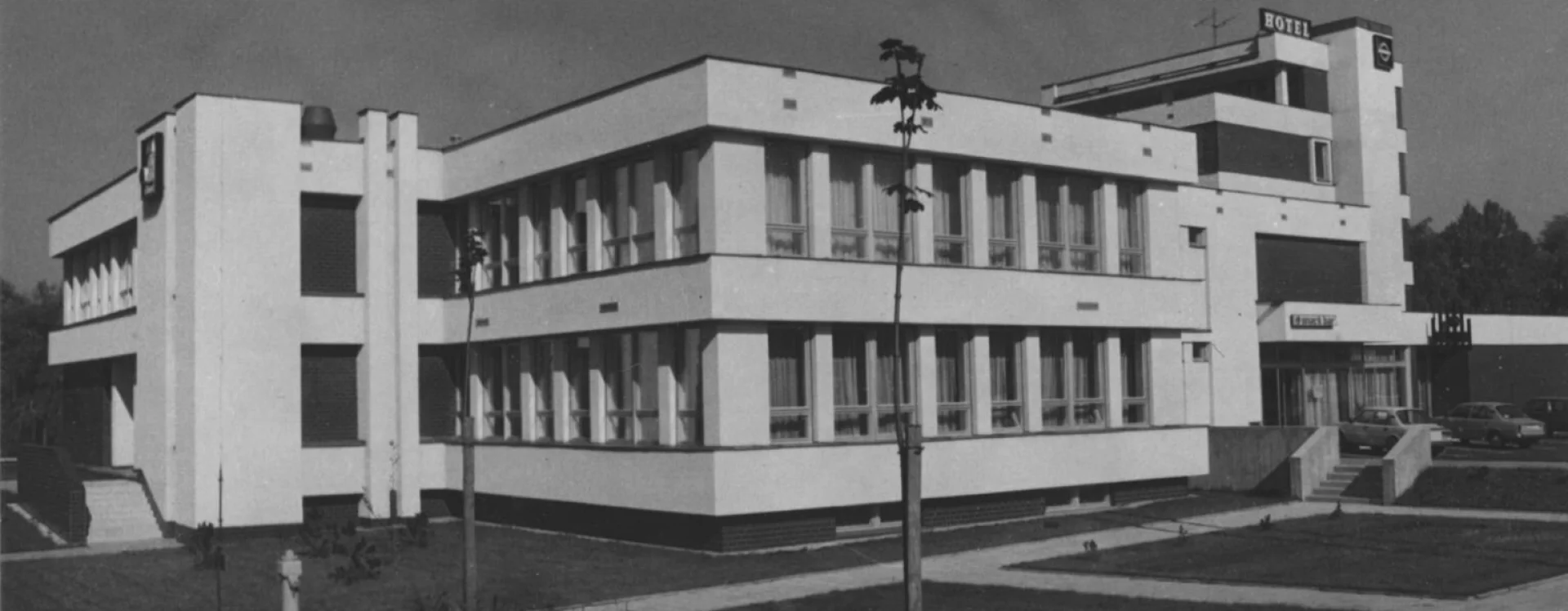
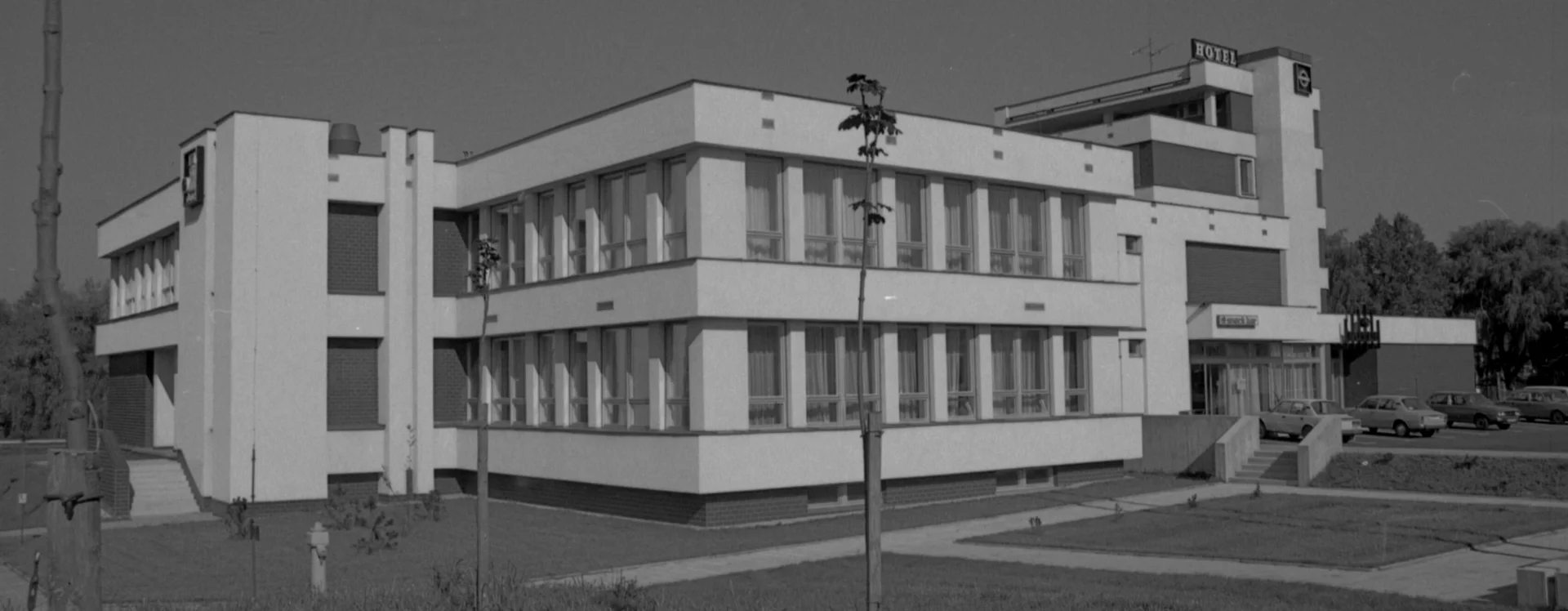
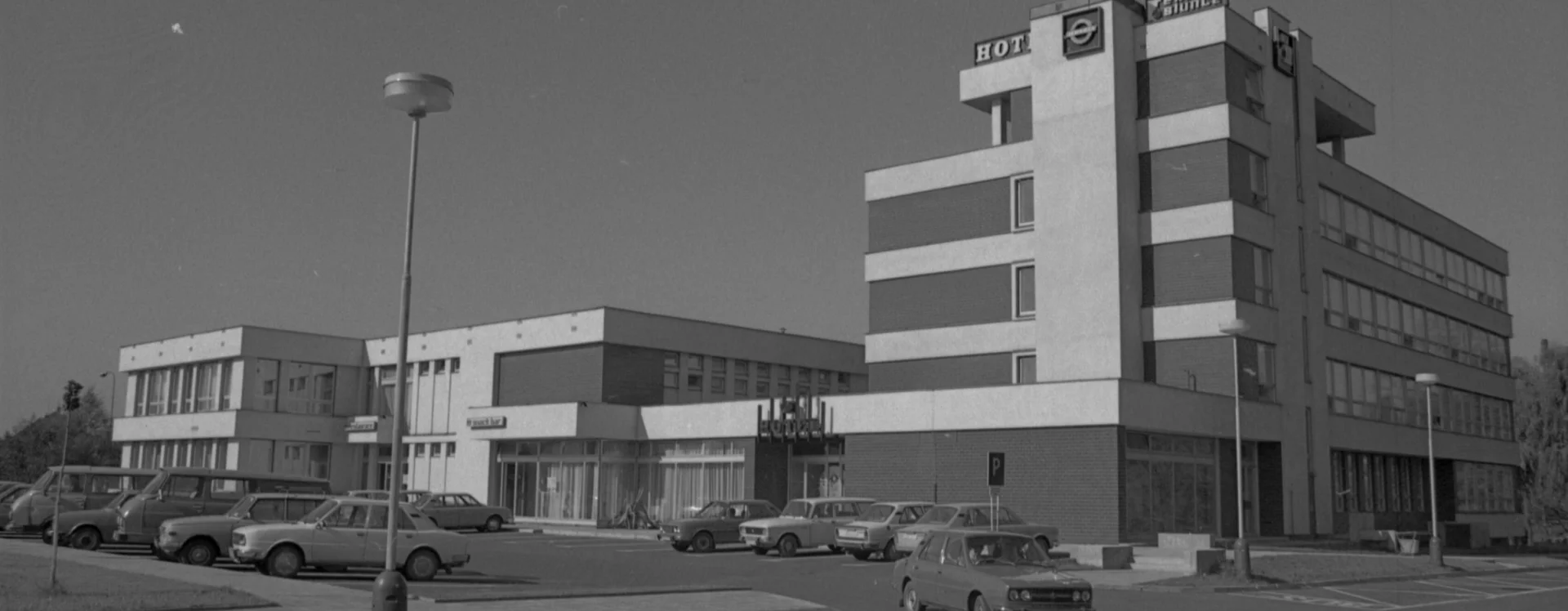
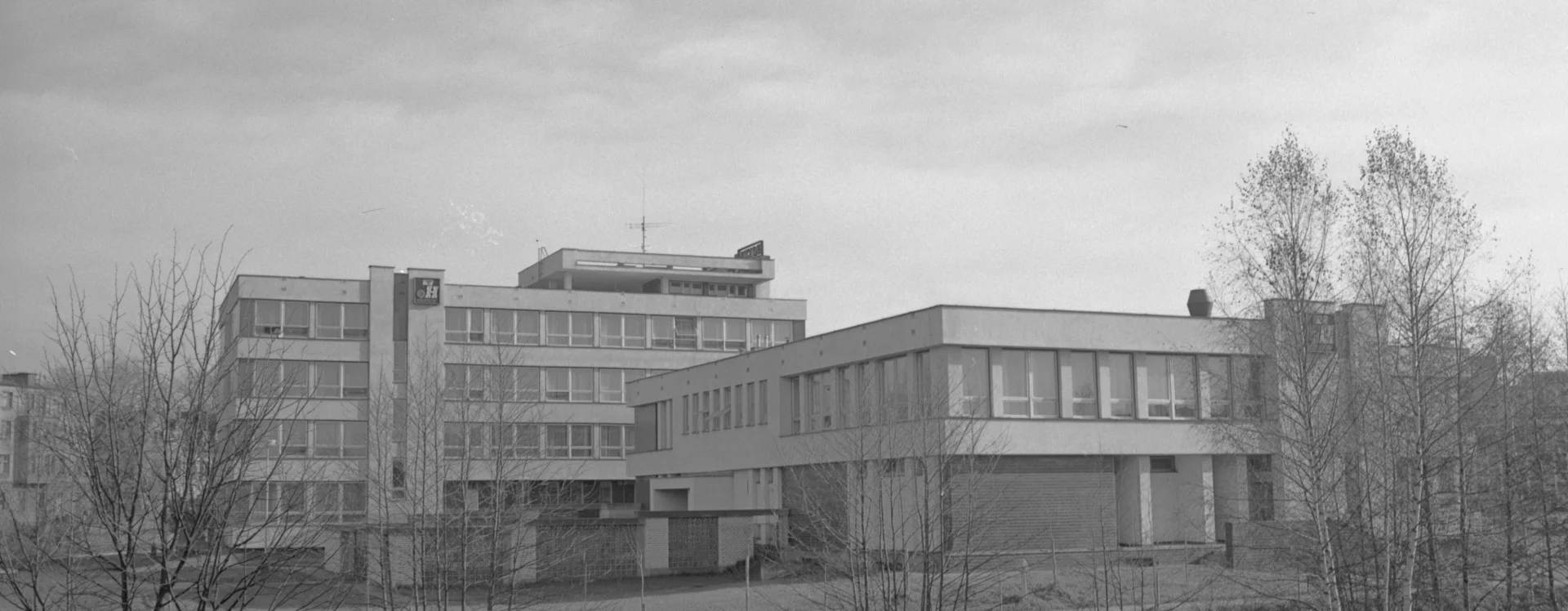
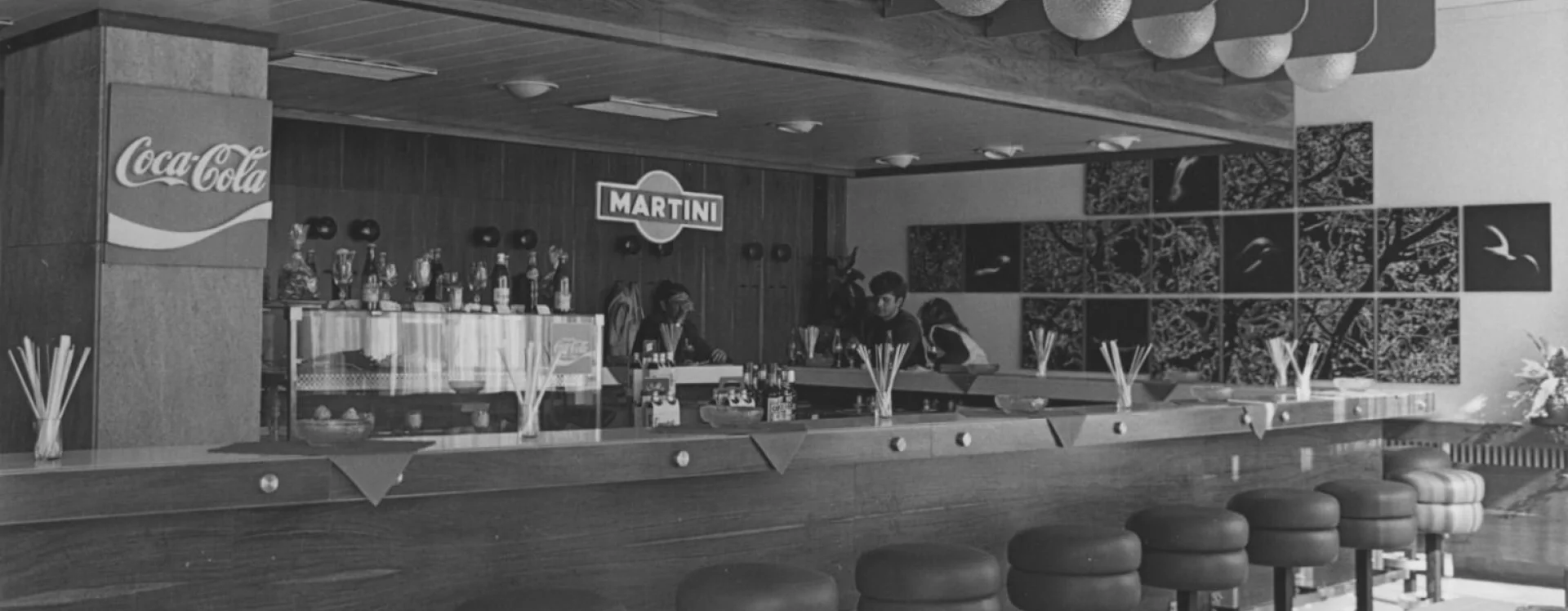
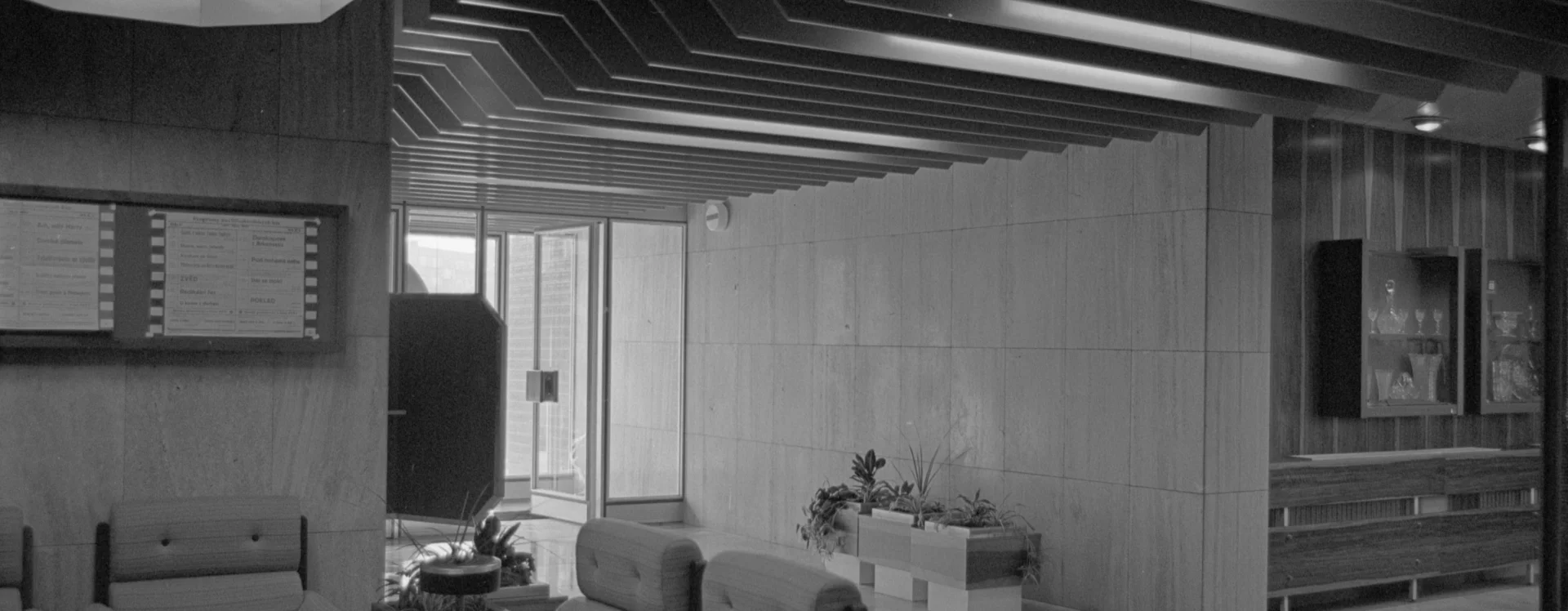
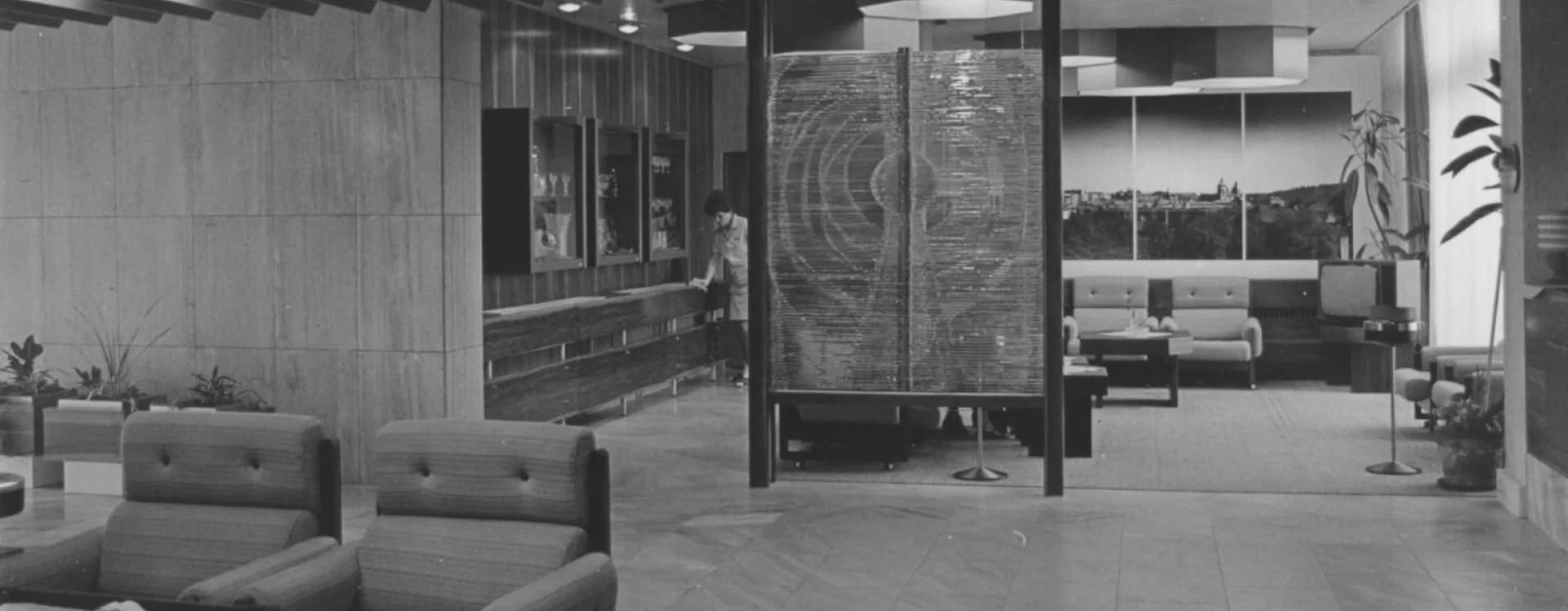
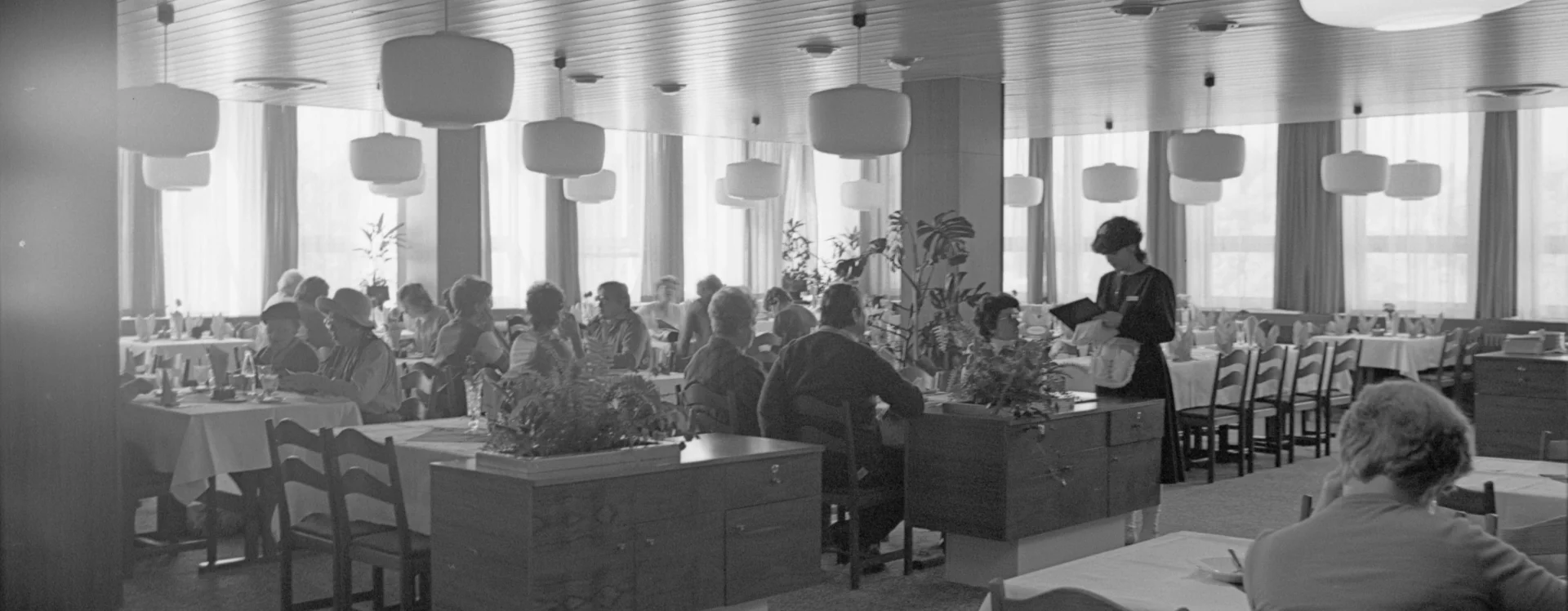
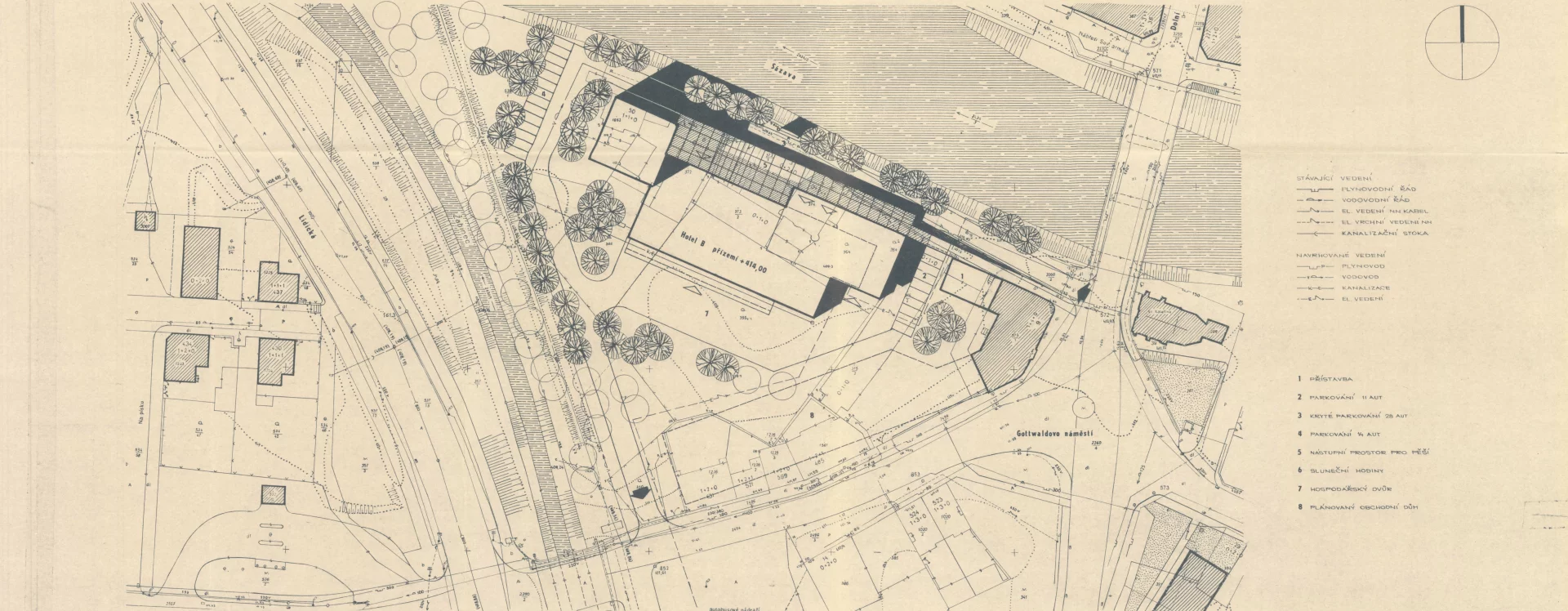
The project acquired its definitive form only at the end of the 1970s, once again under local patronage, this time that of the consumer cooperative Jednota. The design was entrusted to architect Zdeněk Černík of Obchodní projekt Hradec Králové, whose proposal for a ninety-bed hotel was successfully realized between 1979 and 1984. The building was situated on a triangular plot defined by the River Sázava, the Žabinec stream, and Humpolecká street. The hotel’s layout is based on the duality of two volumes—a four-storey accommodation block and a lower restaurant section—connected by a communication corridor housing the lobby and a daytime bar. The structure was constructed as a prefabricated MS 71 frame, with facades articulated by horizontally emphasized bands in cream and brick-red tones. The projecting entrance canopy, the rhythm of strip windows, and the nautical treatment of the building volumes all demonstrate the design’s formal links to functionalist architecture. The hotel was classified as Category B and included a restaurant, snack bar, wine bar, two lounges, and a multipurpose hall.
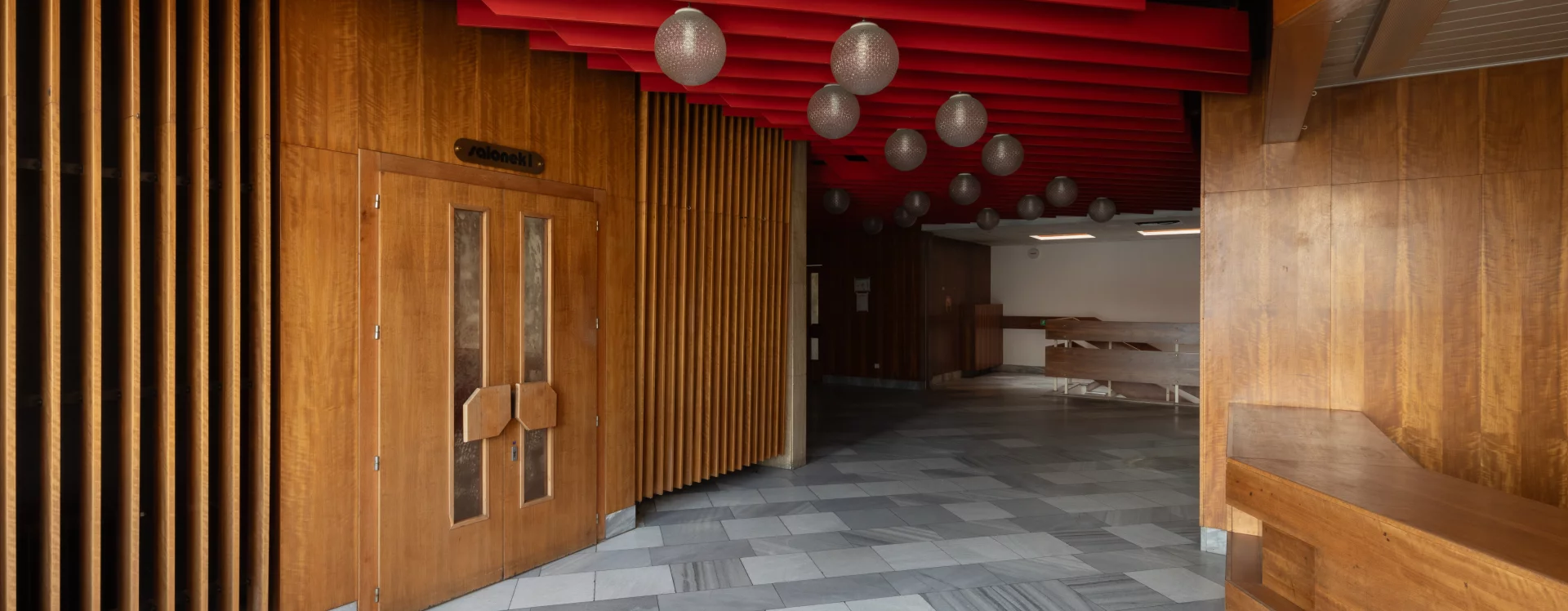
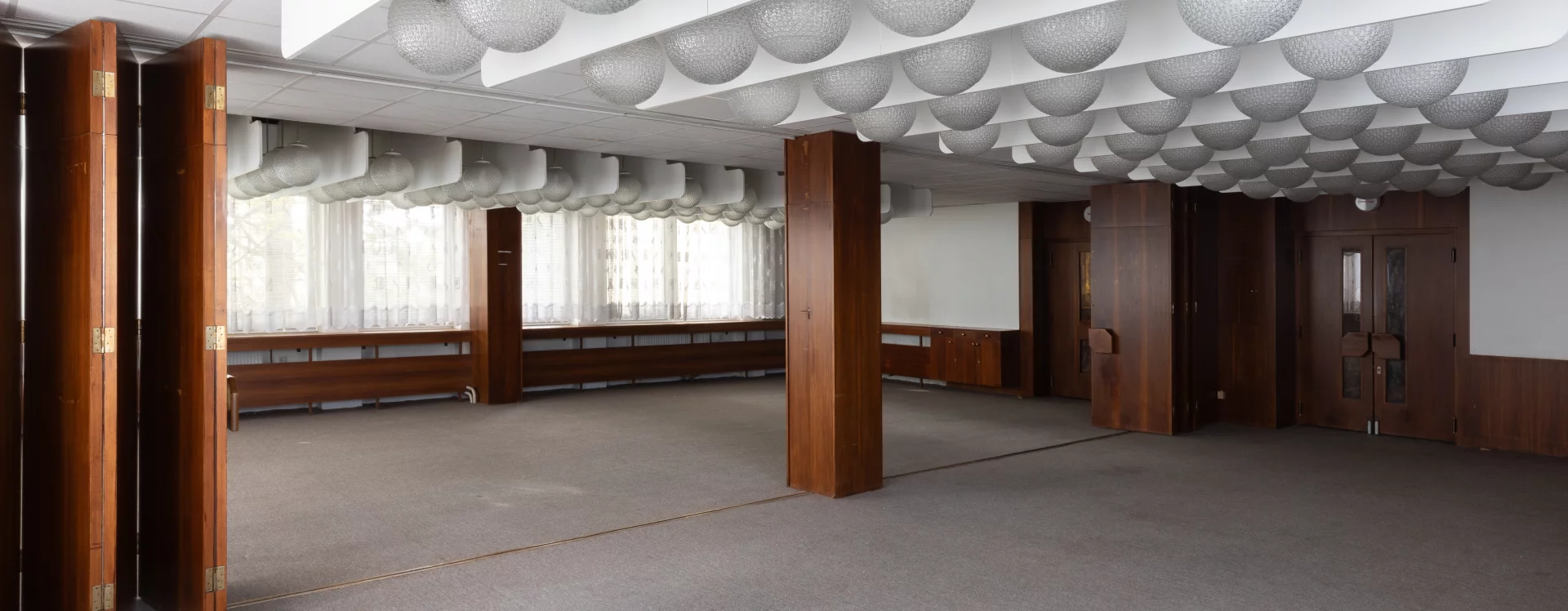
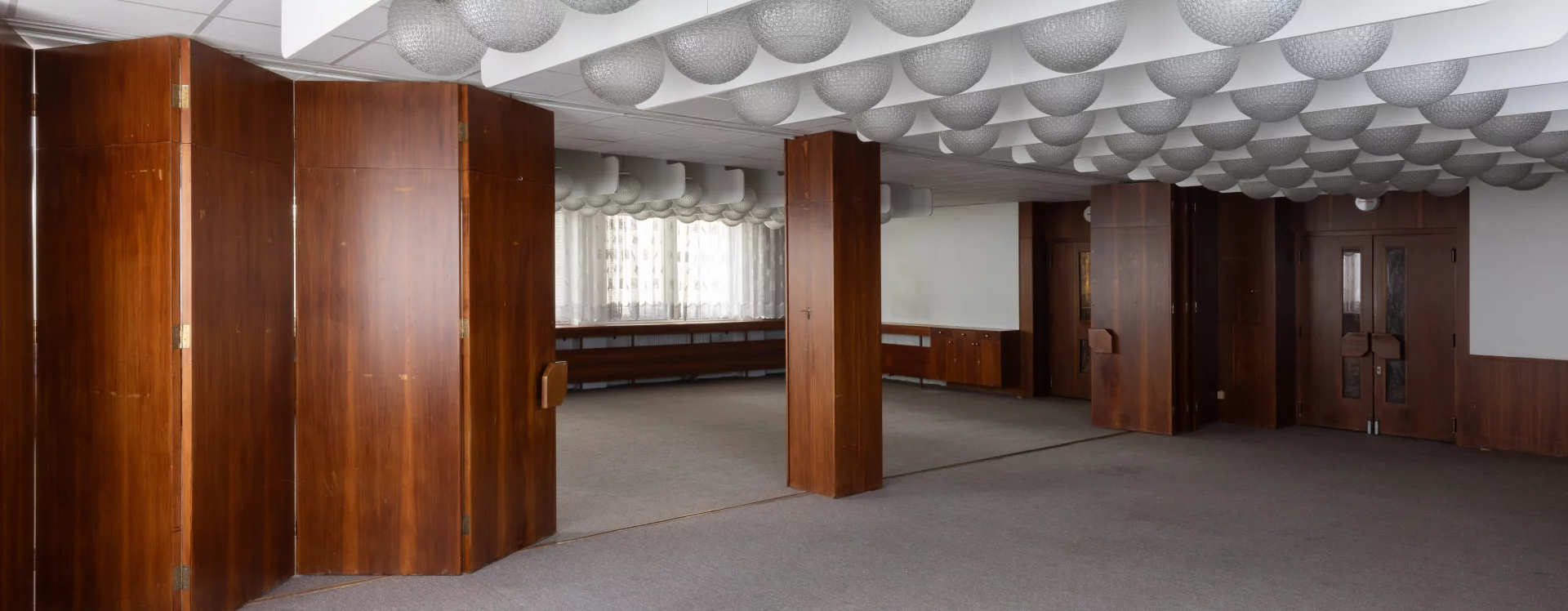
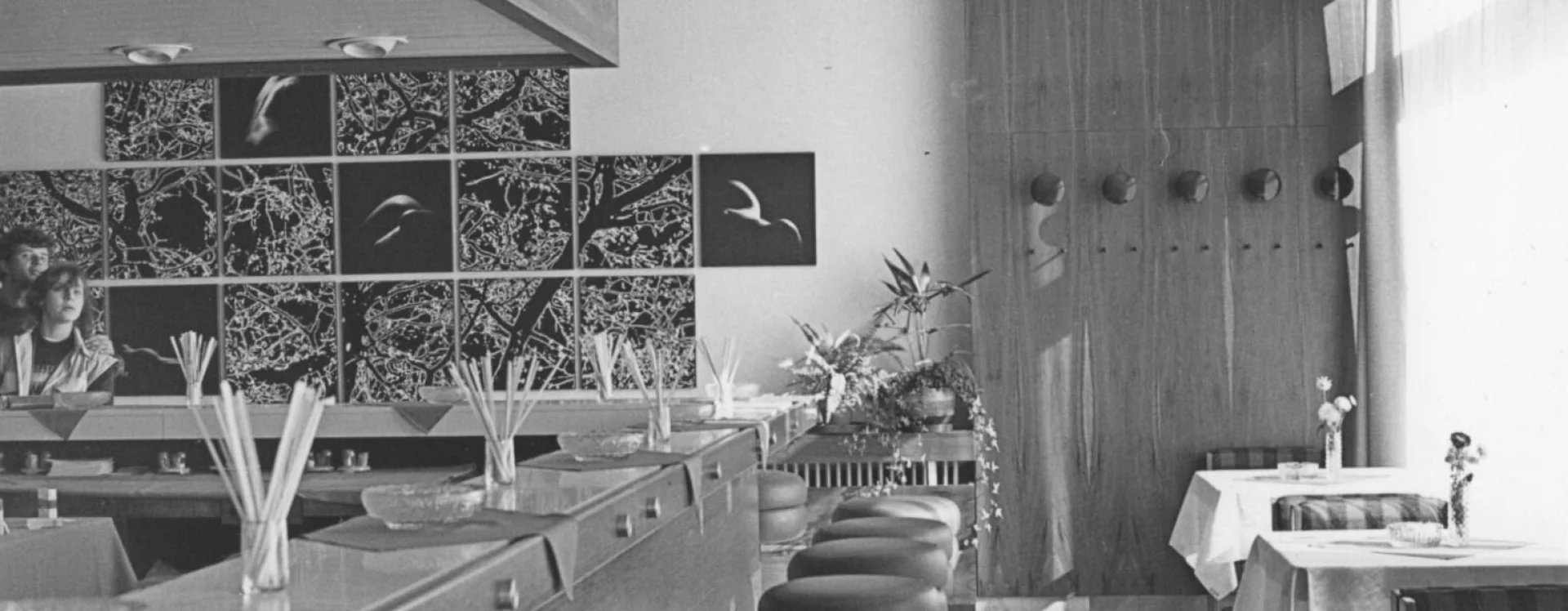
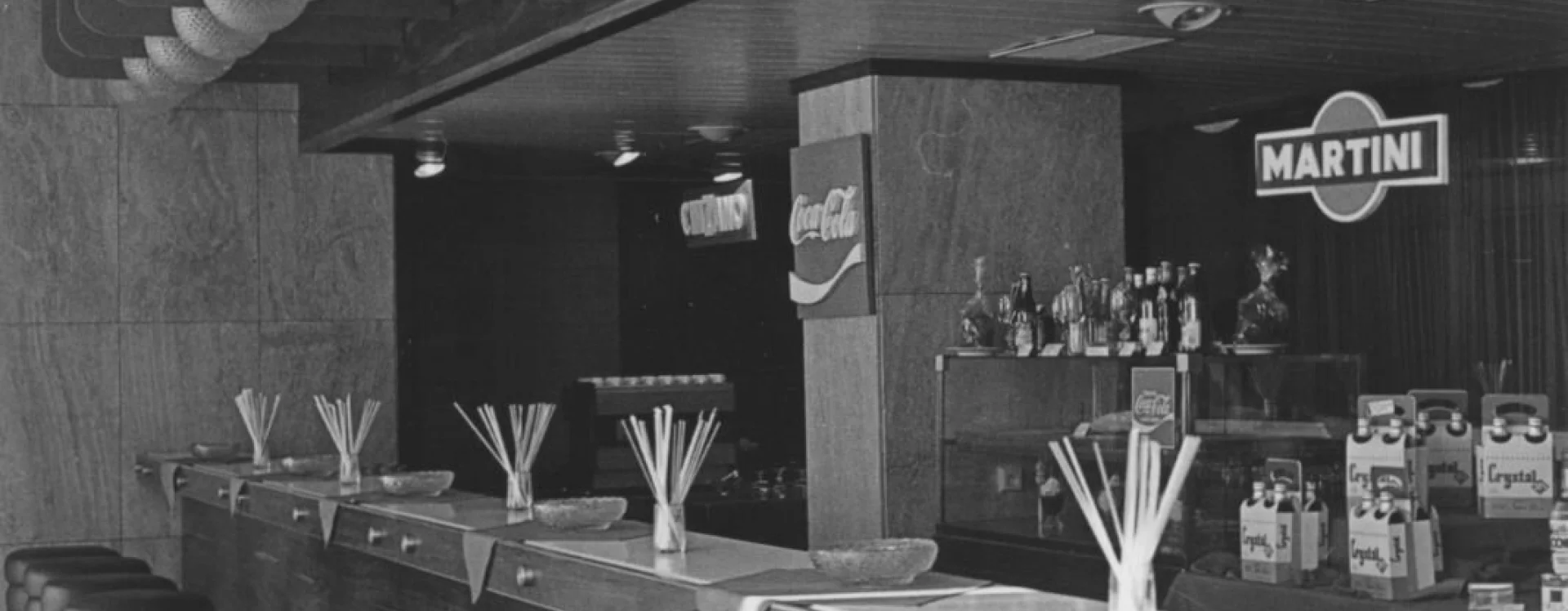
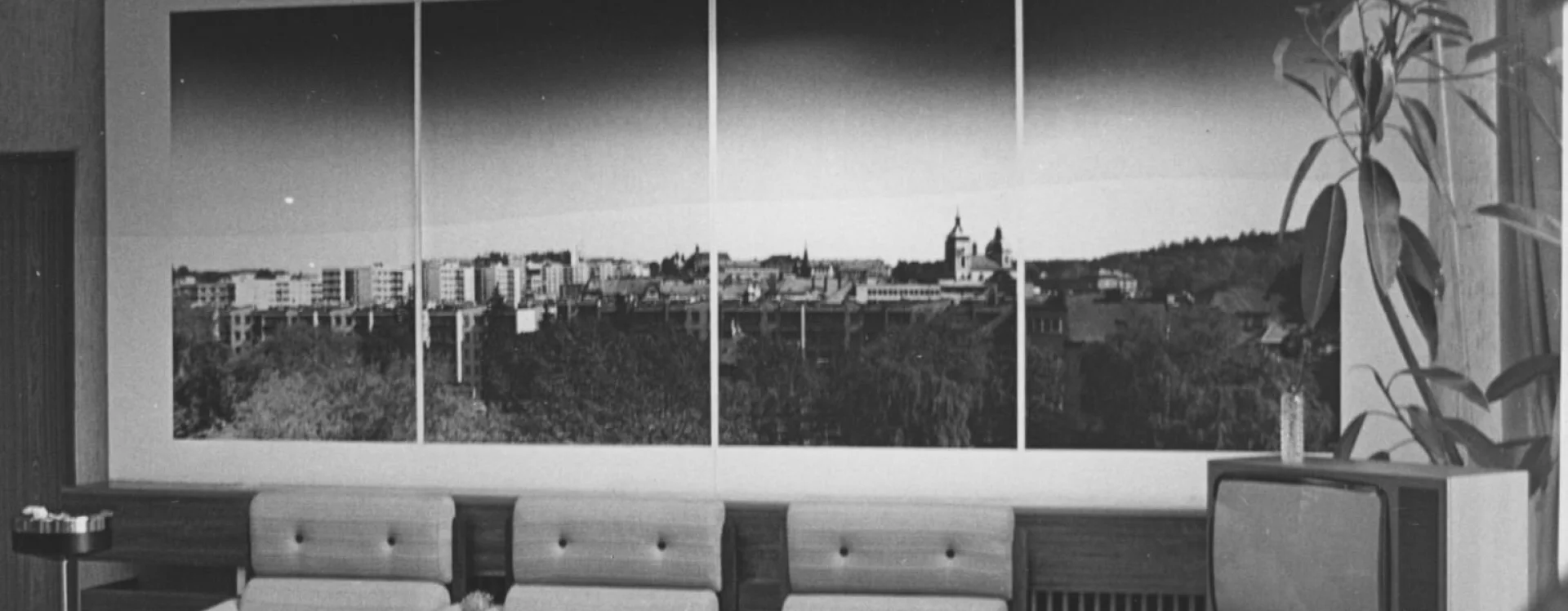
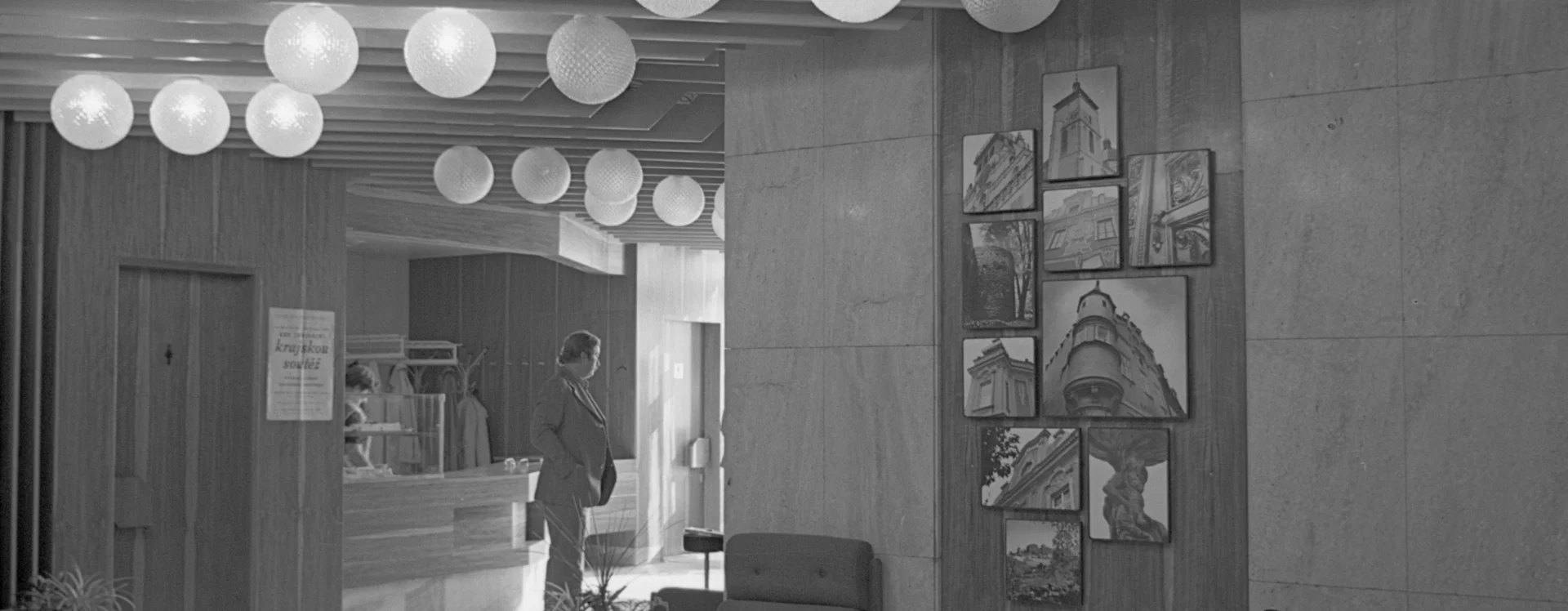
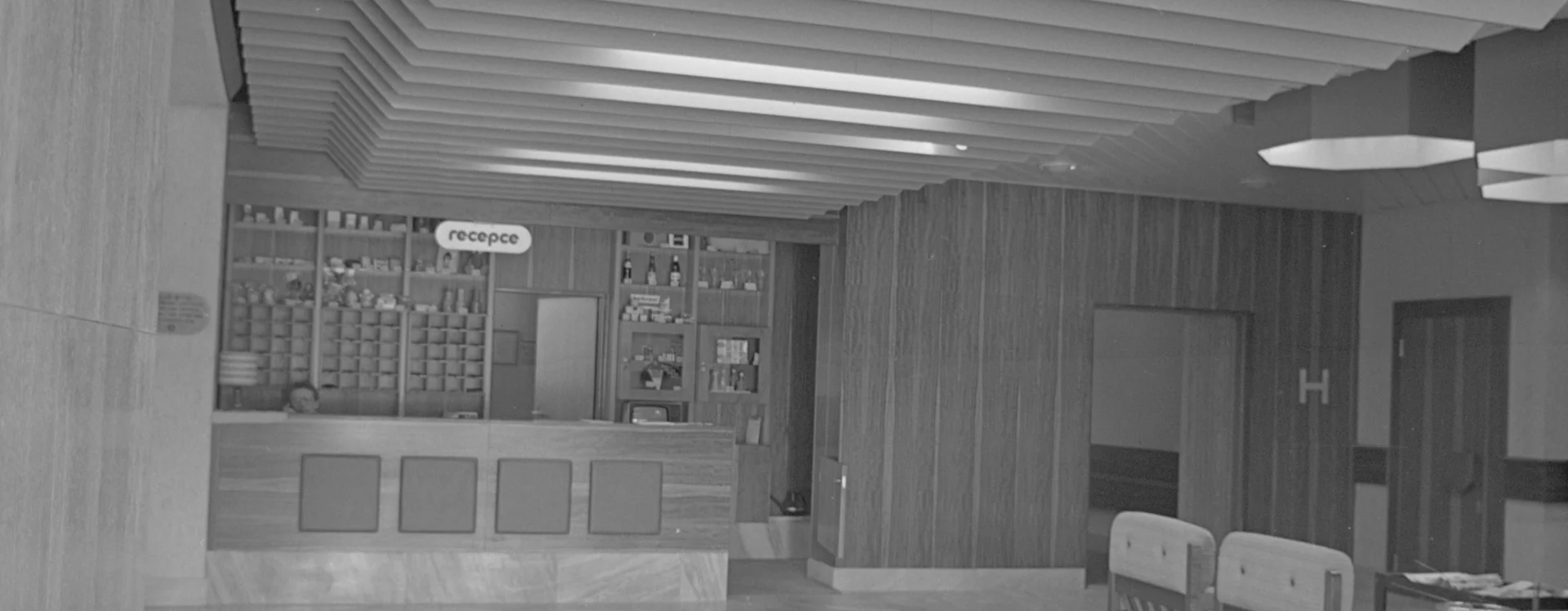
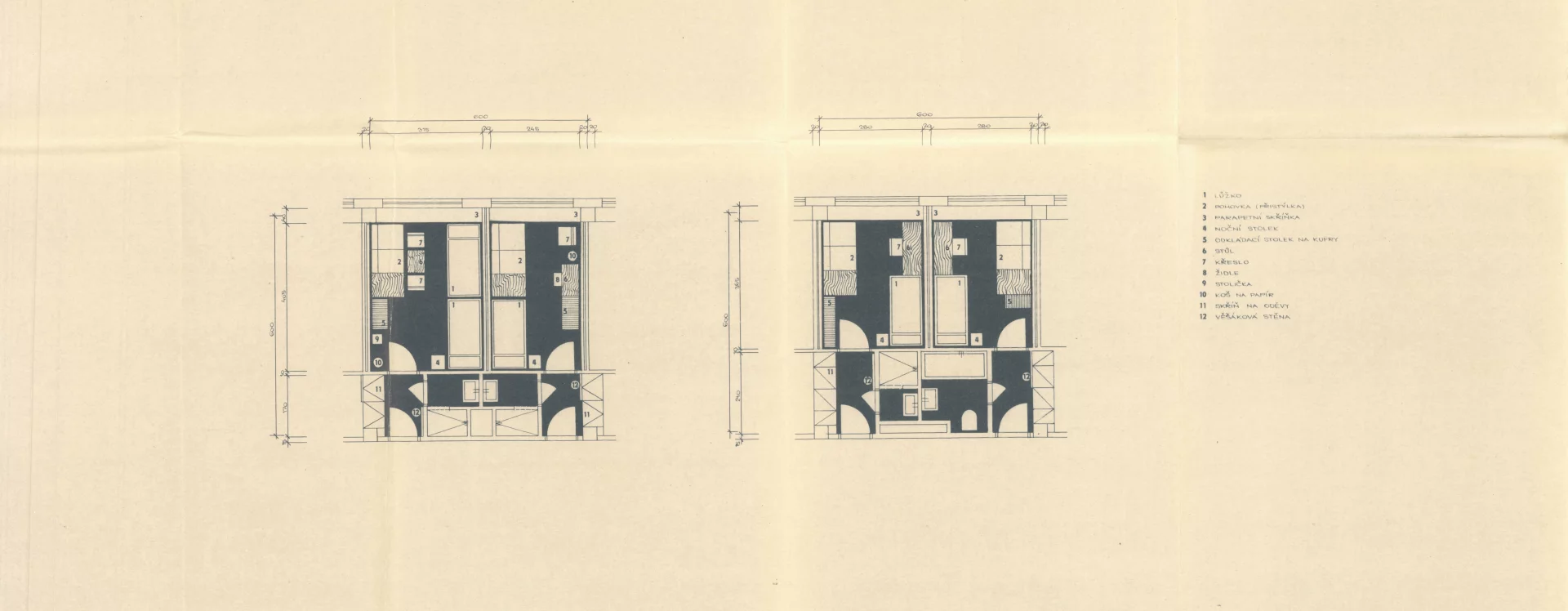
The interiors were designed by architect Josef Bedrna (born 1943) as a comprehensive artistic environment. His design featured predominantly uniform furnishings in natural tones, with a strongly accentuated colour scheme in the snack bar and lobby areas. Ceilings in the form of honeycomb or louvre grids in the corridors and lobby were complemented by rich clusters of lighting. Original artworks were installed in both the public areas and the guest rooms. The concept also encompassed bespoke graphic design and the styling of small operational items, including the hotel’s logo, menus, key tags, signage system, porcelain, and similar details.
Hotel Slunce became an important example of late-socialist architecture and its centrally planned economy. It exceeded the local conditions in terms of its scale, capacity and range of services. In a cultural and social context, it was a symbol of luxury and exclusivity, while in the urban development of Havlíčkův Brod it stands as evidence of a rather insensitive transformation of the town’s historic structure in favour of modernist principles. Nevertheless, it deserves some architectural merit. At present, the building serves as a hostel, and since 2021 it has been subject to a demolition order.
Dana Schlaichertová, 2025
Literature
Petr Houška. Ubytovací zařízení a hodnocení jejich kvality v kontextu historického vývoje cestovního ruchu a jeho právní úpravy. Available from: https://hotelstars.cz/ke-stazeni/?action=download&file=7 [accessed 4. 9. 2025]
Vladislava Říhová, Zuzana Křenková. Sochy a města. České umění 50.–80. let 20. století ve veřejném prostoru: evidence, průzkumy a restaurování. In: Sochy a města. Available from: https://sochyamesta.cz/.
Sources
Osobní rozhovor s Josefem Bedrnou, 29. 7., 5. 9. a 8. 9. 2025.
Státní okresní archiv Havlíčkův Brod, fond Městský národní výbor Havlíčkův Brod. sv. karton 60.
Státní okresní archiv Havlíčkův Brod, fond Jednota s. d. Havlíčkův Brod. sv. karton 2, 12.