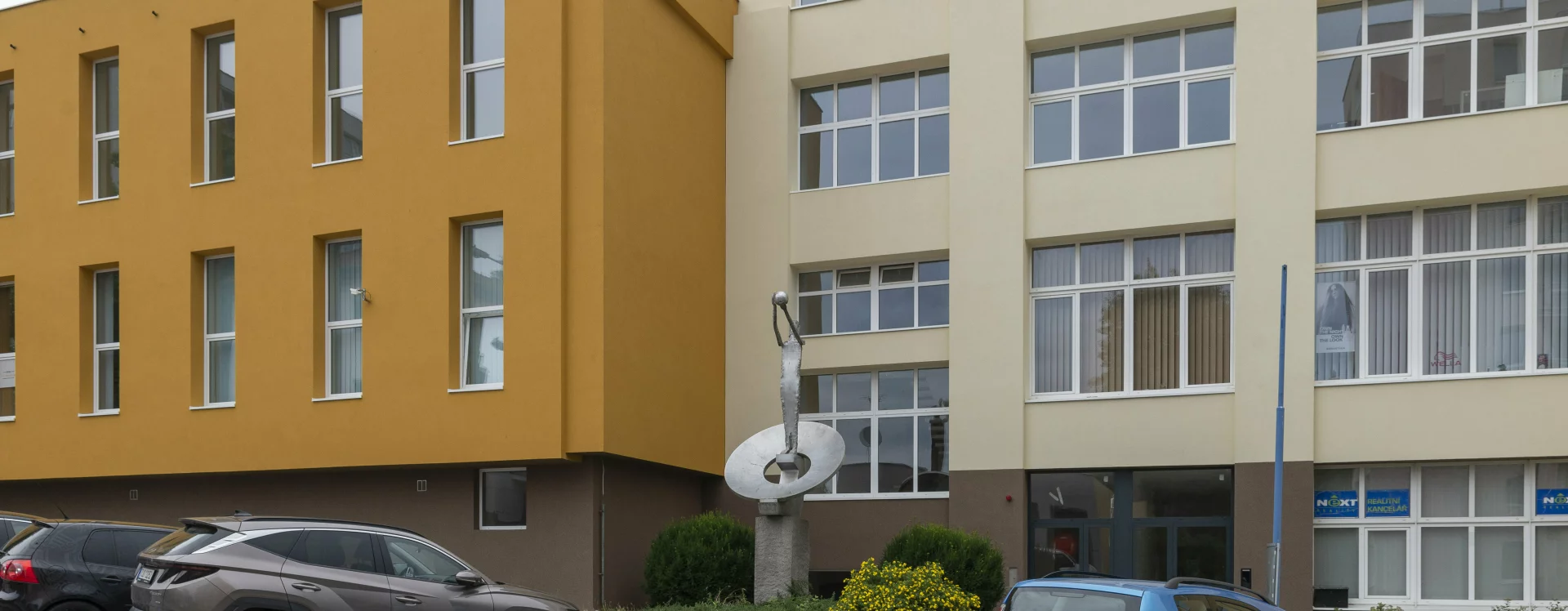


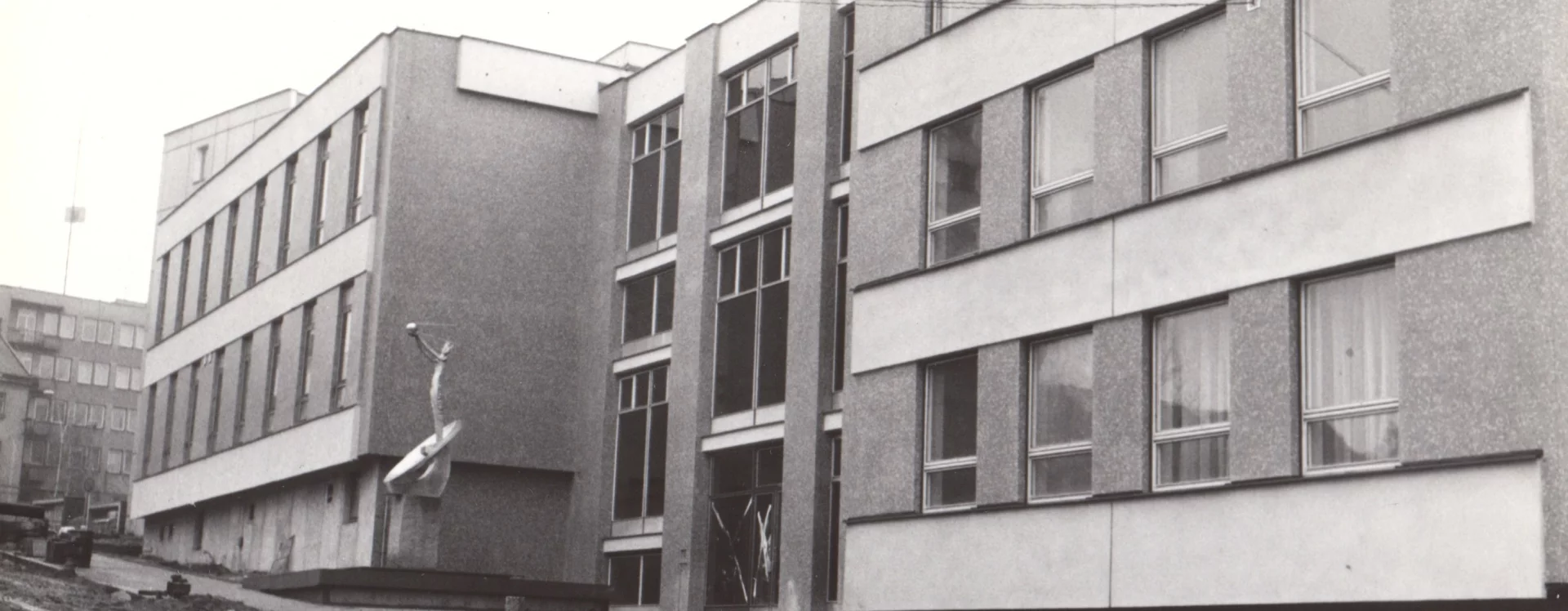
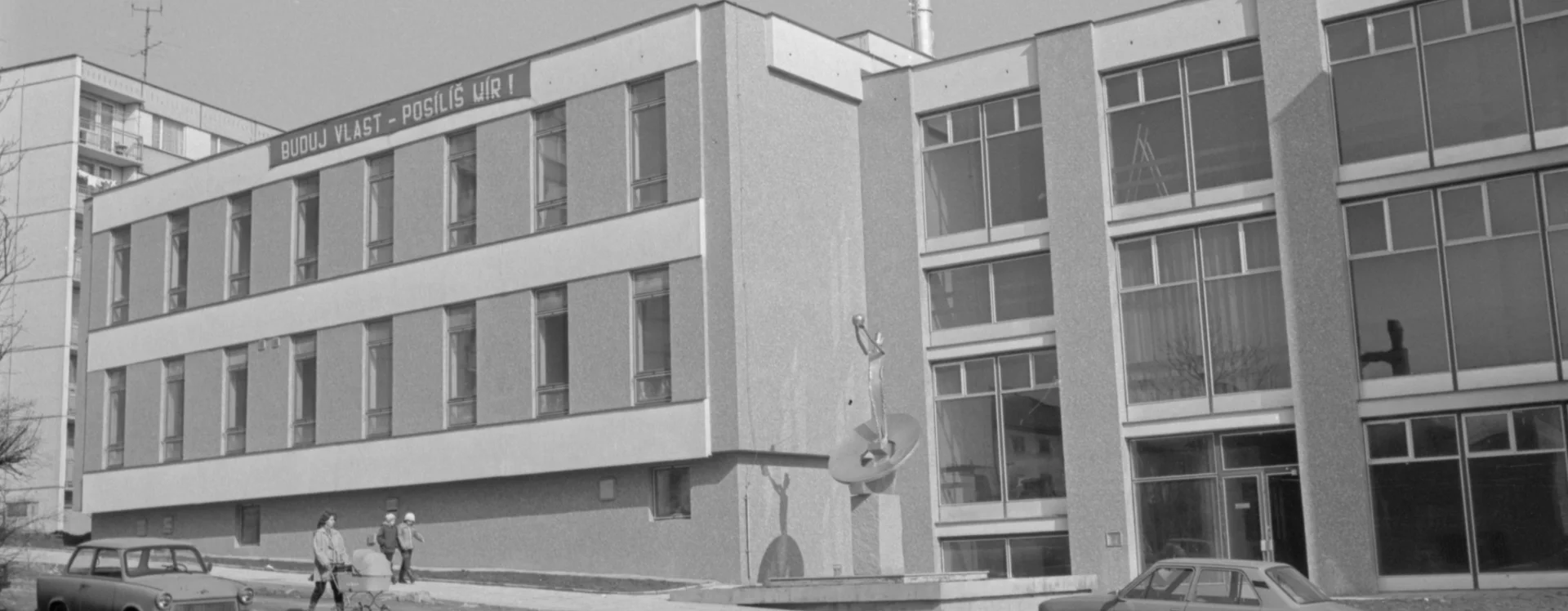
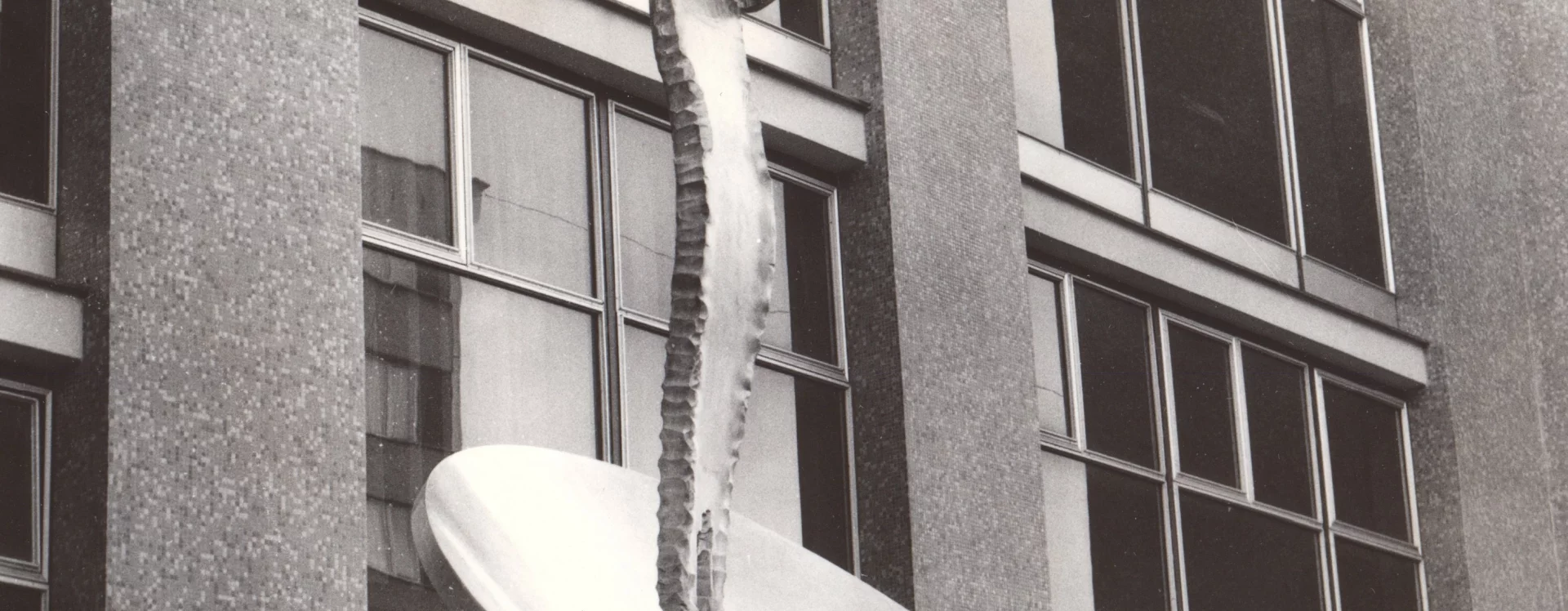

The area around Smetana Square (HB-VP-SN1, HB-VP-SN2) was the most rapidly changing part of Havlíčkův Brod from the late 1960s to the 1980s. The site of the demolished historic houses was replaced not only by residential buildings, but also by new shops, offices, and state-owned enterprises. A large telecommunications building, or telephone exchange, was initially planned for the centre of this area, on the eastern side of Smetana Sqaure next to the post office (HB-58), but was eventually moved to the upper edge of the new square. It was built in a relatively cramped space between the administrative building of a starch factory, a printing plant, new tower blocks, and several historic buildings that had survived the large-scale demolition in this area. The main entrance led to Beckovského street, which was called Revoluční at the time.
The project was designed by architect L. Charvát from the Pardubice branch of Stavoprojekt Hradec Králové, with construction taking place between 1982 and 1985. The building was constructed from a prefabricated reinforced concrete skeleton and brick walls within individual sections. It housed a telephone exchange for up to 12,000 subscriber lines, a telex machine, and a radio relay station.
At that time, every public building was required to include a work of art, which was intended to develop the aesthetic sensibilities and values of the inhabitants of the totalitarian state. For each project, a table specified the percentage of total construction costs that had to be allocated to artistic decoration. In the case of the telecommunications building, this was to be a free-standing sculpture in front of the main entrance, representing the work of the telecommunications office. In connection with the overall cost of the construction, a generous sum of 250,000 crowns was evidently allocated for the artistic component.
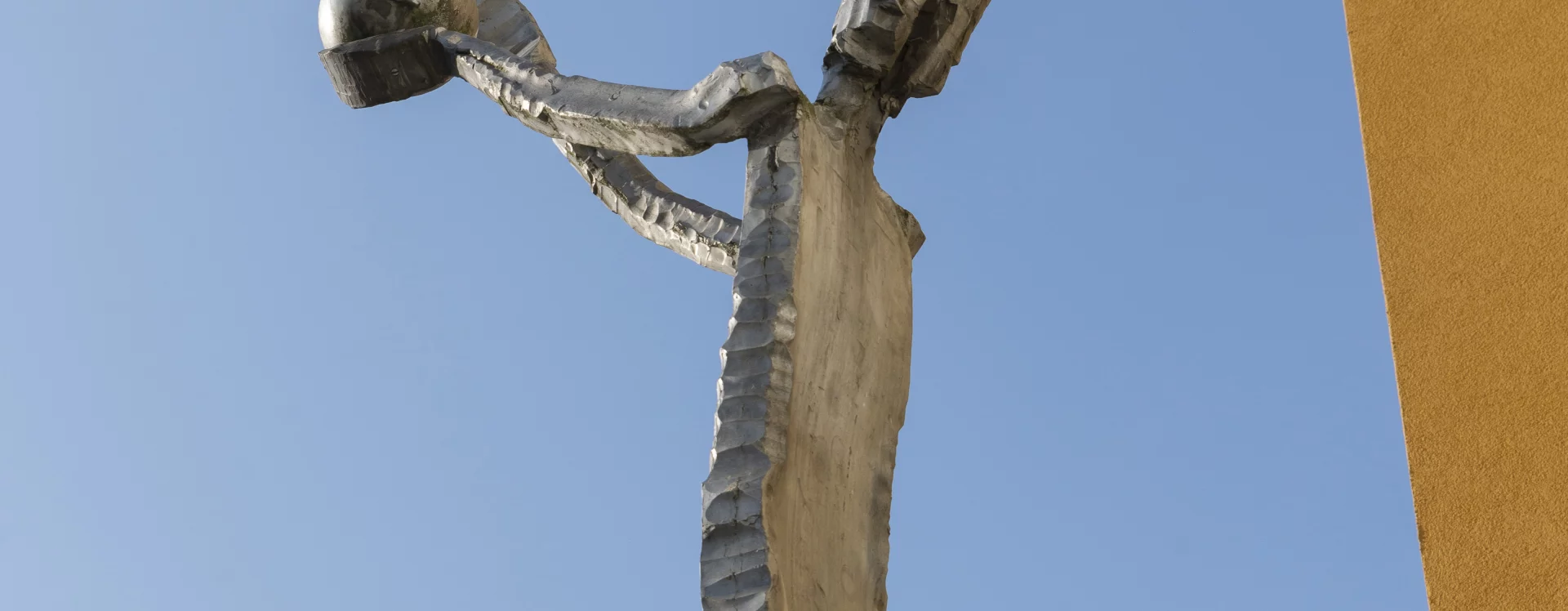
František Janda, a sculptor who originally trained as a locksmith and later studied at the Academy of Fine Arts under Vincenc Makovský, was approached to create the sculpture. His basic theme was the human figure. The combination of his technical and artistic training allowed him to employ a variety of sculptural approaches. In his stone and wooden works, he relied on traditional sculptural techniques, simplifying forms and surface textures. By contrast, his metal pieces often carried a distinctly technical character, welded from sheet metal and frequently incorporating older metal objects or scrap materials.
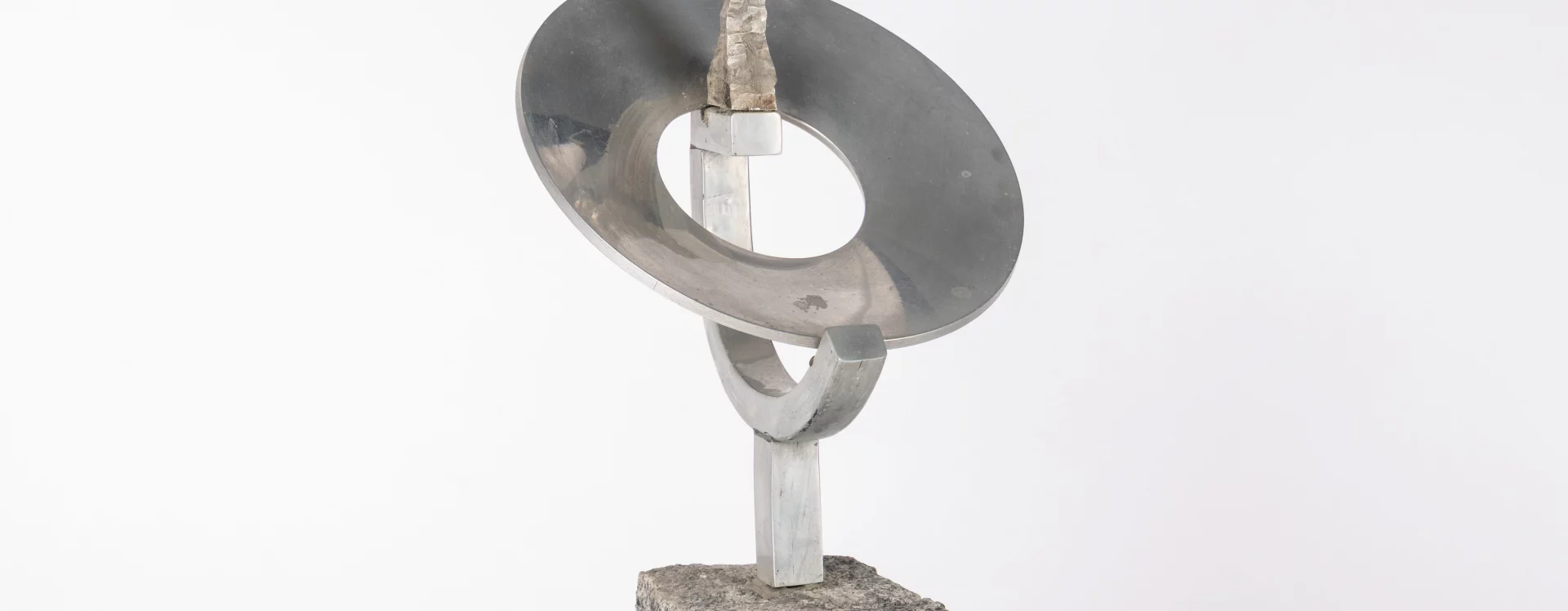
The sculpture for Brod was also made of metal. A schematic silhouette of a person made of metal strips, with edges that look as if they have been kneaded by fingers, lifts a companion in his hands. The figure with softened contours is placed on a geometric console in the middle of a precisely cut steel ring–a signal receiver. It is as if the object, through its different treatment of the material, points to the paradox of a field in which the possibilities of human thought and intelligent technology collide.
Zuzana Trnková, 2025
Literature
Vladislava Říhová, Zuzana Křenková. Sochy a města. České umění 50.–80. let 20. století ve veřejném prostoru: evidence, průzkumy a restaurování. In: Sochy a města. Available from: https://sochyamesta.cz/.
Josef Sůva. Čtyřicet mírových let: východočeští výtvarní umělci na počest 40. výročí osvobození Československa Sovětskou armádou. Pardubice, 1985. p. 28.
Sources
Zina Zborovská. Evidence pomníků, památníků, pamětních desek a soch na území města Havlíčkův Brod. Havlíčkův Brod, 2012. p. 132-133.