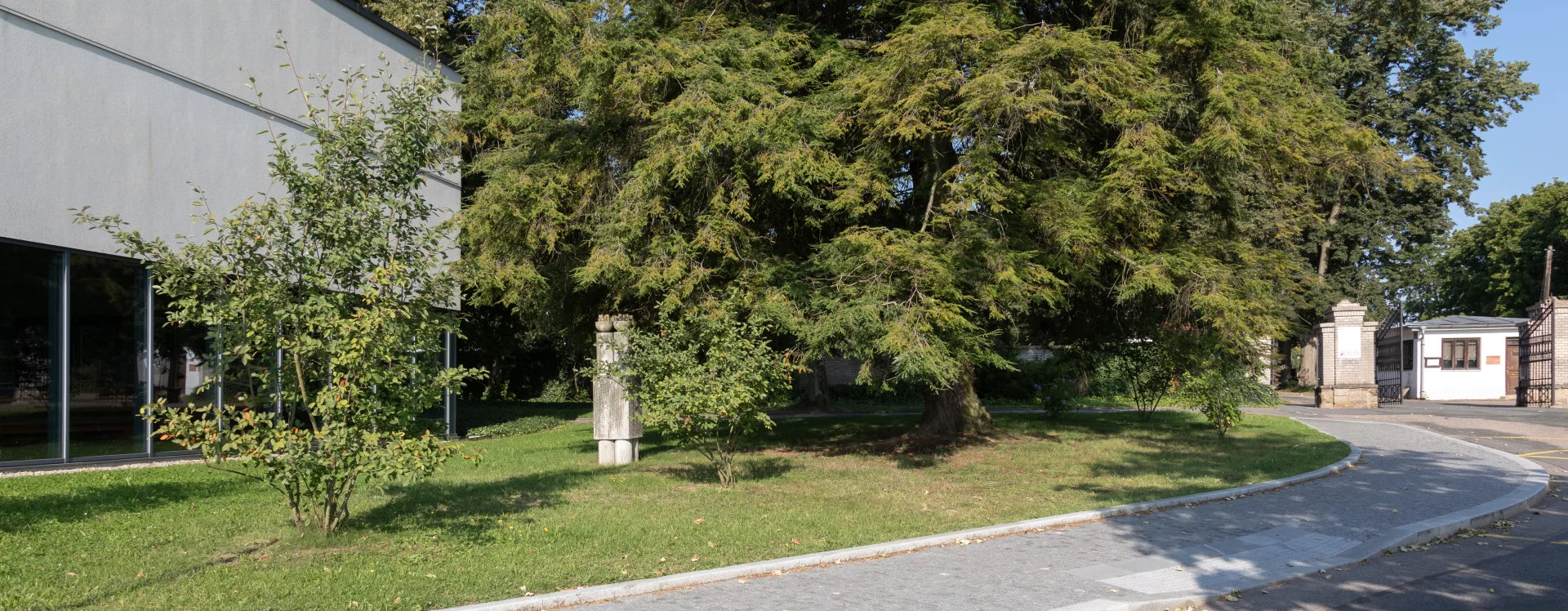
The New Cemetery (HB-VP-NH) was established in Německý Brod between 1910 and 1912 outside the town, diagonally opposite the Prague or ‘state’ road that ran past it. The triangular space between the road and the cemetery was landscaped as a small park with an access road.
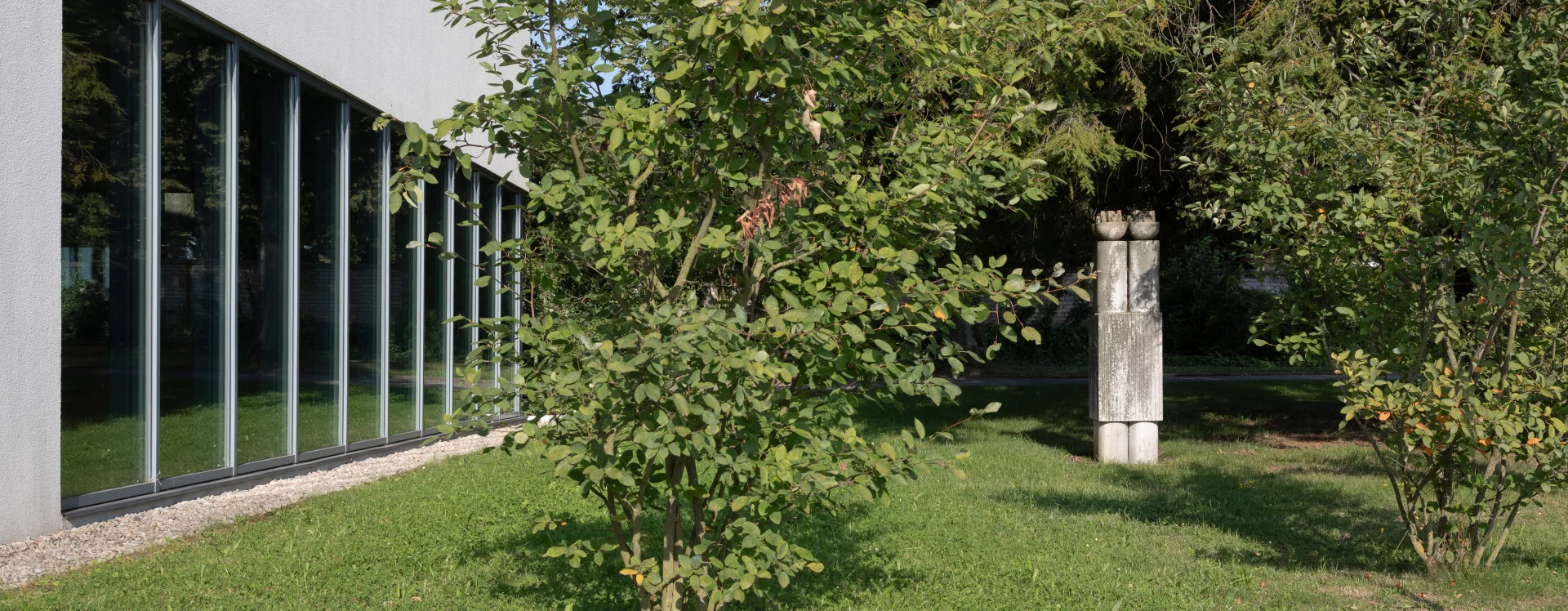
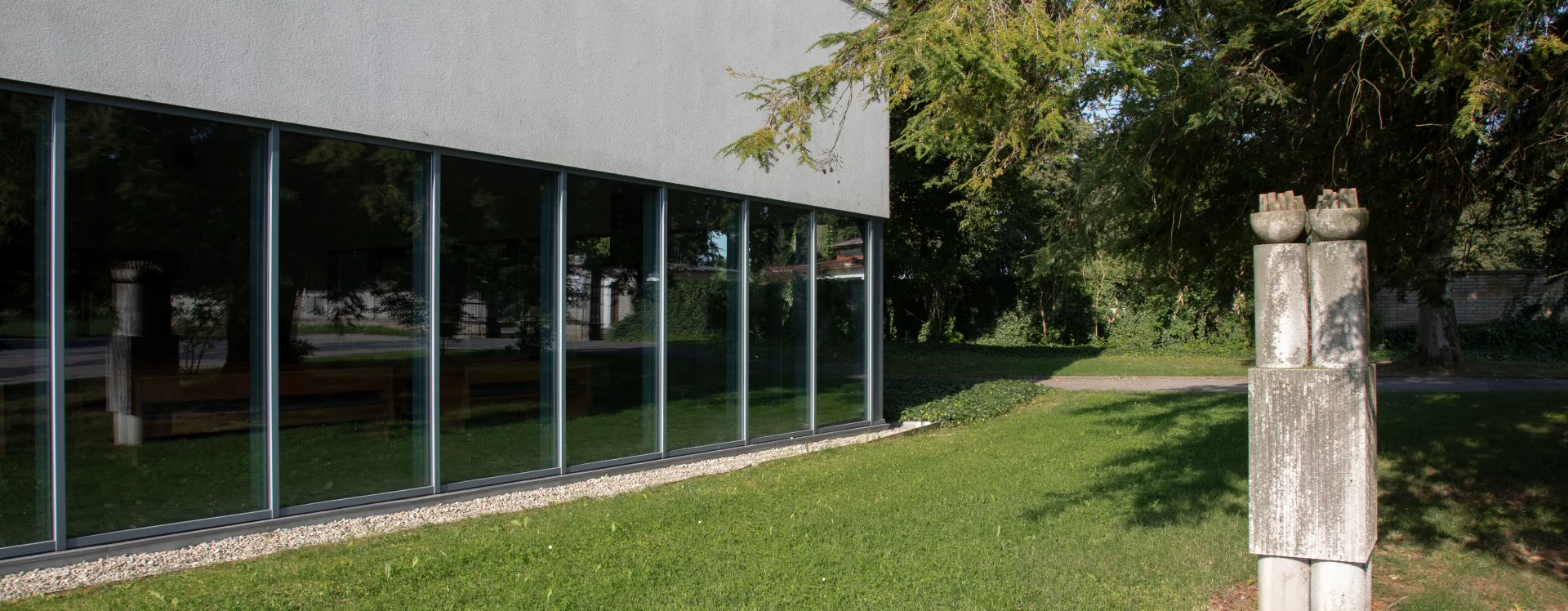
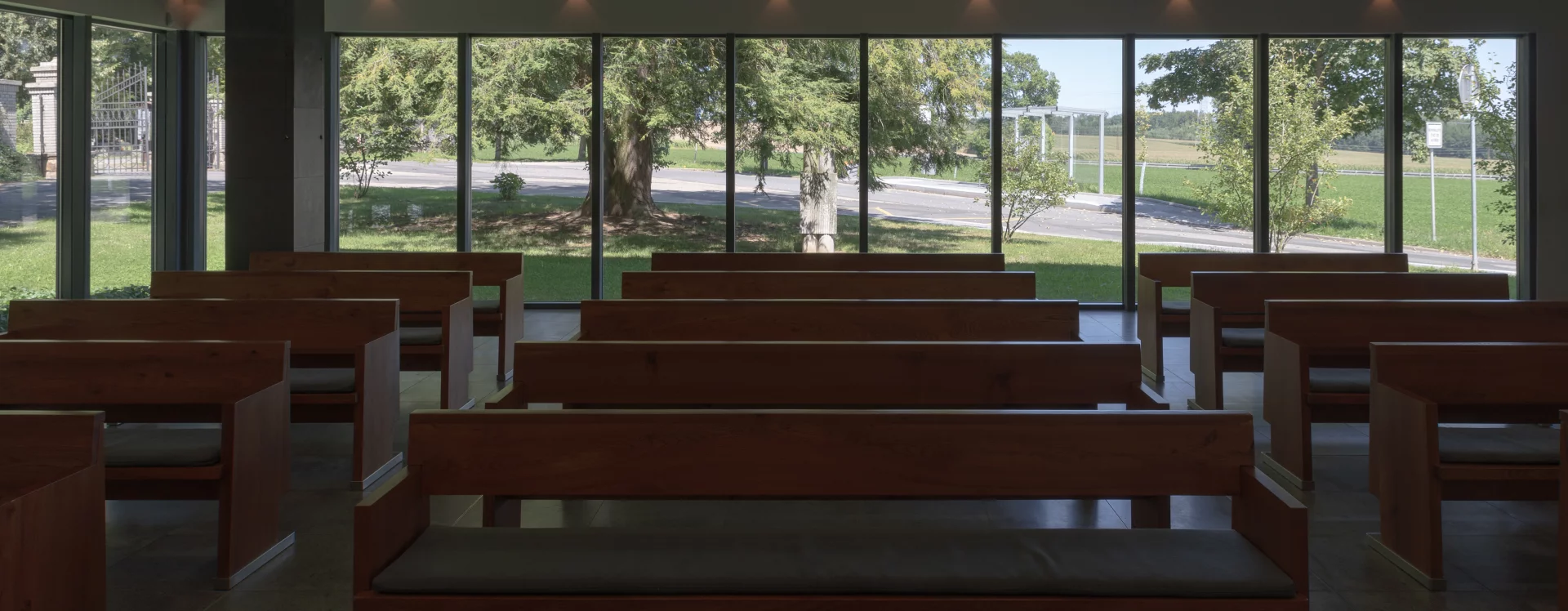
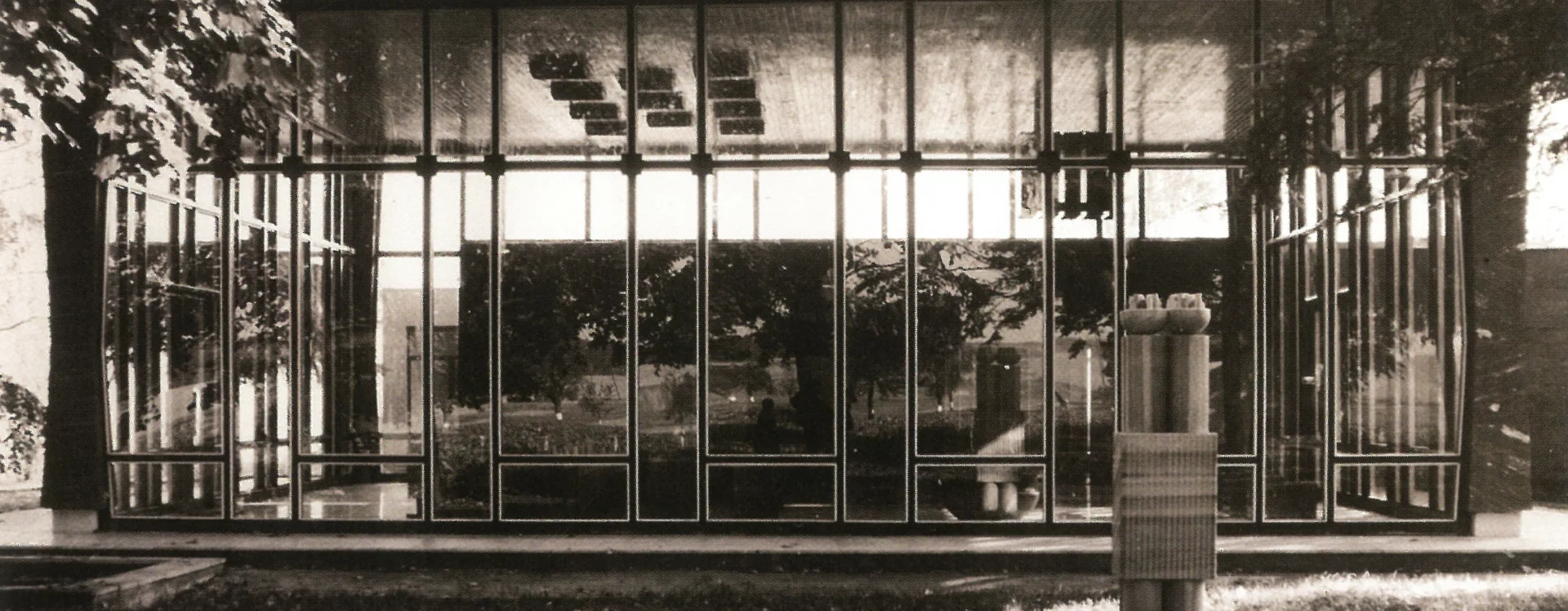
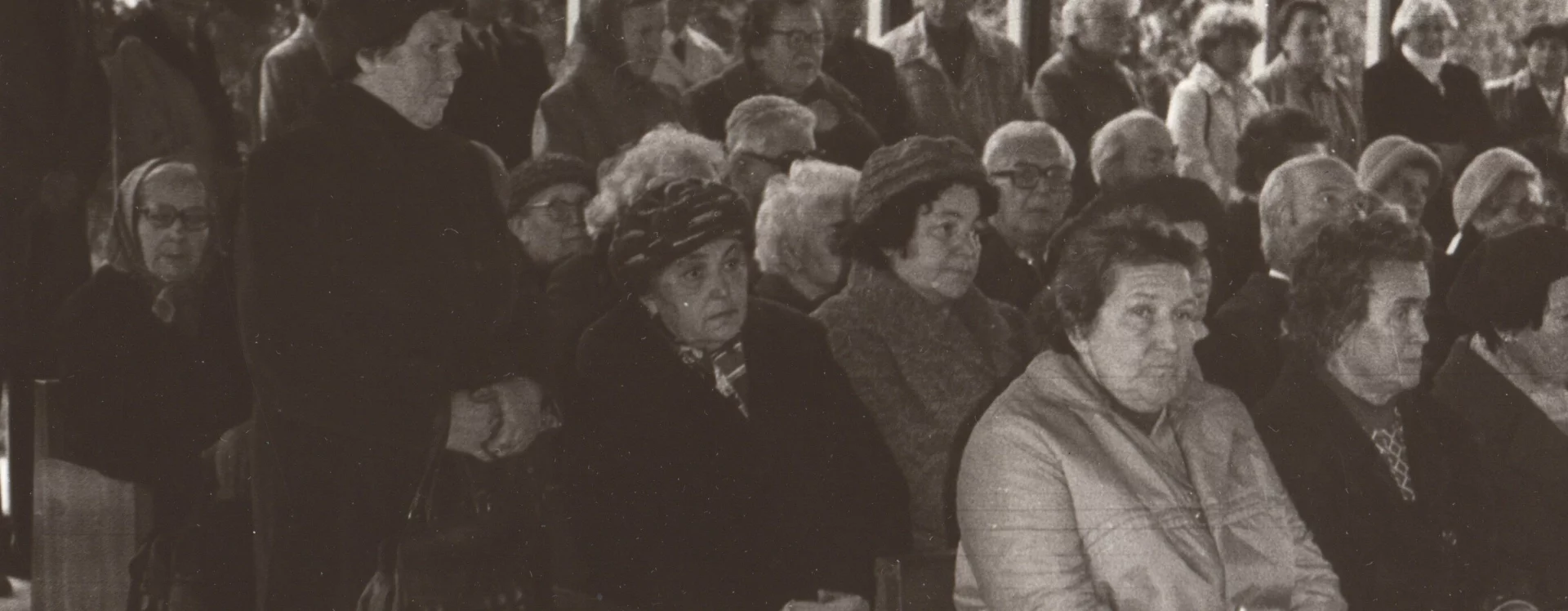
At the turn of the 1960s and 1970s, architect Lubomír Driml designed a new ceremonial hall (HB-2949) for this space. The facade of the main hall for funeral ceremonies was largely glazed and opened up to the natural surroundings outside the town. The architect intended for ceremonies to be held facing the glass, so that attendees could look out over the landscape. In 1972, the Eternal Flame marble sculpture by Karel Hyliš (1928–2024), a sculptor and university teacher from Havlíčkův Brod, was placed on the axis of this view. This was probably the first collaboration between Lubomír Driml and Karel Hyliš, which was then revisited for the Trčkova/V Rámech housing estate in the town centre (HB-VP-SN1).
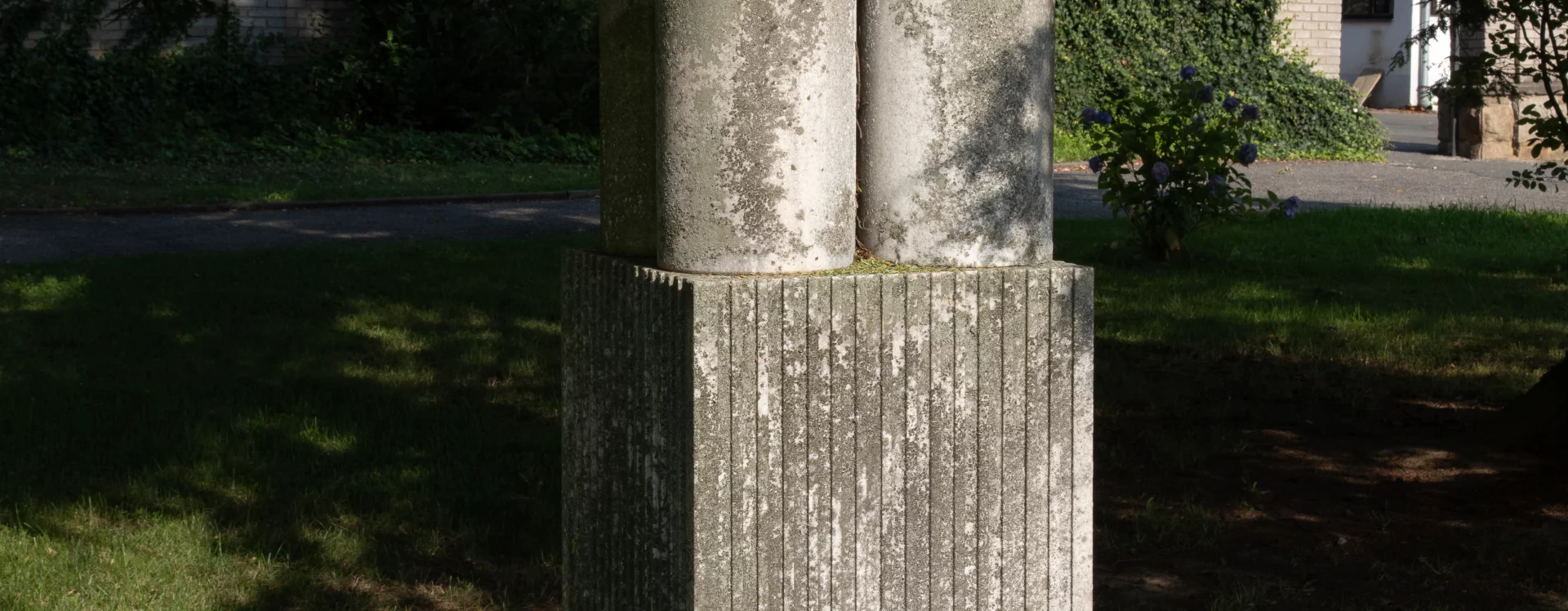
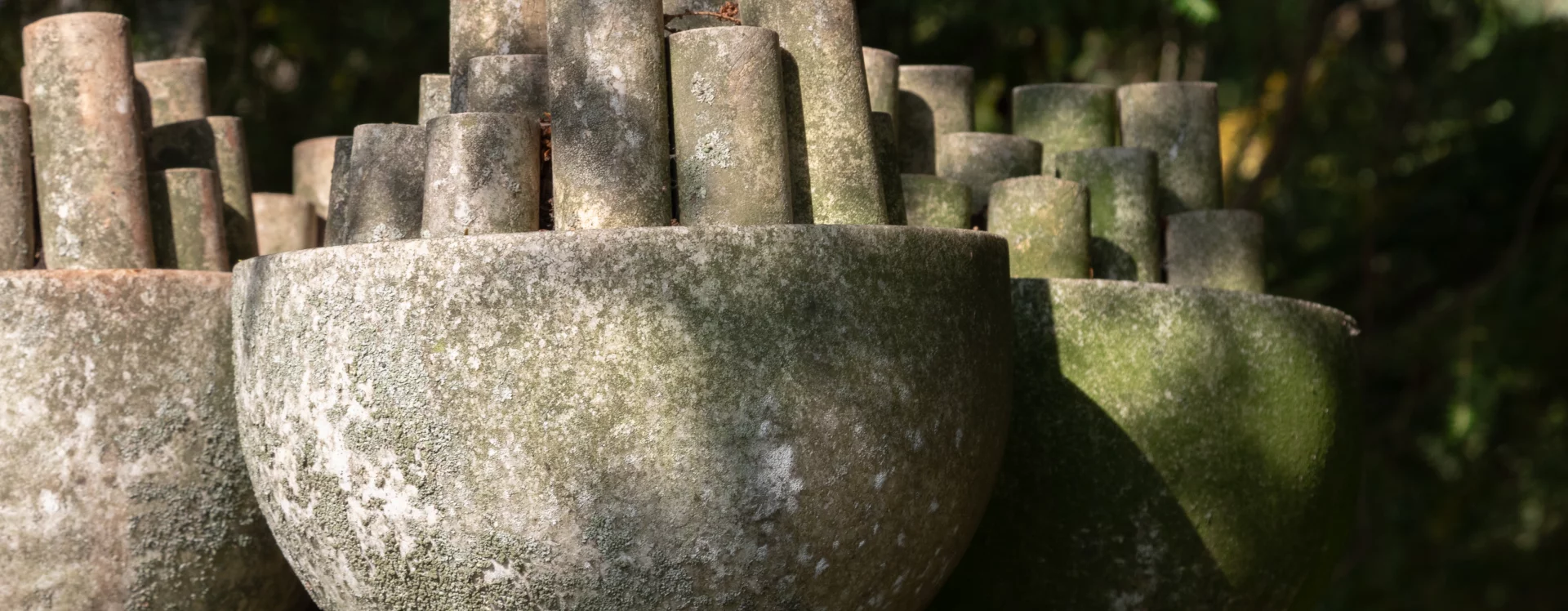
With its geometric and schematic shapes, the Eternal Flame sculpture refers to a ceremonial fire pit. The vertical composition of cylindrical and prismatic shapes is topped by stone bowls with small cylinders of stylized flames. As in other works by Karel Hyliš, we again see the use of archaic symbols and forms that did not conflict with the ideology of the totalitarian regime. The client was ultimately the state, which made artworks a mandatory part of every public building.
Today’s visitors to the New Cemetery will be surprised by the rather modest scale of the Eternal Flame. However, considering that the sculpture was intended to play a key role when viewed from inside the funeral hall, its size is in keeping with this urban concept.
In the end, the ceremonial hall was oriented in the opposite direction, thus preventing the intended meditative experience—an effect envisioned through the interplay of architecture, art, and nature—from being realized. The overgrown greenery, which partially obscures the Eternal Flame, further diminishes the clarity of the statue’s spatial context. Perhaps with the revitalization of the ceremonial hall, attention will also turn to its immediate surroundings, offering the statue a renewed opportunity to reclaim its intended presence within the renewed area.
Zuzana Trnková, 2025
Literature
Eliška Jedličková. Architekt Lubomír Driml. Olomouc, 2019, Diplomová práce.
Vladislava Říhová, Zuzana Křenková. Sochy a města. České umění 50.–80. let 20. století ve veřejném prostoru: evidence, průzkumy a restaurování. In: Sochy a města. Available from: https://sochyamesta.cz/.
Josef Sůva, Jiří Hyliš. Karel Hyliš: dialog, hmota, prostor. Jihlava, 2008.
Josef Sůva, Jiří Hyliš. Karel Hyliš - výběr z tvorby. Jihlava, Oblastní galerie Vysočiny, 1989.