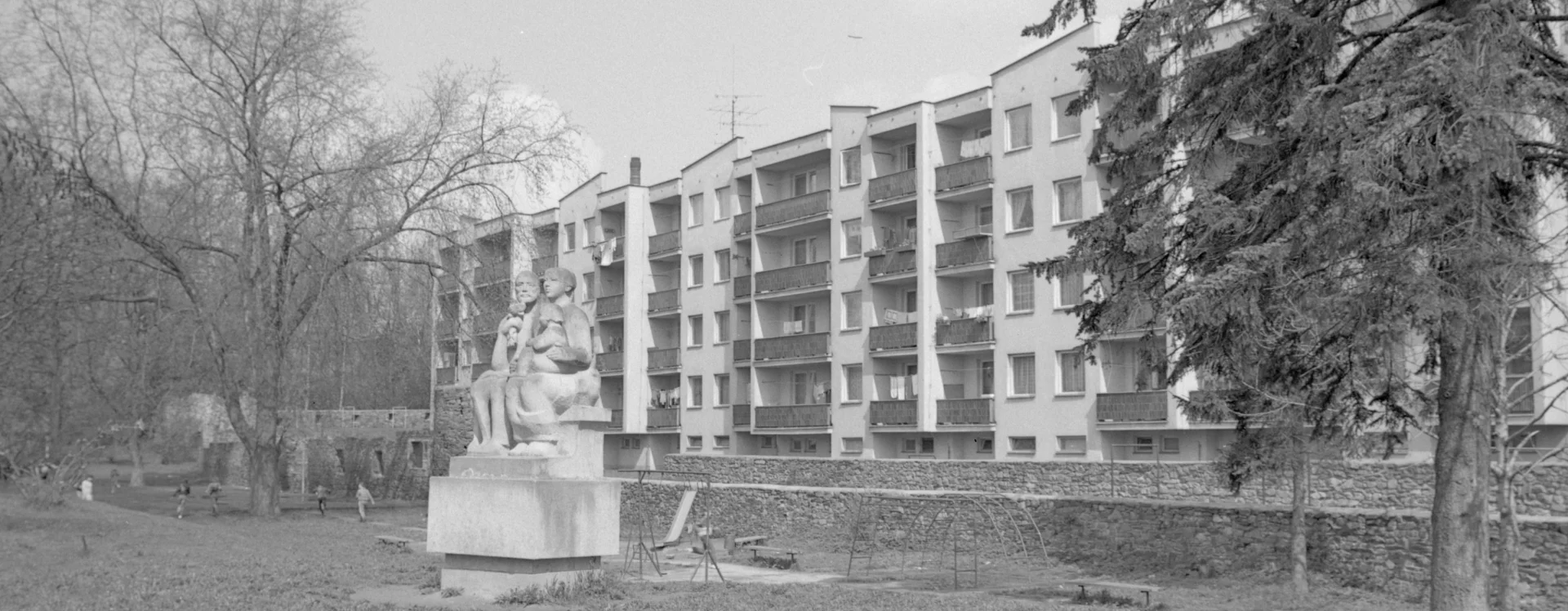
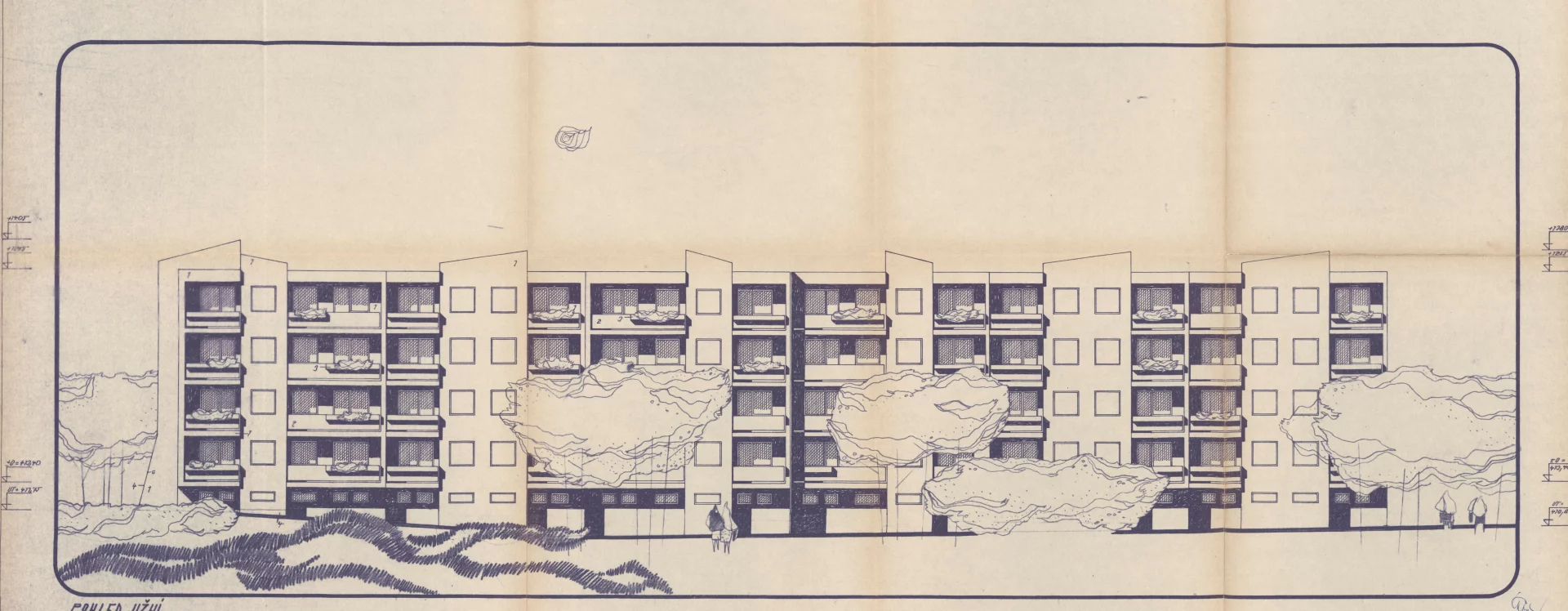
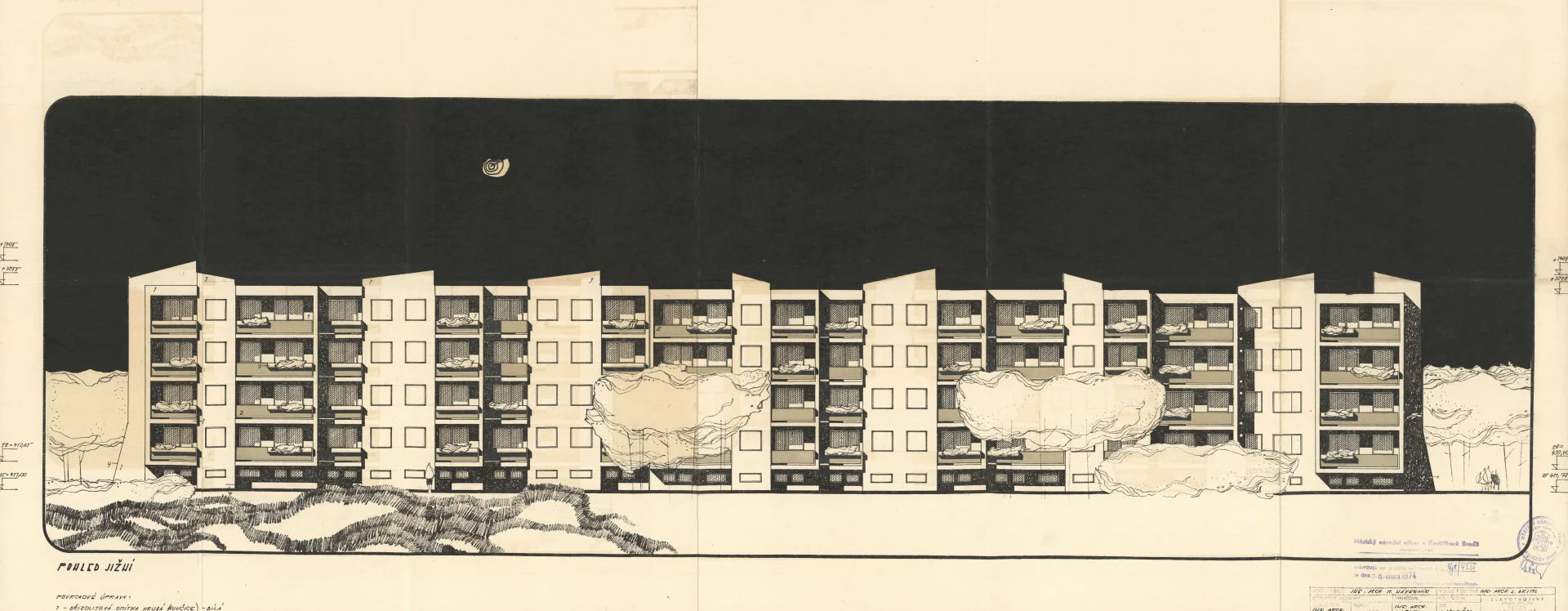
From the late 1960s, the largest urban development project of the second half of the 20th century took place in the centre of Havlíčkův Brod, specifically, the new constructions on Smetana Square (HB-VP-SN1) and the surrounding area, based on designs by Lubomír Driml. The first phase of the project also included the Trčkova and V Rámech housing estates, sometimes also referred to as the Smetana housing estate. New apartment buildings were constructed on the site of the demolished historic buildings of the former Na Louži district, in the area between Smetana Square and the preserved sections of the town walls along the Sázava River. The architect also designed a leisure and relaxation zone for the residents of the new housing estate, which he situated in the area around the walls and towards the river.
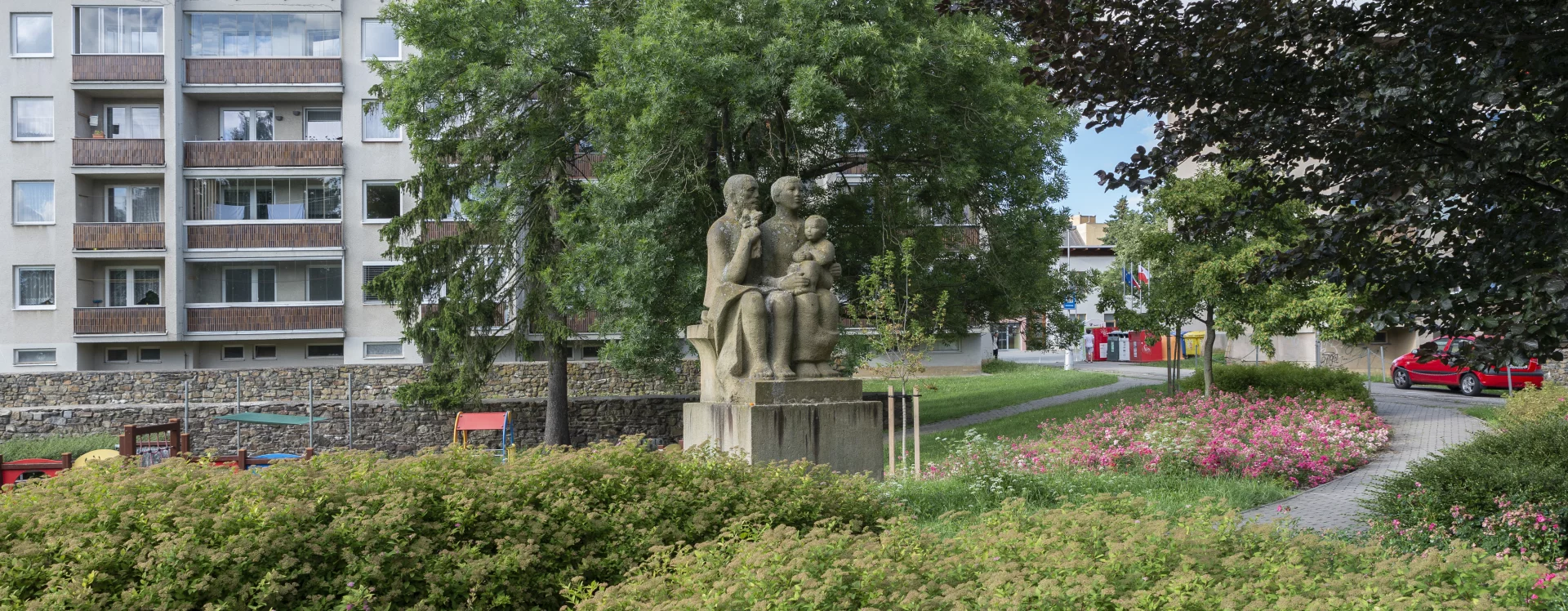
Since 1965, a portion of construction costs for public buildings and spaces had to be allocated to works of art, which aimed to promote the cultural and aesthetic education of the population in the socialist state. In 1979, the new housing estate thus acquired a monumental sculpture, located near one of the pedestrian passages between the walls from the housing estate towards the Sázava River.
The sculpture’s theme–the family–was an obvious choice for the new housing development, which was primarily intended for young families. It was often used in the official art of the time, along with the themes of life and motherhood. These fundamental values did not contradict totalitarian ideology and offered artists the opportunity to avoid overtly controversial content in their work.
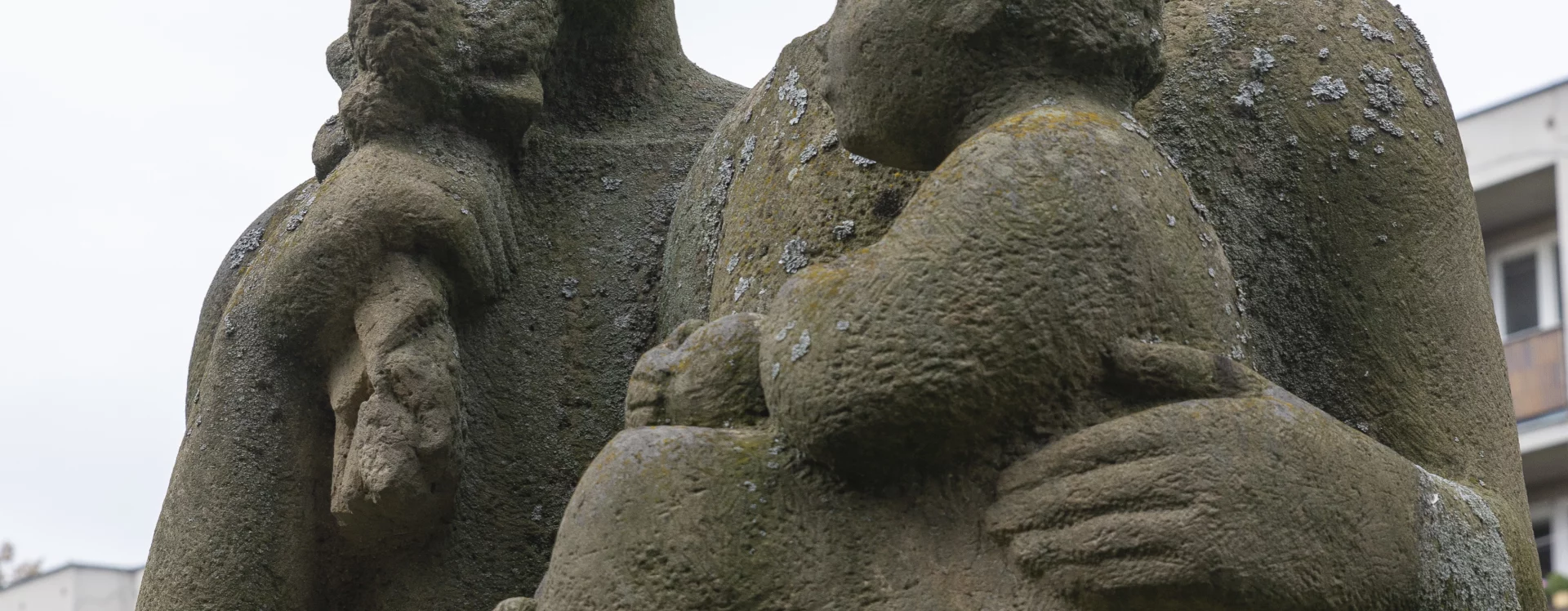
The sculptor and university lecturer Karel Hyliš (1928–2024), a local artist living in Havlíčkův Brod and also an associate professor of sculpture at the Faculty of Education in České Budějovice, was commissioned to create the sculpture. Seven years earlier, Karel Hyliš had collaborated with Lubomír Driml on the Brod project for the ceremonial hall of the New Cemetery (HB-VP-NH), where he complemented Driml’s structure with his marble exterior sculpture Eternal Fire (HB-pc903_5).
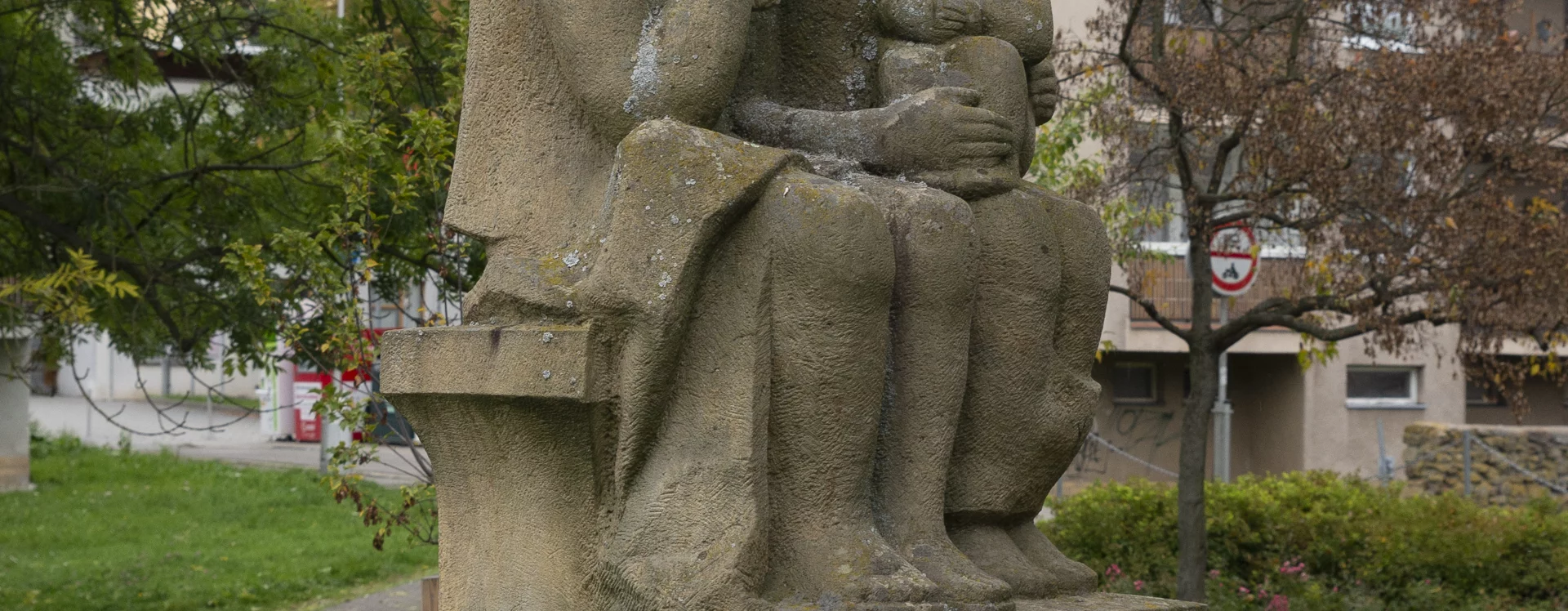
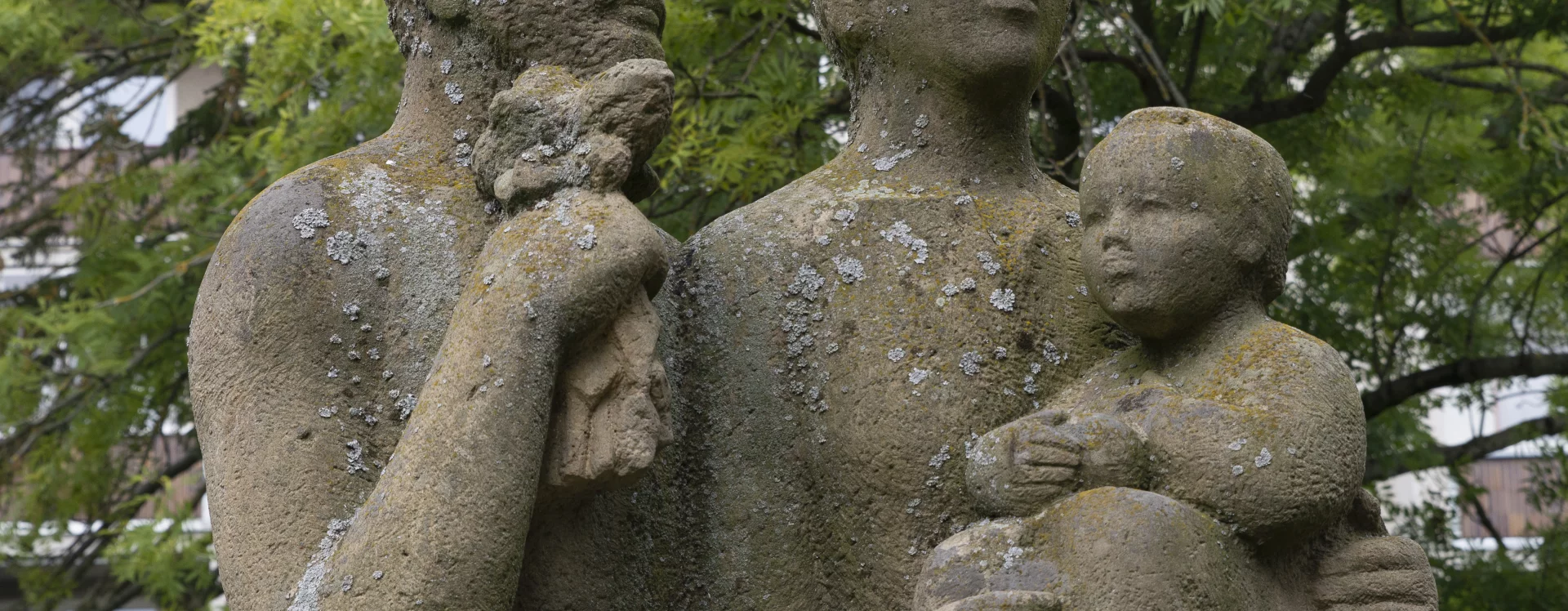
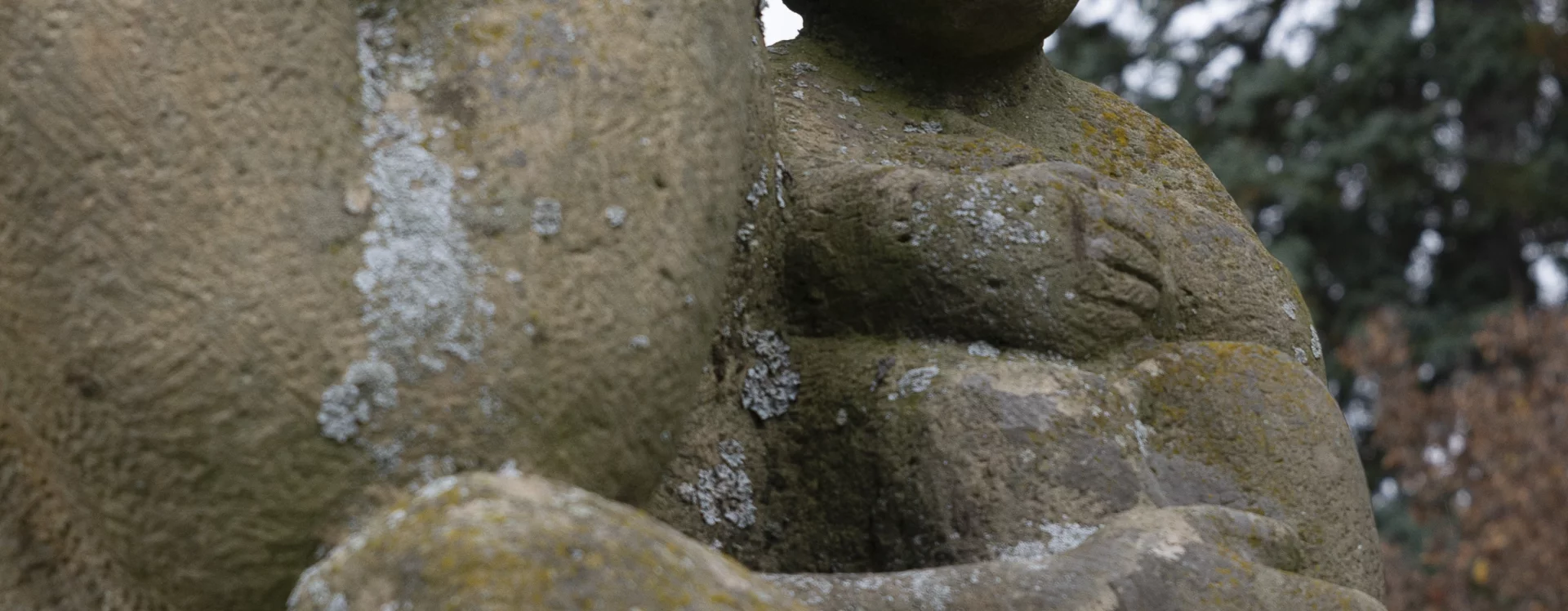
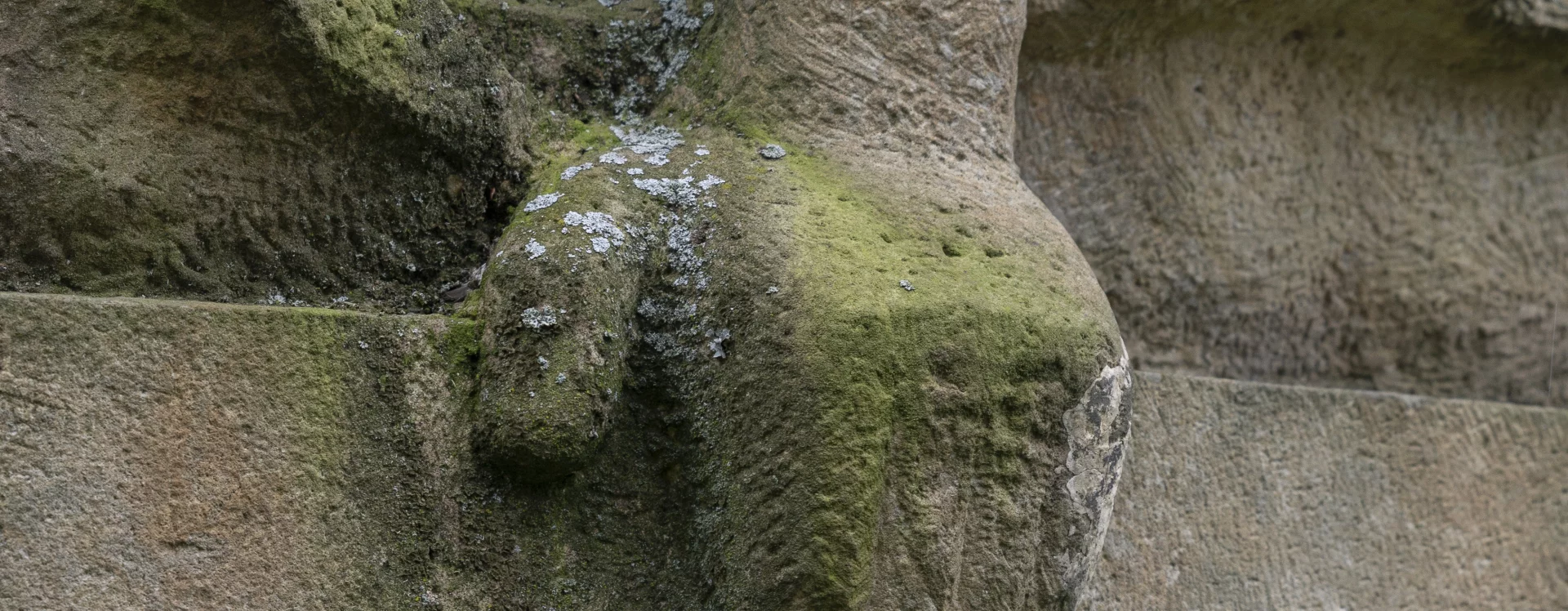
Hyliš’s Family–a seated father and mother with a child on her lap, consists of slightly stylized figures that still seem set within the prismatic blocks of stone from which the sculpture is carved. The static and dignified appearance of the figures partly stems from the concept of period realism, but it transforms the treatment of the theme into a timeless validity, unrestricted by the ideology of the time. Thanks to his university work, Karel Hyliš had an overview of artistic work not only within socialist Czechoslovakia, but also abroad, which allowed him to transcend the limits of regional art in his search for the ideal representation of the human figure.
Zuzana Trnková, 2025
Literature
Lubomír Driml. Havlíčkův Brod - částečná přestavba obytné zóny. In: Architektura ČSR. 1978.
Petr Horák. Mezi adorací a demolicí. Osudy vybraných děl českého výtvarného umění 50.–80. let 20. století po roce 1989 na území dnešního Kraje Vysočina. In: e-Monumentica. 2017, V/5.
Eliška Jedličková. Architekt Lubomír Driml. Olomouc, 2019, Diplomová práce.
Vladislava Říhová, Zuzana Křenková. Sochy a města. České umění 50.–80. let 20. století ve veřejném prostoru: evidence, průzkumy a restaurování. In: Sochy a města. Available from: https://sochyamesta.cz/.
Sources
Zina Zborovská. Evidence pomníků, památníků, pamětních desek a soch na území města Havlíčkův Brod. Havlíčkův Brod, 2012. p. 127-128.